In episode 912 of QAV Australia (recorded 24 March 2026), Cameron and Tony open with geopolitical commentary on the Iran-US-Israel conflict and its impact on oil prices, before reassuring panicked listeners that market chaos is cyclical and the QAV rules — including the three-point trend line and Rule One sell signals — are designed exactly for moments like these. In the Club episode, Tony delivers a deep-dive Pulled Pork on Karoon Energy (KAR), the upstream oil producer. Other stocks touched on include Viva Energy, Santos, Central Petroleum, Pepper Money (CGF’s revised lowball takeover offer), Harmony (HMY hitting a Rule One sell), and the messy Humm/Credit Corp takeover situation involving the Takeovers Panel. After hours, Tony recommends juggling comedian Michael Rayner (“The Broken Juggler”) and the political memoir *All’s Fair*, while Cameron raves about Jackie Chan’s *Police Story*, David Lynch’s obscure 1993 HBO miniseries *Hotel Room*, and the 1944 film *Gaslight*.
This week’s full episode is for QAV Club members only. The free episode is available below. Also check out our podcast archives link and our pages on Apple Podcasts or Spotify or watch clips on TikTok. Or visit our homepage to learn more about QAV and how it works as a value investing system that you can learn and apply to beat the market.
Transcription
AudioQAV AU 912 Club
[00:00:00]
Cameron Reilly: Welcome to QAV Australia, episode 9 1 2. This is the 24th of March, 2026 off air. Tony was just telling me he thinks it’s all fun.
Tony Kynaston: Yeah,
Cameron Reilly: The Trump stuff.
Tony Kynaston: it is. Well, it, I think it was, we’re a couple of hours an hour past the end of the 48 hour deadline, so I was hoping we’d come on there and there’d be like, you know, the missiles are flying, and we’d be on
Cameron Reilly: hoping for
Tony Kynaston: watching CNN and Well, it’s a resolution, isn’t it? It’s something, something happening instead of a taco again from Donald.
Oh no, we’re in negotiations. It’s all good. And then Tara’s going, no, it’s fake news. We have, we haven’t, who is this guy? Donald Trump. He hasn’t talked to us. It’s just, it’s just, uh, I think it’s fun.
Cameron Reilly: assumption is he is just buying time until the Marines landed
Tony Kynaston: Correct,
Cameron Reilly: island
Tony Kynaston: correct. I.
Cameron Reilly: tries to see how that goes.
Tony Kynaston: We have seen this movie before, haven’t we?
Cameron Reilly: Yeah,
Tony Kynaston: When they had, when they [00:01:00] had negotiations and Teran came out and said, this was really fruitful.
Cameron Reilly: yeah,
Tony Kynaston: Next day the aero sirens went off.
Cameron Reilly: yeah, yeah. Trump, I think he’s just muddying the waters,
Tony Kynaston: Of course.
Cameron Reilly: but the markets react. price was down. Now, I, I wanted to ask you about this, um, I saw in your notes you said oil is now a Josephine, but it’s not. look at my monthly chart,
Tony Kynaston: Okay,
Cameron Reilly: it’s, uh, still well and truly in by territory. But if I look at the daily chart, dumb, dumb, or the hourly chart, no data here.
Yeah. Okay. One
Tony Kynaston: well, it’s down today anyway.
Cameron Reilly: Yeah, it, well, even the daily chart, it’s still up. You, this is, oh, sorry. This is iron ore I’m looking at. Okay. Iron ore is still
Tony Kynaston: I know oil.
Cameron Reilly: Yeah. Yeah. Okay. Let’s look at oil. Wow. Oil is definitely a [00:02:00] buy. Like my monthly chart still has oil at $103 81
Tony Kynaston: Okay.
Cameron Reilly: spike on the end.
Tony Kynaston: Well the background for my comment in the notes today was I did, I started the pulled pork last night on Karun, and the oil price was a little bit much higher I think, than it was this morning when I woke up. So I thought it’s probably Josephine.
Cameron Reilly: Mm. Well, if I look at the monthly chart for Brent Crude Oil, it’s still, yeah. $103 80. Still very, very much in bio territory. I look at the daily Chart, it’s dropped, uh, down to a hundred and there’s back up to $103 81.
Tony Kynaston: Really today,
Cameron Reilly: yeah,
Tony Kynaston: huh?
Cameron Reilly: so it was at 112 on March 20th,
Tony Kynaston: Yep.
Cameron Reilly: a hundred on March 23rd, and is back up to 104 basically.
So I think the market’s gone. You know [00:03:00] what?
Tony Kynaston: Taco. Taco who wants tacos.
Wow. Yeah. So it’s gone up today. ’cause I, I think it was like, I had a look this morning when I got up and it was like 95 or 98 us.
Cameron Reilly: So to determine whether or not it’s a Josephine, would you be looking at the monthly chart or the daily
Tony Kynaston: No, the monthly.
Cameron Reilly: right.
Tony Kynaston: Yeah. Yep. I must admit, I assumed that it dropped so much overnight that it would gone back to being a Josephine without checking
Cameron Reilly: Well, I think that, uh, you know, the, you was talking about why it’s fun, but one of the things that this period teaches me as the junior member of the QAV uh, Federation is that, uh,
Tony Kynaston: number, number one.
Cameron Reilly: things change. It’s, it’s almost on a daily basis, it’s whip I whiplash is what I thought I’d call the
Tony Kynaston: Yeah.
Cameron Reilly: [00:04:00] episode. It’s whiplash
Tony Kynaston: Right.
Cameron Reilly: thing right
Tony Kynaston: Set up. Right, mate. Call man.
Cameron Reilly: It’s completely and utterly insanity.
Tony Kynaston: Mm-hmm.
Cameron Reilly: there’s nothing to be done. Like I’m getting emails from people every day, text messages from people every day, QAV members, you know, what should I do? Should I sell?
Tony Kynaston: Really?
Cameron Reilly: you know, people are getting panicky. I’ve seen, you know, my down 11% in the last 30 days.
What should I do?
Tony Kynaston: Mm-hmm.
Yeah. Lemme get the crystal ball.
Cameron Reilly: I have an AI set up now to auto reply to those emails. It’s just like, if, if the, if there’s any variation of what should I do, it just says, have you not been listening? [00:05:00] No. In all seriousness, I’m not, I’m not being disrespectful. No, but we just look, you do whatever you say, I say
Tony Kynaston: Yeah.
Cameron Reilly: would say is we continue to follow the rules. You could do whatever the hell you want, it’s your life. whatever helps you sleep at night,
Tony Kynaston: Mm-hmm.
Cameron Reilly: get you through.
But we will follow the rules. We’ll follow the rule one, we’ll follow the three point trend line, we’ll follow the commodity trend line and we’ll just play it out because I, I, I have come to understand this. This is normal. This is normal chaos. Every, every, every period of volatility and chaos that I’ve QA VD through has seemed absolutely unique and bonkers and crazy.
Tony Kynaston: That’s right.
Cameron Reilly: But I’ve seen enough of ’em now. So the first one was COVID, the second one was Ukraine
Tony Kynaston: Yeah.
Cameron Reilly: [00:06:00] rates, coinciding interest rates going up after the, you know, um, modern monetary theory, theory failed. And this is the, probably the third. Oh, there was also, no, there was also Trump’s, uh, liberation
Tony Kynaston: Yep.
Cameron Reilly: tariff nonsense.
Tony Kynaston: Uhhuh.
Cameron Reilly: one seen in six, seven years we’ve been
Tony Kynaston: Mm-hmm.
Cameron Reilly: And it’s like, oh yeah. So it’s, it’s almost one every 18 months.
Tony Kynaston: Mm.
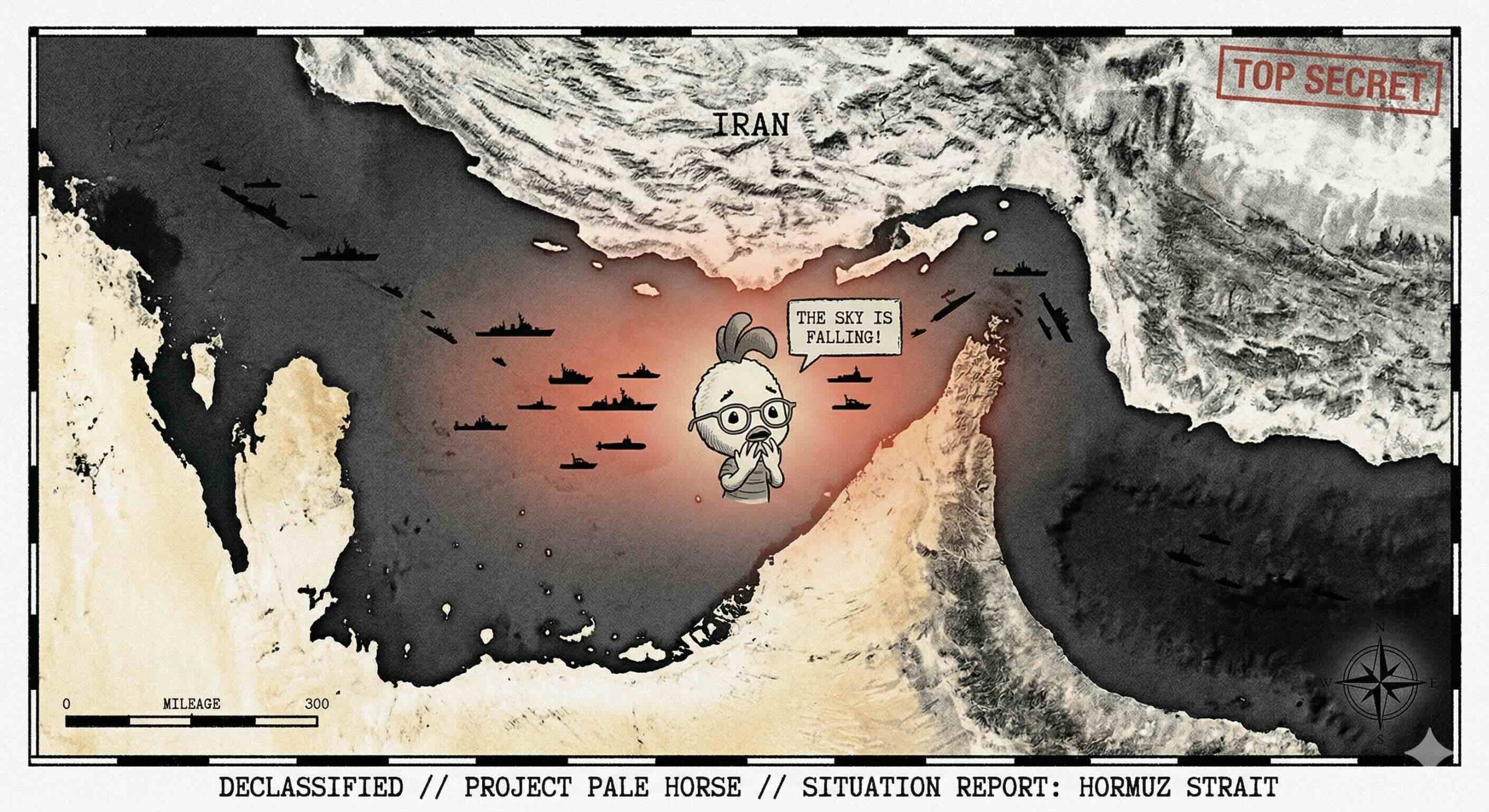
Cameron Reilly: What? Every 18 months we have some sort of, uh, holy shit. The sky is falling chicken little moment.
Tony Kynaston: Yep.
Cameron Reilly: And I’m, it’s kind of boring. After a while you’re like, oh, okay.
Yeah, another one of these. Everyone’s panicking and I’m going, yeah, just, you know, buying opportunities will present themselves as a result of this. We’ll buy it the bottom and we’ll write it back up. And people. Wet themselves and run for the hills will not be around when the buying opportunities are presenting themselves.
[00:07:00] Um, we just manage our losses on the way down carefully. we never know what’s gonna happen. Uh, it could turn around tomorrow, you have no idea. But COVID was like that. We remember us saying at the beginning of COVID, we could not be buying anything for a year. We had no
Tony Kynaston: Mm
Cameron Reilly: we might be, I remember us going, what are we gonna talk about for a year? Like, there’s nothing to do. ’cause for a couple of weeks there, the
Tony Kynaston: mm
Cameron Reilly: saying don’t buy anything. So we were like, well, we’ll, you know, just about what’s going on.
Tony Kynaston: Yeah. We started interviewing people about MNT and all sorts of things, didn’t we? Yeah.
Cameron Reilly: yeah,
Tony Kynaston: Yeah.
Cameron Reilly: And we had economists on and that kinda stuff, but then it just turned around and, and so you have no idea what next week is gonna bring.
Tony Kynaston: Mm-hmm.
Cameron Reilly: you can do is just play it day by day and realize that A, this is
Tony Kynaston: Mm-hmm.
Cameron Reilly: B it will bottom out eventually and turn around. And when it does, we will be here. We will have cash and we will be buying things. And then the market will [00:08:00] go bonkers at some point. ’cause
Tony Kynaston: Yep.
Cameron Reilly: stop panicking
Tony Kynaston: Yep.
Cameron Reilly: already be invested.
Tony Kynaston: Mm-hmm.
Cameron Reilly: ride that up. That’s where we get our So, uh, looking at the portfolios. So the big difference for me between this crisis and the other crisises that I’ve seen in time doing the show is all of the portfolios except my super, my super still sucks us, but the rest of my portfolios. Uh uh oh. Tony’s pulled out the crossword puzzle. He is so bored already. He’s gonna do a
Tony Kynaston: I’m, you know what I’m doing? No, I’m not. I, I don’t have a piece of paper nearby. This is the closest piece of paper I’ve got. I’m making notes of how to reply once I can get a word in edgewise.
Cameron Reilly: Oh, it’s like that. You gotta saw back and you’re getting snippy.
Tony Kynaston: I was, I was trying to do it. I was trying to do it quietly. But you’re paying attention to the video stream.
Cameron Reilly: [00:09:00] if I look at, I’ll just do the light group. So the light portfolio is down little, roughly 11% in the last 30 days versus the all odds down 7%, let’s say. But if I look at all time do, uh, we’re up 16% versus 9%
Tony Kynaston: Mm-hmm.
Cameron Reilly: We’ve dropped a lot, but we had so much buffer there
Tony Kynaston: Mm.
Cameron Reilly: that we can still afford to. Drop a lot before we get back to, you know, neutral with the all odds because we, we had that huge growth over the last months, you know.
Tony Kynaston: Yeah.
Cameron Reilly: up now.
Tony Kynaston: It’s okay if you look, I was sitting here biting my tongue, writing out points. Uh, so point number one you said, you said before that, yeah,
Cameron Reilly: talks a lot.
Tony Kynaston: I’ve gotta go back to 10 minutes.
Cameron Reilly: B.
Tony Kynaston: 10 minutes ago you said
Cameron Reilly: [00:10:00] Wow.
Tony Kynaston: uh, every 18 months it’s chaos and it’s, it’s, this is a unique problem and it’s not unique. These, the, if you step back a little bit, you know, the fact that it looks unique is actually a sign that it’s a volatile period, but that’s not, that’s path of the course in terms of being an investor.
It’s, it’s never, it’s the, the, the fact that we’re going through a period of chaos is not unique. It’s gonna happen, as you say, every 18 months or so. Probably every two years has been my average over 30 odd years of watching it and being invested. So it’s not unique, just, you know, it’s because it’s not, it looks unique.
Yeah.
Cameron Reilly: like it was the end of the
Tony Kynaston: Correct.
Cameron Reilly: We were
Tony Kynaston: Yeah.
Cameron Reilly: a major land war involving whatever countries,
Tony Kynaston: Mm.
Cameron Reilly: you know, that’s gonna be
Tony Kynaston: NATO on Russia.
Cameron Reilly: You
Tony Kynaston: Yeah.
Cameron Reilly: it, everyone looks like, oh my God, the sky’s falling.
Tony Kynaston: And because when, when something like that happens, the media goes and rings up someone who’s gonna give ’em a [00:11:00] headline, right?
Cameron Reilly: Yeah.
Tony Kynaston: uh, Russia, Russia’s invaded Ukraine. Tell us what this could mean for world history. They’ll ring up someone who goes, oh my God, NATO at war with Russia. This is terrible. It’s gonna be the end of civilization as we know it.
Cameron Reilly: Mm-hmm.
Tony Kynaston: so that’s what gets into our brains and not, not trying to diminish the Ukraine war or anything like that. It’s very serious. But, but we tend to catastrophize, or the media tends to catastrophize for us, and they’re doing it right now. What does it mean for the Straits of film war? What does it mean?
Well, we could be, you know, we could have petrol rationing in a few days and, and yeah, we could, I’m not, again, not trying to diminish the problem, but, but it’s the, it’s the extremities that make the headline. So the.
Cameron Reilly: I think your point is if you zoom out enough, a
Tony Kynaston: Yeah.
Cameron Reilly: is a crisis. And we
Tony Kynaston: Correct. A framework based around how to deal with that.
Cameron Reilly: Yeah.
Tony Kynaston: Yeah.
Cameron Reilly: a cyclical
Tony Kynaston: Correct.
Cameron Reilly: every couple of years, and there’s nothing to be done about it. And, and the system’s gonna take a, you know, we we’re gonna go through a period of [00:12:00] turbulence, volatility, but unlike the Air Canada flight, you hope you don’t crash into a, uh,
Tony Kynaston: Oh,
Cameron Reilly: firetruck.
Tony Kynaston: that was terrible, wasn’t it?
Cameron Reilly: Crazy,
Tony Kynaston: out whether that was because of cuts to air traffic controllers on, not in the us.
Cameron Reilly: uh, not yet, but
Tony Kynaston: Okay.
Cameron Reilly: gotta be your guess. Right?
Tony Kynaston: Yeah.
Cameron Reilly: first guess. Yeah.
Tony Kynaston: Now they’re putting ICE agents to work because the, the, uh, lines are too long at the screening places and airports too. So it’s just a. Yeah, I saw, I saw someone, um, which I think was a fake meme attributed to Donald Trump, although I don’t think he actually did it.
Put out a map with the Straits of America instead of the Straits of Horus. And I feel like that works on different levels. It’s, you know, funny ’cause of the, what, renaming of Gulf of Mexico. But it’s, um, it’s funny ’cause like America’s pretty close at the moment too. It’s, it’s on, its, it’s, nothing’s working.
It’s like, it’s on its knees
Cameron Reilly: mm
Tony Kynaston: and I know it’s, that’s again, an exaggeration and catastrophizing. But, um, [00:13:00] yeah, when you’ve got planes crashing into fire engines at LaGuardia, it’s, there’s something wrong
Cameron Reilly: Mm.
Tony Kynaston: basically. Anyway, be getting back to it.
Cameron Reilly: puzzle.
Tony Kynaston: Back to my crossword puzzle. Yeah. Number three. Well, number two is, um, I remember just after we started doing the podcast, it must’ve been around COVID and I did a fir my first interview with, uh, shares for beginners with Phil Mus Ello.
And, you know, he was exactly like this. Oh my God, what’s gonna happen? The market’s down and who knows what, you know, what’s the best magazine and blah, blah, blah. And I’m like, situation normal. This is how the market works. And, and he made that the title of the, the podcast episode Situation Normal. And once you sort of realize that it, it doesn’t change the situation, but if you’ve got a framework to deal with it, you, as we said at the start off air before we started, you can sit back and have fun and just, just watch the Keystone Cops make absolute asses of themselves trying to work through [00:14:00] a another situation.
And, um, so that’s the second, the, I think the thing that’s a bit different for me this time is that. I have in my holding so many stocks, which are way above their cell lines. And they’ve, even though they’ve come back a lot in the last couple of weeks, they’re still not cells. And I think that’s a bit different to what, what it was in COVID when, um, it was, I was being forced to sell much quicker than I am at the moment.
So that’ll be interesting. Do we, do we, well, we had a big year last year. We had a big year.
Cameron Reilly: right, but your portfolio was quite when we went into COVID or 2020. It wasn’t COVID, it was 2022
Tony Kynaston: Mm-hmm.
Cameron Reilly: rule one spiral.
Tony Kynaston: Yeah.
Cameron Reilly: Why didn’t you have enough buffer in your portfolio to. You dunno, because
Tony Kynaston: dunno.
Cameron Reilly: that in the last week.
Tony Kynaston: I,
Cameron Reilly: why is this different to
Tony Kynaston: yeah.
Cameron Reilly: QAV ’cause what I remember [00:15:00] from 2022 period, the dummy portfolio, I didn’t have to sell a lot. light portfolios, which were brand new, the first one, second one I had to recycle a lot because nothing had had a chance to establish itself.
Tony Kynaston: Mm-hmm.
Cameron Reilly: I just bought them all and then they
Tony Kynaston: Yeah.
Cameron Reilly: one.
Tony Kynaston: Yep.
Cameron Reilly: um, yeah, I was wondering about you and my super was kind of new at the time too.
Tony Kynaston: Well, if you, I, I can’t, I can’t remember back to 2022 specifically, but at the moment, like I hadn’t traded anything for at least 12 months, and I’ve only traded one thing
Cameron Reilly: Yeah.
Tony Kynaston: in the last week. So, um, yeah, it’s one trading in 12 months versus a more normal cycle, which is to trade probably half the portfolio.
Cameron Reilly: right.
Tony Kynaston: Um, so it could be, that could be that the stop-losses are much like, like the rule one, stop losses are pretty much outta the equation at the moment. Um, for what I’m holding and the three point trend lines as for that, like, it’s a bit of a, the, the profile of stocks I’m holding, if I think about. Per [00:16:00] mining and parental, even though they’re coming back a lot, they were a long, they had such huge increases in 2025.
They’re a long way above their cell lines.
Cameron Reilly: Right?
Tony Kynaston: Um, so I think, I think that’s probably the reason, but I, I don’t know for sure, but it’s, it’s a bit different. So I’m, well, I’m hoping is that when things turn around, I, I don’t have to trade. I don’t have to sell ’em and go to cash and then find something else that this, you know, um, is a time when, uh, you know, having a a, a stock which is way above its sell line might work for us because we don’t have to trade, but the stocks turn around and we just hold ’em for longer.
Is, is what I hope, uh, which would be nice.
Cameron Reilly: yeah. Anything more? What’s,
Tony Kynaston: No, that’s it.
Cameron Reilly: That’s it.
Tony Kynaston: That’s, that’s it. Thank you.
Cameron Reilly: Okay, well, uh, back to my portfolio updates. Um, yeah, all of the, all [00:17:00] of the light portfolios, the dummy portfolio, my super portfolio are all down about 11% in the last 30 days. The, um, the, uh, STW 200 is down about seven, so, but we, it’s obviously turned around in the last day a little bit. They’re starting to recover. The US portfolios are interesting. The main US dummy portfolio is down about 8% in the last 30 days versus the s and p down about five. The QAV America light portfolio is actually up 2.3% in the last 30 days the index down for, so
Tony Kynaston: A couple of will stocks, I think in there. Is there? Yeah.
Cameron Reilly: of oil stocks.
Tony Kynaston: Yeah.
Cameron Reilly: So, uh, it’s, it’s, uh, handled this well and so, and like, uh, kind of, kind of crazy, um, [00:18:00] how much some of them are up, like cord energy is up 37%, um, in the last sort of couple of weeks.
So they’ve sort of had a real boost. But anyway, that’s where the portfolios are at. Bit of a bit of a hiccup, but as I said, like the dummy portfolio over the last, if I look at the last one, I don’t know where are we, March this
Tony Kynaston: Mm-hmm.
Cameron Reilly: year, still up 13% for the financial year versus the index up 1.75%.
So
Tony Kynaston: Woohoo.
Cameron Reilly: that puts it in perspective.
Tony Kynaston: Yeah, exactly.
Cameron Reilly: 1200, uh, 12 times market. 11 times market maybe. Alright, well moving on to other news. RBA lifted interest rates last week, Tony, as you predicted,
Tony Kynaston: I think I’m one from 10.
Cameron Reilly: [00:19:00] I think it’s a
Tony Kynaston: It’s a trend. Yeah, it’s a oh two. Okay. And it was a five four decision, so I came close to getting it wrong again, try.
Cameron Reilly: Yeah. Right. So everyone has to make sure if you’re doing your own checklist,
Tony Kynaston: Mm,
Cameron Reilly: change the cash rate.
Tony Kynaston: that’s correct. Yep. And in a couple of weeks the average mortgage rate will change too, as the flow through to from the banks to mortgages and we’ll have to change that. Yeah.
Cameron Reilly: Yeah.
Tony Kynaston: Mm-hmm.
Cameron Reilly: Challenger Tony CGF reduced their PPM offer value during the week.
Tony Kynaston: Bastards.
Cameron Reilly: Revised non-binding offer for pepper money. Challenger Limited announces that further to its update on 9th of February, 2026, it has submitted a revised confidential, non-binding conditional proposal acquire jointly with Pepper Group A NZ Hold [00:20:00] Co limited Pepper Money Limited. Under the revised proposal, challengers reduced the offer price from $2 60 per share to $2 25 per share, less the final fully franked pepper money, 2025 dividend of 7.80 cents per pepper, money share, any special dividend. The revised proposal represents challenges best and final offer in the absence of a superior proposal. What do you make of that, Tony?
Tony Kynaston: Yeah. Um.
Uh, just trying to remember the reason now I’ve forgotten it, but, uh, something happened, I think it might have been interest rates rising, which, uh, challenger is used to reduce its, um, offer. There is no other bidder in the market at the moment, KKR joining up with, um, uh, challenger to buy this business and they already have a stake in it.
So I think they’re being [00:21:00] a bit hard nosed, but, um, yeah, I think, what would you say the revised offer was?
Cameron Reilly: $2 25
Tony Kynaston: dividends. Yeah. But the share price at the moment’s a dollar 70. So,
Cameron Reilly: Hmm.
Tony Kynaston: you know, the market’s not even thinking that bid’s gonna be, uh, enough or is gonna go through, so we’ll see.
Cameron Reilly: It was, the share price was $2 like 40 at
Tony Kynaston: Correct.
Yep.
Cameron Reilly: Um, I know that uh, a lot of financial services stocks are taking a beating at the moment. Is that because they think the economy’s gonna be screwed because of oil prices and, uh, people aren’t gonna have any money and businesses aren’t gonna have any money and everything’s gonna be difficult for a while?
Tony Kynaston: All of the above. I think, um, certainly interest rate rising will hurt, which is interesting because [00:22:00] oftentimes, uh, interest rate, rising cycle, rising cycle can be good for banks because, um, they, if they keep the same percentage in margin on a RO rising interest rate price to actually make more dollars.
So, um, and that’s seemed to be a good thing hasn’t happened yet, because as you said, if, if we’re in a high inflation, low growth environment, then people are gonna use banks less, either for commercial reasons, like to. Put money into their businesses to borrow, to put money into their businesses or to, um, you know, buy new houses or upgrades or whatever.
So yeah, there’s been a bit of a de decrease in share prices for, for, um, uh, financials. I’m just looking up now, the Challenger offer, and the reason why they revised the big down was just, um, they said worsening economic conditions, increased concerns about the state of the private credit markets, um, and [00:23:00] at least, uh, at least mess article I’m reading says that, um, there was some pressure from challengers own investors who weren’t comfortable with the high premium of the original offer.
Cameron Reilly: Hmm.
Tony Kynaston: Um, but yeah, like m and a activity when the market’s in a turmoil like this can result in offers being withdrawn or, um, reduced, uh, and more difficulty in them going ahead as well. As we’re also seeing with the Hum situation where Credit Corp is bidding for, uh, HUM, which was on the buy list last year,
Cameron Reilly: and also with Harmony HMY, uh, I just got an alert saying that they’ve become a cell. Rule one sell for one of my light portfolios. They’re down 8% today.
Tony Kynaston: but they’re not a takeover situation, [00:24:00] are they?
Cameron Reilly: No, they’re a financial, um, loan provider stock. You did a pulled pork on them I think in episode 8, 4 0 back in last year.
Tony Kynaston: Mm-hmm.
Cameron Reilly: today. We had Gabrielle Radzinsky the show.
Tony Kynaston: Mm-hmm.
Cameron Reilly: Um, so yeah, it’s just another one of these financial services companies that’s, uh, taking a beating at the moment.
Tony Kynaston: Yeah. And, and, um, they’re a bit like pepper money too. They provide, uh, uh, credit to small businesses and to people to buy cars or whatever. Take holidays.
Cameron Reilly: mm.
Tony Kynaston: Very similar, but getting back to Hum. Um, the interesting thing about Hum is that, is all the shenanigans that are going on. So we had Michael Goldberg from Collin Street Financial on the show last year, and they, they’ve been involved in some shareholder activism about, [00:25:00] about Hum.
It’s, it’s, um, I think I covered this in the prize show a couple of months ago, but, uh, what’s happened recently in the last week is that there the, uh, one of the activist people, uh, not Collin Street, they, they took, um, the situation to the takeovers. Panel, which is kind of unusual for this kind of situation.
It does involve a takeover offer from Credit Corp, but it wasn’t Credit Corp or Hum who took the issue to the takeovers panel. It was a independent shareholder. Um, and the takeovers panel is made a declaration of unacceptable circumstances at hum, uh, which is under appeal by, um, Mr. Abercrombie, who’s the major shareholder and founder of Hum.
Um, but the interesting situation is that a declaration of unacceptable circumstances, um, if the appeal isn’t successful, is usually a precursor to final orders, which, which, um, happens. Uh, if it happens, it gives the takeover. Panel, um, [00:26:00] the ability to compel the board to act in a particular way regarding the Credit Corp offer, um, and dealings Mr.
Abercrombie has had in the in share purchases. So they might be, um, ruled ineligible to have voting rights, for example, as, um, part of the deal. ’cause there’s a, uh, a meeting coming up, I think in May that the activists have called to, uh, vote on a few issues, uh, around all this. And so, um, it’s very pertinent as to how much, uh, how many shares Mr Abercrombie com uh, control at that meeting.
Cameron Reilly: Hmm. We don’t, uh, I don’t think we hold. Hum, do we?
Tony Kynaston: I don’t, um, but it was on the buy list.
Cameron Reilly: yeah. I think we got rid of it a long time ago when we had to.
Tony Kynaston: But very interesting situation. I mean, yeah, had to have the takeovers panel get involved for a start was interesting
Cameron Reilly: Yeah.
Tony Kynaston: and to see, you know, it’s worth, it’s worth watching this kind of thing just, um, as experienced because, um, you know, make ’em up again in the further takeover in [00:27:00] the future. And it’s good to know what it all means.
Cameron Reilly: Indeed. Scott, well, Scott’s one of the people who was Chicken whitling. Uh, this week you send me an email. What are your thoughts on putting a stop-loss on when you buy? I think you’ve mentioned before, but I can’t recall what the thinking was. For me, working a full-time gig and trying to keep an eye on things can be difficult, especially when the market is doing crazy shit. I’ve been caught out a few times, as mentioned above, which has meant selling for 15 to 25% losses. set up the alerts, but if I’m stuck in meetings for most of the day because of work, I miss them and it is too late to stop the losses. I’m then forced to sell for a bigger loss than might’ve been if I had the stop loss in place. It’s been a very rough six weeks. I’m down 14% since the 1st of February, according to share site. Can’t take a trick right now. I’ve bought three parcels of shares during this time and had to sell two of them since, and the other one, BFG, is only in the portfolio as the dividend keeps it above its rule number one, [00:28:00] hanging on, just getting a bit worried and frustrated.
I’m a long way. From the end of last year when everything looked rosy and I was well up. Cheers, Scott.
Tony Kynaston: Well, I’m gonna introduce Scott to Mr. Market and the, uh, the, uh, um, story that Warren Buffett likes to tell that you are a homeowner and you have a manic depressive neighbor who comes to you every day with a different price offer for your house. And it’s up to you to decide whether you buy or sell. And I guess what QAV does is give you some rules around accepting or denying that offer.
So yeah, appreciate exactly what Scott’s saying and what he’s going through. And, um, yeah, we were all riding high last year and now we are down a bit more in the saddle. Um, but we’re still here. We’re still going and dealing with the situations as they arise. So that’s what the rules are for. Scott, um, I wouldn’t get too worried about having to trade a bit when the market’s like this.
It’s fairly natural. Um, but that’s the question on stop-losses. [00:29:00] Uh, I haven’t used a stop-loss in I don’t know how long. 15, 20 years. Um, I’m not saying you shouldn’t use it given your circumstances where you’re busy during the day, but to be honest, um, the way I work is getting an alert from Stock Doctor, which comes out at night.
So the market’s shut, um, and then I can decide what to do. Um, sometimes I even wait the next day and see what the share price is like after the market opens, before deciding to sell. Um, there’s nothing wrong with stop-losses, but they’re very brutal. So you might find you put a stop-loss in. Well, what I was finding, um, and this is only in a small number of circumstances, was I put a work out, a stop-loss, put it in the order, and, uh.
At some stage during the day, the share price went below the stop-loss and I was exited, but then the share price recovered in the afternoon. Um, and, you know, I was outta the market. So it’s a very brutal way to run things. So, um, you might even [00:30:00] want to add a bit of padding to your stop-loss for that reason.
Make it a bit, you know. Um, if your stop loss is 10%, make it 15% for example, so you can get an alert and sit size up the situation for yourself. ’cause you’re also being sold out regardless of what your a DT situation is. So, you know, I don’t know what size of, you know, holdings you have and what they are compared to the shares you’re buying, but, um, you know, if you are stopped out on a day when the share price, the share is thinly traded, then there could be a big gap between the buy and sell and you get a price which is much below what you thought you would get if you had have been washing it yourself.
So there’s a couple of issues with stop losses to be aware of. Um, it may suit Scott, given his circumstances, and I’m not gonna give personal advice, but just think about these things, Scott. Maybe try it on one or two of your shares and, and go from there.
Cameron Reilly: You know, it’s, um, the, the sort of intraday panic about and that kind of stuff. I, [00:31:00] I, I went through that, you know, I remember the first year or two doing that and like my, uh, writing my alerts. Like it was trigger finger
Tony Kynaston: Yeah. Right.
Cameron Reilly: like I was, uh, gene Walder and Blazing Saddles, fastest guy in the west and, uh, his name?
I just watched that on the weekend.
Tony Kynaston: Yeah. Um, CLE even little
Cameron Reilly: that’s the
Tony Kynaston: and so hear me.
Cameron Reilly: Black Bart? No,
Tony Kynaston: Oh,
Cameron Reilly: character is, um,
Tony Kynaston: can’t remember.
Cameron Reilly: the Frisco kid.
Tony Kynaston: that’s it.
Cameron Reilly: Waco kid.
Tony Kynaston: the Waco kid, and I watched the Mel Brooks documentary You recommended. That was really good.
Cameron Reilly: you enjoy it?
Tony Kynaston: Yeah. Especially the end, the second part about, um, David Lynch and
Cameron Reilly: Yeah.
Tony Kynaston: he’s in his, uh, production company
Cameron Reilly: Yeah. Um,
Tony Kynaston: and blazing settles. That was great
Cameron Reilly: yeah.
Tony Kynaston: seeing the clips again.
Cameron Reilly: Yeah. So I watched the whole thing like, uh, [00:32:00] over on Sunday or Monday or something.
Tony Kynaston: I love that. Uh, there’s many scenes. I mean, like when I first saw it, when it first came out, I was probably like 10 or 11 or something. And to see, see far jokes on the screen. I mean, that just cracked me up that adults had the same sense of humor as we did on the playground. But, but the classic scene when I watched it again during this documentary was that I just pissed myself was when, um, the Waco kids got his arm around black Bart.
He’s going, you gotta remember, these are farm people. These are, these are simple people. Salt of the earth,
Cameron Reilly: in other words.
Tony Kynaston: morons.
Cameron Reilly: Yeah. Anyway, trigger finger. Um, and then I remember you saying at some point, know, if it goes from 20%, which is our rule one now to 25% and you sell it for 5% less. When
Tony Kynaston: Yep.
Cameron Reilly: to 20 stocks in your portfolio, 5% of one stock
Tony Kynaston: Mm-hmm.
Cameron Reilly: [00:33:00] is really nothing. And then when you add that up over or whatever factor that in over five years,
Tony Kynaston: Correct. It’s bugger rule.
Cameron Reilly: And you, you just, it’s gotta stop panicking about it and just realize, I do what you do. Like I said to Scott in my reply, I said, I bring it up in the show, but I said, look, what I do is I just, I check my alerts. Usually at the end of the day, I’ll
Tony Kynaston: Mm-hmm.
Cameron Reilly: see what happened. Go, oh, okay.
There’s a couple of things I probably need to take care of tomorrow if there is. Um, and then, you know, mid-morning I’ll have a look at it and decide what to do. Usually, depending on what I got on for the day, but I just don’t panic that much
Tony Kynaston: Yeah.
Cameron Reilly: like you have a moment, you take care of it and sometimes it works in your favor.
Sometimes at eight o’clock at night, when I check it’s a cell,
Tony Kynaston: Mm-hmm.
Cameron Reilly: I get around to it at 12 o’clock the next day I take a lunch break and I take a look at it. It’s not a sell anymore. I’m like, oh, okay. Something happened and I win. Sometimes it goes in your favor, [00:34:00] sometimes it doesn’t. But over, over 10 years of investing, it’s not gonna,
Tony Kynaston: No.
Cameron Reilly: of points here, a couple of points There is, you know, on a one stock, out of a big portfolio is gonna make a big difference.
So, you know, relax,
Tony Kynaston: Yep. And there’s been cases too, like, I must admit, I, I try and find reasons to keep holding a stock sometimes too, or often.
Cameron Reilly: Yeah.
Tony Kynaston: like if it, if it’s an alert at night and next day, even though it’s still below the alert, but it’s on the, on the rise, I’ll just watch it. Keep it, you know what, why panic? And it’s, why do anything in panic?
That’s just the worst way to act them, to make decisions. So just, you know, pants on fire. Just go and sit in the bathtub. Don’t, don’t trade shares.
Cameron Reilly: Well, I was like that with FEX this week. Phoenix, you right there.
Tony Kynaston: Sorry, you, your pants was on fire during SEX this [00:35:00] week.
Cameron Reilly: FE
Tony Kynaston: sorry. I heard SEXI was thinking of Southern Cross Electrical.
Cameron Reilly: Uh, Tony. Tony, Tony Phoenix Resources. Um, because iron ore was a sell, according to when I ran my, um, uh, commodity check, uh, at one point this week. And I had a look at it and iron ore had ticked up. It was still a cell, but it, it had sort of was ticking up and I was like, Hmm, you know, it looks like not gonna be a cell much longer, so I’ll hold it a day or two and just keep an eye on it and see what happens.
And, and it did. And, you know, iron ore kept
Tony Kynaston: Yeah, right.
Cameron Reilly: and I didn’t have to sell FEX. So Yeah, sometimes you gotta fudge it a little bit if it looks like things are going in your direction.
Tony Kynaston: Yeah, don’t even know if it’s a fudge. You could call. I guess it is a fudge, but it’s, yeah. You need [00:36:00] to put some managerial decision making on top of the rule, I guess. Or just, it is a fudge. You’re right. But it’s, it makes sense to do what you are doing and whether I do.
Cameron Reilly: So don’t panic, Scott. I know, you know, Scott’s been doing it about a year or so, but, uh, he’s still, he’s still in the honeymoon phase of QAV going through his first, uh, his first crisis. You’ll get you
Tony Kynaston: Oh,
Cameron Reilly: Oh yeah. We all
Tony Kynaston: uh,
Cameron Reilly: first
Tony Kynaston: yeah.
Cameron Reilly: Yeah. Our first chicken
Tony Kynaston: Uh, watching him grow up.
Cameron Reilly: were
Tony Kynaston: Yeah.
Cameron Reilly: when we used to
Tony Kynaston: Yeah. Well, the other thing, Scott, too, is, uh, I think in your email you said that you were selling things between 15 and 20%, so it sounds like you’ve got a 10% stop-loss in there. Um, and as you said before, cam, I, I, I use 20%. I think you do, and it sounds like if Scott’s getting between 15 and 25, he’s probably averaging about 20 anyway.
So
Cameron Reilly: Hmm.
Tony Kynaston: another perspective to look at it as well.
Cameron Reilly: yeah. [00:37:00] Alright, well, uh, that’s all I have. Tk, what you got. List left on your list.
Tony Kynaston: I left on my list. Yeah. Um, front of the Wall Street Journal yesterday was Iran Strikes Accosting Big Oil. And it was an article about, um, the damage to, uh, the Qatari, um, installations from the Iranian missiles. And
Cameron Reilly: Hmm.
Tony Kynaston: one of them in particular was, uh, one of Shell’s, crown jewels, a giant plant, um, for l and g in Qatar.
And they’re talking about it being offline for at least 12 months while it’s repaired. So it wasn’t completely a surprise to me that, um, we got to the 48 hour deadline this morning and Trump chickened out. So I think there’s a lot of pressure being applied, um, stateside from the oil majors for him to clear this up.
And not just the oil majors, but people who rely on the oil majors. You think almost every lobby group would be telling him [00:38:00] to just get it, get it fixed and get it done. So, um, yeah. Interesting.
Cameron Reilly: But how do you do that at this point?
Tony Kynaston: I know that’s, that is the trick, isn’t it?
Cameron Reilly: I mean, if you’re Iran, they were in the middle of negotiations with the US and Israel when they got bombed. So you, and if, if they didn’t know already, which I’m sure they did, but now they doub doubly know you can’t trust any agreement that
Tony Kynaston: Correct.
Cameron Reilly: The US or, or Israel, right?
Tony Kynaston: Yep.
Cameron Reilly: They, they, they’re gonna just promise you one thing one day and then bomb you the next day. So negotiations are really off the table. There has to be is Iran keeps saying massive security guarantees in place, um, for them moving forwards and what that looks like, I, I don’t know, in this
Tony Kynaston: Hmm. I.
Cameron Reilly: then for the US and Israel, if they, if they give in and don’t, if they exit this without regime change or taking over [00:39:00] Iran, having permanent control of the Straits of Warren Lewis, look. Weak and all of this is for naught. Um, so sort of an existential crisis for Netanyahu and Trump as well, you would think, uh, to at, not the same as it is for Iran, but at a, at a certain level. So I can’t see how any of them get out of this. Uh, at this point. It’s, it’s a quami.
Tony Kynaston: I can’t see them getting out of it quickly. But to me, the only logical exit is for boots on the ground to control the straits of houz. And then, you know, the long term game with regime change, the wild card is Israel. ’cause they’re not gonna give up on regime change. And Iran, they want Hezbollah, completely un you know, done and dusted, unfunded, they’re gonna keep firing missiles into Iran, even if the US does a deal.
So, um, it’s not gonna end quickly from that respect. The straights of whom was, I can see being reopened quickly and, you [00:40:00] know, the Marines are heading in place. I think that’s how it’s gonna finish. Um, but who knows?
Cameron Reilly: a couple of thousand Marines is gonna get the job done.
Tony Kynaston: Yeah, I’m not an expert.
Cameron Reilly: 10,000 drones a month. that’s, that’s a lot of drones you gotta get through. And the other thing with Israel is Israel’s getting hit. It’s not.
Tony Kynaston: Mm.
Cameron Reilly: the media a lot because they, Israel’s cracked down with the
Tony Kynaston: Mm-hmm.
Cameron Reilly: Not a lot of news getting out of Israel, but Israel’s getting hit according to all of the sources that I listen to that have sources inside of Israel that are speaking to them. Missiles are getting through Iron Dome and there’s only so long that they can,
Tony Kynaston: Mm.
Cameron Reilly: know, keep, keep their population at bay. If, if they’re being terrorized by Iranian counter strikes, retaliatory strikes, so,
Tony Kynaston: Yeah. Well, there’s so many wildcards because, uh, what’s Iran’s, what’s Iran’s final solution if they get cornered? Are they gonna find missiles [00:41:00] at the European capitals? Does that bring
Cameron Reilly: concerned
Tony Kynaston: into a wall?
Cameron Reilly: I mean, there’s, there’s commentators I’ve been listening to, uh, that are very concerned that Netanyahu may launch a nuke at Iran if
Tony Kynaston: Ooh.
Cameron Reilly: feels cornered.
Tony Kynaston: Yep, that’s a possibility. But the other possibility, which I think deserves consideration is what does China do with Taiwan? Because you think about the American military now, it’s in the Middle East. Um, it was in the, in the China Sea, and it’s now probably somewhat still in, in the coast of Venezuela, um, or Cuba.
So there’s a, there’s a big stretching of military resources that, I don’t know what it is today. It used to be the military strategy in the US to be able to fight the war on four fronts or four walls at the same time around the world. They’ve now got three. Um, you know, there’s, they still have presence in the China Sea.
They still have presence in near Venezuela, and they’re moving troops to the Middle East. [00:42:00] What happens if China invades Taiwan?
Cameron Reilly: Yeah. I, I, I mean, I think, I don’t think China needs to Oh, thank you. I don’t think China needs to invade Taiwan. I think if I’m China, I’m just like, Another, another
Tony Kynaston: They’re gonna wait. Yeah. Yeah.
Cameron Reilly: it just,
Tony Kynaston: And I don’t, yeah, it’s, it’s also an issue too, given Trump would, would, would the US feel obligated to come to Taiwan’s defense as well?
Cameron Reilly: yeah, who knows? It’s all crazy.
Tony Kynaston: Yeah. And we’re just speculating.
Cameron Reilly: we are. What else you got Josephine? I mean, a, uh, Paul Pork Josephine,
Tony Kynaston: I do. Um, yeah. So. I, I’m denied about whether to do this pulled pork. It’s on Karun and I, the reason why I’m denied was because I bought some last week and I didn’t wanna sound like I was, uh, pushing a stock I own, but the, the background to it is there’s four stocks on the buy list at the moment. [00:43:00] Um, and I did a pulled pork on one of them, Viva Energy two weeks ago.
Uh, I did Santos last year and, um, I did Central Central a couple of weeks ago
Cameron Reilly: Sorry to correct you. There’s really only two stocks on the buy list
Tony Kynaston: and one’s under takeover.
Cameron Reilly: according to my analysis, CTP Central Petroleum, which is a mixture of crude oil and LNG, and my revenue analysis says it’s primarily LNG based
Tony Kynaston: Oh, okay.
Cameron Reilly: G’s a sell. Same with Santos. I’ve got that down as
Tony Kynaston: Well, okay.
Cameron Reilly: so that’s a cell. So it’s really only, again, this week, Veeva and Karun Energy. There are two stocks as of y know, yesterday morning. Anyway, I haven’t done an update today, but.
Tony Kynaston: Yeah. Right. Um, well, there you go. So, um, I decided to do the pulled pork on Karun for that reason. There’s nothing else on the buy list to talk about really. Uh, but this is a note.
Cameron Reilly: when you say you bought karun last [00:44:00] week, I think it’s fair to say we all bought
Tony Kynaston: Yeah.
Cameron Reilly: last week.
Tony Kynaston: Okay. Well that puts it in perspective then.
Cameron Reilly: QAV member and light member. ’cause I think it, I did a light, uh, thing of it as well. It might have been Viva, I can’t remember. But yeah. ’cause we own both of the, like we all own Karun energy at this point. If anyone’s had any cash, it’s been the one of the only things to buy for three weeks now. So, yeah.
Tony Kynaston: I just wanted to be upfront and say I’m doing it for those reasons. It’s the only one on the buy list, but also, um, and not because I bought some last week and wanna push it. So obviously do your own research, but as you say, cam, it’s fairly topical. Um, last time I did a pulled pork on, this was back in September, 2023 and the, the company’s a little bit different since then.
So, uh, I think it’s worth revisiting for those reasons. But, but bear in mind I have, I have bought some last week and it may blow up in my face ’cause uh, you know, the straits of that and tomorrow and the oil price halves and these [00:45:00] stocks are rapidly becoming sell so we’ll. Um, but the rules take care of that too.
Uh, and I wanna also say that last time I did the pulled of pork on Karun, the share price was $2 61, which turned out to be the peak, and it dropped back to a low of a dollar 33 at the end of 2024. It since recovered prior to the, um, latest conflagration and was it about a dollar 55 before, uh, the closing of the Straits of Emir?
So, um, that might be where it heads back to if the war is resolved quickly. But who knows? For those people out there who forget the pulled pork I did before, or who don’t know who KARUN is, they’re Australian based, but they’re, they have a lot of, um, effort and operations over in America. And in fact, they’ve been relocating senior personnel across the Houston, even though they’re Melbourne based.
Um, and they’ve, they, they’ve basically have three core assets. [00:46:00] So they’re an, uh, an all. Up what they call an upstream oil business. So they’re not selling to, um, retail customers. They’re, they’re finding oil, they’re, um, taking it out of the ground and they’re selling crude is is their business. And they do that at, uh, the Bower, um, field and Patola oil fields, which are in Brazil’s Santos Basin.
So they’re off the coast of Brazil and they have a stake in, uh, a field called who dat. In the Gulf of America or Gulf of Mexico, depending on which map you look at. And they also have a new prospect called the Neon Prospect in the Barossa Basin off the coast of Australia. So they’re the three operations, ro uh, sorry.
Um, neon, uh, has not been developed yet, but the other two are producing crude and providing cash to this company. And, you know, given the, where the oil price is now, a lot more cash than, than they were prior to, um, the Middle [00:47:00] East, uh, war, the biggest cash generating unit is the, um, the Brazilian fields. Um.
Who dat in the US Gulf does represent a growth opportunity for them. So, uh, they are still exploring in that region and finding new, um, sources of revenue going forward. And the neon prospect in Australian, uh, waters represents the most significant value driver. So they’re moving to what’s called a final investment decision, otherwise called an FID, uh, in the middle of this year to decide whether or not to, um, to proceed with, uh, developing the neon field, which won’t be.
Cheap. So, um, I’ll get to that in a minute. And, but the point I wanted to make now is that the neon field will be a higher cost field than the American fields. And to give that some context, in 2025, the breakeven cost for bone was $14 80 US per barrel. [00:48:00] And, um, they actually, uh, another big part of what has happened for this company in the last 12 months is they acquired a, uh, floating.
Um, oh, it’s called an FPSO, which I’ll talk about again in, in a little bit, which they used to lease. And, uh, that’s, um, improved the economics of, of the boner field by about four or $5 a barrel. Um, and so, uh, 14, $18, $14 80 US a barrel was the break even for Bona last year. It’s gonna come back to more like $10 US a barrel going forward.
Um, and the Huda operation is around $9 50 US a barrel. So they’re very cheap, uh, to, to process those two fields. The neon field in Australia is expected to run at about 18 to $20 US a barrel, and you’ve gotta add the amortized capital cost to develop it of around six to 10. So, um, it’s still profitable.[00:49:00]
Even when the oil price was down in the sixties, that’s, that’s still a profitable field. But there are big swings to the economics of this company, um, as the oil price moves up and down. The other thing about Neon is it’s gonna cost about a billion dollars us to develop. Um, but it will, uh, increase the.
Reserves of karun by 60 to 90 million barrels. That’s the estimate. And um, if it goes ahead, it will probably double karin’s existing reserves. The only question mark around all of that is that Karun expects to take on the partner to help fund this and to share the cost and the upside of the project. So we don’t know who that partner is yet and we dunno what the terms of the deal is yet.
So it’s pretty hard to factor in and work out the spreadsheet calculation for the cost benefit of, um, neon them, but it will be revealed during the year. Uh, and that’s gonna be a, uh, an inflection point for the share price. Um, if it’s a good deal [00:50:00] and they go ahead and I expect the share price may re rerate, but, um, who knows?
Um, getting back to that, uh, FPSO, uh, they, um.
Just try to look up. Ah, yes. The owner of the FPSO was a company called sdi, GZ. Um,
Cameron Reilly: Okay.
Tony Kynaston: yep. And they, they sold their, uh, floating, um, platform to karun for $115 million, and there was about $8 million. US both these figures are in US in transaction costs. They were, the FPSO was owned by Alterra and Ossian A and o, and they used to lease the vessel to Karun, but the um.
Share market likes the deal and see it as a marking coon’s transition from a pure explorer to a full scale offshore operator. [00:51:00] So it’s one of the steps of turning these fields into cash generating units ongoing is to control that sort of, uh, floating platform. Um, FPSOs are pretty interesting. So what they are is basically a, a next tanker, uh, which sits above the oil field and can, um, drop, uh, what they call, um, rises down to the, uh, seabed where the, um, drilling is taking place.
And, and those rises bring the oil up from the seabed. And then they do a bit of immediate, uh. I wouldn’t, wouldn’t say refining, but separation. So they take out the sea water and any sort of gross impurities from the, um, the, uh, oil that’s coming up. And then they store it and then they, um, load it into two smaller vessels to take it to shore.
And that’s a more efficient way of, um, of monetizing the operation and trying to run a pipeline from a, an oil rig out, uh, offshore [00:52:00] back to shore to storage tanks there. So, um, interesting type thing. They run a, um, a navigational, I guess, uh, system called a weather vane, so a weather van anchoring system.
And it allows the, the FPSO to move around in the wind and the waves for stability. Um, uh, even though it’s a big, a big ship that’s just basically at sea in a deep water, um, environment up to a kilometer deep, they’re, they’re pretty stable. So, um, the, the reason for highlighting this is it’s a, it’s made a big difference to the economics of the company.
As I said, it’s made their margins bigger, um, and it’s secured, uh, those economics going forward. Um, I wanted to just run through a couple of other things that have happened at Karun since we last spoke about them. Um, soon after we talked about them, or maybe around the time I talked about them last time, they received a first strike on their remuneration report.
[00:53:00] And, uh, to karun credit or the credit of the board, they did take the shareholder, uh, criticism to heart and they restructured the executive incentives and capital allocation strategy going forward. So in 2024, the company overhauled the short term incentive and moved away from rewarding the executives for just merely acquisitions and exploration to, um, putting, uh.
More than three quarters of the STI reward was tied to production targets, budget control, and operational excellence, and only 5% was allocated to finding new growth opportunities. So prior to that, the incentives were criticized for heavily for rewarding executives simply for making acquisitions. Um, so big change to the incentives.
Uh, which aligned with what the shareholders wanted. And that came after a number of years of, um, karun promising but not delivering dividends. And so Karun since, uh, [00:54:00] the last pulled pork in 2023 has implemented the capital returns policy in a formal way. So the board have committed to returning 20 to 40% of underlying net profit to shareholders in 2020.
In 2025, they declared a final dividend of 3.10 cents per share. And they also launched a buyback program as well at the same time. So, uh, they’ve launched it and repeatedly extended an on market share buyback program, which was returned over $80 million to shareholders in 2025 alone. Um, and then the last thing to, to mention about, um, changes to this company is that.
Uh, there was a lot of pressure from activist investors, um, namely Sandon Capital and Samuel Terry Asset Management, uh, to change the leadership at the company and the CEO at the time, a guy called Julian Fowls departed and new leadership was appointed with a mandate to focus on operational efficiency and [00:55:00] shareholder value over aggressive m and a.
Um, and that all came to a head with the acquisition of the WHO dat, um, field that I talked about before because it involved a, um, dilutive capital raising of about, uh, which in which entailed about a 40% dilution of existing shareholders. And, uh, one of the reasons why the share prices dropped after 2023 was because of that capital raising.
Um, so what else can I say about them? Um.
We spoke about who dat, we spoke about the FPSO ownership. Um, there has been challenges during the last year or so. So despite, um, the changes I mentioned, the boner, uh, field has had operational issues including, um, equipment values, and there was a a 50%. Profit drop in 2025 due to lower oil prices and unexpected downtime.
So there is a lot of, um, challenges in this [00:56:00] business and, uh, certainly in the fields that they’re operating in. Um, kinda like, uh, well definitely the Gulf of Mexico is, is where hurricanes often form in the US So there can be big weather challenges, but they’re also operating in deep water drilling environments.
So there are all kinds of special challenges there, but they have, um, now put on A CEO who’s focused, uh, on being able to, um, handle operational challenges like that. The CEO called Carrie Lockhart, formerly of eor, and she took over in November, 2025, and she’s been tasked with, um, enhancing the operational performance and improving the technology.
Uh, so. They’re kind of the things that have changed since then. I guess the last thing to perhaps mention is that a couple of weeks ago, the Brazilian government announced a 12% export tax on crude oil effective March, 2026. And so that’s obviously gonna [00:57:00] have an impact on margins, uh, for the oil coming out of the boner, um, facility.
So there is a bit of, uh. Uh, sovereign risk with this company operating overseas. Um, but I think overall, uh, the share price has been rising off. Its off its low point and it is seen as being in a better space than what it was in 2023. Um, notwithstanding some of the operational issues they’ve got. Their, um, you know, who that will provide growth for them.
Neon effort goes ahead, will provide a, a long-term future for them. So there’s a lot of things to life that’s going on. Um, and hopefully the executive changes, at least in the CEOs, um, is going to bed that down. If I look at their results, I’ve already sort of flagged that the profit was down, but production was down 1% because of the averages I mentioned before.
Um, sales were down 19%, mainly because of the oil price changes. And to give some perspective on that, uh, in [00:58:00] 2024, Brent, on average over the year, was about $81 USDA barrel. And in 2025, Brent was about $69 on average, um, uh, across the year. So that’s, that’s really hurt. Car’s profit, um, hurt their margins, uh, and um.
The other thing to highlight, I guess from their numbers is that owning the FPSO in boner has reduced costs by 7% for that field, but, uh, contributed to an overall cost reduction of 3%. So costs are coming down, it’s just the oil price, which is, um, hurting them last year. And of course the oil price is up now, so that problem, uh, might be improved.
Uh, QAV numbers for the company and I’m doing a stock price, uh, sorry, an analysis with a stock price of $2 oh five, which was yesterday’s price. It’s now dropped back to around $2 today. So if people are thinking about looking at this, you probably should, um, look at, uh, the current price and the current figures.[00:59:00]
If you do your own downloads before making your own decision, it will change, um, a little bit because of that. Um, the other thing I think I’ve, I’ve felt since buying it is it feels a bit funny cheering for more disruption in the Middle East to get the KR stock price up. But, um. It’s, that’s, you know. I guess something I have to live with.
But uh, I have been checking the news overnight when I first get up to see what’s happened in the Middle East because of that. And the, your price. Anyway, getting back to the numbers. IV one’s a dollar seven, IV two is $2, so it’s trading around IV two. Uh, Stock Doctor financial health and trend is strong and steady.
Stock oed, a quality rank is 88 with an overall rank of 97, which is very high. F score is six out of nine. P is just under 10 times, which is the highest in the last three years. So it gets a negative score for that. Doesn’t have consistently increasing equity does have a buyback, so we can score it for that.
And Pr/OpCaf is low at 3.95 times, which is really what’s putting it on the [01:00:00] buy list. Net equity per share is $2 14, so we can buy it for less than book and book plus 30%. And that’s reasonably similar to the NTA, so that’s a, a good thing to note as well. Earnings per share forecast growth is negative 3%.
So, um, we can’t, uh, score it for growth over pe uh, again, I, I expect that would change. Um, if the oil price remains high, we might see some growth in the, in the forecast earnings going forward. Uh, yield is 2.68%, so they can’t score it for that. There was an owner founder, but he retired in 2020. A chap called Dr.
Bob Hoskin. Um, I tried to look up what his current stake was, but I couldn’t work it out. And I’m kind of thinking it’s below 5% now. ’cause he wasn’t, um, in the, uh, top 10 list in the annual report and he hasn’t appeared for a while in the. Uh, you know, changes of ownership for material holders. So I’m suspecting he’s, he’s probably still a hole holder.
I dunno if he’s still a shareholder, [01:01:00] shareholder, but he, he’s probably got less than 5% anyway, so I can’t score it for own a founder. Um, it was a new three point trend line in February, so he can score it for that overall eight out 14 for quality, which is only a score of 44%, which is not great. And 0.11 for our total QAV score.
So this may well come off the buyer list, uh, if the share price doesn’t improve from where it is. Um, I, I guess to address some of the questions that people will have who have looked at car, uh, I think what I like about it are the opportunities. So karun trades are a steep discount towards Australian peers.
Um, like, uh, some of the other explorers on the ASX are trading around sort of an average of 15 times. The PE for KAR is, what’d they say it was? Um, five. nine oh, it’s, it’s increased a lot recently. It’s up around 10 now, so it’s trading at a bit of a discount to its peers, um, largely because of the issues I’ve mentioned. [01:02:00] Uh, it does have, um, low operating costs, pretty, very low breakeven as I mentioned before. So, uh, any leverage up in the oil price. Um, leg up in the oil price is really positive to margins, as is decreasing oil price as well.
Uh, but very strong cash generation. Um, debt’s been reduced and, uh, good even with depressed margins last year. Still good, uh, operating cash flow and I like the, the clear growth path. So who debt will provide growth in the near time term? Neon probably won’t come on until next. Uh, I’ll say. 2030s at the earliest, and we will know about the final investment decision in the second half of this year.
Uh, but you know, that’s, if it does go ahead on a good basis, that’ll be a, um, a real milestone for the company. Um, I mentioned before about risks, uh, sovereign risks of the Brazil, um, windfall [01:03:00] gains tax. Um, there could be windfall gain taxes in Australia too, so it may not just be a sovereign risk for Brazil, but, um, that’s obviously, uh, gonna affect them.
Um, I guess one of the biggest risks is what does car do if neon doesn’t go ahead or if the farm out deal is onerous. So time will tell with either of those two things. If, if Neon doesn’t go ahead. I suspect the, the. Management will have to get back on the acquisition trail, uh, m and a trail to try and find something else to replace it.
But I also suspect, given it’s, we’re getting so close to that decision, they’ve done a lot of work to make it stack up financially. And, um, the FID might just be a rubber stamp of their thinking around proceeding with it. But we have, we haven’t seen the detail yet, so we’ll have to wait and see. Certainly gonna be a, um, an inflection point for the stock price, uh, in a couple of months.
Um, I noticed that the CFO had resigned, which is always something that catches my eye. Then yesterday, um, later on I noticed [01:04:00] that, uh, they’d announced a replacement. So looks to me like the current CFO was asked to relocate to Houston and decided not to go. Um, and he’s been replaced by some us, uh, people.
So, uh, Eric Williams is the new CFO and this was announced yesterday. He’s based in Houston, as is the current CEO and as is a newly created position of CTO slash coo, which combined the two previous roles. And that person is also based in the US and Cam. The guy’s name is Mark Nick, um, here you wouldn’t have heard of, but he previously worked for Murphy Oil as the country manager in Vietnam.
We did Murphy Oil on the US Show recently.
Cameron Reilly: Hmm.
Tony Kynaston: Yeah. Um, so I think the CFO resigning was, um, not something to be worried about. And he, he’s, he’s been replaced now, uh, and by someone based in Houston. Um, other risks for the company, um, there could be a capital raise for neon, [01:05:00] which again, could dilute shareholdings and we’ll have to make up our minds whether we participate or not, or get diluted.
Um, although it’s looking like they’ll take on a partner instead of, um, going to another capital raise, which, um, ended badly for them in, um, the case of who dat back in 2023. Uh, but I look, I think the biggest question though, and the biggest risk that’s, um, on my mind anyway about this company is what happens if the or when the Straits of Film was, are opened again?
Um. I’m guessing it’ll probably decrease the share price, but it, the company was on the buy list before the current conflict, so, um, and as I said before, it does have a lot of margin, um, with low operating costs at the moment. So even with a lower raw price, if it’s above the sixties where it was last year in 2025, they’ll have a better result than they did last year.
So it’s still gonna be, I think, likely profitable for them this year. Um, but yeah, it could drift back down towards the pre-military buildup. [01:06:00] Prices of around a dollar 60. Um, but that’s why we have cell signals. Uh, so I can’t speculate on what will happen and I’m ready to sell if I need to, ready to ride this through if it keeps going.
And of course, on the other hand, exhibit a Donald Trump. Um, who knows what will happen if this trade, if was as we spoke about before. Um, I suspect the, a majors amongst other people are applying pressure to end this quickly. But as, as we’ve said, um, somehow we all have to bear out or the US has to bear out of this with, uh, its ego intact and that’s always top of mind for Donald Trump.
So we’ll see. So that’s my thoughts on KAR.
Cameron Reilly: mm Thank you Tony. Uh, I did want to a disclaimer too that I added them to my super on the 10th of March. I added them to the light portfolio on the ninth at to dollar 98, and then I waited a day as per our self-imposed rules, before I added them to my super portfolio, [01:07:00] and they dropped down to a dollar 83, which was considerate of it.
Tony Kynaston: Oh good. That worked in your favor.
Cameron Reilly: It did.
Tony Kynaston: Now, by the way, as an aside, when I was trying to look up our, our, um, self-imposed regulations to make sure I could talk about it today, I clicked on the link in the email to look to, um, get to our disclosures and it just went to the homepage on the new website. So, um,
Cameron Reilly: this
Tony Kynaston: you fixed it.
Good. Okay. Alright. Thank you.
Cameron Reilly: I
Tony Kynaston: I like your, I like your emails now. I just wanted to make that work again. Thank you. I’ll make sure it was working. Yeah.
Cameron Reilly: Well, there was a link to it on the website, but you had to go down to the footer to
Tony Kynaston: Yeah.
Cameron Reilly: did a direct link.
Tony Kynaston: Thank you.
Cameron Reilly: Uh, cool. After hours. Tony,
Tony Kynaston: Yeah. So a few things. Um, have you heard of Michael Rainer otherwise called the Broken Juggler?
Cameron Reilly: I have not.
Tony Kynaston: He’s, he’s, I started following him on my, um, on my reels and it’s quite, it’s quite surreal and quite fun to watch his clips. But I thought I’d [01:08:00] mentioned it to you because, um. He, he’s been going for a long time and, and if you go to his website, you can see he’s been a, an actor who’s always played the dork, often in commercials, um, as well as a juggler, but it’s, he’s more recent stuff, which I love.
So he is like this middle aged little guy who now posts almost every day, a clip of him juggling in his backyard. But the first thing he often does, he’s, he’s got a pillow with a picture of Nicholas Cage on it with a big grid. And he, he always starts off with something like, first I must throw Nicholas cage into the basket, and he tosses the pillow over his shoulder into a basketball hoop in his backyard.
And then he, then he’ll say, now I must juggle a chainsaw and a tomahawk and a balling ball. Or, or I, he’s, he’s sort of known for having a parasol that he spins and he balances a, um, a burger on it, which un wraps as it goes. So things like that, it’s very,
Cameron Reilly: Wow.
Tony Kynaston: good fun to watch.
Cameron Reilly: Yeah, I’m just looking. I’ve got one of [01:09:00] his YouTube videos going on in the background here with the
Tony Kynaston: the more recent ones. Yeah, yeah. Anyway, is is worth looking up? Um, I’m reading a book called All Ords Fair, which is fairly old. It goes back to sort of post Clinton Times. It’s, it was ghost written, but it’s basically dual interviews with Mary Madeleine and James Carville who were, uh, if you’re a political junkie, like I’m a little bit, uh, used to run the campaigns for George Bush and Bill Clinton presidential campaigns and then got together and got married.
So, well actually they were together while they were running campaigns. So very interesting story how one was supporting the Republicans, one was supporting the Democrats, um, and I hadn’t read it. And uh, yeah, it’s good. Really interesting to get behind the scenes looks at that, those two campaigns.
Cameron Reilly: How did they make it work? Any like two opposite sides of the divide.
Tony Kynaston: Yeah, it’s interesting. I mean, I think they just really liked each other, but, and I think also [01:10:00] too, you know, the, they were very, very busy and probably didn’t see a whole heap of each other, but Yeah. Um, Mary Mattman talks about the RNC would get really upset when Carville would turn up to take her out and out.
The Democrats would when she turned up to, to go on a day.
Cameron Reilly: And that was in those days,
Tony Kynaston: yeah.
Cameron Reilly: it was far less vehement than it
Tony Kynaston: Correct. Yeah. Yeah. But very interesting. Um. So that’s that. And I, I saw a trailer for the new Martin McDonough film, WildHorse Nine,
Cameron Reilly: Yeah, I’ve
Tony Kynaston: isn’t, isn’t coming out for, um, a few, not until end of the year, I don’t think. But, um, I didn’t realize what his filmography was.
I knew he’d made, um, three billboards outside of Ebbing, Missouri, but I didn’t realize he’d, he’d started off with in Bridges and had done seven soccer, soccer paths.
Cameron Reilly: Seven Psychopaths and then the Banshees of Insurance.
Tony Kynaston: Yeah,
Cameron Reilly: he’s a playwright
Tony Kynaston: [01:11:00] yeah.
Cameron Reilly: originally, I think. Isn’t he an
Tony Kynaston: Irish playwright. Yeah,
Cameron Reilly: And he’s in a, he’s married to, in a relationship with, um, Fleabag,
Tony Kynaston: correct.
Cameron Reilly: her name is. Phoebe
Tony Kynaston: Waller Bridge is, yeah. Phoebe Wooler, three bridges. Yeah. So, um, very interesting. I hadn’t really put all those things together until I saw the trailer and then looked into him.
Cameron Reilly: Well, he’s one of my favorite. Writer of directors,
Tony Kynaston: Yeah.
Cameron Reilly: is all of those films are just magnificent.
Tony Kynaston: I agree. And I, I thought that before I knew it was the same person who’d done them all, but that was, um, yeah, just joined the dots when I saw the new trailer.
Cameron Reilly: and,
Tony Kynaston: Mm,
Cameron Reilly: what’s his face? Malkovich. I think
Tony Kynaston: yep.
Cameron Reilly: of looks like him, like a sequel to him. Bruge like two hip men together and one’s gotta kill the other one. But I think,
Tony Kynaston: Right. Yeah.
Cameron Reilly: doesn’t he get a, he gets a phone call from, who’s the mob boss in this one? It’s, oh. Um, Bamy, I think. [01:12:00] Who says he has to kill John Malkovich? Sam Rockwell has to kill Sam. Yeah. Malkovich while they’re away or something.
Tony Kynaston: Oh, it’s, it’s always, you know, even if you just follow the actors who get involved in these productions, it’s, he’s obviously attracting a really quality cast all the time too, which is great. Yeah.
Cameron Reilly: I, I’ll watch Sam Rockwell read the phone book. I’ve always loved Sam Rockwell for, dunno what the first thing was I saw him in. But he’s always, he’s one of these guys that’s just endlessly entertaining every role that he does.
Tony Kynaston: Yeah, although I didn’t, I, I watched the most recent movie of his, which was good, but not great. I wouldn’t necessarily recommend it, which is kind of apropros to what we talked about last week. What’s it called? It’s called Have Fun, stay Safe, don’t Die, something like that.
Cameron Reilly: Okay. I
Tony Kynaston: It’s,
Cameron Reilly: one.
Tony Kynaston: oh, it’s worth watching, but it’s, it’s, it’s not great. It’s, um, Sam Rockwell comes back from the future and he goes into a diner and like, it’s really, he’s, it’s great acting. ’cause he goes into diner and says, right, I’ve [01:13:00] been here 300 times before, you are gonna die. You are gonna die. Put your hand up if you wanna come with me and save the world.
And like everyone’s going, who the fuck is this? And then someone calls the cops and he’s like, ah, don’t call the cops. You do that every time. But it goes on from there. And, and like it gets, it’s a, it’s a pretty farfetched, he’s, it’s trying to stop an AI from being built. Um, yeah. So it’s kind of interesting from that perspective, but it’s, uh, it’s, it’s okay.
It’s not great, but he’s great.
Cameron Reilly: Well, I got a bunch of good things for you this week. Um, have you ever heard of David Lynch’s hotel room?
Tony Kynaston: No.
Cameron Reilly: Me either, until yesterday. Read about it on the Lynch subreddit and I was like, what? In 1993, I think he made a three episode miniseries for HBO called Room.
Tony Kynaston: Oh
Cameron Reilly: bit like Tarantino’s four rooms.
Tony Kynaston: Right.
Cameron Reilly: And I dunno about the connection between [01:14:00] ’em, but takes place in a hotel room, three stories, three different casts. I think the only thing in common is the, uh, the wait, the, the, not the whiter, the, the Bull Boy bellboy. A bit like four rooms.
Tony Kynaston: Yeah.
Cameron Reilly: the first episode stars, Harry Dean Stanton, uh, Freddie Jones, who was the Elephant Man’s original
Tony Kynaston: yeah, yeah, yeah, yeah, yeah,
Cameron Reilly: Man,
Tony Kynaston: yeah, yeah. Right?
Cameron Reilly: Heley.
Tony Kynaston: Mm-hmm.
Cameron Reilly: And, uh, yeah, I think they’re the three cast. Uh, fantastic. Really, really lynching
Tony Kynaston: Yeah. Right.
Cameron Reilly: Angelo Battle, Menti doing the, the sound, et cetera, et cetera. So it’s on, it’s on YouTube.
Tony Kynaston: Okay.
Cameron Reilly: dug it up out of no one, no one’s seen it for decades. Somebody dug it up and put it on YouTube, but it’s, I’ve only seen the first and half of the second episode.
But really enjoying that,
Tony Kynaston: Great.
Cameron Reilly: crazy that I’d never even heard of this [01:15:00] Uh, Chrissy and I watched Gaslight, the 1944 version of Gaslight with a George Ko film with Ingrid Bergman. um, Joseph Cotton and Charles Boyer as the husband. You ever seen that?
Tony Kynaston: I haven’t,
Cameron Reilly: Fantastic.
Tony Kynaston: is it.
Cameron Reilly: really good. Yeah. Apparently it’s not the original. So the, the whole Gaslight thing was based on a, play, a London play was made into a British film in 1940. was 44. It was like a remake, but said in London Charles Boyer’s French and Ingrid Bergman was Swedish and Cotton I guess was American, but really good and, and uh, really like, quite scary.
Um, but, uh, Ingrid Bergman’s performance, I don’t think I, you know, I was trying to think if I seen her in anything outside of [01:16:00] Casablanca.
Tony Kynaston: Yeah, right. Yeah.
Cameron Reilly: I don’t, I don’t know that I’ve seen many of her films, but it’s very lynching actually. This, this whole film. Which is funny when you realize that left her husband and ran off with Roberto Rossini and then they had Isabella Rossini and then David Lynch cast
Tony Kynaston: Yeah. Right.
Cameron Reilly: and Blue Velvet, and then they
Tony Kynaston: Yep.
Cameron Reilly: relationship
Tony Kynaston: Mm.
Cameron Reilly: I don’t know, five years or something.
So there’s a sort of a
Tony Kynaston: Six degrees.
Cameron Reilly: connection there to
Tony Kynaston: Yeah.
Cameron Reilly: thing. yeah, can highly recommend that it’s on HBO. Um, I watched Jackie Chan’s police story. Uh, you ever seen that?
Tony Kynaston: I don’t think I have. No, but I looked it up when you, um, told me you’re gonna talk about it, which looks great.
Cameron Reilly: I had never seen it. Uh, it’s sort of one of his most famous
Tony Kynaston: Mm-hmm.
Cameron Reilly: a, the story behind it I read is that he’d gone to Hollywood to do a Hollywood film, the Protector or something, which was a huge flop. [01:17:00] And he went back to Hong Kong with his tail between his legs and just decided that’s it. I’m just gonna make the craziest action.
I’m gonna show Hollywood how to make an action film. he put together his stunt crew and they made this thing. The stunts in it are absolutely batch it crazy. Particularly, it was made in like 1985, I think. Obviously no ropes, no wires, no safety gear. He, I think it was in this one, he fractured his pelvis, two of his vertebrae. got second degree burns on his hands when he slides down a metal pole in a shopping center and just took all the skin off his hands. the, the crew apparently called it Glass Story, not, you got something
Tony Kynaston: thought there was, I thought there was a delivery arriving, but it’s not. I just heard a noise and saw a truck.
Cameron Reilly: the cast called it Glass Story because of how much glass they [01:18:00] break in it.
It’s just like the stunts are crazy. There’s one scene in the beginning when he is chasing down or they, they, they, they starts with him and his crew of cops taken down some gang and there’s like this, um, slum village built on the side of a cliff. And they’re getting cars and they drive cars, the crims, to try and get away through buildings on the side of a cliff, and the cops are chasing him. And you see people jumping out of doorways and out
Tony Kynaston: No, I.
Cameron Reilly: out of walls as they’re smashing and things are blowing up. They built this village and then trashed it, driving cars at full speed through it. And Gemini was saying, yeah, the stunt guys in the buildings couldn’t see what was happening. They just had to. didn’t know where the cars were coming from. They had a basic idea, but once a car hits a building, you dunno where it’s gonna
Tony Kynaston: Right.
Cameron Reilly: to.
Tony Kynaston: Yep.
Cameron Reilly: they just had to wait. And if a car came through a wall, you had to [01:19:00] exit and jump out a window. And then of course, in like in Jackie’s films from that point onwards in the credit sequence, they show the outtakes and you see cars flipping and exploding and them dragging guys out.
And there’s a, this scene after that where one of the bad guys is escaping on a double decker bus and Jackie runs down the street, steals an umbrella off a lady, and then jumps up and hooks
Tony Kynaston: Mm-hmm.
Cameron Reilly: of the umbrella through a window, and then is being pulled along through the air on this bus swinging, holding onto this speeding bus an umbrella.
It’s, and then he has to climb into the thing. It’s just insane. The guy, like the fact that he is still alive is
Tony Kynaston: Yeah.
Cameron Reilly: amazing. Like completely mad. He is with a watch.
Tony Kynaston: Him and Tom Cruise,
Cameron Reilly: a punk band, uh, British punk band from the seventies. Dunno if you’ve ever heard of them. The Soft Boys post-punk.
Really? Not punk, post-punk. [01:20:00] I like it. It’s kind of late seventies, early eighties. They went into the nineties and they broke up and then I think they did a reunion album in the early two thousands. But kind of, uh, actually reminded me a lot of Robert Forster
Tony Kynaston: Oh, okay.
Cameron Reilly: stuff in, in a way.
Tony Kynaston: Mm-hmm.
Cameron Reilly: I dunno, a little bit, sort of Nick Cavey in Elements a little bit.
Uh, you know, Robert Forster Never heard of them before, but, um, stumbled on them in Spotify. The Soft Boys
Tony Kynaston: are they from?
Cameron Reilly: to it all day. You say, Hmm.
Tony Kynaston: Where are they from?
Cameron Reilly: I think they were, um, Irish or
Tony Kynaston: Ah, okay.
Cameron Reilly: something like that. Yeah. From the uk. Anyway, somewhere
Tony Kynaston: Mm.
Cameron Reilly: I.
Tony Kynaston: back to stunts, have you seen It’s a Mad, mad, mad World, the old movie.
Cameron Reilly: was a kid. Yeah.
Tony Kynaston: Check out some of the clips, which I’ve been watching Yeah. On YouTube because, um,
Cameron Reilly: Really?
Tony Kynaston: like as a kid, I, I saw it then too, and it was just, yeah, okay. It’s a bit of [01:21:00] fun and there’s a few comedians in it, but it’s actually a movie that was written and made by the stuntmen.
And when you actually, when you actually see the clips now, you go, oh my God, how did they do like that is, you know, people on big fire engine ladders being swayed from side to side, cars, crashing into buildings, planes doing incredible stunts.
Cameron Reilly: You’re talking about the 63 film,
Tony Kynaston: Yeah. With like,
Cameron Reilly: Kong
Tony Kynaston: no, no, no. The American one. Yeah.
Cameron Reilly: Right. Tracy, Milton Burr. Sid Caesar.
Tony Kynaston: Mm-hmm.
Cameron Reilly: Mel Brooks, buddy
Tony Kynaston: Yeah.
Cameron Reilly: Ethel Merman. Mickey Rooney, Phil Silvers, Jonathan Winters
Tony Kynaston: Mm-hmm.
Cameron Reilly: Jimmy Durante. What a cast,
Tony Kynaston: Yeah. But it’s basically just one stunt after another, the whole way through.
Cameron Reilly: right?
Tony Kynaston: When you watch it from that perspective as an adult, you can sort of, and with a bit of hindsight, you can see, my God, that was, there’s no CGI. There’s no safety net. That’s incredible.
Cameron Reilly: Yeah. [01:22:00] But it’s like Smoking in the Bandit, right? That
Tony Kynaston: Yeah.
Cameron Reilly: directed
Tony Kynaston: stunt man. Yeah,
Cameron Reilly: his stunt car, uh, driver or stunt man.
Tony Kynaston: yeah, yeah. Same thing.
Cameron Reilly: Chrissy and I have been talking about this both in terms of police story and um. Gaslight, like just watching old films that were made pre CGI pre all of, you know,
Tony Kynaston: Mm-hmm.
Cameron Reilly: real people doing real stuff with. I don’t know, there’s something about it. It’s, it’s uh, there’s that slash real humans trying to do something element that, uh, has some sort of to it, at least to us anyway. I dunno if Fox’s generation will care, but we certainly enjoy watching old
Tony Kynaston: Yeah, no, I agree. Alex is gonna go and see Hail Mary tonight, which I, I’ll eventually get [01:23:00] around to seeing it. And I love the book. I think I talked about the book on the show a couple of years ago. Yeah. Fantastic book. Well, Andy Weir, like he wrote The Martian and he wrote Hail Mary. He wrote another one called Artemis, which was, wasn’t very good.
But Mary again is just like end-to-end physics. It’s just fantastic. Um, so the hard science and his books are great. Um, but the reason for bringing it up is, I’m interested to see what Alex thinks of it because it’s, um, the, the people who made it deliberately did it with all real effects, a bit like, um, uh, the guy who made 10 and, uh, Christopher Nolan, does he, they try not, or they don’t use CGI.
It’s all physical effects. Yeah. So same with Hail Mary.
Cameron Reilly: 19 14, 19 15.
Tony Kynaston: Yes.
Cameron Reilly: one he did the World War I thing?
Tony Kynaston: Yeah,
Cameron Reilly: Yeah. No, my, both my boys have seen Hal Barry and they raved about it. I’ve got other friends that have seen everyone I know who’s seen it says it’s really great.
Tony Kynaston: no, good. I look forward to [01:24:00] seeing it because the book was fantastic.
Cameron Reilly: All right. Let’s go talk about Kodak on the American show. Tony.
Tony Kynaston: that looks interesting. I’ve had a look at, had a quick look at them. It’s yeah.
Cameron Reilly: interesting story. I’m looking forward to it.
Tony Kynaston: Mm.
Cameron Reilly: Thank you.
Tony Kynaston: Thank you.
Cameron Reilly: everyone.
Tony Kynaston: See ya. Don’t forget. Have fun.
Cameron Reilly: Oh, that too.
Tony Kynaston: Have fun. Stay safe. Don’t die. Or Sam Rockwell will come back from the future.
Bernard: Q A V is a checklist-based system of value investing developed by Tony Khyneston over 25 years. To learn more about how it works and how you can learn the system, visit our website, Q A V Podcast dot com dot A U.
This podcast is an information provider and in giving you product information we are not making any suggestion or recommendation about a particular product. The information has been prepared without taking into account your individual investment objectives, financial circumstances [01:25:00] or needs. Before you decide whether or not to acquire a particular financial product you should assess whether it is appropriate for you in the light of your own personal circumstances, having regard to your own objectives, financial situation and needs. You may wish to obtain financial advice from a suitably qualified adviser before making any decision to acquire a financial product. Please note that all information about performance returns is historical. Past performance should not be relied upon as an indicator of future performance; unit prices and the value of your investment may fall as well as rise. The results are general advice only and not personal product advice.
Transparency is important to us. We will always be very open and honest about the stocks we own. We will also always give our audience advance notice when we intend to buy or sell a stock that we are going to talk about on the podcast. This is so we can never [01:26:00] be accused of pumping a stock to our own advantage. If we talk about a stock we currently own, we will make it known that we own it.
This email is authorised by Anthony Khyneston. Authorised Representative Number zero zero 1 2 9 2 7 1 8 of M F & Co. Asset Management Proprietary Limited (A F S L five 2 zero 4 4 2). No part of this content may be reproduced in any form without the prior consent of Spacecraft Publishing.
Quote of the day: “The voice, Afghan matchmakers say, is more than half of love.”
Excerpt from
Shantaram
Gregory David Roberts

0 Comments