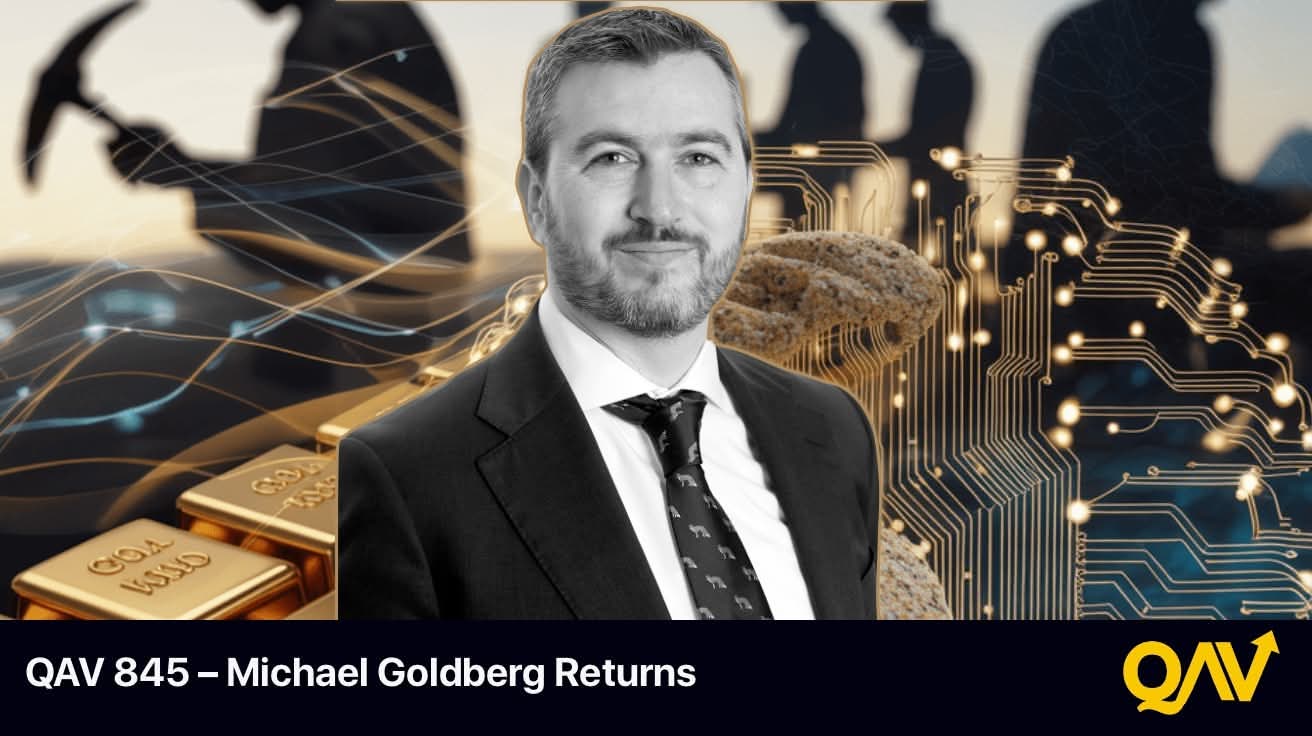
Michael Goldberg from Collins Street Asset Management returns to the show after three years. We dive deep into how value investing has fared through the turbulence of recent years — from post-COVID struggles to the renewed upswing of 2025. Michael discusses his firm’s 14%+ annual returns, the long-term patience required for undervalued stocks, and the surprising persistence of “cheap” companies that stayed cheap for years. We explore Astron Limited (ATR) and its rare earths project in Victoria, delve into mineral sands, gold funds, and the lifecycle of commodities, and tackle the hot topic of AI’s economic impact, from efficiency gains to workforce disruption. They finish with thoughts on Seven West Media’s merger, the AI-driven hype around the Magnificent Seven in the US, and how value investors can navigate an overheated tech market without losing their cool.
⸻
Timestamps
[00:00] – Introduction: Michael Goldberg — reflections on the last three years for Collins Street Asset Management.
[00:03] – Value investing through turbulence: comparing portfolios, dividend performance, and the impact of rising interest rates.
[00:04] – Discussion of Astron Limited (ASX: ATR) — mineral sands, rare earths, and US funding.
[00:08] – Gold Fund strategy: investing in cheap miners vs. speculating on gold price.
[00:15] – The role of AI in investing and business — hype vs. reality, and pattern recognition vs. creativity.
[00:17] – Seven West Media (ASX: SWM) and Sky Entertainment using AI for advertising and compliance.
[00:20] – Discussion of NextDC (ASX: NXT), Oracle (NYSE: ORCL), and Nvidia (NASDAQ: NVDA) — are AI infrastructure plays overvalued?
[00:28] – Deep dive on Seven West Media’s merger with SXL — valuation, synergies, and market multiples.
[00:30] – AI bubble in US markets and whether corrections will ripple into Australian equities.
[00:31] – Passive investing and Commonwealth Bank (ASX: CBA) dominance in institutional flows.
[00:34] – AI’s impact on employment: the “Great Freeze” and disappearing tech jobs.
[00:37] – Philosophical close: can AI be creative, or is it just remixing humanity’s dataset?
Transcription
Cameron: Welcome back to QAV, episode 845. We’re recording this on the 10th of November, 2025. Keeping with the 20 fives. The last time our guest was on this show was episode 525. 300 episodes ago, I guess. Uh, that was in July of 2022. Welcome back. Michael Goldberg from Collins Street Asset Management. How have the last three and, uh, change years been for you and Collins Street?
Michael, I.
Michael: Tony, thank you for having me back again. It’s always a blast to talk to you guys. three years has been an interesting time. I mean, certainly I think value investing struggled for a little while. We’ve, uh, we’ve, we’ve been able to. some really good returns. I think we’re still running at about 14% since we launched in 2016.
The last five years I think we’re running at about 14 and a half. So no complaints there, but it’s certainly been a bumpy ride and I think anyone who’s a value investor would probably say the same. How have you guys done,
Cameron: No,
Michael: your
Cameron: no.
Michael: last couple
Cameron: We had no,
Michael: No.
Cameron: we had no but [00:01:00] 2021 to 2023, uh, the couple of years there, you know, were tough. We really suffered and we thought it was just us. So I’m glad we should have had you on more often during that period so we could commiserate.
Michael: You, you guys are much more data driven, I think. I think you guys probably have more sophisticated tools for picking your stocks, but for me it’s, it’s been interesting and frustrating and equal parts, um, you know, ordinarily. Look again over the last year it’s been really, really good for us. But the couple of years before that, you know, it, it was, it was surprising how many stocks stayed in our portfolio for a long period of time.
You know, normally you have some sort of recycling going through, but I just found that the last four or five years, the stocks that were cheap five years ago were still cheap a year ago. Um, and that’s a strange and different sort of situation to be in. Um, but you know, our take is if they’re fundamentally good businesses, eventually the market will cotton on. The question is when’s he [00:02:00] eventually.
Cameron: Well, uh, I was just gonna say, our portfolio, the one that we run for the podcast that’s been running since 2019, now, I guess last five years, it’s just little bit less than 19% per annum.
Michael: Amazing.
Cameron: But nearly half of that is dividends, right? So 11.5% is capital return, the rest is dividends. But you know, that couple of years that I mentioned, like just COVID, post COVID was great.
2020 to 2021. Middle of that, soon as interest rates started to go up, it was basically beginning of 2022, interest rates started going up. Ukraine happened. And, uh, it, it was a rough couple of years, but, um, last year or so, it’s been great again, last 18 months, it’s really recovered quite well. Some of the portfolios that I started for our, uh, a program we started called QAV Lite in early 2022, were underwater for like a year and a half, two years.
It was, [00:03:00] it was miserable. And they’re all doing double market now. So, you know, they’ve, the last six months have boomed through, you know.
Michael: I think if you didn’t own Commonwealth Bank over the last coup over
Tony Kynaston: Hmm.
Michael: couple of years, you were pretty much outta luck.
Cameron: So, um, Michael, it’s been a couple of years as I mentioned since we had you on, and I was, we keep saying we should get Michael back on, but we were too. Too miserable. Uh, then I got your new, I got your newsletter, Rob’s newsletter that came out your September, 2025 quarterly report. And I know you, you mentioned artificial intelligence and I know Tony’s got a lot of questions for you, which we’ll get to in a second.
But before we get to that, you highlighted, uh, three companies. Astron Limited. Seven West Media and Hum. Group Limited. We’re quite familiar with Hum and seven. West Media got a question for you about them in a minute, but Astron hasn’t been on our buy list, but the last time you were on our show in 2022, [00:04:00] you mentioned Astron, A TR.
I think you, they might have been a new investment for you
Michael: That may
Cameron: then. Can, can you remind our audience about Astron, who they are and what they do? They’re a mining company, aren’t they?
Michael: are, they’re based out of an area called Donald, which is in, uh, which is in Country Victoria. They own probably the world’s largest undeveloped mineral sands mine, and they also have rare earths on that same tenement. Um, in terms of their progression, uh, the recent negotiations with the US have seen them get some very attractive funding from the us. would say in the last 12 months or so, the stock has probably gone up about 150%. They’ve actually had a split, which means that if you look at the share price, you might not be able to tell that. Um, but yeah, I mean, if, if they managed to get their mines up, their mineral sand project alone is enough to, is, is big enough to last for about 40 years they could produce as much as I think 10 years of global demand by themselves once they get it up.
So it’s, it’s quite a large mine. It’s got quite a lot of, uh, upside [00:05:00] potential. Um, and like I said, they’ve now got a US partner. They’ve now got financing, and so it looks like they’re moving towards getting beyond just the theoretical, um, decision making and potentially into, you know, finally after almost a generation, uh, developing the mine site, which would be very exciting.
Tony Kynaston: Do you, when you are assessing a company like that, do you follow the, or take a position on the underly commodity? Do you work out, is that in the doldrums? Is it doing well? Which I guess for mineral sands would be something like titanium dioxide.
Michael: Look, the, the mineral sands, um, are the sort of mineral sands that go into building tiles. It’s, uh, it’s, it’s not, not as exciting as perhaps some of the, uh, higher tech mineral sands or, or rare earths. Um. of their mineral sands that they have mined historically, they had previous mines, um, have been sold into the Chinese market, literally to make tool, uh,
Tony Kynaston: Hmm.
Michael: tiles or white or, um, would you call like porcelain goods.
The sort of things that go into making bathtubs and kitchens are what you’d use this brand or this, [00:06:00] this version of mineral sands for
Tony Kynaston: Right. But do you still,
Michael: right, the rarest are much more exciting. Um, but that’s, that’s, that’s, that’s not what they’ve focused on until now.
Tony Kynaston: but do you do any sort of analysis on the underlying commodity? Because you know, for example, uh, lithium stocks a few years ago were a huge boom and bust cycle, and you kinda like could see that coming and going in the commodity. Itself before you’re worried about the miners who are mining it. So do you take a position on whether your company that is going to do well because the, you know, the market for the underlying commodity is strong or weak, or where does that fit in?
Michael: I, think that if a commodity is doing exceptionally well, you do have to take a position, um, because otherwise it becomes difficult to work out what the value is. For something as boring as. As, as mineral sands, I don’t think it’s as necessary. Um, the mineral sands price has been pretty flat for an extended period of time. Um, they did a feasibility, a feasibility study 15 years ago, and they did another feasibility [00:07:00] study again a couple of years ago. And both times it showed, um, based on prevailing prices that they are very, very economic. And so there we didn’t have to take a a, a. Strong position on what we thought Mineral Standard was gonna do.
But to your point, um, you know, we, we were asked on several occasions if we were investing in lithium when the boom kicked off. And our take was, look, you know, there are certainly companies that are gonna make fabulous money out of it, but at this point we don’t know. You know, we can’t work out based on our assessment of demand and supply and, and what’s coming on in terms of production, whether, whether lithium’s expensive or whether it’s cheap.
But certainly it’s much more expensive than it was yesterday and the day before. Um, so I think if you are, if you’re investing in. Something that’s going through a boom. You have to have a strong position on what you think the genuine value of that commodity is. Um, but if you’re buying something that hasn’t experienced a boom like that and you can assess the project based on its economics, then I think it’s also important.
Tony Kynaston: And you, you do your, your company does take positions on commodity related themes too. ’cause I’ve seen special funds set up to take advantage of that. Hmm.
Michael: [00:08:00] I mean the, the, the probably our, our, our most, our most famous or infamous, uh, special situation, uh, special situation fund is our gold fund.
Tony Kynaston: Mm-hmm.
Michael: it about two years ago, and even then, at the time when we launched it, VAs, my business partner and I, we, we didn’t agree on everything. Um, which is not a surprise for anybody who’s met me in VAs. But, um, you know. Basically, VAs was very, very confident that the price of gold was gonna increase substantially from about the 1600 US dollars at the time. Um, I’m dumbing myself in here. I said I understand all the reasons for the, for why you think the tailwinds stack up. I understand demand and supply.
I understand there’s been a un under, under development of new projects. I understand, you know, that, that. If you look at gold as, as, as, as money, then if you’re, if you’re comparing it relative to, to, to, to regular currencies, that that, you know, there’s a lot of upside just based on the inflationary impact. But I said, I’m not comfortable investing in gold stocks based on speculation. I wanna be sure that if we’re buying gold stocks to get exposure to the gold story, buying [00:09:00] gold stocks that are. Cheap based on the current status quo. And so that’s what we did. We looked for companies that were, that were priced as if gold were, at the time, I don’t know, $800 or a thousand dollars, and we said, you know what?
Where the gold goes up or a little bit down, these companies ought to do quite well. Now of course, we’ve had the double tailwind that, um, gold prices have gone up and a lot of these companies, not all of these companies, but a lot of companies have seen a lot of excitement come into them. And so I think we’ve seen about 150% return. In about the two years that we’ve been launching the fund, that since we’ve launched the fund. Um, but yeah, they’re certainly helpful to have a view
Tony Kynaston: Yes.
Michael: but, uh, my preference is to not be reliant on higher prices of commodity to make money out of the equity investments.
Tony Kynaston: We, I don’t take special situations in the way you’ve just described it, but what I find is that by following our process, you look back and say, gee, I’ve bought a lot of gold miners in the last six months, and it becomes a, a theme anyway from the ground up rather than identifying the macro factors involved.
Michael: I, you know what? I [00:10:00] agree, Tony. I mean that, that’s, that’s how this actual fund came about. We’re not out there looking to launch new funds. You know, VAs and I are investors. We love businesses, we love valuations, we love funding opportunities. when we find an idea through our broader research that either doesn’t fit, mandate, or goes a bit too far, um, for our flagship then we’ll launch something to give us, you know, special exposure.
So we, we had, we’ve got a little bit less now, but at the time when we launched the, the, uh, the gold gold fund, we already had. ish percent exposure to gold companies in our flagship company.
Tony Kynaston: Right.
Michael: but we both wanted more, but we didn’t think it was appropriate to have more than 30% in what’s supposed to be a diversified portfolio.
And so at that point we, we said, well, why don’t we just launch a new fund? We flagged the idea with some investors and they were all on board, and so we launched it and thank God we’ve done very.
Tony Kynaston: And is that, and, and I think the other thing about the special situation funds, which I find interesting, is are not intending to keep that open forever. It’s going to have a, a life cycle and end at some stage.
Michael: Yeah. So, so the, the, the way we structure [00:11:00] them is that number one, they’re, they’ve got a life cycle, they’ve got a maturity date, and number two, they’re closed. And we do that for two reasons, number one. I think investors in general tend to stress when they see volatility. And if you’re investing in a single commodity, good chance you’re gonna see some volatility.
So if we give ourselves a three or four year time horizon, we can see our way through that volatility and get towards the positive outcomes. Um. So that’s why it’s a closed ended fund. And in terms of timeframes, if you, if, if you’re investing in a single type of idea, there’s no, there’s no single idea that I’m aware of in the history of the world that has been value forever.
Things
Tony Kynaston: Hmm.
Michael: and things become expensive, and at some point you’re gonna want to exit. So we think that, you know, for these sorts of things, for these sorts of, uh, cyclical thematics. Four-ish years is probably about right. That gives you enough time to see the results. Um, and then if people wanna stick around afterwards, they’re welcome to stick around afterwards.
If people wanna get out, then we give them the opportunity to get out.
Tony Kynaston: So the fund might keep going, but you’ll, [00:12:00] you’ll allow redemptions after a certain date. Is that how it works?
Michael: Yeah, that’s the way it works. Um, we also, often with these sorts of things, we’ll have a. Capital returns along the journey.
Tony Kynaston: Hmm.
Michael: we launched this particular fund, the Gold Fund, about two years ago with the intended, it should last about four years.
Tony Kynaston: Mm-hmm.
Michael: I said, some spectacular returns in the first couple of years, and so we actually returned, um, about 78 cents on every dollar that people had already invested, that people
Tony Kynaston: Hmm.
Michael: invested.
We were returned back to clients, uh, couple months ago, so they’ve still got. I don’t know, a dollar 50, a dollar 70, I think it’s probably a dollar, $70, 75 for every dollar they invested, and they’ve also got 78 cents back. So,
Tony Kynaston: that’s like a PE of 1.3.
Michael: Uh, so yeah, look, I mean, I think people like getting their capital back. I think it improves your IRRs. Um, and if people wanna reinvest it, then we, we gave that opportunity to people who did wanna reinvest. But we thought, you know, given, given that people had come into this fund with an idea of how much risk they wanted to take, [00:13:00] given that they’ve now got much more exposure.
’cause, ’cause the, the fund had done so well, we gave people the opportunity to take that off the table.
Tony Kynaston: So, so given you watch the sector quite closely because of that fund, what’s your view on the lifecycle of gold? When, when do you start exiting positions yourself?
Michael: Tough questions Look, I mean, you can pick arbitrary numbers. You can say, oh, if the, if, if the portfolio goes up more the next percent. Or you can pick an arbitrary number in terms of what gold prices are in a particular currency. Um, there’s, there’s as much, there’s as much, um, art as there is science.
I think in my view at least. I think the point at which I’ll get genuinely concerned that we’ve hit the peak of the cycle is the point at which. listed companies are predicting higher gold prices in their valuation. So at the
Tony Kynaston: Right.
Michael: granted that gold prices fit 4,000, I think if you look across most of the gold stocks on the ASX, most of them, their earnings or the, or the, or their, or the unit price is predicting gold price well below 3000. I think [00:14:00] that’s probably quite usual, um, for when a, for when a, a commodity is becoming hot. I think when a commodity has become hot. And perhaps too hot, you’ll start to see the market predicting $5,000 gold price when the gold price is 4,000. And at that point I’d be very, very concerned, but I don’t think that we’re there yet.
Tony Kynaston: I’ve seen a, I’ve noticed a couple of miners. I can’t recall which ones, so possibly not ones that I own. They’ve started to go un hedged, which is kind of like what you are saying. Just saying we think the gold price is going higher.
Michael: Yeah,
Tony Kynaston: Hmm.
Michael: I, I think we’ve seen that probably for a couple of years. Um. Yeah, look, it, it’s, it’s hard to know. You can say either they are insiders who know the market better than
Tony Kynaston: Mm-hmm.
Michael: we should listen to them. Or you can say they’re insiders. And insiders often make terrible decisions at, uh, at peaks and troughs, and so we shouldn’t listen to them. It’s take your pick
Tony Kynaston: Okay.
Cameron: Don’t get high on your own supply, as Scarface said, or somebody said in Scarface. Yeah.
Tony Kynaston: Hmm. And speaking of situations, your latest quarterly report, uh, went into AI in depth. So, [00:15:00] and I guess from a value perspective, what, what are your takes on the whole AI bubble circular economy or, you know, next, next horizon for mankind that’s going on at the moment?
Michael: I, I think that AI is a fascinating, um, conversation. Uh, but I think that people get carried away a little bit when they start talking about it as if AI was actually artificial intelligence rather than just a tool that is really good at collating reading, assessing data, recognizing patterns, and then feeding you back best practices or, or, or consensus feedback. Um, I, I, I think that. What’s his names? Uh, Sunday Pache, CEO of Google said that he thinks that AI will be as revolutionary as fire and electricity. I think it’s probably right. Um, I forget who I saw it source from, but I, I recall reading, um, somewhere that, uh, they were comparing AI to
Tony Kynaston: [00:16:00] Mm-hmm.
Michael: not, not that it by itself necessarily. Um. I mean, it by itself will add tremendous value. But the, you know, the, where we’ll add the most value is, is, is how it drives new economies, how it drives new outcomes, how it drives new efficiencies. And so what comes out of AI is, I think, gonna be much more interesting from an investment perspective and from a, from a wellbeing perspective and from a humanity perspective than the AI by itself, which at the moment I think is really just a really, really good algorithm. That might be a bit simple, but that, that’s where I see it at the moment. I.
Tony Kynaston: How, what’s your take on the fact that every time I open an annual report this year, it’s got AI somewhere in the paragraphs? I mean, is it, are we too early to see any sort of benefits in the general run of the mill company, or is it coming or, or what’s your take on that?
Michael: Look, I, I, I think it’s certainly coming and, and you know, Cameron, I think you mentioned that we wrote a bit. We wrote about some of the companies, um, in our quarterly report, seven West, obviously the media, the media space that would be crazy not to use all the data they’ve been collect, collating through their online, um, through their online [00:17:00] offerings to better target advertisement.
Now, again, in the olden days, you might’ve, you know, you might’ve said that was an algorithm. Nowadays you can, you can use AI to grab such massive Mabb, such massive chunks of data that you can get better outcomes and better tailor make, um, your, your, your targeted, your targeted, uh, advertising. Um. You know, we, we mentioned in our quarter report that we had some exposure to, to, to, to sky entertainment. So, you know, sky Entertainment assesses, gambler behavior to identify problem gambling so that they can, they can be in line with, uh, with regulatory expectations and cut it off. necessary. I, I think that AI is going to play a part, um, in everybody’s life going forward. Um, and I think it’s inevitable.
I think it’s inevitable in much in, in much same way that the Industrial Revolution changed the way we went about our day-to-day lives. I think to some extent this will have a similar impact. Um, now that can be scary, certainly. In some regards. Um, but it can also be very exciting to [00:18:00] think, you know, what the world would look like going forwards given these massive efficiencies.
And these, the, the ability to cheaply implement best practices for every mom and dad, you know, shop on every corner. Um, it’s, it’s a fabulous, fabulous tool if used properly. And I think
Tony Kynaston: So
Michael: if you wanna keep up.
Tony Kynaston: are, are you therefore ascribing an extra value to seven West Media or Sky Um, because they’ve got the ability to use data or, or you know, where does it fit into your valuation model?
Michael: There, there’s no specific part of our valuation model that relies on or has an expectation that a, a AI should play a part. Uh, that being said, I think that any company that does not implement AI in some way in their business model, they’re going to be left behind. Um, I, I, I, I suppose your question is, if it’s adding efficiencies, can we predict better earnings going forward than what
Tony Kynaston: Hmm.
Michael: seen in the past? I don’t know. I, I don’t know, because I suspect that. If you are [00:19:00] doing it, if you are trying to drive efficiencies, but all of your competitors are also trying to die of efficiencies. It may be a a, a net zero sum game. Um,
Tony Kynaston: a cost.
Michael: or, or, or potentially cost. Again, I, I dunno that AI is that expensive. Um, I think a lot of these companies are already paying for data, um, and I’m not sure that AI is necessarily gonna add a substantial cost in the long run.
In the early, in the early. Perhaps now it will add value, um, at a cost at some point. I think it’ll be widget ized or commoditized. Um, so that it’s expected that everybody should use it and it probably won’t add a tremendous amount of value. I mean, it’s, it’s, it’s really the same thing with the Nvidia of the world, the Nvidia and the um, the Oracles and the snowflakes.
And locally you’ve got companies like, um, next DC and a all of those guys. Have quite by accident, benefited tremendously from, from, from, from the, from the ramp up of ai. Um, and they’ve definitely got a first mover [00:20:00] advantage. But at some point, um, you know, even amongst the AI providers, you know, if you look at, if you look at, uh, ChatGPT or you look at perplexity, or you look at any of the other ones, they might have a. Mover advantage, but eventually it feels to me like it’s gonna become somewhat commoditized. So yes, definitely first mover advantage. Yes, definitely. If you’re an early adapter, uh, adopter rather, you’ve probably got some advantage, but eventually I think it’ll become an expectation.
Tony Kynaston: It’s like a hygiene factor for just being in business really, isn’t it?
Michael: Yeah, I mean, I think so. And you’d be mad not to try and take advantage.
Tony Kynaston: Yeah, sure. So, you know, you mentioned sort of unintended consequences or secondary consequences there. What about on the economic side? Are you, are you envisaging any sort of, uh, dislocation because of unemployment? For example, when AI becomes widespread?
Michael: That’s a good question, Tony, and we’re actually talking about it at lunch on Friday. We had a a, a, you know, in our office we have lunch together every Friday and we talk about, the rule is no work talk, but sometimes we get into tangential work related stuff and we’re talking about AI this, this past week.
[00:21:00] And I think the challenge, anytime you’re experiencing change is it’s very, very easy to recognize and identify what the cost is and what you’re going to lose. It’s very, very hard to identify what the benefits are gonna be. And I found myself thinking, um, you know, if, if, if we compare ourselves to, you know, my grandparents era, the, the era that came out of World War II and, and set up and, and rebuild our lives here, and I think of my grandparents and, and, and wonder what would my grandmother have thought when, when, you know, she, she worked in what we would call today a sweat shop. Um, doing sewing for, for locally made, you know, dresses and. Jumpers and whatever it was. What would she have thought at the time when we, when we experienced some serious globalization and those sorts of roles went overseas, she would’ve probably been frightened out of her mind and, you know, concerned for what the future would look like.
But if you fast forward now with the benefit of hindsight, you know, the way that our grandparents and our great-grandparents lived compared to where we are today, it’s incomparable. It’s incomparable how
Tony Kynaston: Hmm.
Michael: off [00:22:00] we are today, even given all of that change. And I think we’ll probably find the same thing, you know. I we’ll find that it’s scary to make a transition. I’m sure the people who, uh, made saddles for horses, and I’m sure the people who are the town expert at building horse drawn carriages were very, very frightened when cars came about, when the combustion engine was used in, in automobiles. But I think if you look at the, the wider world, no one’s going to argue we aren’t better off.
And I think the same will probably happen with ai. Will there be some turbulence while we go through the, the, that that teething period? have no doubt what that will look like. I have no clue. But I’m sure that when we get to the other side with the efficiencies that this sort of data assessing tool can do, um, I think we’ll all be better off for it.
Tony Kynaston: So, so the
Michael: either that or the machines will control the world.
Tony Kynaston: So do you see AI as, as, as kind of like just a, a, a fifth gear on data usage, or do you see it as being. You know, the, the super intelligence that [00:23:00] blasts our to do things ourselves outta the water,
Michael: I.
I, don’t know if, I don’t know enough to not know, but
Tony Kynaston: right?
Michael: of AI is that it consumes a tremendous amount of data and that it finds patterns. So for, for, for example, for example. When you go shopping on Amazon and you buy meat pies the bottom, it will say, people who bought meat pies also bought sausage rolls and tomato sauce. Now, the AI might not know why you’d buy tomato sauce with your meat pie, but it recognizes the pattern and it calls it out, right? Ai, as far as I understand, doesn’t create anything new. So for example, if you asked ai, back to my analogy about, uh, about, uh. Horse-drawn carts. If you asked AI back in the day, how do I improve my, my, my manufacturing of horse-drawn carts, it would give you best practices for how to make and sell horse-drawn carts.
It would not suggest that you invent the combustion [00:24:00] engine and. into, into a car. If you, if in the, in the, in the 1990s, I think it was 1990s, if, uh, if you asked AI to help you build a better phone, it would’ve built you a Nokia that was indestructible and waterproof and would never break, and perhaps a better battery.
It would not have created for you a Blackberry or ultimately an iPhone. So, so I, I think, I think it’s important to recognize that while AI at the moment at least mimics. Human behavior very, very well. It’s not actually creative, you know, I was talking about again, Friday lunchtime, we were talking about mimicking, um, you know, mimicking looks like reality. And, um, Andrew, who you met earlier, who’s a bigger music aficionado, he said, Michael, do you remember the Band Rock set from the 1980s? 1990s? Yeah. Yeah. Joy Ride. Dangerous. You know, enjoyed it as a youngster. He’s like, he said, he. read somewhere in an article that at the time they were recording [00:25:00] their early albums, they didn’t actually speak English. And so instead they would transliterate their songs into Swedish and they would sing it in Swedish with the words coming out being English words. And that’s a bit like how I imagine ai. AI might sound intelligent. AI might be able to produce things that seem intelligent, but ultimately it’s transliterating.
Ultimately, it doesn’t really understand what it’s saying. It’s just identifying patterns and sharing them back with us. And again, pattern recognition. It’s fabulous and important and adds, you know, adds tremendous amount of value. But it’s important to distinguish between pattern recognition and creativity.
I think certainly in my understanding of where AI is at at the moment, it’s not creating, it’s just recognizing.
Tony Kynaston: Yeah, interest. Interesting. We can probably talk for hours on the philosophy of all this.
Cameron: I’m, I’m deliberately, I’m deliberately not entering this conversation. Yeah,
Tony Kynaston: whether to invite you in. I’m just gonna ask one more question then I can invite you in Cam.
Cameron: no,
Tony Kynaston: back to markets, what. the, the can, I dunno if we recorded those statute you had before about the growth [00:26:00] of the US market and how much was attributed to but a large amount of the growth in the US market is attributed to
Cameron: I’ve got the.
Tony Kynaston: do you think happens when you know the, that comes off its peak? Does it flow through to the Australian market? And do you foresee any positioning you might do to mitigate that when that happens?
Michael: I’m not sure because is your question. Assuming that AI related companies are expensive, what happens when they correct or are you
Tony Kynaston: Yes.
Michael: and its effect on broader markets
Tony Kynaston: No, the first one. Okay.
Michael: look, I mean, there’s no question that the Australian market is impacted by by US markets even, even when we shouldn’t be, we tend to be, and so if you see a big pullback in, in, in those stocks, especially the ones. That are tangentially into ai, the Magnificent seven. None of them are directly ai. In fact, I don’t think there’s an AI company that is uh, a pure play AI company that’s listed, but certainly they’ve gotten a lot of their growth and a lot of their hype off of [00:27:00] jumping on the AI bandwagon. If they come back, it’ll impact the broader US markets, and that’ll certainly impact us as well in terms of protecting ourselves from it. I dunno what you do except for investing in good quality companies that are absurdly cheap.
Tony Kynaston: wouldn’t, for example, start buying government bonds when you think things are very overvalued in the us
Michael: That’s an easy question for me ’cause that’s outside of my mandate. You know,
Tony Kynaston: right.
Michael: us to give them their equity exposure. And so that’s what
Tony Kynaston: Mm-hmm.
Michael: is. Um, I think that if we fled to government bonds every time something made us nervous. Um, we launched this business in 2016. We would’ve been in government bonds since 2017 and missed out in fabulous return since then. So I, I think, I think you have to temper your expectations and also you have
Tony Kynaston: Mm-hmm.
Michael: temper, your concerns. Um. know, I think things are never quite as good as they might seem at first, but things are also never quite as bad as they might seem at first.
Tony Kynaston: No, fair enough. I agree. Cam, can I invite you in to talk about AI for a sec?
Cameron: No, that’s a really bad idea. We’ll, we’ll never, we’ll never get outta here if I do that. Well, I I did have a [00:28:00] question though. Um, talking about Seven West Media a few weeks ago, Michael, we had Gabrielle Radzinsky from Send On Capital on the show talking about the Seven West merger with um, SXL, uh, which he is an activist against, uh, as an investor.
He doesn’t like the sound of it. As an investor in Seven West Media yourself, what do you think about the merger?
Michael: The only case I can make for it is that if seven West can get the, uh, PE multiple, um. Through the merger, then it’s worthwhile. But on the numbers, it seems to me that this should have been 60 40 in favor of, uh, seven West at the least. but again, it, it, it doesn’t matter what I think it matters what’s gonna go ahead and what’s gonna happen. Um, I think there are certainly synergies for, for a combined company for sure. You take, you take competitors outta the market, then you can improve your margins. I don’t like it. Um, I’m not sure there’s a ton we can do about it. I’m hopeful that we’ll see a re-rating from seven, which is currently trading on some [00:29:00] ridiculous multiple, like three and a half, four times.
So if all they get is a PE re-rating through the merger, then maybe it’s worth it. But yeah, no, when I first saw the, saw the proposal, I was not too pleased be as diplomatic as I can possibly be.
Tony Kynaston: Did you, um, did you see it was the Channel nine results last week that came out and said their commercial TV revenue was down something like 18% for the last quarter, I think.
Michael: I, I didn’t say that, but I did see seven say that the market had softened.
Tony Kynaston: Oh, it was seven. Was it okay? I could, I could have that wrong. Sorry. Yep.
Michael: No, it, it could be. You’re right. I, I saw the seven, I saw an announcement from seven, but it could be that you’re right about nine as well. We actually were wondering whether, whether nine would come in and eat seven’s lunch in terms of this
Tony Kynaston: Mm.
Michael: uh.
I, I dunno that I’d say we’re hopeful that they would, but, um, surprised that it hasn’t happened yet, I suppose is fair.
Tony Kynaston: Yeah, fair enough. Um, back, back onto the ai, I guess. And its effect on the market. We, as, as you know, we, we run a US show with [00:30:00] its own portfolio that tracks our, our buys and sells and, uh, it’s, it’s doing at at least market for, for a while there it was doing three times the market, without having any AI stocks in it and Mag seven stocks in It seems to me that. If all the money gravitates to the AI stocks, it does create value opportunities and some pretty good companies in the rest of the market. Are you starting to see that over there or even in Australia to a certain extent.
Michael: Yeah, look, I’m not sure that we’ve seen it in Australia. I think as far as. quite different, um, in, in terms of how the market’s behaved. I think in America, you, you, you have certainly seen that you’ve seen the magnificent seven take a tremendous amount of attention and capital flows, and we have found that, that there is a, a, a massive pool of undervalued and I suppose. research stocks in the US and in the global markets. Our focus here, um, is the Aussie markets, but as part of our research, we do look globally and who knows, you [00:31:00] know, there’s a decent chance at some point in the future we will launch a global fund as well. Um. But I think it’s, it’s, I, I think you’re right.
I think it’s, it’s undeniable that when you get a tremendous amount of hype in one particular sector, it sucks away capital from other sectors. Um, and creates almost a, uh, a, a two, a two pace market where, where all of a sudden you’re, you’re being forced if you want to get exposure to Nvidia to pay 50 times earnings. Whereas, you know, if you can identify a manufacturing company on single times, multiples, uh. Yet, it can’t win. It can’t, it can’t find a bit in the broader market. So yes, I agree with you. I think, I think we saw that to some extent. Um, think locally with so much of the cash flows, the institutional cash flows, going to companies like Commonwealth Bank, um, for such a long time, and also the top 20 in general,
Tony Kynaston: Hmm.
Michael: you’ve seen our small and mid cap market completely ignored for a long, long time.
I think that’s slowly starting to reverse a little bit now. Um, and I think you see the same thing in the US markets.
Tony Kynaston: In, in the Australian sense, that also [00:32:00] exacerbated a bit because, uh, of index investing, so they’re forced to CommBank and the brokers who were, or the fund managers who were covering small caps in particular have been hollowed out and not just not there now.
Michael: I’d like to say yes, Tony, but I don’t think it’s quite so simple and, and the reason I say that is because it was just index buying, you would see all of the top. which I think represent about 60% of the ASX 200 all moving up in tandem. And we didn’t see that. Um, BHP has been pretty much flat. Um, CSL has done quite poorly.
Um, I’m not even sure if it’s in the top five anymore. It’s probably close. Um, whereas Commonwealth Bank, we’re doing fabulously. Well, I think it’s, I think it’s a combination of two things. I think it’s number one. There’s been a massive flow of passive investing through the ETFs, and I think that has impacted the top 20 for sure. Um, but I think a company like, like, um, Commonwealth Bank, like Commonwealth Bank in particular, is especially attractive for the institutions looking to park money, where they [00:33:00] need liquidity and they can feel safe having invested in what feels like a safe stock. Um. I think beyond just the index investing, I think Commonwealth, Commonwealth Bank benefited from Indus, sorry, from institutional flows, looking for somewhere where they can get some, um, some liquidity in the Aussie markets.
Tony Kynaston: Yeah, right. Cam, I think I’ve gone through my list of questions. Do you have anything to add for Michael? Yes.
Cameron: No, I guess we’ve covered everything that I wanted to talk about. Um, I did, just talking about the AI stuff though, I did have a news item today. I, I have mentioned, I’m not sure if it was on our US show, but um, on one of my shows, uh, recently that Jerome Powell, when he put out his latest jobs report, said that there’s, uh, a big freeze on hiring.
In the US, they’re calling it the Great Freeze. A lot of companies are just not hiring university [00:34:00] graduates because they expect AI to be able to do their jobs in the next couple of years. And I just saw this morning the Department of Industry Science and Resources reported that tech employment in Australia dropped by over 30,000 roles in FY 25, reducing the tech workforce to 949,000, the first decline since 2020.
And again. AI taking these jobs is the main reason that’s being given. So, you know, we, we have, um, been waiting to see job losses credited to AI taking people’s jobs. Haven’t seen a lot of that in this country yet, but we are seeing companies saying, well, we’re not gonna bother hiring people because we assume that AI is gonna be able to step in and fill that role.
And I find it difficult. You know, we, you were talking about saddle manufacturers and, uh, your grandmother, um, and those jobs for the [00:35:00] last couple of years. I do a, a show called the Futuristic, where we, we look at all of this stuff each week. We look at AI and robotics mostly the challenge that I have when thinking about, um, the next 10 years is trying to figure out what jobs.
Will be available that AI and robots won’t be able to do better than a human. I’ve spent a couple of years trying to figure that out because you know, in every tech revolution that we’ve had since the industrial revolution, the new technology has wiped out some jobs, but replaced it with other jobs. But we’re moving into this era where it’s very hard to work out what the jobs are that aren’t gonna be able to be done better, faster, cheaper.
With the combination of AI and humanoid robots. So I am a little bit concerned about kids going to university right now, uh, what the job market is gonna look like [00:36:00] for them when they get out in the next few years, and the impact that’s gonna have on a whole generation of 18 to 23 year olds, you know.
Michael: No, Cameron. I agree. I think it’s gonna be most tough for the junior workforce. I think. I think people are looking for the first job. Even if, if, I mean, I imagine in white collar rolls like accounting C and, and, and in law, a lot of the jobs that you would give a first year uni, um,
Cameron: Hmm.
Michael: the, the
Cameron: Coding.
Michael: you, pardon me.
Cameron: Hmm. Oh, so coding, just tech jobs obviously is the first to go
Michael: All, all sorts of
Cameron: journalism.
Michael: yeah.
Cameron: Hmm.
Michael: of things that you would get your junior, you know, associate to, to, to run down information or look up case studies or, or, you know, run down some paperwork. All that sort of stuff is gonna be by, um, managed by ai. Perhaps you’ll need, you know, one. One employee, um, overseeing, you know, an AI machine that can do the job of five or 10. Um, I, I wonder how quickly it’s gonna impact established [00:37:00] roles. I, I wonder how much value there is in creativity and recognizing outside of patterns. Again, I, I, I think. I think AI is exceptional at identifying, um, status quo and patterns and, and, and what works normally. I think there’s still, I think there’s still a space for humanity, hopefully, um, in identifying things that are outside of the norm. Um. Opportunities that, that, that stand out because they are not standard. Um, and, and I think you’ll find, I think you’ll find that in professional services, there’ll be a place for that sort of thinking for some time.
But ultimately, you know, as I, as AI gets smarter and as it’s, you know, as it’s database grows, um, I think making a distinction between. Human enterprise and AI enterprise will become increasingly difficult. My my worry or wonder is if [00:38:00] AI is drawing from this massive data set we call the worldwide web, which is essentially all of humanity’s best efforts. Um, saved. Saved in the cloud. What happens at some point in the future where they’re drawing from the dataset that is majority ai, um, created? Is it like the snake eating its own tail? Is it going to create all sorts of unintended consequences? I don’t know, but that seems like a problem for another day. I.
Cameron: They call it the, the dead internet theory. It’s, uh, the internet is being produced by, it’s already happening. Something like 50% of the content on the internet now has been produced by ai, not by humans. So we’re already starting to see the, is it Ura? Boro
Tony Kynaston: Ords.
Cameron: the snake Ro yeah. The snake eating its own tail.
Michael: Saying, I
Cameron: Yeah.
Michael: worry about it now. Cameron,
Cameron: No, well worry. It’s a, it’s a bit like the seven West merger. Um, it’s gonna happen.
Michael: you can do, right?
Tony Kynaston: Yeah.
Cameron: This no budget, like [00:39:00] it’s, and it’s also my perspective about the, uh, the collapse of the Mag seven or the potential collapse of the AI market. Yeah. What Tony’s taught me over the last six years from an investing perspective is we deal with reality when it happens.
We don’t prognosticate, we don’t have a crystal ball. We just deal with it the best we can as it happens, right. So,
Michael: Yeah,
Tony Kynaston: You play the cards
Cameron: no.
Michael: yeah, prognostication is where the most fun conversations happen. But if
Tony Kynaston: it is, yeah.
Michael: money and we’re talking about living our lives, you’ve gotta deal with what’s in front of you today.
Tony Kynaston: Correct.
Cameron: Yeah.
that’s all you can do.
Tony Kynaston: Yeah.
Cameron: Well, Michael, I think that’s all we have for you. Thanks so much. Congratulations on the continued success of Collins Street Asset Management and, uh, hope it’s not three years before we get back on. We’ll have to get you back on for another update in a year or so.
Michael: And Tony, always thrilled to hang out with you guys.
Tony Kynaston: Michael. Good to see you again.
Cameron: Cheers, Michael.
Bernard: Q A V is a checklist-based system of value investing developed by Tony Khyneston. over 25 years. To learn more about how it [00:40:00] works and how you can learn the system, visit our website, Q A V Podcast dot com dot A U.
This podcast is an information provider and in giving you product information we are not making any suggestion or recommendation about a particular product. The information has been prepared without taking into account your individual investment objectives, financial circumstances or needs. Before you decide whether or not to acquire a particular financial product you should assess whether it is appropriate for you in the light of your own personal circumstances, having regard to your own objectives, financial situation and needs. You may wish to obtain financial advice from a suitably qualified adviser before making any decision to acquire a financial product. Please note that all information about performance returns is historical. Past performance should not be relied upon as an indicator of future performance; unit prices and the value of your [00:41:00] investment may fall as well as rise. The results are general advice only and not personal product advice.
Transparency is important to us. We will always be very open and honest about the stocks we own. We will also always give our audience advance notice when we intend to buy or sell a stock that we are going to talk about on the podcast. This is so we can never be accused of pumping a stock to our own advantage. If we talk about a stock we currently own, we will make it known that we own it.
This email is authorised by Anthony Khyneston. Authorised Representative Number zero zero 1 2 9 2 7 1 8 of M F & Co. Asset Management Proprietary Limited (A F S L five 2 zero 4 4 2). No part of this content may be reproduced in any form without the prior consent of Spacecraft Publishing.
Quote of the day: “Hope of gain Lessens pain.” “Poor Richard’s Almanack”, Benjamin Franklin