
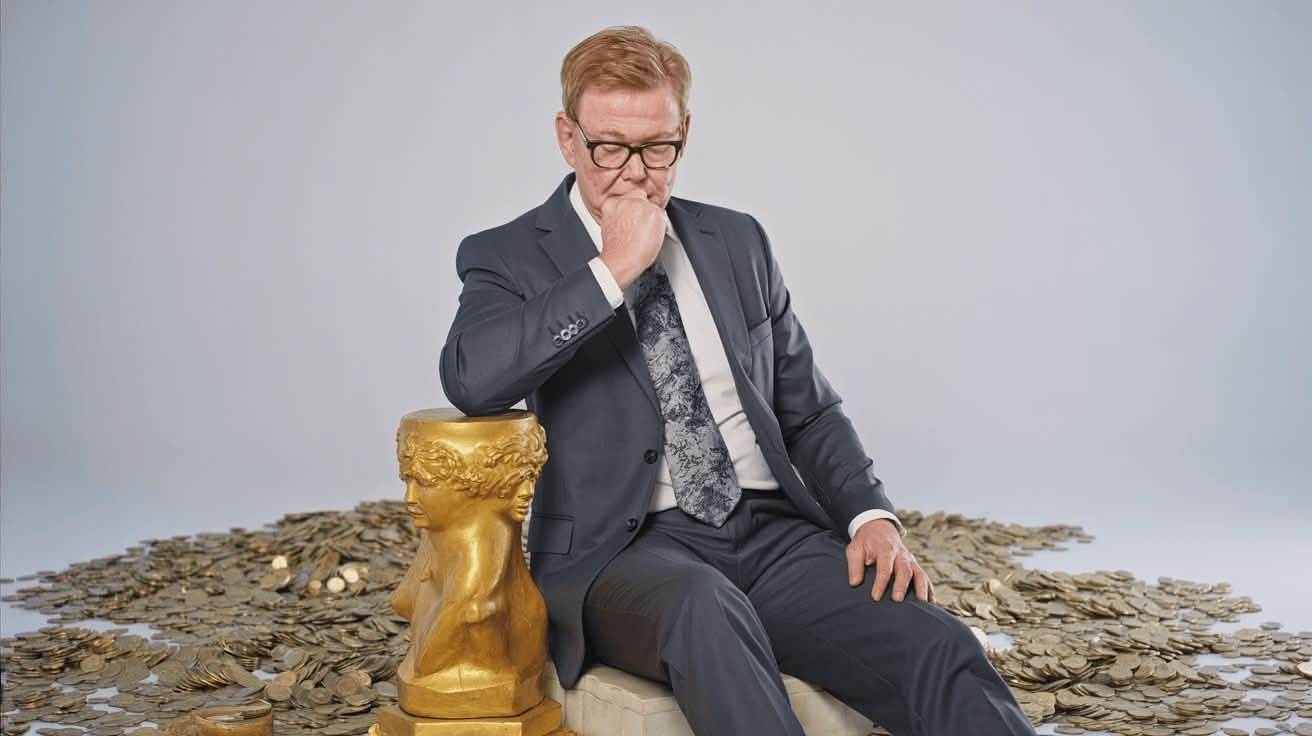
In episode 831 of QAV Australia, Cameron and Tony go into detailed discussions on Beach Energy (BPT), Plenti Group (PLT), Motorcycle Holdings (MTO). They explore the state of gold and commodity sell rules, and whether young people are truly worse off than boomers. Tony wraps up with a deep dive Pulled Pork on Vault Minerals (VAU), while Cam gets philosophical about AI and Epicurean physics with a touch of Lucretius. It’s a jam-packed episode full of insights, laughs, and sharp investing commentary.
This week’s episode is for QAV Club members only. You can listen to one of our free episodes by clicking the below link and opening up our pages on Apple Podcasts or Spotify or watch clips on TikTok. Or visit our homepage to learn more about QAV and how it works as a value investing system that you can learn and apply to beat the market.
Transcription
Cameron: Welcome back to QAV Australia.
Tony Kynaston: Let’s be hardcore focused on the share market care.
Cameron: not as fun as talking about kung fu. this is, uh, we’re recording this on the 5th of August, 2025. I can’t find my notes, so I can’t even say what episode 8, 8 31, I think it is. Eight 30. Yes. 8 31. Uh, how have you been? Tony, how’s your week been?
What’s
Tony Kynaston: Good. Not much news. Played a lot of golf. The weather’s turning for the better. It’s, it’s not temperature wise, it’s not feeling like winter’s gone, but it, we’ve had a, a week of sunny days, so I played, uh, four games of golf this week, which has been fantastic.
Cameron: How’s the
Tony Kynaston: Back’s holding up. Yeah. Um, been doing the gym work all through winter, so, uh, yeah, so far, so good.
Yeah.
Cameron: go. Well, you can tell me more about that and after hours. Tony, let’s get into the, uh, let’s get into some news and some questions. We’ve got a couple of questions this week, which is nice for a
Tony Kynaston: It’s great. Thanks for those.
Cameron: I wanna apologize. [00:01:00] I wanna apologize to all our club members. I screwed up the buy list yesterday.
Um, because I wrote a clever little macro. It was the simplest, silliest thing when I’m doing, when I’m compiling it all, I need to just filter one page. You know, I need to filter by prop, uh, not filter by, um, um, QAV score and, and, and, you know, stack rank and by QAV score and filter out certain ADTs and those with qualified audits.
And I thought, I’ll just write a, I’m sick of like going filter, filter, filter. I’ll just write a little macro that’ll just like do it all. And I hit the Mabb, wrote the macro, ran the macro, took it, blah, blah, blah. Turns out there was something in the macro that shouldn’t have been there that pasted a whole bunch of data in.
So it, uh. And I should have known because the final list had a bunch of new stocks in it. And I, and I always think if there’s a bunch of new stocks you haven’t seen before, that’s usually a sign that something’s gone wrong. So I went and checked a couple of them and they looked okay. I was like, eh, eh, okay, maybe it’s okay, but wasn’t.
[00:02:00] Thank you to Daniel, one of our club members for emailing me last night and saying, eh, I think that’s right. So anyway, I put out a new version. If you haven’t got the new version, go to the link in the email or the blog posts or the Facebook or the whatevers and get the latest version. Um, moving right along, BPT, Tony, uh, we talked a little bit about this, uh, I think in the American show last week.
I’m not sure if we covered it in the Australian show ’cause I added it to my notes. But, um, BPT has become a three point trend line sell and. No,
Tony Kynaston: better.
Cameron: not today.
Tony Kynaston: Mm-hmm.
Cameron: Uh, okay. Well it was
Tony Kynaston: Yeah, it was
Cameron: point.
Tony Kynaston: last week.
Cameron: Um, damnit. I wanted to ask you about, oh yeah, it’s just above it. I, wanted to clarify this with you because we did have a [00:03:00] conversation about selling certain companies because they’re big and maybe we just hold ’em once they come on the list.
Uh, but I think you said BP t’s not big enough. Is that right?
Tony Kynaston: Well, yeah, two things. I mean, that was just amusing. I haven’t sort of come to a conclusion on whether we should hold large cap stocks. But anyway, BPT wouldn’t be big enough. It’s market cap is. What’s that? 2.7 billion? Yeah,
Cameron: not
Tony Kynaston: no. Well,
Cameron: No.
Tony Kynaston: I mean, I was thinking about CBA and Macquarie group in particular. Um, and perhaps JB HiFi, which I looked up JB Hi FI’s market cap, which is 12.6 currently, but it has doubled in value.
Um, so it’s was probably about 6 billion when I was thinking about holding it despite the cell line. But look, I haven’t decided whether to do that or not yet. Um,
Cameron: Just
Tony Kynaston: just amusing. Yeah, I keep putting the, [00:04:00] I keep, I keep throwing these things out into the universe and the podcast and the hope that someone out there is going, Hey, I’ve, I, I got an opinion on that, or I’ve got some data on that, but, uh, it’s not happening.
Cameron: Right, right. Uh, okay. Amusing not a a, a space musing.
Tony Kynaston: I have a theory.
Cameron: it’s just
Tony Kynaston: My theory is by a elk. That’s, that’s an A, not a elk.
Cameron: I. Is this a
Tony Kynaston: It is theory on dinosaurs.
Cameron: sounded like you’re doing your Eric, your Eric
Tony Kynaston: Yes. There little, little at one end. Big in the middle and little at the other end. And that’s my theory. It is. That’s mine by aal.
Cameron: actually sounds a little bit goonies, that
Tony Kynaston: Oh, okay. Yeah. No, it’s uh, I think it’s cli actually. Hmm.
Cameron: Right. Yes. Moving right along. Uh, I did [00:05:00] have to sell something from the dummy portfolio in a live portfolio last week. Boom. Logistics ball, BOLI had to sell and I haven’t replaced it yet ’cause I haven’t found anything big enough that, uh, has reported or has a sort of reporting period.
’cause we’re still reporting season. Right.
Tony Kynaston: a NZ or tower. I think there’s some other financial services stocks which often have March in their as their reporting date. They could be, um, they could be Joseph
Cameron: yeah, not on the buy list as of yesterday.
Tony Kynaston: Oh, okay. I did mine this morning. Plin, I’ve got plenty group reported in March, a NZ reported in March. Beach has just reported, so it’s actually one of the first ones to hit our buy list with new numbers as is Tribune [00:06:00] resources. Uh, bank of Queensland was February, tower was March. Uh, URW.
Cameron: January.
Tony Kynaston: Sorry.
Cameron: We can’t buy that. It’s de-listing. EOW is
Tony Kynaston: correct.
Yep. And then E Road. So there’s a few there, but like have it check to see if they’re buys on the ELA or not.
Cameron: Uh, yeah, I think so. Something that were filtered out for some reason
Tony Kynaston: Okay.
Cameron: portfolios, but I maybe I might be able to buy, I’m not sure what I own and don’t own in the dummy. I might be able to have to the dummy, I have to have
Tony Kynaston: Yep.
Cameron: actually, so actually the main reason I didn’t is because the buy list that I looked at yesterday was the broken buy list. I come to think of it, and I didn’t fix the buy list until late last night, and I haven’t had a chance to look yet today. So anyway, I did have to sell something. It’s, it’s not often that I have to sell
Tony Kynaston: Yeah,
Cameron: big deal when I have to
Tony Kynaston: yeah,
Cameron: Hmm.
Tony Kynaston: yeah. Trump’s been good for the share [00:07:00] market,
Cameron: Oh man. Like, yeah, you see, he fired
Tony Kynaston: the head of the stats department. Yeah.
Cameron: the jobs
Tony Kynaston: Mm-hmm.
Cameron: like the jobs numbers.
Tony Kynaston: Mm-hmm. Mm.
Cameron: Um, it’s What do you Mabb, what do you make of it all, Tony? I mean, the economy apparently is not going
Tony Kynaston: No.
Cameron: despite the share market
Tony Kynaston: And
Cameron: booming.
Tony Kynaston: the stats manager probably won’t improve the economy.
Cameron: It’s not a good
Tony Kynaston: No. It’s straight out of, I mean, you are a historian. What’s it like 1930s Germany or Stalin, or, yeah.
Cameron: It, it, it, it’s more reminiscent of Stalin next, you know, they’ll be getting rid of scientists ’cause they don’t,
Tony Kynaston: Right.
Cameron: doesn’t fit with the, uh, doesn’t fit with
Tony Kynaston: Well, they’re already, he’s already doing that. Defunding universities and research. Yeah.
Cameron: [00:08:00] yeah, yeah. It’s, it’s straight out of, um, sort of the Stalin era when there was a particular ideology that. You had to stick to. And if the facts and the data didn’t stick, the didn’t, didn’t map to the ideology, then you got rid of the facts and the data
Tony Kynaston: Yeah.
Cameron: it. And you, uh, I mean it’s, and I’ve, I’ve tried really hard to understand that in, in Stalin’s era. ’cause Stalin wasn’t a
Tony Kynaston: Mm-hmm.
Cameron: Like I don’t think Trump is a dumb guy either. Like if you re, if you listen to the Mooch, the Mooch says. get to be elected president twice if by being a dumb guy. Like he’s smart. But it’s particular kind of
Tony Kynaston: Hmm,
Cameron: a street smart, cunning smart. And Stalin was a smart guy, but set the country back in so
Tony Kynaston: hmm.
Cameron: by enforcing first.
Mao did the same [00:09:00] thing, ideology before facts and data. I mean, it’s, and it’s hard for me to, again was a smart guy, hard for me to unpick entire, I mean, I understand their fear of counter ideology undermining the revolution and undermining all the hard work and the victories that they had shed blood for, seems just counterproductive to get rid of data and science and the people behind it because it doesn’t map to the message that you wanna sell, uh, in the long run.
So anyway. But yes, that’s what this
Tony Kynaston: Yeah, me too. Yep. So questions? Is that next?
Cameron: Do you have
Tony Kynaston: Oh, I did, I have heaps. No, I have heaps and news. So what do you want? First,
Cameron: Oh, what do you wanna
Tony Kynaston: I’ll talk about news.
Cameron: Okay. You that.
Tony Kynaston: All right. So, uh, the first thing is to note is that, uh, [00:10:00] sir Michael Hill, founder of the jewelry brand, Michael Hill, eponymous jewelry brand, Michael Hill, dialed last week at the age of 86. Uh, he. I guess, um, there was an article going back over his career. So Michael created the jewelry brand in 79 and re New Zealand with his wife, lady Christine.
They of course, still have Nightwood in New Zealand. Michael Hill then expanded to Australia in 1980 with the business now operating more than 200 stores across the country in addition to stores in New Zealand and Canada. Jewelry, however, was not St. Michael’s first love. Instead it was music. He dreamed of becoming a concert violinist, but was told that as a 17-year-old it was too late for him to reach the pinnacle of his craft.
Instead, he found himself working at his uncle’s family owned jewelry store in New Zealand. The Michael K. Michael Hill Company has remembered its founder [00:11:00] as a talented businessman. So Michael had a natural gift for storytelling, a key knife for visual merchandising, and an instinct for attracting customers, and a gift for selling.
The company said he won international awards for his window displays and revolutionized the stores advertising with bold, unconventional campaigns. Michael Hill, chairman Rob Fife said, and enduring curiosity, open-mindedness and creativity that challenged all of us to embrace evermore lofty goals and be unconstrained in our thinking, a legacy that will continue to inspire us.
He said, so valet Michael Hill and um. From another perspective, he, he built a golf course in, in the south island of New Zealand called Jacks Point, which some of my friends have played. I haven’t gotten over there yet, but wouldn’t mind at some stage. And, uh, going way back, he was a pleasant enough neighbor when, um, we were neighbors of a place called Dockside in Kangaroo Point in Brisbane, in the late, uh, late eighties, early nineties, as he was [00:12:00] moving to Australia.
Cameron: Oh wow. you ever go ask him for a cup of sugar
Tony Kynaston: Michael Hill Jeweler. No, I didn’t, no, he’s just pleasant. We sometimes catch the ferry to town together. Have a chat, but yeah. Nice guy.
Cameron: Really? Oh well. Yeah. Well he built a, built a, an
Tony Kynaston: He did. Yep. Uh, I had a, a couple of news articles on Beach to talk about, and as you said, it did become a sale towards the end of last week. They put out their quarterly report, which, um, wasn’t received well, and then they, uh, decided to put their annual numbers out on Monday. So they’re one of the first companies off the off the ranked, uh, in company reporting season.
Um, the first article deals with the. Accordingly numbers and that saw the share price drop. So this is from the AFR Street talk section. Beach Energy Chief Executive Brett Woods said the [00:13:00] oil and gas producer is ready to pursue acquisitions again despite shocking investors with a half billion dollar impairment and a gas reserves downgrade that looks at to wipe almost 300 million from its share market value.
Shares and beach. Whose biggest shareholder is Kerry Stokes. SGH Limited dived as much as 11.6% after the company also flagged another slight delay at the over budget weightier gas project in Western Australia. Its key growth, venture and softer than expected outlook for production in its Otway venture in Western Victoria.
Some analysts suggested that developments may enter the dividend payout to shareholders to be announced on Monday in Beach’s full year earnings report. It didn’t. It looks like the share the dividend was increased. Woods who was widely regarded as the pick of seven CEO and now Beach Chairman Ryan Stokes described the June quarter as strong in a quarterly update.
He emphasized material growth in production and revenue for the year ended June [00:14:00] 30, and a strengthened balance sheet that left beach well placed to chase growth. He said as we look to FY 26, our strong balance sheet, low cost operation and domestic focus make beach uniquely positioned to pursue both organic and opportunistic growth to deliver on our vision to become Australia’s leading domestic energy company would said.
So that’s kind of strange given that they took a big write down and the shares went down. He’s saying it was a good year. He then goes on, the comments come as Beach’s name as being tossed around as a potential player in an industry shakeup spurred by the 36.4 billion takeover bid for Santos led by Abu Dhabi National Oil Company.
Some have suggested that Ad Knock and its partners could take on the local partners such as B Beach to ease foreign investment approval while others say beach could acquire Santos domestic gas assets, which may be sold as part of that process. Beach’s Santos is partner in the Cooper Basin Venture, which supplies gas to the [00:15:00] Ggl LNG Export Plant and the East Coast Market Beach advised of an impairment charge of 674 million pre-tax to be taken in its full year results, which have been brought forward the week to August the fourth, which was yesterday.
The charge mostly relates to cuts and the prices beaches, assuming for production from its Cooper Basin Venture in South Australia’s North and from the Perth Basin and wa. So that’s the reason why the share price went down and became a sell. It took a, a write down in their assets. Uh, it’s a bit like, you know, a gold miner doing the same, saying the mine’s not gonna last as long or whatever.
Um, not a cash hit to profit, but, um, well, but, but a hit to profit because they have to balance that right down with a, a loss in the p and l side of the balance sheet. Um, but it sort of smacks to me as a new CEO, again, clearing the decks, um, taking over a company before it turns around, and the shares were up today after another article on the finger review.
Talked more about. A [00:16:00] consensus forming that beach will somehow, uh, come out with the Santos assets if, um, the offer of Ad Knock goes ahead to buy Santos and that it’s part of the play to get the Foreign Investment Review Board to allow that takeover to occur by securing a hundred percent Australian owned gas for Australia, for the domestic market.
Uh, which is all supposition, but it’s kind of driving this news that’s driving the share price at the moment.
Cameron: Right. Well, we don’t have to sell it right now. That’s good
Tony Kynaston: Yeah, exactly. Uh, what else can I say? Um, couple of other companies, which caught my eye during the week, uh, motorcycle Holdings, MTO, uh, is up dramatically. Um,
Cameron: Had a
Tony Kynaston: it did, so it was, uh, it announced that they were going to acquire a couple of motorcycle dealerships, one called Peter Stevens and one called Harley Heaven.
Um, which is aptly name, I guess. And, uh, on the day of the announcement, the shares were up [00:17:00] 17%, but they’ve been rising ever since. And in the last week they’re up about, well, since the announcement a few weeks ago, they’re up 50%, um, on no other news. So, you know, the question is, is, is the market just taking its time to digest the acquisition details, which is a small company so it wouldn’t get much brokerage coverage.
So sometimes they’re slow to rerate, uh, but also it’s coming into result season. So I’m wondering whether there’s some, um, good results in the offering, which may be starting to leak perhaps, or there could be something else. Um, who knows. But, uh, it’s certainly done well for people who own motorcycle holdings.
And the other one, that’s, the other one that’s done well is plenty group. So they put out a positive. report quarter A one for them. I think they report in March, uh, plenty. And they, the, the report said Plenty group announced the company’s loan portfolio, which is a driver of revenue and profitability, increased $2.7 billion at 30th of June, 2025.
A 21% increase, uh, over the 30th of June, [00:18:00] 2024 portfolio, and a 6% increase from the March, 2025 number. Low annualized net credit losses of 94 basis points against 130 in the prior current period, and 116 basis points in the prior quarter and quarterly revenue, uh, of 73.3, up 20% on the PCP. So good result from them, which drove the share price up as well.
Cameron: Group are up 30% in our portfolio since I added them. Well, I added one parcel early May, another parcel towards the end of May. They’re both up around about 30, 31%. And MTOI added to a portfolio E early May. It’s up 44% since then.
Tony Kynaston: Boom, boom.
Cameron: I added parcel at, uh, December last year. It’s up 87% since 20th of December when we added it. So yeah, [00:19:00] absolutely great results so far from
Tony Kynaston: Should we, should we call this episode Motorcycle Holdings? Chucks a wheelie.
Cameron: Oh no, I’ve think I’ve
Tony Kynaston: Um,
Cameron: that. We’ve already talked about
Tony Kynaston: Yeah.
Cameron: one, ah, musing. is ah, musing.
Tony Kynaston: All right. Um, and one that also caught my eye, uh, Vassar. Now it hasn’t been on our buy list for a long time. It’s currently QAV score of 0.03. And I tried to go back and see when I did the pulled pork on it, ’cause I’m pretty confident we covered it many years ago. Um, it wasn’t on the pulled pork list, but I think the pulled pork list goes back about two years.
Um, and I went back to an old buy list and it was on the buy list anyway in mid 2023. So that’s probably about the time when I talked about it. Um, it had, back then it only had an 80 t of 11,000. So it was a small company and it still is really, and the price was 12 cents. But today the A DT is 125,000 [00:20:00] and the price is 51 cents.
So, um. Good luck if anyone held onto since then, I, I haven’t owned it ’cause it’s too small, but, um, it’s certainly done well. It’s a water rights company. I remember doing the pulled pork on it a few years ago ’cause I hadn’t heard of it, but it’s been doing, uh, good things a blade as well.
Cameron: Hmm. Yeah, I don’t hold, checking through my buy list, uh, my portfolio. It’s a shame.
Tony Kynaston: Uh, last thing I wanted to talk about, and I kind of debated with myself whether I’d mentioned it or not, but, uh, I, I’ve decided to because it’s like we’re on the end of the productivity round table and so it kind of plays into that. But, um, there’s, I’ve noticed in the last, you know, year or so, particularly from.
Uh, look, our friend Alan Kohler, there’s been a lot of talk about, you know, boomers having the best of times and young people are doing it tough and can’t afford to buy a house. Buy a house, all that kind of stuff. And while I think elements of that are true, um, a lot of it’s [00:21:00] true. Uh, I think this article kind of puts things into perspective.
It was in the Washington, in the Wall Street Journal, so it may not have the same numbers applicable to Australia, but because these are us numbers, but the, what it said was that, uh. The, uh, it’s kind of a strange grammar here. The headline is 31%, and then the article reads how much higher the average net worth of millennials and older members of Gen Z was in early 2025 than baby boomers at similar ages and 20% higher than Gen Xs.
According to Anna Hernandez Kent, a researcher formerly at the St. Louis Fed. Many millennials think it’s time to retire the narrative that their generation got a raw deal, but still remain anxious about the future after coming of age, during the 2007 to 2009 recession. So, um, I, I raised that because one of the things which I’m also kind of aware of and don’t like is this [00:22:00] idea that, uh, you know, people keep calling for, say, the removal of negative gearing on property.
Um, you know, it’s created wealth on the Boomer network and we should get rid of it. I don’t like the idea of. Pulling up the lather after you get to the next level. Um, if, if you do that too much, then yes, boomers will still make money out of negative gearing property. But if you stop it, then how are the young kids gonna make, you know, progress with buying houses?
’cause that’s how I got into the property market, was buying a property and renting it out. And then the interest rates deductible against my salaried income. And it was a, a much cheaper way of getting into the property market than buying a house, living in it, and paying the whole deal myself. So I’m, I’m quite.
Look, I’m kind of resigned, but I’m quite fearful of the fact that this productivity round table’s possibly just gonna end up in me paying more taxes, which is, you know, people can argue the, the virtues of that. But, um, [00:23:00] giving the government more money never really helped anyone. It doesn’t, it doesn’t improve productivity.
We’re at, we’re at a stage in, in the productivity cycle where I think I saw numbers saying that we’re either at a high or a majority of of people now rely on the government for, for income rather than the private sector. And that’s not good for productivity. And I understand kine economics and I know that’s all a result of the COVID, um, funding of, uh, you know, paying out people and, uh, get the government picking up the slack when the private economy falters and they get all that, that’s fine.
Um, but certainly increasing taxation won’t help productivity, uh, and certainly stopping things which benefited me from getting a foothold. Um. In increasing my equity is not gonna help younger people increase their equity. So I’ll just make those two observations. That’s my rant for the week. You can put that on TikTok.
But, um, and I’ll be pleasantly surprised if the productivity commission comes out with [00:24:00] something different to just taxing me more. But, uh, we’ll see. Um, yeah, uh, I’ll, I’ll leave that out there for what it is.
Cameron: I think they’re looking at a lot of AI stuff, aren’t they? From Scott FARs comments in the last week.
Tony Kynaston: Yeah. But unfortunately, they’re also looking at the trade union’s recommendation that, um, companies have to agree to use AI without making workers any worse off, which is a fair enough position. But if the productivity commission or the government adopts this policy, it’s gonna decrease productivity, not increase productivity.
’ cause uh, you know, as people like Steve Santino says that. Dislocations in the economy mean yes, you lose jobs in one sector, but you sometimes gain them in another and, uh, sometimes the employment moves sideways. So there’s gotta be some flexibility in using AI to gain productivity.
Cameron: Mm. Yeah. Well, you know my view on that, so
Tony Kynaston: what? [00:25:00] What’s your view That we should all just get a universal basic income and surrender to ai?
Cameron: Well, no, but I don’t, I still can’t figure out what jobs humans are gonna be able to do better, faster, or cheaper than a combination of AI and robots in the next decade. The, this whole idea that there’ll be new jobs that we can’t imagine yet that humans will go and do has been true in the past, but this time it’s different.
Tony, we, we are dealing with,
Tony Kynaston: Uh huh.
Cameron: we are dealing with AI that can do,
Tony Kynaston: enough rope here.
Cameron: pretty much any job that humans can do. did a, uh, uh, we, Steve and I recorded a futuristic episode yesterday and I was talking about a Microsoft study that came out last week about the top 40 jobs that they feel are under threat from AI in the short [00:26:00] term. And yeah, you know, it’s just the top 40, but it’s a lot of jobs.
A lot of jobs are gonna be threatened and, uh, I can’t figure out, you know, the model looks like of jobs that AI and robots combined won’t be able to do
Tony Kynaston: Yeah, well it’s quite poss and look, I respect that view and I also try and overlay it with the human view, which says that AI might not be allowed to do some jobs. We’ll just say no, you know, I don’t want my ass wiped by a robot. So, you know, forget it.
Cameron: only way I can see it not gobbling up everything is if we put
Tony Kynaston: Hmm.
Cameron: regulatory hurdles, uh, to prevent it from doing it. But I don’t know
Tony Kynaston: Well, they may not be regulatory. I mean, we might find out that we still prefer to go and talk to a counselor rather than talking to a computer or a robot. So they [00:27:00] may not be, I agree, they probably are. There probably will be regulatory hurdles, but there may not be, there might just be human preference to deal with another human being too.
I don’t know. I can’t, I can’t predict it.
Cameron: Neither can I. Yeah. But, uh, it’s hard. I’ve spent, you know, the last couple of years trying to figure out what the future looks like AI fully comes online. I mean, I think people who look at AI today and think, well, this is what we’re gonna base the future on are making the category error. I think, you know, as I keep saying on my other show, and a half years ago when Chat GPT came out, we were all amazed that it could write a coherent sentence. Now it’s writing
Tony Kynaston: Mm-hmm.
Cameron: and we’re producing video using VO three that from a text prompt that looks like it’s. Real humans doing real talk. That’s two and a half
Tony Kynaston: Mm-hmm.
Cameron: So what’s it gonna look like another two and a half years from now? And again, we don’t know, but assuming that all the people running the industry [00:28:00] aren’t completely full of shit, um, it’s, there’s still a lot of runway left for it to get better and better and better.
And so what the world looks like when we have super intelligent. AI in our back pocket. And then Robots Human, Steve just bought his first humanoid
Tony Kynaston: Mm
Cameron: it’s getting delivered in December, for a open source, fully teachable, programmable, humanoid robot. Uh, what it looks like when everyone has one of those in the house that can, that doesn’t sleep, just needs to swap a battery pack every six hours or whatever and can do all of the chores around the house, et cetera, et cetera.
And they’re on mine sites and they’re doing your, they’re your plumber and
Tony Kynaston: mm
Cameron: your, uh, gardener and your chef and your babysitter and all those sorts of things. I don’t know, man. The hell, I know it’s gonna be a very
Tony Kynaston: mm No, I agree. Anyway, getting back to the productivity round table, it’s, it’s from a good [00:29:00] perspective. I think it’s great that I’m seeing so many articles and debate about how to improve productivity in the country. I think that’s at least a good outcome of. What’s going on? So I’ve applaud that.
Cameron: I.
Tony Kynaston: All right. I gotta pulled pork on vault minerals.
Cameron: Uh, I wondered if you’d pick them. They were one of the new ones on the
Tony Kynaston: Yeah.
Cameron: on the list after I fixed the list.
Tony Kynaston: And I tried to go,
Cameron: some
Tony Kynaston: yeah, sure. We’ll save the pulled pork. That’s a good idea. No, great questions. Thank you. I said we’ll hold the pull, pull will be the questions and they’re great questions.
Cameron: he said I tried to, he said I tried to do something and then you, I cut you off accidentally
Tony Kynaston: Can’t think, sorry.
Cameron: Okay. Alright. Questions, Scott. What’s happening with GTN? From what I can understand, there was a return of capital of 23 cents. Per security. The shares have dropped by a similar amount. Why are they returning capital?
I can see it was voted on. But what’s the goal behind this? Shareholders wanting money. [00:30:00] Isn’t that the goal behind capital return?
Tony Kynaston: Yeah, look, I, I don’t, I don’t know for sure what it is. I, I read some of the papers around the exec extraordinary general meeting that was held recently to vote on that, which was approved. It, it looks like it comes down to the best use of, of equity versus debt. It’s the old weighted average cost of capital question.
Um. And so if you look at the company, first of all, GTM pays out a hundred percent of its profits in dividends. Uh, and they do that because they claim they can’t find a better use for the money. That’s fine. Um, and so it’s trading on a high yield. Uh, and therefore to pay out the dividend that’s costing them six or 7%, whatever the number is, I’m not sure offhand.
Uh, whereas if they, uh, take out debt at a lower interest [00:31:00] rate, um, then it’s actually costing them less so they return the capital back to shareholders. Um, and I think what will probably happen is they’ll reduce the dividend, but I can’t guarantee that. But that’s, that’s the argument anyways. And it’s costing them more to pay a dividend, uh, now to shareholders, and it’s costing them to borrow money to fund the growth of the company.
And so they’re returning. They’re basically borrowing capital and returning it as debt, even though it’s two separate transactions and the amounts are slightly different, I think, I think they’re returning about $44 million and they’re borrowing about $35 million, something like that. Um, so that’s the thinking behind it.
It, it can be a rather archaic accounting sort of debate around this because there are pros and cons on both sides, which just go beyond that cost of paying a dividend versus cost of borrowing because you’re obviously taking on more risk if you take on debt. [00:32:00] So if, um, interest rates go up or the company doesn’t make a profit in one year, it’s still gotta pay the interest on the debt, which is, um, gonna be a, could be a millstone, um, uh, around its neck.
Uh, and of course it’s giving back, giving back capital to shareholders also constrains it from. Being able to fund an acquisition if something good comes along too. And the companies was at pains to say that they couldn’t see anything worth acquiring, so they’re gonna return the capital. But I guess that means that they could ask for it back again in a few years time if they are presented with an opportunity to use it.
Um, but that’s kind of the thinking behind it or certainly the message put out in the meeting notes. Before the EGMI wanted to, without giving personal financial advice, Scott, I wanted to just generally say, if you look at the graph of this one, it’s dropped below its cell line. Um, but if you add back the fact you’re being paid or you’re being given 23 cents per share in [00:33:00] capital back and add that to the price, it’s, it’s back up above.
Its its sell line. Um, I think the payment date is next week for that return of capital. So if it was a dividend, I’d normally say if it’s still below its three point trend sell line after that date, it’s a sell. Um, I suspect what’s gonna happen because this is a capital return that’s slightly different.
It may work out to be the same, but it’s slightly different and a bit unusual. I’m thinking that. Where the share price is now, may well become an L two and so it drops the sell price for this company. So I’d be a little bit lenient with this one and, and give it a bit of time to see if it does make a new L two and set a new sell price in the next week or so, maybe two weeks.
Um, I don’t have a hard and fast rule here, but it’d be a shame to sell out and then find out the company’s found its flaw after everyone’s got their money and it’s kind of rerated back to a new level and it says an L two and, um, the sell prices dropped dramatically. So just I’d be monitoring that if I was Scott [00:34:00] to see how it lands.
Cameron: You did a pulled
Tony Kynaston: I did.
Cameron: late
Tony Kynaston: Yeah.
Cameron: I was just,
Tony Kynaston: They’re the helicopter news. news people.
Cameron: Yeah. Right. And so Craig Coleman, who’s a non-executive director, owns 54% of the stock. So it’s a big payday for Craig
Tony Kynaston: Correct, which could also be driving this as well,
Cameron: Yes.
Tony Kynaston: especially if, especially, I don’t know the situation of Craig or what his motivations are, but he could have borrowed to buy the company so he could decide that he wants to extinguish his debt. It’s a typical private equity play to, you know, take to leverage yourself, buy something and then sell off assets and pay yourself back right off the debt and you’ve got a free entry into the company.
So, I, I, I’m not alleging anything, I dunno what his situation is, but it’s, that’s also a potential reason for [00:35:00] this.
Cameron: Yeah. Right. Okay. Thank you for that. Um, next question is from, I just lost my
Tony Kynaston: Aaron.
Cameron: old GTN reference
Tony Kynaston: Aaron.
Cameron: darl. I vaguely remember some discussion a while ago about trading commodities on a shorter than five year time span, if they’ve had a rapid rise, was a determination made about these kind of rapid commodity increases. I’m thinking here about gold, which has had a near vertical rise over the last 18 months. a three PTL to its five year graph would mean giving up all of that before hitting a cell price. Admittedly, some gold companies may be sold earlier, but using RRL as an example, it would also lose half of its current value before hitting a three point trend line sell. And then there was an addendum from a different Scott, he said, also, Cameron, with Trump pulling a new tariff truth social post every five minutes, it seems copper today would, and [00:36:00] should we consider holding off on commodities until the tariff dust has settled in about three and a half years when he has gone which I replied, oh, you think you’ll be gone?
That’s so cute. what’s your thoughts on commodities and, uh, gold in particular,
Tony Kynaston: I’ll take the easy one first from Scott. Um, no, I don’t think he should. I, I wouldn’t wait personally for, um, things to settle down. It’s gonna be a tumultuous three and a half years, if not a tumultuous. 20 years or whatever. Um, and if we ignore commodities, then we’re ignoring gold, which, uh, is having a bull run driven by the, I think the uncertainty created by the White House at the moment.
Uh, so I, I’d be inclined to, to still keep using commodities and the charts, and this is what they’re for. The rules are there to guide you through periods of upheaval. So when you can’t make sense of the world or can’t make sense of the economy or the [00:37:00] commodity or the stock or its price, more importantly, um, the rules are the rules.
So. They guide you through. So, no, I, I’m gonna keep using them. Um, to Daryl’s question, which is a good one, and I did talk a little while ago, I’m not sure if I talked about us changing the rules or said that if people were, um, uh, if people weren’t sleeping at night because they were worried about something getting too high above cell line, and then they should, if they wanted to use a two year graph.
Um, and I think one of our listeners very early on called it the hug line. So basically if something starts to go up steeply, you would mend the sell graph to two years and it starts to hug closer to the share price than, um, what they are now. So, um, Darrell, it’s, it, it’s up to you depending on how, you know, risk averse you are, you could use a two year one, I’m not.
Couple of things on that. Um, what sometimes happens is that. You know, the, the commodity price or the stock price stays high for a while, and then the L [00:38:00] one on the graph, the lowest point on the graph rolls off it and it gets a new L one. And then we get a new cell line, which is a bit higher, um, that I’ve seen that before as well.
So, uh, I’m not using a two year graph for my gold stocks or for gold. Um, I had a bit of a chuckle at Darryl’s comment about a near vertical rise in the gold price over the last 18 months. It’s certainly been spectacular, but it’s used to me, it’s near vertical. It’s, it’s, um. Probably more like 40 degrees or 30 degrees on the graph, but it’s, it’s doing well.
And I’m gonna throw another, ah, musing out there on this one. Something I’ve been thinking about with this problem is to, is to look at the sell price and look at the commodity price or the stock price and maybe to either sell or to start to lighten when the, when the price gets to be two times the sell price.
So when we get these situations where, like gold is at the moment, I think it’s, it’s probably two times its sell [00:39:00] price. Last time I checked, um, or certainly getting close, that might be a warning signal and I haven’t done enough research on that to make it a rule yet. But I’ll look into it. You know, I’m gonna throw it out to the listeners to have a look at it too.
Go back through your, your stocks or your current portfolios and if you have some examples, let me know so we can, we can start to see if there’s enough data that support, such as this decision. A bit of research I did, um, I went back to. FMG ’cause that’s always kind of my touchstone with these things because, you know, it rose well above its sell price before it came back to its sell price.
And it was really the drop in the commodity of iron ore, which made us so out of FMG in time. So the current system kind of worked in that case, but it, it is a good share price graft to look at ’cause of its volatility. And um, even at its height, uh, which was around 30 bucks, it was just short of twice.
Its sell price at the equivalent time, which is around 17 bucks. So didn’t [00:40:00] quite get to two times. So maybe there’s something a little less stringent than two times. But I also looked at the iron ore price and back in. November 23, it got to its highest price for, um, the last five years anyway, uh, and it was, um, a bit over 200 bucks, which was twice its sell price.
And I looked at the FMG graph and if we’d sold then I think the price for FMG was about $23 at the time and it went all the way up to around 30 and then crashed all the way down to 15. So, um, we wouldn’t have had the increase in price and we did sell out at the right time, or I did anyway, so it worked.
Um, but it was kind of a signal, an early signal with the iron ore price at twice sell price to, to perhaps exit that market anyway, so I’ll throw that out there as an idea. And Darryl, you might wanna have a look at that and do some research and gimme your thoughts or anybody else. But, um, I’ll look into it a bit further as well.
Cameron: [00:41:00] I am looking at the gold chart. I calc the current sell price at a little bit south of $2,300. The gold price is currently $3,400.
Tony Kynaston: two times. Yeah. Okay.
Cameron: the um, L one by the way is, um, looks like around about July, August, September, 2022.
Tony Kynaston: So it changes next month, maybe?
Cameron: No, July, 2022.
Tony Kynaston: Oh, it’s five. Sorry. It’s only three years. Yeah. Yeah. It’s got two years. Yeah. Right.
Cameron: L one
Tony Kynaston: Yep.
Cameron: Mm.
Tony Kynaston: So it’s a great,
Cameron: two is not that much higher either, by the way. So yeah, it’s not gonna change for
Tony Kynaston: okay, so it’s a great issue Darryl raises. It’s been raised for on and off for the last five years. Um, and I haven’t [00:42:00] changed it yet, but
Cameron: don’t like living up their gains.
Tony Kynaston: Well, I think they’re more scared of, of like a, my situation where you, like, as you said, you’ve bought it, it’s gone up a lot and it comes back and ’cause the sale prices well below it’s high and um, you give it back at the price you bought it for.
Cameron: You know, in our US portfolio, W Willis Lease Finance company was up 300% at the end of last year, post-Trump. It’s fallen by 30% this year, which has sucked the oxygen of our
Tony Kynaston: mm
Cameron: returns for the year. It’s still up 200% from where was when I bought it though. So, yeah, I mean I’ve, we’ve given up a lot of, uh, profit on that in the last six months, but who knows
Tony Kynaston: Yeah. Oh,
Cameron: around again.
I don’t
Tony Kynaston: that’s, and that’s the problem, isn’t it? It might, you dunno whether this is short term re retraction for a company like Willis Lease or whether it’s at the start of a trend to long-term [00:43:00] trend.
Cameron: I dunno why it was up 300% in the first
Tony Kynaston: Yeah,
Cameron: I’ve got no insight into the macro microeconomics of lease financing, uh, in the us so,
Tony Kynaston: well, the recent,
Cameron: that’s the thing, like in the, in this,
Tony Kynaston: no, sorry, you go.
Cameron: was gonna say in the five or six years we’ve been doing this, like the amount of Myers I’ve had. That I’ve had to give up everything. Uh, you know, it’s gone back to zero. It’s, I could probably count ’em on
Tony Kynaston: Hmm. It.
Cameron: probably wouldn’t need all the fingers on one hand. Really. It’s happened a couple of times and it’s heartbreaking when it happens. they really are the anomalies. It’s not the rule where you give up everything, you might give up a bit, but again, then you have the ones that just keep going and going and going and, uh, they, they stutter a little bit, then they pick back up and go, great guns.
It’s, it’s amazing to me. Sometimes I’ll look at the buy list, uh, not the [00:44:00] buy list, the portfolio, um, I’ll be looking at stocks that have gone up Lemme just, um, I’m just gonna stack rank by, uh, you know, profit on this. Um. A OV up 300% since we bought it in April, 2020 COVID. Um, but there’s some here that, um, you know, I remember like, I remember buying and selling S‑G-G-L‑V, this is one that always jumps out at me. They’re like,
Tony Kynaston: Rice growers. Yep.
Cameron: are limited. Yeah. buying and selling that a few times, uh, in the first couple of years and, you know, we’d always sort of stutter and fail and I’d have to rule one it or three point line sell it or whatever. Then this last parcel I added in December, [00:45:00] 2023. It’s up 90% since then. And time I see it, I go, oh, I kind of remember when I added that again. I was kind of my teeth. Uh, not these guys again. They, they never work out and then, but then you forget about
Tony Kynaston: Yeah.
Cameron: they just keep going and keep going and do well,
Tony Kynaston: Yeah, I just had a look at the price graph or KOV and the, the, in the last kind of couple of months, it’s moved away from its cell line, but it’s still nowhere near double its sell price. And for pretty much the whole of the last five years, the cell line’s moved up with the movement in price. So that’s kind of an easy one to, to decide on.
Um, but I guess my point is. Apart from the sell though, what’s the difference between a core vest and a, a gold stock, a Perseus mining or a, what was the one Regis that, uh, darl has just the sell prices will diverged from the stock price. [00:46:00] Um, so the underlying business is going up. That’s great. So, but, but what forced me to, what is making me think about whether we look at a, a metric like twice the sell price is because generally this is a general sort of statement.
Most stocks follow a, a a a furrow or a trough. So they have a, a line across the top as they go up and a line across the bottom as they go up. So our L ones and L two lines and our H one and H two lines, and they generally squiggle backwards and forwards between those. Occasionally they’ll break out and the lines get redrawn.
But, um, it’s, it’s, as you said before, it’s more rare than not that they go way above that sort of. Constrained band that they’ve been trading in. Um, so they generally have a, an incline slant left, you know, lower left to upper right or vice versa. But they generally trade within the range on that slant. So, um, yeah.[00:47:00]
Um, it could be that if they, if it, I mean it could be that if they break out on the upside of that range, that the, there’s been a reason for a re-rating in the business, you know, it’s acquired something or it’s, um, something’s changed in the industry or government regulation or whatever. And maybe that should be taken into account, but, but it could also be the case that it’s just people are paying up for it too much and that we’ll revert back.
So Darryl could be right. So, um, I’ll keep looking at that and come back in the future if there are any rule changes.
Cameron: Hmm. Do you wanna tackle, oh, you tackled Scott’s first,
Tony Kynaston: Yeah,
Cameron: So thank you Scott, Scott and Darryl
Tony Kynaston: they were, yeah.
Cameron: You wanna do your pulled pork now?
Tony Kynaston: Yep.
Cameron: v vol Vol.
Tony Kynaston: Not electricity vols, but gold vols vault minerals. And I, I tried to look up the pool forklift and I couldn’t see it, but this [00:48:00] company last year was formed by a merger between Silver Lake Resources and Red five. Um, two gold miners happened in June, 2024, and I thought I might’ve done a pulled pork on one of those many years ago.
Cameron: resources.
Tony Kynaston: Yeah, it was certainly on the bio list in the past. I don’t remember Red five being on the bio list. Um, so possibly have covered part of this one before. But anyway, it’s worth looking at Again, it’s a combined company, so it’s different. Uh, this company has three major gold operations in WA and they’re really kind of, um, areas of, because they, they have more than one mine and they oftentimes have a processing, an all processing plant with them.
But their three districts are Leona Deflector and Mount Monga, and they’re about to restart a, an old gold mine in on TAR on Ontario and Canada called Sugar Zone. So four, four gold mining areas or districts, um, three in WA and one [00:49:00] in Canada. Uh, they, as I said, they merged Silver Lake, merged with red five.
Red five’s been around for a while, so. It, it was incorporated back in 1995. Uh, so around a long time. Um, what else can I say about them? Uh, at the time of the merger, they appointed, uh, chap called Luke Tomkin as managing Director and Chief Executive Officer on June 18th, 2024. And he brings over 38 years of experience in the mining industry, including senior management roles at WMC, Western Mining, uh, sons of Galia, and a seven year tenure as managing director at Mount Gibson, which was on the BI list many years ago as well.
So, um, he’s, uh. He was the, the MD of Silver Lake Resources prior to the merger. Merger as well. So, been around for a long time. Plenty of experience, uh, good [00:50:00] quarterly results. And bear in mind, the company was only merged in the middle of last year, so we don’t have more than a couple of halves of, of merge company results to go on.
But the LA latest quarterly were good. Uh, and I think it was the MD said, uh, vault further strengthened the foundations and outlook for the business with continued strong free cash flow. Despite the delivery of 38% of production into the rapidly reducing hedge book and continued internally funded reinvestment in the business, the King of the Hill plant upgrade continued the progress and exploration drilling accelerated, which has vault well positioned to deliver medium to long-term growth in the prolifically yanar district.
Uh, goes on to, to mention that it has an all in sustainable sustainable cost of $2,657. And I think you said before, the gold price in Australian dollars is around [00:51:00] 3,300. So that’s quite a healthy margin for this company actually. Sorry. It says, um, they say that they realize the sales price of 4,200 per ounce Australian.
So that’s, um, that’s quite good. And they go on to talk about all their other, um, metrics and, and, uh, investments and developments, but it’s all growing and they’re investing capital and throwing off lots of cash, which we like. Uh, I thought out of all of that, the comments on hedging were an interesting one.
So they go on to say, as of 30th of June, 2025, the company’s forward Gold Hedging program totaled 132,500 ounces to be delivered over the next 15 months at an average forward price of 2,876 per ounce. The hedge book inflection point is rapidly approaching with scheduled deliveries to step down from H two next year with 56% of the outstanding hedged ounces scheduled for delivery.
And H one [00:52:00] FY 26 vault will exit FY 26 materially un hedged. So what that means is that, um, at, even though they were achieving $4,200 on sales to the market, they are still delivering on, um, options that buyers have taken out on their gold. Sales at 2,800. So their margins have been depressed, but as, uh, of the middle of next year, if the gold price holds up, then um, they’ll make, be making even more money than they are now.
And that’s a twoedged sword because if the gold price drops, and they might have to increase their hedging against the, the guard against it, dropping below their, um, uh, their, uh, profitable ability to, uh, process gold. Um, and look, it’s, I wouldn’t say it was a rule of thumb, but I’ve seen it before where a, a commodity depresses, the company hedges the book to protect its [00:53:00] margins.
After a couple of years, the commodity price increases dramatically. They come off on hedge, the commodity price goes down and they reh. So it’s a bit of a dance sometimes with this, I’m not saying it will be in this case, but, uh, and they can always reh if they come out of hedging and the gold price is lower.
Um, so it’s not really too much of a risk. Um, and it’s probably skewed to the upside. I mean, I don’t like to predict, but can you see volatility decreasing in the Trump administration next year? Um, it’s, it’s possibly unlikely could happen, but it’s possibly unlikely. Uh, there was a couple of articles.
Cameron: gold price by the, the Australian gold price is 5,225
Tony Kynaston: okay. So if they got 4,200, I guess that might include the hedging sales in there as well. Pressing it a bit, but yeah. But if they get another thousand dollars per ounce on every ounce sold in FY 26, that’s a big increase in margin for them. [00:54:00] Uh, a couple of, um, notes recently, uh, this. I think they’re both from the Fin Review.
Oh, no ones from the Fin Review, uh, article said, here’s one ASX Gold Miner that’s tip to Rerate, and it’s an interview with a chap called Philip Lee from SG Hiscock. And, uh, he was asked the question, which stock in your fund has the most near term upside? And he says, vault Minerals is a recent edition and is among the more undervalued names in the gold sector.
The recently completed merger between Red Five and Silver Lake Resources has created a more diversified and resilient producer, or the management team, may not be among the more promo promotional in the market. That track record of operational delivery, cost, discipline, and integration execution speaks for itself.
We view the combined group’s operational depth as a core strength. So that was, um, bit of a tick for vault from then and, [00:55:00] uh, from yesterday actually. ’cause vault was up four or 5% today. Um, and it was up 6% yesterday. So it’s, it’s already doing well. Uh, this is an article from yesterday’s Capital Brief, which gets put out after the market shuts.
Yesterday being the 4th of August. Gold miners led gains on the ASX 200 after the spot price soared. In a previous session following the release of U of Soft US jobs data and the rollout of President Donald Trump’s global tariff regime fault minerals were up 6.8% and the shares gained the most on the benchmark index yesterday.
So, um, maybe that will stop happening in the future, maybe if Trump gets their fire. If that’s market maker reporter in the US, things will settle down. But, um, we’ll see. Anyway, that’s [00:56:00] enough on Vault, uh, QAV numbers for Vault. Um, and I do wanna highlight these are still their December 20, 24 results. We don’t have 2025 yet.
So as with all these comments on stocks. You know, I’d be waiting, I am waiting for 2025 results before pulling the trigger on anything. Uh, so with the 2024 numbers are very good. Stock price, uh, was 39.50 cents before the market opened this morning when I did my download, uh, which is greater than IV one of 13 cents, and just below IV two of 40 cents.
It is, however, two thirds of consensus target. So, um, vault is reasonably covered by analyst brokers. So they, um, they think it’s undervalued Stock Doctor, financial health and trend is strong and steady and it’s a borderline star stock. So we get a score of 0.5 for that doesn’t have a dividend, so we can’t score it for that.
Pr/OpCaf is 7.68 times, which is why it’s at the bottom of our buy list ’cause it’s [00:57:00] just slightly above seven um times. But I did look at the, the download. And Stock Doctor also produce a prop calf number, and they’re saying it’s only 5.9 times. I haven’t had a chance to pick apart the discrepancy, but it often relates to the number of shares used in the calculation.
Um, and I guess if the mergers gone through in the last 12 months, there could be things happening to the shares increasing dramatically, or maybe something’s come out of escrow and being sold. I don’t know. But, um, I haven’t had a chance to rec, uh, to reconcile that. But either way, it’s still, um, on the, on the bottom of the buy list, net equity per share was 28 cents and plus 30% is 36 cents.
So we can’t buy this for, uh, book value or book value, plus 30 earnings per share. Forecast growth in Stock Doctor is 63%, which is huge. Um, I’m wondering if that’s off the pre-merger number or not, but again, haven’t had a chance to pull it apart. But anyway, growth over PE is [00:58:00] 3.93 times, so it scores a two in the checklist.
Doesn’t have an owner founder, so he can’t score it for that. Recent uptrend is above the byline, so we score it for that. Any record low pe, but I do hasten to a, there’s only three PEs available since the merger, consistently increasing equity, um, and again, boosted by the merger in two of the halves anyway.
Um, but it was going up before the merger with Red five. So we score it for that. Uh, all in all, it’s um, 12 out of 16 or 78% for quality and a QAV score of 0.1, um, which is slightly higher if we use Stock Doctor prop calf in that number. Um, I think the risks and pluses are pretty obvious risks are that the gold price does retreat from its all time highs.
I think it’s unlikely in the short term given volatility in the markets, but, you know, I don’t like to predict. Uh, as I said before, being unhedged in 2027 can be a risk and a [00:59:00] blessing. I suspect, again, with the gold price, um, being driven by volatility in being a safe haven, that that’ll probably turn out well for them.
But I’m not gonna predict, uh, again, a double-edged sword. Risk and advantage, they’re running gold Mines now across two continents, both in WA and in Canada. So probably couldn’t find two gold mines geographically more apart in terms of flight times anyway, um, so that they may incur some sovereign risk, although, you know, it’s low in Canada and Australia.
- You know, if I could try and predict any so sort of sovereign risk, it might be that there’s some kind of extra tax put on, you know, resource stocks, um, ’cause they’re making too much money. Uh, but you know, who knows? That’s a prediction that may not come true, probably won’t come true, but it’s out there.
Uh, the other risk I think for this company is the bullish forecasts aren’t met. So they’ve just merged two companies together. [01:00:00] There’s often roadblocks in these kinds, or sorry, road bumps in these speed bumps in these kinds of mergers. And, um, they’re reporting everything sunny at the moment. But, um. You know, it’s a bigger and more complex beast than it was.
Who knows? Um, they, and they’re basically having to be held to, you know, delivering on the prospectus. Um, which can be difficult, uh, even in the best of times. So they may come up with a, a speed bump, um, along the way, which might derail them. And, uh, on the plus sides, you know, it’s great that they can make hay hay while the gold price is high.
Um, especially if they’re unhedged in, in a short period of time. They are calling out lots of exploration upside. So, um, they’ve got four gold mine tenement areas and there’s, um, still potential upside in each of those areas, and they are exploring. So I wouldn’t be surprised if they came up with some more gold reserves.
And I guess, you know, apart from the fact that it’s gonna be bloody hard flying back and forths from Ontario to manage [01:01:00] a gold mine there and a gold mine in wa. Having four gold mines does produce, uh, does provide diversification for them. If anyone does start to run out of resource, they’ve got other ones to pick up the slack.
So that’s a vault you on the buy list and worth a look and wait for the new results to come out soon.
Cameron: Thank you, tk. Well, I think that’s, uh, that’s
Tony Kynaston: Yeah.
Cameron: anything else before,
Tony Kynaston: No, I’m done. Thanks.
Cameron: Then we’ll go do QAV America and I’ll talk about another Berkshire of buy this
Tony Kynaston: Also called GTN. Yeah.
Cameron: Yes. Not to be confused with the Australian GTN. Uh, what do you got for me in after hours this
Tony Kynaston: Not much. Still reading Michael Palin’s Diaries, which is quite a long book, enjoying it. I, I guess the reason for raising it is I saw on the [01:02:00] news in the last day or so these wife died recently, Helen, who features prominently in the diaries and, and you know, I saw an interview with Michael Palin, who’s turned 82 this year where he is quite devastated by that, that news.
And, um, yeah, it was sad
Cameron: by the news or by her
Tony Kynaston: by her passing. Yeah. And, uh, what else can I say? Foundation series three is starting to drop and it’s much better than the first two seasons, so I’m enjoying it. It’s finally hit at straps. It was pretty ordinary I thought, in the first two seasons, but I’ve always been a fan of the book site, persistent and season threes, you know, rollering along much, much better.
And the characters are developing a lot better than they were in the first two seasons. So that’s worth.
Cameron: Hmm. No, I didn’t, I haven’t looked at it because you sort of didn’t, uh, review the
Tony Kynaston: Hmm.
Cameron: Well,
Tony Kynaston: That’s it for me.
Cameron: I don’t have much for you. I’ve, [01:03:00] um, I’ve been reading Lucious and Epicurus most of the last week. My nighttime reading back to, I started reading a poet. Um, friend of mine, old school mate, Tony, I think’s been on the show, has he been on the show? Tony Ashwin talking about real estate development during COVID and the Gold
Tony Kynaston: I don’t think so. Yeah,
Cameron: he’s a real estate developer. I’m the Gold Coast now. Anyway, I was chatting to him and he mentioned this poet Mary White to me. Um, so I was reading her poetry and she mentioned Lucretius and I realized that’s what I wanna really read is her. So I went back and reread Lucretius on the nature of things you ever read Lucretius
Tony Kynaston: no.
Cameron: it’s great masterpiece written in roughly 60 BCE.
He was a contemporary of Cicero and Julius Caesar. We know that because, uh, Cicero mentions him in a couple of his letters. Um, [01:04:00] he, he was an epicurean philosopher. We know nothing about him except he wrote this. poem called, uh, on the Nature of Things, which basically encapsulated epicurean philosophy in, in a poem. we know the poem was a big inspiration to of the latter Roman poets like Virgil. But it, and, and it disappeared for during the dark Ages, and we knew it existed because Virgil mentioned it and Cicero mentioned it, and then a copy was found. Ray and I talked about it on our Renaissance show in the 15 hundreds.
Uh, a copy was found moldy on the floor of a basement of a monastery somewhere in Germany, and it was rescued. now have a second copy that was found in the wreckage of [01:05:00] Villa of the Pappi, uh, outside of Herculaneum, which they believe probably belonged to Caesar’s father-in-law. it’s another story, but it’s, it’s a terrific, uh, and a terrific encapsulation of Epicurean philosophy. But it was basically about atoms. You know, the epicureans figured out Democratis and Epicurus in 300, b, CE, that. Everything was made of Adams and that was the basis of their philosophy. Everything is made of Adams and Adams are eternal. really is born or dies. It’s just Adams reconfiguring themselves. when you read Lucious is explanation for how they intuited this. It’s brilliant. He says, you know, you wear a gold ring and it wears down over the years, but you never notice it wearing down. You don’t see anything disappearing from it, but something’s [01:06:00] disappearing because it wears down over the years.
Or water dripping on a rock creates a groove in the rock. You don’t see anything happening, but something is being removed from the rock. Therefore, the rock and the ring must be made of small. Uh, that we can’t see, but that’s what everything is made up of. And what happens to those things?
Well, they must get worn off and shaved off, and then they go make other things. And they, they had this whole understanding of
Tony Kynaston: Hmm,
Cameron: 300, B, CE, and, you know, that was the basis of their philosophy, that it’s all just atoms. And it always blows my mind when I read it and, uh, realize that they, they had no scientific beyond vision
Tony Kynaston: Hmm.
Cameron: theoretical physics basically.
They just thought about it and figured out, well, this must be true. Anyway, it’s good
Tony Kynaston: It was,
Cameron: That’s about it. What have I been listening to? [01:07:00] Um, lot of Kovich, bit of Van Morrison today because this company that I’m talking about owns a business called Tupelo
Tony Kynaston: uh,
Cameron: and that got me into listening to Van Morrison today.
Do you like Van
Tony Kynaston: I do, yeah. Yep. Great voice.
Cameron: All right, well we should go
Tony Kynaston: Okay.
Cameron: So, uh, that’s QAV Australia for this week. Thanks for the questions again people, and, uh, thank you Tony for coming on and
Tony Kynaston: Yeah. Right. Happy ASX everyone. Thanks.
Sarah: Disclaimer: This podcast is an information provider and in giving you product information we are not making any suggestion or recommendation about a particular product. The information has been prepared without taking into account your individual investment objectives, financial circumstances or needs. Before you decide whether or not to acquire a particular financial product you should assess whether it is appropriate for you in the light of your own personal circumstances, having regard to your own objectives, financial [01:08:00] situation and needs. You may wish to obtain financial advice from a suitably qualified adviser before making any decision to acquire a financial product. Please note that all information about performance returns is historical. Past performance should not be relied upon as an indicator of future performance; unit prices and the value of your investment may fall as well as rise. The results are general advice only and not personal product advice.
Transparency is important to us. We will always be very open and honest about the stocks we own. We will also always give our audience advance notice when we intend to buy or sell a stock that we are going to talk about on the podcast. This is so we can never be accused of pumping a stock to our own advantage. If we talk about a stock we currently own, we will make it known that we own it.
This email is authorised by Anthony Khighneston Authorised Representative Number zero zero 1 2 9 2 7 1 8 of MF & Co. [01:09:00] Asset Management Proprietary Limited (AFSL five 2 zero 4 4 2). No part of this content may be reproduced in any form without the prior consent of Spacecraft Publishing.

Why no new episodes on Spotify since July 9?
Hi Graham, if you’re referring to free episodes, as I mentioned in my recent newsletter, I’ve stopped publishing them recently and focused of producing short-form clips from the episodes on tiktok and youtube instead.