Transcription
QAV AU 824
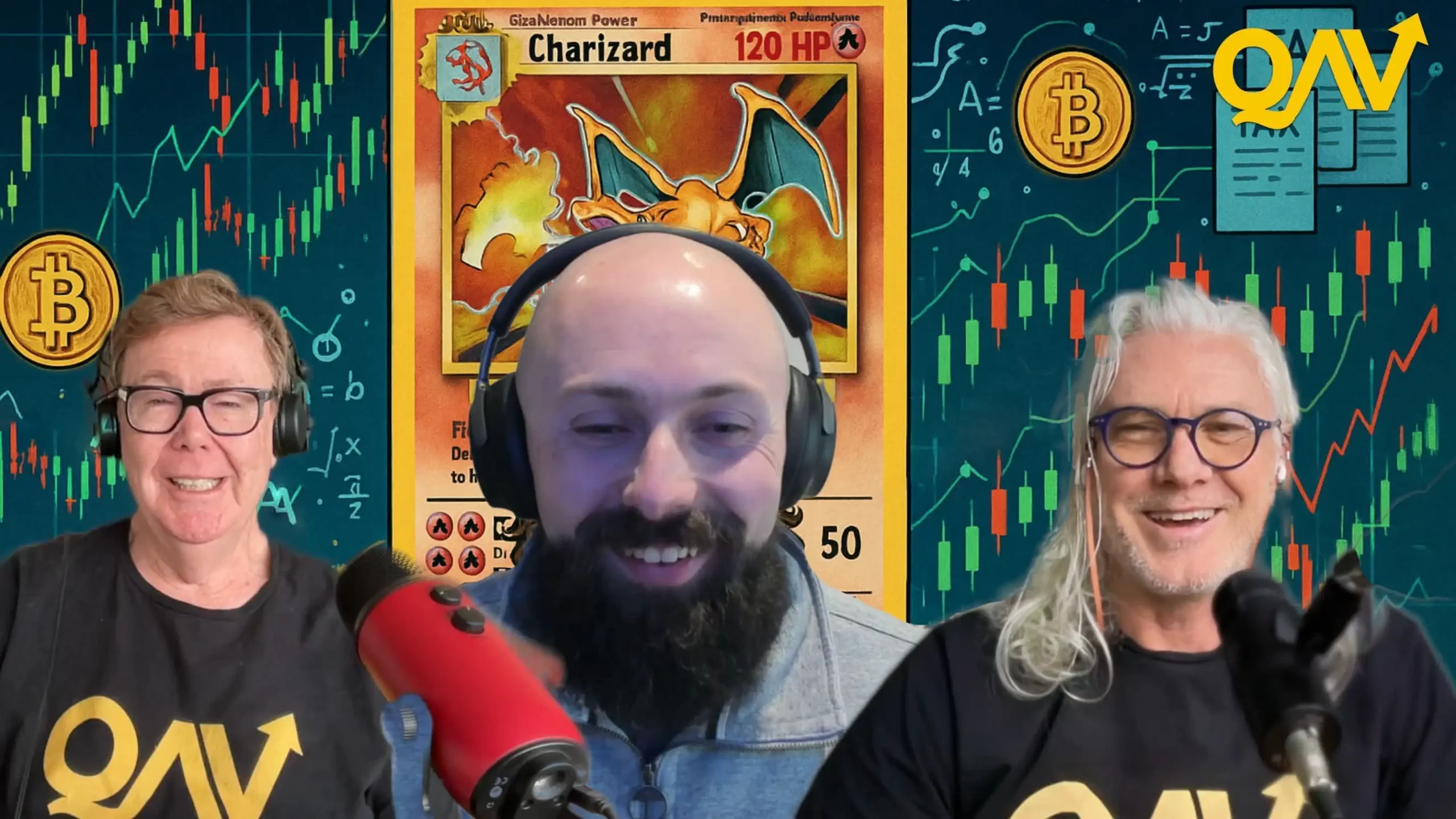
Cameron: [00:00:00] Welcome to QAV Australia. This is the, um, the, the hair episode. We’ve decided, uh, we’re gonna call ourselves lots of hair, no hair, and somewhere in between hair. I don’t know. My name’s Cameron Reilly with me as always, Tony Kynaston and our special guest today, Navo Trousselot We’ve just been talking about different ways to pronounce Navarre’s name from Navexa. Navarre Trousellot founder, CEO, chief Bottle Washer and [00:01:00] everything at Navexa, Australia’s leading stock portfolio system. Is it fair to say that, can I say that? Will anyone sue me if I say that?
Navarre: I mean, we’ll find out. You’ve said it
now, so the cat’s out. of the bag.
Cameron: Yeah. Well, how, how I define leading is.
Navarre: I.
Cameron: Completely subjective, right?
Navarre: That’s right? It’s
like Australia’s best
pie. Yeah. Or my mother was telling me earlier that, um, my, my, one of my, uh, cousins in, in Sydney was seeing Australia’s best psychiatrist. I’m like, is it, are they ranked? Like, how do you, how do you get to be the best psychiatrist? Is there like a, a ranking system? Do you have to, do they go and like sit competitions to see who, That, that would be interesting. A competition.
Cameron: Hmm.
Navarre: I, I’d
watch that. How, how many of your patients killed themselves? Uh, that’s, you failed
Tony Kynaston: Hmm.
Cameron: Anyway, that’s getting dark already. [00:02:00] Navo uh, it’s been a while since we’ve had you on the show, and as I said, off air, I think you had more hair up top and less hair down the bottom the last time. Um, perhaps, but I, before we get into investing. Uh, I’ve been watching your, is it TikTok or YouTube or something you were doing on your way to work?
5:00 AM every morning.
Navarre: Yep.
Cameron: And I, I, I think I sent you a message on this once before, but I just wanted to do it on air. You did a, you talked about your entrepreneurial activities as a teenager with Pokémon,
Navarre: Yes.
Cameron: which I showed to Fox my now 11-year-old son ’cause he was obsessed with Pokémon at the time. And, uh, tell everyone that story because that I, I, I was fascinating.
As a father of three children who have been obsessed with Pokémon at various stages, I thought your story was great. So why don’t we start with your Pokémon story.
Navarre: Yeah, [00:03:00] well the, my Pokémon, what do I call it, my Pokémon
venture, I guess, was the first real business I was in. Not that I knew that at the time, but looking back, I kind of learned all, all the foundational skills and it, it started at school. started with the trading cards and I was kind of late to the party with trading cards, so I had to work my way from the bottom somehow, I’m not quite sure how this worked out. I seemed to just work out how to do good deals better than anyone else.
slowly Trump of Pokémon trading cards at your school.
That’s right. I had the art of the deal and so I slowly amassed the best cards in the school, I even
was, cards. All the best cards. Everyone told you. Your cards were fabulous. They were the best. Sorry, I’ll, I’ll shut up now. Keep going.
Exactly, and, and then I was one of the first [00:04:00] to do kind of online ordering of Pokémon cards as well. So I somehow convinced my, my mom to give me her credit card number and put it into some foreign website in the US with the hopes that these Pokémon cards would come. And I figured out that certain series released in the US before they did in New Zealand where I grew up. I’d order these cards in and then immediately just trade them all away for everyone else’s good cards. ’cause somehow I had identified the supply and demand dynamics and I knew that this series would come out soon and flood the market and the value would drop. But in my kind of 10-year-old wisdom, I figured I can just trade all these away and get everyone’s good cards.
And then in a month or two they’ll come out Anyway, I’ll just get them back then. I slowly did that. I eventually ended up, um, I’ve still got my Pokémon [00:05:00] cards, but I eventually into Dragon Ball Z cards and sold them at school and got into a whole lot of trouble with the, with the principal. And that’s kind of another story. But all my Pokémon cards, I still have, um, a folder over there in the cupboard and they should be worth something. I have never got them valued. But um, was kind of really what taught me the trading dynamics.
- the story I remember was something about you getting, um, a Charizard or something like that, uh, or somebody else having a Charizard that was perceived to be highly valuable. And then you sort of cornering the market on Charizards.
Yes,
Cameron: that some somewhat correct.
Navarre: yes. So this one kid had a Charizard right from the beginning. It was just one of the lucky, lucky people. And that was the big sought after card at the time. it took me many months to put a deal together to get that Charizard. And then [00:06:00] funnily enough, once I got that, I went to a market in the city and there were a few people selling Razza.
I actually bought two more and then I came to school, I had three Shazad. So I was the kind of super king of the school ’cause no one else had had one of those cards. then I was able to those a bit later on to, to pull off some mega deals. ’cause people really wanted those. And I was able to kind of get rid of those cha ads, right as the. Trading card scene shifted from Pokémon to Dragon Ball D at my school. um, yeah, I’ve, I’ve still got that original cha out as well.
Cameron: So what, what are the life lessons or the investing lessons that we can take away from your Charizard or your Pokémon story in general? Navo.
Navarre: well, I think it’s kind of a, business lesson as well in general with, with [00:07:00] supply and demand and being able to put deals together that, that no one else can. And then it gives you that leverage when you go into these situations to get an outsized return on what, no one else would’ve been able to pull off with the right kind of combination of things.
So I guess that’s built forward into business. um, I’ve sold a couple of businesses. I’ve done many kind of business deals, and just trying to work out what those elements are that make it a sweet deal for someone to get an outsize return versus just, you know, handing it over for the market price.
Cameron: So you would say, I imagine that that experience with Pokémon, you know, my experience with my kids is they’ve just blown incredible amounts of birthday and Christmas cash cards, which I know my older boys who are now in their mid twenties, but they had [00:08:00] thousands of Pokémon cards when they were 10, 11, 12, that when. My youngest son, Fox got to the Pokémon Age like seven, eight. I said to my older boys, do you still have your Pokémon cards? And they’re like, ah, we just chucked them Yeah. years ago. Like it was like, but they spent like an insane amount of money on it. Fox has done the same thing, just blown ridiculous amounts of cash.
I remember him, like he, he paid, he got birthday money once and spent like 75 bucks on a single card from a shop. I’m like, what? What? And even his older brothers were like, dude, don’t do it. That’s stupid. It’s a way. And he was like, no, no, I gotta have it. But you are somebody who’s actually like, I actually, it was a profitable experience for you, at least in terms of life lessons, I imagine business lessons.
Navarre: Yeah, well when I, I mean it was profitable at the time ’cause I started selling them as well to other kids at school. So I, I, realized money was a bit more useful at the time than some Pokémon cards, so I could actually buy [00:09:00] some cool things if I had the cash. So I learned how to sell them then, which is what got me in a lot of trouble at school.
Apparently you’re not allowed to. Start a business on school grounds, but, um, you gotta do what you gotta do. But yeah, it, it was a very cool experience and I’ve got three young boys now, the oldest being five, they’ve started watching the Pokémon show, so I’m sure it’s only a matter of time before probably try and steal my Pokémon card collection, so I’ve been locked that away.
But, um, be into it,
Cameron: Did they know their dad was the Pokémon King of Auckland or
Navarre: uh,
Cameron: Wakaro or wherever you grew up in New Zealand?
Navarre: Christchurch. Um, they know
I have cards. They know I have cards, but they, they don’t know the full story just yet.
Cameron: Mm. Oh, very good.
Navarre: That’s right.
Cameron: All right.
Tony Kynaston: Oh, great story.
of a good story of arbitrage. Good story of quality investing good story [00:10:00] of the cornerstone of McDonald’s making kids want something and badger their parents into buying it for them. So many good lessons from that story for investors.
Navarre: Yeah,
exactly.
Tony Kynaston: Mm-hmm.
Cameron: Sto, tell us, uh, for those people who dunno about Navexa, most of our audience will, because we’ve been talking about Navexa every week for the last however many years. But
Navarre: Good to hear.
Cameron: who’s new, why don’t, why don’t you give us the, uh, give people the quick rundown on what Navexa does and where you’re at, and anything new that you’ve done lately that we may not know about.
And then we’ll get into the real topic, which is what you’ve been learning about how people are investing from watching.
Navarre: For sure. So I guess in a nutshell on Navexa is a performance tracker and tax reporting platform. So typically investors who have just been using their brokerage account to track performance, barely seeing any of the information [00:11:00] that I think they need to make good decisions with their investing. So it was the first kind of goal of. Me building Navexa was to be able to answer those questions around performance, about how am I going at the moment? What is my annualized return, what have I earned in dividends? Even basic things like, how did I perform last year? These are such simple questions, but most people can’t answer them because they’re using, using the wrong tools to do it. Navexa initially was to solve that problem. Then as the platform matured, and I also matured as an investor, tax side of things became, uh, a huge part of Navexa. And today, especially this time of year, the tax side of it is massive because. I say this all the time to people that you, you do all this research and picking the right stock or choosing the right ETFs and you [00:12:00] go through all the pain of holding it for years and years and then people just sell it off willy-nilly without even seeing what the tax implications gonna be. And then they end up giving away all this money to the a TO that they didn’t need to do. And it was like, what was all the, the patience and everything beforehand and doing all the research, coming time to sell it. You’re just doing it uninformed and, and losing a stack of money. So the tax side of things surprising myself has become quite an interesting part of investing to me. ’cause there’s so much money you can save there if you know what you’re doing, which is just as important money as it is when you’re making it out of a, a capital gain. So that’s what Navexa does, um, at a high level.
Cameron: So do you want to talk to us about that? Tax secrets?
Navarre: Yeah, how long have we got? Like there’s a lot of [00:13:00] stuff, uh, in the tax side of things and I think if I was just to give some, some quick info to people out there, now’s the perfect time to look at your portfolio, see your current tax position and make any moves you need to before the end of financial year. ’cause a lot of people treat tax as, um, I get to July or August and then I worry about it then. But you’ve kind of already locked in everything. It gives you a lot less flexibility, now you can do some tax loss harvesting or get rid of some losers in your portfolio so you can offset some of those gains. really, uh, a really important factor with investing is to, to know your current tax position. I find a lot of investors that I speak to have no idea what their current tax position is. And because it is like no one likes talking about tax sounds boring. all about giving money away to someone you’re begrudgingly [00:14:00] doing it to. And that’s why I think a lot of people overlook that.
Cameron: Well, of course, QAV investors don’t have any losers, so that’s not a problem that they have to worry about. All of our stocks always go up. Uh, we’ve never had anything go the wrong way. Is that right, Tony?
Tony Kynaston: Until I do a pulled pork on them. Cam, um, I guess I, we should also give the usual disclaimer when not offering tax advice to people. Um,
Cameron: It’s in the, it’s at the end of every
Tony Kynaston: okay, good.
Cameron: in Tony.
Tony Kynaston: Yeah, because we do talk about this every year and. Um, Navar or Navar when um, this time of year comes around that if you have had some capital, check out your capital gains if you have had some, do you have anything that you aren’t weed too long term, it’s trading, uh, at an unrealized loss and then sell it off.
And there are some rules around that from the tax officer’s point of view. I dunno if you are all, you know, into those, but maybe you could give a prey on, um, you know, harvest loss, harvesting rules from [00:15:00] the a TO as well and what watch out for there.
Navarre: Yeah, well the, the wash sale one is one that, um, a lot of people dunno about, and it catches people out and that’s when you, you kind of sell something right before the end of financial year and then you rebuy into it within 30 days. So you, if you could do that, it means you could realize a loss to help out your tax return, and then you just buy the assets straight back.
So it’s like you lost nothing, but you gained a, a capital loss for tax purposes. there’s a 30 day rule around that. So you can’t, can’t get away with that. So the general rule is if you’re selling something. You have to really be selling it, uh, for a good reason, not selling it to try and game the system. the big one. And at this point is a good time to kind of, um, identify any of those losses. And it, it becomes really [00:16:00] tricky to do if you’re not using something like Navexa, because what your current tax position is quite tricky. If you’ve had a portfolio that’s 10 or 20 years old and you’ve bought and sold, many different parcels of the same stock, uh, if you haven’t been tracking it, you have no idea what your current tax position is. Even if the performance suggests you are up, you might actually be running at a capital loss depending on the parcels you’ve sold in the past. So gets quite tricky and that’s where something like Navexa easily pays for itself in the, in the tax moves that you can do.
Tony Kynaston: I guess a couple of other points to be aware of there is that we are allowed to carry forward tax losses from year to year. So there’s no point selling something
at a loss this year if you’ve got a carry forward tax loss, and a lot of people aren’t. you know
you’ve filed your tax return 12 months ago, you can’t remember whether you had a carried forward loss or not.
So, um, there’s that [00:17:00] issue, um, to check and
then this, the other one is, you might shed some light on this, is that
um, you might decide that you have a large parcel that’s in a negative position, but you only wanna sell part of it. So what are the rules around partial sales? Is it, you know, first in, first out, last in, first out, what you know, or, or is it our discretion to sell things?
Navarre: Yeah, that’s a really good question that, um, a lot of people are unaware of, of what you can do there. So typically, FIFO being first and first out is the, the default strategy that use and, uh, individual investors use. a lot of people mistakenly think that’s the only thing that you can do. The a TO quite generous in the sense that as long as you can prove which parcel you’ve sold, they’re happy for you to do it. So with Navexa, we’ve got five built-in strategies. So you’ve got FFO, li [00:18:00] O. gain, max gain and min CGT, and they all have various effects on your capital gain stacks. Of course, the super common one is the minimized CGT strategy because often people are trying to minimize their, their capital gain stacks basically how those strategies work is FIFO orders everything by date and then you sell the earliest parcels first and you work your way through until you’ve depleted all of those parcels. Life o’s the exact opposite. You start with the last ones in and Work backwards. The, the fun ones like minimize CGT actually order the parcels by highest price first. But men’s CGT also factors in the CGT uh, concession rate of 50% off for individuals selects the parcels that will result in the lease tax first. [00:19:00] So if your goal is to pay the lease tax, you can run a minimize CGT. But some people, and I get this question quite a bit, is why would I ever run the maximize gain strategy? Why would I ever want to pay the most tax? the scenario that I, um, use to illustrate this is. Perhaps you’ve had a particularly low income year personally, maybe you lost your job or you’ve, you just took a year off, or you were made redundant, or whatever it was. kind of a perfect time to realize a big gain because you still end up being potentially under some of those tax brackets. So if you had a high income year, the idea is you’re trying to stay under some of those tax brackets when you’re realizing you gain, so you pay the least amount of tax. It’s often a good idea to get rid of the, the big winners if you have to [00:20:00] when you have a low income year.
So maximize gain does become, quite a useful strategy to those who know. How to use it. Uh, of course, if you’re always using a minimized CGT strategy, eventually you have to sell your big winners and realize a big gain. So it’s not always wise to just pin it on that and, and think you’re doing, uh, you’re paying the least every, every time.
So yeah, it’s, it’s quite flexible. And then the other part I’ll touch on in Avera is you can go full manual mode as well and allocate parcels, uh, however you like. So that’s quite a powerful feature that, um, some of our more advanced investors are using.
Tony Kynaston: I am, if I have A large parcel of shares bought over time and I’m trying to look at uh, selling some of those at a loss to offset a capital gain during the year, which report do I use? I, am I using max cgt or min CGT to work out what to sell?
Navarre: so there’s a couple of [00:21:00] things there. So we have a, a whole report called the unrealized gains report. I’m not sure if you’ve, you guys have checked that out, but it simulates selling your entire portfolio on the, on that day that you run the report. basically from there you can go through and see, which things are big capital gains, which things are capital losses. And if you’re trying to realize some losses, that report will highlight which trades if you made today would result in a capital loss. And you can also switch the strategies on that report too. So it’s often depending on your goal with running it with a couple of different strategies to see what the outcome is and then making some decisions from there. I will tease a little feature. So in about. or four weeks. got a big announcement coming around, um, some AI features. one of the cool things that you’ll be able to [00:22:00] do is ask it, if I sold $5,000 worth of my BHP holding and it’s going to tell you what the tax liability would be on that particular trade. So what we want to do is empower investors to, before they even make the trade, can use Navexa to essentially test what would the tax result be if I do this? can at that point either go, ah, no, I don’t want to do that, and, and back out of the trade or go, no, I’m happy with that. It’s gonna be a, a capital loss or a small gain or whatever.
And then execute the trade. that I’m hoping will really round out that picture of, done all your research, you’ve made your decisions around if it’s a good stock or not, and now you can complete the picture with the tax information about what that. That trade’s gonna do to you at, uh, end of financial year.
Tony Kynaston: about right, Seems to me you’re, you’re in a, the driver’s seat to [00:23:00] be able to know what people are selling at this time of year for tax loss reasons, um, which might make them good investments because people are selling them for tax reasons and not fundamental reasons. So do, can, what can you share in terms of the top stocks that.
are being sold at this time of year?
Navarre: I don’t have the info on what’s being sold at the moment, although that would be, that would be quite interesting. But recently we’ve been, uh, looking at our, our database as a whole, because we’ve got of thousands of investment portfolios at this point. Uh, ranging from absolute beginners who have just bought their first ETF through to people managing, you know, $50 million plus across all sorts of interesting things some of the big, um, some of the data points that we’ve got that I’ll through in a moment. On one hand, they’re not really surprising if [00:24:00] you’ve been, um, if you’re in the value investing And the good thing about it is the data is really backing up What’s. I considered the typical advice around, you know, buy and hold investing and that kind of thing. And so seeing the data for myself from our own data set was really reaffirming that, no, it’s not just like these sayings that people always say, it’s backed up in the data and the performance. some sets we’ve been looking at has been over the last 12 months what’s happened, and as we all know, like the last 12 months has been pretty crazy. all different aspects. You’ve got wars, you’ve got trade wars, you’ve got AI stuff happening. It’s kind of been, it’s kind of been all go. So it’s an interesting test of, of the performance. But the, the first step we’ve [00:25:00] seen that was quite interesting is that 90% of our portfolios and Navexa have made a positive return over the last 12 months. So, bearing in mind our customers aren’t necessarily just a, a small snapshot of the entire market. People who use our product tend to be more serious investors. So keep that in mind with some of these stats. ’cause it definitely won’t represent the broader market of people. But I thought it was quite surprising that that 90% of people were in the positives because with the big dip after the tariff announcements and that kind of thing, you would’ve expected. A lot of people freaking out and selling, which I’m guaranteed did happen, it doesn’t appear to be the case across Navexa customers. It looks like they either went through the storm and, and didn’t make any rash decisions or likely probably even, [00:26:00] um, bought up a bunch of stuff during that dip to, to keep the positive performance. So what do you think about that stat? Is that kind of your being, your sense to the market or would, do you think it would be different there?
Tony Kynaston: I guess the, you know, the, a ASX is up some 11 or 12 or 13% on, on an accumulation basis this year. So you’d expect that people would be up and I think the us market’s, what’s that cam? something similar or even more, it’s about 20%, isn’t it? I think the US market. I think you track it.
Cameron: the last year it’s,
Tony Kynaston: Yeah.
Cameron: yeah, the last year it’s, it’s been way more than that. It’s
Tony Kynaston: Yeah. So, um, yeah, I’m not surprised by it really
Um, but it does, but what you’re saying is it doesn’t follow a bell curve if the market’s up 12% in Australia. Say, for example you expect it to be a bell curve and you’d have outliers making a lot more than that and outliers making A lot less than that. [00:27:00] But, uh, it doesn’t seem to be the case from what you’re saying.
Navarre: Yeah. And then, so a li digging a little bit deeper into that stat. So we had our top 10% of portfolios, which is um, a few thousand portfolios. So reasonably good, good data set. There was an average return of 55%,
was super decent over the last 12 months. And the like with the ASX 200 figure, our median. Investor return was 12.1%. So looks like at the, the lower end or at the middle to lower end of our, um, performance across portfolios, it seems to be pretty closely aligned with the, with the ASX 200 that, that doesn’t surprise me since we’re majority Australian customers at the moment. We’ve got, we’ve got some foreign customers as well, like in the US and the UK, but a majority of the [00:28:00] user base is Australian.
So I would suspect a lot of people are sitting on a bunch of ASX 200 ETFs in that spot as well. But,
Tony Kynaston: You,
Navarre: so
Tony Kynaston: sorry, go on. No, you go. ahead.
Navarre: So a couple of other things I really wanted to dig into in, into the data personally things like the trading volumes Number of holding set people own, because I’ve seen all sorts of stuff, uh, dealing with customers in the v over the last few years from people who are doing just hundreds of trades every year across all sorts of things.
And they have portfolios of, you know, a hundred plus, uh, stocks in crypto people who just buy, you know, one or two things a year and sit on it. And so I dug into those numbers and what we [00:29:00] saw, particularly around, uh, trading frequency, that our top 10% of, uh, portfolio performance, they averaged about 29 trades per year. It was an interesting number because I thought it might’ve been a bit less, you know, around 10, 29, 29 trades per year. And then to contrast that with the bottom, bottom 20%, the average was 65 trades per year. So that was quite surprising to me as well, that people, and that doesn’t necessarily mean they’re beginners, it means they have the worst performance. So there’s, I guarantee there’s plenty of experienced people in that, in that bottom section, but 65 trades a year seems pretty crazy to me. how can you make that many good decisions in a, in a 12 month [00:30:00] period?
Tony Kynaston: do you, do you have A portfolio size to go along with those figures? like how many times are the portfolios turning over.
Navarre: So the, the minimum portfolio size is $50,000, No, sorry. I mean, number of number of ho, number
Tony Kynaston: of holdings.
Navarre: Ah, yeah,
Tony Kynaston: Yeah.
Navarre: the number of holdings
Tony Kynaston: I’m, what I’m getting at is if someone’s got a portfolio of a hundred stocks, then 65 trades may not be that much, but if I’ve got a portfolio of two stocks, then 29 trades is a heap. So how, how does it correlate?
Navarre: yeah, well, I’ll, I’ll get to that number in a sec, but I think even if you have a hundred stocks. still feel like 65 decisions is, is too many. holding that many stocks would be pretty difficult to manage because you just forget what half the stuff you’ve invested in. But with the number of holdings, so got the averages across the different [00:31:00] deciles there.
So the top 10%, the average holdings in their portfolio was 20.
Tony Kynaston: Okay.
Navarre: that sounds pretty good to
Tony Kynaston: Mm-hmm.
Navarre: sure I could keep my head around 20 different things. then the bottom, um, ninth and 10th deciles, so the bottom 20%, they had an average of 32 and 40 holdings.
Tony Kynaston: Right.
Navarre: again, it kind of lines up with that trading stat of the bottom.
Performers are doing the most amount of things in, in that 12 month period.
Tony Kynaston: Yeah, but it’s, but in terms of a ratio between the number of trades and the portfolio, it’s, it’s reasonably similar. the top 10% has 20 stocks and they’ve done 29 trades and the bottom, so they’ve turned their portfolio over more than once. And the bottom decile or decile has, what’s, what’s 20%? I’m not sure. [00:32:00] Do decile?
Navarre: It’s, that’s right.
Tony Kynaston: Yeah.
they’ve got 40 stocks in their portfolio. They’ve done 65, so it’s, you know, one and a half times. So it’s kind, is it related to the portfolio size, I guess is what I’m saying?
Navarre: Yeah, and I, I don’t have the stat on what size the portfolios were. ’cause we, we’ve ordered it by into buckets of performance basically.
Tony Kynaston: Right.
Navarre: some of those portfolios will be 50,000, some will be in the millions. Um, but we’re just looking at the total return. So that even factors in not just the capital gain, but the income return as well. So,
Tony Kynaston: yeah, I’m, I’m sure there’s almost every listener listening to this is gonna say, tell me more about the top decile. So what could you divulge about them where they all invested in crypto? Were they all invested overseas? Were they, uh, what can you say about them?
Navarre: yeah. So I, I did run that query on if there was a strong overlap in, in holdings for that [00:33:00] top decile. What do you think the, the top holding was? I.
Tony Kynaston: Prius.
Navarre: No. What about you, cam?
Cameron: Uh, yeah, I’m, I’m not even gonna hazard a guess. I have no idea.
Navarre: You’re not gonna like it. You’re not gonna like it.
Cameron: Well.
Tony Kynaston: Crypto.
Navarre: it is. So 40, 40% of the top 10 decile Bitcoin. So that’s the strongest overlap compared to hold c, BA. So that’s number two.
Tony Kynaston: Oh, right. Of course. I.
Navarre: we ran some stats a few weeks back that showed one in five of our users now hold crypto in their portfolio, which is up from one in 10, only two years ago. So there’s a strong trajectory, [00:34:00] that more and more people are getting it into their. portfolio. And, and even with a lot of the investors I’ve been speaking with over the years, uh, Navexa customers, a lot more of them are now holding crypto as well, which is, has really surprised me. ’cause anecdotally, it seems to have moved from certain characters owned crypto maybe five years ago You can’t pick who owns it. So people you
Tony Kynaston: All right,
Navarre: never expect have
Tony Kynaston: so,
Navarre: portfolio.
Tony Kynaston: so there was, there used to be a correlation between Pokémon carbs and crypto, but now it’s, it’s sort of broken down. It’s everyone. Now, is it?
Navarre: That’s right. Exactly. So, and, and I mean, on the crypto side, it’s, it’s mostly Bitcoin. Like the other ones people are into all the, those other coins. Um, but. The people who are making serious returns seem to just be sticking with, with Bitcoin, uh, since it’s [00:35:00] the oldest and most proven. But after that, so the usual suspects are in there.
We’ve got CSL number three, um, Tesla number four. we’ve got a Ethereum and number five. So two cryptos there in the top five. And then you’ve got, uh, Telstra, BHP, apple. So there’s, there, there was nothing in that kind of top 10 section that was super surprising other than Bitcoin being the most overlapped one. Um, it seems that the Australian, the classic Australian portfolio seems to be go and still performing quite well.
Tony Kynaston: what uh, can you give us a split between active and passive? How many ETFs are in the, what percentage or of ETFs are in there?
Navarre: I don’t have that particular stat on hand, but looking at in that top, um, top 10, the first [00:36:00] ETF doesn’t show up until the 18th most overlapped. out of, out of all the top performers, it doesn’t appear, that ETFs are, are featuring that heavily. And, and with that, that’s, uh, VAS, which is not surprising.
And only 6.7% of the, the top 10 performers hold that. So lot smaller. Honestly, I would, I was expecting that you’d see more ASX 200 or s and p 500 ETFs, um, with a strong overlap, it’s not what the, the data suggests on those top performance.
Tony Kynaston: Mm, interesting isn’t it? Yeah. Overseas versus local, are they, are they holding ETFs for the us stocks?
Navarre: Not, not in those top performers. Um, it seems to be a lot of local, it’s not until you [00:37:00] get down to the, the 30th most held one, which is NDQ, um, at 4.6%. So it seems from that top performance, it’s strongly ASX stocks and crypto, and then a couple of us ones. So you’ve got, apple and Tesla up there as well. So it’s quite surprising because when you look at, at those, um, individually, it’s, I mean, some of them have had, had a good run, but others are kind of just doing their usual movements from what I’ve seen. looks like the combination of all those has, has held up pretty strongly.
Cameron: Now, Val, how long has Navexa been around now?
Navarre: Um, we’ve been in business coming up six years. I think it’s
August. Six years. the data you’re giving us is the last 12 months, right?
Yep.
Cameron: I’m, I’m interested in longer timeframe results. Do you have similar data [00:38:00] for the top performing decile over six years?
Navarre: at the moment, but that is something we, we are working on getting, because those longer term patterns are quite interesting. The issue is, is the dataset starts thinning out the longer range you go because not all the portfolios have been around for kind of five years or 10 years. Um, so 12 months was the. of statistically best comparison because pretty much all the portfolios we have in Navexa had data for 12, uh, 12 months, sorry. looking at 10 years, it starts thinning out, and then the further you go, the less you have to play with, so the, the data becomes a bit less, um, statistically strong.
Cameron: Yeah, I guess, you know, from my perspective as a, as a newbie investor, um, [00:39:00] one year, um, is interesting, but it’s been a sort of a bonkers year on a number of fronts. Um, you know, how it all falls out, what the strategies are that deliver long-term successes, far more interesting to me than what happens in a 12 month timeframe, which, you know, we all know can turn around and evaporate very, very quickly. I.
Navarre: Yeah, definitely. And, and we are gonna start compiling some of that stuff to, um, show to our community. So you’ll be able to get access to that. We’re going to build a, a section where you can go and view the data yourself and um, be able to compare where your performance sits within some of these categories. Because as you’ll know, it’s like if you’ve got a $10,000 portfolio, you’re gonna make much different moves than if you’ve got a $10 million portfolio. So [00:40:00] being able to compare your performance against similarly sized portfolios I think is gonna be quite important. ’cause people tend to be a bit more rash and make crazy moves the less money’s involved.
But if you’re making moves on $10 million, you’re going to hopefully a bit more thought into what you’re doing there. So. I think that’ll be quite useful. Um, and we’re hoping to get that out in the next few months, so you’ll be able to check out. I had a look at your portfolio. It seems to be doing pretty well. The QAV dummy one.
Cameron: Yeah, it’s trucking along, I think. Um, I’ve just, I can’t get Navexa to work for me right now. It’s giving me zero on everything. Uh, I dunno
Navarre: It’s been
a market crash. yeah,
Tony Kynaston: Hmm.
Cameron: that must be what it is, right across the board. if I, I did our report this morning for the, for this financial year, which almost [00:41:00] 12 months, I guess.
Dummy portfolio is 18.3%, uh, for the financial year versus I, I, it says here the s SPDR 200 is up 14.5% over that period of time. So outperforming that by a bit. Not as much as I’d like, but you know, over the long term is what we look at. But yeah, so
Navarre: Yeah,
Cameron: 18.3. I dunno how that would map against your, whether it sits in your deciles.
Navarre: it, sorry, got a bit of a cough. Um, I don’t have the deciles, the performance deciles in that format, I think that probably puts you from memory probably in the like top 40, top 40%. Um, because it, it’s the top performance ones in the top decile, particularly with [00:42:00] the huge concentration of Bitcoin if you’ve been following the Bitcoin price, you know, over the last 12 months it’s gone crazy. I haven’t got, I don’t know this for sure, but I would suggest a lot of that performance was purely just from holding that one thing. All the other things in the portfolio probably didn’t have as much of an impact, that will kind of level out over a, a longer period as well. um, yeah, I mean, 18 percent’s definitely not shabby at all. That’s, uh, like you’re beating the benchmark and that’s quite hard to do
Cameron: Well, is it.
Navarre: if, if you’re doing 18% per annum, like I don’t think you’d be too upset in a few years time as it starts compounding.
Cameron: Yeah. Well, look, again, I, I’m new to all of this, but in the six years that we’ve been [00:43:00] running QAV, it doesn’t seem that hard to me to beat the benchmark. Um, uh, we, we had a couple of difficult years, 2022, 2023 when interest rates started going up and the war started and trade wars and that kind of stuff.
Navarre: Hmm.
Cameron: I, I, I’m interested in, uh. Uh, you know, the sort of outside of Bitcoin, which to me, I still doesn’t seem like a strategy to me. More and more people buying Bitcoin just sounds like capitulation to me. Not a strategy. It’s people just going, okay, I’m gonna get on the bandwagon. uh, in all the years that we’ve been doing this and we’ve been asking people to explain a rationale for investing in Bitcoin, I’ve never yet heard one that makes any sense apart from it’s going up, which isn’t a strategy, that’s a, that’s a, of being a follower of a cult, not really a, sort of a rational strategy that I can wrap my head around.
Have, in your experience, have you [00:44:00] heard of a, have you heard a good reason to invest in Bitcoin that you can articulate?
Navarre: I mean, reason I, I don’t have a huge position in Bitcoin, but I do own some, and I was similar to you, like I was very skeptical about it for several years once it came on the scene because with any stocks I would buy, I want to see what the business was and what it does, and do I understand what the hell it’s doing and is it making money?
And you can measure a business by all of those things, whereas crypto, you can’t. But it became a thing for me personally, it’s, I guess you could say jumping on the bandwagon, but it was more that such a, a new technology that is difficult to understand that I’m going to get some exposure to it. Just in case it, it hits the big time.
And I mean, since then it is [00:45:00] only going up and up and up every single, every single year it seems. Um, so I’ve been happy with that decision, but I still wouldn’t be comfortable putting huge position of my portfolio into it because I still can’t justify exactly why other than like, it’s a crazy new technology.
I don’t really understand it. It’s clearly withstood years and years at this point, so, yeah.
Tony Kynaston: Isn’t, isn’t, isn’t human psychology interesting when it comes to investing.
I mean, I, I, I accept everything you’ve said and I think it’s you know a perfectly valid thing to do. But just to unpack it, I mean, isn’t the goal of investing to put all your money where the best return is? and if you don’t understand Bitcoin, how do you know it’s gonna give you the best return?
But, you know, so it’s like, I I’ve had this conversation with lots of people where they said, well, I’m just putting in 2% of my portfolio so I can understand it. So I get that right. They don’t [00:46:00] understand Bitcoin, they wanna know how to trade it, you know, what, what it looks like to hold, et cetera, et cetera.
So I get all that. Um, I. I guess, let me ask the question in reverse, because what you’re describing is that basically a momentum trade. You, you’ve got your toe wet, it’s going up, happy days. what’s your rule for selling when you get out?
Navarre: Well, that’s a good one, which I don’t have an answer that satisfies any of us, um, other than that’s why I’ve stuck to a small position. So even if it goes to zero, I, it’d be annoying, but I’m not going to lose the house over it. But I think. is no plan for selling at this point. It’s just to hold it for the long term and, and see where it ends up. think e ’cause crypto’s so volatile, even if it dropped by you look back over the [00:47:00] last few years, you like, yeah, that happens all the time. It’s nothing to worry about. Whereas if a stock drops 50%, you’re like, okay, there’s something terribly wrong here. I need to make a move. so yeah, it’s, it’s something I, I need to work out still, but it’s,
Cameron: What I, drops by 75%? Like it, I’m looking at the chart at the moment. In, in November, 2021, it was trading at around 90,000 Australian.
Navarre: Hmm.
Cameron: By December, 2022, it had dropped down to 25,000.
Navarre: Yep.
Cameron: Now, now it’s up around 165,000. Right. But that’s a big drop over that, you know, 12 month period. That’s, uh, you know, 75% drop. You would still hold it if Yeah. Well, I mean, that’s the, the craziness with crypto is, and like investor psychology is really interesting and that’s what drives markets,
Navarre: [00:48:00] uh, all the time. investors have been beaten up so hard by volatility when it drops like that, it’s just like, oh, whatever. It’s just, you know, another day and the
whole, sorry, that that can’t be true because people are selling. The price doesn’t go down yeah. aren’t selling. And that, that’s, that, but it doesn’t ring true to me because a lot of people are selling for the price to drop by that much. oh, yeah. of Bitcoin holders were selling it as quickly as they could the course of that 12 months.
Cameron: So is it not the bigger guys just gaming the whole market, just it off the price drops. They create a run and then they buy back in and pumping, isn’t it? It just looks like a pump and dump from the outside to me.
Navarre: yeah. And there is a lot of that, and I think a lot of the price over the last couple of years has been driven by fact that a lot of big companies have started [00:49:00] investing into Bitcoin. You’ve got governments getting involved with Bitcoin as well and driving
- Yeah. And driving up confidence. And you’ve got companies like micro strategy, like
with huge Bitcoin reserves.
So even if you’re invested in the s and p 500, you’re holding a big
Tony Kynaston: Hmm.
Navarre: of Bitcoin. With it. So all of those companies getting involved have driven it up. But it depends to go back to your previous question, depends on the circles you run in. So I have people who are in the crypto industry in my circle and they’re doing all sorts of things with, have never sold out of their positions because they understand it at a, a technological level and what the applications are that they’re using it for. I think you definitely get the mainstream people, like I know people who’ve never invested in anything and suddenly they’re talking about crypto that they’re buying and then [00:50:00] just as quick as they were talking about it, they never talk about it again. And, and those are the people that are coming in driving the price.
They freak out, they sell it, there are the, the long term holders of it, is seems to be getting more and more at an institutional level and, and companies holding it on their balance sheet. See?
Tony Kynaston: Oh yeah, there are whole ETFs. There are whole ETFs devoted to it now as well, so that’s, there’s certainly supply side demand at the moment.
Cameron: Trump, Trump getting involved in it. Does not. Instil confidence in me that it’s a, it’s a good long term strategy. But, you know, the, do you know the Mooch
Tony Kynaston: Mm-hmm.
Cameron: Trump’s uh, former, I dunno what role he had in the first Trump administration, but he, he put out a book, the Little book of Bitcoin about six months ago that I got and read. ’cause I saw a video where he was like, yeah, I was a skeptic. And then I got my head around it and I spoke to all the key guys and then I became super pumped up about [00:51:00] it. I was like, all right. So I got Mocha’s book and I read it looking for, you know, some sort of explanation for it. And it was, it’s going up.
That was it. I read the whole book and the strategy was, it’s going up.
Navarre: Yep.
Cameron: That’s why I’m getting in. And I’m like, well that’s, that doesn’t help. So I don’t know. No, it’s not. It’s not a good reason. the guy who produced our documentary,
Tony Kynaston: Mm-hmm.
Cameron: Hoffman, has produced two documentaries crypto. He did one like, I don’t know, was six or
Tony Kynaston: Mm,
Cameron: ago.
Then he did another one a couple of years ago, an update. He interviewed all of the key people across crypto and Bitcoin and blah, blah, blah. And we had him on the show. I actually, I don’t think we put it to where, ’cause it was too embarrassing. But we had Totten on a couple of years ago ’cause he’d been giving me a hard time, if you’re not buying crypto, you know you’re an embarrassment and blah, blah, blah, blah, blah. I was like, okay, so, so give us the rationale for why we should buy crypto. And he is like, well, it’s going up. And I’m like, yeah, Jesus
Tony Kynaston: gonna be worth $500,000 a coin in a couple of [00:52:00] years. Yeah.
Cameron: like, there’s just, apart from it’s going up. I’ve never had any, like anyone go every, anyway, I’ll stop ran. And It is.
our listeners have heard Yeah. about this endlessly over the years.
Tony Kynaston: And, and the, and the behavioral finance psychology applies to us as equally as it applies to an investor as well. We’re not investing because we don’t understand it. But, but you know, someone out there, as Cameron said, I think is doing a pump and dump. So they’ve got, if not an understanding of Bitcoin, certainly understanding of the way the market responds to Bitcoin and their
Cameron: Consumer psychology.
Tony Kynaston: psychology.
And they’re, they’re trading Pokémon cards, right? They’re pumping and dumping, Yeah,
Cameron: yeah,
Navarre: yeah.
definitely.
And Pokemon’s a big business.
it is an, and it, I have personally done some transactions in crypto, um, that were a convenience thing, so an actual application of it, um, doing cross border payments, which was actually easy and better than transferring through [00:53:00] the, the SWIFT system or whatever, and like waiting a few days to get the money at the other end and that kind of thing.
So there are
some practical. drugs, sorry, Exactly. So
Tony Kynaston: And,
Navarre: some
Tony Kynaston: and look, you’re right. I mean, and, and paying the bank you know whatever it is
50 bucks for a trade of foreign currency is, is,
Cameron: ridiculous.
Tony Kynaston: bad as trading in Bitcoin as far as I can see. really.
Yeah.
Navarre: Yeah. But as, as for how that justifies the valuation, like I can’t give you why that would justify it, but it, it’s just, yeah. It’s a such a crazy thing. And I’ve been saying recently that thing that crypto has done on the technological side is it pushed chip makers like Nvidia to work on better and better chips to help the mining operations and that kind of thing, which then formed a really good base for all the AI [00:54:00] stuff coming in. like, oh, the, these chips worked well for crypto. Now we can just kind of. them for the AI side of things. So the AI side of things is very, you can
justify how
Tony Kynaston: So, so you think when AI becomes our overlords, nostalgically, they’ll own Bitcoin? We’ll all have to, we’ll all have to convert to Bitcoin.
Navarre: Yeah, exactly. But like personally, um,
the, the AI thing is really interesting because I’m a software engineer and I use AI every day in developing Navexa itself. so the applications I’ve seen I’m doing have been so powerful. I’ve, I’ve had a few moments lately where I’m like, oh, shouldn’t have been able to do that. Like, that was a bit too good. Um, so short term, I’m really excited about it long term. [00:55:00] I am quite terrified of it. So plan is just to use it in the short term to, to, you know, gain an advantage, whether that’s in software development or, or or whatever. But long term, I don’t know how it all ends up because, um, what the mainstream aren’t seeing is it is getting rid of jobs already throughout the tech sector and that kind of thing. And it’s like, it’s suddenly people will just see it for what it is and they’re like, holy crap, this is, this has come for my job and I wasn’t paying attention. So.
Cameron: How do you think it’s gonna change investing? So it’s a question we get asked a lot and we’ve, we’ve talked about it a bit.
Navarre: Yep.
Cameron: I don’t have a clear answer.
Navarre: No, well that’s a really good question because that’s exactly what I’m doing at the moment. Um. With Navexa. So we are releasing a bunch of AI features next month, we are kind of trying to bridge that gap of how do you use AI [00:56:00] and investing to produce good outcomes. The problem I’m seeing from a purely AI players that the AI models are not very good at maths, which surprises a lot of people because their language prediction engines, they’re not actually doing the calculation.
So if you give it one plus one, it and it’s knowledge goes well. Usually that’s followed by two and gives you the right answer. But you can
give it, tend to write a Python program and calculate all the maths using some Python script that they have running in the background.
you can do that. But a lot of
the maths equations you put in, it will give you the wrong answer. you’ll challenge it and it’ll be like, ah, you’re right. I’m gonna try the, a Python script and do it that way. it’s not super reliable yet on that front. So what, what we are trying to do is bridge AI and the code we actually have that we know the [00:57:00] correct output and kind of interface them together so that you get the benefits of using ai.
But the, the solidness of having actual proven code doing the calculations,
Cameron: Which is, which is, you know, I do a podcast on AI I, Futuristic with, uh, mate of mine, Steve Santino, who’s a futurist. And what I’ve been saying for the last couple of years is I, I see LLMs as a language user interface, a, a lure,
Navarre: mm.
Cameron: know, it’s, um, a, a way of communicating with computers using natural language in that we will get to the point where they will interface with expert systems like Navexa to extract reliable knowledge.
So you have, rather than the ai, the LLM being the font of all knowledge, they’ll, they’ll be able to do a lot of things very well, but they’ll have to interface in with expert systems to be truly reliable. But ideally, expert systems like Navexa should have a language user interface on the front of it. I can go to chat GPT and say, gimme some data [00:58:00] out of Navexa and it’ll go to your website and go, Hey, can you pull this data out for me? And. I can give it to Cameron and it’ll go. Sure.
Navarre: Yeah, well stay tuned
’cause that’s.
Cameron: was gonna say, like with all of the data that you’ve been talking about, that you have like this high level, uh, data on what people are doing, it’d be great if we could get a dump of all of that in raw numbers that we could drop into a AI and say, you know, find me patterns, find me this, et cetera, et cetera.
Is that, is that where you’re going with this stuff? Like, give us the ability to data mine
Navarre: Yeah. So version one, no. Um, we are just laying the kind of infrastructure to be able to interact with your portfolio, version 2,
3, 4, that’s where we’ll start iterating into, into that space because the, the calculations within a tool like Navexa, AI could figure them out. But there’s so [00:59:00] many gates at the moment, like the data feeds on, um, market data and the corporate action feeds, and there’s still a lot of companies with a, a wall around that data, which the LMS don’t have access to. Yet anyway. So even if they could do maths, they wouldn’t be able to to pull that number. we are hopefully going to use some of the insights that we’ve just talked about to build kind of an aggregated community insights section and then overlay that with AI so that you can kind of relate your decisions versus what the community, the Navexa community is doing. think that we’ll be able to help people, um, see that, oh, okay, the top performers are not doing tons of trades and heaps of things. Maybe I should change my approach to not do that. Or maybe they are doing tons of trades and I’m not doing anything at the moment. Am [01:00:00] I missing out on things I need to get, get
into gear and, and. Sorry. Buffet was asked about AI at the Berkshire, a GMA year or two ago, and how it was gonna change. And he said, you know, the, the biggest mistake people are make in investing is like greed and short term thinking, and AI’s not gonna change that.
Yeah.
Cameron: It’ll, it’ll just make people make greedy short term decisions or something like that. Well, you know, I don’t see peop people changing the way that they trade based on, um, having access to data because Buffet’s been trying to tell ’em how to invest for 50 years. And a few people listen, but not many.
Tony Kynaston: but that could be a legitimate use for ai, whether it’s provided by Navexa or not, is if I’m, you know, I’m about to execute a trade on my portfolio and I get a message saying, Hey, did you realize that this company’s being
taken over? Or, um, uh, you know, you if you buy this [01:01:00] company, it’s the large, it’ll be the largest or the smallest position in your portfolio.
Do you really wanna hold 25 stocks when, you know, uh, my research says fifteen’s a better number, for example. So it’s almost like a guardrail on our trading to stop us from falling for behavioral finance.
Cameron: There’s no, there’s no rational reason to own Bitcoin. You go, shut up ai. What do you know? It’s going up.
Navarre: that’s right. it’d be the reverse. If it used Navexa, if it was using the VX ray, I’d say, Hey, you.
Tony Kynaston: haven’t got any Bitcoin in your portfolio.
Cameron: Yeah. What are you doing? You’re an Exactly. The top performers
Tony Kynaston: Yeah.
Navarre: holding it. But it’s um, I think in
the short term, in the short term, AI will provide opportunities for people to get ahead in investing.
Tony Kynaston: Mm-hmm.
Navarre: then like anything, once everyone has that tool, then it will just, everyone will be making decisions with the same tool set and then it will come back to like the buffets of the world applying their, their [01:02:00] thinking on top of what everyone’s already doing to get that advantage. So can look at it in terms of, oh, that’s the, the end goal, so I’m not gonna bother with it. Or you can look well in the short term. If I use it, I can get an advantage now before everyone gets on it. then later when it averages it out, I’ll have to change my strategy again. But I’m
Tony Kynaston: Uh,
Navarre: in
Tony Kynaston: yeah.
Navarre: that camp of using it while there’s an advantage.
Tony Kynaston: Oh, and when it doesn’t become an advantage, it becomes A hygiene factor. So you have to use it. If you’re not using it, everyone else is using it, you’re about to disadvantage. But I’m seeing in the market the market’s changing now through those kinds of games. I mean, um you look at some stocks that don’t, that are fairly thinly traded, and you find out that the price is set by one stock trading in the last
half hour, um, of, of the business day.
Um, just to try and game the price to, to force it up or down for whatever reason, the quant wants it to do that and buy or sell the next day when [01:03:00] someone trades based on that closing price. Um, for example and there are other ones too. I speak to fund managers who tell me that you know, they make sure that the particular company that they, they might be involved with has certain metrics to pass the quant screens, whether it’s, you know.
P/E ratio, dividend yield or whatever. Um, so it certainly, there’s a lot of gaming going on already because of the level of quant trading that’s in the market. So this is gonna get bigger with AI, I think.
Navarre: Yeah, and people will be able to figure out, uh, what data to feed into AI at some point to get it to tell people certain
Tony Kynaston: Correct.
Navarre: And people are actively working on that at the moment for, um, search engine optimization type
Tony Kynaston: Yeah, exactly.
Navarre: to optimize ai. So it’ll be a matter of time for the influence investing that way.
Tony Kynaston: Hmm. what’s um, getting back
to Navexa community, what, I mean, it’s almost like an evolutionary growth algorithm here, isn’t it? What’s the what does the optimal portfolio look like from your experience.
at looking [01:04:00] at Navexa,
Navarre: I
Tony Kynaston: uh, community as a whole?
Navarre: I mean,
looking at, it’s, looking at the, the data we’ve run through, there was nothing really in there that was, um. Surprising to me in the portfolios from an Australian investor point of view, it was all the, the usual suspects. And I think it goes back to if you look inside the ASX 200, it’s like the top 10 are doing all the heavy lifting and, and a considerably bigger than the, the next 190. So it would seem most people are just looking at those top 10 and, and holding onto those and then throwing in some bitcoin
there, which is, which is helping them as well.
Tony Kynaston: Hey, you can’t mock it.
It’s a, a satellite strategy, core satellite strategy,
Navarre: it is, it is, and and the core satellite approach is, is super common across our user
Tony Kynaston: right. [01:05:00]
Navarre: Um, lots of people with a core ETF holding then doing their kind of stop picks around the edge. So I think, um, Bitcoin is just falling into that, uh, quite nicely for those people.
Tony Kynaston: so given that the you know, people are focusing on top the top 10 stocks is that why you are seeing portfolio size of sort of 20 ish because they’re holding the top tenant and they’re holding Bitcoin and something else as well?
Navarre: Yeah, it would kind of appear that way. Um, ’cause 20 holdings is like, you have to, have to be quite intentional with what you’re buying in that case because 20 is not that many at the end of the day. Um, I think people, yeah, just looking for that, uh, appears they’re looking for that security of the, the biggest, holdings on the, on the ASX and in the US as well.
You got in there, which is like the behemoth. So we didn’t [01:06:00] see any kind of crazy risky, uh, risky small micro caps or anything up in that top section. So other than you could maybe say Bitcoin falls into that category, but
Tony Kynaston: So people are, people are holding 20 stocks on average, um because of the the, a core satellite strategy looking for the top 10 stocks in the market Rather than saying, I think the optimal portfolio I want to manage is 20 stocks. ’cause, ’cause there’s a whole, there’s a whole, you know, branch of research that says, you know, you hold more than 20 ish stocks and you get index performance and
if you hold two stocks, you, you get huge alpha but you might get vol.
Huge volatility as well.
Navarre: Yeah. And, and like at the end of the day, I can’t speak to why they’ve done it. I can, all I can do is see the data and, and that’s what it is. So, um, it will, I’m sure over the next few years we’ll be. Um, doing some more surveys and things to try and understand the why [01:07:00] behind a lot of these, a lot of these decisions.
Because at the end of the day, it’s the, the why that’s most interesting. ’cause someone can own whatever. it’s like with Bitcoin, it’s like, why, why do you own the Bitcoin? I want to know if, is there a reason?
Tony Kynaston: When are you gonna sell it? Under what conditions will you sell.
it?
Navarre: That’s right. And, and that’s kind of, that’s the most interesting part to me anyway,
Tony Kynaston: Yeah, no, I agree.
Navarre: yeah.
Tony Kynaston: what what I mean there’s, you can answer a lot of investing myths, I guess, through this kind of analysis too. And, and one that we’ve tackled before we’ve had questions about before, is rebalancing. do you see. do you see extra portfolio trading at this time of year, like at an annual basis or at a monthly basis when people rebalance their portfolios?
Or is it pretty even during the year.
Navarre: Um, the trading volumes are, are pretty even. I think the events that trigger, um, more trades than usual are like what we’ve [01:08:00] seen the last few months with the, the tariff stuff and things. But I know a lot of people are doing rebalancing throughout the year, particularly like SMSF holders and that kind of thing. I haven’t noticed any spikes of it. that would be something interesting to look into to Hmm
was a, was a factor because this time of year, particularly these last couple of weeks, if people are trying to get rid of some losses, um, that will, I’ll keep an eye on that, see if there is a spike in trades over the next couple of weeks. hmm. And at month end too, I would think. Or quarter end or something like that. Yeah. interesting one. Yeah. Uh, ’cause I, I’ve, you know, I’ve always found rebalancing to be. A bit like index investing. it’s like you you’re not sure what you’re doing so you’re rebalancing rather than
Tony Kynaston: you you know, you’ve got the con, you’ve got the courage of your conviction ’cause you understand the company you’re buying into to to hold.
it even though it’s gone up. Yeah.
Navarre: [01:09:00] Because there’s that buffet quote, isn’t there? If you wouldn’t, um, sideline your best player
Tony Kynaston: wouldn’t be Michael Jordan.
Navarre: would ’cause he’s too good. You
Tony Kynaston: Yeah.
Navarre: it out over the team.
Tony Kynaston: Correct. Yeah.
Navarre: a true, it’s.
Tony Kynaston: No. Yeah. Very interesting.
Cameron: Alright, nav, we’ve probably taken up enough of your time. Any, any final words of wisdom for listeners that you
Tony Kynaston: I.
Cameron: leave with?
Navarre: I mean, obviously come check out Navexa. Um, it’s
end of end of financial year, so a really good time to kind of get on and, and get your, sorted so you can make some good tax decisions and, um, and then in the long term, make some good investing decisions as well. So, um, there is a 20% off QAV code I believe, which I don’t have on hand, but I’ll get for you. chuck it in
the show notes if you like.
Tony Kynaston: That’s great. thank [01:10:00] you.
Navarre: is.
And um, Terrific.
yeah, but no, it was a lot of fun and we will be able to unpack some more data in the next few months as well, um, and get a, get a little bit deeper into some of these things. I’ll try and get you And long term yeah, and, and tell us how you’re monetizing that Dar and you must be sitting there going, this is the Pokémon car I can hold onto and, and trade from watching what everyone’s buying and selling. I mean, it’s, it’s, it’s deal flow, isn’t it? I mean, potentially, personally, I’m mostly investing in one stock at the moment, and that’s Navexa itself. Uh, so, um, in terms of diversification, I’m, I’m not very diversified, um, that’s, that’s just the nature of, of running your own business is, is you gotta back yourself. So I, we, we don’t use any of the data to, we don’t monetize any of that data. Uh, in fact, this is the first time we’ve kind of aggregated the [01:11:00] data to look at, look at some of those trends. So goal with it is to, um, feed it back into the Navexa community itself so that people contributing the data to the aggregated results, and then they get value back from it as well. Of course.
Yeah, that’s how we’re, how we’re doing it.
Tony Kynaston: Well, I appreciate you sharing it here. I think it’s fascinating and, uh, it really interesting discussion. thanks.
- Yeah. No problem at all.
Navarre: It’s good fun. Thank Disclaimer: This podcast is an information provider and in giving you product information we are not making any suggestion or recommendation about a particular product. The information has been prepared without taking into account your individual investment objectives, financial circumstances or needs. Before you decide whether or not to acquire a particular financial product you should assess whether it is appropriate for you in the light of your own personal circumstances, having regard to your own objectives, financial situation and needs. You may wish to obtain financial advice from a suitably qualified adviser before making any decision to acquire a financial product. Please note that all information about performance returns is historical. Past performance should not be relied upon as an indicator of future performance; unit prices and the value of your investment may fall as well as rise. The results are general advice only and not personal product advice. Transparency is important to us. We will always be very open and honest about the stocks we own. We will also always give our audience advance notice when we intend to buy or sell a stock that we are going to talk about on the podcast. This is so we can never be accused of pumping a stock to our own advantage. If we talk about a stock we currently own, we will make it known that we own it. This email is authorised by Anthony Kynaston (AR No. 001292718). Copyright © 2022 Spacecraft Publishing Pty Ltd trading as QAV (“QAV”) (ABN 41 163 119 300) which is a Corporate Authorised Representative (CAR 001292718) of MF & Co. Asset Management Pty Ltd (AFSL 520442). No part of this content may be reproduced in any form without the prior consent of Spacecraft Publishing.you.
[01:12:00] [01:13:00]