
Transcription
[00:00:00]
Cameron: Hello, Tony. Welcome to QAV Australia, episode 8 21. We are recording this on the 27th of May, 2025. What’s new with you, TK?
TK: Oh, hi camp. Well, um, it’s, uh, what’s new with meats. Lovely weather down here, but getting cold. Um, the only news we had was our gas ran out yesterday, so, got an emergency delivery. So
Cameron: It ran out.
TK: yeah,
Cameron: not on, you’re not on pipes.
TK: gas down here. Yeah. Yep.
Cameron: Wow.
TK: Yeah. So no broadband, no pipe to gas. Um, anyway, they, so they installed like a, I mean, shout out to Super Gas for being responsive and getting us filled up quickly.
But, um, I hadn’t been checking the gas level because they installed an antenna on the. [00:01:00] The gas bottles and said, don’t worry about calling us now. We’ll know when it’s run down and we’ll come and fill you up. And it didn’t work and I didn’t check. And so it ran out. So we had no heating or hot water or gas cooking for 24 hours, but it got fixed.
Good on them for doing it for us. So out to them for the help. But yeah, that’s news that was, uh, dicey. I could have been sitting here in a woolly jumper rather than my QAV T‑shirt today.
Cameron: Cold showers. Wow.
TK: Yep. It was funny, um, when the gas came back on, Jenny dove straight in the shower and I fired up the cooker and had bacon and eggs and Jenny said, now we know what we both have as a
Cameron: The priorities. Yeah. Mm. I remember when we had that, uh, cyclone hit here. For some reason, our gas water heater blew up and it took. Only a day or two for them to get that replaced. But uh, you really appreciate the [00:02:00] gas
TK: Oh
Cameron: when you don’t have, when you’re having cold showers for a day or two.
TK: yeah. Yep. So, yeah, it wasn’t off long enough. I, I didn’t have a shower. I planned to have one at the gym or the clubhouse it got extended, but, know, best came back on within 24 hours. So I had one then. Yeah. But that was the, that was our big news. We didn’t know what was gonna happen. We could have been, ’cause the truck only comes once a week and luckily it was Monday and the gas went out on the weekend.
So, um, I rang up and, and sort of said, you know, come on, your antenna didn’t work. He’d rather fit us in the schedule and they did, which was good.
Cameron: Good for them.
TK: Yeah.
Cameron: Well, let me get onto portfolio updates. Tony, uh, the Australian dummy portfolio was down little over 1% in the last week versus the benchmark, which was up For the financial year, we are up [00:03:00] 15.3% per annum versus the benchmark, which is up 13.06% per annum. Since inception, we’re up 13.43% per annum versus the benchmark up 8.87. as you and I were talking offline the other day, depends when you actually start our, uh, If you track it from the day of the first investment, I think that’s where it comes in. If you. Track it from when we actually had invested the $20,000 in capital. It’s better than that, but I thought Navex had told me it all comes out in the wash when they calculate it, but the numbers are different, so I don’t know.
TK: Yeah, I, I, I would do it from when we were fully invested. ’cause then you’re comparing apples with apples. Otherwise you’re comparing cash to the ASX.
Cameron: Yeah, yeah. Well, yeah, I thought last time I talked to [00:04:00] Navarre at Navea, he said they don’t do that. They just calculate each, share the performance of that. They don’t look at the uh, during that period. They only look at it once it’s invested. I’ll have to go back and check my notes anyway. ’cause if you look at it from when it was fully invested, I think we’re doing double market over that period of time.
If you look at it from day dot, it’s not, it’s about 50% than the market.
TK: We took something, I think you took something like six months to become fully invested, didn’t you? You didn’t just go straight away and have a portfolio.
Cameron: No, because I was doing them one at one at a time, and
TK: Hmm.
Cameron: it was, was slow, slow going back in those days. The US portfolio was also down about 1% this week in the last seven days versus the benchmark up nearly 10% cent. And for the financial year, the Australian financial year that is the US portfolio is now up 25% versus the benchmark up a little under [00:05:00] six. So it’s come, like the US portfolio has come down a lot since Trump’s tariffs kicked into gear, but it, it, it’s still doing quite well. I mean, it was up like a hundred percent on the market, I think at one point, uh, like four times the market up a hundred percent at one point. It’s, it’s regressed a little bit, but it’s still doing quite well by comparative.
But like, I think w. Uh, will Willis leasing company, WFLC was up like 300%, 350% at one stage. It’s now only up 177%, so it’s, it’s taken a bit of a beating with, I don’t know why the tariffs are affecting it, but it’s taken a bit of a beating anyway, so that’s that. Uh, what else? HLSI sold our parcels of HLS yesterday after the dividend, their special cash dividend, which was quite large when it was, [00:06:00] it was paid.
The payment date was last Friday, the 23rd of May, and when I checked yesterday, the share price was about. 30% below our buy price. So it, you know, once the dividend was gone, it’d blown right through our rule one. Even if I took the 20% rule one, can’t remember exactly where it was vis-a-vis the three point trend line, but I think it was pretty close to that as well. I know you talked about giving it a bit of grace to come back, but I was not feeling very graceful, uh, yesterday, so I dumped it.
TK: It’s your prerogative.
Cameron: Yeah. Uh, and I’m, I’m tempted to check and see what happened to it today, but I’m not gonna, because I, I don’t wanna hurt. I don’t want the pain if it’s come back up.
TK: Don’t look up
Cameron: Yeah. Yeah. That’s it.
TK: They might be doing better.
Cameron: Well, um, why does Trump keep [00:07:00] using the burn the house down? as his opening line in negotiations. Tony, this week’s fire, there’s been two. said he was gonna slap 50% tariffs on the EU. he also said he was gonna slap 25% tariffs on Tim Apple because, uh, they’re making their iPhones in India, not in the US yet.
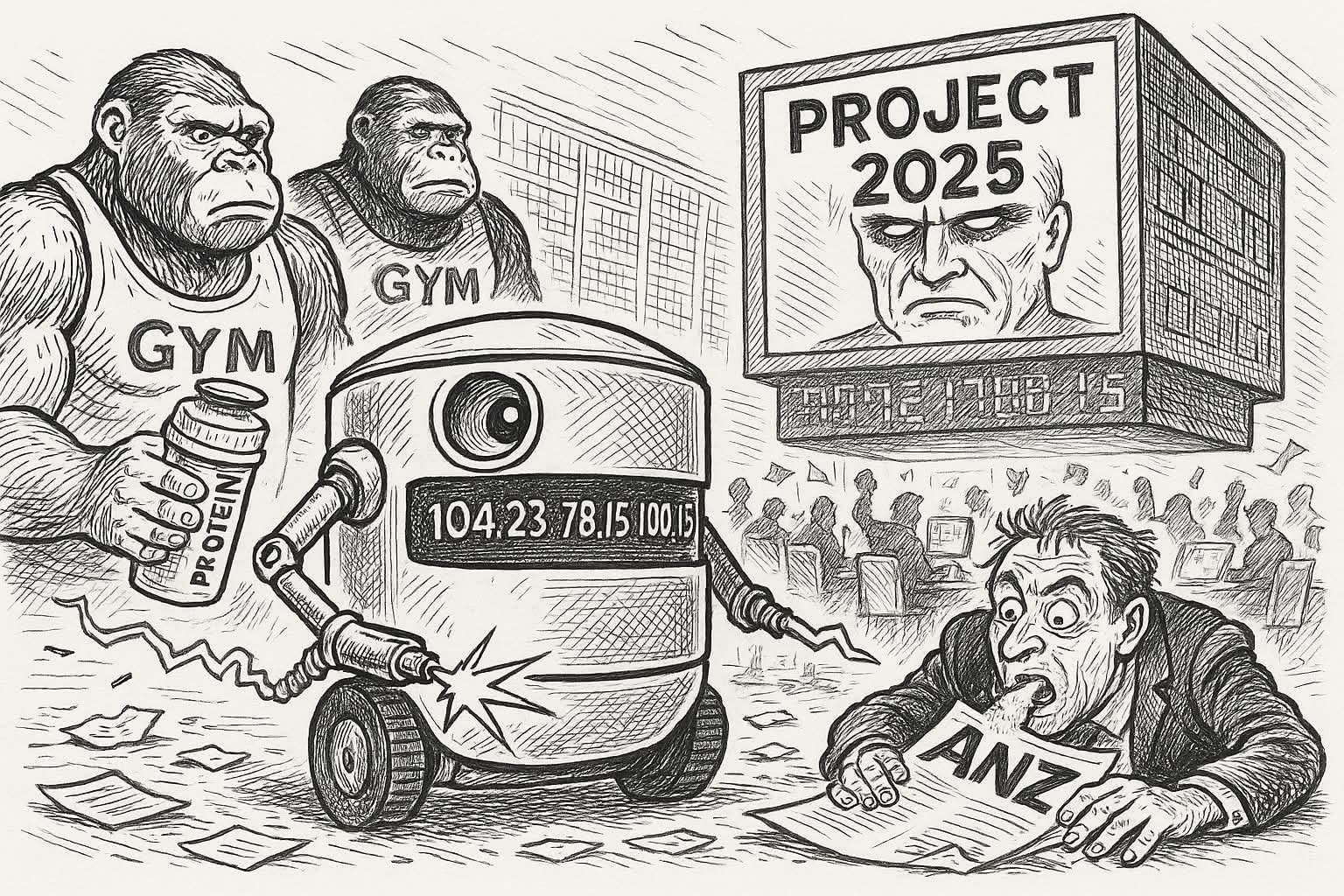
And he’s not happy about that. And then surprise, he got a phone call from the EU and he said, all right, all right. I was only kidding. Anyway, we’ll put a pause on the 50% tariffs, we put a pause on the other tariffs. just getting out there saying loud, noisy things, and then walking them back a day or a week or a couple of weeks later. And I don’t know what your take is on it, but my take that this is just classic Trump misdirection and smokescreen. [00:08:00] It is, keep the media busy, keep the public busy saying these outlandish things that everyone has to re, I mean, the media has to react to it. They can’t not react to it. his project 2025 team are pushing through the one big, beautiful bridge bill. It’s a beautiful bridge it’s gonna be there every time I hear about the one big, beautiful bill. That’s all I hear. It’s a big, beautiful bridge. It’s classic old school magic misdirection. You know, watch the right hand while the left hand is passing a bill full of, uh, sneaky gotcha clauses that they’re hoping no one, and they’re trying to push it through.
They did push it through the house. They’re trying to push it through the Senate. They’re trying to rush it through. A couple of Republicans, like Rand Paul are pushing back and going, whoa, whoa, whoa. Hey, hey, hold on. Slow down. It’s also gonna increase the [00:09:00] deficit by $4 trillion. He’s supposedly, you know, trying to fix the deficit problem while pushing through a budget bill that’s gonna increase it by $4 trillion, according to most economists.
But that’s like this whole, you know, the market reacts every time he says he’s going to put tariffs up, and they, they crash, it crashes, and then it bounces back when he says, oh no, I was only kidding a day or two later. I mean, it’s just, it’s just madness. Tony. It’s madness.
TK: You? Yeah, it is. Well, yes and no. It’s not madness. It’s calculated as you say, it’s flood the zone.
Cameron: Flood the zone,
TK: I also think it’s, have to go back and leaf through the art of the deal. It’s, it’s leverage for him to be able to say to Europe, I’m slapping a tariff on you now. Gimme a call and we’ll talk about it and I’ll that back.
Cameron: but they’re already It’s [00:10:00] not like he has to force them to pick up the phone because they’re already talking.
TK: no, he is forcing the pace. He’s got midterms coming up, so he is forcing the pace. ’cause you know, renegotiating a free trade agreement takes years and years and years and he hasn’t got the patience for that. Um, or the ability to concentrate for that long to keep everything going straight in his head over that time period.
So he’s, he’s compressing the time zone. It’s a negotiating tactic.
Cameron: Izzy though, compressing the time zones.
TK: absolutely. You,
Cameron: What DHH, what evidence do you have of the, that deals have been done in a compressed time zone.
TK: none. um, what’s her name? Meel or Van Lewin, whatever the, uh, EU
Cameron: she a science fiction author?
TK: Kayla Gwynn. Yes.
Cameron: Yeah, that was her, yeah.
TK: yeah. Uh, well, she said she’ll have a deal done by whatever the deadline was, July 21 or something. Um, [00:11:00] Midsummer Equinox, when they can all dance around the bonfire. But, um, so that’s what it’s about.
He’s, he’s trying to get some leverage and it may work. Um, I don’t think he’s focusing, I don’t think the tariffs are the issue for him, apart from the fact he thinks it’ll raise funds to help cover the tax cuts in the big, beautiful breach Bill. he’s, I, my gut feel is that. The tech bros want him to get the EU to back down on some of the restrictions they place on, you know, um, news content gathering on, uh, privacy issues on Google, being a monopoly, et cetera, et cetera.
So I wouldn’t be surprised if, if, uh, again, it’s a misdirection, but it’s bringing the EU to the table to get some kind of concession for, um, his supporters.
Cameron: Speaking of things, I, I took the one big beautiful bridge bill and I threw it [00:12:00] into Google’s Gemini AI morning, and I said, read this and tell me what clauses, uh, the average American should be most concerned about. And one of them that it pulled out was that the bill prevents any states from trying to regulate AI for 10 years. So no one’s allowed to regulate AI in the us.
TK: those negative waves, cam. It’s a beautiful bridge. It’ll be there.
Cameron: Yeah. All right. Well, that’s, uh, it’s interesting anyway, from a, so from a market perspective, from an investing perspective, obviously we, we have, I. It’s, it is noise, but it affects our portfolios
TK: yeah,
Cameron: all we can do is just do what we normally do. Right. Just it day by day.
TK: exactly. Tune into the companies and tune out the noise. But, um, I was surprised during your [00:13:00] market update that the US stock market is up 10% in a week. I mean, that’s huge.
Cameron: Yeah.
TK: about the size of the US market to move by 10%. That’s a, that’s an incredible amount in a short period of time.
Cameron: Yeah. Well, let me, um, let me just pull up my stocks chart here, s and p 500 in the last week. it’s down now. Well, that’s no good. How’s that work? How well it did jump? Quite a bit from. The 10th of May up to the what, the 21st of May, but now it’s, uh, down last day or two. Anyway, it’s been, you know, topsy-turvy as all hell.
TK: Oh yeah. Incredibly
Cameron: Mm Uh, what else have I got? Well, the buy list this week we had some new stocks on the buy [00:14:00] list, uh, TPG it’s been on before, but reran, I guess, including reference, T‑P-G-E-Z-L-T-W‑R.
And the one I wanna talk about, VVA, Viva Leisure, which last gyms, uh, Viva Leisure had an announcement yesterday too, that they had taken a strategic stake in a company called Gorilla X Labs that, uh, make gorillas.
TK: Mm-hmm.
Cameron: It’s, it’s, it’s a lab. Uh, gorilla, uh, gorilla Glue and, uh, just gorillas, they just breed gorillas. gorillas make gorillas great again. That’s their, their motto. No, it’s a, it’s a drinks company. They make performance drinks kind of thing. I did buy some VVA for the light portfolio. When I [00:15:00] sold HLS yesterday, I bought some VVA and the share prices collapsed since then. Oh, that’s great. God Damnit. VVA. Obviously the market didn’t really like that announcement after it came out. I did check it before I bought it, after the announcement had come out and the market hadn’t reacted to it, and I thought, oh, okay. And then it collapsed. But I did go back and read. You did a pulled pork on VVAA while ago.
TK: they run a series of, a network of gyms, don’t they?
Cameron: Yeah, I went back and reread your pulled pork, read the transcript of it, uh, to see what you had to say about it. It’s an interesting business and you, you highlighted a lot of the, the risks and concerns of it back then. But, uh, they’re back on the buy list again. They’ve had a, they haven’t had a great run in the last couple of years.
It’s been very [00:16:00] turbulent, as have many things. the share price crashed in March down to a dollar 20. It’s been working its way back up. It’s like a dollar 34. Dollar 33 today has been as high as dollar 50 over the last couple of years. But, uh, yeah, I don’t know much about what’s going on in the gym business, but, um, yeah.
’cause I’m a, I know a lot about the kung fu business, not so much about the gym business.
TK: Well, maybe they’re cloning gorillas to be personal trainers in the gyms, you
Cameron: I was just wondering,
TK: do your pushups, you have to, they put you on the treadmill and they think that you, you’re running away from a gorilla, but
Cameron: I was wondering this, this morning when we’re gonna have robot home security and I was thinking he wasn’t really
TK: building.
Cameron: he was not really a robot. He was like a more of [00:17:00] a cyborg I think.
TK: No,
Cameron: I was thinking.
TK: rope. There was security
Cameron: Oh, they were, that’s right. He had to shoot them or something, didn’t he? He had to blow them up at some point
TK: Mm-hmm.
Cameron: I was thinking they were like not even humanoid robots. What about the Roomba? The Roomba should have a camera built into it and a microphone.
So when you’re out of the house, if it hears something. It should self activate. Zip, zip around with a camera looking for intruders. do an intruder alert at night when you’re sleeping. It can be listening and then zipping around the house if it hears anything. should have some ai so it can tell the difference between a cat and a, an intruder in the house.
And then it could have like a little stun gun built in it so it could like just zap intruders in the house.
TK: Why stop. with a stun gun?
Cameron: Oh, really?[00:18:00]
TK: Go the full submachine gun. Oops. Made a mistake. It was, it was Fox going to the bathroom. Sorry about that.
Cameron: Well that’s my new business idea. Roomba. Roomba Security. Roomba Security robots. Mm-hmm.
TK: Yeah, Right. Be like the Daleks. If you have a two story place, it gets to the stairs and can’t get up or down.
Cameron: NWH, also on our buy list. Uh,
TK: hear you say that, I think of what you used to call them.
Cameron: yeah, yeah, yeah. Ninjas with attitude. Yeah. Uh, mining contractor, NRW has warned of a $113 million impairment from a messy dispute over who controls the Whyalla port near the loss making steelwork seized from Sanjeev Gupta’s Empire. In February, NRW shares plunged 8% on Thursday after the Western Australia [00:19:00] based company came out of a trading halt on the ASX.
This is an article in the Financial Review from May 15th. The Holt was prompted by a move by the South Australian government on Tuesday to amend legislation and override a legal dispute to give the way ALA Steel Works Administrator KordaMentha clear title to the whale port so it could embark on a sale process with certainty. I got a feeling you’ve talked about this in the past. Have you talked about this
TK: I from memory, I think we raised it as a news item when that went into a trading halt.
Cameron: right?
TK: they, they have a subsidiary from memory, it’s called Golding, who contract mining for the Gupta group of companies. I think from memory be an iron ore mine close to the steelworks. And they were running that to provide iron ore to the steelworks.
so when, the steelworks went into administration, then um, uh, there was a lot of speculation. The com, the company was [00:20:00] gonna lose over a hundred million dollars from memory and, uh, they went into a trading halt. Um, interestingly enough, the share prices recovered a bit since then. ’cause that was, as you say.
May 15. Uh, and all I could see was an announcement from NRW saying that they had some security over this, assets, uh, involved, um, didn’t dig down far enough to see what the assets were, but whether that was providing the market comfort enough to, um, to start buying the stock again. But, uh, it certainly turned up in the last week.
Cameron: Well, I, I just scrolled through my notes. I, I, we talked about it when they had the trading halt back in February. Then we talked about it again in February when the CFO suddenly resigned. Uh, but I dunno if we put a red flag on it or not. We also talked about that, uh, [00:21:00] their commodity exposure a little while ago.
Uh, we mentioned the CFO, but did we put a, do you remember putting a red flag on this?
TK: I don’t recall it. Sorry.
Cameron: Hmm. I’ll have to look up my, uh, transcript of that episode. I don’t think I have it in my notes as red flagged. Let me just check.
TK: I thought we talked about the most recent trading halt, but it may have just been in my notes that we didn’t get
Cameron: I.
TK: ’cause there was a couple of, you know, there was a couple of things we didn’t get to during reporting season.
Cameron: Mm, well I was going over this yesterday and I ended up adding it. I, I added it to my super yesterday ’cause I had to sell HLS well, I decided to sell HLS from my super and I replaced it ’cause I was looking at this and I was like, look, I, I took it as a, as a unfortunate event, but I didn’t think it was gonna have any sort of long-term underlying impact on the business.
And the rest of the business looked okay. [00:22:00] So I decided they’ll figure it out and put my trust in management to work with it. And the share price has been a little bit depressed a result of this. So I thought it might be a good time to buy in. It was on the buy list,
TK: Mm-hmm.
Cameron: so we will see what happens. But I just wanted to highlight that I did buy it.
TK: Okay. No thank you. It was, um, yeah, it, it’s a bit complex. I mean, if it’s the company’s administration and they have secured assets, they may get their money back or they might get cents in the dollar. And then the question is, um, uh, how does that affect it? So that would be, I’m assuming, their own monies by the Gupta Empire, haven’t been paid, and they’ve done work without being paid.
So it’ll be a write off, which will affect their accounts. but yeah, going forward, yeah, I’ll move on.
Cameron: Yeah. All right. Well, that’s all I have in my notes. What have you got in your notes for today? Tk,
TK: Yeah, not much. Just the [00:23:00] pulled pork to do on ANZ, the bank,
Cameron: our old friends.
TK: not the, not the whole of Australia and New Zealand, just ANZ, the bank,
Cameron: Oh, that’s good. Don’t have time. Don’t have time for you to do the whole country.
TK: I. 40,000 years ago, the, uh,
Cameron: Mm.
TK: the
Cameron: You’ll start,
TK: sprinkled stardust on the lizard dreaming.
Cameron: you’ll, start banging on about taxing. Super funds, again, unrealized gains and super funds. By the way, shout out to anyone who was one of the 60,000 views of that video on TikTok from last week, who’s now listening to the show. Welcome. Thanks for joining us. I,
TK: Yeah. Thank you. we’ll try and manufacture some other controversy for you. We’ll pick, pick something out of what we say. Put it up on TikTok, so,
Cameron: yeah.
TK: uh, everyone can have a bang on about their point of view. I think I’ve said enough about the super fund, [00:24:00] um, except to say one more thing, is that the threshold for the extra tax and the tax on unrealized gains is not indexed.
So you might think that it’s only gonna apply to rich people like you and I cam, but, uh, without indexation, it’s gonna affect most people over time. So just, uh, consider that when you are, drawing your battle lines for, for a TikTok battle on unrealized games. Anyway. Pulled pork on A and Z. Um, wanted to clear, I own the stock.
Uh, so off the bat, um, that have a look at their share. today. It’s currently Josephine. but it did go ex-dividend on the 13th of May and uh, with a bit of a long payment date until July 1st. So you should take that into account. Uh, if it does, uh, flirt with the cell line ’cause it is in a bit of a downtrend since it went ex-dividend.
But you know, that’s what happens when these large stocks go. Ex dividend, [00:25:00] di dividend was 83 cents 70%, 70% franking, uh, on that. So it’s worth the round about a buck in round numbers. So, uh, um, sale price is currently $27 28 and the share price when I did the analysis this morning was 28 64. So, um, without taking a dividend to into account, it’s only, um, you know, a bit over a dollar above the sell price.
Um, second bull line is 29 point 63, so. If you add the dividend and the franking credit to the current price, it is floating with a second byline. So just be aware of that if you can, are considering buying it that, um, it is ex-dividend and we don’t get paid until the 1st of July. Uh, interesting time to talk about ANZ.
It’s in a bit of, um, bit of flux because there’s a new CEO coming in. Uh, a guy called Nuno Matos, which we, we did report when he came, when he started a couple of weeks ago, [00:26:00] hire. He’s already recruited his first senior exec from a bank called Santander Spanish Bank. Um, he’s coming across to be the operations manager, and I would expect there to be more international recruits, uh, into the executive rank.
So there’ll be turnover in the executive ranks of ANZI would expect. Thought I’d spend some time just, uh, setting the scene for what he’s got on his plate, um, immediately without worrying about what his strategy and direction is for the bank. first thing is a couple of, you know, general backdrops to banking.
Um, interest rate cuts are happening. This year, I would’ve thought, um, we’ve had one already, which was only 25 basis points. RBA in their speeches, when they talked about the cut, thought that there would be, you know, given all that’s going on in the world with tariffs and uncertainty, that there would be more cuts during the year.
uh, I think should be a tailwind [00:27:00] for Aussie banks because, um, it’s likely that interest rate cuts will spark, um, interest in the housing market, which would mean more mortgages out with banks like ANZ. So I suspect that, um, he gets a, gets a tailwind behind him on that. The other thing which I thought was interesting was a couple of reports I read in the papers recently about n Z’s use of artificial intelligence and, uh, ANZ aren’t the only bank doing this.
I think all banks are probably doing it. but uh, last week I. As reported in the, uh, fin, um, the ci, the chief, uh, uh, it officer of, um, of ANZ came out and said his teams are creating artificial intelligence powered agents that will initially be deployed to help bankers prepare for client meetings, lifting workforce productivity.
Jared Florian, who [00:28:00] has been group executive of technology at ANZ for more than eight years the rollout of AI systems that work alongside bankers on everyday tasks will be the single biggest change program the bank undertakes. Over the next few years, agents will soon be helping ANZ business.
Bankers can power reports on companies and sectors improve engagement during meetings. Florian said in time agents could be used to triage loan applications, AI’s coming. ANZ are adapting it. So that could be another, another tailwind for them be a competitive advantage ’cause I expect all the banks will be doing it, but it, it should be a boost of productivity you would hope.
So they’re, they’re two sort of general background things. The other things that are going on at ANZ that interesting to call out one is a, a IT project, which has been going on for a long time, called the One Platform. And this is a, an app on your phone, which is, um, ANZ intends to migrate all customers [00:29:00] across to time and then, um, uh, start to provide digital banking services to customers rather than the sort of clunky branch services that happen now.
Uh, so ANZ report that they have reached a million customers on their one platform app. Um, that ha that was a, uh. Reported on the 13th of March this year. Um, and they also reported that they’re going to it easier for people to log in. They’re gonna scrap internet banking passwords, um, in an Australian first security move.
So this is a report from Channel seven News. Uh, internet banking frames plus customers will be rolled out in mid 2025, and that is what is set to be a password free experience. bank said it was the first passwordless web banking feature in Australia Instead of a password, customers will be able to log into their accounts using a pass key, which could be their fingerprint face or mobile device.[00:30:00]
PIN or customers will be able to enter their mobile phone number and approve a login request by, uh, sent to their ANZ plus app. By introducing this change, we’re helping prevent customer login details from the risk of data breaches or phishing attacks. Uh, the bank said, so
Cameron: Hold on a second. just logged into my Bendigo Bank app with my face. I don’t have a pass. I don’t have a password on my Bendigo bank app.
TK: shush can, it’s
Cameron: That’s not right.
TK: ANZ are claiming it’s a first.
Cameron: ANZ are full of .
Cameron Reilly: beep
TK: Hmm.
Cameron: I’ve had that on my Bendigo Bank app for a year or so.
TK: Really? Wow.
Cameron: Hmm.
TK: Okay. Well, Nuno needs to take note. Can’t talk to the marketing team at ANZ. Uh. However, um, the ANZ plus platform has not been without its controversy and, uh. [00:31:00] The, uh, an article in the, uh, I think it was in the fin anyway, an article, um, uh, written by James there. So that’d be the fin says, um, ANZ Quizzed Over Aris of new platform costing $1 million a day since the project was first flagged in 2020, app with limited functionality launched in 2022, the bank has spent $1.5 billion on the platform.
Uh, it will ultimate ultimately replace that legacy ANZ technology reducing the cost of serving customers. So that’s the headline at a briefing on Monday, which was in March, 2025, ANZ Group Executive for retail banking. Male Carnegie, how I’m pronouncing that right. Male Maley provided no hard numbers, cost targets, commitments on the time it will take to finish the project.
failed to rule out. The cost would rise from current levels before savings are realized. We are. Why are we in the position where you can’t provide some more numbers to us? [00:32:00] Ask Victor, German and analyst from Macquarie. Carnegie assured him. Returns will be realized over the medium term when more products and features are rolled out during 2026 and after millions of existing ANZ customers are migrated onto.
Plus, over the next couple of years. Incoming Chief Executive Nun, no Matos, who will replace Shane Elliot in July be closely involved in migration decisions. Carnegie said a pilot, Franz of staff will begin in June. Sorry. Back then, they thought that the handover was happening in July. I think none those already started.
Uh, Carnegie said A N Z’s upgrades went further than other banks. New systems will use open banking for home loan applications while features such as introducer commissions and negotiating pricing will be rolled out next year. Plus, pluses Con has focused on consolidating 350 SES systems in the messy middle of ANZ, she said, which have now been rolled into TWI 12 primary systems.
[00:33:00] MST Financial Analyst Brian Johnson, questioned whether a N Z’s cost savings estimates for attracting new home loan customers were too high given mortgage brokers still need to be paid commissions. I think a lot of time and effort and money’s been put into the ANZ one Plus program. Um, I think ever since it was announced, the, the, the numbers around it have been gray, to say the least.
Um. And, uh, it’s been years and years and years before anything’s happened it’s now getting rolled out. I think it’s also fair to say that any sort of cost blowout in the one blo, one plus program will hurt the bottom line. And likewise, any, uh, benefits which they thought they’re getting, which don’t happen will hurt the bottom line.
So,
Cameron: Can I, can I make a prediction here?
TK: that’s a, key, key, uh, project for Nuno to, to manage. Yes, go ahead, make a
Cameron: prediction is, my [00:34:00] prediction is within about six months, Nuno is gonna go, you know what? We need to scrap this whole thing because the future of banking is all about AI and we, you have an integrated AI into this entire system. It needs to be completely rebuilt around an AI backend framework so that I’ll scrap the whole thing and start again.
TK: Yeah, that’s door number one. It often happens with large IT projects ’cause what, when they take too long to be built internally, vendor builds it externally and will sell you, you know, um, and software as a service to replace it at a very cheap price or whatever.
Cameron: All the, the, the software paradigms change dramatically within 10 years. And customer expectations, which is the big one here, change dramatically. And businesses wanna derive benefits from the new technologies. And this is gonna lock ’em in for long it’s, yeah. This is, this is dead on arrival as far as I’m concerned.
TK: and it hasn’t really arrived yet. So, uh, that’s the other point. It’s still 2027 is when we can [00:35:00] see the completion of the rollout. So I. If it goes to plan. So yeah, that’s gonna be an issue for Nuno. Um, there’s a couple of other issues if you bear with me. Um, there’s been a, a js between ANZ and the regulator, as there often is with banks and large companies.
But, um, there’s been a couple of issues with ANZ, um, and a PR, the banking regulator, the prudential regulator, which regulates the banks and financial institutions has over time, but, uh, added to it more recently, um, imposed a $1 billion capital overlay on ANZ, which is more than what the other banks have.
- To give that some context, the, the banks are all required to hold capital for, um, uh, a rainy day for when there’s a downturn, like a GFC in the economy in case there’s a run on the banks. Um, ’cause what the banking model is, you deposit with us and then we take that and we loan it out as [00:36:00] mortgages and other loans.
Um, and if there’s a run on the bank and you come to get you the money outta the bank and the bank could go, uh, well we have to call in all these mortgages to pay you. We don’t actually have the cash you put into the bank. to, um, try and regulate that the banks are all required to hold what’s called tier one capital, and there are various tiers.
ANZ has to hold more tier one capital than the other banks, an extra billion dollars. Um, because the a PR, the regulator sees it as being slightly more risky than the other banks. And so if there’s a run, they have more of a financial buffer to pay our customers who put deposits into the banks.
that extra capital just sits there and it’s not earning income for the bank or as much income as if it was owned out as mortgages, and so it hurts their, their bottom line. That’s, that’s occurred because, um, over time there’s been a couple of, uh, uh, [00:37:00] problems highlighted by the regulator. so this is, uh, from an article, we’ll, going back to April 4th, and it talks about some of these issues.
Um, so Thursday before April 4th, according to the, uh, this article from the A FR AAN Ze released the findings of a long running review by consultants Oliver Wyman of its markets division that uncovered bullying, substance abuse, and managers turning a blind eye to cultural failings these issues could extend across the company’s retail bank.
there wasn’t evidence of systemic misconduct, the report found leadership shortcomings and gaps in how ANZ managed non-financial risks. regulator went further saying ANZ had persistent and prevalent problems with non-financial risks. uh, Australian Prudential Regulation Authority on Thursday said ANZ would have to hold an extra million on its balance sheet to [00:38:00] mitigate those risks, taking its total capital at overlay as it is known to a billion dollars.
compares to no capital overlay for ANZ. Bigger rivals, CommBank and National Australia Bank. And a $500 million impulse for Westpac, the chair, uh, Paul O. Sullivan has issued a mere culpa and says, it is disappointing that we have not yet done enough on non-financial risk. will appoint an independent reviewer and reallocate resources to deal with its governance.
Uh, the, lemme just go on, skip over that. Um, another issue, the Australian Financial Review revealed in May that there’s the Australian Securities and Investment Commission had received a referral from the Australian Office of Financial Management, which manages multi-billion dollar debt issuances for the federal government how ANZ organized the sale of $14 billion in government bonds uh, how they [00:39:00] behaved.
Since then, ASIC has ramped up the pressure with its chairman, Joe Longo, telling a parliamentary committee last year, the investigation had the highest priority, given the seriousness of the alleged misconduct. investigation remains ongoing and no action has been taken. That’s as of April the fourth.
AIC is also probing potential compliance failings within a n Z’s retail bank, including allegations that interest on savings accounts wasn’t properly accrued and that the bank charged fees on dead customers accounts, et cetera. So this is all I’m reading from the Australian Financial Review article by Joyce Cus from the 4th of April.
Some of these things, are in progress. Some of the things, these things are being resolved. But my point is that there’s a lot of focus on ANZ, uh, because of regulator issues with the way the bank has being run. a lot of these things are, uh, are being reviewed and there’s, you know, internal processes to fix [00:40:00] them, et cetera, et cetera.
so I’d say that to the credit of the board and perhaps the outgoing CEO Shane Elliot, the deck’s being cleared as much as possible for the new CEO. And I would say coming from a European banking background that he has and a global banking perspective, he’s used to dealing with government regulators, and I would expect that clearing the billion dollar capital overlay is a priority and perhaps a reason for why he was hired.
I see you smiling their com. Uh, can care, care to comment
Cameron: I want, oh, I wanna go back to these non, non-financial risks. What did you say something about substance abuse issues.
TK: Yes. In the, trading room at ANZ,
Cameron: So, snotting, snorting, snorting coke in the trading room. Is that essentially what the, uh, or allegation is here? Reading between the lines?
TK: Oh, I’m not gonna comment on that.
Cameron: Well substance abuse. What it’s, [00:41:00] it is either alcohol or e illicit or illicit drugs. Caffeine. that classify APRA take issue with people drinking too much coffee at work. Now
TK: What was that? Uh, side for episode? Oh man, I’ve had eight cups. Jerry, we have to do something. Come on.
Cameron: Chrissy’s been saying to me for the last week or so, are you doing coke or something? You’re all like wired up. And then she figured it’s the matcha. I’ve been drinking this new brand of ceremonial grade matcha. She’s like, that’s It’s getting you wired up.
TK: Oh, you should, should send your CV over the ANZ See, see if you qualify.
Cameron: Yeah, that’s my substance abuse. Too much matcha.
TK: Mm.
Cameron: uh, I was just thinking about you talking about them clearing the decks says Shane has cleared the decks. They’ve been.
TK: Well, hopefully, I mean, if, if, if Nuno can, um, in the good books of the [00:42:00] regulators, then um, that’s a, then they remove that billion dollar capital overlay. That’s a big win for the bank.
Cameron: So my question to you is, is this a governance red flag? If they’re all snorting coke in an ANZ, are we, should we be governance red flag, ANZ on our buy list?
TK: Uh, I, I haven’t, and I own the stock. potentially. Um, look, you could also say potentially it’s, well, I won’t say it. Um, the CEOs the almost 10 year tenure around the time that these things are being looked at. So, uh, and, and I, it may go appeasing the regulator that, that they’ve claimed to scalp, um, and that Nuno can come in now and, and say that he’s, uh, you know, sweep sweeping the, the, the bad, uh, eggs from ANZ and it’s a
Cameron: Sweeping the
TK: cetera, et cetera.
Cameron: sweeping [00:43:00] the coke under the, the mat.
TK: So, uh, look, it, it’s, it’s, it’s still uphill for them, but it’s, um, it’s probably a change in the right direction. Some, it’s, maybe it’s an orange card, but, um, yeah, new management, so hopefully new culture. then the last thing that Nuno has to deal with is that, uh, uh, Shane Elliot, uh, acquired Suncorp before he left, which is, or he invited the, acquired the retail banking arm of Suncorp.
the,
Cameron: did personally, or ANZ did,
TK: ANZ did.
Cameron: right?
TK: Yeah, he, he, uh, engineered it. So, um, again, I’ll quote from an article in the fin among his achievements, Elliot streamlined the bank’s Asian footprint to strengthen focus on the core business in Australia, successfully marshaled the $4.9 billion takeover of some corp bank. to his [00:44:00] achievements, Elliot pointed to the sale of 30, mostly Asian businesses and cutting about 10,000 institutional bank customers.
Moves that freed up $14 billion of capital, of which was distributed to shareholders via share buybacks and the rest invested. Elliot said the first half had been a N Z’s strongest ever for revenue at $11 billion, reflecting a step change in earnings following last year’s acquisition of Suncorp Bank.
Still analysts worry that Suncorp’s contribution is covering up underlying softness in the ANZ brand. think underlying franchise results at a divisional level for the legacy ANZ business a week said UBS Analyst, John Story. So that’s from the A FR May eight article by James Ays about the ANZ results, summary to include there.
Um, that, that Shane Elliot did do a good job of reversing their, the, his predecessor’s expansion into Asia, um, and has now brought the bank back to, largely back to the [00:45:00] Australian shores. I did read at the time when the Suncorp. Acquisition was floated. Some analysts were saying, well, N Z’s mortgage market share was in the claim, and it, the, mortgage market share that the bank, the banking section of Suncorp had was about the same.
And so it was plugging a leak. if that’s the case, that’s great. Um, but it doesn’t the leak necessarily in the underlying business, which I think is what UBS analyst John’s story was referring to there. so we need to see some evidence for the underlying blue brand, a MZ fixing the the mortgage market share leak, um, before we can say that the, the problem has been solved.
The other thing that, uh, Nuno will face is the headache of integrating Suncorp. It’s a reasonably large acquisition, uh, has to be, um, integrated into ANZ systems and processes and people. uh, management had already said that, [00:46:00] um, Suncorp syn may not flow through until 2027. Um, although I think in the results they, they called out about 20 million, um, per annum.
I think I’ve got that right, but I’ll cover it off in a minute. Um, or synergies already bank, so he’s got his work cut out from him on that front as well, so are sort of five things on his plate without worrying about what he wants to do to put his own stamp on the bank, including recruiting executives.
So he is gonna be a busy boy. Um, but to be fair, the outgoing CEOs, um, the, the footing of the bank by getting out of Asia, um, by acquiring Suncorp. I’ll say it’s a messy development of the OnePlus platform, but it may prove to have some benefits to the bank. Um, and then, um, there’s the regulator issues, which Nuno should be well placed to, to work through being a clean skin and having a lot [00:47:00] of experience with regulators in Europe.
Um, and ’cause it’s a highly regulated banking system as well over there. um, that’s what’s on his, um, on his desk latest results. So ANZ reported cash earnings of $3.57 billion for first half of 2025. up 12%, half on half. And broadly in line with expectations though flat year on year. Uh, um, revenue reached $11 billion, uh, rising 5%, half on half, driven by the full six month contribution from Suncorp Bank, also began to deliver early cost energies.
Yeah, about $20 million realized to date, which is not the total sum of what they hoped to get. However, underlying momentum showed signs of fatigue, um, the group net interest margin, the NIM we’ve talked about before. When we talk about banks, it fell two basis points to, uh, 1.56%. [00:48:00] Still anything in the 1.5 I think is reasonably healthy for a bank.
Uh, and this I’m reading from the stock doctor summary, uh, that key and trend did on the results. Um, so he talks about, um, the financial health perspective um, uh. The tier one ratio of 12.2, uh, fell from 12.2% to 11.8%, but remains above the regulatory minimums reinforcing the ban bank sound. Capital position.
Credit quality remains robust with the individual provision loss rate stable at four basis points. though collective provisions increased to one 45 million up from 70 million signaling a more cautious stance, I mean, economic uncertainty. And that’s something to focus on with banks. Generally, if they’re starting to increase loss provisions, that means they think that there’s a bit of instability coming, um, and that there’ll be more the economy’s in turmoil and there’ll be more people who are either late [00:49:00] paying their mortgages or, um, throw their keys in and.
And the bank takes position, possession of the asset. So it’s not good to see that increasing, but it’s, it’s not a, a big increase. I mean, 70 million wasn’t much, and 145 million isn’t much in the scheme of the amount of, yeah, the billions of dollars they’ve got out there as listed as mortgages. But certainly it’s a trend to watch.
If it gets worse than that, it, it’s not a good thing for banks. Uh, like other major banks, earnings and dividend growth for the year is forecast to be flat to modest. Management flagged the challenging outlook shaped by global market volatility, regulated regulatory regulatory scrutiny, including an app per imposed capital overlay.
However, ANZ remains focused on delivering long-term value through the integration of Suncorp Bank, expansion of ANZ plus and continued digital investment. According to Ken at stock Doctor, um, ANZ have also been buying back their shares. So that’s something else to note. So [00:50:00] that’s the, the report on ANZ and where they’re at the QAV numbers.
Uh, I’m doing the analysis at 28 66 as the stock price, which interestingly enough is 2% above consensus target. We often don’t see that. So, um, that’s, um, it’s trading around or above consensus target. we give it a negative one score for that in the, um, in the checklist. IV one’s only $11 46. two is 2195.
So both of those are below the current price of 28 66. Stock doctor financial health and trend are strong and steady, and ANZ is what they call a star income stock. So, um. In other words, it’s a, it’s a quality company. If you are investing for dividends for retirement, um, you should look at it uh, we give it an extra 0.5 in our checklist for a star income stock or for it being a star income stock.
Stock EDIA ranking, though not as kind. [00:51:00] Um, the REST score is only four out of nine, and the quality ranking is only 44 out of a hundred. Uh, the value ranking was a, a rank of 90, which was good. But overall, 69. I think the reason for that is that, um, uh, stockopedia tend to rank financial institutions lower than what stock Doctor does.
And this was actually something stock doctor used to do for a long time. In its early days. It wouldn’t rank banks, because they don’t display the same mechanisms, uh, of industrial companies. And if I look at the operating cash flow for a bank, it’s, it’s meant to be the difference between.
The, the, the rate it pays on deposits what it pays, uh, gets in for mortgages. Um, in broad terms. There’s obviously other things in there too, but that’s the big, you know, the big movers of operating cashflow for a bank. But it is, it is, um, it is lumpy because, you know, if the bank [00:52:00] issued a bond, um, placement, that, that could have been for billions and billions of dollars.
Um, or if it, um, there was a lag in either mortgage interest rates changing compared to deposit rates changing, that could be a, um, a big impact on operating cash flow. So if you look at the banks operating cash flows year to year or half on half, they can be very lumpy, but at the moment, ANZ is a wash with operating cash flow.
um, yeah, we like it. It’s the, they, they should put that cash flow to good use. Um, you know, it’s a, it’s a large bank. Um. With, uh, very experienced management. So, um, we should, we should see that operating cash flow deployed well, but I do highlight that banks come on and off our stock list, um, in different ways than say a mining company does, or a simple coffee shop does, um, because of, um, lumpy cash flows.
Anyway. going back to I just wanted [00:53:00] to, to highlight as well that even though they’ve ranked at, uh, 69 on their scoring out of a hundred, they do highlight the fact that ANZ is what, um, termed, uh, a James O’Shaughnessys value screen stock. we’ve obviously spoke about, um.
O’Shaughnessy before in his book, what Works On Wall Street, and I’ll quote from Encyclopedia O’Shaughnessys, cornerstone Value is a value investing strategy presented by US Fund manager James O’Shaughnessy, in his 1996 book, what Works On Wall Street. His extensive backtesting found that value investing works particularly well with large cap stocks with above average sales and cash flow, high levels of share liquidity, which were then sorted for the highest dividend yield.
said, generally speaking, when things are going against you, as they inevitably will, you have to stick to the underlying strategy only by doing so. Will you be around for when it [00:54:00] comes rebounding back? found that this value strategy produced an annual compound return of 15% between 54 and 96, to 8.3% for the s and p 500 index.
As Shaughnessy has continued to conduct detailed analysis of standard and pause compus stat database to identify the most effective investing strategies. So nessy likes a stock like ANZ. We like it, it’s on the QAVB list. Um, a lot of, one of the reasons why we both like it is the dividend yield is high.
it’s 5.79%, so we don’t, it doesn’t quite meet our threshold for scoring, which is the average retail, uh, mortgage rate, but it’s getting up there, it’s getting pretty close. PE is 12 point times, uh, 12.8 times, so not the highest or the lowest in the last three years, so it doesn’t score for that.
Prop C however, is only 1.48 times. And that drives the higher position on the buyer list. Uh, [00:55:00] and I spoke about operating cash flows in banks before. Um, but prop cap at 1.48 times is very, very, um, good. Very, very low. Net equity per share is $24 34 and plus 30% is 31 65. So it’s higher than the stock price, so we can buy it for book plus earnings per share.
Growth is forecast at only being 2%, so we can’t buy it for growth over pe. Um, there’s obviously no one in the founder. This is. Companies almost 200 years old. Uh, equity is, uh, almost consistently increasing, but not quite. So we can’t score it for that. So all in all quality score is 7.5 outta 15 or 50%. So not a great quality score, but the prop calf it to a QAV score of 0.34, which brings it, um, onto the bile list since the last results, and very high up the bile list as well.
And a large a DT stock, obviously. So that’s ANZ.
Cameron: Thank you tk. I am just looking at their 10 year [00:56:00] chart and I wanna ask you about this, like the share price has basically been relatively stable for 10 years. If I go back 10 years ago, it was trading at uh, $31. currently trading at $29. It’s gone up as high as 32. And if I leave outside, if I leave COVID out of it, that sort of 20 20 20, oh yeah, period.
Actually it was back to $28 by March, 2021. It’s sort of hovered around the $28 mark. Sometimes 27, sometimes 29 30. But for 10 years it’s just hovered around 28, 29, 30. Um. It a great investment unless you bought it bang at the start of COVID. It’s gone nowhere for 10 years. It just seems to hover around the same zone.
Goes up a [00:57:00] little bit, comes back a little bit. Like if, if you look at a chart like that, yeah, it’s scoring well on our buy list, but it’s done nothing for the last 10 years. What are the chances that in the next 10 years it’s gonna break out of that band of 27 to $30?
TK: Well, who knows? But, um, I don’t have a problem holding it myself. Um, the dividend yields kind of
Cameron: I.
TK: you, even if the share price flat, you know, it’s yielding on a gross up basis, 7%. but that aside, I, I don’t see any of the banks as a buy forever stock. Um, you know, it’ll, it’ll trade through its banking.
So banks tend to go in cycles like a lot of companies do. And, um, you know, it’ll trade through its cycle. It’s, it’s, come on down, I’ll buy this now. It won’t stay there forever. uh. I expect next half operating cash may not be as strong as this half, it’ll drop off the buy list and then we’ll trade it using our trend lines and bank dividends along the [00:58:00] way.
Cameron: Okay. Uh, assuming you weren’t in a situation where there was a limited number of things that you could buy because of your a DT requirements,
TK: Mm-hmm.
Cameron: if you had an option between buying a and Z and something else that didn’t trade within a very defined band over 10 years. Would you look at the other option?
TK: Yeah. Um, um, it depends. I would always try and buy from the top down. So ANZ is very high up on the buy, so depends what the other option is, I guess. But I don’t have a problem buying ANZ. It’s one part of the portfolio. It’s a high yielding part of the portfolio. And, um, I said, uh. think there’s some, um, I don’t wanna make a prediction.
I think there’s some chance that there’s some tailwinds behind ANZ rates this year will help. if the new CEO can befriend the regulators and get the billion dollars reduced or removed from the capital, that’ll help capital overlay, [00:59:00] that’ll help. you know, if the acquisition at some corp goes, well, that will help, et cetera, et cetera.
So,
Cameron: They just need to invite the regulators to a party in the trading room. Uh, that’ll, you just be like,
TK: That was the problem. The, the a or happened to be the, a auditor day to the ANZ trading room. Come in. Come in. Would you like some coffee?
Cameron: No, the reg, the regulator didn’t get invited. That was the problem he heard about. It was just pissy.
TK: invited. That was the problem. He went, oh my god, this, what’s going on? This is like Wall Street from the 1980s.
Cameron: Yeah. 1985.
TK: Mm.
Cameron: All right. Thank you. Tk. That’s ANZ. Are you okay? Yes, I’m okay. Thank you. it’s just what I do when I’m recording podcasts. Yeah, yeah, yeah. Thank you. Burst in and ask me if I’m okay. ’cause I’m yelling.
TK: Room
Cameron: Uh, [01:00:00] AF after hours. Tony.
TK: Yeah, I had a lot. You see that George went past,
Cameron: I did. Yeah. Norm.
TK: Yes.
Cameron: Norm. I mean, considering he’s been a very large gentleman for a very long time, it’s not that surprising. And he was in his late seventies, I think 76, 77, something like that. But, uh, yeah. What a, what a great part of my childhood. He was as norm.
TK: And made a career out of one part that I can think of. Um,
Cameron: He did other things, but yeah,
TK: years. Yeah.
Cameron: I think he was also Norm, you know, did Cameos and Frazier and
TK: Hmm
Cameron: whatever other spinoffs there were. Yeah,
TK: But I was sad to say that part of,
Cameron: yeah.
TK: of my, uh, history as well,
Cameron: I,
TK: um, reading a book called What I Ate in One Year by Stanley Tucci. Have you ever read any of his books?
Cameron: no, but I just started watching Tucci in [01:01:00] Italy.
TK: yeah.
Cameron: That’s a good show.
TK: It is, it’s of the same milk. So he is written a couple of books already on Italian cuisine and this one’s a diary of, uh, what he ate year before last and uh, while he was filming Conclave and, um, chin The Chita in Roma. So I wish had the book before we went across the Rome ’cause he talks about a lot of cafes and restaurants, which would’ve been fun to
Cameron: Hmm,
TK: to and experience the local Italian cuisine.
Cameron: hmm.
TK: Yeah. So that’s, that’s been fun. Makes me, um, salivate when I read his recipes and what he ate and good it
Cameron: Watching I put on like three kilos just watching an episode of the show, so yeah,
TK: Yeah. Uh, ha. Have you heard of a band called a Toba Coke? No. Otto b Beaver, dunno how to pronounce it. A Toba K Beaver.
Cameron: I have not
TK: Uh, check them out. It’s a girl punk band from Japan.
Cameron: How do you spell this?
TK: O‑T-O-B-O-K‑E. [01:02:00] Beaver. Lot of fun.
Cameron: B‑O-K-O-T-O‑B. Yeah.
TK: one word. And then Beaver,
Cameron: Which is Beaver.
TK: massage parlor in Japan that was opposite the school of one of the, where the lead singer went to school or something. So, yeah.
Cameron: Oh, okay.
TK: great
Cameron: Sounds, sounds great.
TK: Yeah. like if you like that sort of Quentin Tarantino soundtrack
Cameron: Yep.
TK: eights were fighting.
It’s that
Cameron: I
TK: of stuff. It’s really good.
Cameron: now, one of the young guys at Kung fu was insisting that I watch or said it’s great. And I’ve seen some positive stuff on TikTok about it too. You’re not a fan apparently.
TK: Well,
Cameron: I.
TK: Jenny and I would watch the episodes when they were released and go, this is, this is really dull. then we go away for a bit and come back and we watch the next batch of three and we watch the last batch of three for the season on the weekend. And we both looked at each other and went.[01:03:00]
This is just all backstory and no plot, and it’s just tedious. It really is crap. I hated it. like he, like, when it gets down to the second last episode and the last episode, Jenny and I are saying, oh, okay. He, you know, that character’s in Rogue One and that one’s in Rogue One. It must be getting close now.
The, where the road one starts and, and then just like every, like the first season in and it just finishes. another season. No, there could be another five seasons to go before you get to Road One. It’s just so tedious and boring. Ponderous didn’t like it at all. No plot. All, all backstory.
Yeah.
Cameron: Well, I’ve seen positive reviews of it on TikTok, people saying.
TK: it
Cameron: Oh, right. Yeah. Okay. People are saying this is, it’s like, this is what a revolution, a rebellion is really like. It’s just lots and lots of people. Yeah. Lots of, lots of people every day just trying to, know, did [01:04:00] you hear that?
TK: Oh, it’s probably the rain. This rainstorm just blown in.
Cameron: Oh, right. Uh, lots of people dedicating their lives to just trying to undo the empire bit by bit and overthrow it bit by bit. And then Luke and Han come along at the last, last minute and, uh, get medals.
TK: well, yeah, and it could have
Cameron: I.
TK: minute movie, but, um, like two series of it, hour along episodes, or nine episodes of, you know, this wedding feast and that wedding feast and Senate machinations and senator and that senator and up who and the Senate is just hideous and, um, I mean, the acting’s good.
The, I mean, the money they’ve pour into, it’s amazing. you know, the Ben Mendelssohn’s great in it, building the Death Star, you know, but again, you have two seasons of political [01:05:00] intrigue in the, in the empire as it as it tries to build a death star. It’s like, it, it’s just, it’s like watching a public service try and produce something and just, it’s just tedious interminable.
Cameron: Like, it’s like utopia, but without the jokes.
TK: Yeah. It’s exactly what it’s like. It’s exactly what it’s like. Anyway, I, I’ll save you from it. Don’t watch it shot. Um, but Mob Land and Landman, still really enjoying those. The latest Mob Land drop during the week. Thomas Har, Tom Hardy, just brilliant acting. Um, Helen Miran, crazy as fantastic character.
Pierce Brosnan. Crazy as, as well. It’s over the top
Cameron: What’s that on again?
TK: it’s on Paramount Plus
Cameron: Oh, god dammit.
TK: which is not as good, but it’s, it’s, it’s fun. um, what’s his name? Billy [01:06:00] Bob Thornton.
Cameron: All right.
TK: yeah,
Cameron: I.
TK: it’s good fun. So we watch those. Um, got a couple of horses running this week and Julee and Lady Prance a lot.
I both probably have starts this week, so I watch that. about me for the week. How about you?
Cameron: Well, I wanted to do an RIP, uh, for a guy who was really influential to me. Uh, when it comes to the singularity, Damien Broderick, um, I’ve probably mentioned him to you over the years. He wrote a couple of books in the mid to late nineties that I read and really if got me interested in the whole thing. He may, I may have read him before I read Kurtzweil.
TK: right.
Cameron: He wrote a book called The Spike around about
TK: That,
Cameron: 97. And then he wrote one a couple of years later called The Last Mortal Generation, [01:07:00] where he basically said that people be born sort of 1970 ish, would be the last mortal generation. Um, but he also said that if we played our cards right, we, and we stayed healthy, we might last long enough to become immortal, effectively immortal. I took him out to dinner around about 99, 2000. He was living in Melbourne. I was living in Melbourne. I reached out to him and took him out to dinner at the Stoke House in St. Kilda. And I remember asking him, when are people gonna take the singularity seriously? And he said, when it’s too late to do anything about it. And I’ve tried to track him down over the years to get him on a podcast, but he ended up, he was sort of a recluse. Wasn’t on social media. His, the email that I had bounced, he ended up moving to the US and then he moved to South America. Anyway, I went, I was talking about him the other day and I went looking up to, went and [01:08:00] looked him up again and found out he died last month.
He was like 80 something. So that was kind of tragic for me. Like the guy who wrote all these books that talked about AI and the singularity coming
TK: And
Cameron: part of the, part of the predicting. It just got to the edge of it and, uh, didn’t make it through. Um, it’d be like if Kurtz Wild died before he got to take advantage of it.
The guy who spent a lot of time thinking about it, he was a science fiction author mostly, but yeah.
TK: We should put a list together of people who should survive till a singularity so they can live forever. You and me.
Cameron: Yeah, of course. Top of the list.
TK: yeah, the tragedy will be i’ll, I’ll have Alzheimer’s just, just, uh, diagnosed before I live forever,
Cameron: We will fix that. Yeah, we’ll fix that.
TK: good.
Cameron: Yeah. So RIP Damien Broderick, um, there are new albums came out last week, the new album by the Sparks, or [01:09:00] just Sparks Not The Sparks By Sparks
TK: Mm-hmm.
Cameron: dropped. we’ve been listening to that on repeat. We love it. It’s got a lot of just classic Spark songs. Ron May is turning 80 in August, this album has some funky, funky grooves and his usual sarcastic humor in it. it’s, it’s really, I mean, super impressed that he’s 80 and is just churning out like they’re the peak of the success that they’ve had in their 55 odd year career popularity, selling out tours all over the world. I. But the tunes that he’s putting out are bangers. I mean, it’s not for everybody, but just really funky grooves,
TK: I’ll check it
Cameron: which is impressive for somebody who’s 80.
It’s called Mad is the name of the album with an exclamation mark ’cause he’s mad. And then Robert Forster from the Go-Betweens. His new album came out on Friday or Saturday as well. And we went to see [01:10:00] him
TK: Oh,
Cameron: a record launch in the city on Sunday lunchtime at Rocking Horse Records that were celebrating their 50th anniversary.
TK: I was gonna say, is rocking horse still going?
Cameron: Still going. It’s 50 years they’ve been going. He did three tracks from the new album as a bit of a record launch. It was packed. We took Fox and one of his friends down and they were bored within about 10 seconds. But we loved it. It’s good to see Robert again and
TK: did they steal albums?
Cameron: no, but um, I. Uh, they went outside ’cause it’s downstairs, uh, in the mall. They went upstairs at one point they tried to come back down and some guy said, Hey, where’s your tickets to them?
TK: Uh.
Cameron: was not a, not a ticketed event. He was joking around. Fox came and told me, some guy said, where’s our tickets? I said, you just hold this up and you go, here’s my ticket. That’s all you do. Here’s my ticket, mate. You like that? Uh, but yeah, the Robert Forster album we love, it’s classic late Robert Forster sounds like [01:11:00] all of his other albums, but songs of love and loss and um, just his sort of groove, his own sort of ironic sense of humor mapped all through it. But he’s getting old too.
TK: Yes, he
Cameron: listen,
TK: him on a clip recently. Yeah.
Cameron: listening to him intro. Oh right, yeah. Just listening to him introducing the numbers. He is got old man voice, you know. Talking like this, looking at old, so he should live forever too.
TK: Gosh. Rocking Horse. Oh. Must have gone to Rocking Horse records almost once a week. I’d say. Check out the latest imports and, uh, I’d sometimes bump into schoolmates who had made a habit of taking in their technical drawing folders and walking out with at least one album into the, into the folder.
Cameron: Well, it sort of amazes me that sort of [01:12:00] amazes me that those stores have survived. Like it’s, they’ve got just walls and walls of records and CDs and cassette tapes, but just amazing. That to me, that there, there’s still a thing. There you go.
TK: Yeah.
Vinyls making a comeback
Cameron: Hmm.
TK: headlessly expensive.
Cameron: Hideously. Yes.
TK: nieces and that I buy records for, and they’re like, sometimes they’re 70 bucks an album. It’s just
Cameron: Mm
TK: very expensive. I wish
Cameron: mm
TK: instead of
Cameron: mm Yes. I feel that about my DVD collection too. ’cause there’s stuff that I thought, oh, it’ll be on streaming and it’s not. You know, there’s stuff I had that you can’t get on streaming and it’s annoying. The, uh, the, it’s the bait and switch. Yeah. Get rid of your DVDs and your CDs and your records.
You won’t need it in the new digital world until you do.
TK: yeah. And all they wanna charge you to [01:13:00] download it. That’s happened to me a few times. I keep a list of movies I want to see and. You know, ’cause people have referred them or whatever, and you go online, you finally track it down, then someone wants to charge you 30 bucks to watch it.
Cameron: Yeah.
TK: Hmm.
Cameron: Oh, well, that’s the new world. Thank you, tk. Have a good week everyone.
TK: Yeah. Thanks Cam. Happy ASX.
[01:14:00]