
Transcription
[00:00:00]
Cameron: If I was trying to bait you, I would’ve pressed record and then started talking about the end of the coalition. Tony, just as we went to air, coalition, the Federal coalition in Australia has, uh, announced it’s getting a divorce. So, uh, who are the, who are the kids exactly in this
TK: Yeah. I
Cameron: situation? So we were just posing the question, is Peter Dutton the man who killed the coalition, or is Albo the man who killed the coalition?
What do you think? Tony Eson
TK: proud or Barnaby Joyce, the man who
Cameron: or Susan Lay, I mean, yeah, the man. She a man.
TK: turned on? No, I turned on, uh, News for a Laugh the other day after the election and, and they were criticizing Susan Lay for having two S’s in her name. That was the biggest criticism they could have of it.
Cameron: Oh dear.
TK: Yeah.
Cameron: So what does it mean? What does it mean for investors? Tony? I.
TK: Absolutely nothing.[00:01:00]
Cameron: Oh, you need some new lines.
TK: It probably, it probably means that that awful superannuation tax on unrealized gains will go through because there’s no block of
Cameron: Awful. You, you, you haven’t come around
TK: no,
Cameron: since the last week.
TK: not at all. I just don’t see how you can tax unrealized gains ever. It’s I earn a block of land in my super fund and that’s my only asset, even though the land keeps going up, if I don’t have an income to pay the tax, eventually I’m gonna owe the tax office too much money and I’m forced to sell the land and pay them.
That’s not, that’s not how tax works. I can’t think of anywhere else in the world that taxes on unrealized gains. You tax on income or you tax on capital gains after the transaction. Um, yeah.
Cameron: their argument though, people are just burying stuff in super and uh, making extraordinary profits out of what was supposed to be a tax break to help retirees, and they’re just [00:02:00] milking it.
TK: That’s a valid point. And that’s the other, that’s, I’m not, I don’t like the tax on ga on capital in your super over 3 million bucks on balances. Over 3 million bucks. But, um, it’s inevitable. I always thought super would get taxed more than what it was soon as the government runs outta money. Um, and the reason I don’t like that is not that it, you know, um, it’s a tax that I’ll have to pay, but it’s, uh, it’s a, it’s a, you make your decisions on superannuation decades in advance of needing it, and then to have the rules changed.
In the, you know, in the next 12 months based on all the savings you’ve accumulated is wrong. should be a, there should be a sunrise clause on that kind of tax to supers, you know, so in 10 years time it comes in. So anybody who, everybody can then make a, a, a valid decision about whether they can contribute or not.
’cause you can’t get it out until you retire and take it out. But you’ve had to pay tax by then. So that’s why I don’t like that side of it, but I think it’s just, [00:03:00] I was gonna say philosophically wrong, it’s economically wrong to tax unrealized gains because you can’t pay the tax and then you eventually you end up owning the tax officer debt they’ll sue you and they’ll take the asset and then, um, it’s, that’s not how Taxation’s meant to work.
I accept that, I accept what you’re saying about people putting money into super, just as like they put it into trust in companies. People will always try and their asset growth and minimize their taxation. That’s, that’s an acceptable part of taxation. I mean, the government accepts that the, um, everyone accepts that.
Really. Uh, so I, I don’t have a problem with that. What I have a problem with is that, um, is that you have, if you don’t, if you don’t have the ability to pay the tax and you have to sell assets to do it, and you, if you only have one asset, you have to sell the whole thing to pay a, a minor tax bill. It’s, it’s, it’s wrong.
It’s actually a bit unproductive too. And that’s one thing I hope the government does focus on going forward is productivity. Um, and [00:04:00] taxing unrealized gains is not productive. ’cause you’re having to, you’re transacting more than you need to,
Cameron: Well, I don’t dunno if any comments on that.
TK: uh, what, what, wait for the next 20 years and your QIV balances up and then you start getting taxed on, on it. See how you feel then.
Cameron: Yeah,
TK: just, just add it to your tax bill to the government. You I’m paying tax bill to the government.
Cameron: yeah. Just add it on.
TK: Yeah.
Cameron: yeah, yeah. What are you gonna do?
TK: Take your assets.
Cameron: Ah, good luck. Take my good looks. It’s my only asset. It’s my good looks, my low, my low blood pressure. That’s my asset.
TK: Well,
Cameron: It’ll go
TK: start, the government might start taxing that Camp
Cameron: my blood pressure.
TK: earnings off your good looks and then they’ll add to that because you’re gonna live longer ’cause you’ve got low blood pressure.
Cameron: Uh, my good looks haven’t earned me anything so far. I’m not sure it’s going to kick in my children’s good looks on the other hand, maybe. [00:05:00] Um, alright, well let’s get into the,
TK: sorry, the other macro thing that’s happening today, we spoke about the coalition breaking up, but, uh, the RBA meets was, I think it’s meeting now, it should announce in about 15 minutes and,
Cameron: I’ve got the financial review open and waiting.
TK: okay. And I think the market’s consensus is a 25 basis points cut. So we’ll see.
Cameron: And what do you think that will do if it goes ahead?
TK: Uh, it’ll start to inflate the share market and the property market. So it’s, it’s far more important for us as investors than
Cameron: Hmm.
TK: what the coalition does in the, in the party room.
Cameron: The other big news in the last couple of days is the United States’ rating,
TK: Hmm.
Cameron: and that, uh, had a bit of an impact on the US market. I think it had a little bit of an impact on the market here as well yesterday.
TK: Funny because we follow the us but um, yeah, I mean the, [00:06:00] it’s dropped a, dropped a rating, uh, because of its debt levels in the US and uh, um, I think that’s fair. has been some allegations that the person that. it was standard and pause could have been Moody’s that did the rating, was a, um, a never Trumper, and then, and he decided to drop it.
Uh, I don’t know if that’s true or not. Certainly it’s, I think it’s justifiable objectively given the debt levels in the US and yeah. And it means that the US will get less for their bonds when they issue them in the future, which is less income to the government and higher debt costs. So probably it doesn’t have a meaningful impact with one downgrade.
Uh, but um, and the amount of, you know, treasuries, which are already in the market, but, uh, over time, and if it keeps, if the trend continues, then the US is gonna be in trouble. And that’s
Cameron: Hm
TK: people like Warren Buffet have been saying for years, or US has maxed out its credit card and now it’s gonna start having to pay interest on its interest eventually when, if things keep continuing.[00:07:00]
Cameron: mm. Well, I’m looking to see what impact the, uh, coalition divorce has had on the market today. Uh, nothing. Uh, it, when I opened up my little stock thing before, it did look like it had shot up, but, uh, now that’s gone away, so I dunno what’s going on. Uh, speaking of stock market related or tracking issues for club members that are using the stock history version of the checklist, if you haven’t already picked this up, there’s a problem with stock history in Excel at the moment for some reason. And it’s not updating hasn’t updated for the last couple of days, which is a bit of a problem if, like me, you track everything using stock history in Excel, including cell triggers and things like that. So, uh, I have been in touch with Microsoft on X and they’re gaslighting me telling me it’s my problem.
But, uh, [00:08:00] Darrell Woodman picked up that they found a thread on one of the Microsoft support forums where there’s a whole bunch of people complaining about the same issue. No doubt Microsoft will tell us we’re all doing it wrong, but, uh, they, they’re still telling me, even though I pointed them to the forum, they’re still suggesting I reboot Excel. I’m like, yeah, nah, it’s, it’s, it’s not me, it’s you. Anyway, we, um, that’s gonna cause a problem until it gets fixed. Keep an eye on that in other news.
TK: wait for AI to take over and have these glitches. Then you have
Cameron: Eight. No AI would, AI would have fixed it by now, Tony. It’d be all over it.
TK: did you read about the, the with Crock over the weekend?
Cameron: Yes.
TK: Yeah.
Anyway. No,
Cameron: Hmm.
TK: to argue with an AI call center about having problems in Excel. It’s not, not us, buddy. It’s you.
Cameron: It’s, um,
TK: It’s you. bug
Cameron: [00:09:00] humans, humans are the argumentative ones. AI is unfailingly polite, wants to please. So far, whether or not it stays that way remains to be seen.
TK: hmm.
Cameron: Uh, when I did the checklist over the weekend, iron ore had become a buy and wheat had become a buy. I didn’t see those things happening this week.
That’s, they weren’t on my bingo card for this week.
TK: No, there was the coalition breaking up.
Cameron: No, it’s true. So that means some of our iron, all stocks not. FMG because that still has a bad boy flag on it. But, uh, think FEX was a buy. I added FEX as a light buy possibility yesterday. And, uh, I think there was a couple of others on our buy list this week. Let me just flick through. What have we got that’s iron ore related this week? Do, do, do, [00:10:00] do iron ore? Uh, come on Excel, wake up.
TK: Not a whole lot.
Cameron: Oh, FMG and FEX. That’s it. Alright. And FEX is a little bit small. 255,000 is its average daily trade. So too small for, uh, big swingers. But, uh, for the rest of us it’s uh. the buy list and is available to be bought. See if you can ride the iron ore price up if it continues to go up. What about wheat? Do we have any, do we have, we don’t have that many wheat plays.
TK: I
Cameron: Is it on the buy list?
TK: on the buy list. No, I just had a look and yeah,
Cameron: Yeah, that’s it. No wheat. All right, well that’s that. What have you got on your uh, bingo card for today, Tony?
TK: saw a, saw an interesting article on the fin last week uh, was in the market section [00:11:00] and the heading was disclosure doozy insults, investors Intelligence. I guess this is more along the lines of what we were saying during reporting season, that a strong a SX and without a strong as when the companies are sort of, I guess, feeling the vibe and are getting worse at disclosing things, uh, when they should.
Um, and the one that this article talks about is Maine Farmer and it says, uh, where are we? Despite sitting on a locked and loaded $672 million takeover offer from a reputable enough suiter farmers shares sat tanked 13% in the first two hours of trade yesterday, this was last week, volume was heavier than the normal.
Well, the company hadn’t said anything blind, Freddie could tell you something was going on. Uh, so the A SX did step in at 1233 and paused main shares from trading and sending it [00:12:00] a speeding ticket. Is MYX aware of any information concerning it that has not been announced to the market, which, if known by some of the market, could explain the recent trading in securities?
That’s the standard speeding ticket from the A SX Main’s Answer. Nothing to see here, hang on. What about the 11 page, though? The main got from the US Food and Drug Administration on April 28, accusing it of making false or misleading claims and presentations about the risk of its key growth.
Contraceptive pill next, next Astellas and published on the FDA websites, FDA’s website on Tuesday night, cetera, et cetera. So, um, yeah, it’s at least the A SX stepped in and pause the shares. But, uh, it’s, I think all the companies need to go back to director school and just. Work out what’s material and what’s not.
because, um, probably repeating myself, but I think that things could improve with disclosure on the A SX. This year it’s been [00:13:00] pretty, uh, uh, pretty, it’s been a low point I think, for my experience over the last 25 years and what companies are saying and not saying when they should and shouldn’t.
Cameron: What date is the article that you are reading?
TK: I don’t have it. Sorry. I think it was, Ooh, I’m gonna say Wednesday or Thursday of last week.
Cameron: In the fin
TK: yeah. MFN I’ll try and look it up.
Cameron: I’ve got it. Um, yeah, so it was May 14th at 8:00 PM So I’ve, I’ve got open in front of me, main Farmer’s Response, which is also dated the 14th of May to the speeding ticket. it says, uh, is MYX aware of any information concerning blah, blah, blah? Noting our response to question three.
Below, is not aware of any information concerning it that has not been announced to the market. Then question three is, um, their response to that is MYX is aware that on the 12th of May, 2025 US time, the [00:14:00] US Food and Drug Administration published on its website an untitled letter received by Maine Farmer on the 28th of April, 2025 US time related to certain promotional claims used in a speaker presentation for next Stellas. MYX notes that the bidder in relation to the recently announced s scheme of arrangement was made aware of the FDA Unentitled letter shortly following its date of issue. And the FDA entitled letter was made publicly available by the FBA on the Untitled letters section of its website On the 12th of May. MYX can only assume that the recent trading is due to market speculation about the perceived implications of the FDA untitled letter being received by the company such as MYX view is that in and of itself, the FDA’s Unentitled letter is not materially price sensitive. MYX confirms that it has a near finalized response to the FDA untitled letter, which it proposes to provide to the FDA [00:15:00] within the prescribed timeframe.
Having said that, given the market movement, MYX is comfortable making a further announcement to the market, addressing speculation related to the FDA untitled letter. So, look, we knew about it.
TK: we got
Cameron: Some, people knew about it. It was on the FDA’s website. I mean, what else do you want us to do? I mean, if people aren’t reading the FDA’s Untold whether Unentitled Letters website section, that’s on them.
It’s not on us.
TK: Yeah. As I’m sure every Superfund member in Australia does regularly.
Cameron: First thing I read when I get up every morning is the FDA’s Untitled letter section.
TK: And you gotta search the body of it. ’cause you can’t, there’s no titles to search.
Cameron: No titles. It’s like, it’s like the uh, JFK files when they release those.
TK: Look. Yeah. So, um,
Cameron: That’s kind of a lame excuse. MYX, I’ve gotta say.
TK: low.
Cameron: But here’s my question. And we’ve gone over this before. What are they [00:16:00] playing? I mean, what is the game here? They’re, they’re like you say, they’ve gotta go back to director school, but they’re assuming they’re not dummies. They know what’s going on. know what they’re supposed to do. They’re not doing it. Why?
TK: And what’s the A SX doing about it? So
Cameron: Yeah.
TK: this article was from a week ago. The A SX has issued a speeding ticket. Where’s the fine? They’ve issued a speeding ticket. They paused their shares for a little bit.
Cameron: Hmm,
TK: what’s the follow up?
Cameron: hmm,
TK: fo there’s never any follow up.
Cameron: hmm,
TK: Um, these direct, these directors have admitted in that letter that you just read out, that there was market sensitive information on a untitled letter on an FDA website, which they then made available or made aware to the bidders.
They making a bid for the company.
Cameron: hmm
TK: the market,
Cameron: hmm. Not the punters at home.
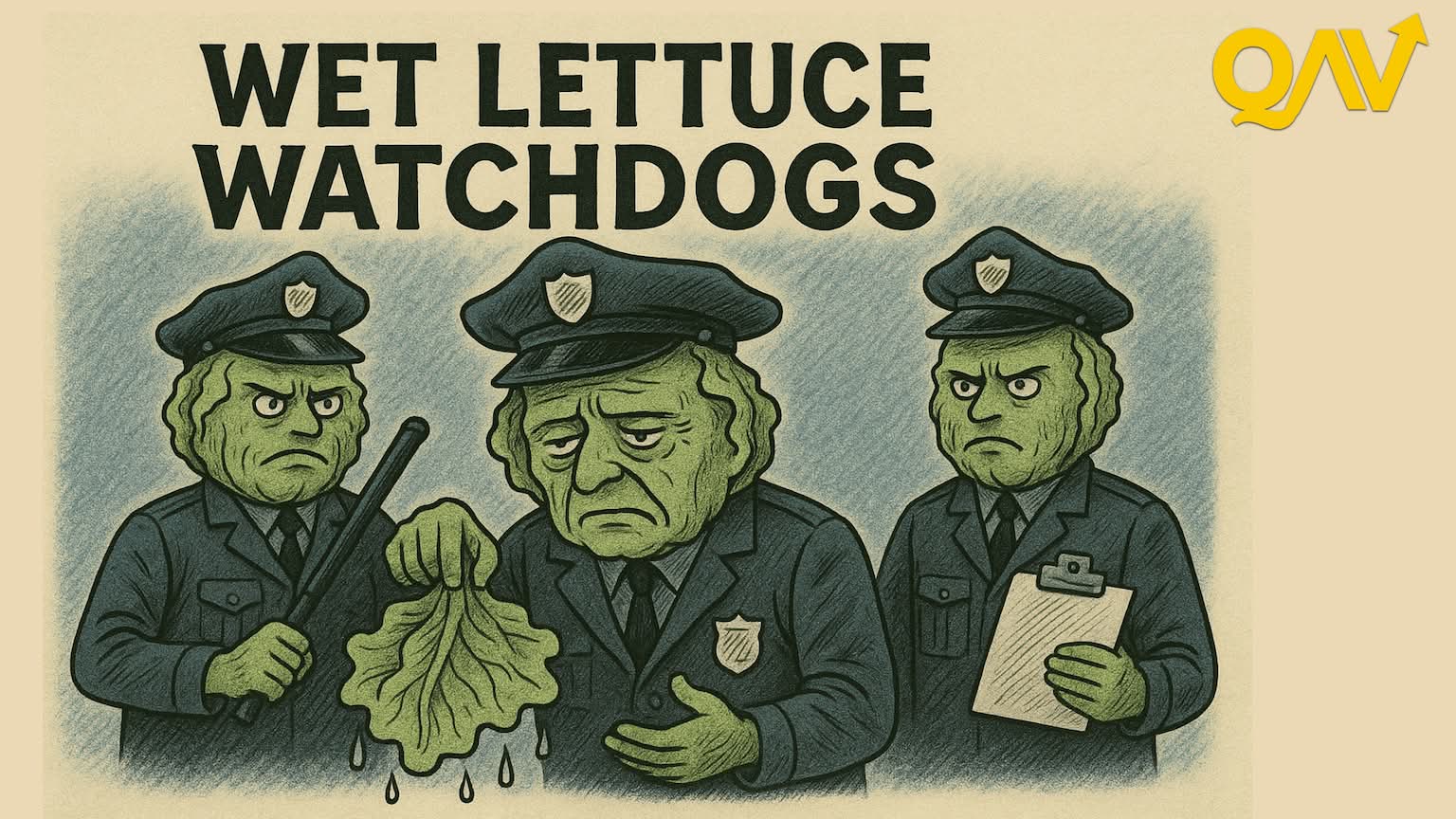
TK: Yep. And I don’t have any skin in the game, so I wasn’t a shareholder in NYX, but it’s another example of how, um, the A SX is a, is, sorry, the ASIC or the As SX or both? Um, probably the As SX, uh, in this case is just a wet lettuce it comes to these things. The only good of what they’ve done is it did announce to the market that, Hey, you should look at this.
Look over here, look over here, and we’re gonna pause shares for a little bit while you do that. and it, and it got a confession out of some, somewhat of a confession out of the directors of, uh, particular company. But, um, really it’s, not good enough.
Cameron: So I’m just making wet lettuce writing that down as my episode [00:18:00] title for this week. Wet Lettuce. Uh, yeah, it’s, it’s appalling. It’s almost as bad as uh, announcing. There’s, I dunno if you saw this, but videos come out of the day that he announced that they were pausing the tariffs, not the China tariffs, but the previous. Tariff pause thing. Videos come out of him walking through somewhere, you know, having a quiet tete with, uh, half a dozen guys that are standing around him. Some camera dudes managed to record it where he said to them, yeah, I’m gonna make an announcement in a couple of hours that we’re going to, you know, pause the tariffs, the market’s going to, market’s gonna, you know, shoot up.
It’s gonna be great. It’s gonna be fabulous. He’s on camera. Tell guys, I guarantee none of them went out and bought shares. Uh, of course they did. Of course. They being facetious. Tony
TK: okay. Sorry.
Cameron: Yeah. Yeah. It’s just appalling. [00:19:00] Yeah. Anyway,
TK: Isn’t he being sued? I forget now. How many hundreds of court cases against Donald Trump at the moment
Cameron: really.
TK: And I read an, I read somewhere that um, an article in the Wall Street Journal, I think it was that one of his lawyers was in court in a very high court, I forget now, which one it was in the us said, look, can rule what you like, judge.
The president may or may not agree with it and may or may not, um, comply with it.
Cameron: At least he’s being honest.
TK: Yeah.
Cameron: He may or may not to foxes. Really? I mean, yeah. No,
TK: Which again gives argument to your credence that there won’t be any more elections in the US ’cause he’s only in that position of being able to not comply with courts. ’cause he’s the president of the us.
Cameron: yeah,
TK: Hmm.
Cameron: yeah. Somebody asked me earlier today, somebody on Facebook said, who do you think the Democrats should put forward to run against him in 2028? I said, yeah, I don’t think it matters, really. [00:20:00] Yeah. Any who? Moving right along. What else you got?
TK: Uh, just the pulled pork to do. I don’t know if you’ve got any other questions or anything you wanna run through first.
Cameron: Well, I wanna run through the Rich Zenner um, interview.
TK: Okay.
Cameron: So, I don’t know, uh, for folks out there, uh, who Dunno, Tobias Carlisle, these are. I was gonna say former Australian, still an Australian, he’s lived in America for a long time, a couple of funds, wrote a great book on value investing. He’s been on our show once or twice, is coming back on soon as I can lock him down. And he does a podcast called The Acquirers Podcast. It’s a value investing podcast. It’s really great and I was listening to it. I don’t listen to it very often, but, ’cause I don’t listen to podcasts very often. Too busy making the bloody things to listen to them. But I was listening to one recently, uh, recent episode, and he had a guy called Rich B. On P‑Z-E-N‑A, uh, uh, is the founder and chief investment officer [00:21:00] of PNA Investment Management, a New York based deep value investment firm with $34.9 billion in assets under management. And he got started in the early eighties. Uh, people may recall, uh, people may know of Joel Green Blatt. I’m sure we’ve talked about him from time to time.
I think I actually did reach out to him at one point, tried to get him on the show, but he is written a number of great books, uh, about investing, like the little book that beats the market and, uh, a bunch of others. Common sense, uh, the investors, something, something, something. He’s a successful value investor over there. Uh, so he and Rich went to, I think it was Wharton, together School. And in 1981 they wrote a research paper how the small investor can beat the market. It was their master’s thesis and they were trying to examine the performance of securities that [00:22:00] were trading at or below liquidation value during the period of 7 19 72 to 1978 in the us. Uh, I think they were kind of trying to update, uh, you know, the premise of Benjamin Graham and, you know, trying to do some academic analysis. Obviously, value investing wasn’t that popular back then. Um, as it is still not that popular now. Really, I don’t think. But they,
TK: isn’t it?
Cameron: yeah. Yes. Although there were, I don’t know how many tens of thousands of people at the, uh, Berkshire Hathaway, a GM the other day, but, uh, they, they wanted to, you know, put to test the theory that stocks that were trading. Below their liquid at or below their liquidation value with a low price to earnings ratio would whether or not they had outperformed the rest of the market. So they ran that, and funnily enough, [00:23:00] they decided that it did, they did on average, beat the rest of the market. So it was a, um, study that verified the basic premise that if they have a low price to earnings and they’re trading around their intrinsic value that they tend to outperform.
TK: Does that
Cameron: So
TK: and I can go to Wharton Business School with the dummy portfolio and gain some MBAs?
Cameron: you, I think, uh, me, not so much unless I get an, I get,
TK: crib.
Cameron: it’s like I, the, uh, the, the award that Markham gave me in, in ino, my, my Napoleonic award, it was for not doing any actual research about Napoleon, just talking about other people’s research about That was all I got my, uh, Napoleonic medal for talking about other people’s hard work. Uh, so anyway, I wanted to play, I’m gonna steal from this show, a couple of clips ’cause I was listening to the whole thing going, oh, I wish Tony was here.
I wish I could tell, see what Tony thinks about that. And I thought, bugger it. I’ll just steal it. With full credit to Tobias [00:24:00] Carlisle, he’s i’ll, I’ll confess to it when he comes on the show uh, to Rich Panna. Um, hopefully these guys don’t get mind. I mean, it’s out there, it’s in the public. Oh, it’s not a premium podcast or anything.
It’s freely available on their YouTube. uh, let me play this first clip and I can’t remember what this is about, but, uh, we’ll work it out as we go.
So I’ll tell you my, my story from 1999. um, we had started in our business in 96 and we had a good first couple years got to a break even and we were feeling good and then we went through this 10 straight quarters of massive under underperformance compared to the broad market, and I had a. Client who came in, sat in our conference room and she walks in the door and says to me, my grandmother’s a better investor than you are, and [00:25:00] all you have to do is buy Cisco. Everybody in the world has figured this out except for you, and you’re just stubborn. Try to go through with her, with her. And I said, you realize that Cisco is now at a half a trillion dollar valuation first company to ever achieve that mark. Um, and you’re, you’re used to double digit returns. You, you, you would be unsatisfied with anything less than 15% a year. So if you bought that whole company for $500 billion, they would have to earn $75 billion a year for you to get your 15% return. And they earn one. don’t you think there’s something wrong with that? And she just looked at me and said, you don’t get it, do you? To which I agree. I didn’t get it. You’re right. I don’t get it. Um, and, you know, that was gonna be the backbone of the internet. It was all just as exciting as, as it is today with artificial intelligence. Mm-hmm. [00:26:00] Um, and so, was that a very painful time for you, or was it like, it you just kind of recognize that, you know what, this is just craziness and I know that the world will get back to reality at some point. No, I mean, when you’re, when you’re a struggling business that just treat profitability and now you, clients are telling you you’re an idiot and they start clicking their accounts, we, we, um, weren’t sure we were gonna make it. And it, and in fact, Joel Greenblatt, who, who you mentioned earlier, that was my partner at Wharton in the, in our, in our little research project. Um, he was a backer, my backer in, in getting going in this business. And, um, we went in the red and I, and we got an offer from another firm to buy us. Mm-hmm. It would’ve gotten all of us a job. Here was the deal. Joel could get his money back and we would all have a job. And I said, Joel, it [00:27:00] sounds like a really good deal. should take it. Um, and Joel said, way. you need to make it through this period, um, you have a blank check. Wow. That’s pretty much what he said. Incredible. Um, and he didn’t ask for any incremental equity in exchange for that. Now he must have really prescient. ’cause that was in February of 2000 when that happened. And 9th it turned around and he never had to put another penny. He never had to put a penny in.
I thought that was a great story. Like, uh, know, just reminds me, I was talking to somebody the other day, one of our QAV club members who got started in early 2022 just as everything crashed with interest rate rises in Ukraine and you know, trade wars and all that kind of stuff. And um, and I was saying, [00:28:00] yeah, look, from my limited experience with this, but also looking at Tony’s numbers and listen, reading buffet stuff over the years. Um. it works with QAV, I think, tell me if you disagree, but we have once every five to 10 years, have one really, really good year where we massively outperform the market. And then we have maybe another year that’s pretty good, but not as big as that one. Not like two, three times the market performance. three times, four times the market performance. And then the rest of the time it’s sort of a little bit better, little bit worse kind of, you know, averages. Uh, average performance, but you’ve gotta be around for that one or two really good years in the decade where the system really outperforms and the rest of the time it’s sort of, you know, tracks along and, [00:29:00] you know, doesn’t revert to the meme, but goes back, that’s where the average 20% comes from. Like in the six years we’ve been doing this, whatever it is, we had that one really good year, uh, during Covid really kicked the numbers up. And since then it’s been okay, like this year we’re up like, I don’t know, 30, 40% on the market. Couple, you know, last couple of years it’s been touch and go a little bit above, a little bit below, that one really good year has put us in a good position for the long haul. it’s good. I, I like it when I hear guys like that are, they’re very successful, that had a couple of really, really bad years, but they just stuck to the strategy and you know, luckily in their case, they didn’t have to bail out greenblatt. Back, Tim. Hard to say. Greenblatt back back. Can you say green blatt back three times fast. You probably can. ’cause you’re,
TK: black back three times fast.
Cameron: oh yeah. Very good. Yeah. Very clever.
TK: uh, yeah, no, I, I dunno if I’ve ever thought about it that way. I just think of it as being [00:30:00] volatile. Um, if you’re a value investor, you’ve got huge tailwinds. ’cause the, well, basically the way I look at it is the market tends to back growth stocks that’s when we tend to, sometimes underperform or, or, i, I outperform a little bit, but it’s when the market goes, oh, okay, growth can’t go on forever.
That’s when the value investors have a really good run. So, yeah. Um, I dunno if it’s every five years or six years, or two years or 10 years or whatever, but, um, it’s more around things like the.com bubbly bursting when, when the market wakes up to itself and comes to its senses, as, as Buffet used to say, when the tide goes out, can see who’s, you know, been swimming naked basically.
So it’s, it’s, that’s the. It’s it’s title. It’s like, it’s when the,
Cameron: Idol. Yeah,
TK: when the, when the tide goes out, when people say, hang on, you can’t, as that chap said on the, on the video, then you can’t, [00:31:00] you can’t have a market cap of half a trillion dollars and make $1 billion year. That’s a very high price to earnings ratio.
May, may have been acceptable while you’re growing, but as soon as you stop growing, the market cap drops dramatically to meet the earnings.
Cameron: I hadn’t, I hadn’t thought about Cisco in years, but I can remember when Cisco was the golden child of the tech industry. I had friends who were working there, people who would leave Microsoft and go to Cisco, and they were paying everyone through the nose, salaries and stock options, and it was insane.
TK: I remember. Do you, you just reminded me. I remember being at a dinner party once around that time
Cameron: I.
TK: people at a friend’s house, but they had their, some of their other friends there. I didn’t know the people, but one of them worked at, a couple of them worked at Cisco and uh, I, I remember leaving a dinner party thinking, how do they even get a job?
We’re just that bad.
Cameron: [00:32:00] Yeah,
TK: Yeah. Anyway, so,
Cameron: I’m just,
TK: agreed
Cameron: looking, sorry. At looking at Cisco’s share price. August, 2000, it was trading at $68. Then by February, 2001, it had dropped to $23 and it stayed there until, 2017. We got up to 37 and it’s now back up to 63 60 $4. But, uh, it’s taken 25 years to get back to where it was in August, 2000.
TK: And
Cameron: So congratulations to those people who are never sell investors.
TK: hopefully they got paid dividends along the way, but probably not. Hey, we should, I don’t know if we have it on our coffee cup. I don’t have it handy, but we should add, you don’t get it to our list of, uh, this time it’s different [00:33:00] quotes.
Cameron: You don’t get it. That’s right. He actually, I’m not sure if I’ve got it in my list of clips to play, but he does talk about volatility at one point in this interview where he says, yeah, volatility as value, investors volatility is our friend,
TK: Ooh.
Cameron: is something I’ve heard you say. He goes, I like volatility.
You know, doesn’t bother me. It’s what it, what creates opportunities for us as volatility, right.
TK: Yeah.
Cameron: people they talked to at one point, and maybe in my clip, so I’ll just shut up and I’ll skip to the next clip,
. We’re, we’re looking at are the metric we use one metric price compared to normalized earnings and normalized earnings. It, it’s a concept, but it’s not a complex concept. it’s what should the business earn over a long, over a full economic cycle.
Not the peak, not the trough, on average, what’s the earnings power of this business? Um, and you know, it’s informed by the history of the business. It’s informed by the competitive positioning. You know, if you look at, if you talk [00:34:00] about stories of things that you’ve invested in that the, we were talking about the internet bubble. Well, COVID was another opportunity to buy things at, at crazy prices. And I will, and, and I’ll, we can save this for a little bit later, but I don’t think we have the same opportunities today. um, but Covid we did, and our, we, our biggest holding became in by the end of the second quarter of 2020. Um, you can’t imagine a worse business than ma building jet engines, um, during covid. and it’s not only that travel was down, the number of takeoffs and la and landings were down 60%. The volume of GEs business was down more than that because first of all, nobody was built buying new airplanes, most of their revenues came from the [00:35:00] repair and remodel, the repair side of the business, the spare parts business, um, ’cause that’s the high margin business.
And, and so if you were parking airplanes, you would operate your, what, the ones you weren’t parked until they had an overhaul date. And then you would park it and pull another one out and you would spend no money on maintenance. So their revenues were down 70%, seven, something like that. And imagine a giant manufacturing operation with an r and d operation with a 70% revenue decline, had had 20% margins before that, or 22% margins. That’s real operating leverage you start to see there, right? Yes. So they were, they’re, they’re their free cash flow rate. If I get my, if I’m remembering my numbers correctly, and I think I’m pretty accurate. Was at negative $7 billion a year. Um, and the stock went down to $5 a share. And this was a stock that used to be the biggest company in the s and p [00:36:00] 520 years earlier, what at $70 a share. So you’re buying it down 90% from its high. Now granted, a lot of stuff happened in the interim, but when you visited the company, don’t, they didn’t know what was gonna happen. All they knew was that, that they had to be focused on costs and survival and liquidity. if you have $7 billion negative run rate, better do something about it. Um, they also, I mean, what made us comfortable is they had 50 billion of liquidity of cash and credit availability. meant they had seven years to fix the problem. Hmm. And, and their. CEO was telling us that were gonna go 14,000 people and they were gonna get the costs down so that they could at least be break even without a revenue increase. And, and [00:37:00] as we calculated it doing, I mean, I, without inside data, just trying to get a sense of what this company would earn permanently, travel never recovered. And that was our downside case. Um, and we are arithmetic and you can find flaw with it. It, but, but, but it was around cents a share of earnings, from a negative $7 billion run rate to a positive, whatever that was, that created 75 cents a share and the stock was five. So I said, so I could, I could, if the world doesn’t recover. I can lock in a 15% annual return. And if you listen to, um, the new guy who had this history of running industrial companies 30 plus percent margins, he said, this should be one of those. That’s what he was telling us. This should be [00:38:00] one of those.
It shouldn’t have been a 20% margin business. We’re gonna run it at 30%. When we get back to normal and 30% margin, would’ve had, something like $2 of earnings on a $5 stock. So you sort of say, wow, the downside cases, I make 15% a year, and the upside cases I make 40% a year. What am I missing? Um, and that was the kind of opportunity.
Now that was one of the extreme ones admittedly, but that was the kind of opportunity that was available.
. Yeah. And I assume he’s talking about GE Aerospace there, this doc with the ticket, GE, I can’t find it back in 2020 at $5, but I see it around about $30 a share. It’s now trading at, uh, a share. Um, but it might be another company. I gonna, but just, I, I just like the, the basic idea of that in [00:39:00] terms of, you know, opportunities, right?
That which is, as you say, title cyclical, great business went through a really tough time for reasons of its control the share price collapsed. ’cause no one knew what was gonna happen, but they came in and thought, no, no, this is a good business and the numbers made sense to them. So it’s that kind of cyclical being, it’s like it gets back to what Buffet was saying, um, and who, whoever was it. Greg, I think, um, in the last a GM about they do a lot of work, to be ready to move quickly when the right opportunity comes across their table.
TK: Well that is classic buffet, isn’t it? He’s, he’s a, greedy when others are fearful. He’s buying blood on the streets. I mean, it, he’s that same sort of paradigm that was just described in that clip is what Buffet’s been doing. His whole investing career. There was the oil scandal at DERs Club and cetera, et cetera, et cetera.
And just, he, he, you know, uh, [00:40:00] he thought Coke was over depreciating its assets and would write it back. He just. know, with that same kind of insightful analysis, the, this is a, he calls it the moat. This is a company ge, which is probably gonna withstand some big shocks ’cause they’ve got a lot of cash.
It’s a well-known brand. It’s a big company. It’s when things are normal. It operates at 20% plus margins he buys it when it’s ridiculously cheaper and wasted for it to get back to normal.
Cameron: Mm. There’s some other good quotes, but I, I, we, 45 minutes in, I want you to do your pulled pork and then we’ve gotta go do an American show. So I’ll leave the other quotes maybe for next time, but um, I highly recommend it if people haven’t already listened to it. Go check out the Acquirers podcast and have a listen to all of them ’cause they have a lot of great guests.
Um, I dunno how Tobias pulls it, but he manages to get a lot of big name investors and value investors on the show. But that one with Rich, I found really, really interesting, really nice guy. Like [00:41:00] really laid back, sort of humble guy too. But, um, just really reflected the basic principles. There’s another clip I’ve got where he is talking about. and he says, I don’t understand. He went to Wharton Business School. He goes, I don’t understand macroeconomics. He goes, people, people try and talk to me about Bitcoin or this. He goes, I don’t understand it. He goes, I don’t understand gold either. Gold’s booming. I don’t understand why I, I just don’t, I don’t get it.
You know, people say You don’t get it. And I go, yeah, you’re right. I don’t get it. He just sticks with what he knows, which is, uh, you know, buying shares in good businesses
TK: Circle
Cameron: can get ’em cheaply. Yeah.
TK: again, a buffet concept. Yeah.
Cameron: Hmm. All right, Tony, who are you gonna pull the pork on today?
TK: I am gonna pull the pork on Cettire group. I’m not sure
Cameron: you work out? That was gonna be my first question. Did you work out in your Paul pork, how it’s pronounced?
TK: No, but apparently the CEO makes it rhyme with satire [00:42:00] according to, uh, rear window and
Cameron: I.
TK: So,
Cameron: Right. Well, that’s what, when I was talking about it, I think it was last week. That’s what I kept thinking. Is this supposed to sound like satire or is it a satire? Because it seemed like a bit of a satire when I was the drop shipping company. All right. Anyway, I’ll shut up. Let you get into it.
TK: Okay, well I’m gonna call it satire. Um, I’m doing the pulled pork, ’cause we did speak about it last week and it was on the buy list. When I did my analysis, the share price had a bump to 55 cents, which is what I’m going to do my analysis on, which takes it off the buy list ’cause it’s at the bottom. But I did notice today it was back below 50 cents, which I think would put it back on the buy list because it’s at the kind of, it’s pushing up against the price to operate in cash flow sets of greater than seven times threshold.
So, um, below 50 cents, I think it’s a buy above it. You might want. Wait. So, um, and that’s, uh, that’s why it may not be on the by list if you have a look at it when you hear this, but it was last week it’s [00:43:00] an interesting company. I, I, you know, it’s, it’s rare that we get, uh, a bit like, a bit like, um, Cisco.
It’s rare that we get, uh, I, uh. It’s not a tech company, but it’s a, a capital like business, which is the whole basis of the, of internet retail, that, that put, uh, put Amazon, et cetera on the map. And this is one of those kinds of company which doesn’t hold stock, as you say, it’s a drop ship So, um, I thought it was really interesting to do a pulled pork on it and interesting to see it on the buy list.
Um, I’ve titled my pulled Pork, how the Mighty Have Fallen because the share price was $4 79 in February last year, and it’s now around 50 cents. The analysis, uh, as of yesterday, it was 55. It’s dropped again below that. Uh, if you look at the graph, it’s a falling knife. So that’s something to be aware of.
It’s the price has been going down, obviously from that high, uh, to today’s price, which is, you know, [00:44:00] or thereabouts of what it was a year ago a little over a year ago. So that’s a big, a big drop. but the price did kick up above its buy line, uh, last week. So it, so it is a buy on. Um, on, on our buy list, uh, I, I did talk about the article last week, uh, where there was some questions raised about an, uh, by an investigative journalist about, uh, whether sales tax had been incorrectly charged, um, for us shipments and, um, weather.
That was helping the bottom line of this company. That’s all I’ll say on that. You can, if anyone’s interested, they can Google the relevant articles and the company’s response to it. It’s, it’s all pretty high profile stuff on the internet last year, um, the background to this company was, it was launched in 2017 and it listed in 2020 at 50 cents a share, raising 65 million.
So the share price is back to where [00:45:00] it, uh, started. market cap is up over 208 million, but the share price is back to where it started. other thing to notice about this company, and its its share graph, is that, uh, according to Stock Dock, the company is held, or shares in the company is held heavily by short sellers.
So it’s something like 10% of outstanding stock has been borrowed and sold by short companies. Now, the interesting thing about this is that, um, uh, they would’ve started shorting it a little while ago during the drop from 4 79 down and during the. allegations of sales tax, tax, um, uh, manipulations rightly or wrongly.
And, um, it, it’s possible, and I’ve seen this happen before, that the KickUp in the price now is caused by what’s called a short squeeze. So if someone’s made a lot of money shorting the stock, they will eventually sell it and hand it back to the original owner and pocket the, the [00:46:00] loss as a capital gain, if that makes sense.
So the way short selling works is I buy it at 4 79, I wait until it gets to 47 cents I buy the stock back in. So I buy it at 4 79. I sell it. I take, keep those proceeds in my pocket, and when the price has dropped enough, I buy the stock back and hand it back to the person I borrowed it from. I’ve made a, a tidy profit.
Cameron: So, um, that’s why I was confused. You said most 10% of the stock is held by short sellers. How can it be held by short sellers if they’ve sold it?
TK: Uh, well, they have to, it’s not, you’re right, it’s not held by short sellers. The obligation is for them to, to return 10% of the stock, to do that, they’ve gotta buy the stock and then return the shares back to the person they borrowed it from.
Cameron: How does, how does any, like, how is that tracked? How does anyone know that? Is that reported somewhere when you have a short transaction,
TK: Yeah,
Cameron: when you
TK: the,
Cameron: Right.
TK: about this last week as well. Again, um, Macquarie Group were pulled up by, uh, ASIC for not reporting properly [00:47:00] their, their short transactions. So basically, if you are, if you are lending your stock to a short seller, I’m not sure who has to report it, but one, the side of that transaction, or if not both have to report it to And so ASIC can then make the market aware that there’s a large amount or a little amount of short selling going on in this stock.
Cameron: ASIC or the ass x.
TK: I think it’s ASIC and I, I think I may have said April last week when we were talking about Macquarie and, um,
Cameron: You did say Ara. Yeah.
TK: I did, it’s, it was wrong. It’s ASIC who does the tracking on this stuff, I’m pretty sure. So apologies for that. But, um, yeah, I
Cameron: Right.
TK: tracks this. Um, and, uh, Macquarie group people can read about that have been picked up for not reporting this stuff properly.
Cameron: So, sorry, I cut you off. You were gonna explain what a short squeeze is. Again,
TK: Yeah,
Cameron: dating a little person, but you’re not referring to that.
TK: uh, no. So what happens is, uh, if, if the share price is [00:48:00] bombed out as this company share prices and it starts to ro to Rise again, it means that the, it’s starting to erode the profits of the short sellers and they basically jump into the market and buy shares to give back to the person they’ve. Borrowed them from.
And that buying also forces the stock up. So it squeezes people who haven’t bought and returned the shares to buy. And that, that buying alone can be enough to lift the price of a, a shorted stock. And you often see that when the short selling the clients, it’s because the, the share price is going up and it becomes a cyclical thing.
The short sellers then make the share price go up ’cause they’re buying it to return the stock. So that’s called a short squeeze that, that kind of, um, amplification of the upturn. So that’s possibly where we are with this stock. Um, even so I think it’s probably, know, below 50 cents, it’s, it’s good value.
So I think even if you, um, not worrying about the short side of things, it’s, it’s, it’s certainly approaching fair value. [00:49:00] Um. over, its over. Its relatively short. Life has shown strong revenue growth and in some years there was a doubling in sales. And even as recently as 2023, it certainly got a kick along during covid as people were not going out to shop.
They were shopping more online. but in the 2024 calendar year that that slowed, and in fact in the financial year, ending, uh, on the first half of the financial year for 2025, so ending in December, the sales growth was just 12%. still good numbers for a retailer, but it’s not doubling every year like it did at the start.
So, and, and we’ve seen this before, even with Cisco, the. People jump in on this growth stock. It’s, it’s, it’s market cap’s gone from 50 odd million dollars, $60 million at listing to 208 revenue’s doubled every, pretty much every year for the first four or five years. And people want to get in on this [00:50:00] exciting growth stock.
And of course, now that the is coming out of it, the, the prices is dropped dramatically and the P’S coming back to back to Worth. Um, so that’s what we’re seeing now. Uh, still good numbers for a retailer though. I mean, you know, Kmar or Target, or Meyer or David Jones would love to have 12% revenue growth on year.
company’s based in Melbourne and Williams Street, uh, where I first began my corporate life working for Shell and Williams Street in Melbourne. uh, that’s where this company’s based. Um. I haven’t shopped with Sai, so I, I, I can’t comment on their service or their operational ability. When I went to their website, was an awful lot of, uh, $500 t‑shirts for sale, and I didn’t really feel like forking out it 500 bucks for a white t‑shirt, no matter uh, who makes it and what brand they have on it.
Um, so I haven’t shopped with them. It’s not my, not my cup of tea, but they do claim that there are nearly 700,000 active customers. And I [00:51:00] think the key thing is a large portion of those live in the us and that’s. of what’s going on to bring them where they are at the moment. Stock Dock published a good analysis I’m gonna borrow from that.
Um, CTT is a global drop shipping online luxury retailer. Under the drop ship model, the business accepts customer orders without keeping stock on hand, the business to generate strong cash flows without having high working capital requirements. The investment appeal lies with its low cost operating model and backend technology, which enables the company to facilitate an effective fulfillment or the chain through the coordination of global logistics, customs compliance, managing product returns, handling payments, and fraud detection.
addition, luxury goods tend to be less sensitive to consumer behaviors from rising interest rates because high-end retail consumers from the wealth effect led by a founder. And CEO. Dean Mince, [00:52:00] who remains a large investor despite selling him some of his shares in 2223. its high forecast, return on equity and strong earnings growth prospects, team being stock doctor has refrained from covering the stock due to the following risks, high levels of short interest, speculation that the company has not paid its share of import duties, low profit margins driven by high marketing costs, and that do not provide a margin of safety in the inventive increase in competition.
Consumer concerns around the authenticity of its products. So that’s stock doctors analysis, which I thought was a good summary. Um, back to the drop shipping model, the company claims to carry a virtual interest inventory of $2 billion. So that’s the interesting thing. I think they’ve got. Access to $2 billion of in inventory, but they haven’t had to pay for it until a customer places an order.
Then they go out and buy that particular item and sell it. So when I think back to my days of retail, that would’ve been a [00:53:00] huge benefit, um, for a company like my direct that I worked, uh, that I worked in and ran. because it’s really hard to balance your inventory levels if you’re a retailer. of the reasons, because like you think about it, you know, I don’t know what’s gonna be on trend in three months time.
If Kim Kardashian wears a black dress down the runway and I’ve got a warehouse full of white dresses, they’re not gonna sell
Cameron: You know what the problem is though, don’t you? Elbow’s gonna come and tax them on all the stuff they haven’t sold yet.
TK: possibly an unrealized gain, possibly. Um, well that would be a loss, I think in that case, but yeah. Uh, so anyway, so they’ve got a virtual inventory of $2 billion, and that’s the magic in this. Style of company that they, um, don’t have to fund that they carry no debt, which is something which we like. It’s on our buy.
It’s one of the reasons why it’s on our buy list. Uh, the founder holds 33% of stock despite selling down, um, over the, over the last couple of years. Still retains a lot. Uh, looking at the latest results. Uh, [00:54:00] now interestingly enough, they provided a Q3 sales update to the market on the 23rd of April, and that was for the, uh, quarter ending the end of March.
Um, don’t normally provide quarterly updates. It’s something you have to do in the us not here. So I was interested why they were doing that, and I checked to see if it was a dual listed company. Um, but it isn’t, so it’s only, its sole listing is on the A SX. So I did. Wonder why they were making quarterly earnings reports and all.
I could think of speculation, but I’m guessing that they liked the sales rises in the past being so, so high and that they wanted to keep the market appraised of them. And if that was the strategy, it’s come, come back to bite them because in the last quarter their sales rise was only 1% and they also declared a loss for the quarter of approximately $4 million, which was blamed 50% on foreign exchange losses for the half.
And um, and they also went into some detail about us tariffs softening their [00:55:00] demand. they did point out that 1% sales growth is better than the rest of the luxury brand market as a whole, which was going backwards. So, um, they have to, uh, hold on to at least some sales growth. Uh, one interesting note when I was going through their presentation was they, they.
Report to sales lines. They, they talk about gross sales, which is revenue of 260 million. but then they talk about sales after returns, which is 192 millions. and that, that’s, this was a similar pattern in terms of the ratio to prior periods. 26 of 26% of their sales by dollar value have been returned.
And um, a lot of work to do to process those returns. Plus it’s not a great customer experience necessarily ’cause someone’s gotta package up what they don’t like and send it back to the company and it’s gotta be put back through the system in reverse and credited and sent back to whoever they, uh, they bought it off if they [00:56:00] can.
Sometimes that you can’t do that. So I know again, from operating and retail returns are a net ne net negative to the business. And having, we never had anything like 26% of sales as returns at my direct. I can’t remember what the number was, but it would’ve been probably single digits. So, um, yeah, if, if they can get that down, good.
Look, it might be a positive that I know with the online retail business, if you don’t know what your size is from with this brand, it’s the first time you bought a pair of shoes from that brand or a dress from that brand or whatever. You might buy three different sizes and try them on and then return the ones that don’t fit.
So could be a bit of that going on, in which case it might be a good thing for the business, but it’s certainly a big cost for that business. The other thing I wanna focus on in analyzing this business is tariffs. And, uh, tariffs have now come in, of course, um. All sales to the us. 43% of SAI sales are drop shipped from Europe to the us [00:57:00] and so they face tariff hikes.
report that only 4% of their sales are from China to the us. So that’s where the worst tariff or the highest tariff hikes have happened. Even though they’re on a 90 day pause, they’re still high. Um, but they are facing tariffs high, high tariff, higher tariffs from the EU to the us. other thing they’re facing is what’s called the, de minimus, um, law changes in the us.
So, the average satire sale to the US is 514 US dollars. And up until now that that kept them below the de minimis threshold of, um, $800 us. And for those listeners who don’t. Know what that means. De minimus in Latin means too small to matter. And de minimus was an exemption applied to parcels, generally shipped from overseas direct to a customer.
And these packages were, um, didn’t go through the warehouses and therefore are harder to regulate for customs duties and tariff charges. [00:58:00] back when de minimus was enacted a hundred years ago or so, the logic was that the US government should not spend a dollar to collect 50 cents. that, uh, has been, I guess, the principle all the way along.
Um, and eventually the, the minimus threshold went up to $200. And then, uh, when Obama was president, he. Boosted it to $800, uh, which kind of suited Amazon and other US companies starting to ship from the, uh, uh, ship, direct to retailers, uh, often from overseas. And so it sits at $800 now, but on May 14th, president Trump included the minimus packages from China and Hong Kong in 135% tariff law, is now on a 90 day hold and reduced to 54% during the hold period.
So only even coming outta China and Hong Kong, um, now faces 54% tariffs on, um, even small parcels. So [00:59:00] it’s not a big chunk of change for satire at the moment ’cause only 4% of their sales to the US come from China. But, um. Trump administration has flagged that they’re going to work through packages from other jurisdictions raising the tariffs on those as well.
And the only thing that’s stopping them from doing it now is that they can’t process the trade from China and Hong Kong through the warehouses that the customs people have to put them through to be able to charge the right duties and tariffs on them. But once they get that sorted out, they’ll, um, they’ll start doing that.
to be fair to the, um, to the current administration, Biden was also looking at the issue of de minimus parcels, largely from the point of view of that, um, the US government suspects that, uh, the fentanyl trade from China was making, um, use of the de minimis parcels that weren’t going through customs inspections and, and sending drugs overseas.
So, um, [01:00:00] and that’s, and that’s certainly the argument, one of the arguments from Trump as to why the exemptions been removed from, from China. So if this de minimus change gets rolled out to the u EU shipments, then satire will have a big problem. Because you glance at their website, they’re ob, they’re usually offering about a 30% discount on what they claim is the retail brand price for a luxury item.
If, if that, if they then get hit with a tariff on the minimus, uh, parcels, which they’re not being hit on now, then that that discount goes away, which would affect them dramatically. So it, it is, as we said before, a volatile place at the moment. And, um, uh, satires certainly face some risks if you’re thinking about investing in it from, uh, from tariffs and the minimus changes.
What’s, what do I think? I think that they might be short term. I wouldn’t be surprised if someone [01:01:00] works out how to get round that problem and. You know, they might work out, for example, that shipping via Australia, which isn’t currently subject to the minimus, um, legislation, is cheaper than sending it direct from China to the US and paying the 54% tariff.
I might. May be able to work out a, a middleman or some other way of getting stock to customers without facing huge tariffs. But that hasn’t happened yet. Um, but it’s certainly something for people to consider going forward as, as I’m, as I’m sure that the CEO of, um, Sati is thinking about now.
Okay, so going onto the QAV numbers, the stock price I used was 55 cents. It is below that now, which puts it back on the B list, but at 55 cents, it fell off the bottom of the B list. 55 cents though is still 80% of consensus. Target IV one. For this company using my methodology is only a cent and there’s no IV two because there’s no forecast EPS available, so we can’t buy it less.
And it’s [01:02:00] Arin intrinsic value and that’s due to the fact that, um, uh. This is one of the companies which ha has been profitable, but um, not, uh, it’s been using the profit to reinvest in the business and, and use marketing to expand its customer base. Now they are talking about changing that to try and maximize profit now, and it did make a loss in the first, in the last quarter.
But, um, at the moment it’s, it’s iv using its earnings per share is only 1 cent. There’s no dividend, so we can’t score it for that stock dock. Financial health and trend is satisfactory and steady. Likewise, stock Edia quality ranking is 92. So on the quality side of things, everyone likes it. However, stock Edia ranked the company as 54.
Um, out of a hundred for value and five for momentum It only a total of 51 in the Stockopedia ranking universe. And that reflects the falling nice share price graph. I think, likewise the PE ratio is 194 times given its low [01:03:00] earnings at the moment, that’s the highest and six halves. So we give it a negative score for that.
calf at 55 cents is 7.5 times, um, which, uh, takes it off the buy list. But at, when I looked this morning, I think the share price was back to 48 cents. So. That would probably it back onto the buyer list. there’s an owner, founder who currently owns 33% of stock, he did buy some more last year.
Um, he only bought 15 million, however, but that followed about, uh, $287 million in share sales in the two years prior to that. So he’s certainly been raising red flags in the market, selling all the shares as the price has been dropping and the company was facing, uh, the spotlight of investigative reporting and, um, issues with tariffs.
Uh, company doesn’t have consistently increasing equity. It did up until last year, but we can’t score it for that now. Um, so overall the score is seven out of 13 [01:04:00] or 54% for quality at 55 cents. The QAV score is now 0.07, but it will be higher at 47 cents. Um. I think what can, what can I say about this? I think stock doctor covered off the risks about it, um, quite well.
I think we covered the risks of tariffs quite well. but, you know, people are always interested in capital, like tech businesses and so anyone who’s interested in that might have a look at this. Um, otherwise it’s probably one to watch and enjoy the rollercoaster ride given all the uncertainty in that particular market going forward.
Cameron: Wow. I was just looking at what price it was at on the buy list last week when I was going to add it to the light portfolios, and then I got the heebie-jeebies with it talked to you and you said, eh, it’s fine, was at 45 cents. Then. then it went up to 60 and then now it’s down back down to 48 [01:05:00] a week.
TK: Yeah. which is,
Cameron: is
TK: it’s volatile but it’s also leading, leading me to think it’s the short squeeze that’s driving the Yeah.
Cameron: Yeah. Speaking of things going down, the RBA has cut rates, 25 basis points to 3.85%
TK: So we need to update our spreadsheets for our, our, um, what we
Cameron: cash rate,
TK: variable. Yeah.
Cameron: the cash rate. Yeah. So, um, your sheets, update your clocks, ladies and gentlemen. Um, I was going through the US checklist over the weekend trying to get equivalent US numbers for those sorts of things too.
TK: Yeah, of course.
Cameron: Because I need to, a little bit different over there, so there you go. What do you think of Michelle Bullock’s decision to cut interest rates?
Tony, what she said was the risk to inflation has become more balanced. The RBA remains [01:06:00] cautious about the outlook. It nevertheless remains cautious about the outlook. Okay. They repeated themselves there, particularly given the heightened level of uncertainty about both aggregate demand and supply. The board considered a severe downside scenario and noted that monetary policy is well placed to respond decisively to international developments if they were to have material implications for activity and inflation in Australia, cetera, et cetera. Sorry. Go on.
TK: No, that’s okay. I think, I think that’s well said. I think, uh, inflation was back into what the RBA calls. Its, um, its band it wants it to be. Um, that happened. I dunno if it was during the election or maybe just before it. And so I thought that they would, as the market did, they would hold onto, they wouldn’t lower interest rates until after the election.
So they, they weren’t seen as the government or the opposition. And, um, uh, this was [01:07:00] probably a little bit overdue. I thought there’d be 25 basis points as well, because as they outlined, um, if they, if they need to, if something really bad happens in the world with tariffs, with whatever, as you know, we can’t forecast it, but it’s certainly a volatile place, uh, then they need to have kept powder up their sleeves or their powder dry so that they can drop interest rates by a large amount if they need to.
if the shit really does hit the fan, um, in the economy and it, and if they had have gone with a bigger cut this time and some people made the argument they should, then they’d have less up their sleeve if something really bad happened. So I think with inflation back under control and the election sort of forced ’em to wait a bit.
25 basis plus. Makes sense.
Cameron: Just looking at how the market has responded. Uh, not much at all, really. Um, the, it’s gone up a little bit since the announcement came out, but it’s still lower than it was at 10:00 AM this morning or 10 40 this morning. So [01:08:00] hasn’t really, uh, people aren’t dancing in the streets. I think everyone expected it. Hmm,
TK: then for sure. Bond, bond future or bond Did
Cameron: Bond, bond yield.
TK: guess
Cameron: my name.
TK: Yeah.
Cameron: Yeah. Well, that’s all for, unless you’ve got something else. We’re into after hours. Tony, we skipped it last week. Got anything good for me this week? Got any tips? Got any recommendations?
TK: Well, haven’t watched much ’cause I’ve been traveling and playing golf and some fantastic golf courses in Southern Coast of New South Wales. people go and play Mollymook and Naru golf courses if you haven’t. Uh, they’re very good na rumor in particular, right on the, um, right on the coast on cliffs.
You shoot over cliffs on at least one of the holes, which is, which is fun. but when I got back on the weekend, I watched a couple of episodes of Mob Bland, caught up with that, [01:09:00] it’s, it really is standout. I highly recommend Mob Bland to
Cameron: I gotta check that out. Mob Land?
TK: uh, Pierce Brosnan and Helen Miran. All fantastic.
Cameron: Hmm. Okay. I do love a bit of Helen Maren.
TK: Ooh. She seems to be in everything at the moment, doesn’t she? She’s in, um, she’s in, coming out in the, what’s it called, the Thursday Detectives Murder Club, or whatever it is. The books that Richard Osmond write, um, in, is 1823, the prequel to the prequel to, uh, Yellowstone. she’s in this, she must be in her seventies.
I mean, she’s, she’s
Cameron: Mm.
TK: very active and doing great.
Cameron: But she will never be in anything better than Caligula. Caligula chef’s kiss.
TK: Oh, Really?
Cameron: Yeah. Oh yeah. The fact that she was mostly naked running around and it’s got nothing to do with it. But yeah. One of my favorite films, ULA love [01:10:00] it. Love it. It’s a masterpiece. It’s bonkers. Completely bonkers. But, uh, that was kind of the point, right?
TK: All right.
Cameron: They’re trying, trying to depict near a, uh, not near a caligula’s reign as bonkers, which it’s probably unfair to Coagula. I think he’s been, uh, badly treated by history. But, um. She was in her absolute prime in the early seventies. Dunno how old she was, but probably about the same age as uh, what’s his face?
Who was in it with her? Um,
TK: Malcolm McDowell.
Cameron: yeah,
TK: Malcolm McDowell. Anyway. McDowell?
Cameron: Malcolm McDowell would’ve both been in there sort of mid to late twenties, I guess.
TK: Mm. And Pierce?
Cameron: Uh,
TK: too. In mob land. Just he’s reverted back to his Irish accent. Doesn’t use anymore. Yeah.
Cameron: Right,
TK: Just that. Just the mob boss? The patriarch of the family. Oh, Cameron, I told you I had to do that. You didn’t do it when I told you you’ll do it now.
Cameron: [01:11:00] because he still got the beard. He had to grow the beard to get away from bond. I think
TK: Oh, okay. Oh, I can’t recall. I don’t think so. Maybe. Can’t recall.
Cameron: every time I’ve seen him on chat shows he’s had beards.
TK: Okay.
Cameron: Well, I’ve been watching, uh, a, a Black Mirror. I watched the first episode of the New Season of Black Mirror. Have you seen that yet?
TK: No, still through the old ones.
Cameron: Oh, right this one. First episode of this one. Absolutely. Gut wrenching, terrifying. Um, Chrissy and I watched it the other night. She was like, well, that was not the good thing to watch before I went to bed. That was horrible.
TK: I may
Cameron: Um, yeah. No, it’s good. I mean, it’s terrifying. It’s basically about corporations, uh, getting in. Yeah, I know. That’s, that’s what keeps you awake at night.
TK: Terrifying.
Cameron: I. Yeah, should just be a Black Mirror episode elbow taxing, unrealized gains One [01:12:00] day in the future. started watching total when I was cleaning the kitchen last night.
TK: you can’t do that. You gotta listen to me
Cameron: I started watching the, uh, the, the schwartzenegger version of total recall from 1990. could have been a Philip take Philip k Dick. Short story, like one day in the future, governments will come for unrealized gains the most dys. That’s your version of a dystopian
TK: k Dick’s short story.
Cameron: coming for unrealized gains.
TK: No, no. I can remember. We can remember it for you wholesale. That was the
Cameron: Yeah, I’m saying that that could have been another book that Dick wrote was, in a dystopian future, they come for your unrealized gains.
TK: the coalition is split, the government will come for your unrealized gains and there’s no,
Cameron: I’m also. I’m also halfway through watching Rashon for the first time. I’ve never seen Rashon [01:13:00] before.
TK: have I.
Cameron: Haven’t seen it. Hmm
TK: No,
Cameron: uh, good, really good.
TK: the same or the same incidents repeated by different recollections,
Cameron: How do you know that if you’ve never seen it?
TK: Oh, it’s part of the movie Folklore. And it was the basis for, what was the Ridley Scott movie I recommended last year or the year before? I think it was on Netflix with Matt Damon and Ben Affleck and, uh,
Cameron: Long as it wasn’t Napoleon?
TK: well, no, the lady from Killing Eve.
It was prior to Napoleon. based on Rima.
Cameron: Uh
TK: stories of a rape, uh, as to, as
Cameron: oh.
TK: it.
Cameron: So rape ’em on? No.
TK: She got a rash.
Cameron: Yeah, like it’s, it’s true. I mean, I’m halfway through it and I couldn’t watch it while I was cleaning the kitchen because it’s all subtitled. So I needed to pay, need to pay attention to it. So what I watch when I get home from kung fu, my body hurts and I have to lie there and stretch and massage my muscles out. [01:14:00] Um, oh, Fox had his kung fu grading on the weekend. He got a new belt. Um, so he got his fourth belt. It’s his fourth grading, no third grading, fourth belt. ’cause he starts with a belt. Um, he did really well. I was really proud of him. He’s, he.
TK: color belt’s that.
Cameron: Uh, this is the middle blue belt. So it’s the, there’s three blues.
It’s the second the three blues, and it’s, it’s a, there’s not many kids, that get that level belt. You know, out of all the kids that we’ve seen in the four years that we’ve been there, many stick around long enough to get that. He’s been going three years now. So it’s, uh, not, not many kids last three years at kung fu, you know, 10% maybe.
So, um, he’s doing really well and it’s interesting to watch him slowly getting more serious about it. You know, as he gets better and he starts to realize that he’s actually getting pretty good sparring. He sparred with the adults afterwards. On Saturday, he gets in and joins our sparring matches, and he holds his own man.
[01:15:00] Like he’s, he’s got the, he’s got the instinct for it a lot of people, even adults in, in sparring, I mean, we got easy with the sparring, like no one’s trying to hurt each other. It’s got gloves on or whatever, mouth guards. But a lot of people, you throw a punch at them and they’ll turn their head, you know, an instinctive blink or shut their eyes.
Turn their head. Not fox man. He just comes in and starts, gets underneath it and starts hitting me in the ribs and hitting me in the kidneys. And he’s in the groin?
TK: You might, you might live to regret all this camp.
Cameron: Yeah. Probably. Or not live to regret it ’cause he kills me in my sleep.
TK: bedroom for a diary. I almost got dad at kung fu this week. I’m getting
Cameron: Yeah.
TK: now.
Cameron: Yeah. Countdown.
TK: Yeah.
Cameron: Um, I’ve got.
TK: the last jewel was the Ridley Scott movie based on Rashomon.
Cameron: Oh, I’ve seen [01:16:00] the last Jewel. No, not the last Jewel. No. I’m thinking of his, Earl, his first film. What was his first one? The, the Dualist? Yeah, yeah, yeah. No, you remember you telling me about this. Okay. Oh, Ridley. I can’t watch Ridley anymore. Ridley’s broke, broke my Heart with the Napoleon film. Um, I’m reading Tinker Taylor, soldier Spy,
TK: Yeah.
Good on you. Good book.
Cameron: it.
Yeah, I’m halfway through it or third of the way through it. Enjoying that.
TK: There’s a great, version of it that came out 10 years ago or so with all the great British actors in it.
Cameron: Gary Alban in that one as Smiley.
TK: Yep.
Cameron: And then all Guinness I think did played Smiley in the seventies version. I. Oh, cvs. Yeah. Right. I haven’t seen any of those. So it’s all, the story’s all new to me, but I’m enjoying it. And, um, I’ve got a band for you if you’ve never heard of them. Tinder Sticks.
TK: Did you mention that last week? Is that the girl band?[01:17:00]
Cameron: No, that was Teen Jesus in the Gene Teasers Eases
TK: Oh, I saw a clip recently too, of, uh, Amal and the Sniffers on, uh, one of the Tonight shows.
Cameron: ballon or something. I haven’t, I haven’t seen that yet, but I’ve seen it promoted. I really wanna dig it up and watch it. I’m so happy for them.
TK: Yeah.
Cameron: So happy for them to be getting this sort of US coverage. Such a great Australian export.
TK: Fallon, right? It’s
Cameron: Yeah.
TK: all these Midwestern farmers in New York going to Jimmy Fallon, whooping and hollering, and then this white girl from Australia gets up and jumps up around into a punk band. It’s fantastic.
Cameron: I guess it wasn’t one of the songs where she swears a lot in it unless they just bleep the whole thing.
TK: saying, so
Cameron: Oh, right. Oh, I love Amil and the sniffers just so much fun. Like I just, I’ve seen a couple of their concerts on YouTube and I just had this huge grin on my face through the whole thing. It’s just so, the joy of Eve in watching them, it is just, it’s so [01:18:00] great. No Tinder sticks I just discovered this morning and it came through a Spotify recommendation based on, you know, you can say, you know, like a radio thing. It was based on Dirty three. I’d been listening to Dirty Three, created Dirty Three Radio and Tint Sticks came on. Tint Sticks is sort of a cross between Dirty Three and Nick Cave and Leonard Cohen, UK Trio started in the mid nineties, drums and violin. But you know, where Nick does his sort of meowy ballady stuff in the last 20 years, it’s kind of very much like that.
TK: Okay.
Cameron: lush, lot of strings, lot of piano. And the vocalist is very Nicky in his mellow. know, older, sort of, kind of Nick era.
TK: Yeah. Right.
Cameron: papa won’t leave you. Henry, Nick and not the birthday party Nick, but version four, Nick, whatever it is. [01:19:00] Uh, but I’ve been listening to it while I was working. It’s beautiful sort of atmospheric, ambient kind of going on. It has lyrics, but it’s um, yeah. Nice. Chrissy liked it too. I played it too in the car on the way to Kung Fu. So there you go. Tinder sticks.
TK: Actually, I had
Cameron: my music tip.
TK: wrote down a couple of weeks ago to recommend to you on in that similar vein, the veils, have you heard them?
Cameron: No,
TK: track called Sit Down by the Fire, which just, it could have been Nick Cave singing at it’s a, a Ballard like that too in that
Cameron: V‑E-I-L‑S. Oh yeah.
TK: right.
Cameron: English New Zealand Indie rock band. According to Wikipedia.
TK: And sit down by the fire is the song I recommend of these.
Cameron: Sit down by the fire. Alright, well, there’s my listening for tonight. Thank you, tk.
TK: Yeah. Good.
Cameron: All right, well, that’s QAV Australia for this week. We’re gonna go and talk to the Americans now. Uh, have a, have a quite a [01:20:00] good week.
TK: Have a have a good week and happy a SX and thank you RBA and watch out for elbow and send the Coalition to Marriage Counseling.