
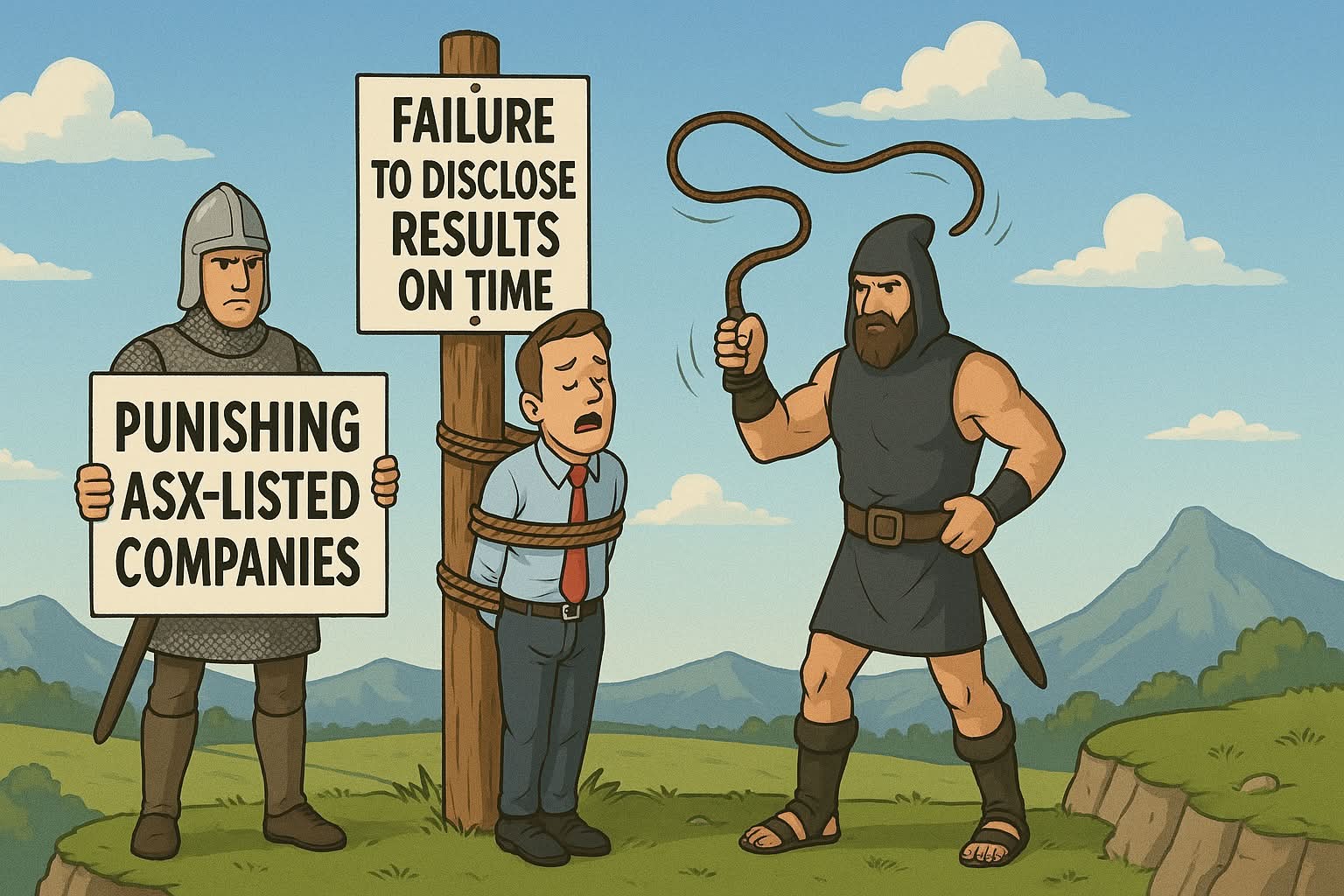
In this episode of QAV, Cameron and Tony dive into the looming macroeconomic uncertainty dubbed “Peak Fear Day,” triggered by Trump’s upcoming tariff announcements—aka “Liberation Day”—and its potential impact on Australian super funds heavily exposed to the U.S. market. They also break down FND’s recent $45 million capital raise and the chaotic movements of its share price. Later, they’re joined by Steven Mabb (Chairman of the Australian Shareholders Association) for a robust discussion on the state of continuous disclosure in ASX-listed companies, ASIC’s role, and potential reforms. The trio explores how shareholders might regain trust and control in a market they increasingly see as opaque and under-policed.
Transcription
QAV AU 812 Audio
[00:00:00]
Cameron: Welcome to Q‑A-V-T‑K. This is QAV Australia. We have to point this out now ’cause we’re doing a US show too today. Um, episode 8 1 2. It’s the 25th of March, 2025. How are you TK?
TK: Good, but didn’t we record nine 11 last week? ’cause you just assigning random numbers to our shows. Hey, confuse
Cameron: It was eight 11. I said it was one short of nine 11.
TK: So it’s
Cameron: Uh,
TK: of nine 11,
Cameron: yeah, yeah, yeah.
TK: That’s
Cameron: be technical about it, you and you and your technicalities with price to operating cash flow figures. That’ll be, that’ll be a reference to our American show.
TK: Rules are rules.
Cameron: [00:01:00] Peak Fear Day is coming for the markets. Tony Dunno if you know that. Dunno if you dunno If you’re feeling it, you’re feeling the peak fear, you’re feeling it.
TK: forward to it. Hopefully it’s a buying opportunity. Peak fear,
Cameron: Oh, that’s one way to look at it.
Blood
TK: on the streets.
Cameron: This is to Chanticleer in the Financial Review. uh, peak Fear Day is coming for the markets. Donald Trump calls it Liberation Day, the date of his next big reveal on tariffs comes at a risky time for Australia’s large superannuation funds. It’s Kiss The Ring Week for Australia’s superannuation sector.
A month after treasurer of Jim Chalmers, an Australia’s Ambassador to the United States. Kevin Rudd a series of meetings for super industry leaders in Washington and New York. You know, if he was an American, it’d be like former President Kevin Rudd. Why don’t we get, why doesn’t he get former Prime Minister thrown in there?
Like, uh, why do we throw our former Prime Ministers under the [00:02:00] bus when they get a new job?
TK: Well, I guess the question is why did he take the downgrade to Ambassador to America after he’d been Prime Minister? Is he sure to
Cameron: what else is he gonna do? Yeah. Wow.
TK: maybe they decided, he kept throwing enough hand, hand grenades. He could do it from overseas.
Cameron: Yeah. Right. Uh, they hosted a series of meetings for super industry leaders in Washington and New York. The big dogs of American Capital are making the Long Trek down under for the second annual Asia Pacific Financial and Innovation Symposium, or. A, a in Melbourne on Tuesday. Uh, the timing of this year’s event is exquisite Australia’s $4 trillion.
Super sector is as exposed to the US market as it has ever been allocations to international shares hovering around 30% for most large funds. The fact the big US private capital giants are pressing the flesh down under this week tells you there are plenty of Australian savings tied [00:03:00] up in American unlisted assets and alternatives into 2025 with global markets dancing to the tune of American exceptionalism. super sector’s positioning looked pretty smart. Even a veterans such as Australian Super Chief Investment Officer, Mark Delaney and Uni Super, CIO, John Pierce, were cautious about overextended valuations and the way US equity markets have been concentrated around a handful of very large. Very expensive tech companies.
But in the two short months since Donald Trump’s inauguration as US President, the big bet global investors placed on America is suddenly looking shaky. And April 2nd is gonna be Liberation Day for America. We’ve been ripped off by every country in the world, friend and foe Trump said in the Oval Office on Friday, according to some guy, investors are gonna have a hell of a lot to chew on over the next week or so. So, uh, there you go. I hope you’re [00:04:00] shivering in your boots. Tony,
TK: Not at all. I, I was surprised to see the US market was up 1.8% overnight. I don’t know if you saw that.
Cameron: do.
TK: they’re not shivering in their
Cameron: I did not.
TK: forward to, uh, liberation day. Um,
Cameron: Mm.
TK: It makes it sound like it’s like the end of World War ii, doesn’t it? Liberation Day.
Cameron: It does. Yeah. Well, you know, if you look at the last, uh, say three months inauguration, you look at the s and p 500 at the beginning of January it was running at, uh, 5 9, 7 5. It’s currently at 5 7, 6 7, so it’s down a bit. It did get as high as 6 1 4 4 sort of the middle of February. It’s down quite a bit from that, but it’s like not doing, it hasn’t, you know, hasn’t had a Nvidia style collapse or a Tesla collapse or anything like that.
It hasn’t halved. [00:05:00] It’s not that kind of a trouncing.
TK: yet.
Cameron: shaky, no doubt yet.
TK: That’s
Cameron: Yeah.
TK: plenty of articles out there to say
Cameron: if you look
TK: we’ll see.
Cameron: the Dell Jones Industrial Average. Uh, early December was at 45,014. Middle of February, it was at 44,745. It’s down to 42,583. So what’s that come down by 5%
TK: Yeah.
Cameron: the last, uh, bit. Yeah. So anyway,
TK: Hmm.
Cameron: um, just
TK: it.
Cameron: as we always say, um, what was the Batman thing?
What do you say, Batman? Just follow the rules.
TK: Well, that’s
Cameron: Yeah.
TK: this is just, I mean, it’s feeding the trucks, isn’t it? All this. News flow coming out of America? yes. Look, I don’t wanna underplay it. Um, the wrong kind of macro settings can have big [00:06:00] impacts on our portfolios, but, uh, it seems like the way Donald Trump is gonna handle things is to throw all the stuff out there, flood the field, and then wait for the response and make a final decision or two or three final decisions down the track.
the US market was up because even though Independence Day or whatever it’s called, VE day, he’s going to, um, he’s going to bring in massive tariffs. He’s already walked it back and said he’s going to, um. weighed a lot of, uh, car tariffs that he had previously flagged were coming in.
So, um, he’s getting feedback. And one of the articles I read said that uh, interviewed the head of, um, general Motors, who said, if the tariffs came in as flagged, that they would be broken nine months. you’ve gotta think that that kind of message is getting through to, to the White House, and they’re gonna modify things and yeah.
This is another, another, uh, of talk big and we’ll [00:07:00] see what happens when the day comes.
Cameron: What’s it worth to you remove the tariffs? What’s it worth? Mm.
TK: of a protection racket really, isn’t it?
Cameron: A bit. Yeah.
TK: one. All right.
Cameron: Yeah. It’s the way it seems to me. What do you have on your list of talking points today? TK
TK: lot actually. Um, I wanted to, to revisit the, the question from last week, which, um, I must admit came in late and I probably didn’t prep for it enough the second buy line and the, the yellow line on the bread light of the buy line follows the cell line. Um, just add to what, uh, we talked about last week.
Um, I went back and checked my notes and I think, I think the history of the two different buy lines is the green dash buy line, which we now call the second buy line was [00:08:00] the buy line we used from the start of QAV. So it’s the most recent line drawn by the most recent high the same in reverse for the most recent cell.
The most recent low, the biggest low, sorry, the biggest high and the biggest low, um, the buy line follows. The cell line I think came in during covid The market was taking off really quickly, but a lot of stocks were still below their buy line because of the, it was such a precipitous downturn when Covid happened, um, that the buy line was a long way from where the stocks were, but they were increasing dramatically.
And, um, we could see that if they were going, the stocks were most likely going to cross the buy line, but we didn’t wanna miss out on the first 20 or 30% growth. so, you know, I had, um, had discussions with Brett and thought about the, looking at the prior buy [00:09:00] line, the buy line that happened after the first buy line that happened after the last cell line.
And we were using that, but that really hasn’t been used much except for that circumstance. So I just wanted to highlight that, that, um, to all intents and purposes, unless there’s another major crash and sudden rebound, it’s the second buy line, which is the, the important one, and the bread letter to use.
Cameron: Right, so that gets back to my question is do we need the first buy line or do we just get rid of it?
TK: We can get rid of it. But, um, again, it was useful I think when we had that big downturn in rebound during Covid. ’cause um, yeah, the, the, the buy line as traditionally drawn was way above where the stocks were rebounding from. And we could see there was a fair bit of symptom happening quickly, and there was no, and the numbers were good and there was no reason not to be in that market.
Um, and then we, well, I went back and had a look at prior [00:10:00] buy lines and thought that might be a better indicator in that circumstance. So take it out if you want, but I think it, it may come back into play again during a unique set of circumstances
Cameron: Will just ignore it for the time being. Um,
TK: Until
Cameron: use the second buy line.
TK: Day when the market tank and went either again.
Cameron: How is that? Remember that film Independence Day, early nineties? Bill, who was, who was the president? One of the bills, bill Pullman.
TK: Oh yeah,
Cameron: Is he the one that’s dead or is it the other bill that’s dead?
TK: Oh there’s of bills. I’m not sure
Cameron: There were two bills and they actually were in a, um, uh, film together. Um, uh, yeah, bill Pullman’s still alive. That’s good.
TK: there are much
Cameron: anyway,
TK: Pullman. Randy Quay the drunken Vietnam
Cameron: Randy Quaid, God, what happened to Randy Quaid? Like, he, he went off [00:11:00] the deep end
TK: yeah.
Cameron: at one point. I never, I, have, yeah. I don’t remember what happened to him after that.
TK: there should not Google what happened to Randy Quaid.
Um, and of friend, um, oh, what’s his name from the fly? And, uh, my most recently on, um, um, the, uh,
Cameron: Jurassic Park.
TK: of the Yes,
Cameron: Yeah. Yeah.
TK: And all those. He was in it
Cameron: Paxton.
TK: Oh, bill Paxton died. Yeah, yeah,
Cameron: Paxton’s, the one that he died, and Bill Pullman were in a, um, uh, sort of cheesy Coleman film that I watched a while ago called Brain Dead.
TK: Were they top cast?
Cameron: wow. Harsh, uh, was a low budget horror film from 1990. Anyway, yes, [00:12:00] bill Paxton. I love Bill Paxton.
TK: Did you?
Cameron: They’re everywhere, man. They’re everywhere. And aliens.
TK: Yeah.
Cameron: tombstone. True lies weird science. Yeah. Anyway, how did we get onto that?
TK: for me.
Cameron: Independence, independence Day. I was just think of that speech that Bill Pullman gives in the film. It’s like this, this rah American speech. He’s talking to all the fighter pilots to Will Smith and whatever about they will not, it was like they could
TK: of
Cameron: take Girl Holmes. Yeah, I get it. Confused with Mel Gibson’s speech and um,
TK: in
Cameron: whatever his blue paint face one. Yeah, that one.
TK: yeah. Which of course, William
Cameron: All right. Moving on from two BL?
TK: paint on his
Cameron: no.
TK: Uh, company news. So, uh, findy is back in the news. They’ve launched the $45 million. Raising. So that might be of interest to, uh, shareholders who hold, sorry. [00:13:00] Uh, to Findy shareholders uh, bought it from our buy list before.
findy, the ASX listed ATM owner backed by the Flannery family has launched a 45 million capital raising to fund CapEx and to restructure convertible notes held by its Indian investor, pyramidal Alternatives. The company split the cash call into a $40 million share placement, representing 20.3% of NDI shares on issue, and a $5 million share purchase plan.
were priced at $4 a share, or a 12.3% discount to the last close, 21.4% lower than the 30 day volume weighted average price. Uh, Fey’s core business is setting up and running automated tele machines, automatic tele machines for big Indian banks. It shares have risen 91.6% over the past 12 months as it won new contracts and broadened out the product offering via Bolton acquisitions.
But the shares have been flat year to date. Uh, the term sheet said 22.8 million [00:14:00] of the proceeds alongside debt would fund CapEx to deploy 2,293 under a new agreement with the State Bank of India, which initially awarded the contract for 4,219 ATMs in October, 2023. Uh, a lot, uh, the rest of, a lot of the rest of it would go to, uh, paying out pyramidal who had loaned them money.
Um. And they said that, uh, potential investors were told the restructure would add 7 million after tax profit after a boost in interchange fees announced this month. from the A FR on the 19th of March.
Cameron: And when that news came out, the share price jumped. I remember about 14% from $4 56 up to $5 44, and today it’s down to $4 and 12.
TK: So just above the issue
Cameron: What the, what the hell?
TK: It’s strange, isn’t it? If you [00:15:00] can buy shares at $4, why would you be buying them at five?
Cameron: The. Findy shares have been so volatile over the last sort of year or so since we’ve been paying attention to them. I mean, they’ve had a good year, don’t get me wrong. They’re at $3 50, back in January. Uh, no, sorry, that’s, that was this year. Go back a year ago. A year ago they were trading to get $3 20. They’re up at $4 50 something now, as I said. So it’s, they’ve had a good year, but they were up at $7 38 the end of last year. So it’s been incredibly crazy levels of volatility, which I never really understood. ’cause they’ve never really come out with dramatically bad news. It’s just been all of this, oh, Steven shorting all of this stuff that they’ve been doing in India.
It all seems good to me. I dunno why there’s been so much volatility.
TK: Yeah. I am not sure it goes, goes hand in hand with, uh, a growth stock,
Cameron: Well welcome back to the [00:16:00] show, Steven Mabb chairman of the Australian Shareholders Association, here to talk us through how the a SA is going to represent angry QAV members, regarding lack of disclosure during confession season. And otherwise, welcome back. It’s been a while, chairman Mabb
steven: Yes. Thank you very much for having me back on, gentlemen. Lovely to, to chat to you again and, uh, I have been listening every week, so I feel like I’m, uh, I’m, I’m in the loop with what, uh, what you’ve been covering. But looking forward to the discussion today and, and hopefully offering whatever help I can.
Tony, do you want to, um, pick it up from there?
TK: Yeah, so lots of examples. Steven, you and I have talked about them beforehand. I’m still trying to come to con, you know, grips with what’s going on. Another classic example happened today, which we hadn’t gotten round to talking about on the show before you came on, but, uh, there was another, um, [00:17:00] was a by a company called Helia. Um, there’s an article in today’s a FR about, uh, them, them being a, a mortgage, uh, insurance lender who looks like they’re going to lose their biggest contract with the Comm Bank. And, uh, the shares have dropped a lot. um, the interesting thing for me with that was that the CEO sold out. A lot of their shares three days before the announcement was made. it’s not just continuous disclosure. There’s a lot of, I’m gonna call it, without picking on this particular example, but a lot of flaunting of the ASX listing rules going on. there have been some, went back and researched it because I was racking my brains to try and think of when companies had been, um, given a ticket for disclosure rules and other listing rules, and there have been some big cases.
Um, uh, I think Rex Airlines were under investigation, um, if not fined by ASIC. [00:18:00] I think one of the big banks was as well. But it tends to be large companies where the focus is of the, ASIC, who seems to be the, the regulator who can take legal action. Um, I’m not that familiar with the as SX listing rules and whether they can, take action and whether there’s a bit of. Finger pointing, going both ways with the regulators. ’cause the, if, if you look at the Corporations Act, it says that, section 6 7 4 says that, uh, ASX listed companies are required to comply with A‑A-A-S‑X listing Rule 3.1. So it just handballs that straight to the ASX then they go through that.
The listed company must immediately disclose any information that a reasonable person would expect to have a material effect on the share price or value of the securities. And, um. Da da da da da goes from there with a few carve outs for, confidential information, um, protected IP and things like that. [00:19:00] the Corporations Act had a change a couple of years ago, which said that, uh, if you were going, if they were going to be prosecuted, they could rely on the fact that they, the prosecutor had to find that they did it negligently or acted with malice, um, rather than just they made a mistake. Um, so that’s made it harder for legal action to be taken successfully against companies.
And that, that seems to have thrown a spanner in the works. And there’s certainly less activity going on in the, the legal, um, prosecution sense and the class action sense that there has been in the past. So. I’m not sure what’s going on. You might be able to shed some light, but it certainly seems, particularly with the latest reporting season, that a lot of companies, um, came out with results, which were a surprise to the market.
Um, they were different to consensus, both on the upside and the downside, but, um, the ones that we are particularly annoyed with are the ones on the downside whether there should be a change to the, to the rules. And, and a couple of things I’ve been mulling is around if [00:20:00] you present results and this, the stock price moves more than 10%, then the ASX should be all over you saying, well, tell us, you know, why you weren’t continuously disclosing the fact that it was a gonna be a, a market moving announcement, um, at the time, and whether you were in possession of information earlier. Uh, that’s just one, you know, potential, um, rule change that could, that could happen. But it just seems to me that, uh, you know, if you look at, say for example, Bendigo Bank, I’ll, I’ll use them as an illustration. They came out. the, with the results, the stock price was hammered. ASX wrote them a letter saying, please explain.
They came back and said, and, and still blown away by this. They said that didn’t think a reasonable person would expect a reduction in our net interest margin to affect the stock price, so therefore we didn’t disclose it. And that, as, as far as I can tell, that’s the where the matter rests. Now, I don’t know if the ASX or bASICally gonna take further action, but you know, [00:21:00] I, if you don’t, if you’re running a bank and you don’t think that increase margin contraction is gonna affect the stock price, then um, I’m, I’m not sure where you, you know, what world you are living in, but why are you trying to manage net increase margin? If it’s not that important to the stock price, then just leave it alone. that’s not what banks do. So there’s a, there’s a lot of, um. A lot of strange things going on. I, I feel it’s getting worse this particular reporting season, interested to know whether we can do something about it, both as shareholders and I guess, um, from the a SA perspective.
steven: Yeah. Thanks TK, uh, a lot there. And, um, I guess I’d start off by saying I’m, I’m not a legal expert obviously, and nor is anyone in the a SA management team, but we’ve, we’ve gone and had a deeper dig in into this since you and I first started discussing it. So a few things that. Hopefully I can share that might be helpful for people.
and the first one is that the ASX actually can’t find companies for breaches of the listing rules. It’s an ASIC responsibility to [00:22:00] take legal action or fine, um, a company. What the ASX can do is send out these aware letters or these please explain letters, which is normally, you know, what we all see as.
Shareholders when we, uh, if we’re, you know, subscribing to alerts, et cetera. Um, and then the company has to respond obviously there. Uh, if the ASX isn’t happy with that response, they can threaten suspension. That’s kind of the first step. And, you know, ask for more information or more, more clarification.
they’re still unhappy, then they can actually suspend the company. Which is the next step. And then ultimately they can delist the company if, from the ASX itself, but they can’t take, um, legal action or, or, um, enforce any fines against the company. So what apparently often happens is if the as SX isn’t happy or isn’t satisfied with the company’s response, they will refer it to [00:23:00] ASIC.
And as far as we all know right now, it’s possible that the ASX has referred this Bendigo Bank example to, to ASIC, um, and maybe ASIC’s investigating one, one of the obvious problems there is, you know, ASIC doesn’t disclose all of that stuff in advance, and they’re also, um, I think swamped with more complaints and, uh, you know, uh, requests for, uh, investigation across all the financial services than they can handle.
So obviously, I assume ASIC are trying to. Manage their workload and, uh, determine which, which of the various breaches are the most significant. And I know Joe Longo, the chair of ASIC, has talked a few times about them being more selective with their legal enforcements. Um, and I’m paraphrasing here obviously, but you know, going after the cases that they think they can win.
’cause sometimes they might think there’s a, a problem there or assess that there might be a problem there, but they’re not sure they can win it, uh, in court. And in turn, they’re not tying up their resources and their [00:24:00] funding to go after a case that they’re less certain about winning. I’m not saying that’s the case with Bendigo, I just mean this is how ASCA allegedly or apparently prioritizing their, their work.
Um, so there’s a few steps. Please explain letter threaten suspension, actually suspend or delist. Now if you think through those, there’s some consequences for shareholders. Obviously, if you do suspend a company. Even for a short period of time, the, the most obvious one being that you can no longer trade the shares while they’re suspended.
So it’s the ASX are reluctant, I think to, uh, rigorously suspend companies because they know there’ll be, you know, at least some of the shareholders then that are unhappy that they can’t, can’t trade their shares. So I, from what I understand, it’s uh. Um, it’s not their first option to suspend a company.
Uh, they’ll, uh, they’ll prefer not to suspend someone unless they think it’s, uh, it’s necessary or, um, you know, needs further action. And I guess sometimes those things are [00:25:00] probably judgment calls, aren’t they? You know, is the, is the Bendigo bank result so far away that it was reasonable to expect a big reaction or, or not?
And, and those things, you know, I listened to your. Episode last week, and I couldn’t disagree with your sentiments. So it’ll be interesting to see whether ASIC actually do take action on this one if, if it’s been referred to them. The other option, of course, is a shareholder class action. if enough shareholders are unhappy with what’s happened here and they don’t think the disclosure’s been appropriate, then shareholders themselves can get together with some legal eagles and uh, and uh, take out a class action against the company.
Uh, so that’s. mechanism, if you like. Um, I’ve been following, you know, a pretty small group of companies myself personally, for the last few reporting seasons, and I agree. There’s been, there’s been a lot of volatility up and down in some of the companies that I’ve been closely watching. But what’s interesting is when I went and had a look at the VIX for the A SX, so the [00:26:00] ASS X 200 VIX over the last.
Um, 18 months, it’s actually been pretty stable at a market level. So, um, you know, it’s, it’s been somewhere between 10, 11, 12, which is kind of quite low by, um, particularly volatile standards. And there’s only been a couple of spikes, um, during that period where it’s got up to around 15, 16. So. So when you look at all the companies in total, doesn’t look like it’s been an overly volatile time, but obviously that’s not, you know, necessarily the individual companies that you are following or I’m following where, you know, maybe they, they have been more volatile than the market as a whole.
So, so there’s some, I guess some things I’d, I’d share that, you know, might be helpful. Um, happy to, you know, take any follow up questions on that.
TK: Thanks Steve. Um, yes, there’s a number of questions I have from that, and the first one is, it’s kind of a meta argument going on here. If companies are required to maintain continuous [00:27:00]disclosure and the ASS X is a listed company and it’s referring disclosure issues to asset, why aren’t they being disclosed itself? You know that if, if, if action is being taken against Bendigo Bank, and I’m picking on Bendigo Bank as a, as an example, there are plenty of other ones that could easily fall in that same category. Why aren’t we as shareholders on not a shareholder, sorry? Why aren’t shareholders, You know, taken into the, into the loop in terms of the fact that that has been referred to ASIC, has it been, has, has the company been told it’s been referred to ASIC?
And if it has, why aren’t, why isn’t the company disclosing that fact sort of in the chain, as you’ve described, is, is completely opaque, but I would’ve thought it was very market. sensitive and, and shareholders should be aware of the fact that ASIC is
investigating a company.
so I mean, that’s, that’s the first thing.
Why isn’t it being made transparent? Um, and I guess, you know, the follow up question from that is, [00:28:00] is ASIC resource properly? If it’s, if it’s, when I did a search on the prosecutions the last 12 months, they tend, maybe it was, perhaps the results were volume weighted, but they tended to be large corporations, treasury, wine group, star casino, Rex airlines, et cetera.
There was nothing about smaller companies. So does there need to be a separate section of ASIC, which is resourced enough to look at regulation and compliance for small cap stocks?
steven: Yeah, so, so good questions. I mean, as, as I say, we love trying to shine a light on, on anything that we think shareholders should know about, and, uh, we’re all for as much transparency as possible. Um, so no arguments at all there, that it would be better to, you know, to be aware of these things. would say the couple of high profile, um, flare ups we’ve seen in the last, you know, three or four months, namely mineral resources and WiseTech, um, ASIC have come out pretty quickly in the media and announced that [00:29:00] they’re investigating and looking into aspects and calling directors in, et cetera.
So it seems they’ve acted, in a pretty. Timely or pretty quick manner there. Um, but obviously they’re very large and very high profile companies that are getting lots of media attention, so maybe that’s forcing their hand a bit more. but yeah, no, no issues in term from our perspective, obviously, in terms of, you know, why shouldn’t that be disclosed as soon as it’s, um.
As soon as it’s known or as soon as it could be shared, as long as there’s no, you know, confidentiality issues. So I’ll, I’ll go back and find out if there are any re specific requirements there. I’m sure once the company has been made aware of that they probably should be making an announcement, you would think to the, to the market accordingly.
So I’ll go back and double check. Um. That particular point. Um, and yeah, I mean, in terms of their resources, I’m, I’m actually having a, I’m going to a round table meeting next Monday with one of the asset commissioners, so I might see if I can [00:30:00] slip this question in and actually, um, ask, uh, around this particular issue, what their process is and how they’re allocating resources, et cetera.
I think it’s a fairly small group, so hopefully I’ll get my question answered. Uh, it’s not Joe Longo, but it’s one of the other ASIC commissioners, so hopefully they’ll be in the loop and they can give us an answer there. And yeah, let me know if there’s any other questions that we wanna pose to ASIC on these issues that are relevant
TK: Well, if you, if you’re talking with them, invite them on our show. uh, we’d love to have them here and, and answer these questions directly and, in a constructive way without, you know.
steven: Yeah, I will, I will definitely ask. We, we actually have, um, at the a SA conference coming up in May, you know, a subtle plug there. But, uh, um, we are actually gonna do a regulators panel this year. And we’ve got, uh, Sarah Court, who’s the deputy of ASIC, coming to sit on that panel along with one of the head, uh, um, GMs from, from the A SX, uh, one of the commissioners from the A TO, um, and one of the commissioners from a PR.
um, so they’re [00:31:00] coming to meet with retail or regular shareholders and, uh, it’ll be a q and a session where, uh, for 45 minutes we, um, we put our various hot questions to the leaders of those regulators and, and hopefully get some insightful answers. First time we’ve done that. So, you know, as a, as a SA member, TK, let me know if you’ve got any particular questions you’d like us to, to them in a, in a couple of months time.
TK: Alright, well I think you know my questions, but I’ll happy to formalize them for you. Um, are there other, other opportunities for shareholders to take action like a rem strike on these issues? apart from, you know, selling the shares, um, it’s, it’s almost a shorting opportunity with when, when the bad news comes out and there hasn’t been continuous disclosure ’cause the market racks pretty violently downwards to the stock.
But, um, know, I know that you have monitors. I know that they go along to board meetings and recommend things. But if there’s a company you feel that hasn’t maintained continuous disclosure, would you recommend the REM strike against [00:32:00] the.
steven: Yeah, absolutely. Yeah. And I suspect, um, the big proxy advisors and super funds that, you know, typically are much, you know, larger shareholders than we are, often be doing the same thing if they feel like the company isn’t being, um, as quick or as open with their disclosure as they should have been.
I did also hear, um, I spoke to one of the former. Uh, GMs of the ASX about these issues as well. Um, and, and he shared that when they send out these aware or these please explain letters, it is a bit of a tell for shareholders that the ASX doesn’t think the company’s been as transparent as they should have been.
Now, whether they take action or not, it’s actually saying that, you know, of all 2000 plus companies this year, these are the 15 or 20 or 25 or whatever it was. we are not happy with, uh, at, at a first order level, at least. Um, and that might be, you know, something to include in the checklist or think about that.
Um, the market operator at [00:33:00] least doesn’t feel in the first instance that they’ve been as, um, open with their disclosure or, or as open in confession season as they should have been. ’cause it takes, you know, some time and effort to look at these things and send out the letter and then respond to the response so don’t do it.
Frivolously is what he said. He said, you know, when there’s, um, when there’s letters like this going out, it is something you should probably, you know, consider as a shareholder, whatever the outcome.
TK: Do, do they actually respond to the response? I can’t think of any example of where I’ve seen the ASIC, where I’ve seen the ASX respond to a please explain letter. may lead to ASIC doing something, but I’ve never, I can’t recall of an example where the ASX has done something
steven: Yeah, I think they respond to the company, but I don’t think the company’s required to, you know. another announcement, market announcement around that. We got a response and the market operator was happy, right? So I assume if you don’t see another response, the market operator said they were happy.
Or if you do see another disclosure, it’s, you know, that ASIC are investigating or the as SX is gonna suspend it, like they’re the [00:34:00] next two, steps in the process beyond, we were satisfied enough with your response where you’re not gonna get another disclosure. I’m not saying
TK: do we.
steven: way, I’m just explaining what the
TK: Yeah.
steven: we understand it.
TK: So as a shareholder, do we assume, if we don’t hear anything after the As SX, please explain that it’s been replied to that the ASX are happy with it.
steven: Um, yeah, unfortunately it’s either that or they’ve referred it to ASIC and then I, I would guess normally in the next few months, if ASIC are gonna do something, then you’d be hearing about it then. Um, I don’t think ASIC are gonna sit on it for a year. Um, I certainly haven’t seen that. Uh, so I’d say if you haven’t, you know, if you haven’t seen anything in a few months, you could probably safely assume there was no further action taken.
If they’d been suspended, that’s gonna be announced. Or if ASIC is starting an investigation, that’s gonna be announced so. Um, yeah, I guess that’s, that’s about all we’re going to know as regular shareholders with the way it’s being applied at the moment.
TK: I guess my overarching comment is that’s very byzantine and opaque um, you know, very unhelpful for shareholders. I, I won’t go any further than that in criticizing the regulator, but [00:35:00] doesn’t seem to, you know, the transparency box or even tick the helpful box apart from your comment that if they send out a letter, it’s, potentially a red flag.
And that’s what I wanted to, to discuss with you is we talked about last week putting red flags on companies that we thought had broken continuous disclosure. assessment of it was they broken continuous disclosure, and we might come up with some rules around that. Like, know, there was a, a surprise drop in the share price of more than X percent, 20%, for example. It’s, this is, I mean, my high level sit, uh, you know, view of the situation is it’s the wild west are under-regulated. ASX doesn’t have the, as you said, doesn’t have the legal ability to do anything but suspend, and it’s not in their interest to suspend because they collect listing fees from these companies for a start.
So they don’t want companies being suspended. They don’t wanna.
steven: sorry, just on that one, on the listing thing, I should have mentioned that I did ask about the listing fees. And, um, they said that the listing fees are paid a year in [00:36:00] advance. So if you are suspending a company, terror temporarily doesn’t impact the listing fees or the revenue as SX generating at all.
It’d only be if you permanently suspend or, or delist them that they then lose their revenue from that particular company. So a short term suspension is, there’s no disincentive, I suppose, there for ASX from a revenue point of view other than, you know, again, potentially there’s other shareholders that are unhappy that the shares are suspended.
TK: Well, except that if just, just say for example, the ASX did temporarily suspend that they thought, all the people they’ve written, please explain to us to, um, eventually companies are gonna stop listening with the ASX and go to a different I. Share market. So there is a conflict of interest I think there in the As SX and look, it’s, I don’t necessarily have a problem with that because it’s ASIC who are the regulator, right?
The as SX are just facilitating things. So that. But if we don’t see what ASIC could doing and we’re not seeing anything coming out of ASIC and we can’t, we can’t have confidence in ASICs. So it’s really the wild west, unless it’s a big, [00:37:00] highly company like WiseTech or, or mineral resources or whatever, um, we’re a lot and we’re reliant on. Rear window to uncover those things. We’re not reliant on ASIC uncovering those things or the ASX uncovering those things. Let’s be clear, it’s, investigative journalism that uncovers those things. Um, it’s, it’s the wild west. And, and so we have to really, as shareholders, take our own actions. And so getting back to my question, I’m, I’m trying to formulate a set of red flags and rules that we can take ourselves.
And so I welcome your input on to that. and it comes in my mind as I’ve been trying to toss this over, it comes down to the question of if the share price is down 20%, for example, 30% whatever, it, it’s the age old question and the share market, is that a buying opportunity or is that a shelling opportunity? And, um, so, you know, immediate reaction was to slap a red flag on something, but it may be that all the bad news is outta the stock and, uh, it’s time to buy. So I, I’d like your input [00:38:00] onto, onto doing things for ourselves, I guess.
steven: Yeah. So, um, I can share that, you know, I, I personally have added to my checklist, do I trust management as a, a go, no go. And if I can’t answer in the affirmative there, then I, no matter how good the fundamentals are, I no longer will own a company like that. And that’s, you know, a, a judgment call of course.
But there’s five or six things I’m regularly looking at there now, and this would definitely be one of them if they’re, if they’re not disclosing. Um, material differences from what they’ve guided or the market expects in advance. Can I really trust that management team? You know, I, I’m not sure I can. Um, so that would just be my personal view on that.
I will say though, there’s companies that don’t give formal guidance, right? So take data three, for example, which is an ASX 200 company. very deliberately and for a long time have not given any formal guidance. They don’t want to get into the forecasting game, which, you know, resonates with QAV, I think.
Um, but there’s a bunch of analysts that [00:39:00] cover, uh, data three, and they come up with their forecasts for what their sales and revenue are, et cetera. And my understanding is even then, if the company, um, believes that their results will be more than, I think it’s 10%. Higher or lower than the consensus of the major analysts covering the company.
They’re then supposed to disclose that in confession season. So even if they’re not giving guidance, they’re still kind of being forced in a way by, by the as SX rules to, um, to update the market when they’re, you know, expecting to deliver result materially different to, to the analyst’s forecasts. Um, so,
TK: I just stop you there?
steven: Can I just sure.
TK: so are you, are you, can you point to that rule? I hadn’t, I’ve, I’ve heard you speak about that 10% rule, but I couldn’t find it when I had to look myself. rules are, as I see them, are fairly
steven: a
TK: and you could drive a truck through them. Really.
steven: yeah, I’ll go and find that Tika. I don’t know the exact listing real number, but I’ll go and find that. ’cause yeah, our, our, um, policy managers, you know, covered that with me a few times. So yeah, I’ll go and find out and come back to you on [00:40:00] that one. Um. But yeah, take data three as an example. It’s, it’s been very volatile.
It around the, the release of half or annual, um, earnings and yet hasn’t diverged much from the analyst consensus at all. So I look at that and go, well, this is either a buying or a selling opportunity if you think it’s extreme. ’cause it’s, it’s share prices moved 10, 15, 20% in one or two days, and then within a week reverted back to where it was.
So I don’t personally, I don’t really want the as SX to send them a letter there because it’s. Other shareholders that seem to be driving that action. It’s not that they delivered a result that was wildly different to what, um, what they had been delivering and what the consensus was. It’s just for some reason there’s been lots of other shareholders buying or selling, uh, at that particular week, um, to, so to me that’s different to the Bendigo Bank example where they’ve delivered a, you know, a core.
Financial result that’s very different to, to what was expected. And it’s something that, you know, reasonably, you would anticipate would affect the share price. So [00:41:00] I, I, I see a difference between those two things where it’s other shareholders reacting to what’s a business as usual result versus not disclosing things that, you know, the market really should have known about.
TK: Yeah, but I, look, I, I take your point. Data three is a good example. You don’t have to provide guidance. Um, but if something happened internally within data three, like a data center call on fire or something, they would have to announce it. So the market is part of continuous disclosure. So there’s still, have to provide guidance, but you still to update the market if, if something’s happening within the company, which affects the share price.
steven: Oh yeah, 100%. Completely agree with that. I just mean where you are not giving guidance about what your earnings or your sales result was going to be. Um, even then, you’re still required to. To update in confession season if your result’s gonna be materially different to what the analyst’s, um, consensus numbers are.
So, uh, yeah, that’s, that’s probably all I could, uh, all I could offer there.
TK: The other, the other thought I had too was, is the fact, is there some, some kind of [00:42:00]information in the market? Um, when a company doesn’t make a disclosure during confession season? you know, normally I would take that to mean when the results came out, they’re gonna be within a, a narrow range of consensus.
But clearly that hasn’t been the case this time. So is there, do we, does the ASX need to have a listing? We’re all saying as soon as the, the. Books are ruled off when they go to the orders. For example, you must update the market with what you think. Um, results are going to be as almost like a pre result announcement, and, and you have to do it.
It’s not whether you think it’s, you have to confess or whether you think it, you’re away from guidance. You have to do it as a stage in the process.
steven: Yeah, I mean possibly, I mean, that might be a, you know, a good additional disclosure I guess. You know, typically we’d be getting that info. only a week or two before we’re getting the actual report at that point. Right. So it would be nice to know, but it’s not like you’d be getting it months in advance if [00:43:00] it’s when the auditors have looked at the books and, and then signed it off.
’cause typically they, you know, they, they bring those half or annual reports out within six to eight weeks of the end of that period. So during that time, I assume, you know, CFOs and auditors, et cetera, are, um, you know, getting everything finalized to go in the report and Yeah, I wouldn’t think they’re sitting on that.
an extended period of time, so it would probably help a little bit, but my guess is you’d only be getting that a week or two before the actual final version of the half or the annual report was coming out.
TK: Yeah. And that’s a question too, isn’t it? So you’re right, you’re only getting it, you’re only getting it earlier. But companies that do, um, provide continuous disclosure once they know, come out and say it. even if it’s only a, a three or four weeks before they their audited results. But, but what we’re finding is that companies are just speeding through that and then getting to their annual results and delivering clangers at in the last reporting season anyway.
steven: Yeah, absolutely. So look, I will raise these issues in the public forum. [00:44:00] With the ASX regulator and with the ASIC regulator in a couple of months time, get it on the, on the record, we’ll have representatives from the FIN and the Australian and the A, b, C there, most likely covering the conference. So, uh, hopefully we’ll, uh, we’ll, you know, we’ll get a bit of media coverage for that as well, if we’re lucky.
And, uh, and then I’ll obviously get back to you in a couple of months with what their, you know, responses were to these follow up questions. ’cause I think they’re, you know, they’re all really valid and us as individual shareholders obviously do. affected positively or negatively by these kinds of things.
So, uh, you know, no, no pushback at all from us on trying to get the, uh, better enforcement and better disclosure if we can.
TK: Terrific. Thanks Steve. That’s great. Um, I might put pen to paper and formalize some questions for you to ask.
steven: Yeah, that’d be great. And then, and then I had a couple of quick questions rela kind of segueing on, on this issue for, for listeners. Uh, if anyone wants to, you know, shoot camera a response if you’ve, if, if you’ve got one. These are, these are a couple of things that have just bubbled up [00:45:00] in the last few weeks at a SA that we’re thinking of, uh, pushing forward with to try and help regular shareholders.
Um. And the first one is around donations. So, you know when companies are giving political or charitable donations, you know, we saw a lot of this in The Voice, for example, where, you know, companies were making donations to, you know, different sides of the voice campaign. And we had a lot of shareholders that were unhappy one way or the other about that.
So one of the things we were, you know, considering is should we, should we ask for a shareholder resolution at AGMs? Uh, and maybe it’s a non-binding resolution, but shareholders get to have a vote on it just like they do with remuneration each year, um, to explain what your political or charitable donations have been for the year and how they tie to the business.
So what is the, you know, the alignment with the strategy or the purpose of the business. So, for example, if you’re an insurer. Um, you know, and you made some charitable donations. You know, maybe it’s a good idea to, to make some [00:46:00] charitable donations to troubled youth organizations because, you know, you’re paying out lots of car theft cases from youth stealing cars, for example.
So that might be, you know, a sensible way to, to make it donation tied to. of your business and how it might positively affect your business over time. Um, so we are thinking it’s just, it could be a nice idea to, um, shine a bit more light on this. If, if the board or the management team are giving away company money to political organizations or charitable organizations, you know, what, why are you doing that and how does it tidy your strategy?
And, uh, and give shareholders a even just a non-binding vote on that from time to time. So that’s one idea. and then the other one was actually about capital management. So one of the things a SA has been arguing for many, many years is for fair capital raisings for small shareholders. Um. But often what happens is the company will do a capital raising and maybe it’s, you know, unfair or, uh, you know, imbalanced towards their small shareholders, but it’s already [00:47:00] happened, you know, it’s too late to do something about it at that point.
the, the other thought was, you know, do we ask for, um, a non-binding resolution as well from time to time on the capital management structure of the company? In general, what’s your approach to managing capital and if you do need to raise capital. How do you intend to do it? Um, and then if they do diverge away from that, to explain why you’ve diverged away from your stated capital management policy.
So given, you know, these are particularly the, the second one’s a very important thing for shareholders, the way that the board and management team are thinking about managing the capital of the company. It could be a, you know, a nice short statement, just like the remuneration report and just like the corporate governance statement.
That covers the way the company’s thinking about and approaching and applying these things for shareholders to A, be aware of, and B, have a, even if it’s non-binding, vote on it from, from time to time. So we’d be interested in, obviously your thoughts and also the thoughts of any of the, [00:48:00]the QAV members on those couple of ideas that we might be able to push forward with over the next couple of years.
TK: Yeah, look, I’m happy to give you my thoughts and pass on any listeners’ thoughts as well. On the donation side, this has been a, an issue for, for years and it’s, um. You know, it comes out from time to time in the cultural wars on both sides of politics. Uh, generally the larger companies will give to both political par major political parties, and if you ask them why there’s, people have done it AGMs from time beginning, they generally say something like, well, we we’re not biased in who we give to, but we have to give to because it’s part of our a to, um, the government of the day.
And, um, you know, it’s important for us to have doors open to present our case when we’re regulators are considering changes, that, that kind of thing. So I, I get that. Um, there have been cases where companies have donated more to one side of politics than the other. Um. [00:49:00] that, you know, my experience is that generally comes out in the rear window type columns in the newspapers. Um, there’s been, you know, cases where ex operators have become chair of companies and they’ve pushed donations to their old party, that kind of thing. And it, it becomes known. Um, so it gets out, uh, whether it should be a shareholder vote. Um, that’s an interesting question. Uh, yeah, I’m, I’m not sure that’s, that’s the first one about political parties.
The second one is, of course, is about other, other groups, um, you know, you know, particular charities or whatever. Um, and we, you know, I, as a broad brush, I, I, I’m supporting corporates for donating to their charities and, and the idea of the triple bottom line, I think took hold about 10 years ago and seems to have gone by the wayside.
- Of re of recent times, but there was a lot of, a lot of benefit in companies broadening their footprint of the [00:50:00] community and, and helping community charities to, um, to support, know, their, their, uh, end users. Um, and, you know, so I kind of support that, whether you need to do it case by case, that tends to be just like a budget line item that goes to corporate affairs or to HR to, to make those donations. Um, so my, my general feeling is managing on a case by case basis, uh, rather than have everything be put to shareholder votes. ’cause it, it’d be a. It’ll be a tedious task. And there’s enough red tape in corporations at the moment, even though I’m arguing for more regulation on continuous disclosure. So it’s, um, there’s enough, there’s a lot of regulation out there anyway. Um, so that’s my feeling on that issue. On the issue of capital raisings, um, I think from memory there’s a 10% rule now which comes up at AGMs from time to time where a, a company will have, in its constitution, it can from, time to time raise capital up to a, a ceiling, which I think is [00:51:00] 10% without having to go to a vote or a prospectus.
And that’s usually when that’s kind of, um. D and there’s a, there’s an outline of any PO potential things that are coming up that the company might need to raise capital for. it’s a tricky one. Um, because wey draws line on needing a prospectus, we draws a line on needing a vote. And I think in, in my mind, if the company was raising up to 10%, people aren’t being diluted horrendously, but it gives them flexibility to act quickly if it’s an acquisition, for example.
Um, uh, or if they need something else quickly to act quickly for. So they’re my thoughts.
steven: And I, I wouldn’t disagree with any of that. I guess the, the idea was just to have that, um, policy or that thinking, um, spelled out in advance so that you’re well informed if you, you know, are thinking of buying shares in that business or you already own some shares in that business.
So, so, um, you know, on the, on the donation side of it, we, we ask. The companies every year if they do make donations [00:52:00] to disclose it in the annual report, but they don’t tie it to the purpose or the strategy at the moment. So that was the thinking. If you are, if you are making donations of any kind, you know, why do you do it and what’s the purpose?
And, and hopefully they’ve got a good answer for that rather than just being a pet project or a passion of a particular board member that year or whatever it might be. Uh, so it wouldn’t be about saying, no, you shouldn’t do that, but, but just giving shareholders a chance to have a, a non-binding say on whether they’re happy with the way that the company’s using those funds.
and then on the capital management side of it, yeah, should definitely write about, you know, the amount of capital that could be raised without requiring shareholder approval. But the question for us as smaller shareholders here is obviously. If you do need to raise capital, what format are you gonna use?
Are you gonna give us an SPP? Are you gonna give us a pro rata raising? Like how, how are you gonna treat us as smaller shareholders in a regular capital raising situation? Or if you’re an emergency situation, what would you do? But also you could be asking them for things like, what’s their payout [00:53:00]policy?
You know, what’s the, what’s the board thinking about an average dividend payout policy as part of managing their capital base, et cetera. So there could be a few things like that in there where they just give you a better idea. About their, and it might actually make some of these boards and management teams that aren’t great capital allocators think a bit more about these things.
Um, if they had to actually put it to shareholders, even in a non-binding way, and then you would get some pretty good feedback as a board and a management team from your shareholder base then too, to say, you know, 95% of our shareholders are in favor of what we’re doing, so let’s keep doing it. Or 50% are against, we’ve got a problem.
We need to rethink this. So, just, just thought. Uh, leadership ideas at the moment. But yeah, if any, thank you for your thoughts and if anyone else has got any thoughts, let us know and we’ll, uh, you know, we’ll see whether we push those forward in, in any way in the next, uh, next 12 months.
Cameron: Okay, back to me. I have something, uh, here. Uh, while you two were. Talking away. This is the UM, ASX listing rules for continuous [00:54:00] disclosure Listing rules 3.1 to 3.1 B 7.3. Marketed market sensitive earnings surprises. I’ll just read this out. Generally speaking, an entity’s earnings for a particular reporting period are not required to be reported to the market until the due date for the release of that information under chapter four of the Listing rules.
However, entities, the market’s expectations of its earnings over the near term may be a material driver of the price or value of its securities. Those expectations may have been informed by. Earnings guidance the entity has given to the market. In the case of entities covered by sell side analysts, the earnings forecasts of those analysts or the entities PCP earnings, those expectations may also have been informed or modified by.
Outlook statements made by the entity in its last annual report or at its last results announcement or [00:55:00] annual general meeting. Other disclosures the entity has made to the market over the reporting period and market wide or sector wide events that can reasonably be expected to affect the entity. If an entity becomes aware that its earnings for the current reporting period will differ materially, downwards, or upwards from market expectations, it needs to consider carefully whether it has a legal obligation to notify the market of that fact. This obligation may arise under listing Rule 3.1 and section 6, 7 4. If the difference is of such magnitude that a reasonable person would expect it to have a material effect on the price or value of the entity securities referred to in this guidance note as a market sensitive earnings surprise. Alternatively, in the case of an entity which becomes aware that its earnings for a reporting period will differ materially from earnings guidance, it is published to the market. It may arise under Section 1 0 4 1 H because failing to inform the market. That its [00:56:00] published guidance is no longer accurate, could constitute misleading conduct on its part. And then it has a bunch of, uh, bits and pieces, questions and answers around that. if that helps, but that’s what I came up with in the listing rules.
steven: Yeah, it does help Cam, and as I said that, that, that’s obviously what we’re referring to then that particular rule around analyst forecast, if the company’s not giving guidance and, and while it doesn’t state the number, I believe the understanding or the implication is around 10% when the, when the number diverges more either direction than about 10%.
Is, is what? The reasonable person or the reasonable investor is, uh, considering material. So whether that’s completely accurate at ASX level, I don’t know, but it, it, you know, historically at least it sounds like it’s been around 10% when the, uh, the, the letters have been sent out. Is, is our understanding.
TK: Yeah, look, my only comment is it’s very general. It’s a lawyer’s picnic and you try and prosecute on this kind of thing because who’s a reasonable person? What do they expect? [00:57:00] There’s also other carve outs around, know, did you think the information was sensitive to your corporation, et cetera. So, um, some, if it was 10%, I think that would be much more helpful. Putting some actual numbers and, and hard rules around this would make it, um, much easier to regulate and, uh, and make it easier for boards too to, about what they need to do.
steven: Well, that sounds like a perfect question to ask the a SX, uh, gm. Why don’t we add a particular percentage to that listing rule? So, we’ll, uh, we’ll send him that one in advance and see if we can get an answer on it.
TK: Thanks, Steve. That’s great. Um, I’ve got a few things to, to go through here, I think. Sorry, cam, you’ve got some more to, to add. look like you wanna speak.
Cameron: Uh, are you still got questions for Steven or are we gonna let him go? ’cause I had something I wanted to ask him before we let him go.
TK: I’m finished. Thank you.
Cameron: Well Steve, we’ll let you go, but um, I wanted to jump to after hours ’cause I know you’re a man who has interests in [00:58:00] many cool things, tv, music, film, books. what you got. It’s been a while since you and I have had lunch and I’ve been able to pick your brain.
steven: Yes. Just finished season two of Severance with my son and, uh, absolutely superb. So, so I love that. Can’t recommend it highly enough. It was, it fantastic and kept getting better. Um, and also shrinking. I really enjoyed shrinking, which is, uh, comedy with Harrison Ford.
Uh. About, uh, a, um, psychologist’s office that Harrison Ford’s running, which is also very funny and, uh, you know, a bit of dark humor. So they’ve been my two, uh, star picks of the last, uh, last few months and, and of course, listening to QAV every week as well.
Cameron: All right. Thank you Steve. Good to catch up, mate. Let’s do lunch at some point.
steven: Thanks guys. Really appreciate it and well done on everything you’re doing. It’s great. Talk to you soon.
TK: Thanks Steve. Thanks for coming on. We’ll talk to you about, uh, horses.
steven: uh, horses.
TK: I’ll talk to you about horses in the coming week. not a great run by [00:59:00] double market on the weekend, but a bit, just a bit of a trial really.
steven: No, I’m a bit worried. She’s a bit too smart for her own good and she knew it was gonna be hard, so she just treated it as a training run rather than trying. So hopefully that’s not the case and she’s not too smart for us. Anyway, onwards and upwards. Thanks again. Thanks,
TK: Steve.
Cameron: All right, well, we’re, um, well and truly over an hour, uh, even when I edit that down. Do we, do you wanna draw a line under it there and cover the rest of our notes next week?
TK: think we have to, yeah.
Cameron: Alright, well, uh, I was gonna talk about severance season two as well. Have, have you been watching that?
TK: I haven’t, no, Jenny’s still halfway through season one and I’ve been waiting for her to catch up, but, um, I might have to sneak a few in myself ’cause I’ve heard good things about season two.
Cameron: Eh, uh, I won’t, I won’t, uh, won’t ruin the finale then. The boys and I and Chrissy have talked about it quite a bit. You know, Taylor went to the, um. Uh, event, he went to the cast event for it, [01:00:00] um, in LA and he just got himself an apartment in LA By the way, he called me this morning. He’s just taken a 12 month lease.
Well, it was about to sign a 12 month lease for an apartment in LA with, uh, one of his guys. Adam, he just rang me up to, it’s funny, he rang me up. He goes, I just want, I just want you to talk this through with me, make sure it’s not a stupid decision. And I hear his girlfriend, Amy, in the background, go, is that Mark? I said, no. He is talking to his actual father, not,
TK: I,
Cameron: not ruddy, his, uh, not ruddy his other dad that he asks advice from. Geez,
TK: other dad Ruddy, from now on.
Cameron: yeah. Um, So that’s cool. But yeah, so they went to it and, uh, there was, uh, uh, there was some funny stuff that happened there, which I won’t tell you ’cause if you haven’t seen the finale, it won’t make sense.
TK: okay.
Cameron: He was at a thing tonight. He texted me. He was at another sh uh, for another show. Oh, it’s a Seth Rogan show that’s just come out called The Studio [01:01:00] where he pays a movie producer or something big cast. Oh, no. Good. Yeah. Well, he said Brian Cranston was at the event that they went to tonight. He gr Brian Cranston walked past him.
So as big fans of Breaking Bad and, and also, um, whatever his comedy was. What was the comedy before that? Um,
TK: in the middle.
Cameron: Malcolm In the Middle. Yeah, the Boys and, and, and we’re all big fans of Malcolm In The Middle was a great show. Even Foxes watched the whole thing. Fox binged the whole thing.
TK: I’ll have
Cameron: While back. Yeah.
Yeah.
TK: thought it was very anodyne, um, sitcom.
Cameron: no, it’s, it’s very, it’s very good. Yeah. Yeah. It’s very good. It holds up well too. you know, anyway, I’ve been reading the IP Cret file about halfway through that. Enjoying it.
TK: isn’t it?
Cameron: enjoying it. Really enjoying it, and I’ve been listening to a lot of Italian hip hop this week when I’m not listening to Shostakovich, I’m listening to Italian hip hop as part of my [01:02:00]immersion in Italian language. Lots of Italian hip hop, which is cool. What about you?
TK: you’ve been seeing those articles. I keep getting articles every now and then on my, on my stream. Spain, you can buy a house in Italy for a dollar as long as you renovate it and go and live in the village after everyone’s left it. Have you thought
Cameron: Yeah. Uh, I’ve thought about asking you to buy me a house in Italy.
TK: a
Cameron: You can come and stay whenever you want.
TK: do it up. Yeah.
Cameron: I’ll do it up. Sure. I got nothing else to do. Yeah.
TK: What about me? Well,
Cameron: else?
TK: I’ve been, I just finished source code. Took me a little while to read it, but really enjoyed it. Um, the early Microsoft, well, early days of Bill Gates, but the last half of the book was the machinations about getting Microsoft off the ground and uh, you know, malfeasance with their partners and doing deals.
And it was actually a really good breed. So I enjoyed that.
Cameron: What’s your take on Bill Gates?[01:03:00]
TK: Ooh, that’s a hard one. Really smart guy, nerdy guy. Um, you know, for, going back maybe 20 or 30 years, but for a long while there he was the Elon Musk of his day, um, yeah, sort of a little bit too much power in the hands of a rich person perhaps, but, I was always, um, influenced by Buffet who thought.
Gates was a smart fellow and good enough, enough to put on his board. So I kind of, um, watered down my view of gates and, and, um, softened towards him over the years when, when I read more about how Buffett thought about him.
Cameron: I had never thought about that before, but you’re right. If he’s good enough for Buffet,
TK: Hmm.
Cameron: if Buffet respects him and his integrity and his character, that says a lot. If you think that Buffet’s a good judge of character and a good guy as we do, and an honest guy, I’ve always, you know, I’ve been a fan of Bill [01:04:00] since, you know. The nine, uh, the eighties, um, and then worked there for a long time. And, you know, I hear lots of bad stuff about Bill, and I’ve never been able to sort of pass it with my connection with him and, and sort of, you know, I won’t say relationship with him, but, you know, met him a couple of times. know, I think he was, um, in the eighties, nineties, just a, a very, very ambitious autistic nerd
TK: Mm-hmm.
Cameron: who, very super smart, and then got his legs cut off, um, during the DOJ thing in the early two thousands, and realized hadn’t played the game and he sh he had to play the game in terms of political engagement and that kind of stuff.
I remember I was there at the time, I remember we had, we had one guy in Washington, like we didn’t have a team. We didn’t have a department. There was one guy whose job was to sort of. Be in [01:05:00]Washington and be there to meet people and talk to people. And it was like for where Mike, what Microsoft’s in the economy was, and its position as a target.
It was like completely understaffed and unthought through. And it was a big shock, I think, to Bill when he got hauled over the coals for what he just thought was business. You know? Yeah. I crushed my competitors. That’s how we survive, right? It’s a cutthroat industry tech, and, you know, we’re just smarter and better at it than everyone else.
So why is that a crime? And,
TK: So what you’re
Cameron: you know,
TK: was another Washington shakedown, Hey, you haven’t greased our wheels enough. You haven’t got enough staff over here taking us out to launch, and we’re gonna get you. Yeah.
Cameron: yeah, yeah, yeah. I, I think it was. But um, and then, you know, he always said before then he was gonna spend the first half of his life making money and the second half of it giving, giving it away. And he did it like he didn’t just, I. Talk about it. He did it. And when you know about his [01:06:00]parents too, and the kind of people, they were highly respected, you know, members of, you know, waspy community in Seattle, but, know, respected lawyers and board executives, his mother and that kind of stuff.
So I, I’ve always sort of been a supporter of Bill’s and he had some marriage problems and, know, may have had some, uh, illicit relationships with, uh, women and employees and he’s paid the price for that. Uh, in terms of his marriage and his, you know, I don’t think he was as involved in any dirty way with Epstein.
Uh, that just doesn’t track. again, when you take the Buffet thing into account, yeah, it just doesn’t, buffet wouldn’t be associated with as closely as he has been with Bill. If Bill was that kind of guy, I don’t think,
TK: Yeah, you, you’d expect that. Yeah. But yeah, I mean, remember, oh, way back when Warren first met Bill, and he, he put a lot of his feelings about Bill into [01:07:00] some of the, his writings. Um, and, you know, they were, the smartest guy I’ve ever met. I didn’t want to meet him. Someone introduced us and then I found out, you know, sort of four hours later we’d been talking nonstop for four hours and he was just impressive.
And, and then I’m
Cameron: Mm,
TK: who introduced the giving pledge to who, whether Bill introduced it to Warren or Warren to Bill. But yeah, that’s certainly one of the most impressive things about Warren and Bill is that they’re giving away their fortune. It’s not going to their kids. a lot of it.
some of it is, but most of it’s been given back to the societies that help
Cameron: Hmm. Yeah, I’m pretty sure it was Bill that introduced it. I mean, it was part of the Bill and Melinda Gates Foundation idea, I think, but may have come from somebody to them. I’m, I can’t remember the genesis of it. ’cause there was some, um, interesting philanthropists that they got involved with, but. Yeah, that’s interesting.
TK: And I, I remember, um, I remember when, um, foundation was being talked about, and [01:08:00]it still stayed with me. I mean, bill was just great at distilling things down to their core principle. And he, you know, what was, so, he may have been during an interview and someone said, what’s the philosophy behind the and Belinda Gates Foundation?
And he said, philosophy guiding it is that every life is created equal. And when you think about that, you know, you, you, it allows you to then build on that and say, well, where can I have the best bang for my buck? doesn’t have to be in a western country. It can be preventing malaria in Africa or whatever.
But I just thought that was an amazing way to approach a charitable foundation was go back to first principles and let that be your guiding light.
Cameron: you know, Chrissy and I were sort of talking about this during the week. I’ve been reading this biography on s Kovich and. It, it’s sort of an example of why that’s important. I mean, okay, so he’s a composer. He didn’t cure cancer, or he didn’t, he wasn’t Einstein or whatever, but generally [01:09:00]considered one of the greatest composers of the 20th century, if not the greatest, and probably one of the greatest composers of all time most classical music nerds.
Um, and he was born into a poor family his father died when he was very young. Um, just prior to the revolution, his mother had to, she had like four or five kids, single mother. During the revolution. The economy of Russia was wrecked. Um, and, uh, he was a very sickly child. Uh, had a lot of, know, medical conditions.
Very sick, very weak, and, but he was a prodigy, a musical prodigy. And so he ended up at the Conservatorium in St. Petersburg at 13 and had to get sort of financial support some of the early, um, Bolshevik were [01:10:00] providing financial support for him. The guy the composer, G Ov, who ran the Conservatorium, you know, wheedled, um, grants out of the government to give him support. Uh, he had to get a job playing piano and silent movie theaters when he was a teenager to help pay for the help for the family. ’cause they had no income and all this kind of stuff. Um, I. But you know, it was this great composer who, if he hadn’t have got financial support from the state and from friends and patrons around him, would’ve not survived long enough to compose all of this great music in the 20th century. You don’t know where the
TK: Mm-hmm.
Cameron: are in society. They could come from poor, underprivileged families, and if we don’t give them, you know, medical care and education and opportunities, then all of society, not just in that case, Russian society, but globally, [01:11:00] we’ve benefited from him or from an Einstein or from a Madam Curie or, you know, pick, take your pick of people that have, you know, created penicillin or created whatever it was, it’s cement, which we can talk about in our next show.
TK: Okay. no, I agree with you a hundred percent. You dunno where the the next genius is gonna come from. And technology’s a
Cameron: from the richest families, you know, the richest 1%, you know?
TK: 1%. Yeah. Technology plays a big part in that too. You know, that, um, I think it was Coler who said, you know, with, you can film it, make a film on your phone these days so that he’s looking for the next, um, uh, next, uh, couple to come from, you know, a, the slums of Brazil or something like that, that
Cameron: yeah,
TK: cheap technology and, and goes to, you know, just goes to town with it and makes a, a, a great movie from it.
Cameron: yeah. [01:12:00] Well, I’m waiting for that to come out of AI generated, uh, stuff too. Like there’s plenty of people now. I saw an animated film just the last day or so. It’s like a five minute animated short about, um, bear. That saves the life of a raccoon or something. And then they become best friends and they go on this journey together.
It’s like a Disney
TK: right.
Cameron: thing all made with AI tools, um, by a guy who’s a professional animator. said, this would’ve taken, this would’ve taken a year. I did it in like a week with these ar or hours I think he said, or something like that with, uh, days with these AI tools just, uh, telling it what to create. Um, so there will be great, um, pieces of art created with these tools that people couldn’t have done before. ’cause they couldn’t afford the budgets for it now. So yeah.
TK: Yeah, no, definitely.
Cameron: Well, apologies if we didn’t get to questions [01:13:00] this week. We’ll do them next week. I think it was a really, really good conversation with, uh, Steven Mabb Thank you to Steven for coming on again and walking us through the as, a’s view on those things. I look forward to his report back in a few months when he has the sit down with the heads of the fires families, uh, Tony and I are gonna go down and do an American show
TK: Yes.
Cameron: Americans out there.
TK: Talk. about how important it is to maintain, uh, Medicare and Medicaid and aid to people.
They love that. They love that kind of talk over there. Yeah. Thank you
All right.
Cameron: TK. Have a good week everyone. [01:14:00] [01:15:00]

0 Comments