Episode Overview
This week we sit down with Alex Passmore, CEO of New Murchison Gold (NMG), the only stock that made our buy list this week. Alex walks us through the Crown Prince open pit operation near Meekatharra, why NMG’s all-in sustaining costs look high on paper but are actually a clever structural arrangement with Westgold, and what the company plans to do with its $202 million cash pile. We also get into the geology, the M&A overlay in the Murchison Belt, and why a QAV score of 0.28 on a PE of roughly 4x is hard to argue with.
Timestamps & Subjects
- [00:00:00] Introduction of guest Alex Passmore, CEO of New Murchison Gold (NMG)
- [00:02:00] Why NMG shows up as undervalued on the QAV buy list
- [00:04:00] Why the market hasn’t re-rated NMG yet, analyst coverage, and index inclusion
- [00:07:00] Understanding NMG’s all-in sustaining costs and the Westgold processing arrangement
- [00:11:00] The $202 million cash balance, how it was built, and plans for dividends and capital returns
- [00:14:00] Options for future processing, including building an own mill versus using existing capacity
- [00:17:00] The Crown Prince open pit, Cloud Kicker pit, and the path to underground mining
- [00:20:00] History of the Murchison Gold Belt, Meekatharra, and how NMG assembled its land position
- [00:25:00] Company history: Thundelara to Ora Gold to New Murchison Gold, and the Crown Prince discovery
- [00:29:00] Westgold’s shareholding, M&A possibilities, and the regional consolidation picture
- [00:31:00] NMG’s no-hedge policy and the reasoning behind it
- [00:33:00] Alex’s view on the gold price, money supply, and the US dollar relationship
- [00:38:00] The financial year change from September to June, and what the August annual report will contain
- [00:39:00] Founder and insider ownership, QAV scoring, and closing remarks
Transcription
QAV 932 Alex Passmore NMG
[00:00:00]
Cameron: Today we are very lucky to have a guest on the show, Mr. Alex Passmore. is the chief executive officer of NMG, who we talked about, uh, ooh, a couple of weeks ago, uh, on the show, I think. New Murchison Gold. uh, interestingly, couple of interesting things, n- this week on our. We put together a buy list every week, Alex, and it usually has 20, 30 stocks for our members. we have a, we have a thing that we instituted, uh, a few weeks, or a few, sorry, a couple of years ago, which was a blackout during reporting season, because we don’t want any surprises. And but then your last r- sort of official results that we could see were in March, so this week the only stock that we could add to our portfolios was NMG, because it was the only one that, uh, was, that we weren’t waiting on a report coming out from.
But then I noticed you’ve changed your financial year, so we’re [00:01:00] gonna have to ask you about that a little bit later on.
Alex Passmore: Yes, of course
Cameron: The other thing that, um, I know when I did my, uh, bit of research on you is that you hold a Bachelor of Science with first class honors in geology, and you worked as a stockbroker for many years before taking the position at NMG.
So the first question I had for you, Alex, is if you were still working as a stockbroker, how would you rate NMG as an investment?
Alex Passmore: Well, thanks for having me on, Cameron and Tony. Um, and, uh, thank you for that intro. Uh, yeah, I, I would, uh. I– look, I mean, in, in the gold space, uh, I think NMG stands out. Uh, so of cour- you know, I may be biased, but of
Cameron: You may be
Alex Passmore: uh, I may be. But, uh, but of course, uh, you know, I think, uh, delivering the, the sort of cash flows that we’re delivering and, and ramping up an open pi- open pit, uh, gold mine into production, uh, you know, over several months to, you know, to the levels that, that we’re, um, that we’re [00:02:00] seeing at NMG with its, you know, pr- producing around sixty thousand ounces per annum run rate, uh, you know, it’s, makes it stand out, you know.
Uh, and so, uh, th-they’re all the things that I’ll be highlighting to, to my clients if I was, if I was still a, a mining analyst
Cameron: would be a buy recommendation. Not that we c- we can’t give any financial advice on this podcast, but if, if you were a, a stockbroker, it would be a buy. Well, listen, I’ve got one question and then I’ll throw over to Tony, Alex. So as you know, we’re value investors. We look for undervalued stocks, generally stocks that are generating cash that we can buy at a discount to their intrinsic value. And NMG, as I said, is, is on our lists, quite high up on our list too. Uh, why do you think that would be? Why is it showing up as a value investment right now?
Alex Passmore: So there, there’s a couple of reasons why I’d say, uh, Cam, is the, the first is, um, we, you know, we are generating strong profits relative to our, our, our market cap. Uh, [00:03:00] so, you know, you’re going to see, uh, uh, a low PE multiple and, and a, a low EV to EBITDA type multiple. Uh, and, and the reason for that is, you know, the gold price, uh, has been, you know, very strong have been very strong. Uh, we’ve also brought the project into production very quickly. So I think that’s probably, um, you know, we- we’re yet to see, um, you know, a, a strong re-rating in NMG, you know, to, to align with its strong cash flows. Uh, and then I think the, um, you know, a- as with all mining companies, unlike the industrial company, uh, you, you need to worry about mine life.
So that is the, the length of those future cash flows, the, the lifetime of those future cash flows. And, um, one, one thing that, um, NMG, uh, you know, when. on a comp basis to its peers, um, that we need to, you know, that, that we always look at and, and, and we are working on is the, the relatively short mine life or the relatively short resource life. So, you know, we’re very well aware [00:04:00] that, you know, the, the, the, the. we’re enjoying strong cash flows now. Uh, and we’re highly confident that, you know, we’ll enjoy strong cash flows in, you know, o- over, o- over many years. Uh, but we need to demonstrate to the market that the mine life is, um, is there. And so that’s what we’re working on, um, behind the scenes, uh, at the moment
Cameron: Why do you think the market though doesn’t give you the sort of props that our is giving you right now? Why is it showing up as w- undervalued? Why isn’t it fairly valued by the marketplace?
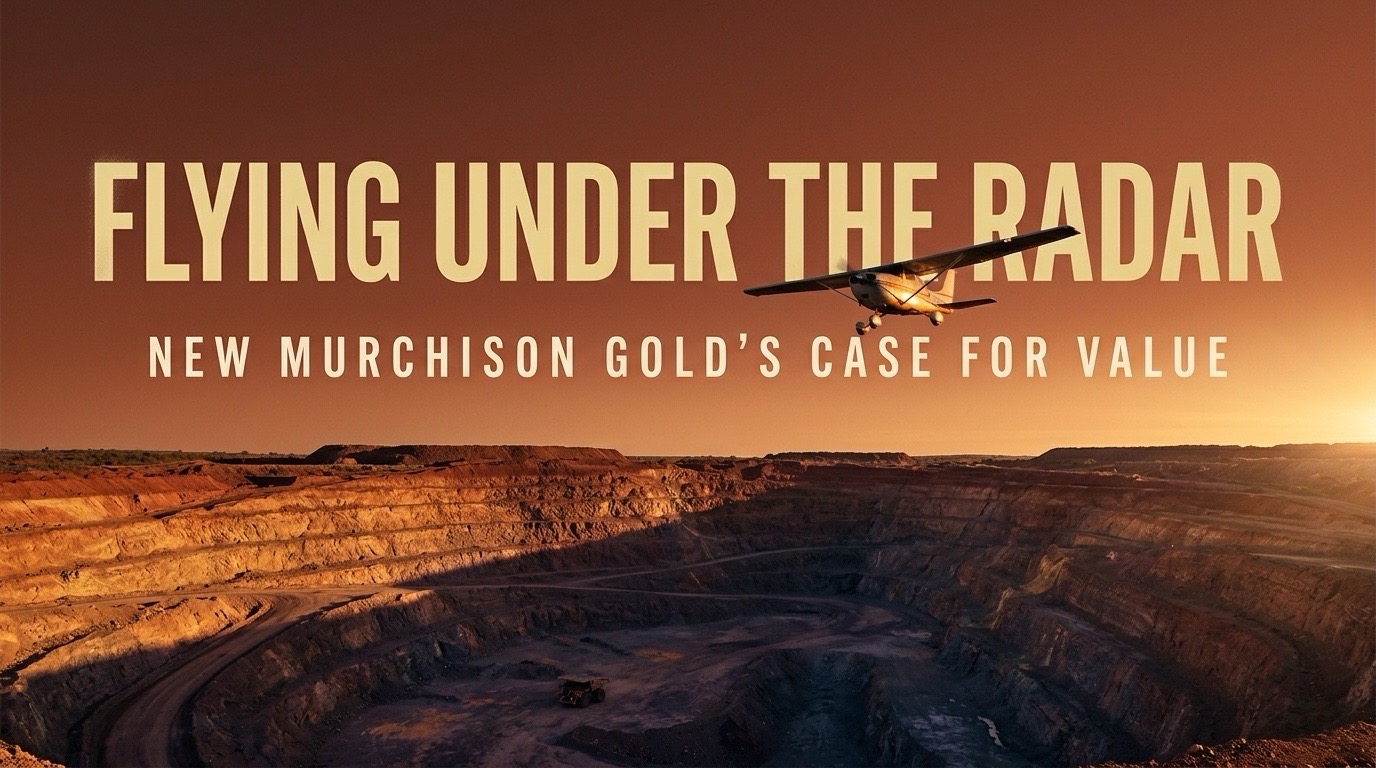
Alex Passmore: uh, I think in the s- in the smaller end of the market, so that is, you know, outside of the top 200, um, you know, there, there are less eyes on, on, on stocks. So I think that, um, in the top 200 there are plenty of analysts and, um, a‑a-and plenty of stockbrokers that, that look for that, you, you know, that are, that are looking at earnings versus market cap versus, you know, um, or, you know, or, or the other cash flow metrics. Um, so I think there’s that. I think there’s, um, [00:05:00] also, uh, inclusion in ETFs, uh, and index tracking funds. You know, I think that becomes very important when you’re, when you’re in the 300 or the 200. Uh, and so we’re just sitting outside the 300 moment. Um, we’d be a fairly good chance of going into the 300 actually, which, um, which is a, you know, usually, um, a good time to buy because, uh, because you’ll get a weight of money that, that come in, uh, that, you know, c- comes into the stocks that, that, that get lifted into those indexes. Um, the, the, the, the reverse can be true as well. You don’t want to fall out of an index. Um, but, uh, you, you can enjoy going into an index. So, you know, a long answer to, to your question, but, you know, I think that we’re undervalued because we’re outside the indexes. We’re, you know, we’re, we’re small enough to, to not, you know, to be flying under the radar. and, uh, you know, and we’ve only just started, you know, producing and we’re, and we’re d- and we’re showing very strong earnings, but it’s early days, so, um, people are yet to notice.
Cameron: Well, best of luck getting into the index. [00:06:00] That would be good for, uh, all of, all of us. I’ll throw it over, throw it over to you, TK
Tony Kynaston: Yeah, so, uh, thanks for coming on, Alex. Uh, I, I guess you’ve just reinforced my view that most stockbrokers have a buy recommendation on stocks, so, um, no, no disrespect to NMG
Alex Passmore: no, thank you, Tony. Um, no, that’s, that’s true. You know, if– I gu- I guess people, um, I, I guess a sell rating doesn’t really, uh, you know, it, it, it’s, um. With, with broking, you know, o- once you’ve got your clients out of a stock, uh, you’ve gotta move on to something else, so naturally you’re gonna have more buy ratings than sell ratings.
Tony Kynaston: Yeah, and you won’t get business from a company you have a sell rating on too if you’re a broker.
Alex Passmore: there’s that too.
Tony Kynaston: Yeah. Yeah, no, very good.
Alex Passmore: Mm.
Tony Kynaston: so, so do you think it’s really just around whoever is analyzing NMG, they’ve got a discounted cash flow that only goes out a couple of years? That’s the reason why the, the value is down.
Is, is it, uh-
Alex Passmore: Well, the, so, so the people that do rese-search us, [00:07:00] so, so we’re covered by Argonaut, uh, we’re covered by Taylor Collison, we’re covered by Evolution Capital. Um, uh, you know, and there are others that are looking to, to start, uh, coverage on us. Uh, their, their discounted cash flow valuations, uh, have us at valuations well above the current price. So the people that do, uh, understand us, you know, can see that there, you know, that there is, uh, plenty of value there. Um, so I think it really comes down to the people that don’t, y‑you know, that, that are looking at the gold sector, you know, have to screen a lot of stocks very quickly. Um, you know, they might say, “Oh, well, too small, you know, I’ll, I’ll wait for a bit more track record. Um, you know, I wanna see extensions to prospective mine life.” But the people that understand geology and understand the, you know, where we are at, um, you know, are prepared to, um, you know, are prepared to make a, make a forecast on, you know, what our mine life and, and what our earnings are likely to be
Tony Kynaston: It was always, [00:08:00] I guess, drummed into me reading research about gold mining companies to look at the AISC and
Alex Passmore: the AISC, the all-in sustaining costs.
Tony Kynaston: Thank you. Sorry, AISC, you’re right. Yes.
Alex Passmore: Yeah.
Tony Kynaston: and that’s– Y‑you’re in the higher quintiles for that, but there’s a reason for that. Could you just maybe take us through
Alex Passmore: Yeah
sure. So,
Tony Kynaston: that?
Alex Passmore: so we, uh, we, uh, mine, uh, gold ore at Crown Prince, at the Crown Prince gold operation near Meekatharra, about, uh, 30 kilometers to, uh, 20 kilometers to the north of Meekatharra. uh, we then crush that ore, uh, uh, down to the, you know, a, a certain size that, that gets us a, a good, uh, sample and, um, it’s, so it’s, it’s called the primary crush. Uh, we then put that on trucks and, and sell it to, uh, one of the majors in the belt, West Gold Resources, WGX is their code. Uh, and so for, for processing our ore, WGX charges a margin, and that margin at, at, at is [00:09:00] 17% of the gold price. So, so, uh, before we, before we even start, you know, there’ll be 17% of the gold price times our production in our costs.
So that, at today’s value, the, uh, gold price is about $1,000 an ounce. Uh, so, you know, that, that straight away, um, you know, is, is reflected in our all-in sustaining costs or AISC. Uh, and then we’ve got mining, crushing, uh, waste removal, haulage, uh, in, in there as well. Uh, and then also we reimburse West Gold for their direct costs, their, their milling costs.
So, so the way that West Gold make money out of the arrangement is they get that 17% of the, of the value of the gold, you know, essentially risk-free and for free. Um, so that’s why, that’s why they would do the deal, uh, or, or process our ore. And for us, um, you know, it, it has meant that we’ve got a very quick, um, uh, ramp-up into full production, going to an already established mill with already proven, um, processing ability and, and [00:10:00] capacity. Um, and, uh, and so we, you know, we pay that away to, to. because we haven’t had to spend the capital to build a mill
Tony Kynaston: Yeah, and that’s, that’s an important point, isn’t it? You haven’t had to invest CapEx to process that gold. So the AISC is a little bit different for your company, I guess.
Alex Passmore: It
Tony Kynaston: and it rises and falls with the gold price because you’ve got a sort of fixed royalty arrangement with West Gold. So it, you know, if you look at things from just the where does a– where does, where s- where does, um, New Murchison sit, uh, on the cost curve, you’re pretty high up, but really it’s not a bad situation to be in, is it?
Alex Passmore: Yeah, no, it’s a, it’s a very good situ- So we, you know, as the gold, if the gold price retreats, you know, our costs retreat, and if the gold price goes up, yes, we’ll be paying more. But, um, but, you know, it ratchets up and up and down, uh, on that basis of that seventeen percent. So, um, that, that’s right. The, the, you know, there’s just, uh, there’s a thousand dollars an ounce or, or thereabouts that we, you know, can’t really control at the moment.
[00:11:00] But the costs that we can control, we think we do a good job at
Tony Kynaston: Yeah. And, um, the benefit of that arrangement too is, of course, you’ve got a nice tidy sum sitting on your balance sheet, um, and no debt. So, uh, maybe explain how much that is and what your plans are for it
Alex Passmore: Sure. So, uh, at the end of June, we had two hundred and two million, uh, in the bank, and that was generated over ten months of, uh, production. Uh, so we, um, got the mine started in, in. It was actually started digging, uh, or, you know, uh, in around, uh, June, late June, early July, uh, last year. Uh, and sold the first ore to Westgold in September. And I think the CapEx, um, for, for setting up the mine was about seven million dollars, and there was a working capital requirement on top of that. But I think the payback was about two weeks. and then we, then we, and then we, we went on to generate, um, you know, substantial, uh, cash, um, you know, thereafter.
So, so that we’ve. You know, we had fifteen million in [00:12:00] the bank at the time at the mine start. Uh, and, and today, you know, a year later, we have two hundred and two million, in the bank. So, um, so, you know, we’ve enjoyed a good gold price. We’ve enjoyed a very, very, um, seamless ramp up. Uh, and, and, you know, that is to do.
A lot of that has to do with the, um, you know, with not having to take, um, a risk on the, on the processing plant, which has been good. Um, so the plans with our, uh, with our cash are to, um, sensibly look at dividends once we’ve, um, you know, once we’ve accrued enough franking credits, which we’ll be doing later on, uh, this year. Uh, so we, you know, we, we, we acknowledge that, um, you know, we-we’re the custodians of our shareholders’ capital. So, um, we you know, a dividend yield in the order of, say, eight percent would be a sensible way to, you know, to say to our shareholders, “Well, you know, let us reinvest your cash into exploration, discovery and growth, and, and hopefully make you, um, you know, uh, a, a very, [00:13:00] very, very strong return. But in the meantime, let us pay you, you know, circa eight to ten percent yield while you wait.” and, uh, and so, you know, people generally don’t invest in, uh, in, in growth stocks and gold stocks for a dividend. But we’re, um, you know, we’re, we’re. we think that’s a, a good approach to, to, um, to, to return, return, um, make.
give a return to shareholders while, while they wait for us to, to, to grow, uh, their asset base. Then the other thing is, you know, look, if, if we didn’t have anything better to do with the, with the funds and we, we couldn’t see any, um, good investments, uh, of course, we would be returning the funds to shareholders either via a, a share buyback or, um, or, or a dividend or a capital return.
So, um, you know, we-we’ve got plenty of, um, plenty of people in the top twenty who would like to see, you know, um, any of those things happen. So, um, you know, we’re, we’re not sitting on the cash, um, for, for no reason and, and certainly, um, not wasting it
Tony Kynaston: Now it’s [00:14:00] buil- it’s building up quite quickly. I mean, you said it’s, um, two hundred million now after a year, but it’s really only about how long since you started processing the ore?
Alex Passmore: Yeah. So it’s, it’s about 10 months.
Tony Kynaston: Right. Okay. So yeah, you’d expect a run rate of higher than two hundred million dollars a year then going forward. But, um, y- you’ve amassed this amount of cash.
You sound like you’re gonna give some back in terms of a dividend, but does that– is one of the possibilities that you might start to invest in your own processing plant and move away from Bluebird?
Alex Passmore: So the, um, that, that is a potential there. Um, you know, we- it’s one of the many options that we have in front of us. so just in our vicinity near Meekatharra, we have, uh, we have the Bluebird processing plant, which is, which is sort of the biggest and, and most logical processing solution for us. We also have Westgold as a, as a big shareholder of us.
So, you know, there’s a very strong relationship there. Uh, we’ve then got Catalyst, uh, which is around 150 kilometers, uh, up the road, [00:15:00] um, that have milling capacity. Uh, and, and there. and there’s also Ramelius and others, uh, to the south of us that have milling capacity. So, um, well, I should say that, you know, I, I don’t want to speak for them, but I would assume that for high-grade ore a, a deal could be done, you know, should it have to be done. Or we could, or we could build our own mill.
Tony Kynaston: Perfect
Alex Passmore: and so, and so all of those options are sort of, you know, remain in front of us. But we’re very happy with the Westgold ar- arrangement
Tony Kynaston: So the question is, does Meekatharra need another mill really?
Alex Passmore: that’s right. When– And when you look at the map, you know, you, you, you’ve got a lot of, um, you know, there, there is a fair bit of processing capacity, uh, around us. That, that said, um, know, mills, uh, so at the, you know, the way that we see it is, is that, that, that thousand dollars an ounce, say, cost that we pay Westgold, um, to, to build our mill that would be, you know, suitable for our size ore body, you know, might be about, about a million ton per hour, a million, uh, ton per hour throughput. So those. That, that sort of gold [00:16:00] mill would be about a hu- you know, a hundred and fifty million in capital to build. Um, you know, you might finance it half debt, half equity. So the equity ask would probably be seventy-five million or thereabouts. now, if, if we’re paying a thousand dollars an ounce to, to process through the Westgold mill, well, you would say, well, a hundred and fifty thousand ounces of processing and, and, and you’ve, you’ve, you’ve paid off the hundred and fifty million. But, you know, no one goes into this business just to, just to end up flat or square. So, you know, w- the way we see it is that, um, you know, if, if we had absolute certainty on four hundred and fifty thousand ounces, say, of, of production, um, well, then you would start looking at building your own mill because, um, you know, that, that would be, you know, three X your, you know, your, your CapEx if you like. Um, so eventually, um, you know, once we build up the resource inventory, it becomes a very sensible option to stop, you know, to, to, to slow down the, the, um, you know, the processing arrangement that we have because, because, [00:17:00] uh, you’re, you know, you’re throwing away money at that point. So, you know, we’re working on.
We’re work- so that’s the part that we’re working on is, is, is getting mine plans firmed up enough that, you know, we can see, um, four hundred and fifty thousand ounces plus in production to allow us to make those sorts of decisions.
Tony Kynaston: We’ll, we’ll pin that number and come back and talk to you when you’ve got the 450,000 ounces.
Alex Passmore: Please.
Tony Kynaston: Um, but that’s an interesting sort of roadmap you’ve got there because I know you do have plans to, to, to get to that kind of number and I guess the f- the, the interesting one I, I saw when I researched the company was the potentially going to the bottom of your open pit and then down.
So maybe just explain what your plans are for that.
Alex Passmore: Yeah, certainly. So the, the, the current open pit extends to about, um, uh, forty-five or fifty meters below surface, um, you know, a‑as we speak. Uh, that, that open pit goes to a hundred and forty meters, uh, below, uh, ground surface. Uh, and then, and then there’s another, [00:18:00] uh, second pit that we’ve just started called Cloud Kicker, uh, which goes to about a hundred meters below surface.
Now, we think those two pits join up in an underground sense, so that is there’s a high-grade, um, uh, ore body that, that go– that runs between them. They’re at. So it’s about a, a‑about a thousand meters of, uh, of a, a gold-bearing structure that runs between them. It doesn’t quite join up, you know, at, at, at surface in a, in a strong sense or, or, or, or a way that you would make it one big pit, um, because the strip ratio, that is the waste-to-ore ratio, would be too high. But from an underground point of view, um, it makes sense to, to join them up. So, so that’s where we see a lot of the future is, is looking at the two, uh, at the ore body that sits below those two pits a‑and how it joins up together and, and, and what an underground mine might look like. um, you know, all, all, all of that would indicate that there’s, you know, four, five years pretty easily, uh, ahead of us.
Tony Kynaston: It’s fairly unusual. I haven’t heard of an [00:19:00] open pit becoming an underground mine. It’s, uh– Is that just because of the geology in the area?
Alex Passmore: So, so a lot do. Well, no, a lot, a lot do. So, so you– So, so there’s an economics cut over So, so with a‑any open pit, whether it be, you know, gold, nickel, iron ore, copper, um, you know, it, it, it really is a trade-off between how many tons of waste you need to move versus how many tons of ore that you’re, you’re processing or, you know, what– And the ore is your revenue, the waste is, is, is your cost. and then at some point, it, you, you end up, um, being better off, uh, having a higher mining cost because you’re mining in, in an underground mine, so that is per ton of ore. Your costs are, are a lot you’re, you’re having to put in ground support and you’re using specialized equipment that, that, uh, that mines ore drives and then takes out, you know, stopes. But you don’t mine much waste. So the ore, the, the per ton of ore cost, um, you know, might, you know, might go up [00:20:00] by, you know, a he- well, you know, a hell of a lot, like te- you know, ten times. But the, the, um, the, the– because you’re not moving any waste, that’s, you know, that, that’s a counterbalance. So at s- at, at a certain depth in, in most ore bodies, you’ll cut over from open pit to underground because the, because the waste number becomes too high.
Tony Kynaston: Okay, that’s interesting. Um, I, I did wonder whether it was just a peculiarity of the area. So could, can you maybe step back a bit and talk about the area? Because Meekatharra has been a gold area for a very long time, but something happened in the last sort of little while whi-which allowed you to sort of sew up some tenements, um, and make a big sort of patchwork quilt out of all the little ones.
But also, I think there must have been some kind of betterment in the, in the process of finding ore because it looks like. Well, maybe you could explain the colluvial sand that was on top of what you found. Yeah
Alex Passmore: thank, thanks, thanks, TK. Yeah, so that’s right. So a couple of things. So the, [00:21:00] the, the Murchison area, uh, so, so if we, if we step right back and look at sort of, you know, the, the, the Yilgarn Craton, which is an area in Western Australia, um, that, that, that, you know, uh, is one of the more prolific spots to look for, for gold mineralization. Um, in fact, one of the better places in the world to look for gold mineralization. Um, th- there’s, there’s a couple of main areas and belts, greenstone belts they’re called, the ty- the type of rock that, that commonly, you know, that can host gold. Uh, so the Kalgoorlie area is obviously, you know, well-known, and so Northern Star and Genesis and others really dominate that Kalgoorlie Leonora Laverton Belt. and then, and, and Bolt and others. Uh, and then, and Regis as well. Sorry, forgetting, forgetting a few of my favorite gold names. Uh, then, uh, then, um, coming to the, the west, you’ve got the Murchison Gold Belt, which is, um, the big brothers in that belt are Ramelius, Westgold, um, you know, Catalyst is a, is a, is a growing company to the north of us.
So they- you know, [00:22:00] they- they- they’re the, they’re two of the major gold belts in, in the Yilgarn. Meekatharra sits at the northern end of the Murchison Belt. Uh, now Meekatharra was, you know, has seen prospectors and, and, and various small mines there, you know, gold mines there since, uh, since, well, since the, the early 1900s actually.
So, um, and there’s been. You can see the different phases of gold rush that have been through the area, and it was, it was the same as, uh, Kalgoorlie. So after the Victorian gold rush, the Bendigo Ballarat gold rushes, uh, there, there was a lot of activity over in Western Australia and all, all around that sort of early 1900s. Then the two world wars, so the particularly World War I, you know, took a lot of work- the workforce away. Um, they all, you know, they all, um, you know, enlisted and, and, and went overseas to fight wars and, and the gold price certainly wasn’t what, wasn’t what it was today. So, you know, you, you can see, um, a strong history of gold mining and, and, and prospecting i- in the area.
So then fast-forward through to the [00:23:00] 1980s, there was, there was a, um, a mini gold boom then Um, the Meekatharra area was, uh, was, was, um, from, from those gold– from the early gold rush days. And those 1980s companies used a lot of the old mines to, to vector in on where a good ore body might be. Uh, and then, uh, you know, a‑and, and then the industry sort of continued. The gold, the gold price was fairly flat all through the, you know, the two. the early 2000s, the ’90s and the, and the 2000s. And we saw, you know, the iron ore, iron ore price take off and the emergence of China. So that really pushed the cost, the cost part of the industry, um, uh, up, you know, as the iron ore, and iron ore was booming, copper was booming, coal was booming, nickel was booming.
So the gold industry struggled because, because the gold price wasn’t going up, yet the. all the costs are so sad ’cause a, a, a mining fleet is a mining fleet. It’s, you know, it, it doesn’t matter which commodity you’re, you’re really mining. It, it, you know, the, the, the per [00:24:00] ton of, um, haulage cost or mining cost is, is roughly the same. So the g- the gold, um, the gold exploration and the gold mining in this area was pretty subdued actually in, in the 2000s. And then, uh, and then, um, at that time, you know, there were companies like the predecessor of NMG that were piecing together the patchwork of ground, um, as you say, TK, to, to amass a, a, you know, a, a big land position. so that was happening, you know, in the late 2000s and, and, and early twenty tens, um, such that we, we emerged with, you know, with a big ground position. That was in a company called Thundelara, which then became Ora, which became NMG. So we had this ground position, but there wasn’t necessarily a, a very, you know, a, a, a big deposit or, or, or a, you know, a, a, deposit that we could really get our teeth stuck into, um, early on.
So then that, um, that ca- that only came about in the last, uh, couple of years. was as the, as the gold market improved, um, the, the [00:25:00] equity market obviously opened up for, for funding gold exploration. Uh, and so we were able to, um, raise, raise the money into Ora, it was called then, Ora Gold. Um, and we.
and then, uh, and then, you know, take a bit more risk, um, in, in drilling, and we, and we discovered the Crown Prince ore body. And that was, that was, uh, sitting beneath a fairly, uh, barren cover, as you s- as you quite rightly say. So it was hidden from the, the prospectors, um, you know, up back from the 1900s. So in, it’s in close proximity to one of these old mines, but, but, um, but was, was undercover and hidden from them.
So, so we were very fortunate to, to, to sort of be looking around an old mine, but then about three hundred meters away discovered this ore body that looks like it could be, you know, um, a, a very, very high grade and substantial ore body
Tony Kynaston: Y- you’ve mentioned a number of iterations for the company. What, what was the reason for that, the, the name changes? Uh, was it, was [00:26:00] it a, a pivot or was it change of ownership or, or what?
Alex Passmore: S- s- so, so this, this can circle us back to our, um, to, to our change in financial year end, uh, question. So Thundelara was, um, was originally a Canadian-listed company that, um, was brought to the ASX 37 years ago as an exploration shell. Um, so, uh, that’s why it had a September year end because it’s a Canadian year end, uh, financial, fiscal year, financial year end. Um, and, uh, a- and, and has been an exploration, you know, shell for– or an exploration company, you know, relying on, um, you know, rounds of funding and, and, and then, uh, you know, and then various and, you know, it was, it was, it was a copper company, copper exploration company for a while. It was a uranium exploration company for a while.
So, you know, operating, operating at the smaller end of the market, um, you know, uh, with a, with a high amount of, uh, risk, um, but, you [00:27:00] know, hoping to, hoping to deliver a reward
Tony Kynaston: So, so it’s the old, old adage of kicking enough rocks and then you find, uh, find gold, huh? Yeah.
Alex Passmore: so I, I, um, I wasn’t around in, in, in those days. I was still, I was still a, a mining analyst actually, and I remember, uh, Phil Crabb, who was one of the founders of, of Thundelara, um, you know, I remember Thundelara going through its various, you know, copper stages and uranium stages as I, as I was sitting, sitting in a broking office. Um, you know, and you’ve just got to keep on. You know, I guess there is a certain amount of you, you go where the market wants you to go, um, you know, when you’re relying on, on risk capital.
So if there’s a, you know, if there’s a bit of a uranium boom pre-Fukushima, um, you know, I remember Thundelara was exploring for uranium in, in the Northern Territory and then, uh, and then it had some ground near, um, near DeGrussa Copper, Sandfire’s DeGrussa project called Red Bore, and then, and it was, and it was exploring for copper for a while.
So, um, you know, that, that’s, uh, you know, that, that, that was the pathway of the company. And then I joined, uh, as Phil was [00:28:00] retiring at the ripe old age of 82. Uh, Phil had, uh, Phil had, um, uh, decided to, to step away. So I joined, um, uh, at, it was Ora Gold then. It had been renamed from Thundelara. Uh, and, uh, it, it.
look, it, it was, it was starved of capital, there’s no doubt. You know, it sort of ran out of puff a bit. So, um, so, you know, we, we were. I then went about raising money, recapping the company, and, and, uh, and we had some good geology in front of us, and then we tested a few theories and found Crown Prince. So, um, you know, or extended Crown Prince.
So, uh, you know, I think we, we, we just ne- at the time of arrival, um, they, they. Ora had just hit, with two holes, it had hit sort of one end of the mineralization didn’t really know which way it went or, or, or, or what they were dealing with. And so, uh, I was then able to take that, that, you know, initial drilling, um, go and, uh, go and, um, explain that to, to, you know, various participants in the market and say, “Well, you know, it could be this, [00:29:00] we’re thinking. Um, can you please, um, invest in us to let us test the theory?” And thankfully it came off. Um, you know, and, and sort of here we are
Tony Kynaston: Was one of those people you explained it to the board of Westgold because they have a shareholding in your business and you’re i‑interlaced with them with your processing. How does that work?
Alex Passmore: So they were there very, very early on, but after we’d– after we had, you know, sort of established that there was a good ore body there, it was open pitable from surface, high grade, you know, a, a new discovery, albeit in an older mining area, um, you know, that, that, you know, Westgold came in about a year after the discovery, know, as we started talking about processing, you know, pathways
Tony Kynaston: I guess there’s the physical operation you’re doing and the physical geology, but there’s also this kind of overlay of M&A, um, that’s always kind of in that area as well. As you said before, there’s a lot of players. Um, Westgold has a shareholding with you. You use some of their resources. What, [00:30:00] what sort of thoughts do you have on where this company might go in terms of any sort of, uh, mergers or acquisitions or takeovers that might take place?
Alex Passmore: So, uh, I tell you, look, it’s, it, a pure speculation and
Tony Kynaston: Yeah
Alex Passmore: But, but, um, look, I think if we discover something, you know, that’s, that’s a resource of, you know, more than a million ounces and it’s, and it looks good, I think we get taken over.
Tony Kynaston: Mhm.
Alex Passmore: I think if, um, you know, I, I think Crown Prince will keep on growing and, and our cash flow will remain strong, so that might opportunity to take someone else over who might not have a cash flow, um, you know, y- yet, and, and, and might make, you know, as it might make sensible, you know, be, be a sensible growth path for, for us.
So, um, you know, we, we look at it both ways. Um, but, you know, there are, there, there are, there are very small explorers in the area who, you know, who are still struggling to get capital, and some of those, you know, explorers might, [00:31:00] might, uh, might, be sensible for us to sort of, you know, uh, their, their pathway, if you like.
So you, you know, you can inject, um, capital relationships, knowhow and, and get them from being, um, you know, get them from being a small project in, into production. And then there’s also, um, you know, and then there’s also the reverse, where someone might find our assets quite useful.
Tony Kynaston: Yeah. Yeah, they’re very good. Um, what– Do you take a view on the gold price? Do you hedge or do you just happily float along up and down?
Alex Passmore: yeah, so we don’t hedge mainly because, um, uh, we. Well, we, we, we don’t, we don’t hedge because we’ve got a high enough margin to, to have, to have protection. So we can adjust our cut-off grade, uh,
Tony Kynaston: Mm-hmm.
Alex Passmore: also that margin that we pay Westgold that, you know, as we were saying before can, you know, comes down as well with the gold price.
So we don’t really need to hedge. The other thing is we don’t have, um, you know, a lot of debt that we need to protect. So, so hedging, hedging is, um, w‑when, [00:32:00] when you make a big capital investment, um, and you need to protect it, you know, you, you, you’ve made it based on a certain commodity price, and if that commodity price was to then go on half or something like that, you would, you– the whole company would, you know, go out the
Tony Kynaston: Yeah
Alex Passmore: That is when it makes sense to hedge, when you’re protecting, um, a capital investment. And, and as you pay that capital off over time, your hedging will roll off. Um, I have also seen, you know, throughout my career many t- many times where, where costs go up to meet hedge price. So everyone speculates on the, on the commodity price saying, “Oh, well, um, you know, it’s a good price.
We’ll, we’ll lock some of that in.” But, you know, fast-forward a couple of years and, and, and the operating costs of the industry go up to meet, to meet the commodity price and then, then, then the hedging is not, is not sort of serving, serving you well.
Tony Kynaston: Yeah
Alex Passmore: you know, so we-we’re, we’re, we’re against hedging unless it really is protecting a capital outlay
Tony Kynaston: Which I think is a good, a good place to be really, isn’t it? You’ve got a floating margin there, which is nice. Um, and you’re not [00:33:00] exposed if it, if the mar- if the gold price drops too much, you’ll still make something. So that’s not a bad place to be. Having said all that, what is your view on the gold price going forward?
Alex Passmore: So, uh, um, it’s, it’s a very, very interesting question.
Tony Kynaston: Yeah
Alex Passmore: think, um, if you look long term, the gold price, uh, is very closely related to the US dollar gold price, is very closely related to, um, the M3 money supply. So that is the, the amount of US dollars in circulation. So the more, the more QE, the more, the more money printing the US does, the, um, the, the better it is for US dollar gold because, you know, it roughly keeps its value and, and suddenly there’s more dollars in circulation. Um, you know, so therefore the gold price goes up, the, the dollars per ounce. Now, obviously our costs are in Aussie dollars and, and it really our revenue’s in Aussie dollars gold price as well. So then you’ve got to worry about what the exchange rate’s doing. And the exchange rate between the US and the Aussie is really driven by interest rate differentials.
So, [00:34:00] um, you know, as long as you think that the Aussie will be, you know, around, know, seventy-ish cents, you know, that, that, that, that we’re in pretty much in lockstep in, in an interest rate differential sense with the US, um, I think that, you know, the gold price goes higher from here in US dollar terms, um, you know, because of, because of, you know, ongoing increases to the, to the money supply
Tony Kynaston: Sorry, just take me through that. How does printing more money affect the gold price?
Alex Passmore: So the, the pri- I. So the, the, the, the price of gold. So, so gold is, is seen as a store of wealth.
Tony Kynaston: Mm-hmm.
Alex Passmore: uh, it, it’s a currency that doesn’t really yield anything. It’s, it’s, it’s well accepted, uh, uh, across the world by, um, reserve banks, um, ma- you know, major institutions. Um, you know, it, it, it is, it is a currency that doesn’t have a central bank that controls how much of it is in circulation. you know, there is a lot of gold in the [00:35:00] world because it doesn’t get consumed. Um, you know, it gets consumed for jewelry, it gets consumed for electronics, but it, you know, doesn’t have a, a use like, say, you know, burning oil or burning coal. so, you know, that, that’s something where, you know, say a Warren Buffett approach might, might, you know, pause for thought for a second saying, “Well, hang on. It’s a, it’s a commodity that, that, that. It’s a co- it’s a commodity that doesn’t get used. That, that must be bad.” Uh, but it does actually get used, you know, a bit, uh, in j- in jewel- jewelry and so forth. Um, but it really is a currency. So it’s been a store of wealth for thousands of years. Um, humans like shiny stuff and shiny things, uh, and that’s just, you know.
It’s, it’s the same, uh, same logic that, you know, why is the US dollar the store of wealth? Or why is the Swiss franc or why is the euro a store of wealth? But it, but in. It, it, it really is a store of wealth be– uh, a store of wealth, sorry, store of wealth because it is tradable. It’s fungible. You can, you can buy, you can, you can buy [00:36:00] stuff with it. So given that you can buy stuff with gold, you can turn it into any currency in the world, it’s basically a currency. Um, so that makes it a good store of wealth. The problem is it doesn’t yield an interest rate because it’s not like a bond. So, uh, so that is. that’s the connection between, um, between the, the US dollars in circulation and the gold price.
So if the gold price is a store of wealth and there are more of the denominator in, in, in circulation, it will, it will go up in, in, you know, in dollars per ounce
Tony Kynaston: Oh, so basically if, if, uh, an ounce of gold was worth a dollar today, US dollar today, and they printed more US dollars so the, the dollar you’re holding onto is worth 90 cents, the gold is still worth a dollar yesterday, so it’s a dollar 10 today.
Alex Passmore: Correct.
Tony Kynaston: Yep.
Alex Passmore: That, that’s right. Okay. So yeah, I mean, I know that my explanation was a bit long-winded, but that’s exactly, that’s exactly the logic. Yes.
Tony Kynaston: No, that’s fine. Yep.
Alex Passmore: yeah
Tony Kynaston: That’s good. And, and, um, yeah, you gotta say where things are going that, uh, there’s gonna [00:37:00] be at some stage some more printing of money somewhere anyway
Alex Passmore: I think that’s right. Well, uh, and, uh, you know, the, the, uh, for the last 20 years, if you pull up, uh, um, the, like I say, the M3 money supply from the US Fed, you’ll see that, um, that the amount of US dollars in circulation has gone up by about, about three and a half times, I believe. So there’s, there’s three and a half times more US dollars today than there was 20 years ago.
So, and, and then, and then lo and behold, the gold price has gone up by, by about three and a half times in US dollar terms. So, you know, that, that’s about where it should be
Tony Kynaston: Maybe Donald Trump’s actually quite wise lining the White House with gold.
Alex Passmore: My bad. Yeah
Tony Kynaston: Um, okay. Well, coming back to your, uh, change in financial year situation, just ex- walk me through what we get in August compared to what we’ve already got from March, please.
Alex Passmore: Yeah, sure. So March was a half yearly.
Tony Kynaston: Mm-hmm
Alex Passmore: Um, and, uh, and, [00:38:00] uh, so that we will then, we’ll then add another three, um, we’ll then add another three months to, um, that and, and, and, and convert to a June year end
Tony Kynaston: Uh, do we get an annual report in August? Yeah
Alex Passmore: So sorry, In, in, in, so we, we are converting to a June year-end. Sorry, that’s, that, that’s, um, yeah, it’ll be an annual report
Tony Kynaston: Yeah, right.
Alex Passmore: June, year-end. Yes. Yes. Yes
Tony Kynaston: Yeah, okay. Even though it only contains nine months or will it actually contain 12?
Alex Passmore: No, we can turn 12.
Tony Kynaston: 12, okay. Yep.
Alex Passmore: yep,
Tony Kynaston: Yep, okay.
Alex Passmore: yep. Yep. Yep. Yep
Tony Kynaston: Very good. Um, I guess from our point of view, as Cameron said, you, you’re ranking very high on our buy list. The QAV score I think is about 0.28 or 0.3, and that’s three times our cutoff. Um, I think your PE ratio is something like four times, so, um, and you’re debt-free and you’ve got lots of cash.
So it’s hard not to like New Murchison Gold at the moment. But, you know, do your own research to our listeners, but, um, worth a look, I think
Cameron: [00:39:00] I’ve got one final question before we let you go, if that’s okay, Alex. One of, one of the things that we l- like, uh, and, and score highly is founder ownership, uh, you know, a high percentage of ownership. We’re normally looking for over 10%. one of the surprising things for me when I did our analysis on NMG was I couldn’t find a lot of, uh, uh, founder ownership, even though the company’s relatively young. Uh, I noticed the, the Crabb family still has some ownership, but it’s n- I think it’s, like, couple of, couple of percents, not 10. w- why don’t we see more Crabb family ownership, uh, on the books or insider ownership?
Alex Passmore: So there’s a couple of things, Cameron. So it’s, so it’s not that young, you know, so it’s, it’s NMG as a name is, is young. Um, but the company has been around for thirty-seven years and because it’s had to, um, raise money over, over, um, many, many years without a cash flow, you know, being an explorer, [00:40:00] the founders get diluted, um, over time.
So that, that, that’s the main reason. But the, the management team, so, you know, I, I’ve got just under in terms of, um, uh, shares that I’ve bought on market. There’s also some performance shares. Um, you know, everyone that’s important in the company that’s running it from an executive team is incentivized but not, you know, not, I wouldn’t say, um, out of market incentivized, but, uh, you know, it’s a very important, um, part of their life that it goes well. Uh, and, um, you know, and, and the Crabb family, you know, are, are still, you know, there substantially as, as, as, you know, as early, early founders as well
Cameron: Interesting. That, that’s not really showing up in Stock Doctor’s list of executive ownership, so maybe they don’t, uh, have access to the full picture
Alex Passmore: Yeah. Well, um, you’ll. So you’ll see in our annual, uh, go, go looking for, um, you know, j‑just go looking for KMP Holdings. Um, and, uh, go, go back [00:41:00] hunting for, um, for, you know, the various performance certs and performance rights at AGMs as well.
Cameron: Right. Okay, terrific. Thanks. Well, that’s, uh, that’s it. We’ll let you get on with your day, Alex. Thank you so much for coming on and, uh, walking us through that. Uh, congratulations on the success of the business. Hope it does well. Fingers crossed, uh, that you make it into an ETF. That’ll be good for all of us. And, uh, we’d love to have you back on, let’s say, in a year or so and get an update on how things are going
Alex Passmore: Thank you, Cameron, and thank you, Tony, for your time.
Tony Kynaston: Thanks, Alex
Cameron: Take care
QAV LIGHT
He already knows where they are.
Click the picture to learn more!