Episode Overview
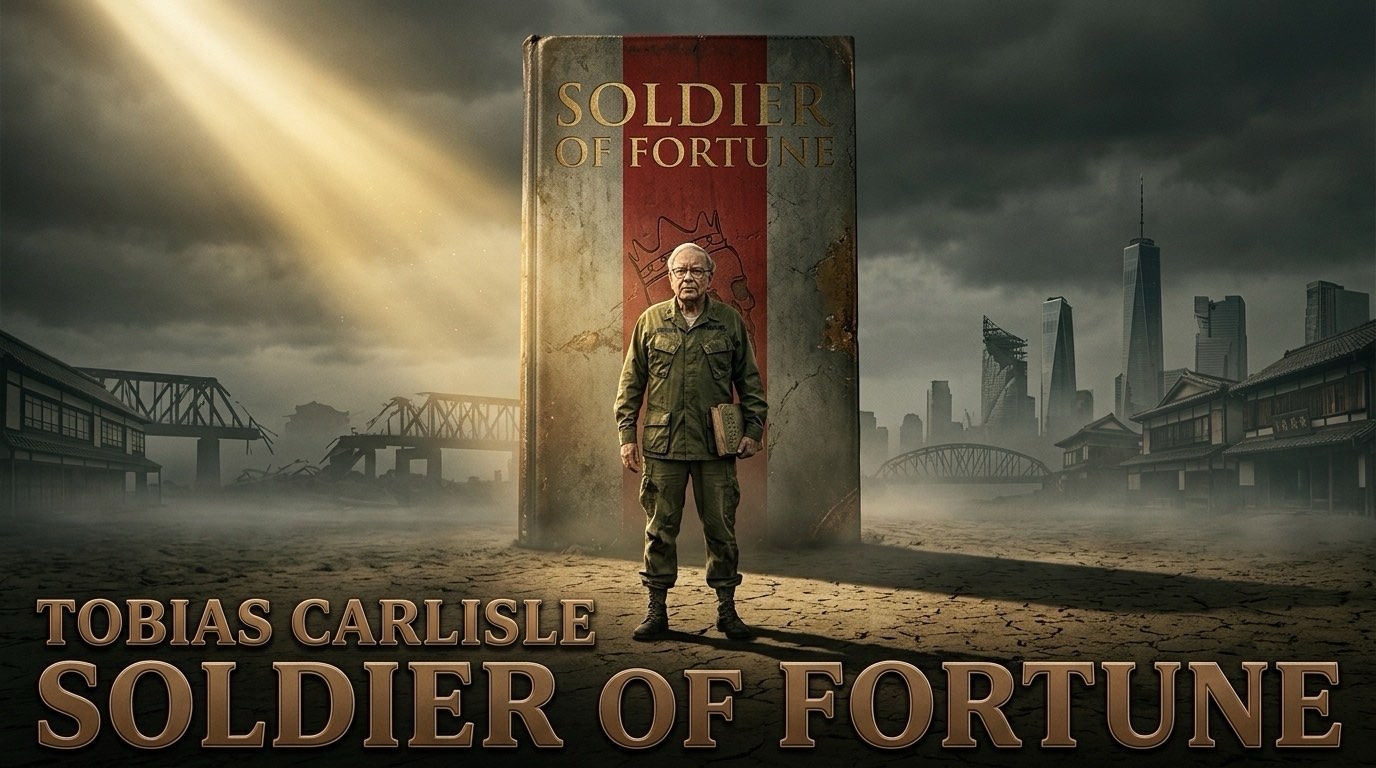
This week we catch up with Tobias Carlisle, who joins us to talk about his new book, Soldier of Fortune: Warren Buffett, Sun Tzu, and the Ancient Art of Risk-Taking. Tony and Cam quiz Toby on the three big Berkshire deals the book dissects: the General Re acquisition, Burlington Northern Santa Fe, and the Japanese trading house carry trade. We also get into the Acquirer’s Multiple, quality versus value, and why small-cap value is quietly sitting there looking like a bargain while everyone chases AI.
Timestamps & Subjects
- [00:00:00] Welcome and introduction of Tobias Carlisle and his new book Soldier of Fortune
- [00:03:00] The three big Berkshire transactions the book is built around
- [00:04:00] The General Re acquisition: why it looked strange and why it worked
- [00:10:00] Via negativa, inversion, and Charlie Munger’s checklist approach to avoiding mistakes
- [00:16:00] Burlington Northern Santa Fe: railways, regulated returns, and accelerated depreciation
- [00:24:00] Wu Wei, mental flexibility, and Buffett breaking his own rules
- [00:29:00] Apple: the greatest trade of all time and why scale makes it special
- [00:33:00] Berkshire’s lack of a master plan as a competitive advantage
- [00:36:00] The Japanese trading houses, the yen carry trade, and Buffett’s reputation opening doors
- [00:43:00] Japan’s shareholder reform push, cross-shareholdings, and the slow cultural shift
- [00:50:00] ADRs and why Americans seem reluctant to buy them
- [00:53:00] Operating cash flow versus earnings, and property developer accounting quirks
- [00:55:00] Buffett on the risk of ruin, Russian roulette, and not doing stupid things
- [00:58:00] Profitless tech, the K‑shaped market, and why small-cap value looks compelling now
- [01:03:00] Northrim BanCorp as an example of cheap, boring, cash-generating value
- [01:04:00] The Acquirer’s Multiple, quality minus junk, and where Toby actually invests today
- [01:06:00] Quality At Value: where Toby’s approach and QAV overlap
Transcription
QAV AU 923
[00:00:00]
Cameron: Welcome back to QAV. welcoming back to the show our old friend Tobias Carlisle, who has a new book out, Soldier of Fortune: Warren Buffett, Sun Tzu, and the Ancient Art of Risk-Taking. And I’m just gonna start with this, and then I’m gonna throw to TK to ask some questions.
But one of the blurbs, this is one of the blurbs. Check this out. “Soldier of Fortune is a brilliant synthesis decoding the genius of Warren Buffett through ancient eyes. The book reveals that Buffett’s unparalleled success comes not from following common Wall Street maxims, but rather from the profound, patient wisdom of a warrior philosopher.
This book is a revelation, an indispensable guide to the timeless art of strategic risk-taking. Jim O’Shaughnessy, author of What Works on Wall Street.” How the hell did you get Jim to write a blurb for your book? We’re huge fans of Jim.
Toby: blurbed a [00:01:00] few of my books. I, I, I, uh, have the good fortune to, uh, know him and have known him for, uh. He blurbed, I think he blurbed “Quantitative Value,” which came out in 2012. But I, I found him on, when he came on Twitter early on, he had, you know, like 100 followers, and I was, I was one of them. And I reached out to him, and I got to know him then, so I’ve stayed in good, I, I love Jim. He’s a good dude.
Tony Kynaston: Wow. Can
Cameron: We only discovered his book.
Tony Kynaston: him on the show.
Toby: Yeah,
Cameron: Yeah. We’re
Tony Kynaston: his chapters.
Toby: I’m sure he’d do it.
Cameron: We only discovered his book like four or five years ago, maybe less. And I, I think it was during COVID I read it and I was like, “Oh my God, this is just what we talk about to a T.” Like, he absolutely
Toby: The
Cameron: was way ahead. Yeah.
Toby: Yeah.
Cameron: Brilliant.
Toby: I’ve re- I’ve got a few versions of it. So the. You know, in the original version, he said that the best value metric was price sales, and then in a later edition, he [00:02:00] said it’s EV/EBITDA, is where I get to too. there’s lots of reasons why price sales works well, and then he said not, not any one of them, use a combination is I think what he finally fell to.
But that, that sound, like that’s pretty sensible advice, I think. There’s lots of reasons to use price sales. It’s not a bad metric. It’s just you can’t use anything in isolation, I think.
Cameron: Well, Tony, I’ll throw it to you because you’ve got a list of questions that I don’t want you to miss out on. Why don’t you kick it off?
Tony Kynaston: So congratulations on the book. It’s, it’s, I loved it. It’s fantastic. love reading books on Warren Buffett and corporate strategy and strategy in general, so well done. Um, I
Toby: you
Tony Kynaston: wanna start uh, got. The book sort of focuses on three of Warren’s investments, excuse me, and they were large for Berkshire Hathaway and reasonably controversial in that they didn’t sort of fit the normal value investment mold, you know, cause I think when the [00:03:00] first one was probably done people were more used to Warren buying Coke or Amex and having a you know big moat around a consumer company that would go on forever throwing off cash. But there were some differences to these transactions. Um but all the all the three of them proved to be outstanding hindsight. So maybe you could just uh take us through what the three transactions were first of all.
Toby: These were, I was looking for a way to illustrate some of the ideas in the book, and I’ve written a lot about Buffett, so I didn’t wanna rehash all of the stuff that I had written previously. Uh, though I think that you could use a lot of that to illustrate those ideas. So I wanted to find that I felt were misunderstood, certainly transactions that were misunderstood at the time that they were done. And I vividly remember all of these transactions. I was a Buffett watcher just in 1997, so I remember this transaction [00:04:00] coming through, and I remember being perplexed. Only, only perplexed in the sense that I knew that this was an insurance deal, and I knew that Berkshire was an insurer. And so it didn’t surprise me that he would do an insurance acquisition, but, uh, I didn’t really have the analytical experience at that time to understand the transaction. Particularly because there are a number of features of it that certainly seemed to go against the grain of what he had been preaching in his letters up to that point. You know, I’d just discovered him, but I’d gone and read all the, the letters and, um, tried to organize them. And I had the Lawrence Cunningham book where he’d sort of put them all into thematically rather than chronologically.
So I, I felt like I had a pretty good handle on what he was doing, and then he did this, General Re acquisition. So the features of the General Re acquisition that were a little bit unusual were, he did it in stock, and he’d been saying you never do it in stock. always prefers to pay cash. [00:05:00] the other thing that. It, it looked, it looked optically expensive as well. That was one of the other things that, that folks were talking about. And I think that they had anticipated that criticism somewhat by talking about the synergies that they were expecting from this acquisition. And you can go back and find Buffett pre-Gen Re talking about synergies, like never manifesting every single firm.
Whoever does an acquisition and slightly overpays said, “Oh, it’s justified because there are gonna be synergies,” and they, they never manifest. And so here he was seeming to be contra, you know, going against what he had previously said that he would do. When you, with hindsight, the deal worked out really well. and I sort of have been investing for long enough now that I can sort of break it down and analyze it properly, which I couldn’t do at the time. But the things that really stand out. The reason he did the transaction, you have to [00:06:00] go back a little bit earlier. He’d, he’d done this deal with Coke very famously. With Coke, where similarly it looked like he’d, he’d overpaid. He was paying a lot for Coke. He’d never really paid up to that extent before. But it was a wild success. He put a third of the equity of the, of Berkshire into Coke, then it pretty quickly, it was like half the equity of Coke, and then it tripled. And by nine, by the late 1990. He so did it like the late 1980s, early 1990s. By the end of the 1990s, was, um, trading at like 60 times earnings. It was a giant part of Berkshire’s equity holdings. Berkshire on top of that, Buffett had been undiscovered, I think, up to that point, but he was well and truly well known by late 1990s. And uh, Berkshire itself was trading at three times what was probably already a pretty inflated, valuation that included Coke. [00:07:00] so he can’t sell it because that incurs this huge capital gains tax. He’s also preached not selling, holding these things for the very long run. And he’s received a lot of criticism since then because Coke really hasn’t done much in the 26 years since they did this transaction. But I think that that’s because f, that criticism is, is a little bit unfair when you understand what happened with the, with the Gen Re transaction. And this was Christopher Bloomstran sort of alerted me to this. But in essence, what he did by using scrip, by using stock, he was able to dilute down the Berkshire holders their big holding in Coke, and he got probably a pretty good deal.
He certainly paid less for Gen Re than he was giving up in, in the stock that he was to the Gen Re shareholders. So the transaction works like this. In a scrip for scrip transaction, Berkshire acquires Gen Re. The shareholders of Gen Re become shareholders in [00:08:00] Berkshire, and the combined entity ends up with a share of, the, the Berkshire shareholders remain, the Gen Re shareholders become Berkshire shareholders, diluted down a little bit.
So the Gen Re shareholders certainly got the worse end of that deal. Berkshire ended up with the better end of that deal. But the essence of the transaction was that he diluted down the stock holding in Coke, he was then able to bring down the overall valuation of Berkshire Hathaway. And Gen Re had a, the synergies were real in the sense that Gen Re, most of its exposure was international or, and it was looking, and it was a little bit constrained by kind of quarterly earnings, so it fit well with, with Berkshire’s insurance book. so that gave him all of this, and their book was mostly bonds. So people who’ve followed Buffett will know that they tend to run with uh, insurance, uh, policies written to equity [00:09:00] holding or, or to, to underlying securities, those policies that they’ve written because they tend to run with equity, which can, which is more volatile but can perform a little better. Whereas Gen Re was running sort of more, in a more traditional sense. They were using bonds to back their, policies, and the bonds don’t perform as well over the long run. But they do have this nice feature that when the market goes down, not always, this is, this is not, this is like a little bit of a, a received wisdom in the markets that bonds tend to rally when equity markets collapse, and that’s not true.
If you go back far enough, you can see that they, sometimes they go to, sometimes they move together, sometimes they move differently. You can’t rely on it. It’s only in certain circumstances, and this was one of those because the equity market was so overvalued. Bonds were yielding pretty good, pretty well at that point.
So the two thousand collapse actually happened, the bonds all rallied, which he was able to then sell down, and he was then able [00:10:00] to invest that long in really cheap equities at the beginning of the two thousand. That set them up for the sort of next decade plus, uh, for Berkshire to really outperform.
So I thought it was a transformative deal. It was a little bit misunderstood at the time, and a good illustration of being more defensively minded and the power of being defensively minded and thinking about what happens next after the crash. Can you survive the crash? What happens after the crash? And I thought that was a pretty good illustration of one of the things at Sun Tzu, which is that you defend first, and then you think about, you secure yourself, and then you think about doing all the other things you’re gonna do.
Tony Kynaston: Yeah. I mean I think from from um your analysis what I took out of it was it was a masterstroke of strategy by Warren doing what he did for for any number of reasons. I mean he realized the market was overvalued in the late nineties. He realized he had a large equity portfolio. He realized Berkshire Hathaway was trading on a to book [00:11:00] ratio which was way above what it normally did, so you know, quite rationally he could have said I’m gonna sell, I’m going to sell my equity portfolio, I’m going to diversify or whatever. But he had always said if I sell I pay taxes and that’s a friction on my earnings. So he didn’t want to do that. What else could he do? Well he could take that overvalued Berkshire scrip and he could use it to acquire Gen Re, even though he’s always said I don’t want to issue more scrip. Um I don’t want to pay for things with scrip, I want to pay for them with cash. But he did, he broke that rule to I think a better outcome, which was he then diversified into bonds, that was the other interesting thing is he’s you know always preached that um diversification is diversification but in that case he did diversify away from bonds. And then of course he um. And and Gen Re I think from memory was constrained, it could only invest in triple A securities or something like that to back up its insurance policy, so it [00:12:00] had to own bonds. Uh so he got a lower price for Gen Re with the scrip bid than he would have otherwise gotten perhaps. And then of course he inherited the the um portfolio that Gen Re had and spent a lot of time unwinding those and coined the expression that derivatives are weapons of mass financial destruction, which was another interesting insight into it. So yeah. But but you raised a point there which I think brings us
Toby: think
Tony Kynaston: ahead.
Toby: I was just gonna say, I think that he tipped his hand a little bit with that when he said that he discovered the, the. He gave the reasons for why he had done it, that it was this sort of defensive move, and then he, after the fact, discovered the, uh, the weapons of mass financial destruction. And he instructed them to unwind them really quickly, and I think they ended, it ended up costing them $400 million, and it sort of
Tony Kynaston: Mmhmm.
Toby: the
them that even in a be- even in a benign market, two parties to the same transaction could both be carrying it in their books at a profit, which is, like, impossible because one [00:13:00] party has. is down and one party is up. And so unwinding it was quite difficult. He said it cost them $400 million, and he started warning about that. But that was well before all of those problems manifest for the other insurers in the great financial crisis, global financial crisis.
Tony Kynaston: Exactly. And and that’s again I think a an example of what you’re saying um about the defensive nature of the Sun Tzu strategy. It’s uh it’s you know to to finish first, first you have to finish type approach to it. And I think there was a a book written a couple of years ago which summed it up well which said that the art of winning is not losing. I think that was the title of it. It talked about you know if you’re a good tennis player you keep the ball in play. You don’t try and go for
Toby: Right.
Tony Kynaston: on every sort of stroke. So similar sort of approach. But um and I think that was summed up in your book by the term via negativa, not sure how you pronounce that, but via negativa,
which which uh Charlie talks about. So could you maybe [00:14:00] outline that and how it fits into these um acquisitions please.
Toby: Via negativa is an idea that, it means by way of the negative. And y‑y, the idea is that you, you go f, might not know what the right thing to do is, but you might have a pretty good idea what the wrong thing to do is. so you eliminate all of the things that are the wrong thing to do, and that might leave you with the solution to the problem. And that’s very much. it’s a Charlie Munger idea. And he, he says, “Invert, always invert,” which he gets from Carl Jacobi. But the idea is that just do exactly that. You don’t, you have a list of things that you don’t do, and so you could think of this as a checklist. Lots of investors do it this way. I, I like to do it this way.
I like to exclude lots of things initially. takes a, takes the mental load down a little bit. You don’t waste time with things that you’re just never gonna do. And so that might be, for m- for me, it’s avoiding statistical earnings manipulation, statistical fraud, all these [00:15:00] sort of little things that have. it makes it very hard for you to fi, to, to be assured of the intrinsic value. So you just take away the donuts, take away the zeros, and invest in what remains and, that’s the, that’s the sort of simple application of it.
Tony Kynaston: Yeah Um I think uh in your book you quote Charlie who says We try not to be stupid rather than try to be very intelligent I think was a good summation of it as well Yeah And um I remember hearing an interview with uh with Charlie um not long before he passed uh where he talked about came to him with an example of an investment he would always ask for the case where it didn’t work where it failed Under what circumstance does it fail And he’d start there and then work back into whether it was a good investment or not So the the their mindset is really around how do we avoid ruin um in what we do And you know that leads you to not taking on too much debt for example um you know and
diversifying when you need to all that [00:16:00] kind of thing So that I thought that was very a very interesting mindset You also talk about another concept called Wu Wei Um can you tell me about that and how it applies
Toby: Yeah, I think– let me, let me, let me talk about the next transaction
Tony Kynaston: Mmhmm
Toby: uh, Wu Wei into it. So the, the next one was the Burlington Northern Santa Fe, um, that happened in 2009. I remember it being announced. I remember people being absolutely perplexed because Buffett had been this advocate for capital light compounders that grow and throw off cash flow they grow. And here he is buying a railway, which is the exact opposite of that. It’s capital intensive, sucks up an enormous amount of capital. And for 100 years before he had done that deal, had just been where capital goes to die. the, the f- the very first, uh, security analysis is almost entirely about analyzing railway bonds because there [00:17:00] had been this mania for railways at one point where they were the tech stocks of the day that attracted a lot of capital. They’d overbuilt uh, there was no there there at the end of all of that. And so the next 20 or so years after that were people buying the bonds of bankrupt railways and getting control of the equity, through that method. And so, uh. And then they really hadn’t done much for most of the period after that they’re so capital intensive. And so when Buffett bought it, it was, uh, it was truly bizarre, uh, that he had, had bought this thing. But pretty quickly after that, in the few years after he had bought it, um, the, the price that he had paid up front was shown to be much, much lower than he actually had paid because it had a whole lot of excess capital on its balance sheet that he was able to pull out. And pretty quickly it was returning very substantial dividends. And [00:18:00] he li– I think he liked the fact, ’cause this was, this was during 2009, uh, interest rates were very low. Forward returns looked like they were very low too, and this was a way for them to get a regulated 10% the CapEx that they would require, which was very substantial.
So it sort of committed them to these enormous capital expenditures inside Burlington Northern that gave them a regulated return on it, which was pretty substantial. And in addition to that, no one’s building new railways, no one’s overbuilding what they have. then I thought that there was this geographic distribution that the US was sort of shifting from primarily a relationship through the East Coast with Europe to relationship with Asia via the West Coast, and that was where Burlington Northern had, had its footprint. And so it gave them this, totally different, geographical distribution. Plus it had these pretty impressive tax, uh, tax [00:19:00] qualities that meant that they could write off a lot more tax than they would otherwise write off. So on a, a cash in, cash out basis and on a return on investment basis, it was, it was a, it was a great deal for Berkshire, even though initially it didn’t seem that way or optically it didn’t seem that way. So I use it as, it– I use it as primarily this, this idea of coup d’œil, which is, they say that the great generals have the coup d’œil, and Napoleon had the coup d’œil that you show up to. it means a stroke of the eye. And so w- uh, old Napoleon, he famously would show up at battlegrounds where one of his generals was doing something, and he would see something that the general hadn’t seen, and it might be the, uh, the enemy was all pushed up against the, lake with water behind them, and so couldn’t move, and they were all, uh, they were, they were, they were stopped.
They weren’t doing anything. They were in a truce or something like that. And he would sort of immediately say, “You need to attack them right now,” because he had understood that they had this advantage that would– that could slip [00:20:00] away pretty quickly if they were allowed to get away. Buffett’s the same.
He’s– He understands the tax, he understands the regulatory environment, understands the geographic location, and he understands that he can get this regulated return on this investment. And even though railways have been a terrible investment for so long, he sees all of these things, so he can just ignore the fact that railways have been a bad investment, and he can see that he can get this quite substantial return if they move quickly and, and buy Burlington Northern, which they end up doing. And since then, it’s been a, been a stunning success, and I track the sort of payments out of it in the book, which, um, have been extraordinary. Like, it seems to be the Buffett idea is that you make the investment and then the capital comes back. So even though it’s capital intensive, it’s had this great ROI for,
Tony Kynaston: You fo you focused on the
Toby: I,
Tony Kynaston: okay we’ll come back to it But before you do um you focused on uh the tax It’s almost like a carry trade I guess um that [00:21:00] Burlington had for Buffett that he picked up on can you just explain that Cause I I found it a bit hard to follow in the book I don’t know if it’s a it’s a um a unique to US accounting standards but I can’t think of an example of it in Australia that uh matches it
Toby: Yeah, sometimes in the States they have these, um, they allow you to write down 100% of an investment in the year that you make the investment. And so your tax in that year is reduced by the size of your investment. So an example for, uh, individuals in the States is if you buy a working– you buy a car that weighs more than 6,000 pounds, which is deemed to be like a truck or kind of working truck, you can depreciate 100% of it in the year that you buy it. it happens that like there’s a lot of luxury kind of SUVs that qualify because they’re very heavy, and so you can buy yourself a luxury SUV and write 100% of it off in the year that you buy it, and it comes off your tax. Just accelerated [00:22:00] depreciation
Tony Kynaston: Right And how did that accelerated depreciation benefit Berkshire in this case
Toby: Well, they’re, they’re able to write down. It– You, you’re able to make an investment and write down more of it initially the first year or so of, of making the investment, which just gives you more tax cover. So your, your earnings are reduced to the extent that you write down capital gains tax in a, in a, in any given year
Tony Kynaston: the the I mean the hypothetically they could invest in Burlington and pay no tax It’s all going back to Burlington really
Toby: I‑internally in Burlington, they can, they can do that. I, I don’t think it would get. I don’t think they would ever get to the point where they were paying no tax, but you can reduce– You can make of dollars of investment in railway bridges and, and so on, and write them down. I forget the exact detail of, of it because I, uh, I wrote the book a little while ago now, but that the– You can, you can accelerate the depreciation, which is not uncommon for certain in certain industries, you’re allowed to accelerate your depre– [00:23:00] So oil and gas has a similar kind of idea.
Tony Kynaston: Yep
Toby: think that they’ve introduced something for some of the hyperscalers as well, where we’re able to write down what you have. And so you make a billion dollars of investment this year that has a useful life that might be five, 10, 15, 20 years, but you write it all down this year, and so it gives you some tax cover to the extent that you’ve written it down
Tony Kynaston: Yeah right Because I I did wonder whether fact Berkshire may have underinvested in Burlington because they could they could hypothetically invest a lot get a tax benefit from it and I guess get a better offering for their customers and be more competitive have better margins longer term and and gain some kind of advantage which would allow them to scale the business quicker than if they couldn’t get that tax advantage
Toby: I think that there’s some limit to how much scaling they can do because there’s not a lot of y- you know, it’s hard to build more railway, but you can certainly fix the bridges,
Tony Kynaston: Yeah
Toby: it’s, you know, [00:24:00] in pristine condition
Tony Kynaston: Right But you you did use that example to talk about Wu Wei so I’ll come back to that maybe explain what that is and how it applies to the Burlington acquisition
Toby: Wu Wei is this idea that, um, it’s– it– there’s lots of different interpretations of, of what it means. It’s kind of a nice term. I like the idea. I think it’s good for value investors who are naturally contrarians. Sometimes if you look at a business, the business, has these great tailwinds that, mean that it’s probably worth more than you would pay for something that h‑has a headwind or has a permanent headwind.
And so the idea is that, like, that you, you allow something to go on winning. Wu Wei is this sort of quality that means that it’s just going to. it’s, it’s effortless success or they, they sort of use it in a, in a, in a social setting. It’s like [00:25:00] sprezzatura or– which is this Italian word for, you know, just like ease of conversation, ease of dressing, like just, just being loose and, um, flexible in social situations or in an investment sense, it would be sort of being a little bit more flexible about the way that you consider an idea and looking at ways that it can, can win over time.
I think it is a little– it’s a little bit woo, you know, the, the Wu Wei, I think is a little bit woo, and I’m, I’m not a particularly woo guy, but I’ll– I do like the idea of, um, just having that like mental flexibility in certain situations, just being a little bit looser. And I think that, I think that that w– is what allowed him to sort of break away from this idea that were where money goes to die, and that this was a situation where it sort of met all of his other criteria, did throw off cash.
It was going to be this sort of not capital-like compounder, but it was– it sort of behaves that way [00:26:00] because they can invest, uh, with the capital gains tax, accelerated depreciation. They get all these sort of benefits out of it, plus the durability, plus the, uh, the distribution. All of these things together, sort of sum up to something that is a little bit more than the sum of its parts
Tony Kynaston: I
Cameron: Sorry, I just have to, the, I, I just have to jump in with the kung fu analogy of wu wei, Tony. It’s just too much to give up. Bruce Lee, big fan of wu wei. Anyone who’s ever read any of Bruce Lee’s stuff on kung fu, you pour water into a cup, it becomes the cup. That’s You pour water into a bottle, it becomes the bottle.
You put it in a teapot, it becomes the teapot. Now, water can flow or it can crash. Be water, my friend. I do Wing Chun kung fu, uh, Tobias, and we talk about action through no action all the time, you know? Using your opponent’s energy against them, using their force against them. [00:27:00] You know, moving with the force.
Don’t fight the force. Flow around the force. Yeah.
Toby: Yeah. It’s, it’s, it’s a real, it’s a, it’s a central idea in martial arts, right? And I mean martial arts like Sun Tzu is, is, is the, the head of philosophy of martial arts, and then you find out it’s repeated, that idea of be like water, like that comes from Sun Tzu. He talks about, he talks about that repeatedly throughout the, throughout the text, and then you find it in other things like The Book of Five Rings, and you find it in Bruce Lee’s sayings, and it’s, it’s often taught, this idea that you use the energy of your opponent or use the energy of the thing, or to augment your own.
Don’t fight it, sort of move with it
Cameron: The famous line from Napoleon is, “Never interrupt your enemy when he’s making a mistake,” right?
Toby: That’s a good one
Cameron: Yeah.
Tony Kynaston: Yeah I
Cameron: Yeah, no, it’s a good one. It’s,
Tony Kynaston: water Yep that’s that’s
Cameron: be water
Tony Kynaston: it It’s the water flowing around the rock idea not trying to move the [00:28:00] rock not trying to crush the rock around the rock It’s the way of
Cameron: Yeah.
Tony Kynaston: I
Cameron: Yeah
Tony Kynaston: good friend in Canada whose nickname is Wu cause he just goes with the flow and uh you know if you’re g generally calm yep always always smiling and happy doesn’t matter what’s going on with the flow Yeah
Cameron: うん。うん。
Tony Kynaston: you’ve taken that out of the transactions be and I think that’s a legitimate take out from these transactions oftentimes with these controversial transactions with um Berkshire Hathaway it’s almost like Warren said one thing for decades and then he’s just turned on a dime and done something different cause it suits him Yeah He’s flexible Exactly
Toby: flexibility, like that’s, that is, that is part of it. You have to be mentally flexible, and I think it’s, it– there’s lots of different interpretations of it, but mental flexibility and also like looking at the thing. Some of these businesses have that tail– just have that natural tailwind to them.
Some managers have that natural tailwind, and I think if you can [00:29:00] recognize it uh, you know, not fight it too much. Like fighting it might be insisting on too low a price before you do it, going with it might be just you can afford to pay up, and I think he did that with Coke. Um, certainly sort of paid up for it a little bit. Northern just being mentally flexible, and I think it also applies with the, uh, the Japanese conglomerates that I’m sure we’re gonna talk about shortly.
Tony Kynaston: are yeah
Cameron: we do that, you.
Tony Kynaston: sorry go ahead
Cameron: Sorry, before we do that, can we talk about Apple? You start the book talking about Apple, which you call the greatest trade of all time, and obviously that’s been one that I think for a lot of, uh, Buffett followers, they scratched their head when he bought into Apple after saying for decades that he didn’t understand technology stocks.
Why is it the greatest trade of all time, in your opinion?
Toby: Well, I also say that it’s a little bit in the eye of the beholder. It’s like modern art. You sort of– It speaks to you or it doesn’t. And I think that. But I, I, I have, I have– I think I have pretty good, pretty good reasoning. The– [00:30:00] When I say this, people often say, “Well, what about the, uh, Naspers doing the Tencent deal?”
Like, that’s the one that everybody comes back to because they put in twenty million and it’s tens of billions of dollars and it’s. They’ve had to split it out from Naspers and it’s like totally misshapen the South African stock market. And then I say, “Well, this was the greatest trade ever because Buffett was a known quantity at the time.
Apple was the most famous company in the world. Might’ve been the biggest company in the world at the time. could’ve done the deal. Anybody could’ve put that trade on. a few people did, even though we ha- we had, funnily enough, we’ve written about it a few times in Quantitative Value and other, in other books since as– ’cause it was the, the, the cheapest thing in the, in the screen at the time.
It sort of– It used to have this, it doesn’t do this so much anymore, but it used to have this, uh, cycle where every time they issued a new iPhone, it’d run up and do really well, and then in the intervening period, it’d sort of fall back. So [00:31:00] in 2013, it got cheap and then it had a good run. 2016, got cheap and then had a good run.
And same thing was happening in sort of the 2019, 2020. But I think it’s moved away from that a little bit. It doesn’t have that behavior so much anymore. I say he put in an enormous amount of money, I think it was forty billion dollars or something, in pretty short order. If you think about the entities that can do transactions on that scale, there aren’t very many of them.
But I’m sure that, you know, maybe, uh, who’s the Japanese guy, uh, who. He’s the Japanese gunslinger. He w- he had a, he did a great– had a great run in 2000 and almost blew up, like went back ninety-nine percent, and then he’s had a great one more recently. Name’s just escaping me. He runs NTT Docomo.
Cameron: Oh yeah
Toby: Uh, Masa son
Cameron: Oh, Masa son. Yeah, right.
Toby: What’s this?
Cameron: it’s n-
Toby: Anyway, Masa. Masa– There aren’t very– Like, maybe big private [00:32:00] equity firms could have done that. Masa could have done that. aren’t very many folks who could have dropped a forty billion, but, like, they– I’m sure that they would all have loved to have had this insight and put the forty billion to work. Because pretty quickly, he’s three X’d, five X’d on an enormous sum of money, and then he’s sold that down enormously, and it’s given him a big part of that three hundred and seventy billion dollar war chest that they have now for a rainy day, if we ever see another rainy day, uh, for his– for Greg Abel, G- for Greg Abel to run.
And he sold it down very significantly. It’s still one of their biggest holdings, but it’s not nowhere near as big as it could have been if they just in it and hold it. So I thought for all those reasons, he was a known quantity. It was a very big investment. It paid off very, very quickly, and it was a break from what he had done in the past.
It just, again, it demonstrated that mental flexibility and, and it worked really well. And I’ve just thought in, in terms of the sheer scale of the return on the size of the investment, that distinguished [00:33:00] it from the Naspers investment, which was a smaller investment, and perhaps they got lucky. Like, if you, if you had to think about all of the made around the world on every stock market, and you had to go to the South African one and a Chinese, you know, to find something that was, like, equivalent, then I think it sort of illustrates the point that Buffett’s was a great investment.
Tony Kynaston: yeah no just uh I guess talking about investments and what we were talking about before about opportunistic investments the link I think to the Japanese investment is is the quote you mentioned uh from Buffett that he talks about not having a master strategy or a corporate planning department and that acquisitions can seem haphazard So why do you think that’s an advantage for a company like Berkshire
Toby: You could, you could compare it to. So Masa sort of is a technology investment, investor. So Masa is sort of constrained a little bit. Masa couldn’t go out and do Burlington Northern. That would just– people would say he’s lost his mind. That’s not a technology. He couldn’t do [00:34:00] Gen Re. Masa might have been able to do the Japanese conglomerates, but I don’t think so. Masa’s sort of constrained to tech. There are lots of other investors out there who are. They’re well known in their niche. They’re not really allowed to step outside their niche. By sort of saying at the outset, “We, we got, we got no plan. We, we.” You know, so what, what I think about the conglomerates like Constellation Software, they, they are– they may now step outside their niche, but they’ve historically been vertical VMS, vertical market software. you think about some of the conglomerates like Ropers or Danaher or those kind of. They’re allowed to do transactions in their niche, but they’re not allowed to step outside that. Berkshire has always said, “We’ll do whatever comes along that makes sense if it’s cheap enough.” And so they’ve given themselves that cover, that flexibility to do whatever they want. There’s no master plan. They’re not trying to build out the energy department necessarily. If something comes along, they would do it, but there’s no urgent need to, to take, you know, the, the cleanest dirty [00:35:00] shirt in any given industry, which is something that a lot of investors who are. I have friends who are healthcare investors or they’re constrained to.
And so they’re trying to find the best thing, but the industry– if the industry is overvalued, then, um, uh, that’s sort of, that’s sort of bad luck. You have to do, you have to do the best deal that you can. So I, I, I think that it just gave him that. That mental flexibility is a big part of it. And I think that Sun Tzu says something similar where he’s, “Don’t, try and force it.”
Again, this is like that Wu Wei idea. You’re looking for. They’re often trying to find the, the soft point or the weak point. So you test a little bit, you look at what’s cheap, you look at what’s moving away, moving down, and then that might be the place where, uh, that, that is the most interesting. So I, I didn’t, I didn’t use that necessarily for the Japanese, the Sogo Shoshas, but Sogo Shoshas, but we can, we can talk about that one
Tony Kynaston: I think um before I leave the quote on the corporate planning department the other side of that coin is [00:36:00] that they don’t have the expense of a corporate department planning their strategies They don’t have all these people running around who have to justify their existence by buying something that probably wouldn’t buy Cause these transactions the big ones we’ve been talking about they come along once a decade on average for Berkshire They’re not out in the market every day know trying to find something So I think that’s a big advantage for them as well and that brings us to the Japanese conglomerate which is kind of this decade’s big transaction And it also is again a head scratcher for Berkshire followers because Buffett’s always said I’m gonna back Team USA I’m gonna back the US economy And then suddenly he’s a major investor in Japan again is another bit of woowah I guess But um but it’s also an aboutface from what he’s always said
Toby: I think he had done He’s done Iskar, which is, which is Israeli. I think he might have done it personally. He’d done some Korean. I think maybe that was his personal capital. I don’t know if he put Berkshire into it, but he, he had gone and got the Korean [00:37:00] version of whatever the, you know, the just the guide, and you go, go through A to Z, and he’d just gone through A to Z and found a few net nets and bought them for himself.
I think, I think Buffett has about a billion dollars outside of Berkshire that he’s just run his own capital and run it up to that sort of scale. That’s, that’s what I have heard. That’s what I understand. But the– I really like the Japanese deal. Again, anybody could have put this–
Tony Kynaston: Mmhmm
Toby: could have put one part of this transaction on. But the thing that makes it so was the carry part of the, the transaction. So the Japanese have these trading conglomerates that were set up during the Meiji era. And because Japan is a small island and it’s resource-constrained, they got these conglomerates which were supposed to go out to the world and find natural resources and bring them back to Japan. And the way that they’ve developed over the years is that they have become vertically integrated. So they go and find the, the resource in the first instance, and [00:38:00] then they, process the resource, and then they build it into these higher order goods until they’re, they’re making technology at the other end, and they’re selling cars and, and so on. And so there are five of these, uh, trading houses that sort of do this thing, and they, they are dominant in Japan. If you go to Japan and you wanna do business in Japan, it’s highly likely that you’re, you’re doing business with these guys. And I was in Japan last year and I met with, with one of them. I, I think it might have been Marubeni. a private equity group that does, that does of every size from the smallest to the biggest, and they, they have the Marubeni kind of stamp on everything that they do. They have this process. Peop– It’s, it’s a common way for folks to leave leave university, start an apprenticeship, and sort of grow inside these organizations. So finds them trading very cheaply. They’re like single-digit PEs. all pretty good dividend payers. Uh, like might have been, [00:39:00] dividend yields of sort of seven to nine percent, which is, which is very fat. At the same time, they– you can borrow in Japanese yen at virtually nothing because the Japanese yen has been so crushed for so long, or the BOJ has intervened in that market for so long.
So they– You can– You could– I think anybody could get, uh, debt for sort of like half a point, half a percent, to a few percent. And so if you put these transactions on, and that’s what, that’s what Berkshire did. Berkshire actually had some zero percent notes that they were able to issue. So they paid no interest at all on these notes, then they invested that into these five conglomerates.
So they’re reasonably safe because there’s– each one is a conglomerate already. They’ve got very diversified income streams, highly likely to keep on earning the way that they had. Highly diversified income streams globally across industries. Like they’ve, they, they l- they’re big mach- they’re big sort of enterprises that are [00:40:00] very stable and, and throw off cash pretty, pretty well. so he’s getting carried in these positions where the dividends coming back in the order of six or seven hundred million dollars a year, and their cost to finance this was, was virtually nothing. So he was immediately carried on this position. So it’s another sort of Buffett deal where the cash goes in and it’s almost immediately cash flow positive back to Berkshire.
And so I just thought it was a, a great transaction that, as you say, had sort of been– was a little perplexing to folks because they expected him to be primarily a US investor, and he had said that he understood the US, he understood the regulatory en- environment, understood the, the cultural environment, and here he was making a big departure.
And so I thought it was another like i- illustration of how mentally flexible he was.
Tony Kynaston: Yeah it’s interesting I mean it’s another example of what what I think is one of the secret sources of Berkshire Hathaway It’s it’s being able to find sources of funding without doing a capital raise or without taking [00:41:00] on debt as you say the carry trade has from a you know again from hindsight was a nobrainer in the way of getting money back into Berkshire for the investment But um you know I guess other people have done it but no one on the scale that he has So he’s always good at finding these other ways of getting capital that he can then redeploy
Toby: I also used it as an illustration of, um, there’s this idea in Sun Tzu that, um, you, you do the right thing, you get a reputation for doing the right thing, you do it for the right reasons. And then when you go to invest in these Japanese companies and he bought up to sort of the limit that he was allowed to take as an outside shareholder. then he goes to meet with them and his reputation is sterling, and so they, they welcome him with open arms because they know that he deals fairly. know the terms on which he deals, and so they increase their shareholding limits to allow him to buy more. then that turns into other synergies where there, there’s going to be ways for Berkshire to work with them sort of behind the scenes rather than [00:42:00] just being an equity shareholder
Tony Kynaston: Question
Cameron: And he did these deals, if I. Sorry, if I remember correctly, he started doing these deals during COVID, right? When the share prices had bottomed out, interest rates were next to nothing. He was able to just, you know, swoop in, borrow a lot of money at, like, 0.5 or 1% interest rates and Yeah just swoop in. Like, it was perfect timing
Toby: Again, I think that lots of people around the world could have done these deals, and it’s just– it was still sort of shocking when he did it on the scale that he had done it, just sort of showed what a great investor he was, what a sort of whole worldview he has
Cameron: And, you know, for years before that everyone had quoted Warren as, you know, you know, “You make money when there’s blood in the streets,” or whatever it is he had said. And he was literally doing it during COVID, literally what he’d been preaching for decades. And again, but, [00:43:00] uh, only Warren, not only Warren, but he’s one of the few people who’s prepared to go and buy, uh, during periods like that.
When everyone else is running for the hills, he’s swooping in and doing deals
Toby: Yeah. I think to be fair, he did initially, uh, balk a little bit and sold out of all of the airlines, which they, they had that little basket of airlines, and they probably got the lo- hit the low on punching out of those. But I, I don’t know. I think maybe they were concerned that there was, that, that it was gonna be something more perhaps than it was.
That, know, if it’s like a, it’s like a 1916 Spanish flu, then that’s not good for the equity markets. But as it turns out, it wasn’t that bad, and so they were prepared for that kind of outcome, particularly because they’re insurers. They might have been, uh, they might have needed some capital there.
But, uh, pretty quickly after that, I think that they announced the Japanese deals and that they were, you know, amazing deals as they always are
Cameron: Hmm.
Tony Kynaston: I remember reading about these Japanese conglomerates I’m gonna show my age here after the 1987 [00:44:00] uh bubble burst in the stock market and there was uh a couple of writeups I read about how I think there was a similar sort of structure in some German companies but certainly the Japanese ones were conglomerates But they’re different to conglomerates as you and I know them They also had a lot of crossholdings and so when the market crash happened they supported each other and there was no large selldown in their stocks and they rode out the market troughs pretty easily and they survived So that’s that was an interesting I think take on those two But question for you is um in the last sort of five years the Japanese stock market’s kind of waking up to more Western ideas of being more shareholderfriendly unwinding crossshareholdings Did Buffett know that was coming or did he or did he help agitate for change or was it just simply happening anyway
Toby: Yeah, I think that they had been, uh, you know, they– s- the Japanese stock market topped out in 1992 or something like that, and it’s fallen pretty consistently since then and might [00:45:00] have been close to the all-time lows in the late early 2020s. And I think that they had realized that they needed to do something to attract international capital again.
So uh, Shinzo Abe had begun these reforms and the Tokyo Stock Exchange was sort of actively trying to find some way to cause them to become more shareholder-friendly. We met with the Tokyo Stock Exchange when we were there about this time last year, a little bit earlier than this last year. And, you know, they have lots of, uh, they have lots of reforms that they’re trying to implement, including this one that most folks know about, which is that you have to get your price to book. You know, you have to get your price to book over one. Otherwise, they publish this list of
Tony Kynaston: Yes
Toby: at a discount to book.
Tony Kynaston: That’s right
Toby: sort of trying to get them to get rid of the, the cross-shareholdings because, [00:46:00] uh, it sort of prevents them from being taken over.
It insulates the, the management team from sort of external forces. When we went there, uh, when I first got there and we sort of met with some of the private equity firms and the activists and including Murakami, like they were telling us the ratios that they were paying for these companies, and I was ready to write it all down here and move to Japan and start doing this ’cause it was like, I thought it was like the US in the 1980s and it was gonna be. And I think that to some extent that has happened. But we pretty quickly cooled down when we actually met with some of these companies. When you talk to them, you sort of understand how difficult it is culturally to shift them because their rationale for the cross-shareholdings and also they all have, you know, they might. Uh, these numbers are wrong, but you know, they have huge cash holdings that are just disproportionate to the size of the market capitalization. And so once you back out the cash, you’re paying virtually nothing and then they’re, they’re pretty well earning. [00:47:00] But they have this view that they won’t be good partners to their, or to their customers rather, and their suppliers, if they don’t have that big cash buffer that they could go out of business ’cause they could have a bad year or decade or something like that, and that might send them out of business. And so they were very unwilling to consider paying that cash out to shareholders. And in their sort of constella- you know, like a Porter’s five forces or if you think about the, stakeholders in a Japanese firm, like it’s customers and suppliers and employees regulator and shareholder, and shareholder was right at the bottom and last, and they had their obligations to all the other ones superseded those.
So it was gonna be a very difficult lift, a real difficult process to get them to shift. I think that you look at the, you know, the thing that they had had, they had no inflation for so [00:48:00] long that it was really difficult to put up prices and it was considered, you know, it was like, uh, it was socially unacceptable to put up prices. So over the, the last, even the last 12 months, maybe slightly longer than that, the, um, inflation has now started to pick up in Japan pretty significantly, and it’s meant that they’ve seen this quite significant rise in the yields on, uh, Japanese bonds, Japanese government debt. Inflation is sort of there.
The yields are coming up. That means that, uh, the, the fire may have been lit and they may have to start raising prices and, and moving and doing things. So Japan, uh, probably that, that difficulty in shifting it means that it’s going to take a decade or two decades to sort of resolve the issue, but they’re probably moving in that direction now.
And it’s one of the great world’s great economies. They’ve got incredible, um, technology. So I think it’s, it’s probably gonna be a good place to invest for, [00:49:00] for the next few decades. Having said that, you know, folks had the same view about a decade ago, and a lot of people went and bought Japanese net nets, and so I think they worked out okay, but they didn’t sort of work out anywhere to the extent that people thought they were going to.
But, you know, this time’s different.
Tony Kynaston: Yeah. Um interesting, interesting change in Japan. I think, don’t they have a concept now with a VIP club for shares trading above book value, where you get access to a special discount and things like that, you get benefits from from doing the right thing.
Toby: Yeah, they were trying to shame for not going through with these things. And, uh, and we would say, you know, because they, they gave them like a two-year grace period to get themselves sorted out, and we would say, “What happens if, you know, they don’t do that?” And they’d say, “Oh, they’ll be shamed.”
I’m like, “Oh, well then, and then what?”
Tony Kynaston: Mmhmm
Cameron: Have to commit harakiri.
Toby: There’s, that’s it. There’s no enforcement mechanism. It’s just
Cameron: I apologize to my ancestors. We talked about that about a year ago, [00:50:00] Tony, on the US show when we talked about Orix Corporation. I remember us talking about all these deals. By the way, Orix is up about 90% since we talked about it in June last year, so it’s been all right. Yeah.
Tony Kynaston: Tobias
Cameron: did well
Tony Kynaston: um I’m gonna wrap up my discussion around the book. It’s a wonderful book and I recommend it to anyone who likes reading about Buffett like I do. But I had some questions about just generally investing in the US because in the last year Cam and I have been doing a value investing US show and there’s a couple of concepts which we’ve puzzled over and you might be able to help us out. Um the first one is ADR. So a lot of the value we’re seeing in the US market comes from overseas companies who have an ADR in the US. Is there a reason why as a class they might trade below what say a local competitor might trade at in the US?
Toby: Yeah, it’s not, again, it’s cultural. It’s not
no [00:51:00] tax reason that it would do that. And there’s, I can give you a, a funny story about the ADRs. So Americans can invest in the ADRs of these Korean chip makers. Um, but they have sort of resisted doing it because they’re ADRs. And so there’s an ETF run by some friends of mine, Roundhill, called DRAM, D‑R-A‑M.
It’s the fastest-growing ETF launch in history. They’ve raised something like. Last time I checked, it was thirteen point eight billion dollars, and that was a few ago, so the number could easily be over that now because every time I check, it’s so much higher. The underlying stocks have done really well too because they’re really AI
Tony Kynaston: Mmhmm
Toby: kind of names.
But the big innovation that that ETF had, were investing through the Korean ETF because it gave them access to these two chip makers. And DRAM just showed up and said, “We’ll give you a.” [00:52:00] You know, DRAM is the memory. “We’ll give you access to these two Korean names, pretty concentrated, and some other chip makers.”
And the, the, money has flooded in because you can now invest through an ETF into these Korean names when they, previously, you could have done that through an ADR, but the aversion to ADRs seems to be so great that they wanted to do it through a dedicated ETF and now it’s, it’s been a great success for those guys.
Tony Kynaston: Yeah I find that strange. Is it, is it a bit of Peter Lynch that people wanna be able to walk up the street and see what they’re buying? Or is there like an extra commission in there cause it’s an ADR? You know it just seems really strange to me.
Toby: I don’t think so. It might be a foreign exchange, it’s possible that it’s hard to invest through some brokerage accounts. If you have an Interactive Brokers account, I think it’s pretty easy. I think most brokerage accounts allow you to do it
Tony Kynaston: Yeah
Toby: simply. It might be that. I, I just think it’s a, I just think it’s an aversion to, to doing anything.
It, they look, it just looks a little bit weird in your brokerage account, and [00:53:00] I think that that’s been the main reason they haven’t done it.
Tony Kynaston: Well maybe Berkshire Hathaway will scoop them all up because they tend to try to discount to similar similar listings in the US. Yeah.
Yeah.
And the other question I’ve got for you is that, um, you know we focus on operating cash flow when we’re looking at investments. Um, operating cash flow is my preferred metric rather than price to earnings because of the ability to manipulate earnings. But um, we’re coming across companies that seem to be putting investing cash flows in the operating cash flows. We had a property development company we looked at and when they flipped a transaction the income went through the operating cash flow statement. Have you noticed any difference between US accounting standards and Australian ones that would cause that? Or know any other reason you can think of why it would happen?
Toby: Well, I, I grew up in the IFRS system, and I did accounting at, at [00:54:00] university and, and learned IFRS when I did that. I think it was just being implemented at that time. Uh, IFRS has a, has a local implementation all around the world. So Canadian IFRS is slightly different to
Tony Kynaston: Mmhmm
Toby: but pretty, pretty similar. When I moved to the States, I had to get my head around that, and I, there are some subtle differences between the two, but they’re really not that significant. They’re, they’re pretty similar. What you’re talking about might be a specific thing to REITs, like a, but I don’t know why a sale of a building, is that what it was?
Tony Kynaston: No. So this company in particular and we’ve seen other examples but this guy was a property developer. They go and buy, they go and have a buy, land bank and then they develop it. They put a syndicate together, um, and use the last land bank sale to fund the next one. But that sale was going through operating cash flow rather than being an investment cash flow entry.
Toby: Maybe that’s their business and so they have to do it that way. I don’t know. Off the top of my head, I don’t know. I don’t invest in REITs, so I don’t see, [00:55:00] don’t really have to think about that problem.
Tony Kynaston: Yeah. Okay. All right. I think that’s my list.
Cameron: Yeah, the suit
Tony Kynaston: questions
Cameron: Oh, not, well, not a question as such. Just a couple of quotes from the book that we’ve sort of touched. We, you were talking before about, um, not doing anything stupid. It was in chapter five, you mentioned that Buffett’s fundamental goal is survival, and this really resonated with me. Um, a couple of quotes that you got that I just thought were worth reading out.
“Buffett explained his view on the risk of ruin in these terms. ‘Even in 1965, perhaps we could have judged there to be a 99% probability that the higher leverage would lead to nothing but good. Correspondingly, we might have seen only a 1% chance that some shock factor, external or internal, would cause a conventional debt ratio to produce a result falling somewhere between temporary anguish and default.
We wouldn’t have liked those 99 to one odds and never will. [00:56:00] A small chance of distress or disgrace cannot, in our view, be offset by a large chance of extreme returns.’ ” Then later on in the chapter you say, it’s got a quote for him, I think at a University of Florida School of Business in the late ’90s.
“If you risk something that is important to you for something that is unimportant to you, it just does not make any sense. I don’t care whether the odds are 100 to one that you succeed or 1,000 to one that you succeed. If you hand me a gun with a million chambers in it, and there’s one bullet in the chamber, and you said, ‘Put it up to your temple.
How much do you want to be paid to pull it once?’ I’m not gonna pull it. You can name any sum you want, but it doesn’t do anything for me on the upside, and I think the downside is fairly clear. I’m not interested in that kind of game.” And, you know, I think about that a lot, uh, whether it’s, you know, uh, uh, Bitcoin, people saying, “Yeah, buy Bitcoin,” or it’s Mag Seven stocks and all this [00:57:00] kind of stuff.
And it’s just this, this idea that I’ve learned from Tony over the last six or seven years we’ve been doing this show. It’s about just the philosophy of investing, risk versus reward, not getting sucked into doing stupid shit. Um, you know, following a thesis that is rational and logical and is relatively risk averse, and just following it day in, day out, ignoring the hype, ignoring the noise.
And with that, uh, can you get me into the SpaceX IPO? Because, uh, I’m super excited about Elon getting us all to Mars.
Toby: Yeah. I, I, I think that’s, that’s, it’s a real shift that you have to make in your mind, and not, maybe not everybody’s built that way. Not everybody. I, I sort of think the more experience you get, the more you, the more times you get burned with something that doesn’t work, the less willing you are to do it.
And [00:58:00] so you get used to, like, looking at the downside first and seeing why, of these. You can have a look at the, the US stock market right now. Like, just ignoring even the SpaceX IPO, the, the Goldman Sachs tracks this index called Profitless Tech, which is exactly what it sounds like. In ’21 it ran up to these all-time highs, and then they all collapsed, as you’d imagine, through ’22, ’23, ’24.
But they’ve all run back up again to all-time highs. They’re almost where they were in 2021, probably get there before the whole thing’s said and done. I don’t really wanna play that game. I, I think that you could pick out some of these names, and they will probably be pretty good returners over the long term, but I don’t know which ones they are, and I think that there’s plenty of chances that there’s a lot of landmines in there.
And I, I think that the more you do it, the more you get burned by the downside. When I started, I [00:59:00] started investing in 2000, walked into that recession, depression. Fortunately, value did really well through there, so I got entirely the wrong message about how you just be a value investor and never worry about drawdowns in your life. 2007, eight, nine came along, value got smoked along with everything else then. Um, so that taught me a lesson that even value gets smoked in most drawdowns. So I, I just, I don’t wanna, don’t wanna do things that don’t, so I try to avoid stocks that have shitty business models, too much debt, crazy people running them. Unproven business models, there’s a lot of that around now. You look through the Russell 2000, the top names in the Russell 2000, they’re all things that they’ve got no revenue. They’ve got, they’re science experiments. They’ve got an idea to do something. They will perform really well ’cause the idea is really compelling.
It’s a great idea. Like, one of these guys is gonna build nuclear reactors in the States. Great idea. I think the, the US needs nuclear reactors, but they don’t have one yet, and it’s hard to build a nuclear reactor, so probably [01:00:00] let that one go through to the keeper.
Tony Kynaston: What’s your
Cameron: we,
Tony Kynaston: at the
Cameron: yeah, that was gonna be my question. Yeah.
Tony Kynaston: like it’s AI the market and then Main Street is is tanking. Uh does that worry you at all? What, what’s your feeling and prognostication for that situation?
Toby: Yeah. So, so does it worry me? I mean, it’s irritating in the short term. I don’t like underperforming, and I’ve been doing that a lot recently. So I’ve been doing that a lot since I launched the funds, but I’ve been doing it particularly recently. But I think that the forward returns for small value are exceptionally good right now. There’s this K‑shaped market you– that everybody talks about, and I posted this chart today on Twitter, where it shows that basically every industry except for tech thinks that it’s going through a pretty substantial drawdown. Like everything’s down thirty or forty percent except for tech, which is, which is off to the races and sort of covering over, uh, the gaps in the market. For everybody [01:01:00] else, it’s a, it’s a, it’s a pretty significant, um, bear market. That situation just doesn’t persist for long. It’s, it’s either tech catching down or everything else catching back up again. I think that the forward returns in the. I, I– The way I think about forward returns is just the, the amount of money that they’re sort of making collectively, what they’re– the rate that they’re reinvesting at, what the returns are likely from those reinvestments, then you add that to what flows out. So there’s no multiple required for pretty good forward returns here. That’s the way I like to, to, to think about it. So when you get those situations, that means get some multiple re-rating alongside that. But even if you don’t count on it, you’re just looking at the, the– without multiple re-rating, I think the returns are really good. I think that that’s not true for the index because it’s– a lot of these names occupy a big part of the index, and they are priced for perfection. They’re not throwing off a lot of free cash flow because there’s so much reinvestment going into the AI [01:02:00] CapEx. It’s a strange market, and really, when the money runs towards those, the big end of town, it does get sucked out of all the small and micro. And there’s some great businesses in there that are just gonna ch-chug away for years and years and years. But they’re not exciting, and there’s no sort of overwhelming narrative that you can say to somebody, “Hey, I’ve got this– I’ve got these great little businesses.” But it’s not– Like I can’t say it’s AI, which is much sexier. There’s no way to sort of pitch it to anybody. You just say, “Well, it’s small cap value.” Like, “How much do you want?” ‘Cause it’s, it’s there. You can fill your boots.
Cameron: Hmm. The, the stock that we did, uh, this week on our US show was, uh, an Alaskan bank, Northrim BanCorp, NRIM. It’s just, you know, it’s relatively small, 500 million market cap. It’s been around for 35 years. It’s throwing off cash. The price to operating cash flow is 3.6 and we’re [01:03:00] like, you know, no AI within sight.
It’s just, you know, cheap as chips, throwing off money. Market doesn’t give a shit. You know, it’s, uh, there for the taking. It’s crazy. When you say you underperform, remind me what you benchmark yourself against?
Toby: I mean, I would look at the– I would look at everything. I’m looking at the index, the SPY, but, I really bank– With ZIG, which is my mid-cap, large-cap, I benchmark against the– it’s, it’s more like SP600, SP400, which are mid and small indexes.
Cameron: Right.
Toby: And for deep, uh, it’s Russell, Russell 2000 are the real indexes.
Those are the universes that it’s being drawn from. So those are probably indexes. Yeah, it’s a, it’s a funny market. There’s a, there’s a lot of very good quality, um, businesses that just don’t have any sex appeal whatsoever. And so, you know, forward returns are like CAGRs as far as the eye can see, but 15% in a market that [01:04:00] like you, you can get a double pretty easy.
Like no, no one, no one, no one’s a buyer at that level.
Cameron: We are.
Tony Kynaston: Yeah it’s
Toby: Me too.
Tony Kynaston: Like it’s. There are, there are different definitions of value I know but we’ve been outperforming the market with the, we call it the dummy portfolio that we put together of the stocks we talk about and, and know um into a, into a spreadsheet portfolio. So it’s interesting that um, uh, there’s different versions of value and some outperform and some don’t. And I know Cam trolls the Reddit, uh, subreddits on um investing and people complain about, you know, that’s not working but it’s been working for us so it’s just surprising.
Cameron: Hmm.
Tony Kynaston: But speaking of different versions of value, you, I, I came across your writings when you put out the Acquirer’s Multiple many years ago. How is that going now? Do you still track that and have a portfolio, uh, that, uh, invests like that?
Toby: Yeah. So the– I, I don’t do it. The, the way that I actually invest is [01:05:00] not Acquirer’s Multiple. I do different– They do differ from the website, the acquirersmultiple. Um, it has been– I think that’s a great intro to sort of statistical value, and if you buy a basket of those names, I think that over time they do pretty well, and you, you’re gonna be holding your nose when you do it.
They’re all heavy industry miners, energy, those kind of names that have their day in the sun. I prefer a little bit more quality in the business. I do think that. So for example, you could look at Cliff Asness’s paper called “Quality Minus Junk,” and that came out in about two thousand and sixteen. And his definition of quality is threefold, but basically it’s the extent of profitability, the safety of the balance sheet, and then some other factors that might not appeal to value guys, but they’re– he looks at the beta of the stock and so on, which, you know, you can probably ignore those, ignore those things.
But [01:06:00] the idea is that looking for a risk-adjusted return. You’re looking for. A- and, and the quality– I should say that the quality is like, is like a factor that performed very well, um, ignoring the value of the, of the quality portfolio. But you do better if you handicap it, and so you– when quality gets really cheap or when there’s individual names in a portfolio, you can buy them for a value price.
I think that that sort of overlap the– might not be the best returning strategy, but I think it’s the safest, and it’s the one that appeals to me intellectually that. And quality is not growth, although that is a component of it. There’s a small component of growth in there. Quality is its own sort of thing. Um, and so I like quality and value. I like that intersection. It’s sort of where I try to play.
Tony Kynaston: That’s what we call our portfolio or our service, Quality At Value, exactly how I look at it too.
Toby: We
Tony Kynaston: Yep. Well, thank you.
Cameron: All right. [01:07:00] Better let you go, Tobias.
Tony Kynaston: Always good to
Cameron: Thanks, again for coming on and chatting and sharing your wisdom with us. So the book, it give the book another plug, Soldier of Fortune, Tobias Carlisle. Oh, there you go. Tony’s got his holding up too.
Toby: Sale version.
Cameron: Uh, mine’s a Kindle version. It’s harder to hold up. Uh, thanks, mate.
Happy hunting out there. Stay well.
Toby: Likewise. Thanks, gents. I
for having me. Thanks, Cameron. Thanks,
Tony Kynaston: Bye.
Toby: you next.
Tony Kynaston: Yeah.
Cameron: Seba.
QAV LIGHT
You don’t need to build it yourself.
Click the picture to learn more!