
Hello QAVvers
It’s another Tuesday.
A better week for the AORD.…
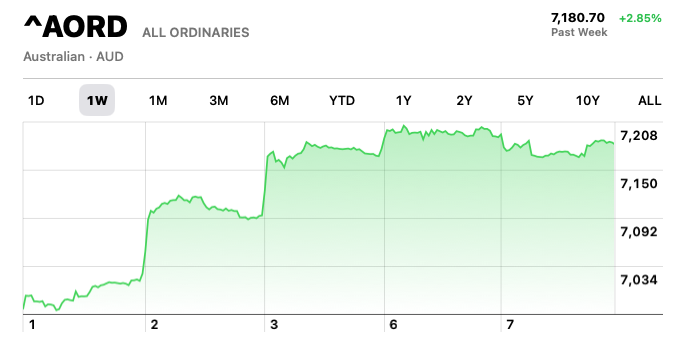
… but as TK pointed out on this week’s episode, we feel a little punch drunk, because we’ve had so many false recoveries over the last 18 months… the RBA’s decision to raise interest rates today didn’t have the impact I thought it might, so maybe the market had already factored it in?
SURVEY
There’s a theory that QAV members might be contributing to the percentage rise and/or fall of shares if too many of us are trading in high volumes on the same day, and, as a result, affecting our overall returns.
To test this theory, we need to get a rough idea about how much dollar volume our combined trades might be.
Please complete this anonymous survey so we can put together some numbers.
Let’s have a look at the portfolio.
QAV PORTFOLIO REPORT
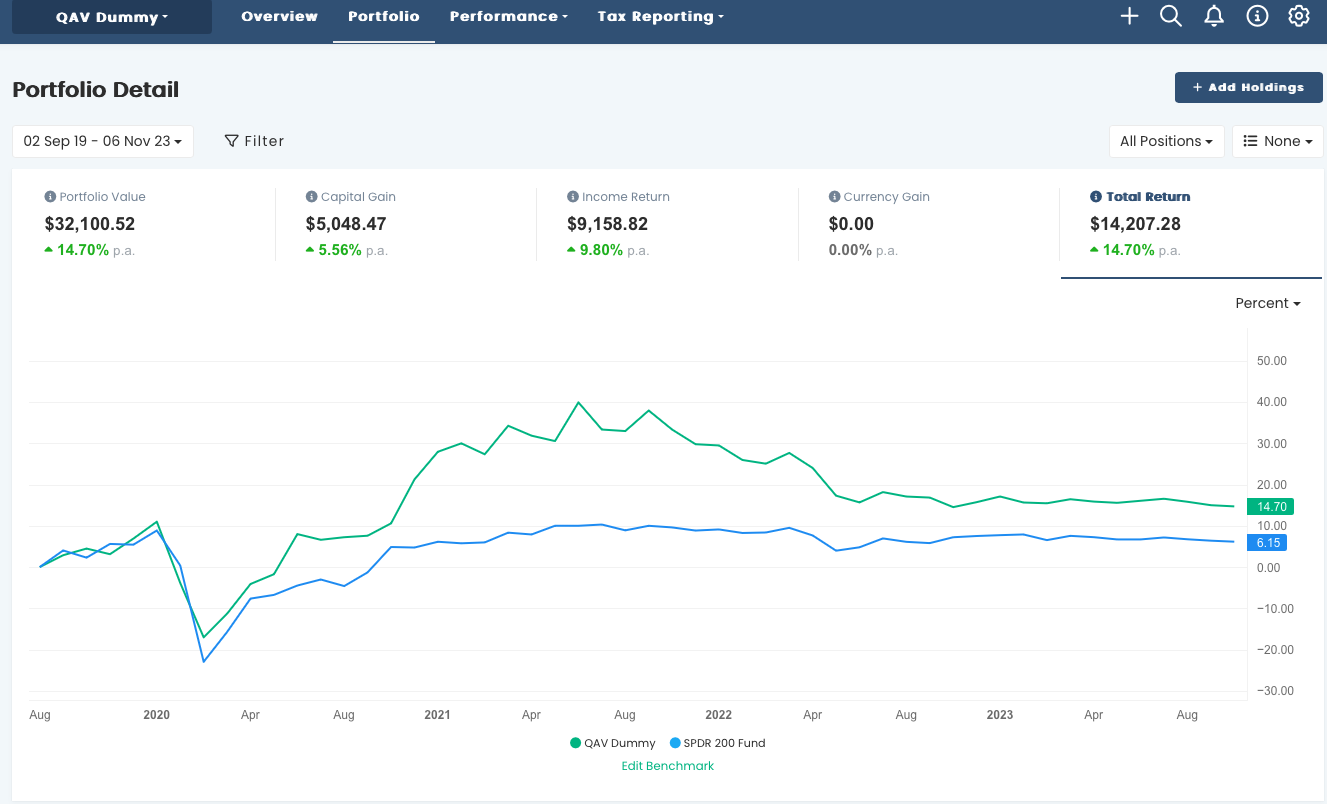
The Dummy Portfolio is performing well against the benchmark over multiple time frames.
SINCE INCEPTION (02/09/2019)
Our portfolio is still doing about 2.5x the STW since inception.
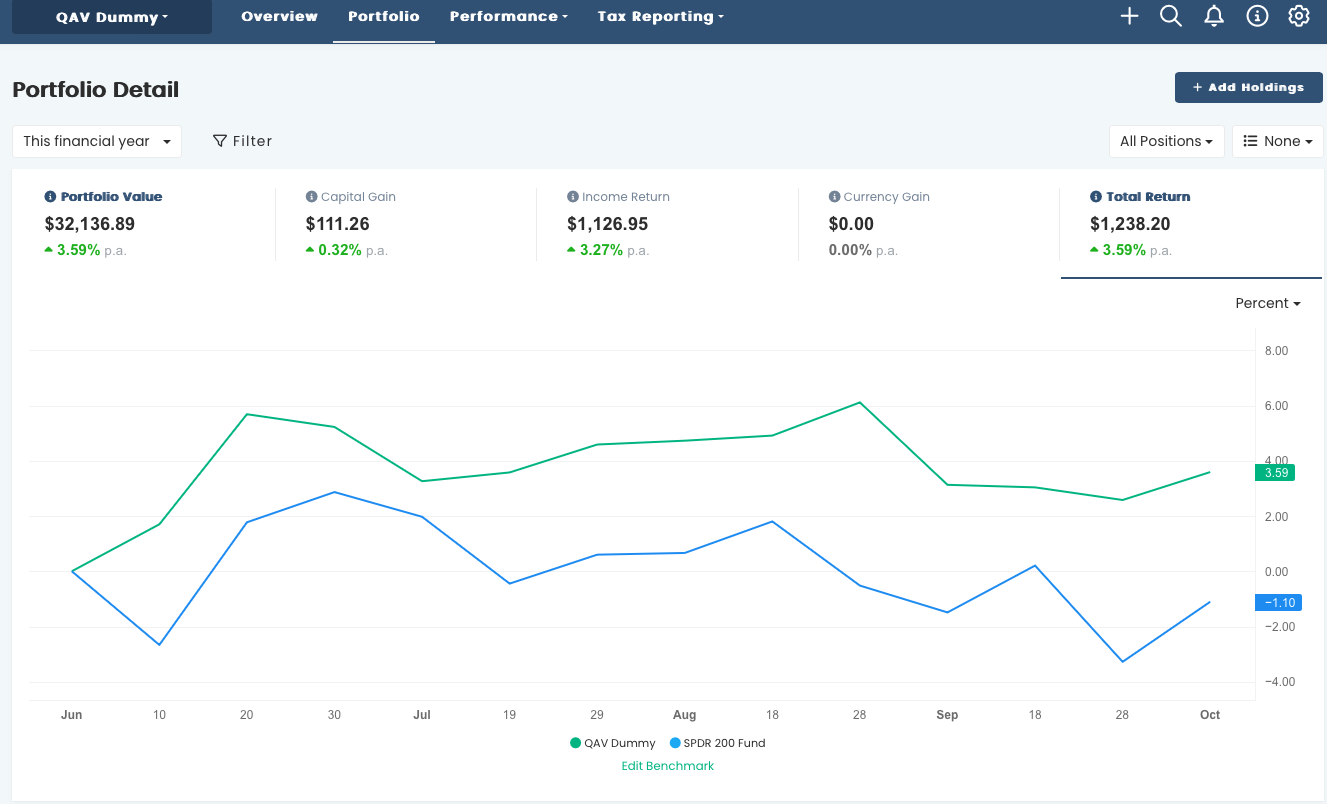
FY REPORT
Despite all of the gloom, for the FY we’re doing much better than the STW.
RECENT TRADES
In the last 7 days we have had no trades.
FREE WEBINAR
I’ll hold another one in a few weeks.
STOCKS OF THE WEEK
During the last week, we also traded some stocks in our Light portfolios. Details here.
** As always, please check our work, DYOR, and consult a financial advisor before making any investing decisions.
BUY LIST
Each week we produce a buy list that we share with our members. The intended primary purpose of this buy list is for club members to use as a reference for comparing their own buy list. In theory, all of our buy lists should look pretty similar each week.
As always, please check our work, DYOR, consult a financial advisor before making any investing decisions.
THIS SECTION CONTAINS CONTENT WHICH IS VISIBLE TO QAV CLUB SUBSCRIBERS ONLY.
THIS WEEK’S EPISODE
FREE EDITION:
Club edition only: JHG delisting; Light Sells analysis; new survey on ADT; SSR down; FPR up; Buffett’s cash pile; RBA meets; cup tips!
Episode Transcription
645 Club
[00:00:00] Cameron: Welcome to QAV, this is episode 645. We’re recording this on a Monday instead of a Tuesday because I don’t know, something’s going on tomorrow.
[00:00:19] Cameron: What’s going on tomorrow, TK?
[00:00:21] Tony: The biggest sporting
[00:00:22] Tony: event In the horse racing calendar is going on
[00:00:24] Cameron: In the world.
[00:00:26] Tony: Yes.
[00:00:29] Tony: Yes. The Melbourne Cup. happy, ASX
[00:00:31] Tony: camp.
[00:00:32] Cameron: and happy, happy, uh, Melbourne Cup for you
[00:00:35] Cameron: tomorrow.
[00:00:36] Tony: Thank you. Alrighty.
[00:00:37] Cameron: When people will probably be listening to this as it’s
[00:00:39] Cameron: running. And when we get to the end of the show, you can give us your tips. How did your tips work out last year? Were they good?
[00:00:45] Tony: No,
[00:00:46] Cameron: Okay.
[00:00:47] Tony: Ruddy’s tip was, I’m going to give you Ruddy’s tip
[00:00:49] Tony: as well later on in the
[00:00:50] Cameron: Oh, okay. Yeah, Ruddy.
[00:00:51] Cameron: Yeah, I’d take tips from Ruddy. ASX has had a better week this week. Tony, uh, but we’ve seen [00:01:00] this before.
[00:01:00] Tony: Why do I
[00:01:01] Tony: feel punched
[00:01:02] Tony: drunk? It
[00:01:04] Cameron: And the RBA is meeting tomorrow. And, uh, it doesn’t sound good. So, like, this is what I can’t figure. Like everyone, like everything I read in the financial review, et
[00:01:15] Cameron: cetera, says The RBA is meeting tomorrow to discuss interest rates. Michelle Bullock has been sounding very pessimistic about what’s going on in the economy.
[00:01:25] Cameron: It sounds like if I had to place a bet on it, uh, I don’t know what Ruddy’s tip is on this one, but I would say that she’s probably going to raise interest rates and yet the market’s been bullish for the last week. What, what am I missing here? Are they just doing it so it can fall again after that comes out tomorrow?
[00:01:45] Tony: does feel like a dead cat bounce, but um, it’s the latest increase has been driven by the US Central Bank. And even then, it’s been driven by Wall Street taking bets on what the US central bank’s going to do. Uh, [00:02:00] there’s a… There’s a theory, I guess, forming on Wall Street that the U. S. central bank is through with rate hikes.
[00:02:08] Tony: So that’s why the market went up in the U. S. It has come back a little bit because Apple’s numbers came out and they weren’t that great. I saw, we’ll talk about it in a minute, but I saw Berkshire Hathaway’s quarterly report came out and Warren’s warning that he expects his operating companies to do worse going forward.
[00:02:25] Tony: But that’s Warren. He never says they’re going to do better, but he is warning that he doesn’t normally warn that they could be facing problems. Um, yeah, so it’s strange. The latest uptick in the market has been driven by US central bankers being a little bit more circumspect on when the, when they’re You know, certain numbers
[00:02:48] Tony: like unemployment coming out in the US, which supports the argument that we’ve seen the last rate hike
[00:02:54] Tony: in the States.
[00:02:55] Tony: And as we know,
[00:02:56] Tony: um, America’s the dog that wags the [00:03:00] ASX as well, so
[00:03:00] Tony: it’s gone up a little bit too.
[00:03:02] Cameron: But then if the RBI writes, it’ll crash again.
[00:03:07] Tony: Probably. If I had a crystal, if I had a crystal ball, I wouldn’t, wouldn’t have been, um, gnashing my teeth over the last couple of years of the performance
[00:03:16] Tony: of the
[00:03:16] Tony: market.
[00:03:18] Cameron: I don’t know. I just, uh, I can’t make any sense of it. It goes up when it shouldn’t go up, goes down when
[00:03:23] Cameron: it shouldn’t go down. I’ve given up. I mean, not that I’ve ever tried that hard to understand it, but, uh, it’s just, makes no sense to me.
[00:03:31] Tony: Yeah. I think it’s largely noise. As we said, yes, um, I think the thing that changed for me in the last week or so was I was sitting on cash because I had nothing to buy and now I’ve got a couple of stocks to buy. So I haven’t gone completely all in for the same reason you just announced that I think if we survive tomorrow’s RBA meeting, that might be a better time to buy, but I bought some stocks Friday, Monday.
[00:03:56] Cameron: Okay, keeping your powder [00:04:00] dry. well, I,
[00:04:01] Tony: I agree with you. I mean, it’s, that’s the thing about since the GFC, the central banks have called the shots in
[00:04:06] Tony: markets
[00:04:06] Tony: really,
[00:04:07] Tony: haven’t they?
[00:04:08] Cameron: I went all in today, but knowing, as I did it, that I’m probably going to have to sell everything when the
[00:04:13] Cameron: RBA rises, raises interest rates tomorrow and everything plummets again, but I’m like, well, I, can’t predict. Don’t predict. I have to just do what the system tells me to do today. But, um, you know, I’m feeling pessimistic about what’s going to happen tomorrow.
[00:04:32] Tony: Yeah, well I haven’t gone all in also too, ’cause I only found a
[00:04:35] Tony: couple of things to buy. So it’s not like the floodgates have opened, so, to speak. Um, but yeah, I hope, I hope I’m wrong. I hope the, the, the floodgates will open soon at, um, it’s about time if they
[00:04:46] Tony: do
[00:04:47] Cameron: Well, there’s nothing going on dramatic in the world, Tony, so, you know, it’s smooth sailing from here on in, I’m sure. of,
[00:04:56] Tony: Speaking of that, I mean, do. What do you think Xi Jinping’s [00:05:00] sitting back and thinking right now? I remember years ago reading an analysis of the, or it might even have been public policy by the US Defense Department, saying they always had a budget that was big enough to fight four wars around the world at any one time.
[00:05:13] Tony: We’ve got two.
[00:05:15] Tony: Xi Jinping’s probably out there spreading a bit of dissent somewhere else in the Middle East to bring it up to three, or somewhere else in
[00:05:20] Tony: the world. And, uh, It’s not very far away from invading Taiwan when the U. S. fleets in the Straits of Hormuza, wherever they
[00:05:29] Tony: are.
[00:05:29] Cameron: you gotta stop believing the capitalist propaganda about Xi Jinping, my friend. He’s, like, all he’s doing is, uh,
[00:05:37] Cameron: building a better, more peaceful world. He’s the peace broker.
[00:05:40] Tony: Mm hmm.
[00:05:40] Cameron: He’s, he was the guy trying to do peace deals between Saudi Arabia and Iran. He’s the, he’s the builder of the Belt and Road Initiative.
[00:05:49] Cameron: A trillion dollars loaned out to developing countries. He’s, he
[00:05:54] Cameron: just wants peace and love, you know, deep down. He’s John Lennon, Xi Jinping, man. He just [00:06:00] wants peace, love, and harmony. Wants a, wants a happier world for everybody. Happy communist future for everybody. I don’t know. Don’t know what you’ve been listening to
[00:06:09] Tony: wonder what John Lennon would think of the Chinese army
[00:06:12] Tony: if he was ever in charge. Oh, what’s that missile
[00:06:18] Tony: for?
[00:06:19] Cameron: I don’t know, but I’m surprised Paul McCartney hasn’t taken half a comment John left on an answering machine 40 years ago and turned it into a new single yet.
[00:06:28] Tony: Yeah, using
[00:06:30] Cameron: We can talk about the Beatles new single in After Hours. I was going to say, speaking about smooth sailing, Tony, Qantas shareholder remuneration revolt. Well, I can’t decide if this is smooth sailing or not, because about 90% of the shareholders voted against the remuneration package or however you want it, whatever you want to call it. I read on the ABC that the outgoing chairman, [00:07:00] what’s his name, Goida?
[00:07:01] Tony: Goyder.
[00:07:01] Tony: Yep.
[00:07:02] Cameron: It’s like an attack of Goida. Um, at the start, it says in the ABC, at the start of the AGM, Mr.
[00:07:08] Cameron: Goida said that the vote against the report would likely be around 90%. He was right.
[00:07:14] Tony: Hmm.
[00:07:15] Cameron: But here’s what I can’t figure out. If you already know that, why put it to a vote? If you already know shareholders, 90 percent of shareholders are against it, what the fuck are you doing putting it to a vote in the first place?
[00:07:28] Cameron: Shouldn’t you be,
[00:07:31] Cameron: why?
[00:07:32] Tony: Well, you got to
[00:07:33] Cameron: I mean,
[00:07:33] Tony: oh, you mean you should change the package?
[00:07:35] Cameron: change the package to something the shareholders approve of. Why are you
[00:07:38] Cameron: trying to ram it through?
[00:07:40] Tony: that’s what happens. So He’s got to do that between now and next year, because if it, if a majority of shareholders voted down next year, then they’ve got to spill, then they then vote
[00:07:48] Tony: to
[00:07:48] Tony: spill
[00:07:48] Tony: the board.
[00:07:50] Cameron: Yeah, right, but he’s not going to be around. It’s not his problem. he’s gone. My question
[00:07:56] Cameron: is, if you know that everyone hates it, why are [00:08:00] you trying
[00:08:00] Cameron: to get it? Why are you going ahead with it? You’re a former senior executive, your wife’s a former senior executive. Explain to me the senior executive corporate thinking here that’s going on, because I don’t get
[00:08:14] Tony: the executive group think he would be, um, doesn’t matter what we put up, it’s not going to get approved, because it’s the only way. It’s a, it’s kind of a quirk of the, um, corporate law is the only way that shareholders can actually hurt the board is via this mechanism of voting down the REM report. Um, and if they do it two years in a row, then there can be a board spill, so they, they could lose, or lose their jobs.
[00:08:38] Tony: Um, so, it, it, yeah. They could have put up,
[00:08:44] Tony: well I mean apart from putting up Alan Joyce gives his money back to the
[00:08:49] Tony: Qantas, the Rem report was never going to get support under any guise this
[00:08:53] Tony: time around.
[00:08:54] Cameron: Okay, so it’s all backlash against Alan Joyce’s, uh, [00:09:00] running the company into the
[00:09:01] Cameron: ground and then taking a big
[00:09:02] Tony: correct. Yeah,
[00:09:03] Cameron: riding off
[00:09:04] Cameron: into the sunset.
[00:09:05] Tony: Yeah,
[00:09:06] Cameron: Alright, Macquarie
[00:09:08] Tony: it’s capitalism.
[00:09:09] Cameron: Bank. Macquarie Bank started the day in the red.
[00:09:13] Cameron: Last week, uh, they reported a 39 percent drop in half year profit to 1. 4 billion. Uh, what’s going on with Macquarie Bank?
[00:09:23] Cameron: They’re one of your favourites. Tony, what’s going on
[00:09:25] Tony: They are, and they are, they’re a volatile company, for sure, but it appears, I mean I haven’t done a deep dive into them, but it appears the issue is coming from the asset division, Macquarie Asset Management. Well first of all, it’s also coming from the commodities trading part of the business, so last year their results were bolstered by the fact that they had this guy trading oil.
[00:09:49] Tony: in, in Austin, Texas, or Dallas, Texas, somewhere, who made outsized profits. But a large part of, that’s not happened again this year, um, a large part of Macquarie [00:10:00] now is what they call Macquarie Asset Management, which is toll roads, so freeways, um, but any sort of asset really, bridges, um, Other forms of infrastructure, pipelines, et cetera, et cetera.
[00:10:13] Tony: And the sales, so normally they work on a sort of pipeline, Macquarie Asset Management, so they buy it, develop it, then turn it over. Sometimes they run them over a long period of time, but a lot of times it’s a buy and flip type approach. And with interest rates rising, no one’s buying, so they’re sitting on assets now, which normally they would be selling part of and booking as profit, which didn’t happen this year.
[00:10:38] Tony: So,
[00:10:39] Tony: you know, it’s one of those things it’s, um, again, I haven’t looked at it in detail, but they still got the assets and they’ll still sell them at some
[00:10:45] Tony: stage. So that profit will come to roost, but it is a very lumpy sort of business when
[00:10:50] Tony: you’re doing
[00:10:50] Tony: that.
[00:10:51] Cameron: It’s always been a very lumpy stock for me too. I’ve bought and had to sell it many times over the last few years. Uh, I noticed, like, it was, it wasn’t on our [00:11:00] buy list. Today. And, but I look at the share price. So when this report came out last week, it was trading at a dollar six. Well, the beginning of the 2nd of November was trading a dollar 61 dropped down to a dollar 56.
[00:11:14] Cameron: Today it’s at a dollar 62. It’s back up. Like it dropped for like 10 minutes and then bounced back.
[00:11:22] Tony: Which I think is that old thing we talked about before the stockbrokers running around town when the
[00:11:27] Tony: quality reports are coming out and picking up the phone and going, sell, sell, sell
[00:11:31] Tony: on the headline. And then over the next two or three days, having a look at the underlying results and saying, buy, buy, buy, we got it
[00:11:37] Tony: wrong.
[00:11:40] Cameron: Well, it wasn’t QAV. That’s for sure because, uh, I
[00:11:44] Cameron: haven’t owned it for a long time.
[00:11:47] Tony: Same. The other thing, I did hear some commentary, I think it might have been in the Fin Review, I’ll read some commentary in the Fin Review saying that Macquarie has gone very heavy into green assets in this Macquarie Asset [00:12:00] Management division and they’re finding it hard to sell them at the moment.
[00:12:05] Tony: Yeah, so that could also be the case, but again, unless the assets have to be written down, they’ll just sit on them until they can sell
[00:12:11] Tony: them.
[00:12:13] Cameron: Looking back through my trading, um, archives, uh, I sold it last out of my super and the dummy portfolio and the light portfolio a while back. I can’t remember exactly. It was a three point trend line sale at 1.
[00:12:31] Tony: Mm hmm.
[00:12:32] Cameron: Um,
[00:12:33] Tony: I did the same.
[00:12:34] Cameron: and it’s at 1. 62 now. So, you know, it’s been coming down since the 1st of September, really.
[00:12:42] Tony: Yeah, so we saved ourselves a bit of money by selling out when we did.
[00:12:45] Cameron: yeah.
[00:12:46] Tony: But it is a volatile stock, I agree. I thought the comment on the green assets was interesting because a lot of people have been getting into that sector. Now, whether that means it’s an overcrowded market because there aren’t that many green assets.
[00:12:58] Tony: Um, but I think, [00:13:00] uh, one of the issues that one of the analysts raised was and I may have, again, haven’t looked at this in detail, but there was a a wind farm or a solar farm in the U. S. which had to get written down heavily because the price it was getting for electricity from that. Um, asset wasn’t as high as forecast.
[00:13:18] Tony: So that could be also hurting the assets that Macquarie hold. And plus there’s this whole backlash in the US, which has been interesting as well, largely driven by Trump and his kin saying that, um, they’re suing fund managers for, for, uh, um,
[00:13:33] Tony: not buying
[00:13:34] Tony: into fossil fuel industries and buying
[00:13:36] Tony: green assets instead.
[00:13:37] Tony: So there’s a, um, a whole lot of fund managers who are now pulling out of that, that market as well.
[00:13:43] Cameron: You’ve been following the, uh, Trump court case in New York. He’s been banned from doing business in New York. They’re
[00:13:50] Cameron: pulling his name off of all of the buildings.
[00:13:54] Cameron: Uh, it’s, uh, it’s a kind of a riot. Yeah, look, I,
[00:13:59] Tony: Sad thing is he’ll probably [00:14:00] get re
[00:14:00] Tony: elected
[00:14:00] Tony: next year.
[00:14:01] Cameron: well, if he’s not in prison by then,
[00:14:03] Tony: Well, then he pardons himself.
[00:14:06] Cameron: he can’t.
[00:14:06] Tony: Why?
[00:14:08] Cameron: Because he’s being sued and he’s being found guilty and these
[00:14:12] Cameron: court cases are in New York and Georgia, they’re states. As a president, you can only pardon yourself for federal crimes, not for state crimes.
[00:14:20] Tony: Oh, that’s interesting, then.
[00:14:21] Cameron: Wow.
[00:14:22] Tony: Yeah.
[00:14:24] Cameron: is why they’re going after him in Southern District of New York and now in Georgia and places like that. So back to MQG before we get over that. We sold it early
[00:14:32] Cameron: July, 176 or whatever it was, went up to 185 a week later.
[00:14:41] Cameron: Um, so, I wouldn’t have noticed that because I don’t look back, but, um, it’s been falling steadily ever since then, so,
[00:14:49] Tony: So Do you think QAV was, uh, forcing the price down there for a while and it rebounded and then it dropped again?
[00:14:54] Tony: Oh, you don’t know? Yeah.
[00:14:57] Tony: You don’t know? All right.
[00:14:58] Cameron: Did it, did it, did
[00:14:59] Cameron: it [00:15:00] cause the price
[00:15:00] Cameron: to drop a couple of days ago and then it rebounded
[00:15:03] Tony: Yeah, nah,
[00:15:04] Cameron: us then I don’t know, man.
[00:15:06] Tony: Yeah,
[00:15:07] Cameron: Um, okay, moving right along. Janus Henderson, J H
[00:15:11] Cameron: G. Um, the
[00:15:14] Cameron: God of, uh, looking both ways, the God of Janus,
[00:15:17] Tony: There’s a guy with a
[00:15:18] Tony: crossing the road,
[00:15:20] Cameron: Yeah,
[00:15:22] Cameron: look to the left, look to the right,
[00:15:24] Tony: also called
[00:15:25] Tony: Hector the Cat,
[00:15:26] Cameron: yeah, is that what it, that’s where I was, yeah, uh, delisting Tony.
[00:15:30] Cameron: Now, shouldn’t be a
[00:15:31] Cameron: problem for any of our
[00:15:33] Cameron: members, yes, shouldn’t be a problem for any of our members because it was a three point trendline sell on the 24th of October, about weeks ago. Thank Um, but I know that not all of our members, uh, abide by the rules when it comes to selling. So
[00:15:52] Tony: We set up a, set up
[00:15:53] Tony: a
[00:15:53] Tony: court
[00:15:53] Tony: in Stonedom,
[00:15:55] Cameron: uh, yes.
[00:15:56] Cameron: Yeah. Yeah. Yeah. We should, at Heresy.
[00:15:59] Tony: Do I get to wear a [00:16:00] really big cap?
[00:16:02] Cameron: Yeah.
[00:16:03] Cameron: Yeah.
[00:16:04] Tony: I like that scene in the Life of
[00:16:06] Tony: Brian that I love when John Cleese has the big cap. All I said was. By Jehovah, that meal was good What? Taking the Lord’s name in vain?
[00:16:17] Tony: Stone
[00:16:18] Tony: him!
[00:16:20] Cameron: although we shouldn’t gloat too much because, um, When we sold it the 24th of
[00:16:24] Cameron: October, it was uh, about 35 bucks, and now it’s 38
[00:16:28] Cameron: bucks.
[00:16:29] Tony: Right,
[00:16:30] Cameron: That’s actually gone up
[00:16:31] Tony: but at least we sold something. We had a share
[00:16:34] Tony: to sell.
[00:16:37] Cameron: Yeah, so what happens now? So, well, I do know what happens because I read about it in their release. It’s a voluntary sale facility. It’s expected to
[00:16:45] Cameron: operate from Wednesday the 13th of December to Monday the 12th of February, 2024, to be followed by a compulsory sale process. If you don’t sell during the
[00:16:56] Tony: Mmm.
[00:16:58] Cameron: if you hold on and go, no, [00:17:00] not selling.
[00:17:00] Cameron: I don’t care what the rules say. That’s what we need is a compulsory sale process. I don’t know. So, so, uh, yeah. Is there anything to talk about with this? I know there’s some questions about it on Facebook, but basically if you are still holding it, you’re going to be forced to sell it at
[00:17:17] Tony: Right, yeah, I, I, look, who knows how it will go, but I don’t like the for sale process because there’ll be someone on the other side treating it like a fire sale. And, um, I’m not sure of the process, but it could even be delisted by then, so they’ll probably have to give you the last price or something like that, which may not be, which then, you know, um, If I put my Machiavelli cap on, and I was an underwriter doing that, I’d be manipulating the stock price at the end of trading to make it cheaper for me to buy out the four sellers.
[00:17:50] Tony: Not saying that will happen in this case, Janus Henderson’s a reputable company, but that’s, that’s a risk. Uh, yeah, so, I mean, the… I did the, [00:18:00] we talked about this company a little while ago, I may have even done a pulled pork on it, but it’s an international fund manager, I think it’s domiciled in the UK from memory, may even be in New York, but it’s listed on a number of exchanges, and so they’re saying, look, we don’t need to list in Australia anymore.
[00:18:17] Tony: It’s the, you know, the stock isn’t very liquid here, or it’s not a big, big enough, a big enough, you know, pool of investors to, to, um, make it worthwhile given there’s costs of listing here. So they’re, they’re consolidating their, their, um, Shareboards, I think they’re only going to be listed in London and New York going forward, maybe some other places too, but not Australia.
[00:18:41] Tony: So it’s a delisting company, a delisting process, the company isn’t going away, but they don’t want us to be shareholders in Australia anymore. So you’ve got choices to sell your shares online now. To go into the voluntary process where I’ll give you, um, I haven’t looked at how they calculate the price, but again, it’s, [00:19:00] um, it’s, uh, I think they’re going to use the NY, the New York Stock Exchange price as the basis to sell your shares, um, voluntarily, and then they’ll do it compulsorily at the end.
[00:19:12] Tony: And they may use the NYSE then too to work out the price, um, probably will. So, um, it just depends how long winded you want to be during this process. Get your, I’d, I’d, if it’s me, I’d, and if the price is above the three point trendline, sell price, you’ve made three bucks over what I did when I sold out, um, but I’d be
[00:19:32] Tony: selling out while
[00:19:33] Tony: it’s
[00:19:33] Tony: still available.
[00:19:35] Cameron: Yeah.
[00:19:35] Tony: look, there’ll be, there’ll be someone who’s at large instos, um, who’s watching the NYSE like a hawk and comparing it to the price here, and they’ll make a couple of pennies on the trade by buying it or on
[00:19:46] Tony: stock beforehand, um, at a price less than what it is in the New York listing, and then try and arbitrage it.
[00:19:53] Tony: So there’ll be someone buying your
[00:19:54] Tony: shares
[00:19:55] Tony: now.
[00:19:57] Cameron: Yeah, like it, the share price [00:20:00] hadn’t really changed a great deal from when we sold it until Thursday. It jumped 10 percent on Thursday last week with the announcement of this, you know, so
[00:20:10] Tony: yeah, that’s interesting, isn’t it? So that suggests to me someone has already spotted an arbitrage up to 10 percent difference and they’ve bought in. Because you think, you think most people would say, Oh, it’s going to be delisted, I’ll sell. Because if you sell, you get your money in two days.
[00:20:25] Tony: And I don’t know if they’ve come out and said how long it will take to get the money to you if you’re selling into their voluntary sale or whether you’re being compulsorily
[00:20:33] Tony: acquired. But it’s probably going to be 30 days would be my guess.
[00:20:38] Cameron: right.
[00:20:39] Tony: So you get your bucks quicker if you do it this way. On
[00:20:42] Tony: market.
[00:20:44] Cameron: I’m just, um, pulling up, uh, Stock Doctor to see if I can see the trading volume the last couple of days. It’s 30 day, oh, oof, yeah, oof. Yeah, [00:21:00] big spike on the second. Um,
[00:21:04] Tony: yeah,
[00:21:04] Tony: which would have been, you think, people getting the news and then selling, so why
[00:21:07] Tony: did the price go
[00:21:08] Tony: up?
[00:21:10] Cameron: there was a lot of people were buying.
[00:21:12] Tony: Right,
[00:21:12] Cameron: why are they, yeah, why are they
[00:21:13] Cameron: buying?
[00:21:14] Tony: well, they must see an arbitrage between the NYSE price and the
[00:21:18] Cameron: yeah, right. Yeah, right. So a lot of people are getting out, but somebody’s snapping them up.
[00:21:24] Tony: Australian
[00:21:24] Tony: price.
[00:21:26] Cameron: Well, is it the
[00:21:26] Cameron: company? No, this isn’t the voluntary sale facility, right? It’s not the company buying its own shares.
[00:21:33] Tony: No, the voluntary sale facility starts in December.
[00:21:36] Cameron: Yeah. Right.
[00:21:38] Tony: I’m not saying the company didn’t buy them, it could be the company buying on market
[00:21:42] Tony: on the day of the announcement, I don’t know.
[00:21:43] Cameron: Right. Well, speaking of not selling things when you’re supposed to sell them, um, you know, we always, we always have this, uh, conversation about the rules and when we sell something and [00:22:00] sometimes things go up and sometimes they don’t go up and I was speaking to somebody last week who said, yeah, I don’t sell things when they breach, I just hold onto it.
[00:22:10] Cameron: If they’re a good company, I don’t sell it, I just hold on. Which prompted me to do a little bit of analysis. So I took the last 18 months of the light portfolio and looked at all of the cells that I’d done over the course of the last 18 months. And there has been a depressing lot of them because it’s been a very volatile period.
[00:22:34] Cameron: So I looked at all of the rule one cells. The three PTL cells and the commodity cells. The only ones I didn’t look at is where the company is delisted or they’ve changed their code from ECX to FPR or something like that, because that just added a little level of complexity too. Tracking it. What I did is I, I wrote a script or several scripts actually to download [00:23:00] all of the closing prices of all of the shares that I’ve sold in the last 18 months since about April 2022, maybe a little bit earlier than that.
[00:23:11] Cameron: And all of the dividends that those stocks have issued since then, and then calculated. Uh, in which cases would have been better off just holding that stock, taking into account any price increases since we sold it and dividends that have been accrued since we sold it versus where we did end up when we sold it, not taking into account how we redeployed those funds.
[00:23:40] Cameron: So after we sold it, you know, what happened with those stocks, just looking at a very base level, would we, would I have been better off? NetNet holding that stock or doing what we did, which is sell them. And when I added it all up, it said that if we just held all of the stocks rather than [00:24:00] selling them as a, as a group, the portfolio would have been 5 percent better off.
[00:24:05] Cameron: However, nearly all of that came from a single stock, which was. TGA, Thorn Group, which had a 391 percent increase since I sold it in May of 22, and it’s currently being acquired. But if I take that out as an outlier, the benefit of not selling was negligible. It was basically a zero sum game. Um, some stocks have gone on to recover quite well, mostly DUR, which I bought back into anyway.
[00:24:42] Cameron: We’ve held DUR in the portfolio and it’s up like 140 percent I think since we bought back into it. So that, you know, there is that argument that we sell and then we buy back into things, as we always say. But the overall benefit of holding everything versus never selling was basically zero. [00:25:00] Now, that doesn’t take into account what would have been brokerage.
[00:25:04] Cameron: guess of trading in and out. So if I added in broke, we don’t have brokerage with the dummy portfolio cause it’s a paper portfolio, but if I added brokerage in there would be, uh, that would, you know, be a difference because there’s a lot of trades accounted for in there, so that’d probably take a couple of points off it, but, um.
[00:25:26] Cameron: Yeah, a couple of disclaimers there. Obviously, so that’s only 18 months of history, and it’s been a very volatile period, as we know. If I ran that over a five year period, um, uh, it could be… Have a different outcome. If I did factor in how we redeployed the funds and how those things have performed, that might change the outcome as well.
[00:25:48] Cameron: But I just wanted to see, you know, I think, uh, Cosman and a few other of our listeners have done their own analysis like this over the last year. So I thought I’d do my, mine now that I’m a [00:26:00] scripting God, uh. And, uh, yeah, so that was my takeaway is really nothing, nothing, no, would have really gained nothing apart from brokerage if we just held onto those stocks over that 18 month turbulent period.
[00:26:20] Tony: Yeah, right. I mean, for me, buy and hold, well, buy and hold was killed for me during the GFC when, when I did buy and hold and everything just halved in value over 18 months. and so I thought there has to be a better way. And given that it’s, the way I view what you’ve said is given that the buy and hold is roughly similar to the trade, uh, at least with the trade side of things, we’ve been taking out insurance
[00:26:48] Tony: that we don’t have another big drop during that 12 month period. And it sounds like if it’s a net net, then the insurance was free over that period, except that we’ve had to do a lot of work compared to the buy and
[00:26:59] Tony: hold [00:27:00]
[00:27:00] Tony: approach.
[00:27:01] Cameron: Yeah. And again, if I took brokerage into account, there’d be a bit of a difference, but yeah, I don’t know how much I could, I could do some quick numbers on that, but I don’t think it’d make a huge impact. Um. Yeah, so, and the market, you know, has been not great for the last 18 months, but it hasn’t had a GFC like fall and no recovery.
[00:27:25] Cameron: It’s sort of gone up and then gone down and gone up and gone down and, you know, not like the GFC where it went down and then stayed down
[00:27:33] Tony: Yeah, right.
[00:27:33] Cameron: took 10 years to
[00:27:35] Cameron: get back,
[00:27:35] Cameron: right.
[00:27:35] Tony: Yeah. Well, hopefully that doesn’t happen. Um, we’ll we’ll see.
[00:27:40] Cameron: Hmm.
[00:27:41] Tony: It’s not going to take much for that to occur, though, I can, I mean, you know, with, um, interest rates having risen, with, uh, unstable geopolitics, with, uh, You know, there’s still a fair bit of, um, still a fair bit of forecasting of a recession in the US and certainly if [00:28:00] you look at what Credit Corp said about the customers who are working, walking away from their repayment plans in their business, that’s got to be a bad sign.
[00:28:07] Tony: So, you know, I played golf with a mate of mine from the States who was visiting Sydney a couple of weeks ago and he said, yeah, it’s terrible over there, so. Again, these are all anecdotal types of pieces of information, but if, if, if the economy does take a downturn, particularly in the States, then yeah, the share market may come off in a GFC type way. The, the reason for saying all that, and I hope it doesn’t happen, is because we have some kind of process for handling that, which is just our rule one and three point trend line sales. Whereas the buy and hold person just has to… Put the shares in the bottom drawer for a couple of years. And as we saw with the GFC, the share market’s only back to about that pre GFC
[00:28:47] Tony: level now, some 15 years later.
[00:28:51] Cameron: Hmm. Yes. If I look at, yeah. Yeah. You pointed that out, I think, last week, right?
[00:28:59] Tony: Yeah, well, if you [00:29:00] had a, if you bought an index fund and it got up to the heights, you bought it before 2007 and it
[00:29:04] Tony: got up to the heights it,
[00:29:05] Tony: did, which I think the ASX was about 7, 200 around the time it started to slide
[00:29:11] Tony: into the GFC. It’s, it’s around that
[00:29:13] Tony: level now. That’s 15
[00:29:15] Tony: years
[00:29:15] Tony: ago.
[00:29:18] Cameron: Yeah, the All Ords hasn’t really, I mean, it, its peak in August, 2007 was 6 7, 7 9. Today it’s 7 1 9 8. It did go up to 7, 6 86, November 22. But um, yeah, it hasn’t gone very much above where it was back in 2007. Bit of 15 years
[00:29:42] Tony: Or more. Yeah, Whereas if you had sold, gone to cash during that GFC period, you were buying it at a much cheaper price.
[00:29:52] Cameron: buying back in.
[00:29:53] Tony: Buying back in at a much cheaper price. Yeah.
[00:29:55] Cameron: Yeah.
[00:29:57] Cameron: Well, speaking of buying things at a cheaper [00:30:00] price or not.
[00:30:01] Cameron: Let’s talk about let’s talk about our survey. So by the time people listen to this, I will have published
[00:30:07] Cameron: this. This is based on the idea you’ve been kicking around for the last couple of weeks about whether or not QAV is actually affecting our returns.
[00:30:18] Cameron: Particularly In the high ADT side of things. So what we’ve done is we’ve published a survey and asked people to anonymously give us an indication about the sort of size of parcels that they are buying or selling when they’re trading, what your average trade parcel is, because we’re trying to get an indication about how much of an impact.
[00:30:42] Cameron: QAV members might be having on certain stocks, and it’s the first step in what I think will be a multi step process of trying to drill into this, but, uh, in a nutshell, the theory is that it [00:31:00] It’s possible that because there’s been so little to buy, particularly in the high ADT space over the last couple of years, that when something does become a buy, uh, enough QAV members pile into it in the, on the same, in the same period, same couple of days, push the price up in the process and push the price up on each other in doing that.
[00:31:29] Cameron: Um… And maybe pushes it up by 5 percent over the course of a couple of days. Um, and then when we stopped pushing the price up, the price retreats back to where it was earlier, and then maybe even a little bit more so, which forces us to sell because it becomes a rule one. And then we repeat the
[00:31:54] Tony: Hmm.
[00:31:55] Cameron: a week later when something hits the buy list.
[00:31:58] Cameron: Is that [00:32:00] kind
[00:32:00] Tony: a good summary. It’s and it’s only a hype. It’s only hypothetical at this stage. I’m just trying to, um, make sense of the last couple of years. I know it’s a volatile market, but in my trading history. It’s been extra volatile, and I haven’t experienced a situation like this before. Um, yeah, so it could be that that’s just the way it is.
[00:32:19] Tony: That’s the process. Or it could be that somehow QAV is…
[00:32:26] Tony: And I must admit, whenever I’ve tried to, you know, dial into some of my trades, I’m not seeing evidence of it. So this is only a theory, um, but, you know, but the theory goes, if there’s a certain stock and it sits at five times, you What, you know, my, if the ADT is five times what I want to buy, and there’s five of me out there, then suddenly I’m not buying, well, QAV’s not buying 20 percent of that daily transaction, we’re buying the whole lot, and if there’s a, if there’s enough, [00:33:00] um, stock waiting at a higher price, we’re buying up The latter, so to speak, and pushing the price up, as you said before.
[00:33:06] Tony: Um, so it’d be good, good, it’d be good to know,
[00:33:10] Tony: uh, what the profile, I
[00:33:12] Tony: guess, of the base is. It’s all anonymous, um,
[00:33:15] Tony: but it may help us try to understand if, uh, QAV has been causing us to trade more than what I normally
[00:33:22] Tony: would.
[00:33:24] Cameron: Yeah, we’ve been doing. A range of analysis over the last couple of weeks, trying to figure this out and haven’t really made any progress yet, but this is the next step in trying to get some numbers. So if you don’t mind filling out the survey, it is anonymous. There are no names associated with it, but, uh, if we get.
[00:33:44] Cameron: Enough feedback that there are enough high ADT, uh, members that might be skewing the performance of some of these stocks. We’re probably all we want to get together and have a chat about it. So, the next step will be say, okay, if you, if you, if you said that you were one of those high [00:34:00] ADP, ADT people, how about we jump on a Zoom call and have a chat,
[00:34:06] Tony: well, and it could also be, I mean, you know, we’ve seen some strange things happening, um, like, Credit Corp, for example. I know it put out some bad news and that could explain away the reason why it dropped by, what was it, 30 percent in a day?
[00:34:19] Cameron: 38.
[00:34:20] Tony: Yeah, but it was also the day after it crossed the three point trend sell line for QAV.
[00:34:26] Tony: So, we may have been in the mix. Maybe it would have dropped 10 percent without QAV. I mean, it’s, I
[00:34:31] Tony: can look up Stock Doctor in the volumes,
[00:34:33] Tony: but I can’t tell who’s in those volumes. So,
[00:34:35] Cameron: Yeah,
[00:34:36] Tony: yeah, like I said, it’s just a theory, so it’d be good to have some more information. So, um, thanks in advance if you fill out the anonymous survey.
[00:34:43] Cameron: yeah. Um, all right, moving right along. What else is in the news that you want to talk about TK?
[00:34:52] Tony: A few things, um, there has been some stocks in the moves, speaking of, in the news, sorry, speaking of moves. Uh, [00:35:00] SSR went down, it’s on our buy list, but it went down quite a bit on the back of a quarterly update. And that seems to be happening a lot in this market, that, uh, stocks are dropping or raising 10 percent in a day, which is really kind of unusual in my experience.
[00:35:17] Tony: Oftentimes, a quarterly update won’t make much difference because, you know, it’s only three months since the last update, so either it’s a sign that there’s a very big deterioration in the economy around the corner that’s coming through on some of these stock updates, or it’s a sign that, I don’t know, people are getting their hair triggers out and just shooting.
[00:35:39] Tony: The reverse happened with Fleet Partners, um, the old ECX, which you talked about before. Uh, it went up on the, on an update, which said that they were, um, uh, buying back their stock again, and they’ve been doing that for a while. So again, the stock was up, I think, um, might even have been up 5 to 10 percent on the day that was announced.
[00:35:57] Tony: So there’s a lot of moves going on, which [00:36:00] is a bit strange. Uh, a couple of things while we’re at it on the buy list. Um, I was going to do a I was going through the buy list today working out what to do a pulled pork on and there’s a stock called PACT, P A C T. It’s one of the, um, uh, container manufacturers that, um, kind of, um,
[00:36:20] Tony: is part of the loose Pratt family.
[00:36:23] Tony: So a guy called Rafi Jeminder. Um, who I think is related somehow to the people who, uh, uh, to Anthony Pratt, who now owns Vizzi. But anyway, that’s not, that’s not irrelevant. No, I may have got that wrong.
[00:36:33] Cameron: Best, best friends with Donald Trump?
[00:36:36] Tony: Well, Anthony Pratt is. Um, so PGH anyway, look like, well, he’s on the buy list, but be careful. It’s, it’s, um, uh, Rafi Jaminder, the CEO and major owner is gonna, has issued a, um, a takeover to take it off the, ASX to buy it out basically, so just be aware of that.
[00:36:56] Tony: I think we spoke about Harvey Norman once before, it’s still [00:37:00] on the buy list, but I think it’s a mistake in the data from memory
[00:37:03] Tony: in terms of the number of shares it’s coming through from Stock Doctor’s data providers, so just be careful with that
[00:37:09] Tony: one too.
[00:37:11] Cameron: Yeah, I keep asking Victor about that and I, Victor at Stock Doctor, and I don’t think he’s resolved that one yet.
[00:37:21] Tony: Yeah. Okay. But just be careful. I mean, do your own research when you’re going to buy a stock, but that’s, there’s a couple there which are on the buy list, but maybe shouldn’t be bought at the moment. Unless you’re an experienced trader during takeovers, then just be aware that PACT is under, under a deal.
[00:37:37] Tony: I noticed today that, um, Buffett’s quarterly report came out and Berkshire Hathaway is sitting on its largest pile of cash ever. The headline in the AFR was Buffett’s cash pile hits 241 billion, record high on scarce deals. So, I know he’s, uh, his ADT is a lot larger than our ADT, so he’s, [00:38:00] uh, he’s finding it hard to buy things at the moment just as we are.
[00:38:03] Tony: Uh, but the other thing which, um, Which struck me, and I’ll just try and find it in the article. Uh, there’s a section in the article talking about the fact that his operating companies were expected to report lower numbers next quarter. Um, they’re buying back more stock, which is not unusual if they can’t find something to do with their cash. anyway, I can’t find it, I’m just skimming through the article. But, but, uh, another sign that the U. S. economy may not be as strong as it, um, is going forward than it is now. well that’s all I got. RBA meets tomorrow as we spoke about. The other interesting thing is that the government went through this big rigmarole of reviewing the RBA.
[00:38:47] Tony: Now, you know, maybe that was done to, um, justify not, uh, renewing the seven year term of the past, uh, person who retires soon. Uh, But they, the, the [00:39:00] review set up said, let’s set up two boards. One to look after monetary policy and one to be the governance for the operating parts of the RBA. Uh, so the government just announced they put Michelle Bullock in charge of both.
[00:39:12] Tony: So , I, I, you know, was the reviewer waste of time. What’s, what’s the point guys? Um, it’s, it’s Meet the new Boss, same as the old boss, meet the new corporate structure, same as the old corporate structure. The RVA seems to have, uh, gotten a. Come through a review with a clean bull of health in, in effect. And the only thing that’s changed is the governor.
[00:39:34] Tony: And, and the only difference between them, well, is there’s not
[00:39:37] Tony: much difference between them. So one’s male and one’s female.
[00:39:40] Tony: Um, so it’s a, I think it’s a bit of a shame, this whole review of the RBA. But
[00:39:46] Tony: anyway,
[00:39:48] Tony: uh,
[00:39:49] Cameron: Is it just a temporary thing, like they’re putting her in charge of both until they can find someone to run one. of them?
[00:39:56] Tony: No, possibly, but at the moment, she’s going to be doing what [00:40:00] the old guy did, but just do it with two boards rather than
[00:40:02] Tony: one,
[00:40:04] Cameron: Well, that’s what they always say, Tony. Two boards are better than one, I’m
[00:40:07] Tony: especially when they’re doing the same job overall as the old board was. So it’s twice the cost, by the way, to the taxpayer.
[00:40:14] Cameron: Hmm.
[00:40:15] Tony: Anyway, I’m going to do a pulled pork, uh, that reminds me, I was going through working out what to do a pulled pork on, and it’s hard to find something on the buy list that’s a buy and that we haven’t done before.
[00:40:28] Tony: So do you keep a list of the prior pulled porks? I may have to start repeating myself, but I’ll do it with the oldest ones
[00:40:35] Tony: first.
[00:40:36] Cameron: Hmm. I don’t, but I can
[00:40:39] Tony: No, that’s fine. I’ve…
[00:40:40] Cameron: together.
[00:40:41] Tony: My memory’s fading over the last four years as to what I’ve done and what I haven’t done.
[00:40:45] Tony: Uh, I was gonna do one on BlueScope Steel, but I started to look into it and I thought, yeah, I think I’ve done this.
[00:40:51] Cameron: Hmm.
[00:40:52] Tony: Um, do you recall me doing BlueScope Steel?
[00:40:56] Cameron: Um, no,
[00:40:58] Tony: Okay. Well, I can do it [00:41:00] next week. It was back on the buy list again today. So, um, I can do it next week, but I thought I’d done it when I started to do it. Anyway, I have found one, um, it’s called ServiceStream and the code is SSM. uh, it’s a, it’s a company that, um, designs, builds, and maintains infrastructure basically for telcos, utilities, and a bit of transportation infrastructure these days.
[00:41:28] Tony: So it deals in large complex cabling. Structures and companies, uh, was big in the NBN when it was first rolling out and probably still is big in the NBN, uh, big, big customer. The telcos are a big customer. Uh, it’s currently a Josephine. Um, it’s above its sell line and it’s buy line, but it’s, I think it’s a couple of cents below last month’s close.
[00:41:51] Tony: So it’s not necessarily a buy right now, but. People may wanna have a look at it. Um, interesting company and I, and it’s on the buy list and it’s, [00:42:00] it’s definitely there for value. I’m not sure it’s gonna be there for quality, so I’ll just run through that and, and talk about it. Talk about why I think that, um, ADT is 623,000, so it’s a reasonable size.
[00:42:12] Tony: for people to have a look at, uh, with their own portfolios. As I said, engineering firm. Um, history largely came out of the telco sector. And I remember them, they’ve been around for 20 odd years or more. And interestingly enough, I couldn’t find a history, a corporate history on their website. So I pieced together a little bit through newspaper clippings, etc.
[00:42:31] Tony: Um, I remember them, but my memory of them as being a telco infrastructure provider. And one of the problems that they had over the years was they basically only had two key customers, Telstra and the NBN. But it looks like, um, now they’ve, they’ve realized that and they’ve de risked that dependence. And even though Telco is still probably half their business, they’re now about 40%, um, with, uh, the, uh, other types of infrastructures, mainly electricity companies, and 10 percent [00:43:00] is this growing part of their business with, uh, transport networks.
[00:43:04] Tony: Uh, they, they did. Uh, purchase, lend, leases, uh, services, business a couple of years ago. So I guess they’ve been acknowledging the fact that they don’t want to be too dependent on big telcos and they’re trying to diversify away from them. So that’s all good. Uh, I think, um, I think it’d be fair to say without, you know, being too negative on the company, they’ve had a bit of a rocky road of acquisitions and contracts gone wrong.
[00:43:31] Tony: Uh, contract blowouts, um, fixed price contracts not being, um, You know, profitable for them, or construction delays, etc. And I went back over their history, they do put all their annual reports online, and um, this was the… Lead sort of sentence in the 2023 director’s report, and it goes, while the board was disappointed with the reported onerous contract and associated financial impacts on the [00:44:00] business, we are pleased by the way in which the executive team has steered the business through this issue.
[00:44:05] Tony: And if I go back to the The oldest report on their website, 2010, it says, I am pleased to report that the management team have dealt decisively with the problems the company encountered with the service stream infrastructure services. The management of that issue has not prevented the company from retaining its major contracts and relationships with Telstra, Etsa, Optus, and Vodafone, and winning the business with important new customers such as Origin Energy and the Queensland State Government.
[00:44:31] Tony: So, large contracts on thin margins can make for a You know, a very volatile business. And I guess that’s my, um, headline for, for people who are interested in looking at this, it has a rocky history. It has been a bit of a falling knife over the last sort of four or five years, but it has just sort of come around a little bit, uh, and started to appear on the buy list, um, it’s turned, the stock price has turned around, um, [00:45:00] it’s looking like a kind of Nike swoosh at the moment, long decline down the, um, down the main part of the logo, and then just.
[00:45:06] Tony: Turning up at the bottom. So that’s the business. Um, if I look at the numbers, the share price I did the analysis at is, was 83 cents, which was less than consensus target, very low yield of only 1. 81%. So we can’t score it on that. Stock Doctor, Stock Doctor financial health wasn’t strong. It’s currently in their early warning category.
[00:45:28] Tony: And it’s been there for a long time. So it’s not going to score on the financial health, um, Dimension, which is a bit worrying in itself, but anyway, um, but it does score because it’s a recovering financial health. So I’ve spoken about that before. I tend to like recovering financial health. Um, it does, it does mean the management are dealing with their problems and they’re concentrated on the financials and trying to write them.
[00:45:52] Tony: If I go through the numbers, the ROE for this company is only 2. 5%. Not that we use that in our scoring, but it’s, um, it’s a very [00:46:00] low Uh, Margin, Business, and that’s one of the things which works, um, against it, I think, in some ways. Um, however, PropCaf is 5. 39 times, so this is going to score well from the valuation metric, but thin on the ground from the, um, the sort of business performance side of things.
[00:46:19] Tony: Uh, The share price of 83 cents isn’t below IV one or IV two, so we can’t score it from that point of view. Uh, but it is below the net equity per share plus 30, which is 98%, 98 cents, sorry, net equity per share, plus 30%, which is 98 cents. So it’s, IT scores from that point of view. So on the valuation side, not too bad.
[00:46:41] Tony: Uh. The other thing it scores well for is earnings per share is forecast to grow and almost triple over the next year or so. So whether we believe that or next year’s annual report starts with, uh, despite the problems we’ve had in our big contract with so and so, we, our management have got us through it.
[00:46:59] Tony: We look forward [00:47:00] to the future. But anyway, they’re forecasting a large Forecast, uh, uh, increase the forecast. Increase in earnings per share is 270%, which is good, which means we score it for growth over pe, which in this case is 6.16. Um, when the threshold is 1.5, before we scare it, uh, score it. So that’s good.
[00:47:19] Tony: Uh, don’t have an owner, founder directors only hold 1%, so we can’t score it for that. Interestingly enough, the PE on this company is 45 times. Um, which we, which we can’t score it for. It’s not the highest or the lowest though, funnily enough. But that’s a huge lot of cash coming in that doesn’t make it to the bottom line.
[00:47:37] Tony: Um, which is an interesting sort of telling sort of thing in itself, and I’ll come, I think the reason in this might be that it might be like the one I did last week, the pulled pork last week, where I spoke about Data 3, where they tend to have Large contracts where, uh, you know, basically they get large revenues from supplies and then pay that, sorry, large revenue [00:48:00] from customers and then pay most of it back to suppliers on, on their thin margins.
[00:48:03] Tony: I think that might be going on here as well, uh, because you can look at the operating cash flow and it, um, if you break it down, there are large, uh, sales to customers, but then there are large payments to suppliers and the cash flow that’s left is, uh, you know, quite tiny compared to the billions going in and out of the account.
[00:48:21] Tony: On top of that, it looks like there was a tax refund this year of some, uh, 44 million, which is boosting operating cash, uh, which was about, operating cash flow, I think was about 90 odd million. So, um, it’s, it’s possible it’s in one of the companies, those companies that have a good, a good half or a good year from a PropCaf point of view, and then it disappears again into the future.
[00:48:44] Tony: Uh, But yeah, definitely a thin, a thin margin. Net profit for this company was 0. 58 of a percent this year. So look, the risks, um, well, sorry, I should give you the score. All in all, uh, well, sorry, it did score for a new [00:49:00] upturn and didn’t score for consistently increasing equity. All up, it was 11 out of 16 or 69 percent, uh, for the quality score and the QAV score was 0.
[00:49:10] Tony: 13. So towards the bottom of our buy list, um, I think the risks on this are. probably self explanatory from what I said that this company operates on razor thin margins and therefore if there’s a mistake it doesn’t have a big buffer to trade its way through it without damaging the profitability. But they have also called out in their in their recent statements that inflation is impacting on their business and I guess that may be because a lot of the contracts are fixed price and were put in place.
[00:49:41] Tony: Before inflation was as big an issue as it is now, but even if that’s not the case, they are also calling out that it’s difficult to find labor at the moment. There’s a labor shortage going on in their engineering businesses. So a couple of risks there. On the positive side though, they are forecasting a big increase in earnings.
[00:49:58] Tony: So if we [00:50:00] take that at face value, then the shares should go up based on the earnings increasing next year. So on the buy list, may not be there next half. Um, raise the thin margins.
[00:50:11] Tony: Um, does have a history of being volatile, uh, but does have a forecast to, um, improve profit next, uh, next year and is trading at a very low PropCaf.
[00:50:21] Tony: Ha
[00:50:21] Tony: ha
[00:50:22] Cameron: And I own it in my Super Portfolio. nearly a rule one sell for me. I think on Friday, but it’s rebounded a bit today, so I’ve still got it.
[00:50:34] Tony: Okay.
[00:50:36] Cameron: Hopefully, now that you’ve done that, it’s going to go to the moon,
[00:50:39] Tony: Yeah,
[00:50:41] Tony: right, Well, I’ll do Blue Scope
[00:50:43] Tony: Steel next
[00:50:43] Tony: week, which, unless something
[00:50:45] Cameron: I looked it
[00:50:46] Cameron: up. You did it in
[00:50:47] Cameron: December.
[00:50:48] Tony: I thought so, okay, I won’t do it then. I’ll try and find something else.
[00:50:51] Cameron: Good luck with that.
[00:50:52] Tony: Yeah,
[00:50:55] Cameron: Well, that’s it.
[00:50:55] Cameron: We have no, uh, questions this week. Again, [00:51:00] people are too depressed to ask questions, so, um, After Hours, Tony, Melbourne Cup Tips.
[00:51:06] Tony: well that’s the question on everyone’s lip is that’s the unstated question out there is
[00:51:09] Cameron: the only thing anyone’s
[00:51:10] Tony: what does Ruddy tip for the Melbourne Cup?
[00:51:15] Cameron: and,
[00:51:16] Tony: Oh well, Ruddy’s tip, he likes the Japanese horse called Breakup. That’s his tip for the Melbourne Cup. My tip is vow and declare. Which has had some terrific runs recently and, uh, it’s got a good weight. It won the Melbourne Cup a couple of years ago. Um, so I like Vow and Declare and my best ruffy is a horse called Virtuous Circle, which is about 200 to one.
[00:51:39] Tony: Um, it’s, uh, hasn’t.
[00:51:41] Cameron: a roughie?
[00:51:42] Tony: Uh, a horse at long odds that could still win. The value, the value proposition, not the quality, the value proposition. Um, so virtuous circle. So it’s not unusual for a horse at very triple digit odds to run a place in the Melbourne Cup. So virtuous circle might be that horse this time and [00:52:00]certainly gets into the very low weight given its form, not its recent form, but its form
[00:52:05] Tony: behind that.
[00:52:06] Tony: And it’s a New Zealand bred horse and they tend to breed, stay as better than we do. So vow and declare to win virtuous circle each way. That’s my tip.
[00:52:14] Cameron: Right. Well, good luck with that. Tomorrow, we’ll see how you go this year, and Breakup is Ruddy’s, uh,
[00:52:24] Tony: yeah. And he, the reason I’m giving you Roddy’s tip is he tipped GoldTrip last year. Which one? And it’s back in this year. He likes Gold Trip again this year, but he likes
[00:52:35] Tony: Breakup better.
[00:52:36] Cameron: Right. What’s his long term track record like,
[00:52:40] Tony: Well, he lives in Wagga Waggas, and
[00:52:43] Tony: they’re slowly traded down from Brisbane, Sydney, and Melbourne, so you get
[00:52:48] Tony: a
[00:52:48] Tony: fair idea. It’s not funny, his lavish
[00:52:51] Tony: lifestyle.
[00:52:53] Cameron: I don’t want to cast dispersions on Wagga Wagga. Sure. It’s a very lovely place to
[00:52:58] Tony: it is, he’s one from one at [00:53:00] the moment, which is better than
[00:53:00] Tony: me.
[00:53:01] Cameron: particularly if you’re sleeping with the, uh, Premier of New South Wales, Wagga Wagga a place to be.
[00:53:07] Tony: He went out on Friday night to, um,
[00:53:08] Tony: the conservatory of music or something to see a school concert. And he came away and I said, how was it? And he said, Oh, it was money well spent by Gladys and her boyfriend.
[00:53:18] Cameron: There you go.
[00:53:20] Tony: Yeah. What about you? What have you
[00:53:21] Tony: been seeing or watching or
[00:53:23] Cameron: We went to the Sparks concert, came to Brisbane for the very first time last Thursday night, Chrissy and I and Fox all went. Cause Fox is a bit of a Sparks fan too. Um, and it was fantastic. I want to thank Jeff, QAV club member down in Melbourne who, uh, gave me notice that the tickets were on sale and I grabbed them.
[00:53:51] Cameron: That was my birthday present to myself was to go see Sparks this year. And, um, it was fabulous. A great night. Very, very, [00:54:00] very great night. One, one to remember.
[00:54:03] Tony: really? Wow. What was special about them? Because my memory of them is, um,
[00:54:08] Tony: the time MTV launched, and they had some,
[00:54:11] Tony: uh, a clip called Beat the Clock, I think it was called. It was just on continuous rotation, and I got thoroughly sick of seeing and watching, waiting for something else to come on
[00:54:19] Tony: MTV.
[00:54:21] Cameron: right. Well, um, It’s like, I mean, I guess it’s, they, they were very entertaining for I mean, you know, you’ve
[00:54:29] Cameron: seen the documentary, they’re a bit of a, they’re sort of somewhere between a comedy act and real music, like their songs have always been heavily
[00:54:41] Cameron: dosed with. sarcasm, and their lyrics, uh, are very, very funny.
[00:54:49] Cameron: Like every song typically is kind of sarcastic and funny and is a, is a, some sort of a
[00:54:56] Cameron: commentary on modern life. And they have been going since [00:55:00] 1971. They’ve, put out 26 albums. Uh, so two, for the people who don’t know Sparks, two brothers, Russell and Ron Mayle, been going since 1971, as I said, um, Russell’s the singer. He’s 75. Ron, his older brother is 78, I think. He’s the songwriter and plays keyboards.
[00:55:22] Cameron: Russell bounced around the stage for the full 90 minutes, jumping, singing in this high falsetto, gave it 150 percent performance, like insane amount of energy for a 75 year old. I, I think I would be flat out bouncing around the stage for 90 minutes like that, but doing it and singing in a high falsetto through most of it, forget about it.
[00:55:46] Cameron: I couldn’t do it. Ron sits there. Ron’s whole shtick has always been to look like he’s totally bored. He used to have a Hitler mustache. Now he’s got a very thin, tiny mustache at the top of his lift. He’s wearing a suit [00:56:00] jacket, dress shirt, and a tie, and then comfy tracksuit pants red Nike sneakers on He looks completely bored for the whole night, except when he gets up and does a dance in the middle of one song. He does his patented dance, uh, with his big shit eating grin on his face. then he. Stop suddenly, gets the Dowel, look back on his face, turns around and back down and sits down at his keyboard.
[00:56:25] Cameron: So it was very, very entertaining. And the songs are great. If you’re a Sparks fan, you know, you love the songs. There’s a lot of really good sing along tracks. But I think the big thing is, you know, everyone knows that they have just struggled. They’ve never really had a big break in the 50 years they’ve going.
[00:56:44] Cameron: They just kept doing it.
[00:56:46] Cameron: had enough of a cult audience that they could just keep doing it year after year after year. And then Edgar Wright put out his documentary during COVID and now they’ve got this, now they’re playing at [00:57:00] Glastonbury, they did the Sydney Opera House. They’ve, it was their first time in Australia in like 20 years.
[00:57:06] Cameron: They’ve got this um, massive New global audience now. They’ve in their mid to late seventies, finally made it. And it’s just, I don’t think everyone there’s just a lot of love for them. Like, you know, congratulations.
[00:57:20] Tony: Right, it’s
[00:57:20] Cameron: you finally got there just by persisting for 50 years, you got there. And now they have this massive, um.
[00:57:29] Cameron: Global fan base and love for them. And yeah, it was kind of, I think everyone who went to see them goes to see them just to applaud their, um, persistence and, you know, their story, their journey, just doing what they’ve been doing, million different musical styles, but always the same sort of thing. Like they’ve always just, Ron just writes these highly sarcastic songs.
[00:57:55] Cameron: Um. And they were also pioneers with electronic [00:58:00] music and all this kind of stuff, as Edgar Wright’s documentary pointed out. They’re like, a lot of very famous musicians, uh, look to them, look to Sparks for inspiration, all that kind of stuff. Anyway, that was good.
[00:58:11] Tony: Yeah. good. And, uh, speaking of people who are 78, I watched the Sylvester Stallone
[00:58:17] Tony: documentary last night, Sly,
[00:58:19] Cameron: Yeah, that like?
[00:58:20] Tony: looks like it’s been put out to copy Arnold Schwarzenegger’s documentary, but it was good. It’s a good documentary, a good story, but he’s
[00:58:26] Tony: 78 too.
[00:58:28] Cameron: really,
[00:58:29] Tony: yeah, and, you know, talked about, they showed sort of x rays from his back where he’s got four or five bolts put in it, and he’s really taken a beating from
[00:58:38] Tony: being an
[00:58:38] Tony: action
[00:58:38] Tony: hero.
[00:58:39] Tony: Like,
[00:58:40] Cameron: Oh, yeah, like I’ve always admired his story, like I admire
[00:58:43] Cameron: Schwarzenegger’s story, like, the whole story about how he wrote Rocky and,
[00:58:48] Cameron: you know, demanded that, uh, he play, he star in it as well, he’s down on the bones of his ass, and, you know, it’s a great, it’s a great story. Yeah, he
[00:58:58] Tony: It’s worth watching. Quentin Tarantino’s [00:59:00] in it, which
[00:59:01] Tony: is always energetic and enjoyable to listen to. He about the Lords of Flatbush, which was
[00:59:06] Tony: Stallone’s probably, you know, first screen role that we
[00:59:08] Tony: would know. Uh, yeah. And, um, yeah, it’s, it’s, it’s, it’s worth watching.
[00:59:14] Cameron: Except Death Race 3000. Which I a year or so ago. It was one of the, um, Roger Corman’s low budget science fiction, dystopian things, and Stallone, very young Stallone, is sort of one of the over the top bad guys in this race car match. Him and, uh, David, um,
[00:59:40] Tony: Paradine.
[00:59:41] Cameron: Carradine, thank yeah. Who? Like that film came out in the mid 70s and he basically looks like Darth Vader.
[00:59:50] Cameron: Came out a couple of years before Darth Vader, before Star Wars. He’s basically wearing Darth Vader’s costume. And we know that Lucas worked for Corman, as all those guys did. Lucas [01:00:00] and Spielberg and Coppola, they all came up working for Roger Corman. Um, James Cameron, um, uh, the guy who made Scarface, what’s his name?
[01:00:12] Tony: No, Brian De Palma.
[01:00:13] Cameron: De Palma.
[01:00:14] Cameron: thank you, yeah. So, yeah, anyway.
[01:00:18] Tony: And you mentioned it was your birthday. I think I, I think I missed it. I’m sorry to say, so happy birthday for a couple of weeks ago,
[01:00:24] Cameron: That was a month ago,
[01:00:24] Tony: have, a month ago,
[01:00:25] Tony: sorry.
[01:00:26] Cameron: yeah, over and gone. Don’t worry about it. I try and ignore my birthdays as much as possible.
[01:00:32] Cameron: Uh, my only other tips this week, oh, the Beatles
[01:00:34] Cameron: track. What did you think of the new Beatles
[01:00:35] Cameron: track?
[01:00:36] Tony: Yeah,
[01:00:36] Tony: big yawn, I thought, and overhyped.
[01:00:39] Cameron: Yeah,
[01:00:40] Tony: putting out that
[01:00:40] Tony: documentary as well, which we’ve pretty much seen from get back
[01:00:43] Tony: anyway. Uh, yeah, it makes me think of Paul McCartney being a businessman first and a musician second when
[01:00:50] Tony: I see
[01:00:50] Tony: things like
[01:00:50] Tony: that.
[01:00:52] Cameron: Yeah, look, it was, it had some sentimental value, I guess, to hear. Them playing together, [01:01:00] but, uh, I was really, uh, I really thought maybe this time, this is the last ever Beatles single we’re ever going to hear. Maybe they’ll really knock it out the park.
[01:01:09] Cameron: Not really.
[01:01:11] Tony: it was definitely a B side, wasn’t it?
[01:01:13] Cameron: Oh, if that, like I, you know, John’s thing is nice. And I was waiting for Paul to come in with the Paul verse. Key change, little bit upbeat. Because it’s kind of dirgey, it’s slow and melancholy. Paul comes along. Woke up, got out of bed, dragged across my head.
[01:01:30] Cameron: No. No, like, really, like, it just needs George Martin.
[01:01:34] Cameron: I mean, Giles Martin is great, but it really needs George, I think, to go. Alright, this is boring. Let’s, uh, it up a little bit.
[01:01:42] Cameron: I think.
[01:01:43] Tony: Yeah,
[01:01:44] Cameron: He was more of the magic than
[01:01:45] Cameron: we often give him credit for.
[01:01:47] Tony: And that’s the thought I had when I saw Paul McCartney last week in concert. Like, there’s this. When you’re watching the songs, you sort of get the feeling there’s an orchestral quality to them. There’s
[01:01:58] Tony: a classical [01:02:00] music. It comes through like a subtext out of some of the songs.
[01:02:03] Tony: hard to explain, but, um, that’s the feeling I
[01:02:06] Tony: had. And, uh, that must’ve been the George Martin
[01:02:08] Tony: input coming through.
[01:02:12] Cameron: And I think Giles, his son, is a great producer, uh, and a good, um, curator, I guess, of their work and his father’s work. But, you know, George had a certain level of authority with the boys in the sixties and they respected him. And I think he had a lot of import into the final product, which, um. Or maybe, at least towards the very end, like in the get back sessions and that kind of stuff, I think his had dwindled to a certain extent.
[01:02:43] Cameron: Anywho, uh, look, my other, my music tip for this week is a French jazz trumpeter I’ve just discovered, Eric Trefaz. Been around for a long time. I think his first album came out in the early 90s. I’ve just discovered him. Very, uh, [01:03:00] similar to Miles’s really mellow, uh, Uber cool Myles, Spanish Steps, uh, that kind of stuff.
[01:03:10] Cameron: If you, if you like really mellow Myles Davis, check out Eric Trefaz. It’s nice sort of working background music or dinner music. He, he, he has a, he mixes it up a little bit with some modern beats, you know, every now and again, but it’s really just this atmospheric, slow, muted trumpet. A lot of it. Very good.
[01:03:34] Cameron: It’s like having a whole new Myles catalog to listen to.
[01:03:38] Tony: Wow.
[01:03:38] Cameron: And my TV recommendation for people who like really out there comedy, like people who like, I’d say Python and Mr. Show. If you don’t like those, don’t check this guy out, but have you seen I Think I Should Be Leaving with Tim Robinson on Netflix?
[01:03:55] Tony: No,
[01:03:56] Cameron: He’s done about three seasons. He’s an ex SNL guy. He [01:04:00] did like one season as a performer on SNL, then he was a writer. He’s got the show. It’s produced by the Lonely Island guys, Andy Samberg, etc. But it is, it is the zaniest, um, sketch comedy series I’ve seen, I think, probably since Mr. Show. Uh, it’s very out there.
[01:04:25] Cameron: Um, he plays these characters that are generally very angry and unhinged in, uh, social settings, but it’s,
[01:04:33] Tony: no. Perb your
[01:04:34] Tony: enthusiasm
[01:04:35] Tony: style or
[01:04:37] Cameron: Way more unhinged. Yeah, like a complete level. Larry’s just an asshole, um, and, doesn’t give a shit. This guy’s unhinged, uh, he plays these unhinged
[01:04:48] Cameron: characters in, you know, various social and work settings, but it’s, it, the thing I like, I like comedy where they take a strange idea. And then just [01:05:00] push it, and push it, and push it, uh, beyond where it should be pushed. Where it’s, it just becomes annoying for character to just keep pushing the same bad idea over and won’t let it go. You know, people who just can’t let something go? They just… Want want to do something because they want to do it, and they’ll just keep doing it.
[01:05:25] Cameron: Not give a shit about the consequences. They’ll just keep pushing. No, no social awareness.
[01:05:31] Tony: Like sparks.
[01:05:34] Cameron: Okay, I think they do it with full awareness of doing.
[01:05:41] Cameron: Well with that, uh, that’s all I’ve got to share, Tony. ASX to you.
[01:05:47] Tony: happy ASXCAM, and send some questions in next
[01:05:49] Tony: week, that’d be great, people.
[01:05:51] Cameron: Or don’t,
[01:05:52] Tony: Or don’t, yeah.
[01:05:54] Cameron: whatever. If you don’t, have any that’s fine. Happy ASX everyone. [01:06:00]QAV a good week.
[01:06:00] Tony: Yep. See ya. [01:07:00]
LAST WEEK’S EPISODE
FREE EDITION:
In the Club edition:
Pulled pork DTL; what TK looks for when he does a pulled pork.
Episode Transcription
QAV 644 Club
[00:00:00] Cameron: Welcome to QAV, Tony, episode 644, the 31st of October. It will be ended. That’s the name for this episode, Tony.
[00:00:22] Tony: Yes, it will be ended at some stage. Or it will just end, it will end at some stage.
[00:00:29] Cameron: I posted a quote from, uh, science writer Verna Vinge on Facebook the other day, Tony. Was offended by his grammar. ChatGPT told me it was fine though, so, I, uh, I don’t know. Don’t know who to believe, you or ChatGPT.
[00:00:44] Tony: I mean, I, I was reasonable familiar with that quote and I always cut up some slack cause I thought, well, you know, maybe Vinger is not speaking in his native tongue or something or, you know, but yeah, it always struck me as a really strange quote. The human era will be ended. It’s like, why don’t you say the human era [00:01:00] will end?
[00:01:01] Cameron: Because it will be ended by something else, by
[00:01:05] Tony: Well, then say that!
[00:01:07] Cameron: Well, it was inferred in the sentence. Superintelligent machines will arise and the human era will be ended. I think it
[00:01:16] Tony: era will end. That’s inferred too.
[00:01:21] Cameron: yeah, I guess you could say, yeah, that’s arguable.
[00:01:24] Tony: Anyway, I was just always told when you write something, don’t spend a dollar, spend 50 cents and say it with less words.
[00:01:31] Cameron: Hmm, Mark Twain who said I would have made this letter shorter, but I ran out of time. Well, Tony, it’s been another dismal week for investors and on the stock market. Uh, we’re speaking at about. 3 o’clock in the afternoon, Sydney time, and the market’s down to, uh, 6, 9, 6, 1, [00:02:00] uh, give or take. Um, a week ago it was up over 7, 000, 7, 080, so it’s lost about 100. points. You know, uh, over the last week, uh, I think over the last year now, uh, we’re sort of, sort of basically where it was a year ago.
[00:02:18] Cameron: No, it’s less lower than where it was a year ago. Lower than where it was, a lot lower than where it was two years ago.
[00:02:24] Tony: It’s less than where, it’s about where it was in 2007 before the GFC. In fact, it may even be lower.
[00:02:29] Cameron: Right. Well, I don’t know. What do we, what do we, what do we have to do? What do
[00:02:37] Tony: Yeah.
[00:02:37] Cameron: do to get it to turn around?
[00:02:41] Tony: I wish I knew. Maybe all the QAV subscribers can buy on the same day and push the share price up. Then we can, we’ll GameStop it.
[00:02:52] Cameron: Yes.
[00:02:54] Tony: we’ll get momentum that people can buy into and then we’ll sell out.
[00:02:57] Cameron: Yeah. To the, to the moon. Hold on a [00:03:00] second. Can I help you, sir? Oh, why are you in here then? You heard a robber in the house. Okay, well, go and tell him to take some of your Lego, because I’m sick of standing on it.
[00:03:16] Tony: How come he’s home?
[00:03:19] Cameron: Oh, it’s a long story, but, um, so, last week, he and his best friend and a bunch of kids were playing Tiggy at school. Fox tiggied his best friend a little bit too hard and his friend fell over and put his hand out and broke his wrist.
[00:03:36] Tony: Ooh. Oh.
[00:03:37] Cameron: He’s got a sling on it, and he had to have a follow up at the hospital today because they were a little bit concerned with how he was healing.
[00:03:46] Cameron: But both of his parents have COVID. So, Chrissy picked the kid up and took him to… Uh, the hospital and they were there for four or five hours and Fox went along too. It [00:04:00]was like, his appointment was at eight 30 this morning. So Chrissy and Fox and this kid Jack were there all day. And by the time they got out of it, they just thought, well, there’s no point going to school.
[00:04:10] Cameron: So they just, she took Jack home and, and his mother is one of Fox’s teachers, so she was home anyway. So anyway, yeah,
[00:04:20] Tony: Yeah, well,
[00:04:20] Cameron: bit of a. Bit of a drama day. Okay, um, yes, back to the market. So, yeah, it’s, uh, I don’t know, just, we don’t seem to be able to get a win at the moment. It’s just one thing after another.
[00:04:37] Tony: correct.
[00:04:40] Cameron: Well,
[00:04:40] Tony: I can’t, well, I don’t know what to say, Cam, but you’ve succinctly put it there with 50 cents worth of words, I think. It’s just one goddamn thing after another.
[00:04:48] Cameron: Yeah, yeah, yeah. It’s been a dismal couple of years. Um, this week on the buy list, Iron Ore and Steel are a buy. Thermal Coal and Lithium were a sell, which means we had to offload [00:05:00] a lot of thermal coal stocks. Aluminium is a Josephine. We talked last week about the, these, this charting that I’ve been doing about buys and sells and Josephines, and I mentioned last week that the sells number, uh, the three point trendline sells had spiked.
[00:05:16] Cameron: It was back down. this week. Um, so everything was sort of trending downwards. The buys are down. Over the six or seven weeks, I’ve been tracking these. The buys have been dropping. The sells are also dropping and the Josephines are dropping. So I thought last week it was the beginning of some sort of trend, but it sort of went back the other way this week.
[00:05:39] Cameron: I wanted to ask you though, Tony, With Iron Ore being a buy, Fortescue Metals Group is a buy, it’s back on the buy list. But we talked about the, yeah, but we talked about that a few weeks ago and we said too many red flags. Uh, with all the executive resignations and the general [00:06:00] consensus in the marketplace that Twiggy’s lost his marbles.
[00:06:02] Cameron: Uh,
[00:06:04] Tony: At least Joe Astin thought
[00:06:05] Cameron: Joe Astin thought so, that’s right. Yeah. What, what, what are your thoughts on FMG? Uh, change since then, or are you going to wait to see some sort of, uh, executive stability?
[00:06:18] Tony: really good question. I’m not sure, given that, like, given I’m sitting on so much cash, I can’t find things to buy. I might dip my toe, but no, I think I, well, I’m, I’m concerned that when executives join a company and then resign quickly afterwards and they, they have good pedigree that there’s something, there’s a problem going on at Fortescue Metals Group. So it’s a red flag for me.
[00:06:43] Cameron: Yeah, I, I kinda feel twitchy about FMG, which is unfortunate because it’s typically been a good performer for us over the years.
[00:06:54] Tony: Yeah, although we haven’t owned it during this latest iteration of [00:07:00] Fortescue Future Industries and 10 percent of the profits going into investing in green hydrogen and putting having a special advanced hydrogen converter or some such. For hydrogen batteries, so, yeah, it’s a, I guess, it’s, I don’t know if it’s a materially different country and company and maybe the iron ore part of the business will trump everything else, but, um, it’s, he’s certainly not focusing on iron ore at the moment.
[00:07:27] Cameron: Mm,
[00:07:29] Tony: And, and key staff have left.
[00:07:31] Cameron: yeah, uh, well, glad to check in with you on that. Um, I guess I can just talk about our portfolio for a moment, the dummy portfolio, that is. Navexa have changed their website in the last few days and subsequently I’m struggling to get it to do things like a, an inception, uh, performance chart, um, the [00:08:00] custom range thing doesn’t seem to want to work for me, but I can say that for this financial year, Dummy Portfolio is up only 1.
[00:08:10] Cameron: 7%, uh, versus the STW which is down 3. 85%. Over the same period, so it’s doing okay. If I look in the last, let’s say, month, in the last month, W Portfolio is up 2. 45 percent versus the STW down 4. 05%. So again, it seems to be doing well. Uh, uh, from that perspective, I don’t know what else I can look at here. The last two years, uh, not doing too well down 0.
[00:08:50] Cameron: 46 percent versus the STW up 2%. So, over the last two [00:09:00] years it hasn’t had a great run, uh, but, uh, luckily it had a good run before that, so it’s still trading on that sort of 2019 2020, uh, run, bull run that the market had. The dummy portfolio went along for the ride with that as well. But, um, yeah, it’s just been, I don’t know, man, it’s just been a depressing time.
[00:09:25] Cameron: Try to navigate through these waters, seeing, you know, all the gnashing of teeth and our forums. Everyone’s feeling it. You’re feeling it. I’m feeling it. Everyone’s feeling it.
[00:09:36] Tony: Yes, it’s, it’s, yeah, it’s hard to, hard to go through. Uh, I guess a couple of points on the market. Um, I know, I noticed overnight, this was, we’re recording on Tuesday, so Monday night in the US, there was a, um, rise on Wall Street of like 1. 5 percent that hasn’t flowed through into the Australian market, um, today on the [00:10:00] ASX.
[00:10:00] Tony: I’m wondering, Um, anyway, whether it was a dead cat bounce on Wall Street, but, um, I, I think in Australia, people are spooked that the RBA is going to raise interest rates next Tuesday on Cup Day. Um, and they’re probably positioning for that, taking some money off the table in case they do get raised. And talking about the market in 2007 being slightly higher than the market now, it’s really been an era of, The share market being run by the RBA, by the central bankers, um, by raising a lot, by first of all, lowering interest rates almost to negative territory after the GFC, and being slow to raise them again, and then raising them all at once, and in killing, killing the party again in the last year or so.
[00:10:48] Tony: Yeah, so that’s it. I think that’s and, um, You know, they did that big review of the RBA, but no one looked into the fact it’s, it’s having a lot of control on the [00:11:00] share market and, and, um, what that exactly means and whether it’s a good or bad thing.
[00:11:06] Cameron: So the new management, uh, just like the old management by the sounds of it,
[00:11:11] Tony: I think you pointed out the new management has worked with at the RBA their whole career.
[00:11:16] Cameron: 30 odd years or
[00:11:17] Tony: Yeah.
[00:11:17] Cameron: like that.
[00:11:19] Tony: Hard to be different. Like maybe she’s nursed a grudge for the last 30 years and she’s gone, ah, now I’m in charge. I can do what I want. Things will be different.
[00:11:28] Cameron: I thought she might have Gorbachev’d it. And you know, she’s just been, you know, biding her time. Wow. Yeah. Well,
[00:11:39] Tony: we’ll see next Tuesday.
Alright, well, I don’t have any other news stories to talk about. Tony’s just, um, all depressing across the board for me this week. Nothing really that interesting or exciting.
[00:12:30] Tony: No, I’m the same.
[00:12:31] Cameron: you got nothing? You gonna do a pulled pork for us this week?
[00:12:35] Tony: I am going to do a pulled pork. Mmm. This is an interesting one and I, I dunno what order this is gonna come out, but I alluded it to it in the question before about a couple of interesting things. So the pulled pork today is on a company called Data three DTL, and it’s an interesting one.
[00:12:55] Tony: We don’t often get technology companies on the, on the buy list. Yeah. So [00:13:00]that’s one of the reasons why it caught my eye. But it is a, a large ADT stock. It’s a Brisbane based IT company that’s been around for a very long time. I think it was founded in 1977, listed on the ASX 20 years later in 1997, and it’s one of the larger homegrown IT companies.
[00:13:20] Tony: I mean, um, there’s a fair bit of the big accounting firms, the, um, the PWCs, et cetera, but, uh, this is a dedicated Large IT firm. Um, uh, it crosses the whole, um, waterfront on it. It’s, uh, it, um, offers cloud hosting. It, uh, helps out companies with IT security, and it does a lot of work on IT solutions. So consulting and sales transformation projects, uh, services, data analytics, et cetera, et cetera.
[00:13:54] Tony: Um, it’s a, it’s a large I‑D-T-A-D‑T stock, so trades about, um. Where’s [00:14:00] my numbers? 2. 49 million per day, so it’ll suit a lot of people. It’s not quite over its second buy line, so it’s a, it’s a technically a Josephine at the moment, but it’s getting close to a buy, um, and it’s way above its, uh, its buy. Uh, But it’s interesting, so I was kind of intrigued by it, um, I have a IT background, so it caught my attention, uh, really good numbers.
[00:14:27] Tony: When I went to do some analysis on this, the FY23 results saw that the revenue was up 17%, gross profit was up 15%, impact was up 22%, Um, there’s lots of recurring revenue. So 60, 65 percent of revenue was recurring. So that’s all really good. And looking back over the last sort of, I think they put six years in there in their, uh, uh, information in their pack, uh, the growth has been consistent for the last six years and the [00:15:00] company claims to have, uh, increased revenue by 15.
[00:15:04] Tony: 3 percent CAGR over the last six years. So it’s, it’s. It’s been a growth company, so it’s kind of surprising to see it on the buy list because we don’t normally get this kind of company on the buy list. Going through the numbers, it’s, uh, share price I did the analysis out of 6. 94, which is just slightly less than consensus target.
[00:15:28] Tony: If people are interested, the ROE on this company is 57%, so return on equity is very, very high, which suggests that it’s mainly a capital like business, as a lot of IT companies are. They’re oftentimes their biggest cost is people, and there’s some 1, 400 staff working for this company as well. Uh, now I… I was intrigued by the payout ratio on this company, which is, uh, 90, 91%, so most of the profits are being paid out in dividends.
[00:15:58] Tony: However, the yield is only a [00:16:00] little over 3%, so we can’t score it for beating the, the bank debt rate, um, or the mortgage rate on that basis. Uh, And I’ll come, I might circle back and come back to why that’s an interesting stat in itself. But it did, uh, did catch my eye. So I can’t score it for high yield, but I will talk about the payout ratio in a minute.
[00:16:20] Tony: Um, The PE is very high. It’s 29 times, which is, you know, way above what we normally see on the buy list. However, it is the lowest PE for this company in three years, so it scores for that. Um, Stock Doctor Financial Health is Satisfactory and Recovering. So it gets a… Um, points for those two things.
[00:16:41] Tony: Recovering especially, I like. Uh, but the PropCaf, uh, sorry, the PropCaf for this company is 3. 69 times, which is a bit surprising given the PE’s 29 times, but, um, uh, certainly throwing off all the PropCaf, and I’ll come back to that one in a minute too. IV1 and IV2 are way below the [00:17:00] share price, so IV1’s 1.
[00:17:03] Tony: 22, IV2’s 2. 67, and the share price is 6. 94. Uh, And likewise, so is net equity per share. It’s, um, 44 cents, so it’s nowhere near the share price, so we can’t give it a score for that or for book plus 30 percent. Uh, earnings per share growth forecast is 13 percent, which I thought might be a bit conservative given the growth.
[00:17:24] Tony: The company’s been getting over the last five or six years, but that’s what the analysts are saying. Uh, but growth over P doesn’t meet our 1. 5 threshold, so we can’t score it for that because the P is too high. I did think this might be an owner founder company, but it’s not. However, directors hold 3%, which isn’t too bad.
[00:17:43] Tony: Interesting, um, interesting history. Looks like the founders are out. Um, they’re probably going back to 77 when they founded the company. Just as an aside, it’s the history of the company is it’s um, uh One of the original, I think, IBM resellers in Australia, and it [00:18:00] merged with a, I think, a typewriter vending company.
[00:18:04] Tony: So, perhaps an IBM typewriter vending company back in the 70s, and formed this company. And then they decided to, uh, jazz up the name, because I think it was called PCA originally, or PCA Partners originally. And they called it DataHash3. Because, uh, that was the year, when they changed the name, that was the year that IBM released personal computers that had a hash above the 3.
[00:18:28] Tony: So you pressed shift 3 and got a hash, and they thought that was the, a great, you know, great move forward in technology, and they’d show themselves to be, uh, on the cutting edge of trends in the IT industry, and so they called themselves Starter 3. Uh, yeah, interesting story. Anyway, um, In terms of manually entered data, it’s not a recent upturn, it’s been, been traveling quite nicely as you’d expect with that sort of growth pattern over the last five years.
[00:18:54] Tony: It gets a zero for consistently increasing equity, although it was pretty close to, [00:19:00] to six halves of increasing equity, just slightly missed out on one. Um, all in all, quality score is 10 over 15, so 67%, QAV score of 0. 18. However, let me just run through some of the interesting… I put this in the risk, uh, section.
[00:19:18] Tony: Uh, the dividend payout ratio is 91. 4 percent and I’m, it’s, it’s not on the checklist as a metric or it’s not a red flag, but it is a risk. I think when a company is paying out such a high. amount of profit as a dividend. Uh, I guess you can read it as a positive or negative. I, I tend to see it as a negative because if they have a downturn, if there is like a recession next year and, and the profits go down, the dividend goes down.
[00:19:45] Tony: And if people are holding the stock to obtain a dividend, then, uh, they’ll sell it, which will, um, depress the stock price even further. So I think it’s an issue when a company pays out that much of its profit as dividends. Uh, I [00:20:00] guess they’re doing it because they don’t need to invest that much in the business.
[00:20:03] Tony: Um, Sometimes companies in this situation keep more on their books, and then they looked for M& A acquisitions, so that’s something they perhaps could consider. But yeah, it’s a risk, and I’m reminded of the time many decades ago when Telstra was a blue chip company, or still is I suppose, but was a darling because it was paying an above market dividend yield.
[00:20:27] Tony: Fully Franked, and people were buying Telstra stock when they retired and living off the dividends for years and years, not really caring what happened to the share price or who was running the company or what it was getting into, but relying on that dividend. And eventually as Telstra’s profit became more challenged, the dividend payout ratio had to keep climbing because profits were decreasing a little bit.
[00:20:49] Tony: Payout ratio was increasing to attract people to keep the share price up. Uh, and eventually it got into the comical situation where Telstra was borrowing money to pay their [00:21:00]dividend. So the profit wasn’t covering the dividend. And obviously you can’t keep doing that forever. And eventually it all came to an unhappy end and a bit of a mess.
[00:21:09] Tony: So whenever I see a payout ratio so high, I’m a little bit skeptical and call it out as a risk. Um, the other interesting thing about this company, and I guess, you know, my brain was picked by the fact that it’s a high PE company. Thank you. Um, but it’s coming up as good price to operate in cashflow. Uh, and it’s, it’s failing on the other valuation metrics like IV1, IV2, and, and net equity per share.
[00:21:37] Tony: So something was going on there and I did a bit of digging. It looks like. In this case, operating cash flows is, uh, often affected quite a lot by supplier payments. So, this company, I think, does about 2. 5 billion worth of sales. Um, I’ve done some back of the envelope analysis on some numbers, so they may be out, but they’re sort of directionally right.
[00:21:59] Tony: It looks [00:22:00] like about 2 billion of that comes from hardware. So they’re, they’re buying equipment from IBM, et cetera, and then installing it and selling it to companies that they’re doing IT consulting work for or other it work for. And so they’re making a very thin margin on that. But depending on the trading terms, when they get the money from the, the client and to, and to how long it takes for them to have to pay IBM.
[00:22:24] Tony: Uh, that can come look like operating cash flow because it’s receipts from clients, but it hasn’t been paid out to a supplier and I think that’s inflating the operating cash flow this particular half because last, last half it was negative 22 million. So, um, some, I’m not sure this is a QAV stock. I’m not sure we can rely.
[00:22:44] Tony: I don’t think we can rely on operating cash flow in this case. Uh. I’m not saying it’s a bad company, or I’m not saying it shouldn’t be bored if people are interested in a growth company, it’s got a reasonable quality score, but I think the operating cash flow here is, is not what we [00:23:00]intend it to be, in other words, a good indication of how, how, um, you know, cash generative this business is, and digging down a little bit further, it’s kind of two businesses, and management do call this out in their presentations, and the business split is important, however, the accounting doesn’t.
[00:23:16] Tony: Split things into business units. It just operates at the company level. So, well, the statutory accounting does anyway, it looks like, uh, like, like I said before, about 2 billion of the 2. 5 billion in sales is IT hardware, and they’re making about, you know, sort of a 1 to 2%. Um, but the rest of the business, the other, uh, sort of 350 to 500 million in sales, maybe 350, I think was the number I pulled out of their figures.
[00:23:42] Tony: Uh, looks like it’s. The people business, so the sort of business that, um, we like to see with IT companies where, uh, there’s a low investment, low capital, um, high ROE and great margins. And so, you know, if you try and split that up and take the [00:24:00] PropCaf from the consulting business and the, and the Other parts of the business, which aren’t it sales, hardware sales, then the prop calf blows out to be more like the pe.
[00:24:11] Tony: So I, I, again, I haven’t done the detailed number crunching. I would guess it’s gonna be sort of in the 20 to 30 times ratio, um, sort of equivalent to what the PEs, which is 29.4. So. Look, I’m not going to say don’t buy this company. I’m not going to say buy it, which I never do anyway, but this is one case where the PropCaf isn’t giving us the whole picture.
[00:24:35] Tony: Looks like it’s a good company. It’s had at least six years of constant growth. You’d be happy to know, Cam, that they’ve highlighted AI as being a particular area of growth for them and that all of their clients are asking them how can they use AI in their business, uh, in every sort of aspect, security, um, uh, network.
[00:24:55] Tony: Routing, all sorts of different things. So, uh, transformation, [00:25:00] business, um, business process flow, all that kind of thing. So, uh, I’ve got no reason to think the growth won’t continue, but I’m just going to caution people to, um, do a, do some research themselves. I don’t think PropCaf is a good measure for this company.
[00:25:15] Cameron: Hmm. DTL.
[00:25:18] Tony: Yeah,
[00:25:19] Cameron: Thanks, Tony. An old friend of mine, an old business partner of mine, was like the marketing director there for quite a few years.
[00:25:28] Tony: okay.
[00:25:29] Cameron: Yeah, there are, there are, I think, because I think they’re based up here, based in
[00:25:33] Tony: They are based in Toowong. Yeah.
[00:25:35] Cameron: Hmm. Good stuff. Yeah, well, I think, um, AI is going to have a dramatic impact on IT businesses and how clients use IT in particular in the next few years.
[00:25:49] Cameron: Already starting to see that flow through. There was an article. In the financial review last week that I referenced in my futuristic podcast on Friday, [00:26:00] basically saying that it’s, uh, that AI and the impact of AI is one of the top three concerns in every boardroom in Australia right now. It’s what every CEO is thinking about and talking about.
[00:26:14] Cameron: How do they navigate this? What this, what is the impact going to be on their business, et cetera, et cetera.
[00:26:20] Tony: Yeah. I think that’s important, but I take it with a grain of salt as well, because every year they publish that kind of survey and what are the top three things that CEOs are thinking about and, you know, one year it’s ESG, one year it’s Internet of Things, one year it’s after pay, it’s like buy now, pay later.
[00:26:35] Tony: There’s always some kind of fad they’re focused on. I’m not, not saying AI won’t be important, but that’s not perhaps the best indicator of how important it will be.
[00:26:45] Cameron: What is a good indicator?
[00:26:48] Tony: Yeah, I don’t know. I guess we won’t know until after the fact, usually. I mean, there’s always a lot of hype and bubble around these kinds of
[00:26:57] Cameron: Yeah, that’s
[00:26:57] Tony: I suspect, I [00:27:00] suspect the next thing we’ll see will be job losses. Which is what, you know, going back to the sort of 80s when I started working and IT was becoming more and more of a thing.
[00:27:09] Tony: Moving from the mainframe to smaller computers and, um, the applications were easier to code and maintain and things. And we started to see less clerical staff, for example. That was a, you know, kind of a, I guess an indicator that it was actually having an impact on business.
[00:27:26] Cameron: Yeah. One of the things that everyone, uh, is predicting as Being one of the first casualties will actually be developers. The ability for ChatGPT and BARD to write code now is pretty impressive. It can write massive chunks of code and, you know, I’ve spent a lot of time getting it to write code for me over the last couple of months.
[00:27:49] Cameron: Um, it’s not perfect, uh, and there’s a lot of debugging to be done and that kind of stuff, but I think it’s going to get better. At those sorts of things, I think its ability to [00:28:00] replace, uh, a lot of the work that coders do, whether or not it replaces coders, is another story, you know.
[00:28:08] Tony: Yeah. Yeah, I think that’s, it’s going to be a great productivity tool if nothing else, I think.
[00:28:13] Cameron: Mmm, mmm. Alright, thank you for that pulled pork. Let’s get into, we’ve only got a couple of questions, welcome, Alex. How are you?
[00:28:24] Alex: Um, Good. Thank you. How are you?
[00:28:26] Cameron: Good. What have you been doing since you got back to Melbourne and settled back into your regular life? What are you doing with yourself these days? Now that your master’s is done, your holiday’s done, what are you up to?
[00:28:38] Alex: Job applications?
[00:28:41] Cameron: For Famous Painter? Is that where you just apply for Famous Painter jobs? Mm
[00:28:45] Alex: uh, no, Christmas casual work.
[00:28:48] Cameron: hmm.
[00:28:49] Cameron: As a Famous
[00:28:50] Tony: how much you, how much are you charging to paint a house these days, El?
[00:28:55] Alex: Who knows? I do have a meeting
[00:28:58] Alex: with the gallery next week though, so [00:29:00] that’s
[00:29:00] Alex: exciting, but that’s for a, probably more for like a secretarial role than
[00:29:05] Tony: Wow,
[00:29:06] Alex: artist, but it’ll be good.
[00:29:09] Cameron: So how does
[00:29:09] Cameron: the, uh, Masters in Fine Art, uh, help you out?
[00:29:13] Cameron: Uh,
[00:29:13] Alex: You know what? Before you ask that question, it applies well to everything. okay.
[00:29:18] Cameron: sure. Okay, good. Congratulations on that
[00:29:22] Alex: Thank you. It’s my highly adaptable degree. Thank you.
[00:29:26] Cameron: Yes, yeah, yeah, yeah, you’ve demonstrated that you can finish
[00:29:31] Cameron: something and that you’re
[00:29:33] Cameron: clever.
[00:29:34] Alex: Okay. Thank
[00:29:35] Cameron: of value in the marketplace. Do you have a question from one of our listeners to read out to us today, Alex?
[00:29:41] Alex: I have another Alex
[00:29:44] Alex: and I’m going to ask his second question. So he says, Hey Cameron, can TK please walk us through what he looks for and when, for, and where when he does a pulled pork? He often finds and surfaces insights in companies and it would be helpful to know how he does it. [00:30:00]
[00:30:01] Cameron: Hmm, I
[00:30:03] Tony: The short answer is experience, really.
[00:30:06] Cameron: thought it was Google.
[00:30:06] Tony: it for a long time. Yeah. Google. Yeah. That’s right. Chat GPT gives me everything I know.
[00:30:12] Cameron: Yeah,
[00:30:16] Tony: No, no. Um, well, I guess you mean, how do I find information about the company to talk about, but I guess one step before that in case you meant, how do I pick which stock to analyze? I’m just looking for a high ADT stock on the buy list that we haven’t spoken about before, especially if it’s new to the buy list.
[00:30:36] Tony: Um, but, um. And I’ll try and check their sentiment to see that it’s a buy, so it’s worth talking about. Uh, but once I’ve picked one, um, yeah, I do use Google. Um, and I start with the analysts or, sorry, not with the analysts, with the investor briefings and annual reports. So I get a sense for the company, um, looking at their [00:31:00] history, looking at who’s running it, um, looking at how their performance has been.
[00:31:05] Tony: Uh, So I get, get all that information, just kind of glance through it. Um, I’m looking for ownership. So I’ll look at who owns it, whether it’s an owner founder, is there a story there about, you know, is there an Anthony Scali who’s been in the company for a long time? Is that something that’s important? Uh, and then just go through their, their, um, their presentations or their annual reports or both.
[00:31:30] Tony: And really it’s experience, Alex. Um, I can’t really pinpoint one particular thing to look for, but oftentimes something will catch my eye, either on what the company has said, or it’s in their, uh, financial statements, but normally I don’t have to go much further than the latest, uh, investor briefing that Thank you.
[00:31:51] Tony: Bye bye. Usually a company’s a half result or a full year result, or occasionally perhaps the CEO’s address in the annual report. [00:32:00] Um, and to give you an example, today I’m going to talk about a company called Data3. Um, or maybe I already have, depending on how this podcast is edited. But, um, When I was going through preparing the pulled pork for Data 3, I noticed that, uh, and they called out, that they have a dividend payout ratio of 91%, and that’s not part of our checklist, it’s not part of something I focus on, but it is something which, you know, immediately flagged my attention, so it was a salient point, and, and, I guess I just ask myself questions.
[00:32:36] Tony: Is that good or bad for the company? They’ve highlighted it when they talk about the company. Um, I think it’s a risk and I guess I’ll go into it in more detail, uh, in the pulled pork section, but it’s just things like that, uh, that, that catch my eye when they’re, they’re talking about it. Um, again, in data threes.
[00:32:55] Tony: Pulled pork. I came across a, um, a statement which said that their cash [00:33:00]flows were often swayed by supplier payments. So again, the question is, was that good or that bad? And I dug into it and found out that, uh, it did materially affect their operating cash flow, which is important to QAV. So, I think that’s, um, that’s…
[00:33:16] Tony: I guess the level of research I do, looking for salient points, asking questions if it’s good or bad, maybe doing some deep, deep dive on that. And then I go through the QAV numbers and, and, uh, look at those and decide whether, I guess, the numbers gel with the story that was in the investor briefing or that I’ve read about the company and its history or, um, and the analysis I’ve done.
[00:33:39] Tony: Uh, so things like, um, How is op, how is operating cashflow affected in the numbers, given that most of it is money and money out to supplies for, for hardware purchases? In the case of data three, uh, yeah, and the numbers might also throw up something which is worth looking at, like, for example, future growth projections, [00:34:00] um, uh, high ROE, that kind of thing, which might be worth a bit of.
[00:34:05] Tony: Um, digging down on. So that’s, that’s about it. It’s, it’s, Yeah,
[00:34:09] Tony: just the process of, of reading what they say, um, what they call out as being interesting, deciding if that needs further research, and then going through the numbers. But it’s, it’s all
[00:34:19] Tony: based on experience. You’ve got to, you know, read something and think to yourself, Oh, that’s interesting.
[00:34:25] Tony: Why are they saying
[00:34:25] Tony: that? Or what does that? mean for the company when they say they have a high
[00:34:28] Tony: dividend payout ratio, for example? Is that clear, Al?
[00:34:33] Alex: And, um, I guess more broadly too, we were just talking about, was it Charlie Munger and Lattice, his book.
[00:34:41] Tony: Yeah. So Alex and I have been talking offline about investing. And I mentioned that, uh, both Buffett and Munger always promote lifelong learning and not just in the financial press or the financial industry, but, uh, particularly Charlie always talks about how everything. [00:35:00] Informs everything else and that you should read widely about science and read widely about psychology and art and all sorts of different things because they will have applications in the investing, in the investing world.
[00:35:13] Tony: And he uses the example of knowing about, um, human psychology when it comes to thinking about how to value a, um, like a casino type company or a, uh, A slot machine company. And he talks about how, you know, human psychology is used against us when we’re, when we go into a casino and gamble on the slot machines, because they’re, they ring loud, they ring loud bells and they have bright flashing lights, which are trying to attract us to, uh, play the slots.
[00:35:42] Tony: Um, but yeah, he said, if you are, um, going to play the slots, find a quiet machine at the back to play, cause it’s probably the one they don’t want you to go to, um, but yeah, so he, he’s always talking. They’re talking about continuous learning, not just looking at the [00:36:00] financial books and financial press, but
[00:36:02] Tony: to try and read widely and then have that inform your
[00:36:06] Tony: analysis of different companies.
[00:36:10] Alex: Oh,
[00:36:10] Cameron: cross pollination of ideas too.
[00:36:13] Tony: Yeah, or Lattice as Charlie calls it. There’s a good book out there that
[00:36:16] Tony: he, I don’t know if he wrote it or
[00:36:18] Tony: he had something to do with it, but it has
[00:36:21] Tony: different chapters on his readings in different areas. It’s really, really interesting.
[00:36:25] Cameron: Is the name of the book Ladders, as in something you climb up, or a Lattice, as in frame,
[00:36:34] Tony: Lattice as in a frame
[00:36:36] Cameron: with T’s? Okay.
[00:36:37] Tony: with T’s. Yes,
[00:36:39] Cameron: Yeah, and you know, it reminds me of, um, you reading the
[00:36:43] Cameron: Checklist Manifesto, and uh, the guy who came up with that, looking at airplanes and applying it to hospitals, and then you
[00:36:52] Cameron: read about it, applied it to investing, and yeah,
[00:36:56] Cameron: ideas
[00:36:57] Tony: Yeah, no.
[00:36:58] Cameron: carry over from different [00:37:00] domains.
[00:37:01] Tony: Yeah, and yeah, I mean, after hours, I’ll talk about a book I’m reading at the moment on, the life of a sports gambler in the US. And interestingly enough, he said at some stage that, uh, he’d adopted a principle of not having more than
[00:37:16] Tony: 5 percent on a particular bet because that was good risk management.
[00:37:20] Tony: And straight away I said, well, that’s the 20 stock portfolio rule, right? That’s 5 percent of each investment. So it’s interesting how these kinds of ideas cross pollinate into different areas.
[00:37:32] Cameron: Yeah, And you know, I just
[00:37:35] Cameron: finished on, uh, on our
[00:37:36] Cameron: Renaissance show, we just finished our Da Vinci series,
[00:37:39] Cameron: which took us
[00:37:41] Cameron: three years to tell the story of the life and career of Leonardo Da
[00:37:45] Cameron: Vinci. And, but he’s like the classic example of somebody who just studied everything he could get his hands on and he saw parallels between, veins in plants and trees and the veins inside the [00:38:00] human body and then waterways in mountains and rivers.
[00:38:02] Cameron: And, you know, sometimes successfully, sometimes unsuccessfully, but he was always trying to look at the micro world and the macro world and see where the overlaps were and making the assumptions that if something worked in one domain, if, you know, um, if, if the way, the way that water moved around a plant, uh, was important to how it.
[00:38:25] Cameron: grew and survived, then the same was possibly true with how blood moved around the human body. And in his day, these were deep insights
[00:38:35] Tony: Mmm, yeah,
[00:38:37] Cameron: blood moving around the body was actually an important thing and not just a thing that carried the, uh, the breath or the, the anima.
[00:38:47] Tony: yes, that’s right, all that came out of your body when you cut yourself.
[00:38:51] Cameron: And if it’s one thing that I got out of this deep dive on Da Vinci is really that passion that
[00:38:56] Cameron: he had for overlapping [00:39:00] magisteria and looking for patterns right across everything that he could turn his eye to. Looking for
[00:39:06] Cameron: patterns. He was a big believer that there were patterns in there. The curls of hair and the swirls of water and things like that, you know, that they were all driven by similar forces.
[00:39:20] Cameron: Anyway. Thanks for
[00:39:21] Tony: it kind of makes sense. But we, you talked a bit last week about the book you read about, um, a new kind of science and I’ve got the chap’s name, um, Hurwitz, Hurwitz, no,
[00:39:30] Cameron: Wolfram.
[00:39:31] Tony: Wolfram. Thank you. Uh, and how Everything comes from an initial state
[00:39:36] Tony: and there are first conditions and then there’s a code and everything propagates from there
[00:39:41] Tony: under a set of rules. of course, there’s going to be patterns,
[00:39:44] Tony: right? Cause everything’s starting from the same thing and then replicating. It’s going to, patterns are going to
[00:39:50] Tony: repeat All
[00:39:51] Tony: over the place, really. Given that.
[00:39:54] Cameron: Everything runs by the same set of physical laws.
[00:39:57] Tony: Mmm.
[00:39:58] Cameron: All right. [00:40:00] Back to, uh, job applications for you, Alex.
[00:40:05] Alex: Okay. Thank you
[00:40:06] Tony: Hey, duck, duck your head Alex and show Cameron how you, what you’re up to on his painting.
[00:40:10] Alex: Okay.
[00:40:12] Cameron: Oh, that looks like
[00:40:14] Cameron: me.
[00:40:17] Alex: guy in white T‑shirt.
[00:40:19] Cameron: yeah, you
[00:40:20] Cameron: got to take 20 kilos off and, uh, make me look more like Brad Pitt for the final version.
[00:40:26] Alex: That’s not done yet. There’s still some
[00:40:27] Alex: wiggle room, you know?
[00:40:28] Cameron: Okay. Yeah. Good.
[00:40:29] Tony: Yeah.
[00:40:30] Tony: that costs more.
[00:40:31] Alex: Yeah. Mm-Hmm.
[00:40:33] Cameron: The Brad
[00:40:34] Cameron: Pittification. Yeah,
[00:40:35] Tony: Yeah, yeah, cosmetic surgery. Yeah.
[00:40:39] Cameron: Thank you, Alex. Have a good
[00:40:40] Cameron: week.
[00:40:41] Tony: ya, Al. Thanks, hun. Bye.
[00:40:46] Cameron: All right, the only other question we got is also from the other Alex.
[00:40:51] Cameron: Can TK please explain how share incentive plans work for directors and managers?
[00:40:56] Cameron: How do these relate to the different
[00:40:58] Cameron: transaction types?[00:41:00]
[00:41:01] Tony: Yeah, of course, and I can draw on my own experience being employed in big companies and getting, uh, incentive plans. So, so, uh, Generally, there’s, I’m hoping I’m not being too basic here, but generally executives are remunerated both in their base pay, but also with what’s called STI, short term incentives and LTI, long term incentives.
[00:41:22] Tony: So think about the STI as being an annual bonus and the LTI is normally over a three year period. It could be five years, but normally over a three year period, um, historically. They were the, uh, the, well, sorry, I should step back from that. STI is often paid in cash. So it’s a bonus at the end of the year.
[00:41:43] Tony: Sometimes it’s in share compensation, but often in cash. LTI is mostly paid less in cash and more in share issuance. And I’ll use the word issuance because there’s different ways of doing the share issuance. But I think issuance is an [00:42:00] important word because, uh, you know, Buffett and Munger used to bang on about this in the dot com boom that corporations wouldn’t call out how much shares they were issuing, new shares they were issuing, to pay their tech staff, um, incentive payments, but, uh, as if it was free because it wasn’t hitting the, um, hitting the bottom line.
[00:42:18] Tony: And I think back then accounting standards were that you didn’t have to report share issuance in the P& L. It was a counterforce in some other way. Uh, and so there was a lot of it and, um, people would say,
[00:42:31] Tony: uh, they’d use numbers like EBITDA rather
[00:42:33] Tony: than talking about the bottom line so they could avoid saying how much
[00:42:36] Tony: was being issued and what it was actually costing the company. But of course it does
[00:42:39] Tony: cost the company because new shares have to be issued, um, which affects, which, which dilutes all the other shareholders. So, so generally share compensation plans are now
[00:42:49] Tony: put together in a, in a very careful way to avoid too
[00:42:53] Tony: much. Dilution and, um, when we’re talking big companies, you, you can, you can pay a, decent LTI to [00:43:00] someone without diluting the big company too much, like Commonwealth Bank, for example. Um,
[00:43:05] Tony: what kinds of ways do they issue the shares and how do they
[00:43:08] Tony: work? Well, it’s annual. Meeting, annual general meeting season at the moment, AGM season. So, um, people are being asked to vote on compensation, uh, packages
[00:43:19] Tony: and there’s all sorts of different
[00:43:21] Tony: ones. Um, they, these days they try and get a blend
[00:43:24] Tony: of soft and hard targets. So you know, back in the
[00:43:28] Tony: days when, when I was being, Um, given these kinds of incentives, say 15 years ago, you would, uh, You would be remunerated mainly on meeting your targets, your P& L targets,
[00:43:39] Tony: and there’d be a split between
[00:43:40] Tony: my section or my division or my company, um, versus the overall company, and there’d be maybe a, you know, 10 percent for things like, um, no injuries at work or,
[00:43:52] Tony: uh, you know, I think I remember once
[00:43:54] Tony: there was a um, a requirement I had to, have, uh, you
[00:43:59] Tony: Three potential [00:44:00] successors nominated and in the
[00:44:01] Tony: system, ready to take over if I got moved or
[00:44:05] Tony: left. So
[00:44:07] Tony: that’s, that’s there.
[00:44:08] Tony: I think these days, if you look at some of the packages, they seem to have a higher
[00:44:12] Tony: soft component. And that’s been an issue
[00:44:16] Tony: that organizations like the ASA and
[00:44:18] Tony: Proxy Advisors haven’t taken all that
[00:44:21] Tony: Um, keenly to, uh, although you do need some soft
[00:44:25] Tony: incentives in there, um, corporate responsibility, a little bit of ESG there,
[00:44:30] Tony: um, seem to be important to a large number of investors.
[00:44:34] Tony: So they’re probably in there a bit, um, these days more than they
[00:44:37] Tony: were in the past, but anyway, so there’s a makeup of targets
[00:44:41] Tony: and hurdles that the executive has to,
[00:44:43] Tony: meet to um, receive their They’re full bonus compensation, and I’m talking
[00:44:51] Tony: particularly LTIs here. Uh, and then
[00:44:55] Tony: usually… They’re issued in a couple of different ways.
[00:44:58] Tony: So
[00:44:58] Tony: there’s, in terms of the [00:45:00] shared types,
[00:45:01] Tony: uh, back when I was working corporate, they were mainly
[00:45:04] Tony: options. Um, that’s less and less the case these days, because mainly because accounting treatment has
[00:45:09] Tony: changed and in the past they were taxed beneficially, um, used to be able to, uh, elect to pay the tax when the option was issued and then.
[00:45:18] Tony: Uh, if you happen to make
[00:45:19] Tony: a decent windfall gain in three years time, because the
[00:45:22] Tony: share price had risen above what it looked like three years before, when the option was
[00:45:26] Tony: issued, you didn’t have to pay additional tax. So there
[00:45:29] Tony: was a, that was a good look. Um, I think that loophole has been closed now. So it tends to be
[00:45:35] Tony: that management get issued what’s called deferred shares.
[00:45:38] Tony: So, um, Uh, if you meet your, your incentives or your hurdles, uh, they will put shares aside for you and then
[00:45:46] Tony: give them to you in three years time. So,
[00:45:48] Tony: you may have had some capital gain if you, if you met your hurdles in the first year or second year and,
[00:45:53] Tony: um, progressively got more deferred shares issued
[00:45:55] Tony: to you.
[00:45:56] Tony: Um, but you’ll be paying tax,
[00:45:57] Tony: capital gains tax on that, on that [00:46:00] appreciation when you finally came around to sell them. But that’s probably the main way of doing it. Um,
[00:46:06] Tony: that’s, that’s by share grant. So they have to
[00:46:09] Tony: actually, um, I guess mint new
[00:46:12] Tony: shares and issue them much the
[00:46:13] Tony: same way they have to do if there’s a dividend reinvestment program.
[00:46:16] Tony: They have
[00:46:16] Tony: to actually issue new shares on the market to
[00:46:19] Tony: give to people who’ve opted to buy them in the DRP in lieu of a dividend
[00:46:24] Tony: or in this case to take them as part of their incentive package. And I guess the last point
[00:46:30] Tony: to mention is that more and more these
[00:46:32] Tony: days, these kinds of long term incentives have a clawback provision.
[00:46:35] Tony: So Uh, that wasn’t the case back when I was working corporate,
[00:46:39] Tony: but, uh, these days, uh, it’s not unusual to see that even though you’ve been given the shares three years after the, the
[00:46:46] Tony: year that, you know, you started the long term incentive program, uh, the company can take them
[00:46:51] Tony: back off you in certain circumstances, like you’ve left the company and then the company’s done badly, or, um, there’s been some
[00:46:58] Tony: malfeasance uncovered, [00:47:00] um, after the fact, after the shares have been
[00:47:01] Tony: issued, they can be clawed back. So I hope that answers your question, Alex. Thanks. Pretty much it
[00:47:05] Tony: in a nutshell as to what
[00:47:08] Tony: LTI compensation is.
[00:47:11] Cameron: Hmm. Thank you, Tony. Well, that’s all the questions for this week,
[00:47:18] Cameron: Tony. People are too miserable to send
[00:47:21] Tony: Licking their wounds. Yeah.
[00:47:23] Cameron: Yeah. After hours, what have you done for fun in the last week, Tony?
[00:47:31] Tony: I went to the Sir Paul McCartney concert on Friday night in Sydney. that
[00:47:34] Tony: was a lot of fun.
[00:47:36] Tony: Um, yeah, it was good. I mean, it’s great. The guy’s 81 or whatever he
[00:47:40] Tony: is, still bopping along.
[00:47:42] Tony: Gotta say he missed a couple of high notes, I
[00:47:44] Tony: think. Um,
[00:47:46] Tony: but I’d forgive him that given how… You know, you put on a three hour show, you kind of
[00:47:50] Tony: forgive an 81 year old for
[00:47:52] Tony: doing that. and it’s still lots of fun. I mean, particularly the, I particularly like the sort of harder rock
[00:47:57] Tony: numbers, You know, the [00:48:00] Helter Skelters and things like, that, which were really good, done really well, Um, the interesting thing was, I saw him in Canada about seven years ago, and it was
[00:48:11] Tony: substantially the same show as it was then, this time. The only difference was the Get
[00:48:16] Tony: back. Uh, portion where
[00:48:18] Tony: he plays, um, along with John Lennon
[00:48:22] Tony: from the Get Back Disney, um, channel videos that Peter
[00:48:26] Tony: Jackson put together. So they sing, John Lennon’s on the rooftop of, Um, the studio and, and Paul’s singing along with him. So it was a
[00:48:36] Tony: really That was a really good touch. But otherwise the show was fairly similar. So he’s,
[00:48:40] Tony: uh, he’s been doing the same stuff for a long time now. I said to Jenny, it must be like doing
[00:48:45] Tony: a gym, three hour gym
[00:48:46] Tony: workout where you just go, you know, you do your 10 reps, do your 10 reps, do your 10
[00:48:50] Tony: reps, and then get off and go home.
[00:48:52] Tony: It’s, you know, a similar sort of thing, but it was good fun.
[00:48:55] Tony: I enjoyed it. um, great show.
[00:48:58] Tony: Uh, otherwise, um, [00:49:00] been watching some slow racehorses run. We had three racing on Saturday and they all did
[00:49:04] Tony: poorly.
[00:49:05] Cameron: no.
[00:49:05] Tony: And they’re all, all going for a spell. However,
[00:49:08] Tony: I was redeemed just before we came on air. Cause I had a um, a horse called I Never Dreamed, which won by five lengths at Swan Hill this morning. And it’s only race one at Swan Hill on a Tuesday, but gee, it was Good to see a horse win. So that was great.
[00:49:24] Cameron: Good to see anything win at this
[00:49:26] Tony: Yeah, exactly.
[00:49:28] Cameron: Stocks or horses.
[00:49:29] Tony: Yeah. and uh, as I said before. I’m reading a book called, um, Gambler, Secrets from a Life of Risk, a Life at Risk, sorry,
[00:49:37] Tony: by Billy Walters, um, which I, you know, I like those kinds of books and, uh,
[00:49:44] Tony: being a being a bit of a gambler at heart, I suppose.
[00:49:47] Tony: Uh, it’s a great story.
[00:49:48] Tony: I mean, you know, the guy pioneered sports betting in the U. S., um, but just that point of crossover where he was talking about his risk management
[00:49:56] Tony: strategies and
[00:49:57] Tony: how he never puts more than 5
[00:49:59] Tony: percent of his. [00:50:00] He’s a bankroll on a bet, which just sounded
[00:50:03] Tony: like people constructing a portfolio of 20
[00:50:05] Tony: stocks, which is 5
[00:50:06] Tony: percent per stock.
[00:50:09] Tony: So that
[00:50:09] Tony: was interesting. Um, yeah, interesting story. I don’t
[00:50:12] Tony: know if people are interested, but he was, um,
[00:50:14] Tony: sent to jail a couple of times. Um,
[00:50:16] Tony: Possibly wrongly, he claims, um, and was involved with Phil Mickelson, who was a noted
[00:50:24] Tony: addictive gambler, betting tens of
[00:50:26] Tony: hundreds of millions of dollars over his career, um, and it.
[00:50:31] Tony: was alleged
[00:50:32] Tony: that, uh, Billy Walters had passed
[00:50:34] Tony: on insider information about shares that Phil Mickelson then bought, and, uh, So Billy Walters went to jail and is bitter that Phil Mickelson didn’t stand up for him in court and
[00:50:47] Tony: tell the true story or back up his story anyway.
[00:50:49] Tony: So
[00:50:50] Cameron: Shares. I thought he was a sports gambler.
[00:50:53] Tony: Yes, he was, but, he became very rich And then just sort of invested in all sorts of different things. Golf courses at some stage, um, did a lot of [00:51:00] charity work, uh, was one of the sort of non
[00:51:03] Tony: casino owning big wheel, big wheels in Las Vegas there for a while. Probably still
[00:51:08] Tony: is. Yeah.
[00:51:10] Cameron: Hmm. Interesting. You say invented sports betting. By
[00:51:15] Tony: he didn’t invent
[00:51:16] Cameron: sort of online thing.
[00:51:18] Tony: He pioneered it. No, he, um, so
[00:51:21] Tony: back in when I,
[00:51:22] Tony: guess he started a long time ago, the, the casinos
[00:51:26] Tony: in Vegas were the only places legally
[00:51:27] Tony: able to
[00:51:28] Tony: take a bet on sports and it wasn’t their main game,
[00:51:32] Tony: uh, because they were more interested in the better
[00:51:35] Tony: margins on the craps tables and the roulette tables and things.
[00:51:39] Tony: So they used to have the sports bet section in a dingy bar at the back of the casino or in the basement or something. And, uh, yeah, he,
[00:51:48] Tony: he, he. He’s had a lot of
[00:51:52] Tony: acquaintances in his life. He was a,
[00:51:54] Tony: um, a kid who,
[00:51:56] Tony: uh, uh, started off just gambling from a [00:52:00] very young age as a,
[00:52:00] Tony: pool hustler and card player, all that kind of stuff from, I think, Kentucky from memory, and, um, then became like Very entrepreneurial and very
[00:52:11] Tony: action oriented.
[00:52:12] Tony: He became one of the biggest car dealers in the area because he was that good at sales. He would, you know, he said he walked in to buy his
[00:52:18] Tony: first car and the dealers were all sitting around reading the paper. Um, and they only worked when someone
[00:52:24] Tony: walked onto the yard and came and talked to them. So, um, he said, I can do a better job
[00:52:29] Tony: than that. When he had downtime he was going through the phone
[00:52:32] Tony: book, he was ringing people on the same street as the, last sale he’d made to say, hey, have you seen the car I sold your neighbor? I can do a deal for you. Just never
[00:52:41] Tony: stopped and eventually, you know, came
[00:52:43] Tony: to dominate the car sales in whatever town he was in in Kentucky
[00:52:47] Tony: and then went from there.
[00:52:48] Tony: But all the time was, he would often go out all
[00:52:50] Tony: night and play high stakes poker and, um, would bet on anything. Pitching
[00:52:55] Tony: pennies, all sorts of different things. Um, and, uh, [00:53:00] and, and
[00:53:00] Tony: at the racetrack, uh, and yeah, I had
[00:53:03] Tony: this kind of almost like a ADHD personality that just
[00:53:08] Tony: kept wanting to take action all the time.
[00:53:10] Tony: Um, almost like had these ups and downs,
[00:53:13] Tony: um, was. bankrupted a couple of times, had a couple of marriages,
[00:53:17] Tony: uh, and then met up with a guy
[00:53:19] Tony: who was a computer geek who had one of the first algorithms on how to
[00:53:24] Tony: bet on NFL football and college football, which is big in the U. S., and had a, had, he was actually,
[00:53:30] Tony: I think working on, um, like a, uh, uh, a nuclear reactor
[00:53:37] Tony: somewhere for one of the manufacturers of nuclear reactors. and he was doing, you know, math into radium decay and things like, that. And, uh, and then thought I can use this kind
[00:53:47] Tony: of, uh, modeling in some other ways. And he started to try and gather all the
[00:53:53] Tony: data they could on, on, um, Football teams, and he built a model for that and he put together a couple of
[00:53:59] Tony: people [00:54:00] called the Computer Gang, and uh, this guy Billy Walters, um, said, hey, uh, you know, That’s a great idea, I can get us out of action, and started to set up this whole, um, pyramid of, of, uh, People with pages running betts
[00:54:14] Tony: across, uh, different bookmakers in,
[00:54:17] Tony: in, uh, Vegas
[00:54:18] Tony: to put all these different, uh, um, betts on the
[00:54:21] Tony: college football and NFL that this computer guy had worked out. and then they fell out. He, he was raided by the FBI, they thought he was money laundering.
[00:54:30] Tony: He,
[00:54:31] Tony: uh, he, I think he beat one rep for that, but then got put in jail another time for
[00:54:35] Tony: it. And, uh, eventually broke up with The computer
[00:54:39] Tony: gang, but then did his own sort of similar thing where. He used to do things like um, back before the internet, went to the head of the Teamsters
[00:54:47] Tony: at, um, at the Las Vegas
[00:54:49] Tony: airport and said, I’m going to do a deal with you, I want every time a plane
[00:54:53] Tony: lands, if there’s any newspapers
[00:54:55] Tony: left in the plane, bring them to me, and he, he Pay them for a [00:55:00] service because he had teams of people reading the sports pages, picking up
[00:55:04] Tony: information
[00:55:05] Tony: about the local football team that just wasn’t widely known out of the circulation area for the
[00:55:10] Tony: local paper and was putting all this into a computer program and coming up with the spread that he wanted to bet.
[00:55:16] Tony: And then, um, so
[00:55:17] Tony: the bookies wouldn’t know it was him. He’d have hundreds of people with pages,
[00:55:21] Tony: putting the bets on for him in tiny amounts. It was, yeah,
[00:55:24] Tony: quite the empire he built.
[00:55:27] Cameron: I can see Leonardo DiCaprio in that role, directed by Scorsese, after Flower of the Killer Moon, or Killer of the Flower Moon, or
[00:55:36] Tony: it does really feel that
[00:55:37] Cameron: whatever it is.
[00:55:38] Tony: Yeah,
[00:55:41] Cameron: good stuff, sounds like a good read.
[00:55:42] Tony: Mmm.
[00:55:45] Cameron: Well, I’m gonna plug a couple of things, Public Image Limited’s new album, if you’re into a little bit of angry post punk, uh, John Lydon, Johnny Rotten, their first album in many, many years, came out this weekend.
[00:55:58] Cameron: It’s pretty good [00:56:00] stuff. I mean, I’m a, I just, I’m a big fan of Johnny Rotten. I love his, always loved his snarly delivery. Just something about the tonality of his voice that I like. I like public, the whole Public Image Limited. I’ve been a big fan of their stuff and his sort of the, I don’t know, droney music with his angry whiny voice over the top of it just works for me.
[00:56:24] Cameron: So yeah, I give that
[00:56:24] Cameron: a plug. It’s pretty good. Um, we’ve been watching an interesting TV show called Alphonse, don’t know if I’ve talked about that before, Yeah. I think I talked about that when Alex was on last week, Jean Dujardin, the
[00:56:38] Tony: yes you do.
[00:56:39] Cameron: we talked about OSS
[00:56:41] Cameron: 117, so this is his new TV show, um, French TV show, basically the setup is, he’s a bit of a, bit of a loser, middle aged guy.
[00:56:55] Cameron: Married to, in an abusive marriage. Uh, his wife doesn’t [00:57:00] really love him. She just beats up on him psychologically all the time. Uh, and then his, he loses his job down on his luck
[00:57:11] Cameron: and his father, who he hasn’t spoken to, he’s estranged from his father, has a heart attack, he goes to the hospital. Long story short, finds out that his father’s actually a gigolo.
[00:57:22] Cameron: He’s like.
[00:57:23] Tony: Ha ha ha
[00:57:23] Cameron: 70s, early 80s, he’s been a gigolo for decades.
[00:57:28] Cameron: And he can’t do it anymore because he had a heart attack and he’s in a wheelchair. So his son, who needs money, and his father tells him he’s making like 20 euro, 20, 000 euro a month from this. His son picks up his clients and he’s training his son on how to be a gigolo.
[00:57:44] Cameron: But all of his clients are women in their… 70s, rich women in their 70s, um, with all sorts of different crazy fantasies, and now his son is learning the roles of being a gigolo to rich French women, rich Parisian women. It’s, [00:58:00] it’s the sort of thing you’d only get out of France, and uh, it’s fun, it’s just fun to see Jean Dujardin not playing the smooth OSS 117 role for a change, and this one he’s sort of a bit of a, bit of a, Doofus, uh, you know, says the wrong thing, does the wrong thing, and his father’s having to coach him into being smooth and charming, so it’s kind of fun.
[00:58:25] Cameron: And then I’ve been reading Robert Sapolsky’s new book. You know Robert Sapolsky? Ever come across him?
[00:58:31] Tony: I have not.
[00:58:33] Cameron: Written quite a few books, um, Professor of Biology, Neurology, Neurosurgery at Stanford University. He’s done a lot of work with great apes and things over the decades. He’s got a new book called Determined, where he’s… Yet again, another person ripping off my work. Uh, he’s making the case, the scientific case for how free will, free will doesn’t [00:59:00] exist, can’t possibly exist, has never existed.
[00:59:03] Cameron: And if you think you have free will, you’re kidding yourself. And. Why it’s important for happiness and also for the justice system, uh, and society in general that we get over this illusion, this myth that people are responsible for their actions and we accept, as he says, what you’re doing is you’re looking at the last three minutes of the tape.
[00:59:27] Cameron: Oh, well, he pulled the trigger. So therefore he’s responsible and you’re ignoring the 45 years of things that led to the three minutes where he pulled the trigger. All of the, you know, from gestation, the genetics, the conditioning, um, all of those things.
[00:59:46] Tony: That’s not a free will argument. That’s a social justice argument.
[00:59:50] Cameron: Well, it comes back to free will at the end of the day. The way that we treat people in the justice system is different already today. I mean, if, if [01:00:00] we determined that somebody was not in control of their actions at the time because they were on medication or they were having a psychiatric episode or something like that, they get treated differently.
[01:00:14] Cameron: They get… put through the justice system differently than if we decide that, no, they were in full control of their impulses at the time, it was premeditated, etc, etc. Whereas he and I make the argument that no one’s ever in control of anything that they do, and it’s, we shouldn’t be thinking about it as punishment, we should be thinking about it as, well, trying to, A, rehabilitate them if possible, B, try and understand what went wrong in their brain.
[01:00:45] Cameron: To see if we can fix it, but also so we can prevent it from happening to other people. And then, then going and shooting up 80 people in a shopping mall or whatever it is. You know, we, we still are stuck in this [01:01:00] middle ages, uh, you know, he says at one point, something like, well, you know, we have, we have made some progress when a hurricane happens.
[01:01:08] Cameron: Now we don’t blame the. Old lady living in a ramshackle house with no teeth and say that she cast a spell and brought it upon us. But we’re not far removed from that, really. We still have this other woo woo mythology that says people are in control through magic, the magic of free will. Um, anyway, it’s just good to see, you know, I wrote my book on it 2011, so it’s, it’s good to see increasingly physicists and scientists and neurosurgeons and people like that writing books that People actually read and take seriously, as opposed to my book, um, pushing the same argument.
[01:01:53] Cameron: Seems to be a bit of a trend at the moment for, um, scientists, credible scientists, [01:02:00] um, getting on board the no free will. It’s just been me and Sam Harris for the last 10 years, so it’s good to see other people getting on board. Anyway, so
[01:02:07] Tony: There has, there has been other scientists, I’ve heard of other people, I’ve heard the research of scientists, like, uh, the person who, uh, did the exercise where they measured the impulse in the foot and the impulse in the brain, uh, during a braking incident in a car. And the foot moves before the brain moves.
[01:02:25] Tony: So it’s a reflex rather than being a, oh, I thought I saw the kid run out in the road and I told my foot to, to stop. No, the foot stopped. It’s before. Before you, um, determined to do it.
[01:02:36] Cameron: yeah, you’re talking about Libet. Libet did some work on that, you know, in the, I think the 80s, 70s, 80s, and, you know, that’s had a certain amount of influence. Yeah, but it’s increasingly people coming at it from a hard science perspective, like I do, which is to say everything’s governed by atoms. It’s all physics and chemistry, and there’s no, there’s no wiggle room in [01:03:00]physics and chemistry to say that Something could have happened differently if, but then else.
[01:03:05] Cameron: No, the, the physics and the chemistry of the brain at that particular point in time were the only way that they could be based on their antecedents. And that action was the result of the chemistry of the brain at the time. There’s no, there’s no wiggle room in it. It’s just, it’s got to take a hard scientific view.
[01:03:25] Cameron: And you know,
[01:03:26] Tony: all the way down, so you never had an element of control over any of it.
[01:03:30] Cameron: yeah, that’s right. All the way back. Your upbringing, all the things that have happened to you, your genetics, your epigenetics, you know, that’s, we’re learning more and more about epigenetics, um, these days,
[01:03:44] Tony: Well, for me, the, I mean, we used to talk about this many years ago when you were writing your book, and it took me a while to cotton on to your concept, but, um, And you convinced me, but the, the light bulb moment for me was Einstein. I mean, if you think about space time relativity, all of space and [01:04:00] time exists at the same time in the same point and have always done that and will always do that.
[01:04:05] Tony: It’s already written out there on a map. Um, as soon as you realize that and accept that, how do you change it?
[01:04:13] Cameron: yeah.
[01:04:14] Tony: Byrne, as David Byrne says, everything that happened, happened today. Yeah.
[01:04:19] Cameron: Yeah. And for people who don’t understand what you just said, I, I’m glad that. You, you articulated it so well, you know, the prevailing cosmological theory in science is what’s called the block universe. It’s, and it plays out of, falls out of Einstein’s special theory of relativity. That is that, you know, we, we talk about space time since Einstein, we, we, we talk about space and time as being the one thing.
[01:04:45] Cameron: We have three dimensions of space, one dimension of time, and they are. The fabric of the universe, the fabric of the cosmos, as Brian Greene refers to it. So the block theory of the universe is, you can think of the universe as like a, uh, Brian [01:05:00] Greene uses the analogy of a loaf of bread. It’s like a loaf of bread, three dimensions, height, width, depth, and the time is the direction that we’re traveling through it.
[01:05:12] Cameron: Stephen Wolfram talks about similar things in his new book on computational theory, but Just as you said, just as like Melbourne and Sydney coexist. Melbourne doesn’t suddenly exist when you fly from Sydney to Melbourne, it co exists. You know, New York and Melbourne co exist, the Earth and Mars and the Earth and, you know, distant planets all co exist at the, you know, at the same time.
[01:05:38] Cameron: They co exist, and if space and time are the same thing, and all points in space co exist, therefore all points in time must co exist. And if, like Einstein famously wrote to the widow of a colleague of his, Something to the effect of… As hard as it is to accept, um, everything that [01:06:00]has ever happened, all points of, all points in the past and the future are happening right now, basically.
[01:06:06] Cameron: Everything that’s ever going to happen is already happening in space and time. We’re just catching up to it, and the way that Wolfram explains that in his new book is the, you know, where… The, the algorithm is playing out and we’re sort of part of the algorithm paying out, but how the algorithm is going to play out has already been determined by where the algorithm is at, you know.
[01:06:28] Cameron: So when you fully accept that, I think that’s the hard point I’ve found with people over 30 years, is people will say, well, I can’t argue with that from a scientific basis, however,
[01:06:38] Tony: Yeah. Or they say, Oh, so I can go and kill you now and get away with it. It’s like, no,
[01:06:46] Cameron: or
[01:06:46] Tony: were always going to kill me and you didn’t get away with it. We already know that.
[01:06:51] Cameron: Or they will say, well, that means, you know, I can’t learn or I can’t develop. No, you will still learn [01:07:00] things. You’ve learned things up until this point and there was no free will. just the way brains work, right? It’s the chemistry of brains. We learn and yeah. Your actions are going to be what your actions are going to be.
[01:07:12] Cameron: Anyway, so they have been reading that and listening to some podcasts that he’s been on and he’s good. I like Sapolsky. He does, he takes no prisoners. I was listening to an interview, a psychologist interviewing him on a podcast this morning, and he was trying to find some wiggle room and Sapolsky just kept shutting him down.
[01:07:28] Cameron: No, well, you can say that you can believe that if you like, but it’s just not true.
[01:07:35] Tony: is almost, I know there’s a religious element to it, but it is almost like religion, isn’t it? The idea of free will. It’s like, I can’t prove it. Now I think about it. I’ve got no argument for it. However, I believe it.
[01:07:47] Cameron: I choose to believe it anyway. And it’s a similar thing too in that, you know, if you go back 100 years ago, um, people, general consensus was that if you didn’t [01:08:00] believe in God, you would, there’d be no meaning to life, you wouldn’t be able to function, or you know, there would be no rules, there’d be no guidelines.
[01:08:09] Cameron: If you took that away, there would be nothing, you know, no Morals, no ethics. And of course, as the world has increasingly become filled with atheists, we realized, well, that’s not true. It’s the same with free will. I found over the last 30 years talking to people about it, they seem to think that if they stop believing in free will, their life’s going to collapse.
[01:08:29] Cameron: There’ll be no meaning. They’ll be depressed. They’ll feel like they won’t be able to change anything. And that’s simply not true. It’s just, you know, you just accept, okay, well, everything that happens is determined by physics. So
[01:08:43] Tony: The physics was there while you were believing in free will. The physics is going to be there after you stop believing in free will. The physics doesn’t change.
[01:08:52] Cameron: physics, science doesn’t care is what I
[01:08:54] Tony: Yeah, exactly.
[01:08:56] Cameron: Yeah, but also, like, for me anyway, it didn’t make my [01:09:00] life worse when I stopped believing in free will, it made my life better, because as I was explaining, the things that fuck most people up, psychologically and emotionally, fear, regret, guilt. Anxiety, anger are all predicated on the idea that either you or someone else has free will. It’s very hard to stay angry at someone when you accept that they don’t have any control over their actions. They did what they had to do based on the way their brain was at that particular moment. It’s very hard to feel guilt.
[01:09:32] Cameron: If you go, well, I did what I had to do based on the way my brain was at that particular point in time, it couldn’t have been any other way. It’s also very difficult, you know, like you just said about if, you know, the time has already happened. The future’s already happened to worry about it. You go, well, it’s going to happen how it’s going to happen.
[01:09:49] Cameron: And I’m going to do what I’m going to do. So why worry about it? Just get on with it and see what happens. You
[01:09:57] Tony: Yeah, live in the moment.
[01:09:58] Cameron: by moment, day by day. [01:10:00] It’s actually, it’s liberating. It’s freeing, but most people think it’s terrifying because they haven’t thought about it very deeply. Well, speaking of terrifying, that’s the end of the show back to the markets.
[01:10:12] Cameron: Tony, happy share market to you, Tony.
[01:10:15] Tony: Happy ASX cam.
[01:11:00]
DISCLOSURE
In the interest of full disclosure, we would like to advise that as of the date of this post, the QAV team currently hold these stocks:
ANZ BPT EHE FHE FPR GRR KAR PRU QBE RMS SSM SUL VEA VUK WAM WDS WGX
If you’re interested in learning more, please review our trading and disclosure policy.
Leave a Reply