Hello QAVvers
Hope your week is going well. Here’s the latest news from QAV HQ.
cheers
Cam

QAV PORTFOLIO REPORT
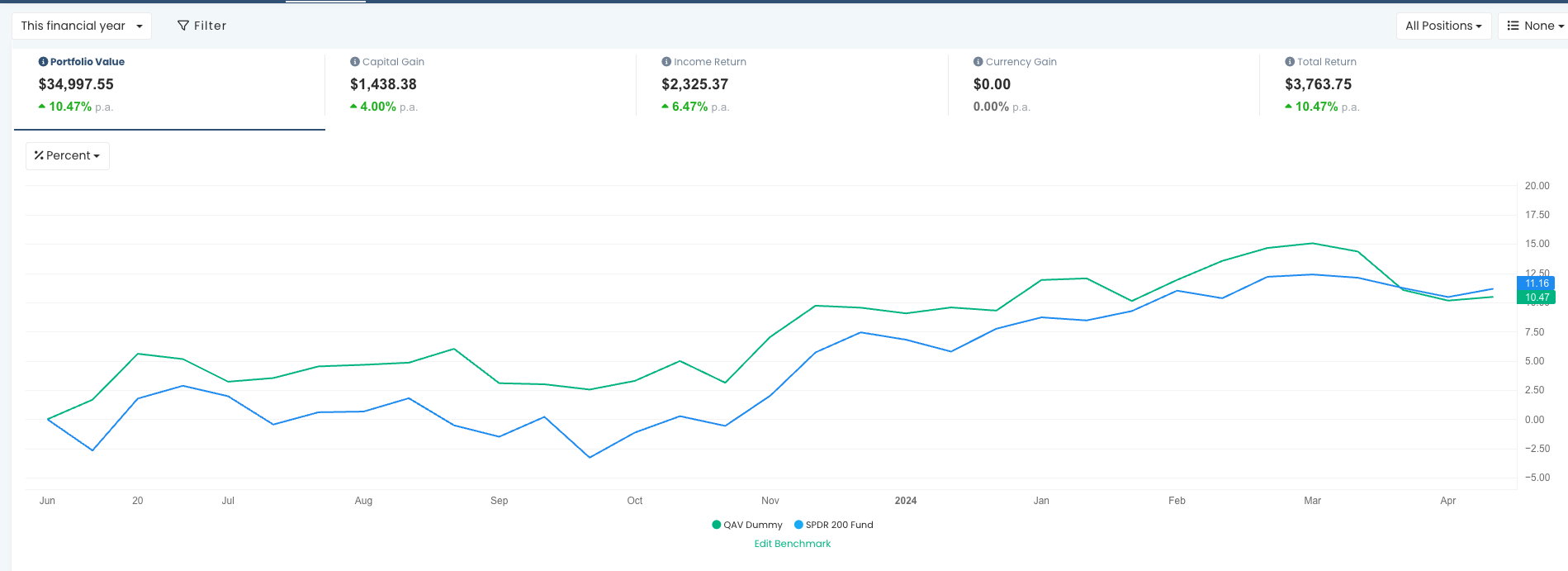
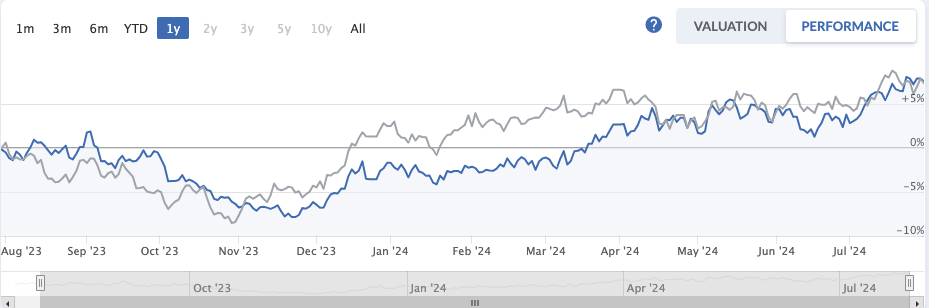
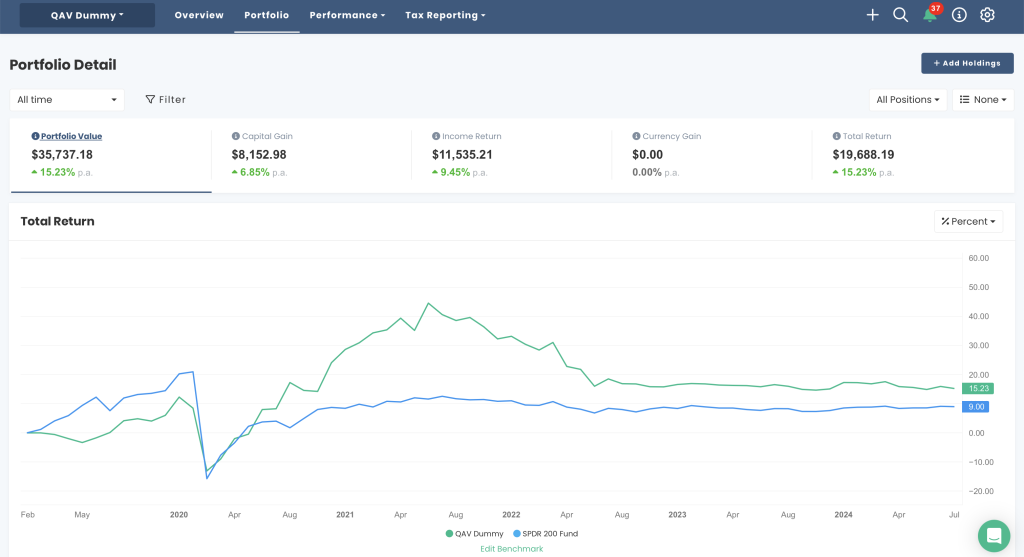
The Dummy Portfolio is performing well against the benchmark over most time frames.
SINCE INCEPTION
Since inception, our portfolio is +15% pa vs the market which is +9% pa.
LAST 30 DAYS
We’ve underperformed in the last 30 days and had declines including CVL (-12%) but good increases from SUL and SRV (both +17%), and MAH (+14%).
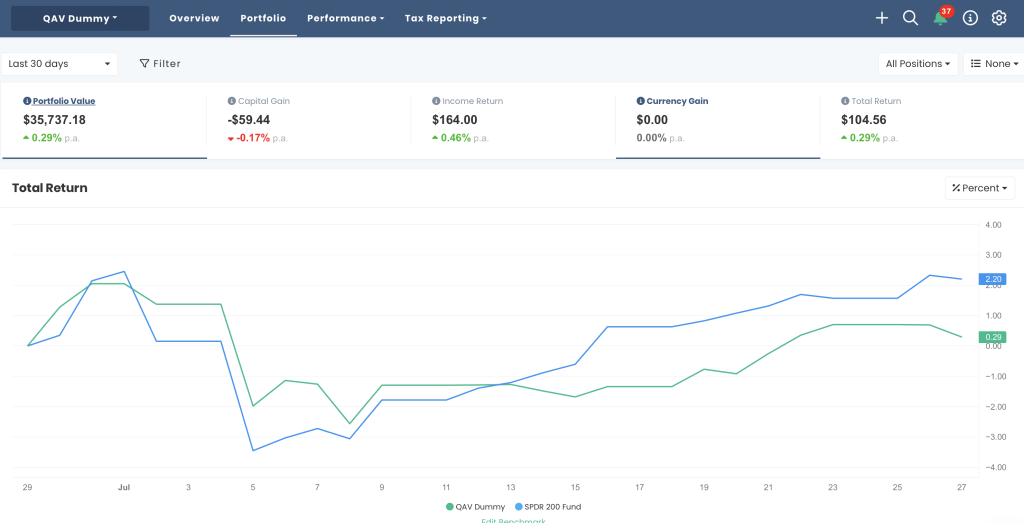
In the last 7 days we sold MSV and added SRG.
QAV STOCKOPEDIA DUMMY PORTFOLIO REPORTS
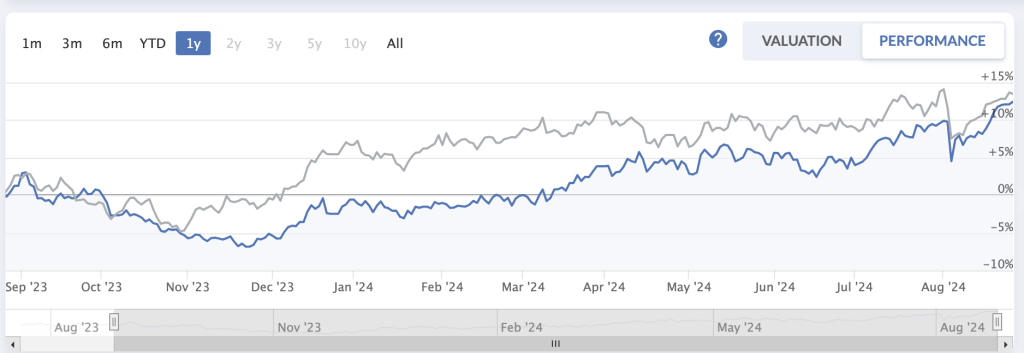
QAV AU DUMMY
I’m still sitting on some cash but now that TK has approved the current version of the SOP checklist, I’ll start investing it.
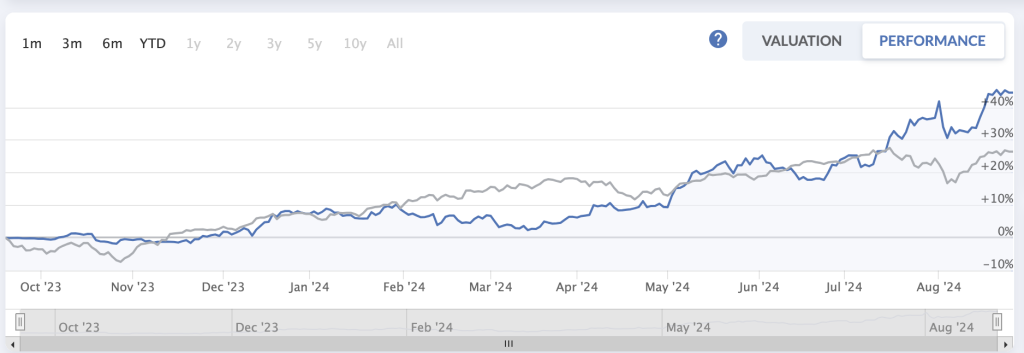
QAV US DUMMY
The U.S. Dummy portfolio is still going very well.
BUY LIST
Each week we produce a buy list based on our value investing system that we share with our QAV Club members. The intended primary purpose of this buy list is for club members to use as a reference for comparing their own buy list. In theory, all of our buy lists should look pretty similar each week.
As always, please check our work, DYOR, consult a financial advisor before making any investing decisions.
DOWNLOAD THE AU VALUE INVESTING BUY LIST (Club members only)
LAST WEEK’S EPISODE
In this episode of QAV, Elio D’Amato from Stockopedia interviews Tony Kynaston. The discussion covers Tony’s investing principles, his journey from corporate management to investing, Tony’s philosophy of having a disciplined investment system, and key strategies he employs in his Quality at Value (QAV) investing approach. They touch on the importance of cash flow over earnings, trend lines for timing buys and sells, and the use of a checklist for evaluating stocks. The webinar also highlights how Tony manages his portfolio and some of his stock picks like Boom Logistics, Macmillan Shakespeare, and AGL. There’s also a dive into the dynamics of market sentiment, psychology of investing, and how to maintain discipline amidst macroeconomic noise.
00:00 Introduction and Webinar Setup
01:21 Meet Tony Kynaston
04:18 Tony’s Investing Journey
09:46 The QAV Podcast
14:30 Investment Strategy and Principles
21:25 Screening and Filtering Stocks
27:48 Using Checklists for Investing
31:43 Scoring and Ranking Stocks
32:11 Companies to Watch: Boom Logistics
36:12 Analyzing Macmillan Shakespeare
39:41 AGL: A Big Player with Potential
44:27 Portfolio Management Strategies
53:53 Handling Market Volatility
57:36 Q&A and Final Thoughts
Transcript
TK on Stockopedia Webinar
[00:00:00] Cameron:
[00:00:00] Cameron: Welcome to QAV. My name is Cameron Reilly and a little bit different this week. Tony’s gone down to his vacation house in Victoria. And I told him to take the week off and I’m going to put in here a recording of the webinar that Tony did. for Stockopedia last week with Elio D’Amato From Stockopedia. And it’s basically them, I guess Elio interviewed Tony. Apologies.
[00:00:28] Cameron: If you already tuned in and heard this, uh, but you know, it doesn’t hurt to hear it again. And. I think it never hurts to hear Tony tell sort of the background. He has an investing and talk about the basic principles of QAV and Elio brings a fresh take on it, interviewing Tony. Those of you who’ve been around investing for a while. We’ll know, Elio , not only from his many appearances on Phil Muscatello’s shares for beginners podcast and also all of the Stockopedia events, but going back, uh, A few years now he was one of the faces at STOCK DOCTOR for many years, did a lot of public facing stuff for stock doctor. So Elio is a very experienced investor interviewing Tony about QAV, I think it was a great chat. So let’s jump into it. Shall we?
[00:01:21] Elio: Everyone, wherever you may be tuning in across this wonderful region of ours, my name’s Elio D’Amato, but the chap down below me more importantly, and who we’ve turned up for today, is Tony Kynaston. Go Tony, how you doing?
[00:01:34] Tony: Good, thanks Elio, how are you?
[00:01:36] Elio: Yeah, very well, thank you, very well, we’ve had a shared and long journey over many years now, but no doubt we’ll get to Talk about all those sorts of things in a moment.
[00:01:47] Elio: I do need to look after a little bit of housekeeping first before we get into the nitty gritty, but obviously quality at value investing is what we’re here to talk about today. Uh, we talk about many faiths in this church we call investing, uh, Tony, um, and it’s not for us to stand on the pulpit to suggest one is right or wrong or not.
[00:02:07] Elio: But obviously, your approach resonates quite strongly with a number of our members as well as myself and therefore you’ve been welcomed to the program today. So thank you very much for dedicating your time to all our members today.
[00:02:21] Tony: Well, you’re quite welcome. And you make a good point about many different faiths in the one church.
[00:02:26] Tony: But I think that’s the, if I have to leave a message today, that’s the message is, is have a system, work out what system works for you and then stick with it. That’s the important thing, I think. It doesn’t matter whether it’s value or momentum or quality or growth or whatever. Um, there’s enough, enough research into each of those styles so you can decide which one works for you and which one has worked the best through thick and thin.
[00:02:49] Tony: And then that’s your system. Stick with it. And there you go.
[00:02:53] Elio: That’s it. I’m not kidding. It’s not the end of our program. We’ve got a lot more to go, Tony. So, uh, stick, uh, stick by. But just quickly. I do need to remind everyone that the information in this presentation is of a general nature only. None of it takes into account your objectives, financial situations or needs, and therefore, should you decide to speak to anyone other than your significant other in life, then you need to do so with an advisor that’s licensed to have that conversation with you, and of course, past performance is no indicator of future performance, But you know, we don’t end up here by accident, but that’s okay.
[00:03:25] Elio: We’ll just gloss over that one because I have to say that. And don’t forget to ask the questions. I can see Chris is sitting there on the sidelines. Uh, the chat box, you’ll notice, I think it’s one of those little icons, uh, on your right hand side or the right hand side of your screen, just simply select on the chat one, and you can ask a question of, um, Tony, some of you have pre, uh, questions, not all of them.
[00:03:49] Elio: Quite a hundred percent sense. So by all means, if you want to elongate on those particular questions, please do so. Although, Chris, we got yours pretty clearly, so we’ll talk about that in a moment. But also, if you’ve got questions through this presentation, please ask them. We’ll try to come to them towards the end of the presentation, unless there’s any burning, of course, that we need to address straight away.
[00:04:11] Elio: But it is about you today, Tony, and thank you very much for coming along and sharing your views with our members. And one of the things we like to do that, you know, possibly may be very different from a number of other, you know, similar sort of situations is we want to learn a bit about your background, how you got to be here today, um, less about your investing, more about your personal stuff.
[00:04:35] Elio: Oh, sure. Yeah, tell us a bit about your background and, uh, and also, uh, advance. Thank you, too, for, um, the preliminary slides that you sent.
[00:04:44] Tony: Yeah, no, you’re, you’re welcome. Uh, so I’ve been investing my own money for 25 odd years now. Uh, I had a corporate career, uh, In two big companies, Shell Oil, a worldwide company, I was in general management there and eventually had a little bit to do with the Flybuys program and marketing and direct marketing at Shell.
[00:05:09] Tony: Then moved across to Coles Myer which is now, Part of the Wesfarmers group and ran a company there called MyerDirect, which was a pioneer in catalogue and online retailing back in the day. Um, so lived and worked through the dot com bubble, which is one of the many booms and busts that I’ve seen in the market over the years.
[00:05:28] Tony: Been a few. Yeah. And all the time investing along the way. Um, and it started for me Back in probably about the, what was it, being the mid 90s, maybe early 90s, uh, uh, when I was working at Shell, they brought in a HR policy which allowed us to borrow from the company, uh, up to our annual salary and at a preferable interest rate, which was the interest rate that Shell could organise, uh, for its corporate activity.
[00:05:57] Tony: Um, the only caveat was we couldn’t use it to, Pay off our owner occupier mortgages. We had to invest with it. So it was kind of a tax thing. Yeah. So, you know, I was a young executive wearing a suit and gallivanting around Melbourne, around Australia, and sometimes the world. And I thought I was a hotshot in, uh, in how companies worked and operating companies.
[00:06:21] Tony: And within about a year, I’d lost about half of that borrowed money. Um, mainly from following tips and, uh, and, uh, the hot hand and, you know, I worked for an oil company so I used to trot up to the exploration guys and ask them what they were hearing about the specky oil drilling stocks and specky mining stocks and then put money into a penny dreadful to see it, watch it halve.
[00:06:46] Tony: Yeah, that’s if you’re lucky. All those kinds of things. And of course, uh, as soon as the stockbrokers in Melbourne found out that we had a bit of money, we became instantly friendly with them. And, uh, and you know, that didn’t help, um, to a certain extent, but it was also partly my fault. I mean, um, we had some good advice.
[00:07:05] Tony: Uh, I remember one of the stockbrokers sat down and work out a plan where I could invest in the share market and have the dividends pay off the interest and, And, uh, I kind of, uh, workshopped that with some friends who were in the same situation. And we all thought that was too boring. We wanted, you know, the returns were too low.
[00:07:21] Tony: We could do better than that. So anyway, I made all the mistakes, um, then decided to knuckle down and put my game face on and work out, um, A little bit more about this investing caper. Uh, and so I started to subscribe to back then newsletters. There weren’t, weren’t no tools like Stockopedia or such. Uh, so read books.
[00:07:43] Tony: Subscribed to newsletters, um, went along to seminars, all that kind of thing. Um, learned a lot about investing. But the light bulb moment for me was when I was, uh, in an airport bookshop and picked up a copy of Making of America, making the Making of an American Capitalist by Roger Lowenstein, and it was Warren Buffet’s story and, uh.
[00:08:05] Tony: You know, by the time I’d landed in the plane, I was a convert. Um, the whole story very much resonated with me, um, made, made a lot of sense. I mean, I, I had a science degree from university, so I was drawn to that numerate style of analysing companies rather than the sort of, uh, story side of analysing companies.
[00:08:25] Tony: And, uh, and that, that stuck and I was able to, you know, Work my way back by investing in those kinds of stocks and eventually pay back the debt when I left Shell. And have been going on from there refining what I do along the way.
[00:08:41] Elio: Yeah, look, that’s really exciting. I mean, our members will know those are story stocks and the path you’ve trodden to go to get to where you are today is something that we’ve all shared, Tony.
[00:08:52] Elio: We’ve all, you know, followed that tip, you know, the taxi driver, which is generally a bit of a warning signal, but, but it’s been blaring for a while. Let’s face it, you know, we are. Record highs or not that far off anyway. Um, and yeah, we did get corporate and yet these other great businesses just keep going up and up and they keep paying us dividends.
[00:09:12] Elio: And in that instance there, um, that would obviously have cut down your interest. As Jonathan has reminded us, uh, an indenture, servitude, employee retention, is what is, is what is, Unfortunately known it as so good on you, Jonathan. Good to see that we’ve got some people with a sense of humour, but I do want to go back to it because, of course, this is about giving, which is what you’ve kindly and generously done over your journey with regards to sharing your investments as it were and, um, and how you’ve got to where you are.
[00:09:46] Elio: And I want to talk about the QAV podcast because effectively you haven’t just kept it all internal, you’ve shared it with the world. The chap that’s over your shoulder just there is Cameron, Cameron Reilly. He is a close, well, not only a confidant, but also he shares with you the podcast. Maybe you could tell us a bit about that relationship with CAM and how it’s evolved into the podcast.
[00:10:11] Elio: You know, the QAV podcast, as it were, and what your ultimate goal is of trying to, um, help investors and how that all works.
[00:10:19] Tony: Yeah, well, well, Cameron and I have known each other for a long time now. I was an early, he was a, he was a pioneer in the podcasting sphere, uh, probably did the first podcast in Australia.
[00:10:31] Tony: I’d hazard a guess and say, um, And I was listening in from pretty early on and I reached out to him after a while and we made contact and we caught up for lunch and became friends after that. I was actually living overseas in New Zealand at the time and he was in Brisbane but my family come from Brisbane so I’d go back there and we’d catch up.
[00:10:55] Tony: We would, you know, talk about a lot of things and eventually decided to collaborate on a few projects. We wrote a book about, um, uh, about, you know, um, the, what we called it the psychopath epidemic, but it was really about institutional psychosis and how our society is driven by the imperative to keep the institution going.
[00:11:18] Tony: Which is not necessarily in the interests of the end user or the customer or the user of the institution. And, I mean, that had a chapter on what we’re talking about here, that not everyone in the financial services industry is in it to help you. They’re usually in it to help them. So, that’s something to always be aware of, I think.
[00:11:38] Tony: And I think it’d be, You know, um, quite reasonable for your customers to say, well, for your listeners to say, well, why is Tony, you know, out there then talking about this and trying to sell something? And I guess the short story is, I’m not really. Um, I benefited, as I said before, from learning about Buffett.
[00:11:56] Tony: Buffett’s always been out there talking about valuing, investing, talking about what he does. I see it as almost like a public service that, um. It’s my way of giving back. I could go and work on a soup kitchen and help a handful of people or I can talk about what I did and hopefully help a lot more. Um, and, and share what I do and how I do it and what I’ve learnt.
[00:12:21] Tony: And you know, people, when we launched the podcast, some of my clients, Uh, friends and past colleagues said, well, why would you want to do that? Why would you want to give away your secrets and, and your edge, so to speak? And the reality is it’s not really my secret or my edge. It’s been out there for a long time.
[00:12:38] Tony: And as Warren Buffett says, he’s been teaching value investing for over 50 years, and it still hasn’t really caught on. So, uh, it’s not like we’re inviting an awful lot of competition by sharing this, but what would you want to do? Is, um, again, to use a Buffettism, if you, if you’re patient and diligent and apply yourself, you can beat the market.
[00:12:58] Tony: Um, otherwise go and buy an index fund. And I think that’s a very valid thing to do. So this is about teaching people how I did it and how you can beat the market and, and sharing a track record of that performance. And this slide shows that. So when we launched our QAV podcast, it was about five years ago.
[00:13:16] Tony: And we decided from day one to Start up a dummy portfolio which we have on our website and we track using Navexa and over that five years that dummy portfolio has compounded at 17. 4 percent against the benchmark index, the SPDR200 of 8. 6%. So, we, my experience over time is that I was able to get double market and that’s borne out starting again from scratch with QAV where we’ve done it live every week on our podcast.
[00:13:48] Elio: I think you’re up to episode 372 or something like that now, so, um Well, it’s perhaps the sum, but trust me to those that listen intently, we’re very much big fans and, uh, members can learn about, um, uh, where there’s actually, uh, cause there’s many parts to the whole QAV offering, and there is a free part as part of the newsletter, uh, that you can sign up for.
[00:14:14] Elio: And I’ll show some details of that, uh, a little bit later as well. Uh, but, uh, I do want to talk about those investing milestones because of course, yes. You know, you did, um, as it were, you know, you’re heavily influenced by Buffett, as many of us are. I don’t think you’re an island there in that regard, but not with, but obviously his perspective and position and what he has access to is very different to us as regular investors.
[00:14:41] Elio: So, would you mind just spending a bit of time in regards to your overall investment strategy and how you basically go about identifying potential opportunities, acknowledging. That you’re not relying on a tip sheet, as it were, that you are actually doing your own research.
[00:14:56] Tony: Yes, yeah, for sure. And when I say I’m, I’m drawn to Buffett or influenced by Buffett, I, I’m not a 100 percent Buffett, you know, disciple, um, because we’re in very different situations.
[00:15:09] Tony: He’s currently managing of one of the largest Companies in America and trying to invest capital in ways that can move the needle for him. Um, you know, we don’t have that, uh, I guess luxury or yoke in our own personal portfolio so we can invest in companies which are a lot smaller. So I think, uh, my investing is probably a bit more like the early stage Buffett where he was looking for undervalued companies.
[00:15:32] Tony: He, he kind of got influenced by Munger and changed to being a quality investor. And there’s a bit of, bit of that in what I do as well. Um, But I guess it’s some very simple principles that I, you know, struck me over the years were, the index has gone up roughly 10 percent over the long period of time. It doesn’t always do that, and it can go down over short periods, but for the last, what, 150 years or so in the Australian market and longer in the US market and overseas, that’s what it’s delivered.
[00:16:05] Tony: So if you buy an index for a lifetime, you’re going to get about 10 percent compounding. It then kind of comes down to, well, if I have like a crate of apples that I want to sell and I take out the bad ones, the ones that have been eaten by worms and look yellow and things like that, then surely I’ll sell more of the ones on the left, so they’ll outperform.
[00:16:24] Tony: And so that’s what the system is designed to do. It’s, it’s as much about taking out the bad stocks as it is about Identifying the good stocks, and if you can do that, um, and you won’t, I don’t do it 100 percent of the time, in fact, even Buffett says he does it 6 out of 10, um, times, and, but if you do that over time, you’re going to get better than the index, and so that’s the kind of underlying principle, and then it’s how do you, how do you do that, I guess, and, um, I kind of, If someone’s asked me how to get started in this, I’d say go out and buy an index fund, get familiar with the stock market, get familiar with, you know, dividends, get familiar with earnings reports, all that kind of thing.
[00:17:07] Tony: Um, you’ll probably fairly soon realize you can probably put together your own index fund because every quarter the ASX tells you what’s in the top 10 or top 20 or whatever you want to use. Um, and then, you know, after maybe a year or two, you’ll start to realize, well, actually. Not every stock in the index is going, is going up.
[00:17:25] Tony: Some of them go backwards and they get replaced. But you’ll kind of work out which ones are the heavy lifters. And it’s usually only a couple. And then you’ll kind of work out what is making them the heavy lifters. What, what’s the sort of KPI that, that drives that. And then if you take that sort of idea, you can apply it to the rest of the market.
[00:17:43] Tony: And that’s kind of the stepping stone to becoming, uh, a pretty good stock investor is to work your way up through that process.
[00:17:52] Elio: Yeah, definitely. Survivorship bias, as Quant guys would say, would help with the ETF, and then yeah, survivorship bias in the sense of, Keep the ones that are good, keep them, and get rid of the bad ones, and then, you know, it should work
[00:18:06] Tony: out in the end.
[00:18:07] Tony: And, and do a bit of research and work out why the ones haven’t survived. That’s, that’s an important thing.
[00:18:13] Elio: So, yeah, it touches on a good point because, uh, I love this one. I love pulling it out of the cupboard. So you’re going to hear me for a bit, Tony, but I do love saying it. Um, you know, sales are vanity.
[00:18:23] Elio: Profit is reality. The Cash is King, and I do know you like to focus on cash, maybe you can just explain that to listeners in all viewers in a bit more detail.
[00:18:36] Tony: Yeah, for sure. So, um, if, if you speak to somebody who’s, uh, hasn’t been investing for a while and say that you like value investing, they probably think that you like stocks which have a low PE rating.
[00:18:49] Tony: And so that’s kind of how I came into value investing, starting with that metric. It didn’t take me long to realize that the E side of that, the earning side of that, could be heavily manipulated. And if you think about the financial statements as a waterfall, you start with the revenues brought in at the top, the sales, and you get to earnings at the bottom.
[00:19:08] Tony: And in between, There’s a whole lot of, uh, number crunching, which can be influenced by management assumptions. And that’s, you know, required and relevant and, um, it’s, it’s part of the accounting practices to, for management to decide how much they need to put aside for, you know, depreciation, for capital use in the future, to replace their assets, um, for bad and doubtful debts, for whatever.
[00:19:35] Tony: particular thing that they can see coming up. It’s, it’s up to management to decide whether the goodwill they have on their balance sheets needs to be impaired or, or not. So there’s a whole lot of work that the finance departments and then the boards of companies have to do to express their opinions before you get to earnings.
[00:19:55] Tony: And that expression of opinions allows a lot of leeway in what the earnings numbers are. And I’m, I’m always. Reminisce, I was reminded of, this is going way back to the 90s when News Corp was still largely in Australia and the CFO of News Corp would end his earnings, the bottom line of the accounts, with 999.
[00:20:17] Tony: 999 and it was his way of telling analysts that And then you say, look, I can make this figure be whatever I want it to be. And so my point is that earnings can be adjusted and, and don’t get me started on abnormal earnings and how, abnormals versus the state of the earnings, um, cause that’s a whole other debate as well, but short, long story short, if you start with the cashflow, it’s the operating cashflow is the very first thing in the accounts and in a nutshell, it’s, it’s The money taken in less the cost of collecting it.
[00:20:49] Tony: And there’s, there’s very little ability or requirement to make assumptions to manipulate that. So I prefer price to operating cashflow as my key, uh, value metric rather than price to earnings. Um, so that’s, that’s kind of like the, the linchpin for my whole calculation. I want to buy something which is going to throw off enough cash that it will pay me back in a short period of time.
[00:21:13] Tony: If, even if I get it wrong, it’ll still pay me back.
[00:21:16] Elio: Yeah, because you touch on a really interesting thing, Tony. You like to, you know, basically, as a benchmark, so you’re obviously screening in order to try to identify these. Just explain that relationship to everyone, how you screen, because, I mean, with 2, 000 stocks on the ASX, that’s a bloody lot to get through, and fortunately, software helps us with that, but, um, but then you’ve still got to whittle that list down to, you know, 5, 10, 15, 20 odd, you know.
[00:21:42] Elio: Companies that you could potentially invest in. So how do you start and whittle that list down?
[00:21:47] Tony: Yep. So I use a data provider, drop it into Excel, and then, uh, and then use filters in Excel to do that. So for a start, if we take out the companies that don’t have operating cashflow or don’t have positive operating cashflow, you’re losing.
[00:22:02] Tony: Well over half of the companies in the industry. It’s a big tail. It is, yeah. So you’re taking out all the exploration companies, all the start ups, all that kind of thing. Storage stocks, yeah. Yeah. We, we, I want to invest in companies with a track record, with management that’s proven itself, um, that, that are, um, continuously throwing off cash.
[00:22:23] Tony: And, and so, you know, that, that drops the numbers right down to maybe a third or so. Right. of the index. Um, and it’s amazing how much is revealed by that price to operating cash flow metric. If the company isn’t making cash, um, that’s, I mean, it could be in a growth phase. It could be in an exploration phase.
[00:22:43] Tony: I should say if it is making cash and lots of it, you can probably say it’s well managed. So that’s a big tick for management for a startup. Yeah. So that’s the, that’s kind of the first thing that we filter for, but then we have a lot of other filters as well. And those other things. Um, uh, we’ll get to it in a minute, but they’re things that I’ve learned along the way.
[00:23:04] Tony: Um, we were talking about investment milestones, and that first one was to use operating cash flow rather than earnings. The second one is to use, um, trend lines. So, uh, I think equally as important in getting into, in knowing when to get into a stock, is knowing when to get out. And so Um, my early days as a value investor, I was a classic value investor, which was if the stock price goes down, I’m gonna buy more.
[00:23:30] Tony: Yeah. Um, but what I found was that that falling knife can keep on falling for a long time. That’s good. Yeah. And it can take, it can take years to get back to, you know, your entry price and then go up from there. And that I was better off selling out when the knife to fallen a certain amount and then putting that money to work somewhere else.
[00:23:48] Tony: Making money during that dip period and then if I wanted to get back into the stock when the uptrend had resumed and so I looked around a lot and this kind of happened to me after the GFC When I looked around to say was there a better way of investing through the GFC Than what I did which was to buy and hold basically And I thought I think there was and Um, there’s all sorts of, as you know, fundamentalist investment, fundamental investors who will use, um, charts to, uh, time their, uh, investment decisions.
[00:24:21] Tony: Uh, I tried to make sense of a lot of those, but couldn’t in some respects. Um, the one that resonated with me the most was to use moving averages. So, you know, the short term period, um, has crossed the long term trend. Um, but I did, I, I, the. One issue I had with that, and I think that’s a very good way of investing, is that it needed a period of time to all that’s before the trend announced itself.
[00:24:46] Tony: So if you’re using sort of three months over 12 months, you’ve got to, you could be waiting three months for that trend to announce. It’s lagging, correct. Yeah, so it’s lagging. So what I worked out was that most stocks tend to have a zigzag pattern, but a general either upline or downline. And so Uh, I kind of come across, um, this, uh, way of looking at charts by just simply taking a ruler and putting it across the two high points of a stock chart.
[00:25:15] Tony: And when the stock broke above that line, it was in an uptrend and I put it across the two bottom points of a stock chart. And I’m talking about a five year monthly chart here. So I’m, I want to take a lot of the zigzags out of things if I can. Um, but if I did that, um, if the, if I drew a line across the two bottom points on the stock chart and the stock broke below that, it was a, a sell signal.
[00:25:36] Tony: So, that was a very simple way to do it. Um, there’s an example there. There’s an example. You can, this is, uh, the reject shot. You can see, uh, the two high points have a line which is descending. And towards the end of the graph, the stock price crossed that line. Cross that line and it started going up, that’s a buy signal, and you can see that there’s a couple of points, um, which are the low points on that graph, and you draw a line, and when and if the stock price goes below that, um, it’s a sell signal.
[00:26:06] Tony: Very important to note that I use a monthly graph and I use a five year graph. Graph, otherwise it can be too, um, squiggly and, and there are too many points on the graph. Um, and also it’s important to note that, uh, every month the graph sort of rolls to the right. And so what’s the highest point now, may not be the highest point next month.
[00:26:25] Tony: And you need to look, re look at the draft, uh, look at the lines. And we actually have a tool for QAV subscribers that, um, does this for you automatically. You just type in the stock code and it will tell you, uh, where the stock is in terms of its buy and sell lines.
[00:26:40] Elio: Excellent. Good, good. So, um, and there’ll be more information and that’s in regards to the newsletter.
[00:26:44] Elio: And I really love how it’s, you know, just to keep it simple, stupid as it were, in regards to the theory, because yes, it’s pretty easy to go cross eyed looking at charts when you look at too many. But, uh, I suppose the good news is it keeps the grandkids entertained. So we can’t Well,
[00:27:02] Tony: it’s funny actually, because my daughter when she was very young used to, I used to subscribe to her newsletter and we’d sit down and put it out on the dining room table and I’d say, well, is this stock a buy or a sell?
[00:27:12] Tony: And she’d look at the graph and say, it’s going up, it’s a sell, or it’s a buy, sorry, or it’s going down, it’s a sell. Yeah, exactly. Let the trend be your
[00:27:20] Elio: friend, but Correct. There are a lot of people that are sitting in on this webinar, Tony, and really do want to know those sort of key, you know, nuggets, as it were, those key things you look for in regards to corporate behaviour and performance, so that you can then make that ultimate decision and the like, and you’ve come forward with a couple criteria.
[00:27:42] Elio: That to me makes sense, but I think people, you know, very much get that value hearing it from you.
[00:27:48] Tony: Yeah, well, I think the, I think to start with the important thing is that I use a checklist. So, um, again, filtering into Excel and then, uh, taking each of the metrics that I look at and putting a score. On those, and then summing up the score.
[00:28:01] Tony: A bit like Stockopedia, I stack rank it and then buy from the top down. Um, so the Checklist Manifesto was a book that came out, I don’t know, 10, 15 years ago. Uh, Atul Gawande was a surgeon who wondered why there were so many errors in, um, Hospitals for surgery and looked around and other industries and legs.
[00:28:25] Tony: Yeah. And settled on, settled on the, on the airline industry and worked out that the reason why there were less areas in that industry then in hospitals was because the pilots religiously went through a checklist. Didn’t matter if they’ve flown the flight. A hundred times they went through that checklist and so he put a checklist into hospitals and suddenly all these mistakes stopped happening that, as you say, people had the wrong side amputated or whatever they were operated on.
[00:28:52] Tony: Um, and uh, and of course the surgeons resisted it because they were gods in the hospital and they couldn’t make mistakes. And then of course, as soon as one or two did it and their numbers improved, the risks had to jump on. So having a checklist is really important. I think. So one of the things that I look for in the checklist is there’s probably about 20 items.
[00:29:10] Tony: Some of them are here. Price to operating cash flow is a big driver. I use some simple valuation metrics. I do a couple of intrinsic value calculations, which is just simply earnings per share over a hurdle rate. So I do current EPS over a hurdle rate. Uh, and then I do a forecast EPS over a hurdle rate.
[00:29:30] Tony: And I think the, I think for me, um, coming up with what the stock is actually worth is more of a heat map process than a number to arrive at a square. So, uh, valuation is part of this process, but it’s, it’s more, is it in a range, which is value, rather than is it trading at a dollar, one when it should be trading at a dollar.
[00:29:50] Tony: Because I don’t think it’s, it’s, it’s, there are a number of different ways to, to measure the value of a stock. One is. Um, a discounted cash flow, and then you get into all the debates about how long that period should be and what the hurdle rate should be. So, um, that’s, that’s one. Another one that we have in, that I use is, is price to book.
[00:30:07] Tony: So, it’s how much are the assets worth and can I buy them at their, at their discounted price. Their value or it’s some kind of discount to their value. Um, so that’s important. But again, there are issues with that because, uh, Goodwill comes into it. You have to take that into account. That’s correct. So there’s no one size fits all, I think, for valuation.
[00:30:25] Tony: So I use about four different types and then that becomes a scoring heat map. for value rather than being a definitive number. So I do that. Um, I look at a couple of things like, uh, I look at a three year, so six halves worth of data for things like, uh, equity. Is the shareholder equity going up consistently over time?
[00:30:44] Tony: Again, that’s a testament to management and their, and their quality. I look at, um, whether there’s an owner founder in the company because there’s plenty of research around that shows that having, um, Someone with a large stake in the company and somebody who’s grown up in the industry and in that company does better than a lot of hired managers would do.
[00:31:05] Tony: So there’s, um, that, that scores in the checklist. Um, I look at things like, is it the lowest price to earnings ratio for the last six halves? Yeah, so there’s a number of these metrics that I’ve learned to look at over the years. I look for dividend yield being greater than what the average mortgage rate is at the moment.
[00:31:25] Tony: Um, again, uh, I found over the years that that’s a good proxy for quality. A company’s not going to, um, have a decent dividend if management thinks that they’re going to have to pull it next year or next quarter or next half. So. So that’s, that’s been a good, a good, uh, proxy for quality. So a number of things like that, um, which then all get summed up and given a score, and then we stack rank the score.
[00:31:49] Elio: Excellent. Good. And, uh, I think that’s a good leading then, um, Tony, in regards to just some companies that, uh, are floating your boat. I mean, obviously we know the market, dry rates and does all this thing. And we also note that we are just at the start of reporting season. So obviously a lot of these results and data can change based on what they actually release.
[00:32:11] Elio: But, uh, are there any, I am going to use Stockopedia for this folks should be familiar with this, but, uh, are there some companies that possibly you might want to just showcase to and then from your perspective, why you find them of particular value?
[00:32:25] Tony: Yeah. So, so our buy list typically has. You know, somewhere like 30 to as high as a hundred stocks on it.
[00:32:32] Tony: Um, we put a threshold in, uh, funnily enough, a larger number of stocks on our buy list are overlapping with Stockopedia. Um, so we can, we can go through a couple of those if you like. Um, but I did pick out a couple that were different, which might be of interest as well. Yeah, sure. Yeah. So I wanted to start with a small one, which is called Boom Logistics, uh, which is, um, uh, a company which hires out cranes.
[00:33:00] Tony: I’ll
[00:33:00] Elio: get there once I figure it out. Sorry, you’re working with someone with incredibly large
[00:33:05] Tony: fingers. Uh, bear with me. Here we go. It’s a smallish company, so it won’t suit all of your listeners here. But anyone who’s interested in small cap stocks might have a look at this. Um, why do I like it? Well, uh, it has, it’s throwing off lots of cash flow.
[00:33:21] Tony: It doesn’t have a dividend yield, so we can’t score it for that. I don’t know. It trades on a price to cash ratio of about two times, so throwing off lots of cash and you can buy it cheaply on that cash metric. Um, so I like, I like that about it. Uh, it, it, it, When I do my heat map valuation, so it’s trading above what I’d calculate its intrinsic value to be, but that’s fine.
[00:33:49] Tony: Um, but if I get to its equity per share, again, it contains goodwill, but that’s a 26 cents, which is almost double what the share price is. So, you can buy it for a lot less than the equity value of the company. So it scores for that. There are, uh, Founders who own stock in this company and the current directors own about 15 percent of the stock, which is a good thing.
[00:34:12] Tony: So they have big skin in the game. Um, we, I like the quality of their, of their financials. Um, it’s, it’s in a, what we call a three point uptrend. So using that graph that we spoke about before. Yep. Uh, what else can I say about it? Um,
[00:34:31] Elio: Well, it has had a bit of a checkered past. In fact, I can remember looking at this stock in a past life, actually, when, uh, you know, Mining Services was all the rage, as it were, and then of course it dissipated overnight.
[00:34:42] Elio: So it’s good to see that, uh, good old Booms, uh, getting a bit of focus again and, uh, uh, yeah. Yeah, yeah,
[00:34:49] Tony: and we, we do, during our podcast, we do what’s called a pull and pork, so we pull apart a company like this and go through each of the metrics and, uh, I remember doing this company and one of the things I highlighted was that this kind of company is, is very reliant on utilisation rates, so if all the cranes are It’s doing well.
[00:35:08] Tony: If it drops down to a lower utilisation rate, watch out. But again, I think the point to make is in using a system like ours, or even like yours, is we have Our exit strategies. And so, um, you know, one of them or two of them in my case are driven by sentiment. Uh, so that, that can get us out. Um, uh, yeah, there could be some other red flags in terms of the quality of the, or if there’s a problem with the audit or, um, someone key, a key senior person leaves unexpectedly, those kinds of things we count as red flags.
[00:35:41] Tony: But, um, yeah, if, if utilization rates dropped in this company, I would expect to see the stock price. Go down and cut through one of our trend lines for a sell indicator. Yeah. So the point I guess I’m making is that I don’t have to be an industry expert in mining services companies. I have to be diligent in applying my system to all the stocks on the stock market and that will tell me when to buy and sell them.
[00:36:09] Tony: Excellent, good.
[00:36:10] Elio: So is there another company we can talk about?
[00:36:12] Tony: Yeah, so that was Boone. I want to talk about MMS, Macmillan Shakespeare. And I’ll declare this as a stock that I own personally as well, but I’m picking it out because it didn’t rate, uh, it rates on our buy list, but it isn’t as high in the Stockopedia universe.
[00:36:28] Tony: So, yeah, so again, um, it’s, it’s, uh, it’s actually trading below its consensus forecast and that’s something we look at as one of our metrics. Um, a lot of stocks do trade below consensus forecast, but. Uh, you know, that’s better than trading above consensus. Yeah, true. This one, this one does pay a strong yield of over 8%.
[00:36:50] Tony: So, it’ll suit someone who’s in their retirement phase of investing or somebody who’s borrowed to invest, for example. You’re getting a strong, healthy dividend yield. Um, and, uh, What else can I say that’s good about it? Price to cash is below five times. So, you know, this is a solid company that’s been around for a long time.
[00:37:09] Tony: It operates in the, uh, novated leasing and car leasing space. Um, and, uh, that’s a, you know, a well established industry, yet you can buy it at five times operating cash flow. So that’s, uh, that’s a pretty good thing. Um, what else can I say about it? I
[00:37:27] Elio: think, actually, this is where Excuse me, and you touched on with Boom and you’ve gone to Macmillan now and it sort of makes sense.
[00:37:35] Elio: I think it’ll be interesting because obviously they’re coming up in a filter that you run and your various calculations. But a lot of the stuff you talked about in regards to utilization rates in regards to, you know, The emergence of EVs and all that sort of stuff, which is what investors in this space would be looking at and, uh, and actually how that’s fallen off in recent times.
[00:37:56] Elio: But anyway, that is not really something you can have in a table and that you can run in a scan. So, um, just explain that relationship to us. How do you then take a spreadsheet to then the real world in order to make your ultimate decision?
[00:38:13] Tony: So, what I found, um, I’ll use Macmillan as a good example, uh, is that the numbers tell me the story first of all.
[00:38:20] Tony: So, I, I didn’t have to know that, uh, Current federal government brought in incentives for the leasing of EV vehicles. That’s the news, that’s the story, and that’s put a tailwind behind the three major players in this space, Wheat Partners, MMS and, um, what’s the other one? SIQ, from memory? Yes, SIQ, Smart, yeah.
[00:38:40] Tony: Yeah, so, uh, I didn’t have to know that because the numbers are good. So the numbers are showing me that something Good is happening in this industry. Um, you know, I guess it helps to know what that is. Um, uh, but that’s, that’s a nice to know thing. Um, the, the fact is the numbers are good. They’ve got tailwinds.
[00:38:59] Tony: Um, there’s a lot of EV take up in their new leases. Um, so you can do a deep, deep dive into the company and work out. What’s happening and why, but I always come to it from the numbers point of view. Like it’s the throwing off cash hand over fist. I can buy it for a cheap multiple of that. Um, it’s a quality company.
[00:39:15] Tony: It’s been around for a long time. It’s paying a really good yield. Why wouldn’t you buy it? So that’s kind of where I’m coming from.
[00:39:22] Elio: No, that makes perfect sense. Before we get into any questions that people may have, Tony, is there another stock you just wanted to quickly cover?
[00:39:30] Tony: Yeah, so I just want, I’ll use one that’s um, that’s similar to both of us, uh, both to Stockopedia and to my checklist, um, Amico Holdings.
[00:39:39] Tony: Actually, no, I’ll jump Amico. We’ll go, that was another small one. I’ll go to AGL. Okay, big one. Yep. Yeah, so just, just because I think big stocks might be more attractive for people who are listening. Um, Again, scores well in the QAV universe and scores well in the Stockopedia universe, I see. Again, trading slightly below its consensus forecast, so we score it for that.
[00:40:04] Tony: It’s got a good yield, not above the average mortgage rate, but still paying 4. 5%. It’s a, it’s a, as anyone would know, AGL is a big company. It’s had a few board ructions in the last few years and it’s now settling down. So it’s what I like to call the recovering company, which is something that I like. So it’s been through its, um, it’s, it’s crisis and now it’s coming out the other side.
[00:40:29] Tony: And that’s something that Buffett likes to do as well, is to find a company in crisis, but a big solar company that’s in crisis at that stage. Um, if people are interested in ROE, it’s, it’s a strong ROE at 16%. Um, but we can buy it at 4. 3 times, uh, cashflow, uh, and, and that’s, you know, again, you’re buying one of the cornerstones of, of Australian corporate, um, investing at four times its cashflow.
[00:40:55] Tony: Um, it’s, it’s again, why wouldn’t you buy it at that, at that kind of price?
[00:41:00] Elio: And that’s actually really interesting, isn’t it, Tony? Because so often we think about stocks as these inanimate three letter codes floating in space, but the reality is that you’re actually investing in a business. Yes. Yes, you’ve got two day settlement and that makes it much more palatable, but you are, you do need to look at this as a business owner or from a business owner’s perspective, don’t you?
[00:41:21] Tony: Well, I think that’s right. And I think, um, I’ve lived overseas quite a bit and, uh, All through that journey, I’ve always invested in Australian companies. And I think the reason for that is I know the companies, um, you know, I’ve got an account with AGL. Um, I can walk down the road and see how Myer’s going under the change of, you know, um, management.
[00:41:42] Tony: Um, so I like the fact that, that I’m investing in companies which I live and breathe and know, rather than, um, sometimes when you’re, when you’re investing overseas, even though you can do it just based on the numbers. I like the. The extra sort of, um, I guess it’s a safety net of knowing that I can go out and check it out for myself.
[00:42:01] Elio: And that’s the whole purpose of why we exist anyway. So, um, thanks very much for that, uh, that plug there, Tony, even though you didn’t intend it. But, uh, here’s a plug, uh, for yourself and for your, um, organization. Now that QR code that you can see there will actually take you Um, to their website, which is QAVpodcast.com.au. Now, I am told that if you use a particular coupon, there’s also a discount if you wish to upgrade to the lite version or to the QAV Club version. But I think the newsletter is free, isn’t it?
[00:42:36] Tony: So, yes, the way it works is we have like a freemium podcast. So we do, we release a podcast every week and we release a newsletter every week, which, you know, tells how the podcast is doing.
[00:42:45] Tony: dummy portfolios going and other salient points. Um, that’s free. Uh, we have the full club membership, which gives you access to all the tools, the checklist, um, uh, the teaching instruction, um, Videos and tutorials on how to use the tools, um, access to Ask Me Questions, uh, and we answer those on the podcast, um, in the second half of the podcast, which is for subscribers only, and then we have what’s called QAV Lite, which is kind of in between, and that allows people to Um, get to trade along with us.
[00:43:19] Tony: So as we trade in our dummy portfolio, we have a couple of those now, four or five, um, that we’ve set up at different times, um, people can set up their own portfolio and trade along with us at their own discretion, but we will tell you what we’ve bought and sold this week.
[00:43:35] Elio: So full transparency, which is, uh, totally wonderful and, uh, and having that control yourself, but not only makes you great at dinner parties, Tony, but it also, uh, empowers you to make those decisions yourself, which again, is something that I think is, uh, very much undervalued by many people.
[00:43:53] Elio: And, um, yeah, you save so much time in regards to, uh, people’s, excuse me, people’s investing. So just remember those QR code folks, or just go to the website. at your own leisure. Sorry, just got a big throttle, but Frank, uh, but it will be gone soon. But I do want to, whoops a daisy, didn’t want to do that. What I want to do is go to some questions because there were some, uh, for you, Tony, and we’ve got one now as well.
[00:44:19] Elio: I’ll come to yours in a minute, Jonathan, but there was, uh, A pre question from a chap by the name of Chris. So thank you very much for sending it, Chris. And I’m going to paraphrase his question, if that’s okay with you, uh, Tony, basically it’s on the topic of portfolio management and obviously, you know, if only the market was only ever open one day a year, but it never is, right.
[00:44:42] Elio: It’s open 24 seven and prices go between over enthusiasm and over pessimism all the time. That’s just the market behaving normally. So the question he really wants to know is how do you go about then finessing the portfolio? I mean, any mug can pick a stock, right? Anyone can do that. But managing money, that’s a different caper.
[00:45:02] Elio: That’s a much harder gig. So he wants to know, when do you take profits? When do you sell down your holdings? When do you, um, you know, possibly look at, you know, it’s unfed like that original value investor perspective, where if you see price go down, you just double up. Whatever the case may be, how do you manage that question called portfolio management?
[00:45:22] Tony: Yeah, so I think it starts with how big is the portfolio? So I would recommend 15 to 20 stocks in a portfolio. Again, that’s been backed up by research over time. Correct. You can, I run a smaller, more concentrated portfolio, but I think you need to have a bit of experience behind you to do that because, um, what you gain in long term outperformance with that, you, um, suffer through volatility and you’ve got to have the stomach for that.
[00:45:47] Tony: Um, but yeah, so say you’ve got a 15 stock portfolio, the way I would first populate that is to do a download, filter out my stocks, go Create a buy list, stack rank it, and buy from the top down, and I have liquidity considerations, so I can’t buy some of the smaller stocks in that buy list. I, I look for large liquid stocks, because I’ve got a reasonable amount to invest.
[00:46:11] Tony: Um, so that’s the first thing. Um, and I should also say we don’t put any sort of other screens over our buy list, but if someone Doesn’t want to buy coal stocks or doesn’t want to buy oil stocks, and they can take those off the list and decide what to buy next. But, but fill up the portfolio of 15 stocks, and you might not get 15 from the first time you do a download because there might not be 15 good quality companies at the right price to buy.
[00:46:34] Tony: So you might do it over time. Which we did with our dummy portfolio, which you’ll get to 15. Um, then I use, uh, primarily I use that three point trend line graph that I talked about before. So rolling five year monthly, looking for sell indicators. So looking for a stock that’s, it’s basically broken out of its uptrend and it’s gone to the sell side of the graph.
[00:46:57] Tony: And so I’ll sell it when that happens. Yeah. Um, Can be a bit tricky around this time of year because companies are going to dividend. So you don’t want to sell something because it’s dropped, because it’s gone next dividend, even though it’s crossed the line. So, um, I’ll add that dividend value back into the share price and see if it still is a sell signal after that.
[00:47:17] Tony: Um, so there’s that. Um, I have what I call a rule one and goes back to Buffett’s rule one, which is don’t lose money. And rule two is see rule one. Yeah. Sorry. Um, I have a stop loss if something drops below 20, 10 or 20 percent of what I paid for it. Uh, and I say 10 or 20, it’s been 10 percent for a long time and we’re trialling 20 at the moment.
[00:47:40] Tony: Um, uh, then I’ll sell it because it’s, you know, I prefer it that way. Something’s gone wrong with my investment idea and I just want to pull that weed and move on and I found it’s better to, you know, go back into buying something at the top of the list and trying to get my money back that way rather than waiting for something to recover that’s going down that I bought.
[00:47:59] Tony: So there are two main reasons to sell. As I said before, I have a couple of red flags. One is if the company has a qualified audit. You can check for that in the annual reports. Um, they’re not very common but occasionally they can happen and they’re a red flag. Um, and they’ve happened to surprisingly good companies over the years.
[00:48:19] Tony: Market darlings have suddenly had a qualified audit and can, You know, can be a leading indicator for a problem. And another leading indicator I found is if, um, if, uh, CFO suddenly resigns unexpectedly. A key member, a key member of staff resigns unexpectedly. So there’s kind of trouble at the mill, as Monty Python would say.
[00:48:38] Tony: And, uh, and so it’s time to sell the stock as well. So there’s basically, you know, three or four reasons why I would sell it. Um, and, and that’s it. And so it’s just a question of, you know, running your screens, running your graphs, having a look, um, and then, um, deciding whether to sell or just continue to, to ride it out.
[00:48:56] Elio: Okay, so what if I then talk about the Great Aussie Dilemma? I mean, seriously, this is such a stress for everyone, and that is when you double your money. Um, you know, because us as Australian investors, of course, you know, we’re masochistic as it were, when it comes to investing, we’re not losing money, we think we’re doing something wrong.
[00:49:14] Elio: But let’s just say you’ve doubled your money in a stock. Are you taking profits in order to get yourself more aligned, or are you using mathematics, which is uncapped potential for, if you’re long only, that is? Um, for a potential 100 percent loss, as it were, what, what are you doing in that sort of scenario?
[00:49:31] Tony: Yeah, well, I wouldn’t see it as a 100 percent loss. I guess, potentially, you could get back to what you put into it, less than 10%, um, which is the rule one. Um, no, I’m still doing the same thing. I’m letting my, my winners run. Because, um, a doubling is just a, is a two bagger, but it could be a four bagger, or it could be, hopefully a 10 bagger.
[00:49:50] Tony: And what I’ve seen over, over time as well, and I think from memory, my, my good example of this is Fortescue Metals Group, um, which I got into, you know, when it was about three or four dollars a share, um, and it sort of went up to about seven, had a bit of a pullback, And, you know, um, the question then is, well, I’ve nearly doubled my money.
[00:50:09] Tony: Should I sell it? Or, um, is this the beginning of a big downturn? And I said, no, it’s not a sell signal. Uh, it’s still way above its, its, um, its long term, you know, sell trend. I’ll hold it. And of course it went up to 26 and it’s now back below that and I sold out at about 21. So, um, yeah, it’s, it’s, I think you’ve got to take the emotion out of this.
[00:50:30] Tony: You’ve got to have a system which you work out in advance and you. , you test it using past data and you say That’s the right system, and you don’t second guess it. You don’t say, oh, I’ve suddenly doubled my money. I’ll throw my system out the door and I’ll, I’ll sell now , because to get double market, you’ve gotta have a stock which goes a lot higher than that to cover for the ones that drop below that.
[00:50:53] Tony: Of course, you’ve always, you’ve always gotta have that sort of statistical approach to investing in mind.
[00:50:58] Elio: No, good. Excellent. Thank you very much for that, Tony. Now, Jonathan does ask, uh, other than monopolistic ex government style companies, and I think we know who he may be inferring here, but he would like to know, from your perspective, Tony, What you would think an example of a good moat or a good Australian moat, uh, would be in regards to a business and by, by definition, for those that aren’t familiar with the concept, an economic moat, as it were, is basically the company protecting itself and its interests in regards to, you know, having the customer buy the shortened curlies and the cargo URLs and revenue basically has to go to them.
[00:51:39] Elio: So how do you go about assessing that, Tony?
[00:51:43] Tony: I don’t, is the short answer, I don’t, I’m not an investor who pays attention to moats, and that could be true. Potentially be because in Australia we have a lot of companies with moats, but they may not be good investments. And, and what I mean by that, they are good investments, but they’re not going to help perform.
[00:51:59] Tony: So they’re big companies that have a large market share. It’s very hard for a startup to break into that industry. And I’m thinking about the four major banks. I’m thinking about Coles and Woolies. I’m thinking about the big insurance companies. You know, they have strong moats. They can continue to Buffett’s definition of a strong moat was you can raise prices when, um, you know, there’s times of inflation or times of economic uncertainty.
[00:52:25] Tony: And if you look at the insurance companies They’ve passed on their cost increases pretty strongly, um, even though there’s, uh, you know, people are, uh, you know, feeling quite pinched in the penny department at the moment, so, um, that’s where the, that’s where the moat is, and they’re the companies that have them, um, I do own shares in QBE, I’ll declare, but that’s not because it has a moat, it’s because it, it throws off lots of cash and, and, um, You know, uh, scores well on my checklist for all the other reasons.
[00:52:53] Tony: Yeah. Um, so I don’t come at as come at these things as moat first. I come at them, um, from the, the checklist first, and if they’ve got a good moat, great.
[00:53:02] Elio: Yeah, and in the case of QBA, I mean, it doubled its profits, and the share price still went down. I mean, some people just, you can’t make them happy, can you?
[00:53:10] Elio: But I mean, that’s just what happens. Look, if you’ve got a question, folks, please do type it in the right-hand side. Make sure you select the chat icon there and we can get to those questions in time. Um, Jonathan has come up with a follow-on question, uh, Tony, where he is asking in regards to your service, do you provide an Excel model?
[00:53:31] Elio: or recommended one in your service?
[00:53:33] Tony: We do, so, um, we provide an Excel model, and that’s our checklist, and we tell you how to use it and how to filter it, um, and, uh, yeah, it’s part of the service. We provide a calculator which gives us our three-point trend lines and, um, sell prices and buy prices as well.
[00:53:49] Tony: Excellent.
[00:53:49] Elio: Good. Thank you very much for that. Um, I do have another question. I think, you know, QBA will be a good possible lead in, but the general market, and we were sort of interjecting a little bit at that at the start of this webinar today, where the What do we do with the market? And I’ve heard you guys talk about it yourself and Can that is, um, in regards to the podcast where the market, you know, a few Mondays ago, we were all chicken little, you know, the sky was falling in on our heads.
[00:54:17] Elio: Uh, basically you couldn’t read a positive news story in the financial press for love or money. Uh, basically the world was going to end. As it were, and therefore, so by definition, so are our portfolios, because of course, our businesses were going to resemble, I don’t know, some backwater, uh, type, uh, company somewhere, but, um, how, how do you manage that?
[00:54:37] Elio: How do you deal with the psychology? of investing because notwithstanding that you have your spreadsheets that three-point chart ultimately is a squiggly line and that thing goes up and down because there is sentiment sometimes at times with regards to the price. So, you know, how do you manage all that, uh, you know, dynamic?
[00:54:56] Tony: Well, I think the system takes, takes the human behaviour out of it and you’ve got to be very disciplined at doing that. Because, you know, we’re fooled a lot by what goes on. So, Buffett talks about turning out the noise. He talks about the market being a manic depressive who offers to buy your house one day for twice what it’s worth and the next day for half what it’s worth.
[00:55:17] Tony: So, yeah, you’ve got to be aware of that. So, I remember that podcast and, you know, Cam and I just sort of laughed it off. It’s the title for the podcast was Water Off A Duck’s Back. Yeah, that’s right. Water Off A Duck’s Back. Correct. It’s, it’s situation normal for us. The market has volatility. Volatility is our friend as a value investor, because it means we can buy things cheaper.
[00:55:37] Tony: But, um, if I look, we didn’t, I don’t think we traded anything during that, the recent couple of weeks with that downturn and then upturn, but someone asked us a question on the podcast, what do we do during COVID? And, um, during COVID, you know, It was probably a better example of how human behaviour could be, you know, intruding into your investment decisions.
[00:55:57] Tony: But we stayed the course and in March 2020 or whenever COVID hit, when the world was going to end and people were predicting millions of deaths and no one knew what was going to happen and the share market went down dramatically, we sold out on the way down. I think I sold all but one or two of my shares, um, Dain Portfolio sold at least half, maybe more of its shares, and then a month later the government announced all this cash splash and suddenly the share market came back, and we bought back in again.
[00:56:27] Tony: The system told us when to sell. The system told us when to buy. It told us what to buy and what to sell. Um, and it took all the emotion out of it because, you know, Cameron was in Sydney then with me and we were driving around doing some meetings and, and, uh, we’re saying, you know, let’s, let’s try and work out what’s going to happen here.
[00:56:44] Tony: And we had no idea, range from, you know, Armageddon to nothing. It’s all just the flu. So we didn’t know. And, and I think. You know, I’m very grateful that we, that I have a system which I could apply to take all that human guesswork
[00:57:00] Elio: Yeah, and whilst it wasn’t quite as deep as the 87 crash, it actually was quicker from point to point in regards to percentage fall.
[00:57:08] Elio: So it was a pretty scary time, and that’s why often you can have, if you have that decision out of your hands, it makes things a lot easier. So Jonathan, as a final sum up to your question, no, we don’t pay attention, or Tony doesn’t pay attention to the macro noise, but he’d be willing to give you counselling.
[00:57:25] Elio: Thank you. If you do need help, because I can tell you, if you could remain sane, listening to that stuff, uh, that’s, um, all great. Um, and honest, uh, yeah, fantastic. Good luck to you. Look, we are coming to the end of this presentation though, folks. So if you do have any other questions, you can either find Tony on his website or just email through to us and I’ll try my very best to put it on.
[00:57:47] Elio: Uh, Tony impersonation for you, uh, but, uh, I guess we’re not, we’re not too dissimilar. So that’s the, uh, uh, benefit, um, of this, but obviously if it gets too hard, um, I’ll pass it to you and then you pass it to Cam. So I think that’s how that works. But, uh, anyway, before we go, just folks, remember this is another one of our investing mastermind series that we’ve run with Tony today.
[00:58:14] Elio: The next one is with Ron Chamga, who again has a different approach in regards to identifying potential opportunities and investments, so, um, we’ll send an invite closer to that date where you could register, um, there, um, but obviously I thoroughly encourage you to go have a look at Tony’s, uh, podcast as well to, uh, get an understanding in regards to it.
[00:58:35] Elio: What floats his boat and how they go about doing their investing. Um, but on that note, uh, Tony, on behalf of all of our members, uh, and you, uh, inquiries who have just, uh, uh, discovered Stockopedia, thank you for your time today. Very much appreciated.
[00:58:52] Tony: Yeah, thanks. Thanks for inviting me on. It’s been fun.
[00:58:55] Elio: It has been fun.
[00:58:55] Elio: Absolutely. And that’s what investing is, to be honest. If it ain’t fun, then seriously, like I said, just keep losing money, knock yourself out. But look, on that note, we’re about to close our camera and our audio off in a second, because I’ve got a pretty important disclaimer slide to show next. There it is.
[00:59:12] Elio: And yes, we’ll see you in the next instalment of our Mastermind Investing series. Thanks again, Tony. Bye everyone.
DISCLOSURE
In the interest of full disclosure, we would like to advise that as of the date of this post, the QAV team currently hold these stocks:
AGL ANZ FHE FPR GNC MMS PRU QBE RMS RSG SSM SUL WAM WGX GEM TLS
If you’re interested in learning more, please review our trading and disclosure policy.