Running your own share portfolio involves a certain level of time and energy. First of all you need to learn how to invest, the basics of trading, and most importantly, learn a strategy that will help you achieve your long-term investing, financial and lifestyle goals. Then you need to set aside a certain amount of time every week to monitor your portfolio, make the necessary trades, and keep abreast of business news. How do we know that this time and effort is worth it?
The benchmark Tony uses is whether or not he’d be better off over the long-term by just putting his money into some kind of a managed fund or ETF, and that makes sense to me.
So we keep an eye on the performance of the managed funds every year to see how we compare.
Here’s a good overview of the performance of Australian managed funds and ETFs.
As of the time of writing, here are the top performing managed funds, ranked by 5 year performance:
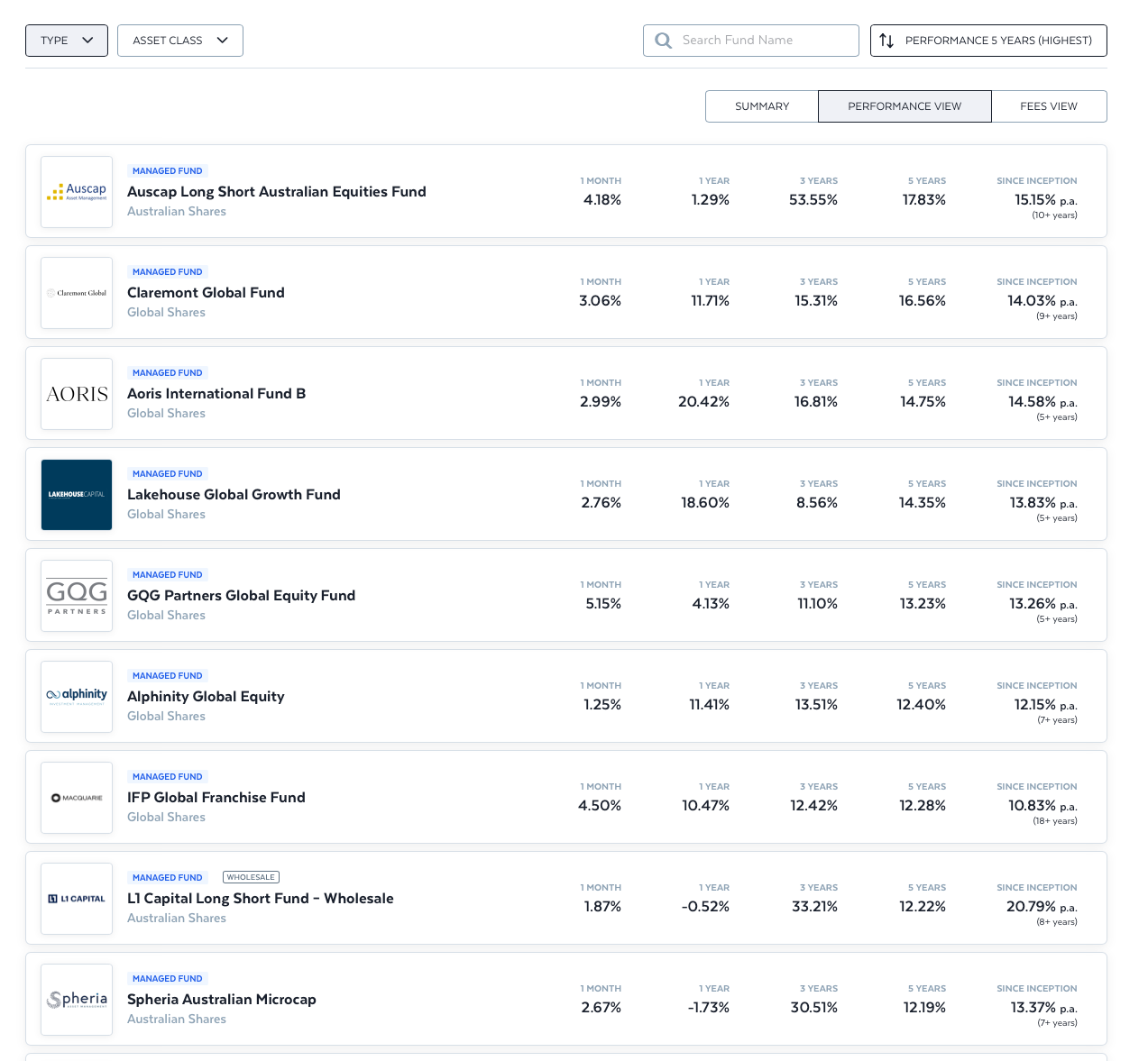
Auscap Long Short Australian Equities Fund is at the top with a 5 year performance of 17.83%. Of course, they also charge a Management Fee of 1.54% p.a. and a Performance Fee which, as of 30/06/2022, was 1.95% p.a. So if you take that 3.49% in fees off of the 17.83%, you’re left with an actual performance of 14.34% p.a. Their reported average performance since inception is lower, 15.15%. Less fees that would be 11.66% p.a. (assuming the fees don’t change over time).
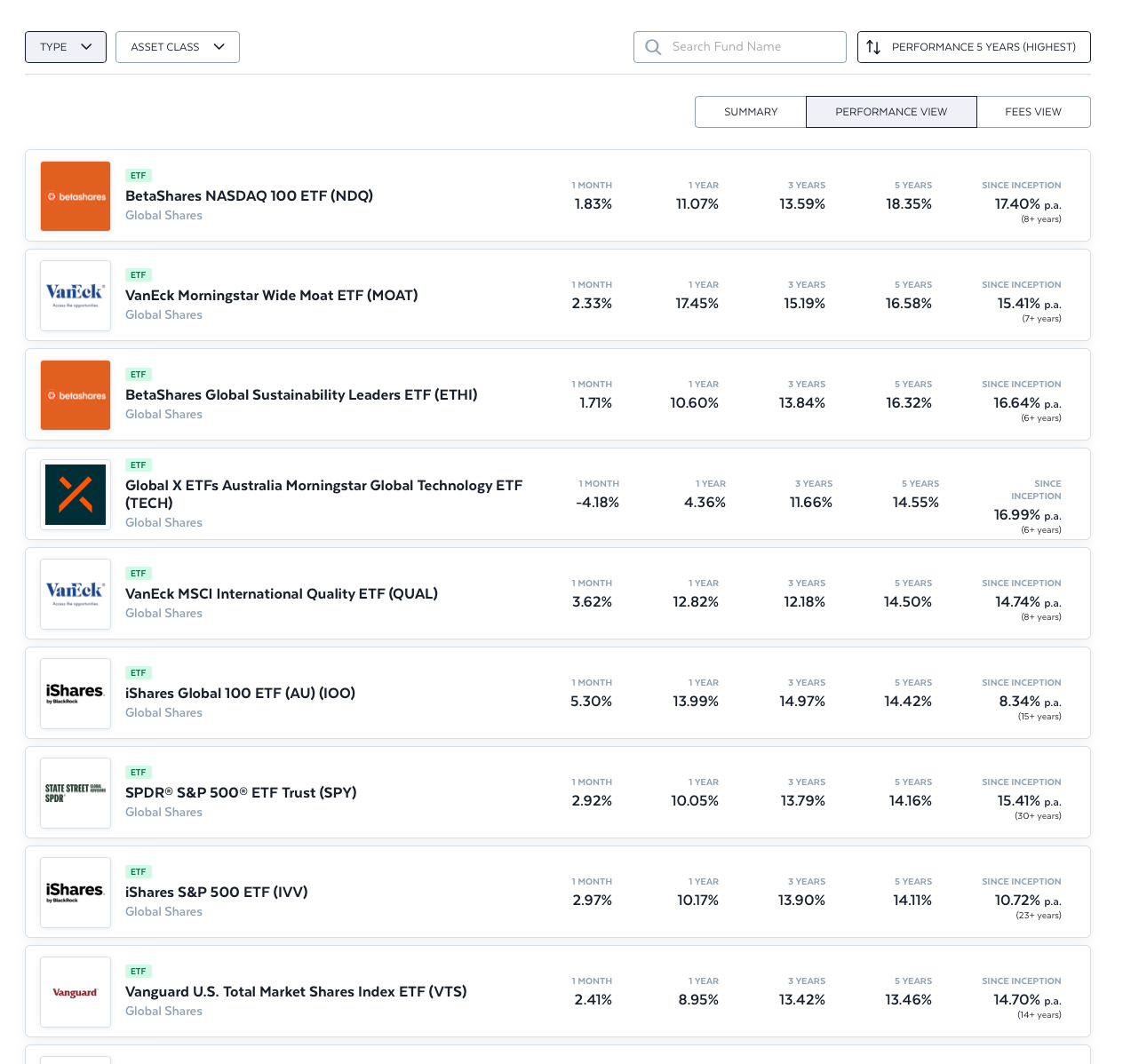
If we look at the top ranking ETFs instead, again ranked by 5 year performance, we see BetaShares NASDAQ 100 ETF is on top at 18.35% p.a. They have a Management Fee of 0.38% p.a. and no Performance Fee. Since inception, which is less than a decade, they have an average performance of 17.40%, which brings their actual performance down to 17.02% p.a.
How does that compare to Tony and QAV?
Tony reports that his personal portfolio since inception (around 30 years) has returned, on average, double the market, which is about 18–20%, depending on which year you calculate it. And that’s after he’s removed brokerage and other costs. So that’s about 4–5% better than Auscap Long Short Australian Equities Fund and 1–3% better than BetaShares NASDAQ 100 ETF (neither of which has been around 30 years but let’s assume if they had, their performance would be roughly the same). Now, 1–3% doesn’t sound like much, unless your portfolio is worth $50 million, then is the difference is a million dollars. Is that work a few hours a week? Even if your portfolio is only worth $500K, a couple of percent difference could be worth an extra $7500–10,000 a year in your pocket.
The QAV Dummy Portfolio we’ve been running since September 2019 has returned an average of 20.18% p.a. over the last three years, which is better than BetaShares NASDAQ 100 ETF 3 year result of 13.59% (less fees) but admittedly not as good as Auscap Long Short Australian Equities Fund’s amazing 3 year number of 53.55% (less fees), although, of course, their numbers flatten our considerably over the long term and, like Tony, we’re investing for the long term.
So the question each of us has to ask ourselves is whether or not we’d be better off and more comfortable learning an investing strategy and then managing our own investments, or handing the responsibility over to someone else, accepting the possibility of lower returns but also avoiding the time and effort of doing it ourselves.
Leave a Reply