
This week I want to talk about one of the oldest chestnuts in the investing playbook. “No risk, no reward.”
Investopedia — where most people land when they’re starting out — tells you “the potential return rises with an increase in risk”.
Of course it’s true — there’s always a risk associated with investing.
But I think the way this translates into the minds of some investors is “the higher the risk, the higher the reward” — and we all want high rewards. So therefore we think we need to accept high risks.
And that’s a problem in a couple of ways. Either because people don’t end up investing because they don’t want to take high risks, or because they do take high risks and end up losing their shirts.
The truth, of course, is that successful investing doesn’t require taking high risks. In fact, it involves having strategies in place to minimise your risks while at the same time maximising your returns.
Let’s look at some data.
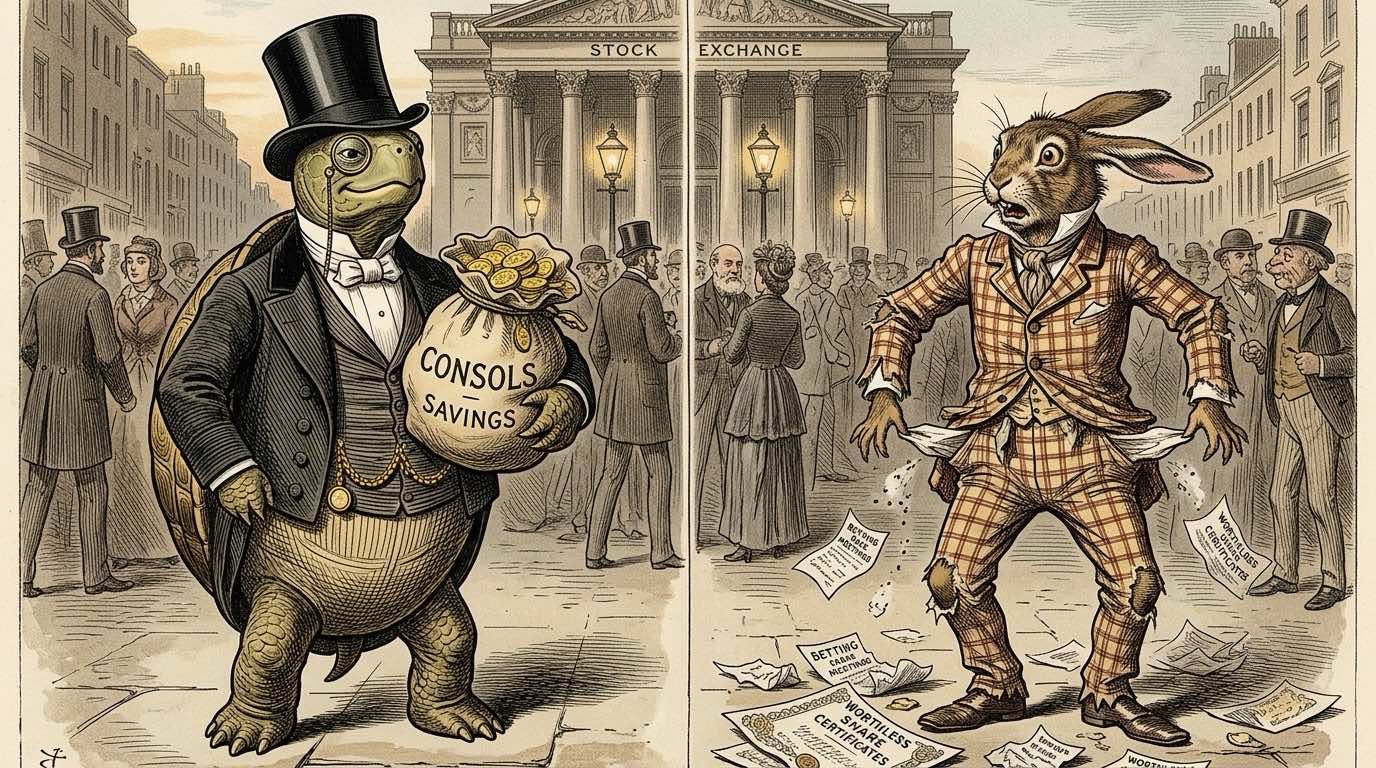
In 2011, three researchers — Baker, Bradley and Wurgler - ran the numbers on US stocks going all the way back to 1968. They sorted them by volatility — volatility just being the technical word for how wild the ride is — and then followed a single dollar invested at each end of the spectrum, right through to the end of 2008. 41 years.
Their conclusion?
“Contrary to basic finance principles, high-beta and high-volatility stocks have long underperformed low-beta and low-volatility stocks.”
BBW concluded that a dollar in the lowest-volatility stocks — the boring ones — grew to $59.55.
A dollar in the highest-volatility stocks — the white-knucklers, the ones that are supposed to pay you the most — ended up worth… 58 cents.
Over four decades, the high-risk stocks LOST money while the boring ones went up nearly sixtyfold.
And before anyone writes in with “that’s just one study, one market, one stretch of years” — other studies went looking for the same thing and found it everywhere they looked.
Then why does everyone still believe in high risk, high reward?
Two reasons.
One — we love a lottery ticket. People overpay for the dream of the 10-bagger the same way they hand over a couple of bucks for Powerball, knowing full well they probably won’t win. All that demand pushes the exciting assets up to prices that quietly guarantee rubbish returns from there on. Common wisdom is that you can afford to “take a punt” on crypto or gold or the latest hype stock, and, worse still, you’re a complete mug if you don’t.
Two — the professionals can’t help themselves. Most fund managers aren’t allowed to borrow money to gear up a portfolio of safe, dull stocks. So to look like heroes against their benchmark, they pile into the volatile names instead, and bid them up even further. The myth survives because the people being paid to know better are paid to keep feeding it.
Tony has never once told me to buy something because it was risky enough to be worth the gamble. There’s no box on the checklist for “is this terrifying enough?”. The checklist does the opposite. It goes hunting for quality — profitable, well-run, audited businesses that throw off cold hard cash — and it only buys them when they’re cheap.
We don’t set out to buy low-volatility stocks. But screen for boring, profitable companies trading below what they’re worth, and have a guess where you wind up? Down the calm end of the market. That isn’t to say we don’t have some undesired excitement now and again — the occasional African gold miner whose C‑suite becomes the guest of a military coup for a few weeks — but we don’t go seeking them. And we have rules in place to get us out quick smart if we stumble into one.
That’s not luck. That’s the whole idea.
And you don’t have to take my word for any of it. The Dummy Portfolio is public — we publish the numbers so anyone can check them. From 2020 to 2025 it returned 16.8% a year against the ASX 200’s 8.2%. Roughly double the market. Not by white-knuckling it through the spec end of the ASX. By being relentlessly, profitably boring.
Minimise your risk — by buying profitable companies at a discount, and then having rules in place for when to get out if things go backwards.
Maximise your reward — by holding those companies as long as you can, letting your flowers bloom, letting the growth compound, and only selling them when the rules force your hand.
Think of it in terms of transportation. You want to travel from one country to another. You want to get there as fast as possible, because travelling is uncomfortable and annoying. Do you take the highest risk mode of transport? Are you jumping in the fastest thing that moves? Jumping on one of Elon’s latest rockets, that tend to blow up on launch? Probably not. You’re going to find a reasonable balance of speed, comfort and safety. You know that flying involves risk, but you don’t want to take more than you have to. Investing should be no different.
min(risk), max(reward)

QAV Myth Killers is a weekly column in the QAV newsletter, taking apart a piece of
investing conventional wisdom. Read the series, or
get it by email every Friday.
General advice only. Spacecraft Publishing Pty Ltd
trading as QAV is a Corporate Authorised Representative (CAR 001292718) of MF & Co.
Asset Management Pty Ltd (AFSL 520442). This is general information and does not take your
personal circumstances into account. See our
disclosure.