When we start getting interested in value investing, one of the first things well-meaning friends warn you about are “value traps.”
A value trap is an investment that looks cheap based on metrics but stays cheap (or gets cheaper) for good reason, usually because of underlying weaknesses in the business or its industry that aren’t immediately obvious.
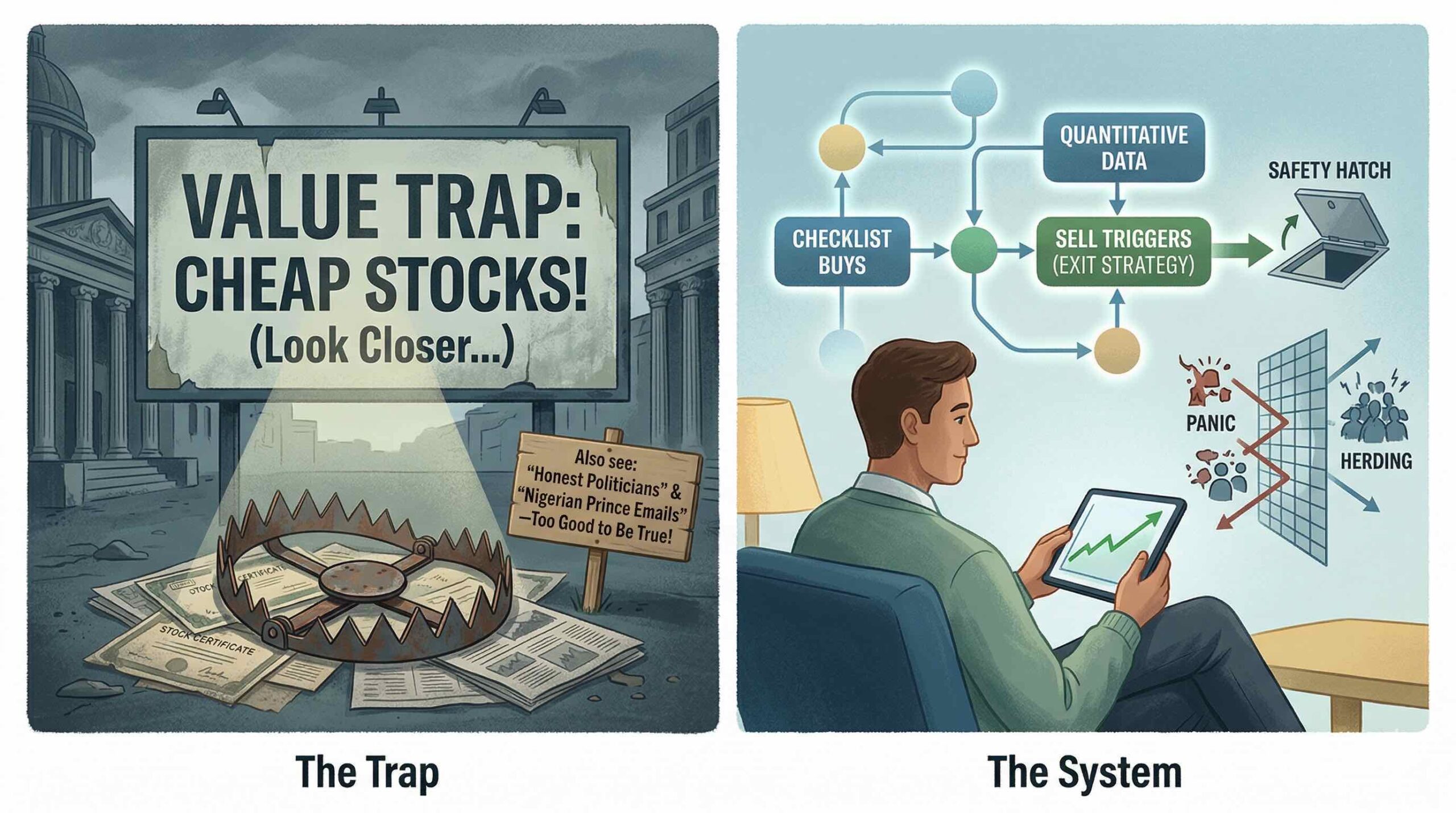
People who believe in the Efficient Market Hypothesis (EMH) think value stocks are basically too good to be true, like a politician who does what they promised before the election, or a Nigerian prince who just needs your bank details to release $47 million. According to EMH, there are no genuine mispricings. If a stock looks cheap, it’s cheap for a reason, and the market already knows something you don’t.
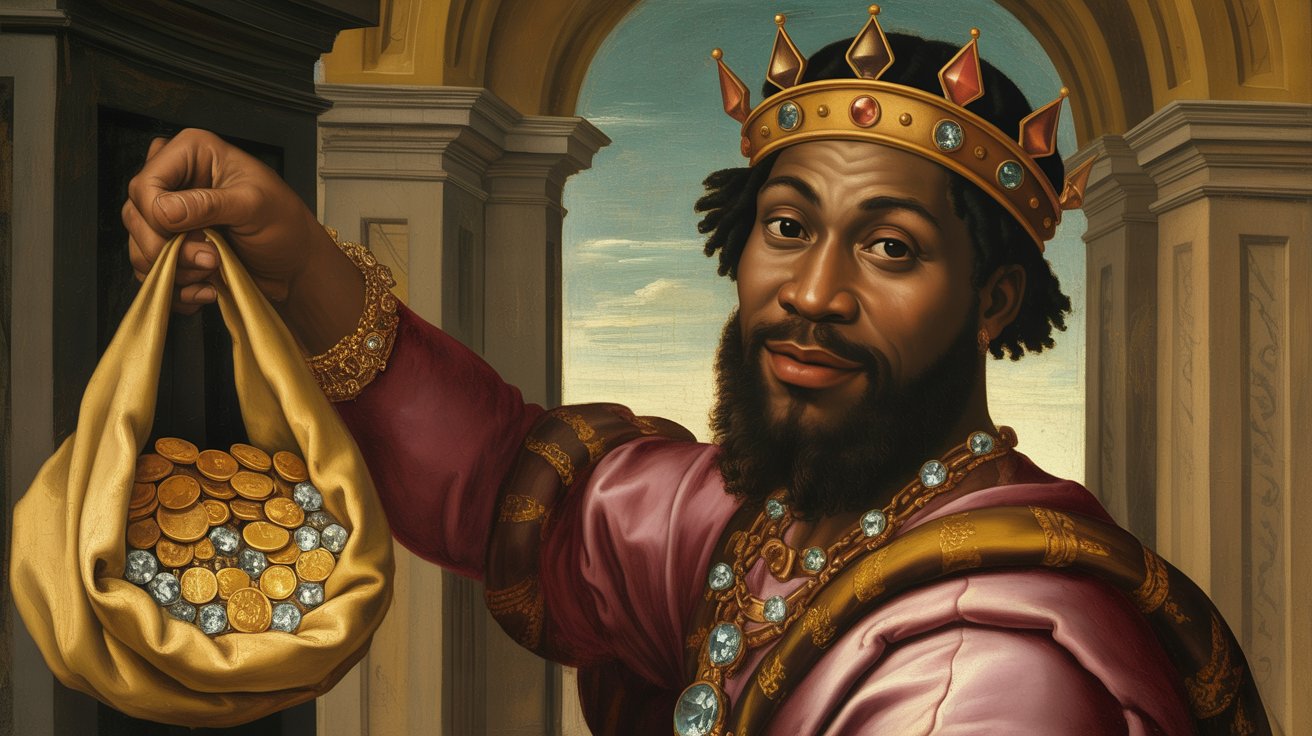
It’s easy to see why this sticks. It sounds scientific. It has Nobel prizes behind it (Eugene Fama won in 2013), and it conveniently excuses doing nothing.
We side firmly with the behavioural finance people, Kahneman and Thaler, who blew a massive hole in EMH by showing that prices are systematically distorted by human psychology: panic, herding, recency bias. The market prices fear efficiently. Value is another matter entirely.
Here’s the thing: we aren’t experts in any particular business, sector, or industry. We don’t claim to be. Some people, like Buffett and Munger, are happy to spend their days studying the intricacies of various markets, and if you want to do that (and have the time and energy), best of luck to you. That’s not what we do. Tony would rather play golf. Cameron would rather do kung fu.
Our approach is to trust the algorithm to find value stocks, and then use our selling rules to exit if something goes wrong. We assume we’re going to get some wrong. That’s built into the system. Even Buffett has always claimed a win rate of around 60%, and that’s what we aim for too.
Our U.S. pulled porks are a perfect example. We know very little about the American market. The majority of companies we’ve covered on QAV America were completely new to me, and probably to most Americans too. Have you heard of Mammoth Energy Services (TUSK)? Precision Drilling Corporation (PDS)? Korea Electric Power Corporation (KEP)?
Over the past year or so, we’ve done pulled porks on 45 American companies that were high on our buy list at the time. As of the day I’m writing this, 31 of them (68.9%) are up since we covered them. Of the remainder, our sell triggers would have had us out and into something else on the buy list before the damage got serious.
So I don’t lose sleep over value traps. I buy what the checklist tells me to buy, and I let my sell triggers tell me when to leave. The algorithm worries so I don’t have to.
I do still steer clear of Nigerian princes, though.
QAV Myth Killers is a weekly column in the QAV newsletter, taking apart a piece of
investing conventional wisdom. Read the series, or
get it by email every Friday.
General advice only. Spacecraft Publishing Pty Ltd
trading as QAV is a Corporate Authorised Representative (CAR 001292718) of MF & Co.
Asset Management Pty Ltd (AFSL 520442). This is general information and does not take your
personal circumstances into account. See our
disclosure.
Leave a Reply