Ray Dalio, founder of Bridgewater Associates and one of the most successful hedge fund managers in history, once said: “He who lives by the crystal ball will eat shattered glass.”
He’s being generous.
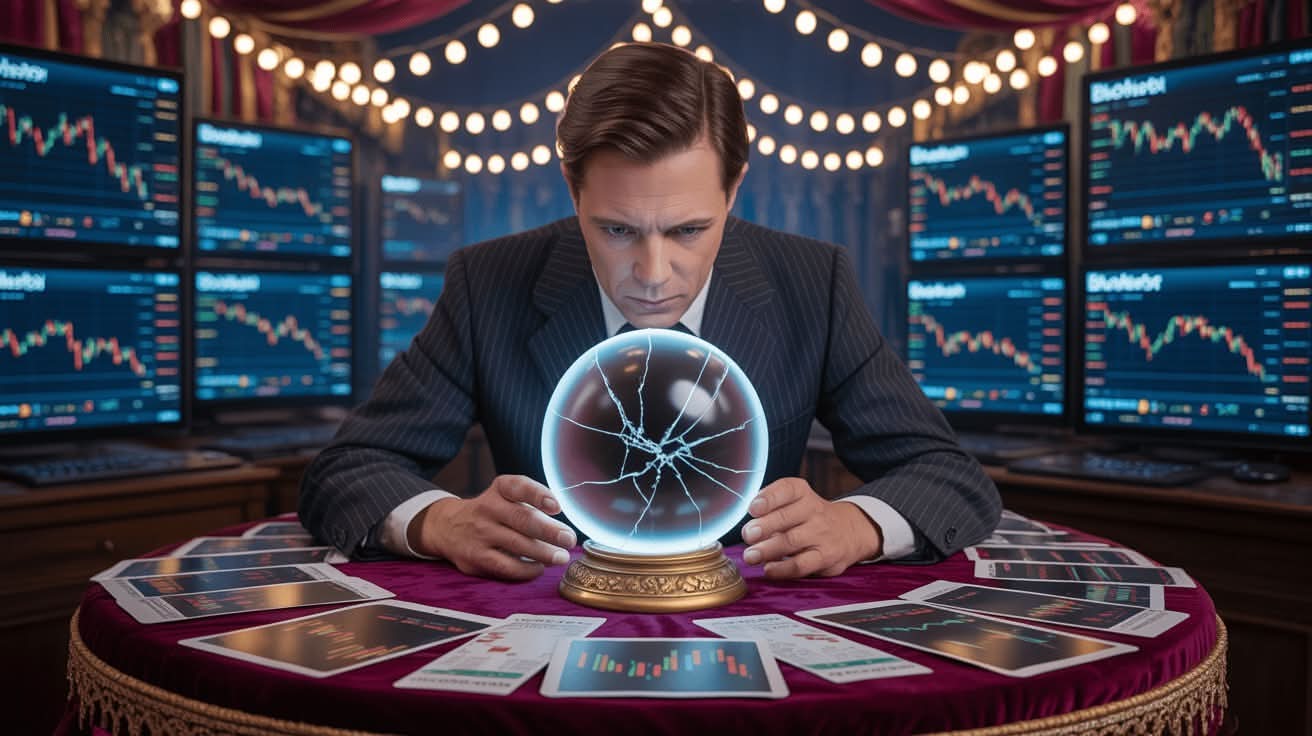
At least horoscopes are honest about what they are. Nobody expects Mystic Meg to have a CFA charter. But turn on financial media and you’ll find an endless parade of “experts” predicting bitcoin’s trajectory, interest rate movements, property prices, and which stock is about to moon. These predictions come wrapped in charts, dressed up in credentials, and delivered with the confidence of someone who has never been publicly accountable for being wrong.
Here’s the thing: if anyone could predict markets with any degree of accuracy, they’d be obscenely wealthy. Most of these pundits aren’t. And the ones who are rich? They made their money getting paid to predict, not by betting on their own predictions. That tells you everything you need to know.
Why We Listen Anyway
We’re wired to want someone to know what’s going on. Believing in prophets, kings, and emperors was probably a solid evolutionary survival strategy for most of human history. The skeptics? The ones who publicly questioned the oracle? They got sacrificed to the gods or exiled from the tribe. They didn’t stick around long enough to pass on their skeptic genes.
So here we are, descendants of believers, still looking for someone to tell us what’s coming next.
Horoscopes exploit this need cheaply and transparently. Market predictions exploit it expensively and with a veneer of respectability. At least your horoscope won’t charge you 2‑and-20 for the privilege of being wrong.
The Actual Difference
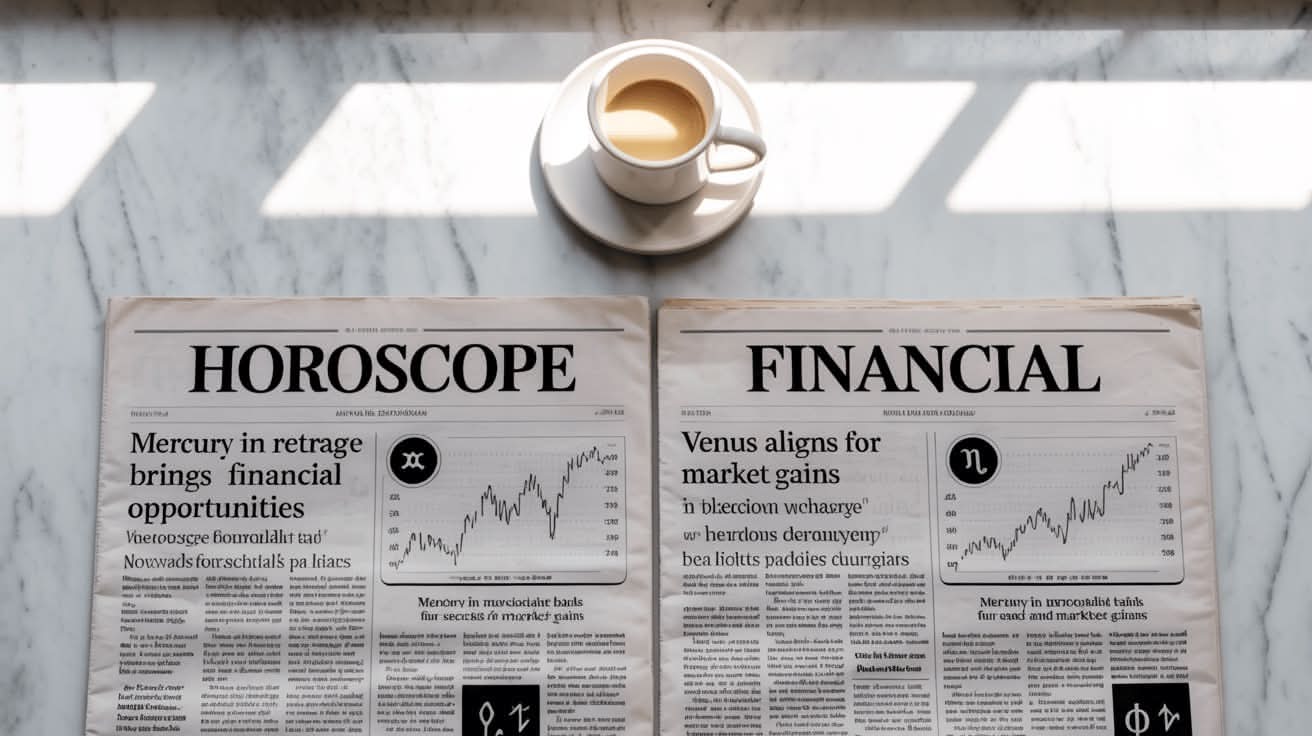
Horoscopes are vague enough to be unfalsifiable. “You may encounter an opportunity this week.” Sure. Fine. Can’t prove that wrong.
Market predictions are specific enough to be verifiable—and they fail verification constantly. Yet somehow, the pundits keep their platforms. The economists who predicted eight of the last two recessions still get invited back on television. The crypto influencer who called for $100K bitcoin in 2022 is still posting charts in 2025.
There’s no accountability loop. Horoscope writers at least have the decency to not pretend they’re doing science.
What Actually Works
The alternative to prediction isn’t paralysis—it’s process.
Instead of trying to forecast where a stock is going, look at where it’s been. Actual numbers. Actual performance. Is the company making money? Can you buy it at a discount to its value? Is the trend your friend or your enemy?
This isn’t exciting. It doesn’t make for good television. Nobody’s booking you on Bloomberg to say “I don’t know what the market will do, but here’s a company trading below its intrinsic value based on current earnings.” Unless, of course, your last name is Buffett.
But it works.
The biggest benefit of ignoring predictions is clarity. People predicting a boom? Don’t care. People predicting a crash? Still don’t care. Some influencer says this stock is going to make a killing? Show me the numbers or shut up. Bitcoin to a million dollars? Explain to me how to calculate the value of a single coin or stop wasting my time.
The Bucket Problem
Think of it this way: the list of things people believe might be true is enormous. Thousands of gods, monsters, miracle cures, get-rich-quick schemes, and market predictions. Some of those things will turn out to be true. Most won’t.
Your job isn’t to believe in all of them equally—that’s impossible and contradictory. Your job is to sort them into buckets: things that might be true, and things that are most likely to be true based on actual evidence.
Some people sort based on what their family believes. Some sort based on what makes them feel special. Some sort based on what sounds sophisticated at dinner parties.
And some sort based on what the evidence actually supports.
The Bottom Line
Market predictions are astrology for people who think they’re too smart for astrology. They scratch the same psychological itch—the desperate human need to believe someone knows what’s coming—but they come with higher fees and lower self-awareness.
At least your horoscope knows it’s entertainment.
The next time someone tells you where the market is heading, ask them one question: what’s your track record? Not their credentials. Not their confidence. Their actual, verifiable, accountable track record of being right.
The silence will tell you everything.
QAV Myth Killers is a weekly column in the QAV newsletter, taking apart a piece of
investing conventional wisdom. Read the series, or
get it by email every Friday.
General advice only. Spacecraft Publishing Pty Ltd
trading as QAV is a Corporate Authorised Representative (CAR 001292718) of MF & Co.
Asset Management Pty Ltd (AFSL 520442). This is general information and does not take your
personal circumstances into account. See our
disclosure.
Leave a Reply