Here’s the uncomfortable truth most of the investment industry would rather you didn’t sit with for too long.
Your instincts are terrible at picking stocks.
Not because you’re stupid. Because you’re human.
And the entire financial media ecosystem is built to exploit that.
The Manufactured Drama
The dominant belief pushed by financial TV, newspapers, podcasts, brokers, influencers and “market experts” is that good investing comes from being informed, staying close to the action, reacting quickly, and trusting experienced voices who “know what’s going on.”
Watch more. Read more. Trade more. React faster.
The subtext is always urgency. Something is happening. Something is about to happen. Something has just happened and you’re already late.
This isn’t accidental. These businesses don’t get paid when you sit still. They get paid when you click, watch, trade, rebalance, switch funds, chase themes, panic, and FOMO your way into action.
Ask a simple question: who pays their bills?
Advertisers. Fund managers. Brokers. Trading platforms. Asset gatherers.
None of them benefit when you do nothing. None of them benefit when you stick to a boring process and ignore the noise. None of them benefit when you quietly compound over decades.
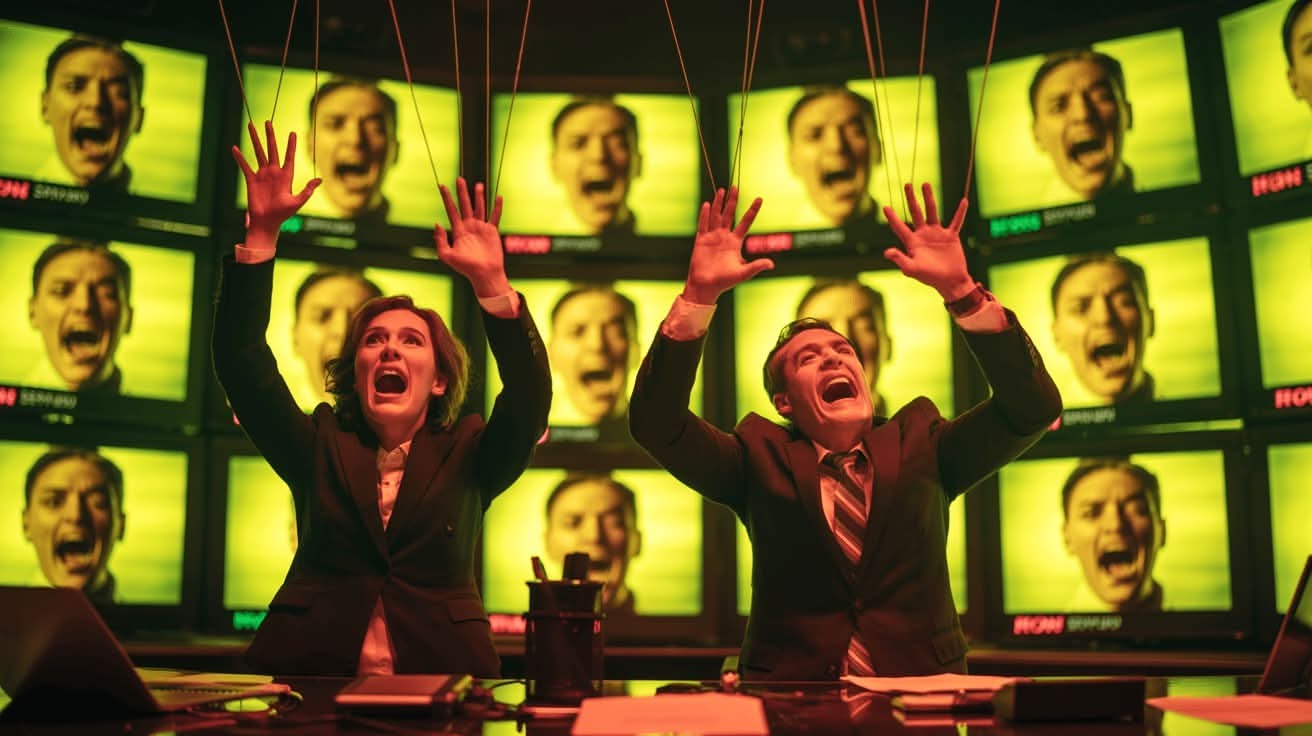
So they manufacture drama. They turn markets into a 24-hour reality show. And they sell you the illusion that reacting emotionally is the same thing as being intelligent.
It isn’t.
Why People Fall For It
Most people start investing knowing almost nothing. That’s normal. We don’t get taught this stuff properly, if at all.
So we assume the loudest voices know what they’re doing. We assume suits, charts, jargon and confidence equal competence. We assume “experts” must have our interests at heart because surely they wouldn’t be allowed to talk if they didn’t.
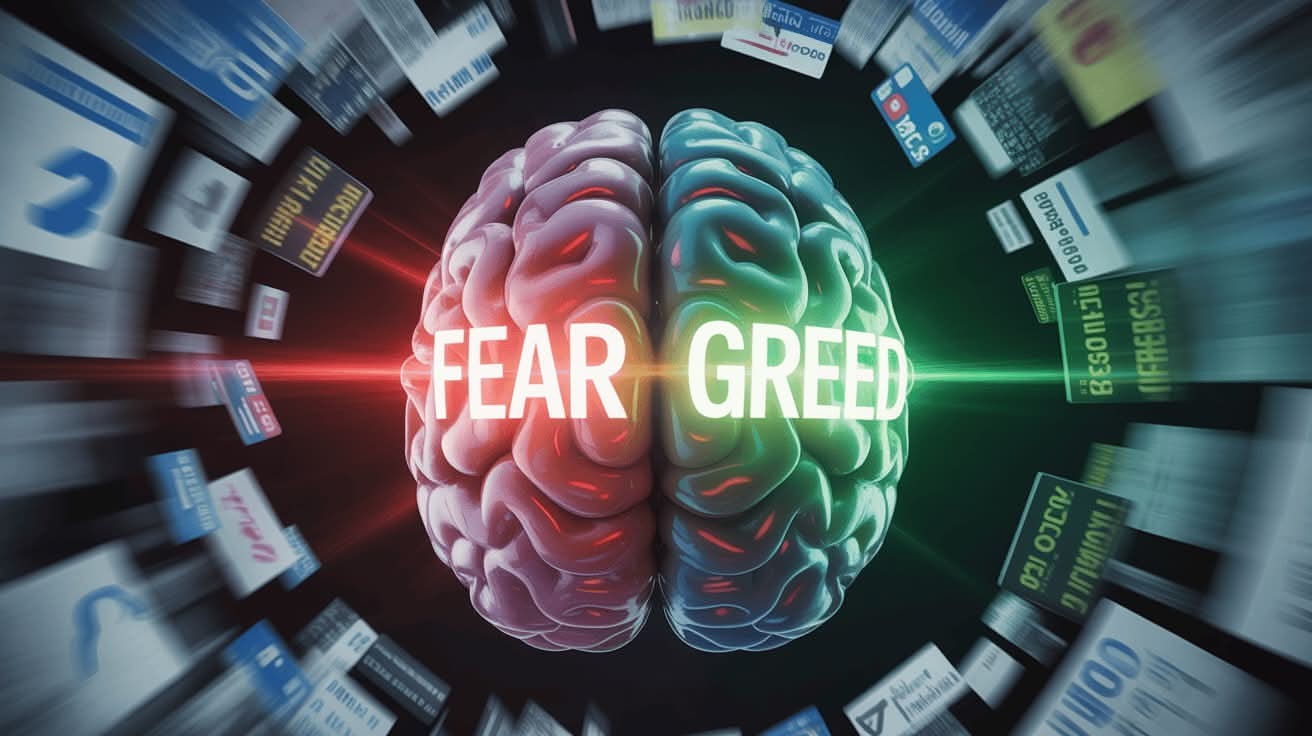
Add fear and greed to the mix and you have a perfect psychological storm.
Fear of missing out. Fear of looking stupid. Fear of losing everything. Greed for easy wins. Greed for status. Greed for the story you’ll tell at dinner.
Influencers understand this. Media producers understand this. Brokers understand this. They aren’t stupid. They know exactly which emotional buttons to press.
And we press them ourselves.
The Quiet Collapse
Here’s the assumption that quietly collapses the whole story.
If these people genuinely knew how to consistently beat the market, they wouldn’t need to sell you commentary.
They wouldn’t need to pump content. They wouldn’t need affiliate links. They wouldn’t need constant visibility. They wouldn’t need your attention at all.
They would be quietly, professionally, relentlessly compounding their own capital.
That’s what real edge looks like. Silence. Boredom. Repetition.
Instead, what you mostly see are people whose income depends on activity, not outcomes. On engagement, not results. On persuasion, not accuracy.
That doesn’t mean everyone is lying. It means incentives matter. And when incentives are misaligned, the advice becomes noise, even if it sounds smart.
The Real Damage
The real damage isn’t one bad trade.
It’s thousands of small emotional decisions stacked on top of each other over decades.
Buying because you’re excited. Selling because you’re scared. Holding because you’re hopeful. Dumping because you’re embarrassed. Chasing because “everyone’s talking about it.” Freezing because you don’t want to be wrong.
Each decision feels small. Each one feels justified in the moment. But each one quietly leaks value from your portfolio.
A one percent difference per year doesn’t sound like much. Over thirty years, it’s the difference between “comfortable” and “why did I bother.”
Worse, this emotional churn trains people to believe investing is impossibly complex. That it’s a game for insiders. That ordinary people can’t win unless they’re glued to screens or gifted some mystical intuition.
That belief alone has probably destroyed more wealth than any bear market.
The Actual Solution
Emotion is the enemy. Not markets. Not volatility. Not uncertainty.
The moment you remove emotion from decision-making, outcomes improve. Not perfectly. Not magically. But meaningfully.
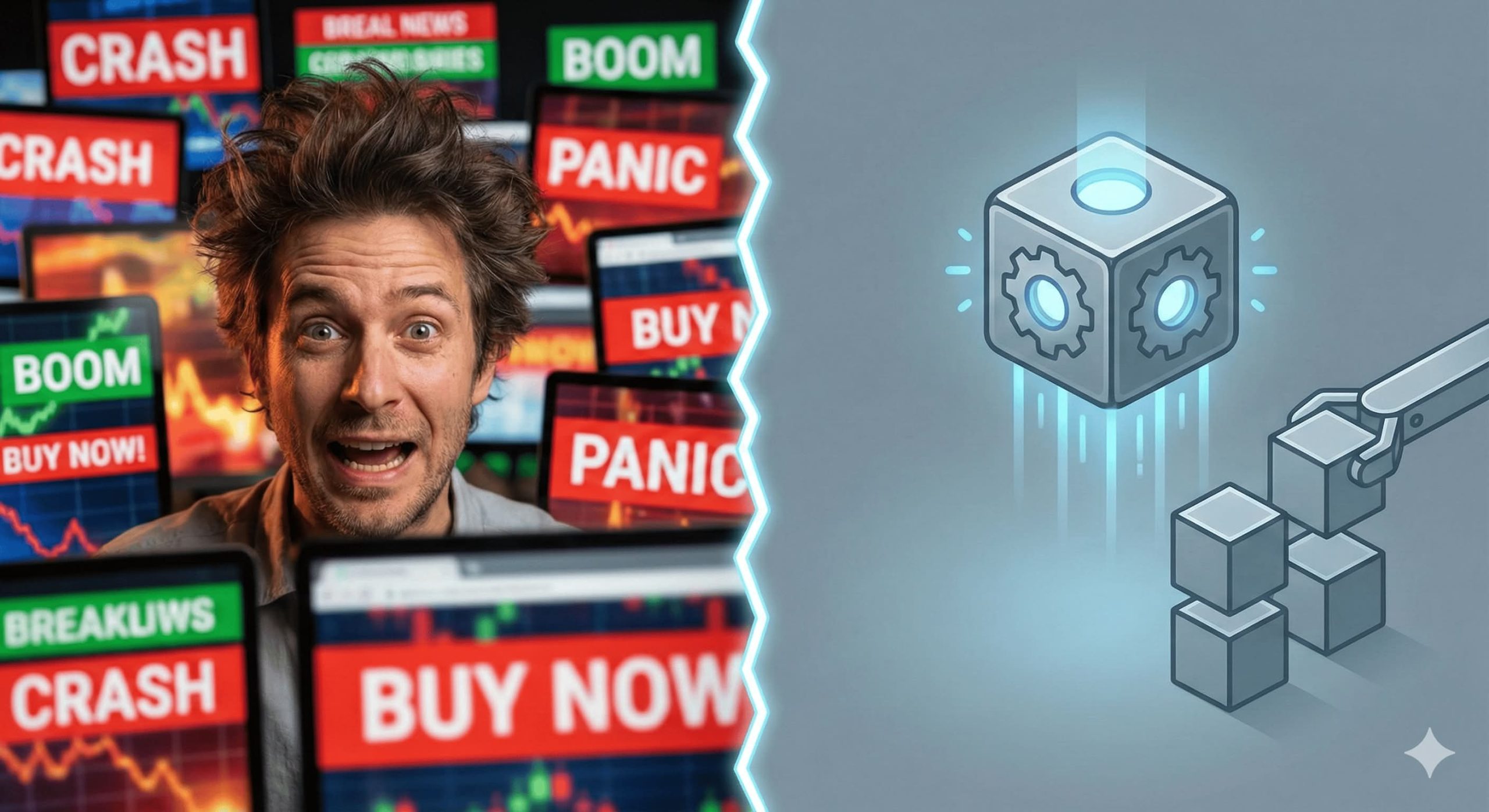
An algorithm doesn’t get excited. It doesn’t panic. It doesn’t care about headlines, hot takes, or vibes. It does the same thing today that it did yesterday, and it will do the same thing tomorrow.
If those rules are grounded in evidence, logic, and long-term testing across multiple market cycles, they don’t need to be clever. They need to be consistent.
No system wins all the time. Anyone claiming otherwise is selling something. A realistic goal is being right more often than you’re wrong and letting compounding do the heavy lifting. Even legendary investors admit they’re wrong a lot.
The edge isn’t perfection. It’s discipline.
And discipline is almost impossible for humans to maintain without rules.
You don’t need more opinions. You don’t need better intuition. You don’t need another guru.
You need a process that doesn’t care how you feel.
We use one. It’s boring. It’s rule-based. It ignores the noise. It doesn’t need to explain itself on television.
And it exists for a reason.
QAV Myth Killers is a weekly column in the QAV newsletter, taking apart a piece of
investing conventional wisdom. Read the series, or
get it by email every Friday.
General advice only. Spacecraft Publishing Pty Ltd
trading as QAV is a Corporate Authorised Representative (CAR 001292718) of MF & Co.
Asset Management Pty Ltd (AFSL 520442). This is general information and does not take your
personal circumstances into account. See our
disclosure.
Leave a Reply