On this episode, Tony does a Pulled Pork on AGL Energy, one of Australia’s biggest and most controversial companies, right in the middle of a high-stakes transition from coal to renewables. We also cover the Challenger takeover tussle, Findi’s spectacular implosion, and the Lula election win knocking around a few of our US stocks. Plus the usual after-hours chat, including Gemini eating two years of Tony’s racing data.
This week’s full episode is for QAV Club members only. The free episode is available below. Also check out our podcast archives link and our pages on Apple Podcasts or Spotify or watch clips on TikTok. Or visit our homepage to learn more about QAV and how it works as a value investing system that you can learn and apply to beat the market.Transcription
QAV AU 953
[00:00:00]
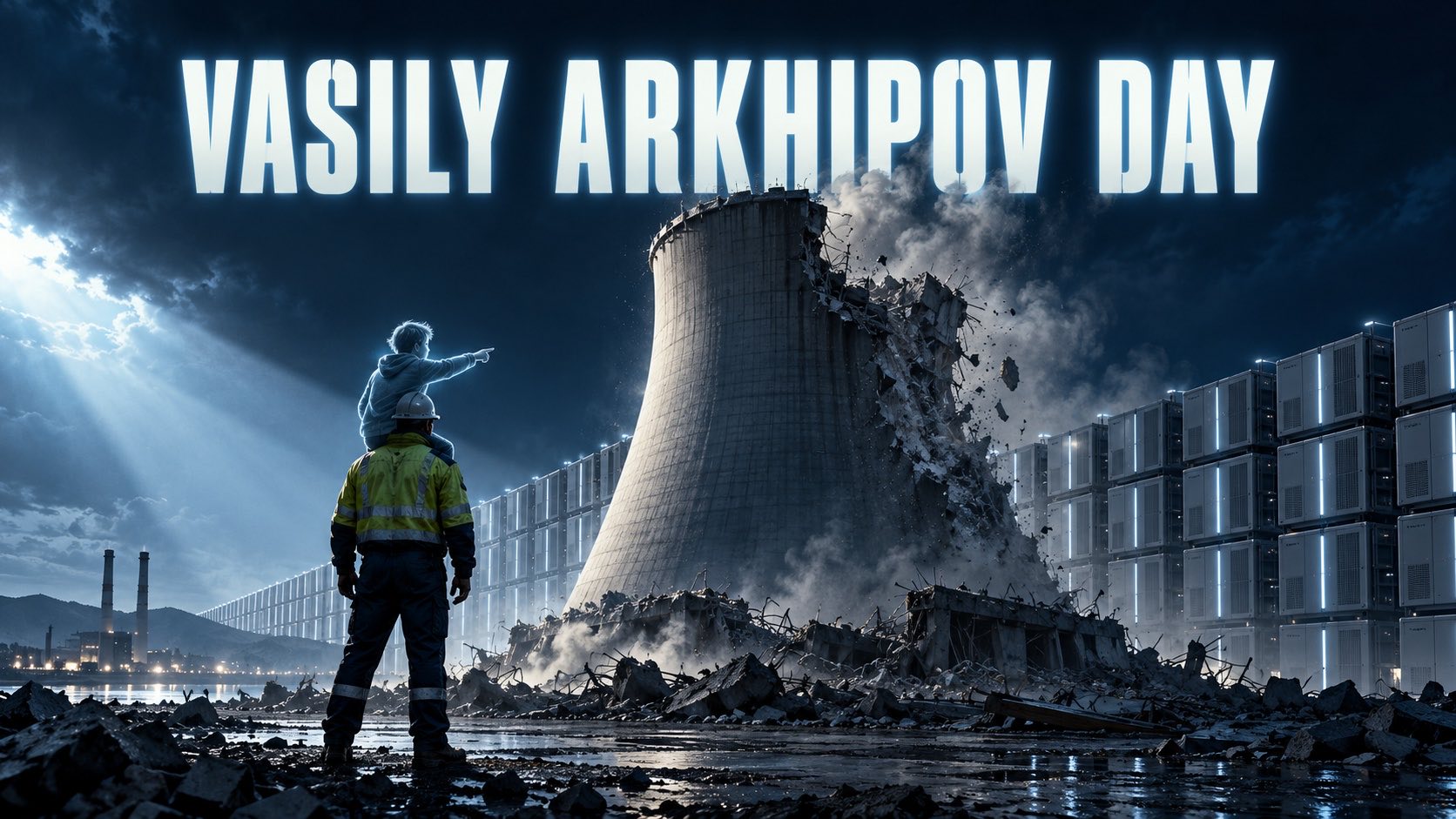
Cameron: Uh, welcome back to QAV, episode 953. It is the 27th of October, and that means it is Vasily Arkhipov Day. Happy Vasily Arkhipov Day, Tony.
Tony Kynaston: Thank you
Cameron: Did you, uh, pull one out for Vasily Arkhipov today?
Tony Kynaston: Well, no.
Cameron: Well,
Tony Kynaston: pull one out anymore, but anyway, yep
Cameron: Well, you don’t have to drink it, you just pour it
Tony Kynaston: Oh, okay. On the ground?
Cameron: Yeah,
Tony Kynaston: Like
Cameron: out. For the kids out there who don’t know, October 27th is Vasili Arkhipov Day to honor Soviet Navy officer Vasili Arkhipov, who on this day in 1962 prevented a global nuclear war. He was in a submarine, Soviet B‑59 submarine, when, uh, the US Navy dropped practice depth charges on it to force it [00:01:00] to surface. This is during the Cuban Missile Crisis. And they were cut off from radio contact. They believed that World War III had started, and the submarine’s captain and political officer wanted to launch a nuclear-tipped torpedo. But the rules of Soviet engagement said that they had to have unanimous consent from all three senior officers on board, and Arkhipov refused the launch,
Tony Kynaston: And he wasn’t shot, someone else, and someone else was promoted who said yes?
Cameron: Um, he, uh, well, he was a senior commander and his job was to, um, you know, make sensible decisions and he said, “I don’t think so. Let’s just surface.” And, uh, it turned out he was right. He became rear admiral in 1975, became the head of the Kirov Naval Academy. In 1981 he was promoted to vice admiral and [00:02:00] retired in the mid-1980s, died in 1998, aged, uh, 72. But, uh, there you go. One guy, um, who said, “Yeah, I don’t wanna start a nuclear war today, uh, if that’s okay with you.” So there you go. I try and remember him every day with Stanislav Petrov,
Tony Kynaston: Every, every week, every year.
Cameron: every. Uh, sorry,
Tony Kynaston: Yeah
Cameron: Well, every day too I’m thankful. When I do my little gratitude list every day, uh, I’m like, “Thank you Vasili Arkhipov.”
Tony Kynaston: What was on your gratitude list today?
Cameron: Oh, dude, like everything. I’m just grateful for, oh, come on, man. Like I’m grateful for the people that invented, uh, all sorts of modern medicines. I’m grateful for all of the people who came before me that developed Australia as a relatively rational, safe, uh, prosperous democracy. Grateful [00:03:00] for, um, people that invented technology.
Uh, I’m grateful for the people that, uh. I’m grateful to David Markham for introducing me to Chrissy. Grateful to just like endless. I have an endless, like if I did my gratitude list, I used to do it every night when I went to sleep, but it kept me awake, so I had to replace it with something that, uh, put me to sleep.
But it’s just an endless list. I’m grateful to all my ancestors who scratched a living out of the dirt in the harshest conditions just so they could pass on their genes to the next generation and get them to an age where they could pass on their genes and so forth and thenceforth that led to me, and, you know, I’m grateful.
I’m grateful to the doctors that, uh, gave, you know, helped my children be born safely and healthily, and none of my mamas died in childbirth. Um, yeah, all that kind of stuff. Just this endless list of gratitude and wonderment I have that got us [00:04:00] here safely today.
Tony Kynaston: Listeners, you could see I’m, I’m well down the list of gratitude. I haven’t been mentioned. I think,
Cameron: You’re
Tony Kynaston: I’ll be signing off now. See ya.
Cameron: you are definitely on the list. You’re on the
Tony Kynaston: It’s okay. I wasn’t fishing for a compliment
Cameron: Grateful for my dad, despite everything. Um, well, uh, big news today, Tony. Lula won the Brazilian election.
Tony Kynaston: Are you grateful?
Cameron: Well, it’s, I don’t have a, I don’t have a position
Tony Kynaston: Oh, okay.
Cameron: of Brazilians are grateful.
Tony Kynaston: Mm-hmm
Cameron: The ones that, uh, didn’t wanna be under a right-wing government again. Some are probably massively disappointed. But, uh, it was a surprise victory.
Tony Kynaston: Ooh
Cameron: um, a lot of people thought Bolsonaro Junior was gonna win, even though his dad’s still in prison. Um, but, uh, it’s sort of had a dramatic impact on some of our US stocks.
Tony Kynaston: So when, when [00:05:00] stockholders aren’t grateful
Cameron: Well, yeah. I mean, some went up. Suzano
Tony Kynaston: okay. Wow
Cameron: but PAGSeguro Digital went down 25%, Banco Bradesco went down 25%, Petrobras went down 14%.
Tony Kynaston: These weren’t all the companies, uh, that we spoke about in the corruption, corruption carwash scheme, were they?
Cameron: Well, Petrobras was.
Tony Kynaston: Hmm
Cameron: of it. But it’s still up 25% since, since
Tony Kynaston: Ooh,
Cameron: so, you know.
Tony Kynaston: Yeah
Cameron: a week ago. It’s, but it’s still, still doing okay. We’ll see what happens with the fallout of that.
Tony Kynaston: Ooh
Cameron: that on the US show, but, uh, it’s interesting. The only other bit of news that I have is, uh, our friends at Findy. When I say friends, uh, the CEO was gonna come on the show and then ghosted me. I saw this released last week, 20th of October. [00:06:00] Um, update on strategic review funding and financial reporting. Are you tapping your desk or something there? There’s a lot of.
Tony Kynaston: Sorry, I’m playing with the microphone lead.
Cameron: “Stop
Tony Kynaston: Some-
Cameron: blind,” Tony.
Tony Kynaston: something,
Cameron: you that when you were younger?
Tony Kynaston: I do while I’m waiting for you to finish.
Cameron: You sound
Tony Kynaston: Sorry.
Cameron: three new non-executive directors were appointed to the FND board. Subsequent to the appointment of the new chairman, a strategic review of the business was performed by the board. Upon receipt of an independent financial review and receipt of the draft audit report, the board placed FND in a trading suspension on June 22nd, 2026. Do we know about that? Did we talk about
Tony Kynaston: I think we might have, yeah. They’ve. Yep
Cameron: The board has continued its strategic review of the company’s operations, financial position and capital structure, with particular focus on the [00:07:00] financial position and funding requirements of its Indian operations. Despite extensive discussions and consideration of alternative financing and restructuring options, the company has not yet secured a solution capable of addressing its requirements on terms acceptable to the relevant parties. In view of the short cash runway, the board continues to very actively assess the options available to the company, having regard to its financial position in the interest of shareholders and other stakeholders, and remains in active negotiation with a range of parties covering a range of solutions for the business. And the finalization of the company’s audited financial statements for the year ended 31 March 2026 remains outstanding. So basically, the company remains suspended from quotation on the ASX. It’s, uh. They were sort of a superstar
Tony Kynaston: They were.
Cameron: minutes
Tony Kynaston: Yeah, I think they got up to about $4 or, or more than that, um, in share price, and they’re well below that now. [00:08:00] Did, did you also see the Rear Window article about the same thing?
Cameron: No
Tony Kynaston: So apparently Mr. Smedley is a member of the Australia Club in, um, Melbourne,
Cameron: Hmm.
Tony Kynaston: fellow club members formed a short selling syndicate nicknamed Get Shorty.
And after they identified a margin loan held by Mr. Smedley, they launched a short attack on Findy shares, and the Rear Window reports that the syndicate pocketed over a hundred and forty thousand before closing out their positions. And then shortly after that, Findy failed to lodge its financial reports and suffered a ninety-five percent share price collapse from its peak and remains suspended.
Cameron: I’m just looking up, uh, archive
Tony Kynaston: blood sport being a member of the Australia Club.
Cameron: Yeah. Uh, I think back in January of ’25, Scott wrote in, was talking about his [00:09:00] best performance for the year, and he said Findy was up 300%. So,
Tony Kynaston: So this is a, this is a company doing banking in India. And from memory,
Cameron: right?
Tony Kynaston: memory, they had a big division of ATMs that they were gonna hive off and float on the Indian Stock Exchange, and that’s when I think they’ve suffered, uh, their funding crisis
Cameron: My next note on them was in October 25 when I said they’d gone from 150% up in our portfolio to 1% down. So yeah, there’s a. So I know they were a QAV stock
Tony Kynaston: They were, yeah
Cameron: So
Tony Kynaston: Not now, but they were
Cameron: yeah, not only non-QAV stocks that can have huge disasters. I did, I did say something about Nick Scali in my newsletter last week just to see who was paying attention and said, “I wonder what happens to.
What, what, I wonder how those people that are, are, are gonna hold NCK forever are feeling?” And [00:10:00] won’t mention any names, but you can probably guess. A friend of mine, he emailed me and said, “I told you before I sold it when they changed their, uh, strategic international things,” blah blah. I said, “How’d you know I was talking about you?
I kept it anonymous. Could’ve been anybody. By the way, you owe me lunch.” Uh, yeah, it was funny. I just checking who’s reading the newsletters.
Tony Kynaston: right
Cameron: So, uh, anyway, that’s, uh, that’s, uh, Findy. Um, not good. Um, yes, that’s
Tony Kynaston: Not, not good, but we’re, we’re out of it, so that is good
Cameron: Well, yeah, we’re out of it, but, um, kind of, uh, shocking in a way, maybe not shocking in a way. It was always a bit kind of murky, murky, Findy. It was like they had this enormous growth
Tony Kynaston: Ooh
Cameron: and then there was lots of rumors quickly about something and something wasn’t what it appeared to be, and there was always these stories going [00:11:00] around and allegations and counter-allegations going on at, at high levels. So I’m not altogether surprised that it crashed and burned.
Might revive, might turn around. Who knows? You know
Tony Kynaston: It certainly had some good numbers at the start anyway.
Cameron: Hmm. So what else you got on your list of things to talk about, TK?
Tony Kynaston: So last week I spoke about a company called Dai-ichi Life, better known in Australia as Tower Insurance, had made a bid for Challenger at eleven eighty a share.
Cameron: Mm.
Tony Kynaston: Um, and the stock rose to that. But I, uh, just, uh, saw a couple of articles recently that talked about, uh, some of the other Challenger shareholders pushing back and thought the eleven eighty offer was too low and thought that, um, a more pertinent bid or an acceptable bid would be around thirteen dollars per share.
So Challenger have officially, officially declined [00:12:00] to recommend the offer, and the ball is back in Dai-ichi’s court. Um, so I, I guess a couple of things about that, um, may not lead to a higher offer because Dai-ichi already have, uh, uh, twenty percent roughly of the stock, maybe a little bit more. So they could just wait and use the creep provision, which allows them to buy three percent every half, um, without launching a takeover.
See, the, the. Normally, if you have more than nineteen point nine percent of a company, you’re meant to launch a takeover. But if you use the creep provision, um, of the Corporations Act, you don’t need to do that. So Dai-ichi may stay just on the share register passively and increasing every six months by three percent, or they might come back and engage and give a, a stronger bid.
Um, I don’t. Yeah, it’s hard, it’s hard to say. And I think the shareholders who are asking for a higher bid [00:13:00] are probably spot on because the latest results from Challenger have been very good. And, um, I did a Pulled Pork on them a little while ago. They provide annuities to retirees, and that’s becoming more and more popular as the population ages and people move from the accumulation phase of their super funds to the retirement phase and need to live off the income.
So Challenger’s right in the, um, square of that space to be able to provide that. So it’ll be interesting to see how it works out. Um, my gut says that it won’t be a quick process, though.
Cameron: Just turn on the camera and you stop talking.
Tony Kynaston: Stop playing with your microphone cord.
Cameron: uh, yeah. Well, we still hold it in a bunch of portfolios. Checking,
Tony Kynaston: do I. Yeah
Cameron: Right. And it’s up quite, quite a bit in some of them. Um, held it uh, May of this year. Oh, no, yeah, May of this year in some cases. It’s up, like, [00:14:00] 34%. But, um, should keep holding it ’cause it might go higher. Maybe
Tony Kynaston: Uh, it might, might go down if Dai-ichi don’t do much. But,
Cameron: Yeah
Tony Kynaston: I, um, I think the downside’s probably protected because even if Dai-ichi don’t do much, um, they’re still a, a cornerstone shareholder. They’re not going anywhere. Um, so I think the downside is probably protected, you know, um, without wanting to forecast or make guarantees.
It’s just a question of whether they’ll get to thirteen dollars quickly.
Cameron: Yeah.
Tony Kynaston: Yeah.
Cameron: The three-point sell line for it is $9.55 at
Tony Kynaston: Mm-hmm
Cameron: to my charts, currently 11.88.
Tony Kynaston: Yeah.
Cameron: Uh, we’ll see what
Tony Kynaston: But if you are a shareholder, monitor it, because if they do launch a higher bid and it becomes acceptable, then eventually the stock will delist. And so you’ll, um, need to assess what the offer is. Is it cash? Is it scrip in a different company listed overseas? And make your decisions based on that too.
[00:15:00] Mm.
Cameron: Right. Okay.
Tony Kynaston: Well, speaking of, speaking of that, um, Challenger popped up on the, in the AFR today on their rolling year records list, um, which I’ll look at. Uh, and there’s only three shares on that rolling year record high today. All the rest of the shares are at lows, um, that they report. And, uh, two of them have been on the buy list.
So Challenger and oOh!media are two of the three, and Ansell’s the third, which we haven’t covered. But, um, just thought it was interesting we got two. There’s only three stocks at new fifty-two week highs. Two of them are on the buy list or were on the buy list and two of them are under takeover. I think, actually, I think they’re both back on the buy list this week, Challenger and oOh!media.
So, um, I, I don’t know what that means, whether it’s a sign of, um, you know, the start of the market turning from liking, uh, growth stocks to value stocks or what, but it [00:16:00] caught my eye anyway
Cameron: Yeah. They are both on the buy list. There you go
Tony Kynaston: Ooh.
Cameron: Along with, uh, a little nickel miner, Lunnon Metals, LM8. You ever heard of them
Tony Kynaston: No, I hadn’t. I saw it there. I haven’t. I thought about doing a Pulled Pork, but I think nickel’s a Josephine, isn’t it?
Cameron: It, oh, it’s a sell actually. Yeah.
Tony Kynaston: There you go.
Cameron: ADT too,
Tony Kynaston: Right
Cameron: thousand, so. But, uh, that’s about half the stocks on the buy list this week are small ADTs
Tony Kynaston: But I did, I did, um, decide to do a, a big ADT stock because we’ve done a couple of small ones recently for a Pulled Pork. Yeah.
Cameron: Who, is that
Tony Kynaston: AGL Energy.
Cameron: AGL.
Tony Kynaston: Yeah.
Cameron: Cannon-Brookes? Is he still
Tony Kynaston: is largest shareholder.
Cameron: got a chunk of that? Yeah, right
Tony Kynaston: Yeah. He sold a little bit recently, but he’s still their largest shareholder.
Cameron: Right.
Tony Kynaston: Hmm
Cameron: Slept on his couch That’s
Tony Kynaston: him?
Cameron: That’s it. No Not with him, [00:17:00] no.
Tony Kynaston: Okay. Was he twiddling his microphone, Lee?
Cameron: He was out, uh, trying to, trying to raise investment in San Francisco for, uh, Atlassian at the time
Tony Kynaston: You
Cameron: relatively small
Tony Kynaston: didn’t kick a few dollars in?
Cameron: Me? If I’d had a few dollars, I would’ve.
Tony Kynaston: Yeah, okay. Yep. All right
Cameron: get into it and I’ll put my shame back
Tony Kynaston: Yeah. AGL Energy, uh, it’s large ADT stock, which is one of the reasons why I’ve s- I’m doing it. It’s on the buy list again this week. I have done it before, but that was in February twenty twenty-four. Um, so I thought it’s, it’s worthwhile touching again because the company’s going through a bit of a transition from being a provider of electricity fired by coal power to being one that’s, uh, provided by wind and solar and then stored in batteries and, um, released onto the grid.
It’s [00:18:00] still partway through that, but I’ll get into that in a minute. Um, I am a customer of theirs too, I should disclose, so I can. If they want me to do another pulled pork, they can give me a rebate or something, I guess. But anyway, this is a freebie. Uh AGL, everyone will probably know about them or have dealt with them.
Uh, it’s one of Australia’s oldest, largest, and according to, um, my research, most controversial corporations. And I guess it’s controversial for a number of reasons. So for a long time, prior to its recent pivot anyway, AGL topped the Clean Energy Regulator’s list of Australia’s highest emitters, and at its peak, AGL was responsible for roughly 8% of Australia’s entire carbon footprint.
And, um, and that amount was, uh, actually larger than some countries. So, uh, it’s, it was a big emitter and, and due to its heavy reliance on coal-fired power stations, uh, three in particular, Liddell, Bayswater and Loy Yang [00:19:00] A. Uh, so having a carbon footprint that large made AGL the number one target for Greenpeace, uh, Australian Centre for Corporate Responsibility and other activists, um, and I guess, uh, activists who were also asking the banks not to lend them money.
So, um, yeah, it’s been a target of years of boycotts and ad campaigns and protests at shareholder meetings. That all came to the boil, speaking of Mike Cannon-Brookes in 2022, uh, when AGL attempted to split the company into two, Accel Energy, and that was gonna be the old dirty coal-powered plants, and AGL Australia, which was going to be the clean retail brand.
And y- And I guess I should explain, in the Australian energy market, there are the wholesalers which produce the energy and then the retailers who can sell it. And that’s why, you know, if you go online and say compare what’s the best energy deal for my household, you’ll [00:20:00] see there’ll be 15 or 20 providers.
A lot of those are just buying. They’re retailers who are buying their power from, uh, two or three big providers in the market. So AGL is the vertical here. It owns both arms of that, um, that, uh, model. Uh, so it tried to, but it tried to split itself into, um, coal power and then the rest, and that triggered, uh, Mike Cannon-Brookes to buy 11.28% of the company.
Um, I think he did it through a little bit of financial support and engineering, but anyway, that’s what he ended up with, and he launched a public campaign against the board and successfully blocked the demerger. So everything stayed within AGL Energy. Um, and the, the, the process really was, um, well, I, I guess a bit of chaos, uh, ’cause the CEO, chairman, and a lot of the board members resigned and, um, ef-effectively that allowed people like Mike Cannon-Brookes and other activist [00:21:00] shareholders to try and force a faster transition away from coal.
Um, the, the controversy is still ongoing though, so even though they are moving out of coal, it’ll take a while and, and AGL has publicly committed to closing all of its coal plants by twenty thirty-five. Um, but some, some people are questioning whether that can be done, and some people are questioning, uh, whether that’s too quick because, um, it may lead to blackouts and energy shortfalls and price spikes if there aren’t enough, um, renewables and massive grid batteries in time to be able to smooth that out.
Um, but it’s also, I guess, also in headlines, not just for the sort of the decarbonization process, but also at the moment because of cost of living, um, pressures. And so one of the big contributors to inflation, uh, if you read the papers, is energy prices, not just at the bowser, but also for [00:22:00] providing electricity and gas to, um, the households.
And part of that’s driven by the fact that, um, there are. These coal power plants, um, are getting pretty old and they can become a little bit un-reliable and suffer sudden breakdowns, and that causes spikes in the wholesale electricity prices. When there’s less supplies of electricity, the, the, um, demand pushes the price up, and that eventually flows through the household bill.
So there’s a bit of a catch twenty-two here, but, um, there’s, uh, you know, the desire to move away from, um, coal p- provision, but there’s also the need for coal powered provision of electricity to work well at the moment. So it’s a bit of a tightrope that AGL’s balancing. You don’t wanna. If you own those coal powered plants, you don’t wanna be putting billions into them to keep them running reliably if you’re gonna close them in the next 10 years.
So interesting sort of dilemma. Um, that’s, that’s kind of, I guess, a summary of where things [00:23:00] stand in terms of, uh, their public profile. Let me get back to the outline, uh, and the history of the company, which will provide a bit of context. AGL was founded in 1837 as the Australian Gas Light Company, and was originally, um, set up to, to provide gas for Sydney’s first street lamps.
Um, it’s grown over that time to now service about 4.6 million customer accounts, and it is the largest electricity generator in Australia. It’s one of the big three, uh, the other ones being, um, Origin Energy and a company called Energy Australia. Um, Energy Australia, I think, is owned by a Hong Kong company, but Origin’s local and locally listed.
Um, AGL manages millions of, uh, electricity and gas services for residential, small business, and commercial clients in New South Wales, Victoria, South Australia, and Queensland. So that’s the eastern states. Um, I think Origin might be, um, servicing the others, uh, with big- bigger market shares, [00:24:00] but, um, that’s by the by.
Um, in recent years, AGL’s also diversified into other utilities for homes like broadband internet, mobile plans, electric vehicle subscription services. Um, it’s put all those into a, into a brand called Beyond Energy, and it’s, um, positioning itself as a single provider for household services. Um I guess the, that’s a pretty good summary of where it is now.
It’s the largest private power generation portfolio in the country. As I said, it was relied on burning coal. Um, it, I s- I mentioned three power stations before, Bayswater, Loy Yang, and, uh, yeah, Bayswater, Loy Yang, and Liddell. Liddell has now completely shut down, so that is the first stage of the transition to replacing coal power with batteries.
Um, but it, but this transition, which they call F35, is, um, you know, it’s one of the [00:25:00] biggest high-stake structural transitions I can think of in corporate history. I mean, it, it’s really getting into new territory quickly whilst trying to manage its obligations with its legacy assets, which are aging. So, um, yeah, it’s, it’s, it’s, I think it’s gonna have some up and, ups and downs along the way, um, like is I guess what I’m saying.
Uh, to put some. I, I struggled to get my mind around exactly how big this is, but, um, they aim to produce 12 gigawatts of new renewable energy and firming capacity, and that’s grid-scale batteries, wind, solar, and pumped hydro by 2035. And 12 gigawatts, I mean, that’s a bit like saying 12 googol. It, it’s a. I found it a very difficult number to understand, so I did a bit of research into what that meant.
But 12 gigawatts of electricity power would be enough to power 9 million homes simultaneously, and Australia’s got about 11 and a half [00:26:00] million homes, so that’s most of Australia it can power. Um, and if I sort of scale it, one kilowatt is about the power that a microwave would use. One megawatt, which is 1,000 kilowatts, is enough to power, say, a, a supermarket, um, or about, uh, six or 700 homes.
One gigawatt, which is 1,000 megawatts or a billion watts, is enough to power, um, a, a city of about 750,000 homes. So that’s like about what the Gold Coast may be. And then 12 gigawatts, which is 12 billion watts, is, li- like I said before, nine out of 11.5 million homes. So it’s, it’s a substantial amount of power that they have to build with essentially, I guess, cutting-edge technology and replace something which has been working for a long time.
The, I guess the saving grace for that is that they are able to use. I mean, their, their strategy minimizes some of the risk because if they replace [00:27:00] coal power plants with, with batteries, then, uh, they can use the existing grid connections. And that’s one of the problems with, um, with renewables, is getting new poles and wires from the best place to put solar farms and wind farms into the grid because it might have to go through people’s properties and they might object.
So that’s, that’s an issue. Um, but yeah, so big, big task for them, um, because they’ve bitten off a lot there. Uh, t‑t- I think the other factor to talk about is that, um, coal power plants can run twenty-four seven, uh, unless, unless there’s a breakdown or there’s maintenance. So they have what’s called a high capacity factor.
Whereas at the moment, um, if you’re reliant on wind and solar, uh, you obviously have to be able to store the power somewhere for, for night times or for when it’s calm. And so there needs to be a large amount of grid-scale batteries and pumped hydros [00:28:00] built to store the excess power and release it when the grid needs it most.
So it’s a, it’s a large investment into doing that. Um, as I said, the first stage of that is underway. So Liddell closed in twenty twenty-three, and AGL have been. And, and doing a good job at building grid-scale storage, um, uh, particularly in one called the Torrens Island Battery in South Australia, which is still underway.
Um, oh no, no, sorry, it’s completed. Uh, the Broken Hill battery and they’re, uh, building a, a massive battery at Liddell, and that’s started to be commissioned now. But to put those in perspective, I mean, I think, um, the coal-powered plant at Liddell was generating, uh, two gigawatts. Um, the Torrens Island battery is generating two hundred and fifty megawatts.
The Broken Hill battery is fifty megawatts, and the Liddell battery [00:29:00] is, um, five hundred megawatts. So they’re still short of a complete replacement for Liddell. Now, uh, I, I don’t know, I don’t wanna make their case, but I think they’d say that a distributed network of batteries may not need to have two gigawatts, um, of capacity available at all the time.
Uh, you know, by distributing the network, if it’s calm in one place, it’ll be windy in another and, you know, batteries can recharge and discharge overnight and all that kind of things. But certainly, it’s a tricky replacement process. The other thing which is, um, excuse me, help, hurting the process is that there’s a bit of a, um, pipeline in renewables construction.
So, uh, AGL currently has successfully amassed a nine-point-six gigawatt development pipeline of potential projects. Um, but there’s still a lot of that, uh, stuck in planning, community [00:30:00] consultation, and early construction. So, um, there’s been some reports to show that it, it might take longer than they think.
So we’ve all seen the headlines of people who don’t want power cables near them or don’t want, uh, their, their wind turbines on their farm or whatever. So it is a tricky process. It’s also being made worse by construction costs going up, which has happened recently and, and the resources are being, for construction are being dragged all over Australia between residential needs and, and, um, power needs and all sorts of things.
So even though the pipeline’s pretty much sorted out by this company and is planned to be delivered, they’ve still got to actually do it. Um
So yeah, I think that’s probably a good summary of where they are. Uh, I did note that Mike Cannon-Brookes thinks the progress is moving too slowly and lacks ambition. Um, and [00:31:00] so even though he’s still the largest shareholder, and that’s through his firm Grok Ventures, um, which holds about ten point four percent, um, he has made it clear that he’s frustrated with the company’s current management team and their pace of change, and he has sold a little bit of his shareholding, uh, even though it’s, he’s still the biggest, um, shareholder.
So there is a bit of management tension. Um, if I could summarize it, management is, I guess, focused on the practicalities of getting all this, uh, new renewable pipeline delivered and dealing with a legacy coal powered network which is ailing and getting older, and then, uh, their largest shareholder who is agitating for it to all happen quicker.
So, um, it’s a fairly interesting dynamic going on there at the moment. Uh, getting back to the history, uh, AGL, I don’t know if this was deliberate or not. When they did light the first gas lamp in Sydney, it was on Queen, Queen Victoria’s birthday in 1841. [00:32:00] Um, by 1871, they listed on the stock exchange. Uh, and roll forward to recently in, in ’76, they converted their network to natural gas.
So before that it was what was called town gas, which was a coal byproduct. But then there were discoveries of natural gas, um, as a resource which they could pipe, so they were doing that. Um, and they also around that time began buying up electricity networks because they saw, uh, gas being displaced more and more by electricity in the sort of latter half of the twentieth century.
Uh, they did a, a, a big merger, a fairly complex merger with, uh, Alinta Energy in 2006, and that’s when they became AGL Energy and consolidated their, their space at the top of the pecking pile in Australia in, um, in this, uh, market. Um, in 2022. uh, sorry, 2012 and the early 2000 and, and teens, they bought the massive Bayswater and Loy Yang [00:33:00] coal fired power stations, and so they became, uh, um, this controversial provider of, uh, greenhouse, uh, gas as well as electricity.
And then, uh, in 2022, they’ve been through the green battle which I outlined before. All in all, the results are okay. If I look at their latest results, um, their statutory profit after tax went up a lot. Um, in FY25 it was a loss. This year it was a, a loss of 98 million. This year it was up to 756 million.
Um, but that’s a lot to do with, uh, non-cash items. So there were write-downs last year, and there was the sale of a business called Tilt Renewables, which was put into profit this year. So, um, if I look at, uh, net profit after tax, excluding those items, it was down 2%, as was revenue was down 1.8%, and the dividends were cut back a little bit, so they were down 7.4%.
So it, flat, [00:34:00] flattish to mixed results. Um, some. I did a bit of, um, research on what analysts thought of the current situation, and so they were kind of mixed as well. Um, some analysts praised the capital discipline of exiting Tilt Renewables, um, and also the, the fact that the reliability operationally of the grid was improving this year.
Uh, and I should mention that Tilt Renewables, um, is a company that provides or operates the biggest wind power platform in Australia, and it was established about 10 years ago as a JV between, uh, AGL, the Queensland Investment Corporation, QIC, and the Australian Government’s Future Fund. Um, and it grew rapidly, um, and it now operates nearly two gigawatts of, um, of wind assets across about 12 different locations and, um, AGL had a 20% stake in the business.
They decided to sell it, uh, because it was a big, [00:35:00] um, cash injection into the business of $750 million. Um, and as part of the sale, um, they did, they did a, um, a deal where they can keep access to the supply of, uh, of, uh, the wind energy from the, from Tilt going forward. But it did give them another $750 million of cash to put into, uh, building batteries and other, um, storage, uh, like, like pumped hydro for, uh, the replacement of their coal powered, uh, assets.
So wasn’t a bad, um, deal and, and analysts liked it. But on the bear side, some analysts thought that, um, you know, perhaps profits have essentially plateaued and they went down 2%. Um, and they’re als- some analysts are skeptical of the massive capital intensive layout required for 2035. Um, and, um, there, there, some analysts also called out a thing called the greenwashing litigation, which was interesting.
So at the moment, the company is actually in court defending an action, [00:36:00] uh, a class action brought against them. Um, and I think it’s probably Australia’s first ever greenwashing consumer class action brought. It’s brought by Slater and Gordon on behalf of residential, uh, household customers. Um, and basically what it alleges is that this company had a product out in the market that said that for an additional, um, purchase price per week for power, you would, um, they would source power in a carbon neutral way.
And the lawsuit al-alleges that that was misleading and deceptive conduct. And the crux of the matter is that, um, AGL was buying carbon credits, um, with the extra, uh, revenue, and there’s been a, um, a review of the carbon credit, uh, market, I guess, and there’s been some scrutiny as to whether some of these credits are actually, um, worth what you’re paying for them and are actually helping Australia lower its, lower its carbon emissions.
So, uh, that’s before the [00:37:00] courts at the moment. Um, obviously AGL are defending it and, uh, we’ll see how that plays out. But there could be, there could be some, um, funding required for that, uh, in the future as well. So a couple of issues there too. So like, I guess where I’m, what I’m saying is AGL’s gone from being this cash generator, electricity and gas provider with a very stable business to, um, you know, risking it all on rushing as fast as they can if you, uh, follow what MCB says to, uh, to a, a green battery, wind, solar, uh, pumped hydro type business that can be reliable and produce the same output, um, as, uh, what the coal power stations do.
So it’s a, it’s a very interesting dynamic that’s going on. Be that as it may, and it’s hard for me to forecast what will happen, um, if I look at the QAV numbers, ADT is twenty-four million dollars, so this is a very large, um, largely traded stock, so suitable [00:38:00] for people to buy into regardless of the size of the portfolio.
Price for the analysis is nine dollars oh three. I think it’s a little bit less than that today when we checked in before. Uh, IV1 for this company is nine ninety-one, so it’s above the current stock price. IV2 is eight dollars and nine, so it’s a bit less than that. So we, we give it a tick for IV1, but not for IV2.
It’s eighty-eight percent of the consensus target, so it scores for that. Net equity per share is seven dollars eighty-four, um, but book plus thirty is ten dollars twenty. So again, we can buy it for less than, um, assets plus thirty percent. I do point out that NTA is a bit lower than that. Uh, again, this company has had a lot of mergers and acquisitions, so there’s a bit of goodwill on the balance sheet, but at least, uh, for net assets, um, it’s higher than the share price.
Yield is five point five four percent, which is good, but not quite enough to, to beat the current, uh, mortgage price, so we don’t, can’t score it for that. Stock Doctor [00:39:00] financial health is strong and the trend is recovering, which scores a two.
So, um
Uh, this is one of the companies that I kinda like to focus on because, uh, we often see that if a company has a, a financial health trend that’s recovering, um, it, its metrics are improving, and it’s a chance for us to get in, um, early again. So we scored a two for a recovering trend. ROE, we don’t score ROE, but I just wanted to highlight it’s twenty-five percent, which is, um, surprising when you think of the scale of this business.
So I, that, that caught my eye. PE is four point six times, which is the lowest in three years, so we can score it for that. PROPCAF is five point two nine times, so, um, it’s, uh, it’s, uh, throwing off a lot of cash, and we can buy it for a, a five-year payback in cash terms on the operating cash le, uh, yield.
Um, and certainly [00:40:00] we can get the payback before 2035, so that might be a, a nice risk mitigation. Uh, Stockopedia give it a quality rank of eighty-one, but an overall of ninety-nine. Uh, that’s driven by higher rankings for value and momentum. F score is seven out of nine, which is healthy. Earnings, earnings per share growth for this company, though, is forecast to decline.
Stock Doctor lists, lists the earnings per share growth as being negative fifty-six percent, but I think that’s probably because they factored in the, the Tilt Renewables, um, receivable last year. Um, most analysts are guiding for flat to slightly lower EPS next year. But either way, EPS is, um, forecast to be negative, so we give it a negative one for growth over PE.
Uh, and this is a rare company, um, that does have a PE ratio less than the yield, so that’s usually a, excuse me, an extreme value indicator for me. So that’s, uh, a score for that. There’s no owner founder. Um, we can’t count the tech bro. He wasn’t [00:41:00] around in Queen Victorian times, uh, so not a founder. Um, it’s a new three-point trendline buy.
It actually may have just dropped back down again today, so by all means, check this before you, um, decide to do anything.
No consistently increasing equity. It is a new three-point trendline buy, but just check that because it’s been hovering around its buy price. I think it may have dropped down again today. Um, quality is overall thirteen out of seventeen or seventy-six percent.
QAV score is point one four. If I can list the positives and negatives, I think, um. Uh, management is doing a pretty good job on converting coal power to green power. Uh, and I think that will have its, uh, that will have a positive, uh, benefit for the company because, you know, the company’s faced a lot of, um, a lot of activist protests, a lot of legal challenges on its carbon footprint.
A lot of, um, a lot of banks are [00:42:00] pressured, um, not to loan companies like this. Uh, so, you know, it’s, um, has, uh, probably higher debt level of debt, debt costs than some other companies that are similar. Um, so if that, if that, if they do manage the 2035 green transition, then I would have thought a couple of things might benefit.
There’ll be a lot of, um, global, uh, investors that can start to look at a company like AGL because they’re prohibited now by their mandates from, um, owning heavy carbon emitters. So that will, I think, uh, help the share price and also too if the banks can, uh, lend to it more competitively, that would give them better access to debt financing, which would help as well.
Um, but they’ve got to deliver a firm 2035 infrastructure that can operate, um, with reliability at scale, and that’s a big, that’s a big issue. Um, uh, you know, who knows? But it might take longer than, than planned. It might be a mix. There might be some other outcome there. [00:43:00] Um, on the negative side, analysts are saying that we’ve reached peak pricing for electricity and certainly for coal fi- coal-fired power stations, that might be the case.
Um, I, I wonder. I think this is going to, um. There’s a few other things to play into this. Of course, if we, when it gets to a completely green, uh, provider of electricity, how does rooftop solar play into the mix? Will it still. I mean, I think electricity suppliers are facing, you know, not just the demands of becoming green and keeping the current grid stable, but also managing the fact that a lot of homes now have solar and they don’t, um, need grid supply during the day, but they’ll need it at night, so they’ve got to change the way that they operate, uh, or the grid, the providers have to change the way they operate.
So there’s a few challenges there. But I think it also comes down to what does the margin and volume look like [00:44:00] 10 years from now? Um, not just because there might be even more, um, home independence with better battery infrastructure and things like that, but also too I, I ha- couldn’t find any analysis to say whether operating batteries and, um, uh, a green electricity grid was gonna have a better margin for the company or not.
And, um, so there’s still a kind of, um, bit of a veil over the financials when it does transition to 2035, and it, it could be that they have that, but I just haven’t seen it. So there’s, there’s a few moving parts for this company. So that’s AGL. Interesting, and do your own research.
Cameron: And I wonder about the impact of needing to cover the remaining countryside with data centers to run AI and how you power all of that.
Tony Kynaston: Yeah. No, I mean, it’s, that’s a big issue, I agree. I, I suspect the solution for it is that you’re gonna build data centers in very remote locations, and I, I know Bill [00:45:00] Gates was over scouting out the Kimberley in Australia, and it’s the same sort of interesting power problem that mining companies have, and they often build their own power stations nearby.
So I think that’s probably the long-term solution. But the, the problem with that is, how do you then, um, get the data cables from the data center back to population centers so you don’t have latency? So there, there is a few issues to cover with that one too.
Cameron: I might just solve fusion and then it’ll, it all goes away. We just have unlimited fusion energy.
Tony Kynaston: It might.
Cameron: We live in a sci-fi world, Tony.
Tony Kynaston: do.
Cameron: Yeah, but that is, I’d, I’d. I mean, I’d hate to be running a company like AGL right now. It’s like such a complicated, difficult to be right now.
Tony Kynaston: Yeah. And it reminds me of like, um, you know, I’ve worked, worked in big corporates, like before Y2K with massive, um, IT type projects that were cutting edge and, [00:46:00] you know, hadn’t been done at that sort of scale with demanding that kind of resources, and they are difficult to manage. Um, they’re very complicated, and you, you often make mistakes along the way.
Costs blow out, timelines blow out. Yeah.
Cameron: But, and then doing that in an environment where, you know, there’s a, some sort of a time horizon on your ability to get a return on investment on this infrastructure, whether it’s five years, 10 years, 50 years, no one really knows. But yeah.
Tony Kynaston: Yeah. And, and keeping the current grid stable while you’re doing it too, which, you know, it, it could well mean that, you know, if they’re turning it over and to, to green in 2035, that in 2034 they need massive maintenance on the coal power stations, otherwise the grid falls over.
Cameron: Yeah. Well.
Tony Kynaston: I like to, I like to think that a lot of stocks are on our buy list as value stocks for a reason, and I think I’ve kind of outlined the reasons here.
Cameron: Hmm.
Tony Kynaston: Less than book plus 30, and it is throwing off lots of cash, so at the moment it [00:47:00] stacks up for us.
Cameron: Hmm. Thank you, TK. So, uh, after hours, you wanna kick it off?
Tony Kynaston: Yeah, we watched, um, Tenzing, the movie recently. Have you seen that yet?
Cameron: What’s that?
Tony Kynaston: Oh, a movie about Tenzing Norgay and the, and the, uh, first people to reach Everest. So Tom Hiddleston and Willem Dafoe star in it, along with a, a local actor playing Tenzing Norgay. It’s pretty good actually. Um, you know, it’s a standard sort of biopic, but, uh, pretty impressive mountaineering scenes.
Like, you know, I, I kind of be a little bit blasé about Everest these days ’cause it seems like lots of people have climbed it and if they can climb it, is it really a challenge? But this movie apparently was, um, no green screen, all shot in either New Zealand or in the Himalayas, and you get a real feel for climbing mountain faces and facing windstorms and the difficulties of what they did.
So it’s, it’s, it’s reasonably [00:48:00] compelling. It’s good.
Cameron: Just looking up the director, a female director, Jennifer Peedom. She did Sherpa before that, 2015. Solo.
Tony Kynaston: Top cast.
Cameron: River. Tenzing. Yeah, she’s got a, she’s got a genre, her own genre.
Tony Kynaston: Hmm.
Cameron: Everest. Oh, it was a documentary. Anyway, good stuff.
Tony Kynaston: Hmm. Been listening to a little bit of Fontaines DC, um, mainly because we’ve gotten very hooked by the Mob Land theme which they do. So I’ve just been getting into a bit of them lately, which is interesting.
Cameron: who that is.
Tony Kynaston: Oh, look at my,
Cameron: Irish.
Tony Kynaston: Alex put me onto them last year, and I kind of listened to ’em for a while and put them aside.
But yeah, I’m, I’m liking what I’m hearing.
Cameron: Oh, very good. I haven’t heard of them at all. I’ll have to check that out.
Tony Kynaston: And I’ve been using AI to help me code, uh, [00:49:00] my analysis of racing for betting strategies, and Gemini managed to kill about two years’ worth of work on the weekend.
Cameron: How did it do that?
Tony Kynaston: Uh, I hadn’t been as good with my backups as I should have been, and it wrote data, overwrote data, which I was able to reconstruct and unpick, but a, a little bit’s gone forever into the void.
Cameron: Back up.
Tony Kynaston: Yeah. Well, I, I do, but, you know, um, I had to go back two months in this case. It had been doing it for a while and I hadn’t noticed. Hmm. Hmm.
Cameron: Yeah, you gotta have a backup strategy.
Tony Kynaston: Yep. Anyway, I’ve never written a, well, Gemini’s never written a bit of code, so every time I open the spreadsheet, it backs it up for me.
Cameron: Yes. Been doing that for years with my alert sheet, so every time it opens up, there’s an automatic backup,
Tony Kynaston: Yeah.
Cameron: going back years.
Tony Kynaston: I, I used, I used to use Time Machine, but I found that
Cameron: Mm-hmm.
Tony Kynaston: of times I tried to go back to old versions and they just weren’t there.
Cameron: Oh, really?
Tony Kynaston: Mm. [00:50:00] So I gave up on Time Machine, but, hopefully it’s sorted.
Cameron: until my backup drive broke, and it now costs a million dollars to buy a replacement backup drive. So I was like, “Yeah, can’t do that anymore.” Well, uh, I, uh, went and gave that talk to the
Tony Kynaston: Yeah. And did you corrupt their minds? Which your plan was, I think, your cunning plan.
Cameron: you know, nothing from the teacher since, so she may have been fired as a result. Uh, it did, you know, uh, get pretty dicey. I
Tony Kynaston: Oh.
Cameron: orgies, um, drug-fueled sex orgies,
Tony Kynaston: You must have had good attention.
Cameron: Mate, the kids were into it. I thought I’d be there for like half an hour. I think I was there for two hours. The Q&A went for an hour.
Tony Kynaston: Did you wear your QAV T‑shirt?
Cameron: No, I didn’t. talk about investing.
Tony Kynaston: Mm-hmm.
Cameron: kung fu. They asked me kung fu questions. Um, yeah, so we, we– It was [00:51:00] a long-ranging discussion.
Tony Kynaston: Nice
Cameron: all of the girls in the room to, uh, learn a form of martial arts
Tony Kynaston: Mm-hmm
Cameron: started talking about domestic violence, rates in Australia and how shameful it is,
Tony Kynaston: Mm-hmm.
Cameron: domestic violence, men on women in this country, how appalling it is, and women sadly need to learn some form of self-defense.
I said the men should learn it too. It’s gonna be great for health and fitness, but, uh, particularly you young ladies, if you have the opportunity, some form of martial arts, some form of self-defense. Um, but yeah, I talked about everything as I am wont to do, so it was good. It was fun. Good kids. And, uh, Mount Tamborine, I think it’s like five years probably
Tony Kynaston: Brought.
Cameron: Tamborine.
Absolutely beautiful
Tony Kynaston: Yeah, good
Cameron: sunny after floods here last week. I thought, uh, I might get flooded out,
Tony Kynaston: Mm-hmm.
Cameron: lovely.
Tony Kynaston: Good
Cameron: And I’ve been watching Demolition Man.
Tony Kynaston: The movie?
Cameron: Demolition. Yes, the
Tony Kynaston: Wesley Snipes?
Cameron: [00:52:00] Yes.
Tony Kynaston: I’d have, yeah.
Cameron: I’ve never seen it,
Tony Kynaston: Oh, really?
Cameron: a, friend of mine’s been telling me, “Oh, you gotta watch it.
It’s fantastic.” And I st- I’m still only halfway through it ’cause I watch it in bits and pieces as I tend to do, but it’s fantastic. It’s hilarious.
Tony Kynaston: It is funny, isn’t it?
Cameron: over the top,
Tony Kynaston: Mm-hmm
Cameron: Obviously, uh, of a piss take on early ’90s sci-fi, you know, action extravaganzas. Um-
Tony Kynaston: So that’s also Sylvester Stallone too, isn’t it? And Sandra Bullock, if I’m remembering?
Cameron: That’s right.
Tony Kynaston: Yeah. Yeah
Cameron: actually, great cast, Nigel Hawthorne
Tony Kynaston: Ah.
Cameron: kind of the bad guy
Tony Kynaston: Mm-hmm.
Cameron: like the leader of the new San Angeles city and the, the sort of savior of humanity or the savior of Los Angeles. uh, playing an evil villain, which is nice. Um, Denis Leary’s in it. Um, uh-
Tony Kynaston: how the Americans cast an Englishman as the bad [00:53:00] man, isn’t it?
Cameron: Yes. Yeah, yeah, yeah.
Tony Kynaston: Like, uh, Alan Rickman in Die Hard.
Cameron: Yes.
Tony Kynaston: Hmm
Cameron: Rob Schneider has got a small role in it, which he has a couple of good lines. Um,
Tony Kynaston: Uh, he, he can be good, can’t he? I love that, uh, did you ever see that movie, You Don’t Mess With the Zohan, that he had a bit part in?
Cameron: I’ve never watched that
Tony Kynaston: The– I forget now what the context was, but he was pretending to be the, um, the terrorist hotline. It’s like he’d answer the phone and go, “Press one for bombs, press two for rockets, press three for dynamite.”
Cameron: yeah. Anyway, enjoying it. It’s fun. Uh,
Tony Kynaston: King then
Cameron: yeah, I keep meaning to check that out,
Tony Kynaston: Q
Cameron: I I watch. I’m nearly finished Game of Thrones, you know, I’ve been rewatching that. I’m in the last season.
Tony Kynaston: Mm-hmm.
Cameron: I’ll pick another season to watch. But it’s, you know, I’m- I only got it on when I’m making dinner or [00:54:00] cleaning up the kitchen after dinner.
Tony Kynaston: Yeah, right
Cameron: my only TV time. It’s on in the background. I’m paying, you know, scant attention to it, so it’s, uh, gotta be something that I don’t need to pay attention to really, you know. Uh, that’s it, TK. That’s all I got. Let’s go talk America.
Tony Kynaston: Very good. Thanks
QAV LIGHT
You don’t need to build it yourself.
Click the picture to learn more!