On a recent Caesar podcast I was talking about the Roman siege against Masada in 73 C.E. and, of course, it reminded me of value investing.
If you don’t know the story, let me catch you up.
Scene: The First Jewish-Roman War.
Date: 66 C.E. — 73 C.E.
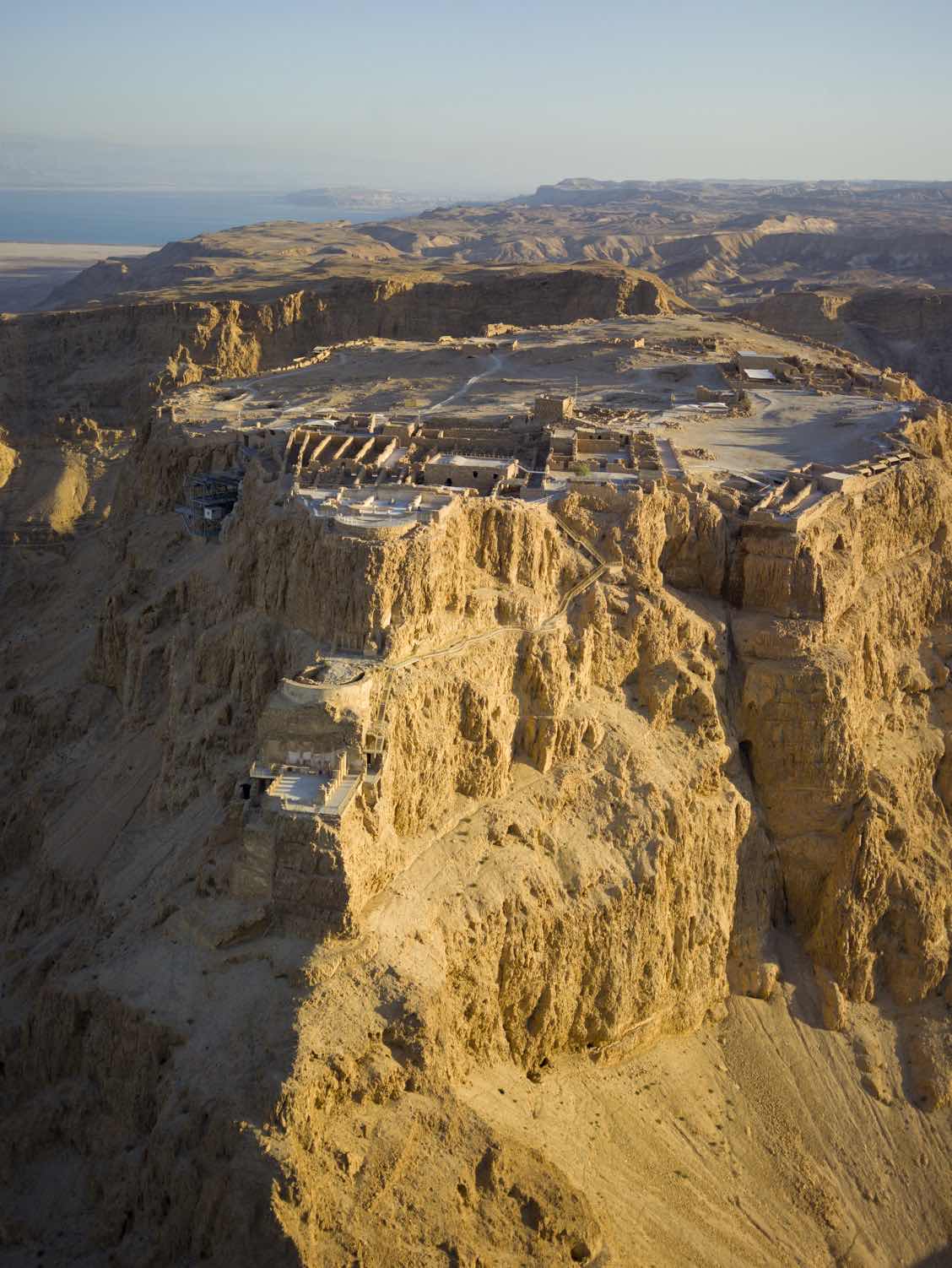
Judaea was under Roman control when a Greek guy sacrificed a bird at the entrance of a synagogue in Caesarea Maritima, a port city of the coast of Judaea and, at the time, the capital of the province. That lead to protests, which in turn lead to some of the population refusing to pay their taxes to Rome, which lead to the Roman governor of the region going into the temple to take the back taxes, which lead to riots, and eventually a civil war between the Jews. A group of Jewish assassins, the Sicarii, so-called because of the large curved blade or “sica” they hid beneath their cloaks (the original ‘cloak and dagger’ operation), murdered the High Priest along with thousands of their own people (men, women and children), and hundreds of Roman soldiers, including the garrison at an impressive mountain-top fortress in the desert called Masada.
Fast forward to 73 C.E.
The Roman army, now lead by Titus, son of the new emperor Vespasian, pretty much wiped out the Jewish forces, destroyed Jerusalem, burned their temple to the ground, and then he sends one of his generals to clean up the Sicarii who are holding out in Masada. The Sicarii are feeling pretty cozy. They are on top of a mountain fortress, with enough supplies to last them a couple of years. No sweat.
But the Romans don’t take no for an answer. They start by building an enormous wall around the mountain, so nobody can get in or out. Then they spend a few months building a whopping great siege ramp, I’m talking half a million tons of earth. On top of that, they build a humungous siege tower with a ginormous battering ram which starts pounding the wall. As the wall starts to crumble, the Sicarii, quick on their feet, start reinforcing it… with dirt and wood. A clever engineering solution for withstanding the impact of the battering ram. What do the Romans do? They simply set fire to the wood.
By the time the Romans had breached the walls, the Sicarii had all committed suicide.
Sometimes a moat isn’t as powerful a defence as you think it is.
On this week’s Australian episode, we were talking about REA — Reverse Engineer Anything, the AI framework that makes it easy to clone any application that runs on your computer. It will pull apart the code, figure out how it works, and then build you the same functionality. And, of course, you can modify it anyway you want, to suit your personal circumstances. Software companies that have spend years / decades building up their products may soon find themselves losing customers who just build their own.
AFR had a story about software cloning last week:
United States software developer Brandon Thomas is behind the current interest in “cloned” products and announced ArtCraft last week. He used Anthropic tools to build versions that look like Adobe’s most popular apps, including Photoshop (PhotoCraft), Illustrator (VectorCraft), Acrobat Pro (PrintCraft) and Premiere (FilmCraft). He has since added knock-offs of Microsoft Word, PowerPoint and Excel. “Software is over … I just one-shotted Photoshop, the whole thing,” an account run by Thomas posted on message board Hacker News.
Check out Brandon’s site.
Perhaps software moats are going to disappear like Masada’s.
I know — cloning a piece of software isn’t the same as cloning an entire business. I worked at Microsoft long enough to know that there’s a lot more to the software business than just the product. How much of that will matter, however, when anyone can say to their AI “build me some software that does X, Y and Z”, I’m not sure.
What about technical support? “Hey ChatGPT, fix that bug for me.”
What about new features? “Hey Claude, build me a new feature.”
What about testing? “Hey Gemini, run a thousand virtual tests on the software, using every conceivable permutation and fix any problems you spot.”
Yes, Cameron, it’ll be ready in an hour.
Buffett, of course, has talked about “economic moats” for decades:
“The most important thing to me is figuring out how big a moat there is around the business. What I love, of course, is a big castle and a big moat with piranhas and crocodiles.” — “Striking Out at Wall Street,” U.S. News & World Report, June 1994.
In QAV, we don’t have a score for “moat”. TK has actually said “I’m not an investor who pays attention to moats.” (#734)
But in an old episode when discussing inflation, TK connected moats and pricing power directly to what the QAV process captures: “The process will still take that into account, and we’ll find stocks that can’t put their prices up will come off the buy list and those that can, will come on.” (#549)
In his pulled porks, he’s discussed the relative and perceived strengths of moats at companies like Kelly Partners, JB Hi-Fi, Pro Medicus and IVE Group, and questioned how much of one businesses like Kip McGrath and EROAD really have.
If that competitive advantage helps a company maintain its earnings and cash flow, we can pick up those results through the checklist without awarding a separate point for “moat”.
My point is that moats don’t last forever, as taxis found out when Uber arrived and Encyclopaedia Brittanica found out when Microsoft Encarta landed.
AI and humanoid robots are going to threaten lots of moats over the next few years.
Which ones? How quickly? I have no idea. Some companies will lose customers. Others will use the same technology to cut their costs and become even harder to compete with.
Fortunately, I don’t have to work all of that out before I can invest. We can keep running the checklist, buying companies that qualify, and following our selling rules. That won’t get every decision right. But it gives us a way to respond when things change, without having to predict which software company will survive the next clever girl with a laptop.
And we need to be prepared to follow those rules even when we still love the business. A company can have a famous brand, a brilliant product and decades of success behind it, and still become a poor investment at the price we paid.
I’m happy to own shares in a company with a moat. I just don’t want to become so attached to the fortress that I refuse to leave.
QAV Myth Killers is a weekly column in the QAV newsletter, taking apart a piece of
investing conventional wisdom. Read the series, or
get it by email every Friday.
General advice only. Spacecraft Publishing Pty Ltd
trading as QAV is a Corporate Authorised Representative (CAR 001292718) of MF & Co.
Asset Management Pty Ltd (AFSL 520442). This is general information and does not take your
personal circumstances into account. See our
disclosure.