
To prepare for my Renaissance podcast this week, I’ve been reading about the great German artist, Albrecht Dürer, best known for the engravings he did as illustrations for printed books. He also painted on canvas and worked in other materials, having trained originally under his father, a goldsmith.
Even if you’ve never heard his name before, you might be familiar with this pretty famous woodcut he did of a rhinoceros named Genda.
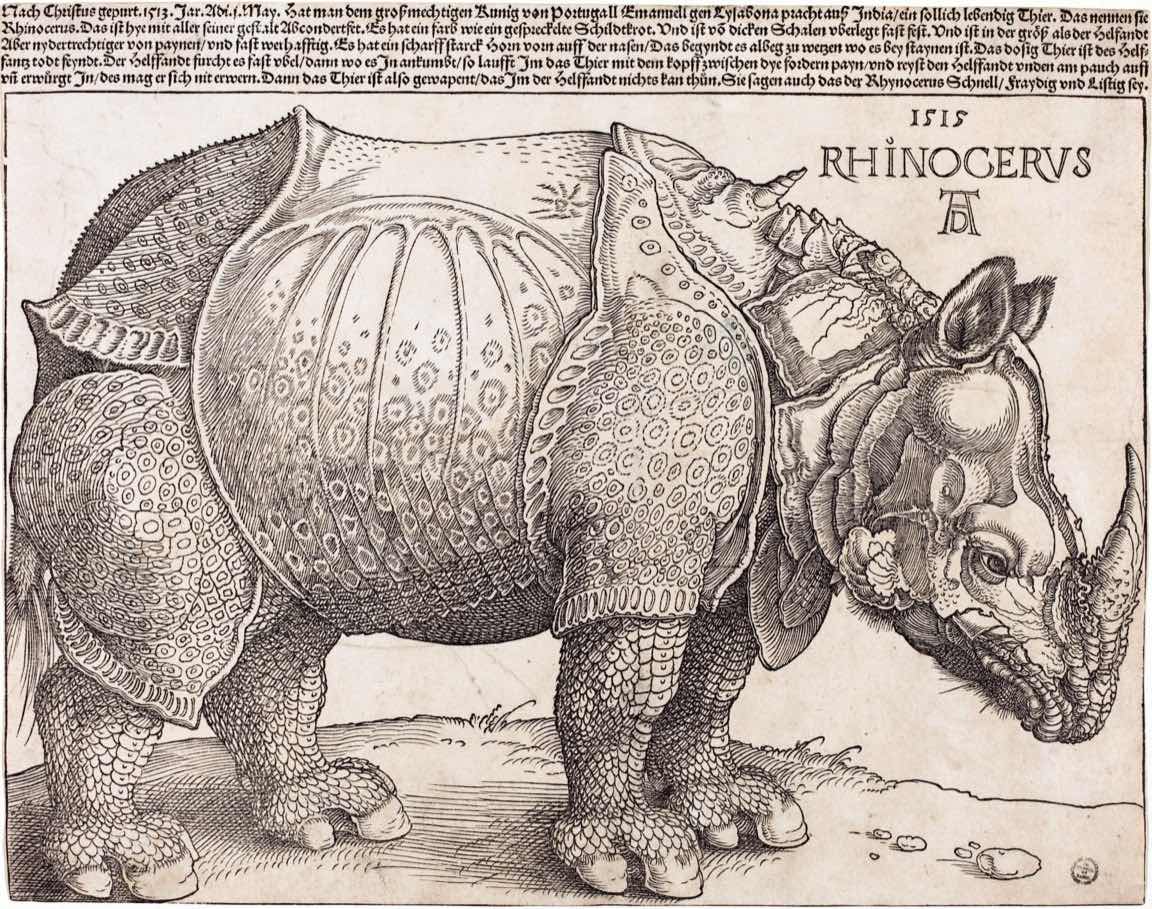
And there’s actually an interesting story that goes along with this woodcut.
Genda the rhinoceros was originally sent to King Manuel I of Portugal as a diplomatic gift from the Sultan Muzaffar Shah II of Gujarat (Western India). It was the first live rhinoceros seen in Europe since the days of the Roman Empire and it made quite a stir.
Descriptions of it reached Germany soon after and Dürer used those to etch his version of it, which, as you can tell, is highly stylized with a combination of scales, laminae, shells, and even an extra horn on its spine, which makes it look more like something out of Game of Thrones. King Manny arranged a fight with a young elephant from his collection, to test the account by Pliny the Elder that the elephant and the rhinoceros are bitter enemies, but the elephant fled the field in panic before a single blow was struck. I don’t blame it.
Poor Genda was then sent as a present to Pope Leo X, who also wanted to see it fight with an elephant which had made him laugh by squirting water and then kneeling down to be blessed like a good Christian. Ah the good old days of rhino versus elephant battles in the arena. That’s what Christianity is all about. So Genda was thrown on another ship, only to be shipwrecked near Porto Venere on the Ligurian coast of northwestern Italy, where he was last seen trying to swim to safety, but unfortunately still chained up (it had been shackled to the deck to keep it under control) and unable to make his way over the rocky shore.
Dürer’s drawing survived much longer than the actual rhinoceros and served as the inspiration for innumerable rhinoceroses in lesson books. The woodcut was copied many times in the following three centuries and was regarded as an honest representation of a rhinoceros well into the 18th century, when Clara the rhinoceros toured Europe for 17 years and more accurate representations became popular.
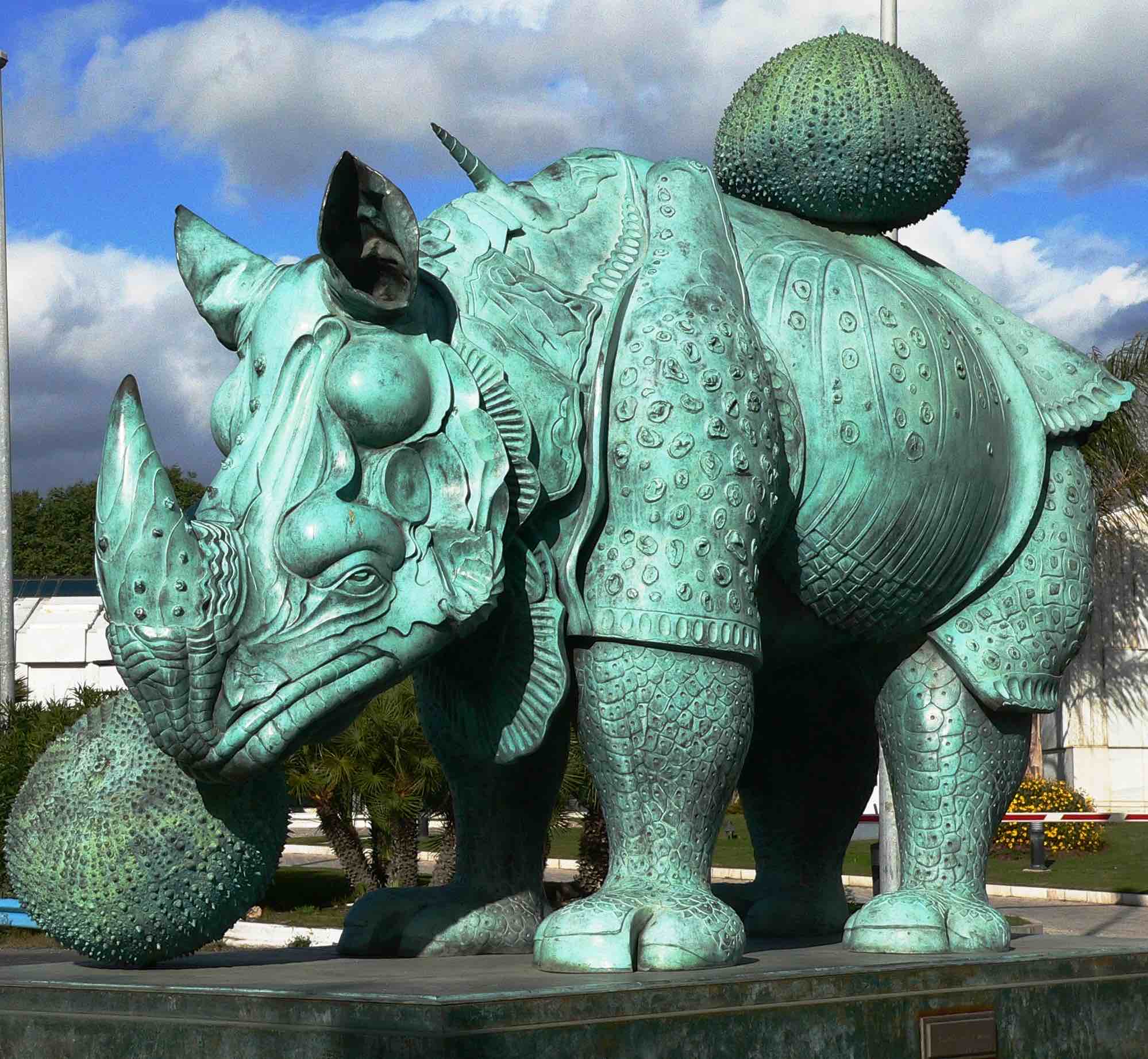
But the image continued to have a cultural impact. Salvador Dalí, who had a reproduction of the Dürer woodcut hung in his childhood home, loved it so much he made a marvellous sculpture of it in 1956, which stands in Puerto Banús in Spain.
(Funnily enough — it’s the second time I’ve read about suffering rhinoceroses this week. Software engineer Jesse Waites recently published a post called “I Pointed AI at 400 Years of Historical Archives. It Found a Forgotten Meteorite, Lost Rhinos, and Unrecorded Volcanic Eruptions” where he talks about other rhinoceroses dying in transit.)
So what does Genda have to do with value investing?
The story got me thinking about embellishment, and how the prospects for companies are sometimes embellished. CEOs, brokers, financial advisers, and members of the financial media, occasionally have been known to inflate the prospects of certain companies.
They’re usually based on some level of truth, but are enhanced and extrapolated in ways that might seem impressive to the casual observer, but really would not hold up to much sober investigation.
When you strip away the fake armour, additional horns and scaled legs, what you’re left with might still be a fearsome and impressive beast, but not quite the super-powered version that you were promised.
And the prospects between the two versions of the story could be materially different.
One example that comes to mind is Liontown Resources. The lithium deposit was real, the mine was real, and major commercial interest was real. The vulnerable part of the picture was the confidence attached to future prices, costs, funding and expansion. A genuine asset can support an investment story that makes its eventual profitability look much more assured than it is.
You might think, if you’ve already got a rhinoceros, why would you need to embellish it even further than nature has already enabled it? Isn’t a rhinoceros bad-ass enough? You’re making money, you’re growing, what else do you need?
Perhaps that’s just the nature of the markets, the short-termism of CEO contracts and the incentive mechanisms that brokers the finance media operate under. There are motivations to fluff up the stories as much as possible, even when the honest story is probably good enough. It’s one of the reasons we look for companies with high founder stakes. They have less incentive to gild the lily.
QAV, of course, is designed to strip away the embellishments, the extra scales, fake armour and additional horns, and give us the bare naked rhino which we can then score with our eyes wide open. We just want the cold, hard facts. Is the company making money? Is it growing? It is well managed? It is available at a reasonable price? Okay, we’ll accept a little bit of forecasting (hence our IV2), but it’s only one of twenty metrics.
Give us a naked rhino any day.
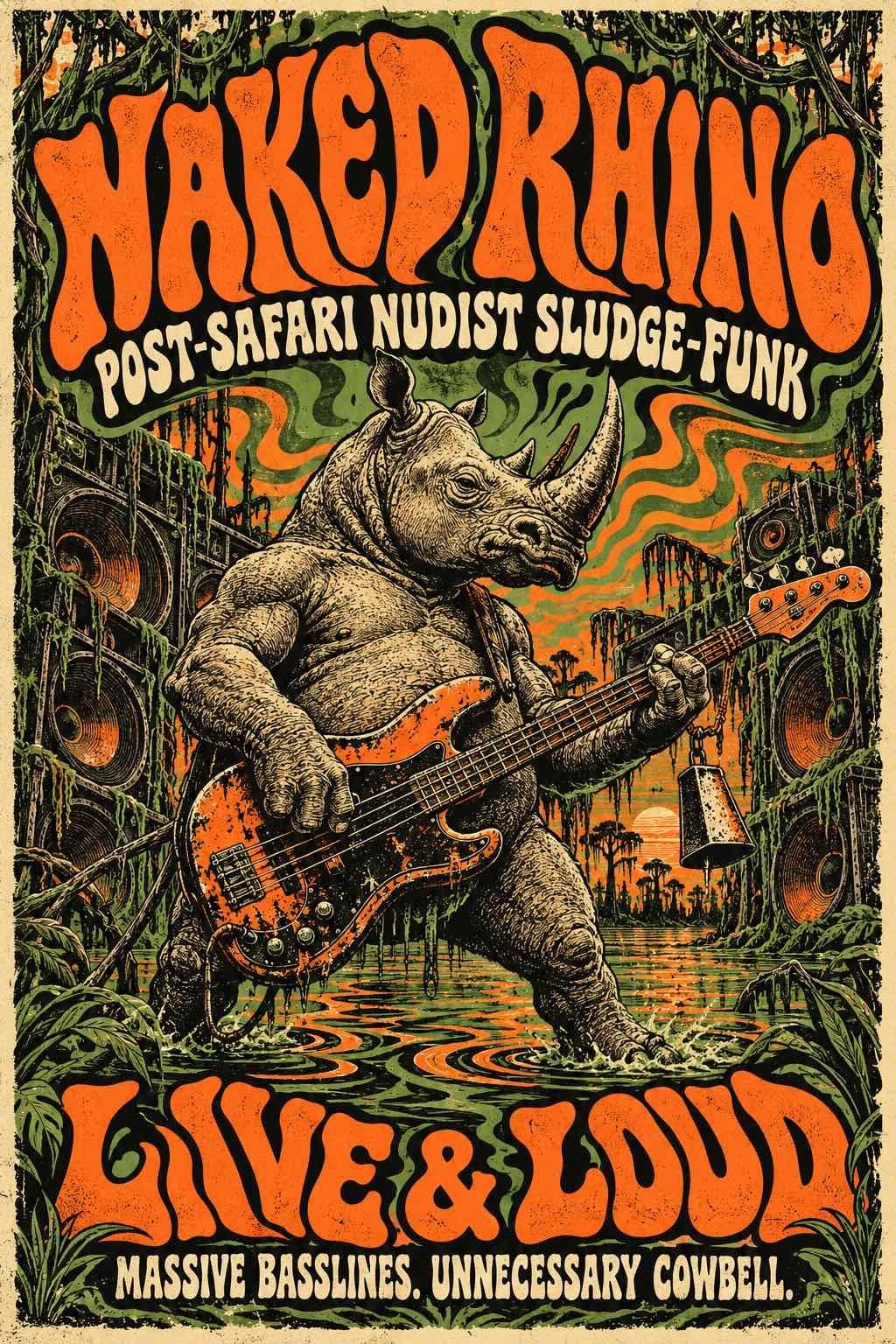
Coincidentally, “NAKED RHINO” was the name of my post-safari nudist sludge-funk band in the early 1990s.
Now… where can I find a good old fashioned rhino versus elephant fight? Anyone got the Vatican’s phone number?
QAV Myth Killers is a weekly column in the QAV newsletter, taking apart a piece of
investing conventional wisdom. Read the series, or
get it by email every Friday.
General advice only. Spacecraft Publishing Pty Ltd
trading as QAV is a Corporate Authorised Representative (CAR 001292718) of MF & Co.
Asset Management Pty Ltd (AFSL 520442). This is general information and does not take your
personal circumstances into account. See our
disclosure.
Leave a Reply