
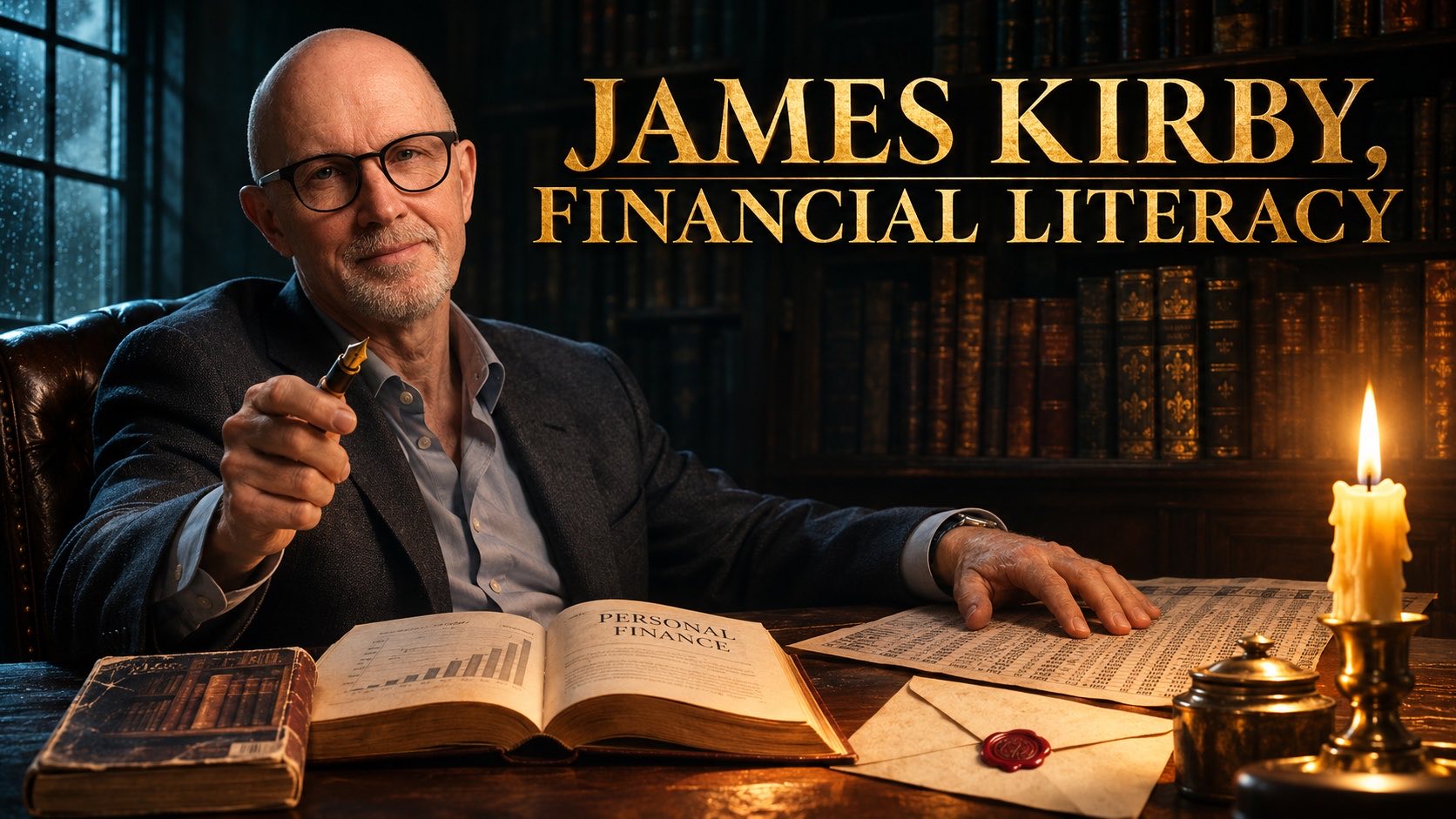
This week we chat with James Kirby from The Australian’s Money Puzzle podcast about financial literacy (starts 23:30), AI replacing financial planners, and the surprisingly niche world of rare book collecting. We also cover BRI jumping 41% on a takeover bid, run the numbers on Nvidia’s PROPCAF, and dig into listener questions on the quality score and 3PTL backtesting. After Hours goes deep into Klaus Kinski, Werner Herzog, and the greatest unhinged Letterman appearance you’ve never seen.
This week’s full episode is being made available to everyone. Also check out our podcast archives link and our pages on Apple Podcasts or Spotify or watch clips on TikTok. Or visit our homepage to learn more about QAV and how it works as a value investing system that you can learn and apply to beat the market.
Transcription
QAV AU 956 REVIEW VIDEO
Cameron: [00:00:00] Welcome to QAV Australia 956. It’s the 17th of November, TK, and you’re in your new digs. Look at that
Tony Kynaston: Yeah. Still plenty of packing boxes to get through.
Cameron: Yeah. thing you have people to do that for you
Tony Kynaston: Yeah. That’s the Jenny approach. She likes to get people in all the time. I’m just like, “I’ll get to it.” But no, she’s got peop- which just complicates things for me. You know? Yeah.
Cameron: Yeah.
Tony Kynaston: I’m trying to record a podcast and there’s people running around the
Cameron: around.
Tony Kynaston: Yeah. Anyway.
Cameron: to be, uh,
Tony Kynaston: Oh, good. Yeah, good. Yeah. But I was, I was saying to, uh, some people I was talking to yesterday, we moved in last week. The movers came on Wednesday, and by lunchtime it was really clear that half the stuff hadn’t arrived. They’re like, “We’re just the movers. We don’t know where it is. We’ll get back to you.”
Cameron: Oh.
Tony Kynaston: [00:01:00] so yeah, we, we’ve been sleeping in the place, but, uh, haven’t been able to sit at the table or, um, you know. We had to go out and buy bed linen and stuff like that, and a toaster and, yeah, ’cause we just didn’t have half the stuff. And then, uh, uh, we got a call on Friday saying, “We found it,” and then so they booked in for Monday.
But I was in Sydney doing climb stuff. And then, um, so Jenny had to be here and Alex was here on Monday for the removalists to come back in, and same thing happened again. By lunchtime they’re going, “Uh, uh, yeah, I can see it on the list, but it’s not here.” So, so we’re waiting for another drop to be. Well, they’ve gotta find the stuff first and then bring it to us
Cameron: standard of customer service in Australia that we’ve come to
Tony Kynaston: Oh, you know, it’s just, I don’t. Like I was saying, I flew to Sydney and I was on the 5:30 flight on Sunday afternoon, ’cause I had to go to this AGM, right? So I thought I can fly up Monday morning, and a couple of the people from Melbourne did, and they got in at, like 11:00 o’clock, and the meeting started at 9:00, ’cause [00:02:00] of the delays.
So I thought, you know, go up Friday, I go up Sunday. 1:00 o’clock in the afternoon I get a text from T- uh, Qantas, “Your flight’s been canceled. We’re now putting you on a 3:30 flight, and you’re flying via Canberra in a light aircraft to get you to Sydney.” So I re- that’s like, that leaves at 3:30, so I had, like two hours to get to the airport.
Ring ’em up. Um, delays on the, on the service line. “Okay. Well, we’ll put you on the 8:00 o’clock flight.” Yeah, that’s fine. Get to the airport, that’s delayed. So, you know, I got into Sydney just before the curfew at 11:00, 11:30 or whatever it was. Got to the hotel. You know, it’s just nothing works anymore, Cam
Cameron: Why do you think it is, Tony? Is it Albo’s fault? Albo
Tony Kynaston: So that’ll be RBA’s fault. It’s always the RBA’s fault.
Cameron: RBA, RBA
Tony Kynaston: Yeah. Put interest rates up and everyone just went, “Oh, it’s all too hard. We’ve gotta cut costs.”
Cameron: [00:03:00] I’ll tell you who else isn’t happy, people that bought Trump coins, Tony
Tony Kynaston: Do you think Trump’s happy?
Cameron: Probably. Yeah, he’s probably made
Tony Kynaston: Yeah
Cameron: I see that, uh, the Trump coin, this is in the Reuters I saw this morning. Trump coin launched, it went up to $74 in 2025. You wanna
Tony Kynaston: Mm-hmm.
Cameron: at what a Trump coin is worth at the moment?
Tony Kynaston: A penny.
Cameron: How about that? Yeah.
Tony Kynaston: Yeah
Cameron: I don’t know, something like 94 cents or something like that.
I don’t know. It’s dropped 94% is
Tony Kynaston: That’s a big tariff.
Cameron: But, uh, th- they’re, they’re doing the third round of Trump coin plugs at the moment, and the people who invest the most get to have dinner with Trump, and somebody said, “Yeah, it’s almost free now,
Tony Kynaston: I was, well, his diary.[00:04:00]
Cameron: No. Yeah, that
Tony Kynaston: He’s suddenly got time for dinner with people who own Trump coins.
Cameron: Yeah.
Tony Kynaston: He’s a lame duck, lame duck president now
Cameron: why would I not go if it cost me nothing to go?” said someone
Tony Kynaston: Hey, we should buy 90. Yeah, you got 94 cents? We’ll go and have dinner with Trump.
Cameron: Right
Tony Kynaston: But our plane will be delayed. Our f- We’ll miss it. Yeah
Cameron: I think it’s got to the point where Trump’s paying people to take the coins now, but he’s not paying it out of his own money. He’s getting the treasury to pay it or something like that
Tony Kynaston: He’s getting Jensen Huang to play, to
Cameron: Yeah.
Tony Kynaston: pay.
Cameron: Well, speaking of Jensen Huang, uh, there’s been a lot of talk that he might be going back, but I see the New York Times today is saying that, uh, uh, anonymous members who represent the board are saying, “No, he’s not coming back. That is not under discussion.” And I had some people me if Nvidia is now a good, uh, value buy, seeing as the price has dropped. So I ran some numbers on it over the weekend, and the PROPCAF was 38 times.
Tony Kynaston: Okay.
Cameron: And I was like.
Tony Kynaston: yeah.
Cameron: You were like, “What?”
Tony Kynaston: Oh, it’s getting back into the realms of reality then, isn’t it? I expected you to say the PROPCAF was like a thousand times or negative or something like that. Negative infinity. Yeah
Cameron: Oh, I remember when we did the PE analysis of the Mag Seven six months ago, and most of them had reasonable PEs compared to the dotcom boom,
Tony Kynaston: Yeah.
Cameron: Tesla. But, um, I still said, “Look, no, 38 times? I’m not. I don’t know what’s gonna happen to Nvidia tomorrow, let alone 38 years from now.” it’s all of this forecasting.
Uh,
Tony Kynaston: Hmm.
Cameron: gambling. You know, people
Tony Kynaston: Absolutely
Cameron: They own 90% of the AI chip market w- today, which is great. I mean, great business. Hats off to Jensen Huang and the Nvidia team for what they’ve done. But do I think they’re going to maintain that dominance forever? No. How long do I think it’s gonna last for? [00:06:00] Don’t know. I
Tony Kynaston: It’s gotta, well, it’s, it’s,
Cameron: as good as
Tony Kynaston: it’s gotta last for 38 years to get your money back.
Cameron: 38 years, right? I mean, that’s based on today’s
Tony Kynaston: Yeah. There’ll be growth. Yeah.
Cameron: quadruple their revenue
Tony Kynaston: Hmm
Cameron: for the next four years, that comes down. But the share price probably goes up alongside of it, so maybe it doesn’t. I don’t know. Um, couple of things. Um, BRI went up 41% yesterday, Tony,
Tony Kynaston: Yeehaw
Cameron: I did a Pulled Pork on them while you were away in May.
Tony Kynaston: so I can’t claim it? Okay. You can claim it. Yeah. Good.
Cameron: it. Yeah. They, they are
Tony Kynaston: Shoulders of Giants Camp
Cameron: That’s right. They are under an acquisition offer, uh, which
Tony Kynaston: Mm-hmm.
Cameron: everyone accepts. Um, it, the price had been down since I added it, though. So when I looked at it yesterday, I think I was up 15%, not the full 41%. So, [00:07:00] um, there you go. But good luck to anyone who got in on that, and it’s still not a bad little run. I don’t
Tony Kynaston: That’s good.
Cameron: I haven’t looked
Tony Kynaston: Yeah. So that’s the timber company, isn’t it? BRI?
Cameron: Yeah, it was an interesting, um, Pulled Pork actually to drill down into all of the different milling things
Tony Kynaston: Hmm.
Cameron: I think they’ve been around like 100 years or something like that from memory, and all, uh, very interesting. Looks like they’re not– They’ve had no, no share price movement today.
Looks like everyone’s tapped out Yeah, right. Currently at $1.58. It looks like it’s, uh, stalled there. But yeah, it had come down quite a since May. Uh, May it was trading at around $1.33. It had come down to a $1.02 in October, [00:08:00] and then is back up. So there you go. Uh, what else? We had some questions.
Tony Kynaston: Mm-hmm
Cameron: sent through some good questions I’ll throw through to you.
We do actually have a guest coming on in 15 minutes, folks. Um, so we’re gonna try and jump into these a little bit quickly, and then we might need to pause. question from Doug, “How much weighting/thought/value are we still placing on the quality score? original episodes when the podcast started the rule, if I recall correctly, was only to buy if the quality score was over 75%.
That seems to have stopped. Did anyone do back testing on it or if it had lost relevance as a standalone gate to buy?” What’s your recollection of the quality score? Because mine’s different
Tony Kynaston: Yeah, mine’s different too. I think we said it was a nice to have. It was, um, something we looked for, but we did compromise on that. It wasn’t a hard, a hard gate at 75%. [00:09:00] And, and my memory of it is pre-QAV, um, I started off having a hard gate of 75%, but I was finding that the buy list was too small, and sometimes it wouldn’t even have stocks on it at 75%, so I loosened that.
And, but I also found too that, um, by using the PROPCAF and the quality score together, uh, to get the final QAV score, if something would had lower quality but it was cheaper, cheaper to buy, the, the results or the performance was, was similar to something that was more expensive, so, but had better quality.
So, um, I, I’ve actually not used it as a hard gate for probably 10 years
Cameron: Yeah. Um, what it says in the Bible, which I think, uh, I don’t think I’ve updated this section of the Bible, um, since I first wrote it five years, [00:10:00] six years ago, whenever it was, which is
Tony Kynaston: Do we need a c- do we need to put a council together to amend the Bible? Council of Nicaea?
Cameron: council? Yeah.
Tony Kynaston: Council.
Cameron: No, uh, I’m the Pope
Tony Kynaston: Just, uh, you’re the
Cameron: I just
Tony Kynaston: pope.
Cameron: yeah. Papal infallibility, Tony.
Tony Kynaston: Right.
Cameron: Um, they say, “A good score is higher than 75%, however, we will take lower if the combined QAV score is equal to or above 0.10.” I think, I, I mean, my vague recollection is, um, thinking it was a hard cutoff at 75 when we started, but the, very early on you said to me, because we had a score that was lower than, you said, “No, as long as the final QAV
Tony Kynaston: Yeah
Cameron: we’ll still do it. It’s a nice to have.” That’s the way I’ve always treated it in memory anyway. Could be wrong on that, Doug. Maybe in the very, very early days. I know Doug’s been around a long time. it was for a little while, but it certainly hasn’t been for the vast majority of the time we’ve been doing the show. Second [00:11:00] question, “Has Tony or anyone used adjusted price graphs to include total return for three PTLs? I’ve been starting to look at a way to rank ETFs and this issue came up. I know we score dividend in the system, but that doesn’t directly impact the overall trend and buy or sell signals. To me, comparing overall total return is the only fair comparison.
But I can also see that if you’re only just buying into a stock, you don’t care about previous payouts if you haven’t had them, or maybe you should because they’re indicative of past performance.”
Tony Kynaston: So I’m not sure I understood that question. So we’re, we’re talking about the stock price graph for three PTLs, and I think Doug’s saying we need to figure dividends into that graph, but I’m not sure how you would do that because it’s a share price graph. Um
Cameron: you would need to f- you know, write code [00:12:00] to
Tony Kynaston: Yeah, break it down somehow
Cameron: in somehow. I’m not sure how you do it either
Tony Kynaston: No. Um, dividends are certainly important, and we put them into the checklist for scoring, but I don’t. And I, I wondered whether the dividend yield was already baked into the stock price anyway, that people take it into account when they’re pricing the stock. So,
Cameron: Yeah, I think that makes sense.
Tony Kynaston: yes. So, maybe Doug can just give us some more information, but I, I don’t see how you can blend those two together on a share price graph
Cameron: On the 3PTL and backtesting, though, I have started the project that we’ve been talking about. Um, I’m building a model for backtesting 3PTL stuff, um, looking at question for people who don’t know, I don’t know how much we’ve talked about it, but the question is whether or not we should just be. Oh, I, I talked about it in the newsletter this
Tony Kynaston: Yeah.
Cameron: actually.
Yeah. Whether should we, we should just be taking the two highest and the two lowest and ignoring all of the fudging that we’ve done. we fudge too far, [00:13:00] A Fudge Too Far, that was a great David Lean movie, I think, wasn’t it? Um, or if, you know, the fudging is actually improving the return. So I’ve been trying to work out, it’s a question for you, w- I can probably do offline, but, know, it, thinking it through, the first stage of the backtesting will be various versions of the 3PTL modeling.
So what I’ve got is the current version of my logic, the, um, base level version of the logic, just the two highest and the two lowest,
Tony Kynaston: Mm-hmm
Cameron: and then adding one of the additional rules in at a time, different variations with, say, the, the flat line rule or the latest peak and the latest trough instead of the lowest
Tony Kynaston: Yep
Cameron: second trough for the second line. And then it’s [00:14:00] a question of using m- m- model one, when does it get us in, when does it get us out, and what happens to the share price after it gets us in and gets us out? And I’m looking at periods, so I’m looking at, I think, 20 days, 60 days and 90 days or 30, 60, 90 or something like that. Um, and I might need longer timeframes because the q- I guess the question I have, I wanna check if this is the question you have is, which model gets us in at the right time, the optimal time, and which model gets us out at the optimal time? If the model gets you in and then the share price goes to. It gets you in too early and the
Tony Kynaston: Mm-hmm
Cameron: hasn’t stabilized and it goes down a week or a month later, um, and then goes back up, it got us in too early. Uh, if it gets us out too early and the share price can- turns around and keeps going up, then that’s suboptimal. it’s just a question of what the [00:15:00] timeframes for checking back are, you
Tony Kynaston: Yeah
Cameron: long a window do we want to take into account?
Tony Kynaston: Well, the way I, I would do it is I’m looking for, with your different model variations, what the performance is for a set of stocks, QAV stocks. And I’d do it over a long period of time because, you know, like all these edge cases happen because of things like coming out of COVID or going into COVID or, um, something else has happened.
The Ukraine war started or interest rates have risen. So you’re probably on a five-year period and then just.
Cameron: five years, yeah
Tony Kynaston: you know, a set of– maybe go back five years and look at what was on the buy list five years ago and, um, yeah, see how they perform under different models.
Cameron: Okay. And just look at the whole five-year period.
Tony Kynaston: Yeah
Cameron: Okay. Um, lastly, Doug says he’s been experimenting a lot with AI to build and speed up his checklist, and he wants a Zoom [00:16:00] call. Um, he says Cam or Tony. I’m assuming it’s probably a Cam job.
Tony Kynaston: Yeah, that’d be good. Thank you.
Cameron: Yeah. yeah, and I said, I said Doug can email us anytime.
Love to, love to look
Tony Kynaston: Ooh.
Cameron: AI work on
Tony Kynaston: Ooh
Cameron: I got a lot to learn. Uh, we can share ideas. So yeah, good. Thank you for those questions, Doug. Uh, well, how long have we got? Oh, eight minutes. Um, Scott sent me an article,
Tony Kynaston: Hmm.
Cameron: the Australian Investor, that was in Morningstar. Um, this came out on the 22nd of October by Shani Jayamani. Um, executive summary: the 2026 State of the Australian Investor report marries qualitative survey data from the largely self-direct and engaged retail investors within the Morningstar community with quantitative portfolio performance and transaction data from an overlapping and expanded group of retail investors using Sharesight for portfolio tracking and management. The report key [00:17:00] findings, investors are cautious but remain pragmatic and continue to take advantage of perceived opportunities
Tony Kynaston: Yeah, that’s good summary.
Cameron: Yeah. Wow.
Tony Kynaston: La-last year they, they were wild and deeply optimistic and buying Bitcoin, but this year they’re pragmatic.
Cameron: By the way, I had a good laugh. I looked at Bitcoin yesterday ’cause, uh, an old friend of mine was arguing about my, uh, analysis of Nvidia, I remember him pumping, um, uh, Bitcoin for the last five years. Do you know the, the current Bitcoin price is the same price it was at five years
Tony Kynaston: Oh, really? Wow.
Cameron: maybe 5% up,
Tony Kynaston: Yep
Cameron: it’s, it’s come all the way back to its price from five years ago. But limited supply, Tony. It’s gonna go up forever. Limited supply. You
Tony Kynaston: Yeah. Well,
Cameron: don- look, you don’t get it, Tony.
Tony Kynaston: I don’t get it. I know.
Cameron: a
Tony Kynaston: I’ve been saying I don’t get it for the last 10.
Cameron: about limited [00:18:00] supply? It’s, it’s, it’s a new kind of money, Tony. New c- it’s
Tony Kynaston: Well,
Cameron: Tony.
Tony Kynaston: well, good customer service is in limited supply as well, but that’s not worth well, it should be worth a lot, but
Cameron: is
Tony Kynaston: it’s not. Yeah. It’s
Cameron: my Wi-Fi provider, I’ve had some Wi-Fi issues and I’ve been contacting them. They call me to check up the next
Tony Kynaston: Ooh, wow
Cameron: ” Hey, just checking up to see how it’s going with those fixes we did yesterday. Let me know. Get back to me.” I’m like, “Holy shit.” And then they sent me a customer survey and I was like, “You guys are seriously the gold standard,” you
Tony Kynaston: Oh, everyone sends me a customer survey. Telstra came in and put my NBN in and sent me a customer survey, and then when I just ignored it, they sent me another one. Then they rang me, and I’m
Cameron: I’m not saying that
Tony Kynaston: like
Cameron: they, they, they get gold standard because they call me to check
Tony Kynaston: okay.
Cameron: it’s going a day later.
Tony Kynaston: Uh-huh
Cameron: They reach out, “Hey, hey, how’s it going? How’s it going?” And they’re on it. They’re like all over it, different people, they know the notes. You call them up, they go, “Yep, I’ve got, I’ve got the notes from Jacob here,” [00:19:00] uh, blah, blah.
They’re fantastic. I’m like, why can’t everybody
Tony Kynaston: Hmm.
Cameron: that level? But you don’t get it, Tony. Decoupled, Tony. Decoupled, Tony. Limited supply,
Tony Kynaston: Yeah
Cameron: It’s gonna go to a million dollars. Go to the moon, Tony
Tony Kynaston: Well, aren’t they gonna halve it? That’s when you buy it, when they’re gonna– about to halve it or something. Yeah. Number of Bitcoins in circulation halve.
Cameron: Hold on. If you thought it was going to a
Tony Kynaston: Yeah.
Cameron: ’cause it had limited supply,
Tony Kynaston: Yeah.
Cameron: it at 100,000? That makes no sense
Tony Kynaston: Didn’t we get given $500,000 Zimbabwe notes or something from Thorsten to say, you know, “This is what Bitcoin is gonna be worth one day”?
Cameron: Yeah, yeah. I’ve
Tony Kynaston: Mm-hmm.
Cameron: somewhere. Yeah. Torsten, he emailed me, Dad. I think he wants to give us some money, you some money
Tony Kynaston: He wants to give us some money.
Cameron: Wants to give you some money, yeah, for the film.
Tony Kynaston: Oh, excellent.
Cameron: Uh, anyhoo, [00:20:00] um, what else?
Tony Kynaston: Shh. Well, shh, it’s a tax write-off. Don’t, we don’t wanna,
Cameron: findings.
Tony Kynaston: pollute it with the actual income. Yeah. Hmm
Cameron: shift in retail portfolios continues with exchange traded funds becoming the core building blocks of investor portfolios while individual shares are transitioning to satellite holdings. Satellite of love.
Bum, bum, bum. Satellite of love.
Tony Kynaston: That’s a high, that’s a high register.
Cameron: of, uh, the film, remember old David, my old friend that was in the, uh, reel of the film singing some old song about Jesus? I had to cut him in ’cause I had Jesus as a friend of mine, and they didn’t like that, so I had to replace it with my old friend David.
They complained. I called him the other day. He’s 101.
Tony Kynaston: Wow.
Cameron: in October. Called him
Tony Kynaston: Good on him.
Cameron: lunch with him in a couple of weeks. Sharp
Tony Kynaston: Oh,
Cameron: Yeah
Tony Kynaston: of weeks, you better bring that forward if he’s 101.
Cameron: Well, [00:21:00] actually, I sent him an email on his birthday and he didn’t reply. It was on
Tony Kynaston: Oh
Cameron: 31st. Then I called him a week later, couldn’t get through, didn’t answer.
Called him a few days later, still no answer. So I called reception at the village where he lives in. I was like, “Oh, David.” They go, “Yeah, yeah, he’s still around. I’ll get him to give you a call.” He called me up 10 minutes later, and he was
Tony Kynaston: Yeah.
Cameron: Anyway.
Tony Kynaston: your earphones down.
Cameron: ETFs, are you surprised that everyone’s going into ETFs, Tony?
Tony Kynaston: I was– we were actually talking about this yesterday when I was in Sydney with the, with some of the shareholders in Climb,
Cameron: Myer
Tony Kynaston: and it’s certainly the big thing. That’s, that was my takeaway from what you sent me as well, that, that, this document. My two takeaways were people are buying the dips, so as soon as the share market turns down for whatever reason, they’re, they’re buying it.
Um, which is kind of a version of the Fed put that they expect that if, if the share market drops, the interest rates will be cut to put things back into balance. And the other, the other takeaway was that, [00:22:00] um, people are now investing heavily into ETFs, which kind of makes sense too, ’cause I mean, I’ve preached it forever as well, that index funds at low fees make a lot more s‑sense than, um, active management if you, you know, unless you find a, find a good one.
Um, ’cause there’s fees involved. However, there is. One of the people I was speak- talking to yesterday said that there are now more ETFs in America than there are stocks. So, you know, it’s, it’s,
Cameron: People
Tony Kynaston: it’s getting out of control, and there’s o‑obviously ETFs that are low-cost index type ETFs, your Vanguards, for example.
But there’s a proliferation of ones now which do have high fees, which are gonna struggle in any sort of downturn. So, you know, there’s a lot of synthetic ETFs, so they actually don’t hold the commodity or the stock underneath that they’re tracking. So if the market drops quickly, you know, and they’ve got a basket of puts [00:23:00] and calls and warrants on these things, they may not be able to redeem you out if you try and sell, ’cause they can’t sell the underlying asset to, to get out.
Um, so there are lots of risks now, I think, in ETFs which weren’t there five years ago, ten years ago, so that’s. You’ve got to be careful about that, I think. But if you,
Cameron: a
Tony Kynaston: but if you are just buying a vanilla index fund with low fees, I think you’re okay
Cameron: I’ve got a guest coming on in a few weeks who I saw post on the ASX subreddit that he’s a value investor, and over the last 10 years his CAGR is 20%.
Tony Kynaston: Okay,
Cameron: And I said, I said, “Come on.” Um, but, uh, he– I know he’s got some ETFs in his portfolio, so we can talk to him about that.
Tony Kynaston: Ooh.
Cameron: And here is
Tony Kynaston: Oh, hello
jk: Hello
Cameron: Live in front of your naked, steaming eyes, James Kirby, welcome to QAV
jk: Cameron. Hello, Tony
Tony Kynaston: Hello, James
Cameron: [00:24:00] How are you, James?
jk: Very good. Thank you very much.
Cameron: Oh, the pleasure is all ours. Yes.
Tony Kynaston: yeah
jk: good,
Cameron: Very clearly.
jk: Uh, uh, James Kirby from The Australian’s Money Puzzle podcast.
Cameron: Oh, you’re introducing yourself. Okay.
jk: if
Cameron: Wow. That’s, that’s very accommodating of you.
jk: make it easy.
Cameron: Well, I’ve. Tony’s got some, uh, things he wants to talk to you about. Before we get into that, though, I’ve got a couple of quick ones.
jk: Yes
Cameron: Um, you wrote a book, My Mother’s Diamonds
jk: Gee, you’ve done a bit of homework. That’s good. I’m
Cameron: That’s, that’s my job. And, and I, I was particularly taken by that.
It’s, um, so it’s about Holocaust survivors and people trying to recover their assets. There was a story this week about a Van Gogh. Did you see that in the news?
jk: No, but the art repatriation is a story that never ends. Yeah.
Cameron: Right. this is a, Sotheby’s has, uh, got a Van Gogh called something trees, Blossoming [00:25:00] Chestnut Trees. Um, it’s up for sale, valued at $180 million, and it was sold by a Jewish art collector in June of 1936, and they’re claiming it was sold under duress, um, they want, know, retribution or
jk: goes. Yeah. I, I, I found this, this. There was a story be- in Dunedin, New Zealand of all places in the book, where someone had just spotted something and said, “Hang on a second,” you know.
Cameron: Hmm
jk: we had that, had that on the family wall, or we had that over the fireplace back in wherever. So that was an amazing, was an amazing sequence of events.
I started, I wrote an article for The Australian, which, which was based on an advert I saw in a newspaper, that became a feature and a series of features, which became a book, which became a documentary on SBS. Just a [00:26:00] story that went on forever. Uh, and it’s still going, really.
Cameron: Yeah, still going. That’s fascinating. Well, I wanted to get your thoughts on that, and we’ve done that. You, uh, stopped using Twitter in early 2024. Why? See, the big questions I’ve got here, the important questions. Yeah.
jk: good. You’ve really done your research. You know, I’ve always been skeptical about, uh, working for free. Anyway, so I was quite happy to jump off Twitter along with everybody else when they got a bit tired of Elon Musk’s more, uh, unsavory, opinions and, his approach to things.
Uh, people were very disappointed with him, I think, in many ways. And, but more generally, uh, I have always liked to be paid for the work I do, and, uh, pushing– working on social media, you don’t really have a straight line to, uh, [00:27:00] you know, rewards. It’s, uh, in our world, my world, professional media, it’s become very difficult to have a career where you are paid properly for the work you do that you could have a full-time career.
And it, it’s been really tough, and I’ve watched a lot of people, um, jump off, if you like, into other areas to be paid better, but they’re not necessarily happier, or they didn’t necessarily want to do it. it’s quite a, it’s a skill in itself, career navigation in, uh, in our game.
Cameron: Okay, interesting.
Tony Kynaston: So, so you got into podcasting?
Cameron: Yeah, podcasting, where all the big money is
jk: Well, podcasting has, you know, I think it’s got a future, and it’s, it’s– That’s for us to– In media, that can, that can be something that’s often missing. But also what I love about podcasting that you will get [00:28:00] somebody, and you will meet them, and then we’ll talk about whatever subject it might be, doesn’t matter. they will talk to you, and you– a‑and they will be very interesting. And you s- might say, “Could you write an article about that?” They say, “Oh, yes, we’ll write an article. Sure.” They send it in, and you look at this. You look at what’s sent in, and you say, “Oh, this is so removed from what I had in mind.” bring that same person onto a podcast and literally say to them, “Tell the listeners what you’ve been telling me,” and it flows. So I think there’s that terrific. That’s a terrific aspect of podcasting in our area of financial and economics, where that ability to sort of articulate complex ideas in an easy way. It’s, it’s a– it’s actually– it’s a skill that’s sometimes easier in the spoken word in podcast than it is, you know, to write
Cameron: Yeah.
jk: for most people,
Cameron: Yeah. I– Spot on. I
Tony Kynaston: Yeah, no, like great. [00:29:00] Yeah
Cameron: And do– And let’s do it before AI takes it all over, and I think that leads Tony into his first question for you
Tony Kynaston: Well, yeah, I mean, I– Cam and I were talking about the level of customer service in Australia, and I’ve had a lot of time sitting at airports recently to listen to The Money Puzzle and, um, which is a good podcast, especially if as you unpack, I guess, the, the tips and tricks of navigating the financial landscape at the moment.
And my first question is: Will, will AI replace financial planners? What, what are your thoughts on how AI’s go- getting into that a‑advice sort of, uh, you know, geography of the landscape?
jk: I think they will adv- I think they will replace the low-hanging fruit in financial advice. There’s a lot of routine advice often given by people who are barely a few steps [00:30:00] ahead of the person across the table or the client, and I think that sort of level of financial advice will just disappear. And I– and it’s not necessarily the wealthier or, or, or less wealthier people.
I think it’s got to do with how easy it is to offer that advice. And so I think that will be instantly replaced by AI, and financial advisors at every level will have to add value, just like we all have to add value in everything we do. So journalism is the same. Um, the very obvious stuff, the low-hanging fruit that would’ve been, you know, six, six secret hideaways, uh, Greece that I haven’t been to.
Well, I just go onto AI and put that in, and I’ll get a pretty good list. So I don’t need to subscribe to something to get that. I think financial advice has something very similar. So you’ve gotta add value, and then you have to move up the chain. I think that would be the case, um, substantially. Yeah, I think [00:31:00] it’s a, it’s an area that is ripe. And the smartest advisors are already– They are, are, are– they are already h- or at least if they’re not hiring consultants, they are actually hiring staff because you– the, the, the productivity kick you could get in financial advice from AI is powerful
Tony Kynaston: It is, yeah. And, um, there’s a, there’s a big underserved general market, I think, at the moment for financial advice, and maybe a v- financial advice is too narrow a term. But, uh, now that it costs sort of $3,000 to $5,000 for your first interview with a financial planner, a lot of people aren’t getting in the door for financial advice, and I s- I see AI as a big, a big tool to help get them just started on the basics of their financial life
jk: I think so. Except, of course, you can’t, uh, complain if they’re wrong,
Tony Kynaston: You can complain.
jk: to
Tony Kynaston: You can [00:32:00] complain, you just can’t get recompense. Yeah.
jk: Yeah,
Tony Kynaston: Mm-hmm.
jk: we’ve gotta put that on the table, um, that there is that as- I think the, the ideal way obviously to use it is to stress test your ideas with the financial advice, so, uh, with a financial advisor.
So you, that, that you, that you go as far as you can on the, on the, on the common denominator work. How much should I have in super? I pay off my mortgage? These are like elementary questions and, and they are not very complex, so that when you go to an advisor, the advisor can say something really specific that you wouldn’t have found out on AI, whatever that might be, that you can add or subtract make it better for you and your situation.
But generic advice, I think the AI will, will just wipe the floor with, with people who are giving generic advice and charging three thousand
Tony Kynaston: Yeah
jk: [00:33:00] dollars a pop for it. That’s, that’s a business that’s over. So, so by the way, so is, uh, some of the other businesses, I think the obvious ones. You know, I think some of the businesses where people were making pretty good, uh, compensation for, you know, mortgage broking, I would really worry about.
Um, comparison services, that sort of thing. I think it’s, it’s, it’s ripe for the taking, I imagine
Tony Kynaston: No, I agree. Uh, that, uh, real estate agents, I think, is a big one. We recently bought a house, and AI gave us all the information on valuations for the property, so we, we went along pretty well armed for negotiating the, the purchase. And, um, yeah, you, you sort of. The, the tricks that real estate agents could use to try and get the price up are fairly limited now, I think.
jk: Though you know the questions to ask, Tony.
Tony Kynaston: Mm. Yeah, I guess so.
jk: knows the questions to ask. You need to know the questions
Tony Kynaston: The prompts. Yeah
jk: the prompts. Yes,
Tony Kynaston: Y- you just made a comment and said that the, the [00:34:00] basics are pretty well known about things like whether you pay down your mortgage first. But I, I question that. I think that there are people still str- still quite struggle with, um, you know, I’m busy, I’m on the tools all day, and then, you know, I don’t have time to think about whether I’m paying the mortgage off or whether I’m investing in a new property or whether I’m salary sacrificing more into super and, or having an offset account.
So I think, I think that’s the kind of basics that, that a lot of people aren’t getting any thought or advice on that, that AI can probably help with
jk: I suppose so. I was thinking more of sort of homespun when, you know, kind of homespun folky type wisdom that would come, you know, people would get from their parents or, or, um, you know, pay off your mortgage as soon as you can, this sort of thing. There’s nothing wrong with those rules if you, if, if you’re lucky enough to be familiar with them. Uh, you know, spend less than you earn. if you could actually hang on to three or four of those underpinning rules, go a long way
Tony Kynaston: Yeah. [00:35:00] It’s, it’s interesting one, isn’t it? What, I mean, there are a lot of people that I’ve encountered through doing our podcast or just generally who don’t get exposed to those kinds of rules and, and, uh, e- ei- either, either ever or late in life. So there’s a real gap in terms of financial literacy. I don’t know if it’s the school system or the parents don’t pass it down, or the kids are just naturally cynical or what, but yeah, the, I, I’m seeing big gaps in people’s knowledge.
jk: Big gaps. A‑and, and that area of financial literacy I’m, I’m very interested in, and we did a, we had a, uh, convention in Sydney, uh, just a few days ago, and, uh, it was a literacy Xtra, the Financial Literacy, um, Foundation. And one of the things that, uh, came up was that younger have so little understanding.
They have different perceptions. I’m thinking of something like a bank. I mean, you, you or [00:36:00] I. What’s a bank? A bank is a big building. it’s got walnut, you know, corridor, lined corridors and steps, and it has this sense of it’s fundamentally strong, and you, you go into the bank, and your money’s in that bank, and they have huge buildings, and they’re very, very convincing. But a digital native, if you like, just sees a brand name, and that brand name isn’t very different from another brand name like Grand Theft Auto or something. They’re just names on a screen, so they have no sense of security from a bank, and they have no sense of cash because they never use cash. So you’re talking about this entirely different generation who will have very different demands, and in some ways they’ll be very smart. Uh, but in other ways, they will lack a, sort of a, um, a fundamental understanding the relationships [00:37:00] and that how a relationship with a bank or what a bank is is different than what some other business might be
Tony Kynaston: And I think, I think, well, from my own experience, you know, when my daughter got to an age where she was earning a bit of money, like just from casual work, I said, “Righty‑o, you can’t just leave that at home in a jar. You’ve gotta take it into a bank and earn some interest on it.” And we went into the bank, and we opened an account, and when she got her first statement, she said, “Dad, what does.001% interest add up to?”
So, so the, you know, the whole banking relationship has changed anyway, I think, and, and, you know, she got quite cynical about
jk: it
Tony Kynaston: involved
jk: it’s a, it’s a, it’s a, it’s a fascinating area, and, uh, it’s an area I would be concerned about, and I, I, I do try to talk to that age group because they do listen to podcasts, and they have this issue, they have this blurred line between gaming [00:38:00] and investing.
Tony Kynaston: Mm-hmm
jk: There’s another area of real concern in financial literacy at the moment where, again, a, a, a, a digital native or someone who, whose life so far was largely their, the economy was online to them. they have perhaps bought their first stock and on a site where it celebrates this, and it’s like you’ve won a prize because you’ve bought something. But you haven’t won a prize yet. You’ve just bought. you, you may never win the prize. Uh, so
Tony Kynaston: Correct.
jk: dangerous, uh, you know, habits forming for people, and I, I think that’s
Tony Kynaston: Mhm
jk: we’ve gotta really, uh, explain to people very carefully what it really means to invest or what it really means to engage your money and who, who’s on the other side of the transaction.
What’s the relationship? You know, what, is it fair? Is it a fair [00:39:00] relationship between you and who you’re dealing with? So people get lost in this mire. They come out and they say, uh, like First Guardian, if you read the stories, the one common theme was people said, “I didn’t think you could, uh, lose my super,”
Tony Kynaston: Ooh
jk: was super.
Because, because there was a government control mandated that I had to save by law, thought that there was some sort of reciprocal, uh, deal that you were protected in some fashion, that it was guaranteed. It’s not guaranteed. people don’t know that. You think they do, but they don’t. They don’t have, uh. M‑many, many people have no idea the terms in which we do our financial relationships, including super.
Tony Kynaston: Yeah. And they don’t have the literacy or the experience that if a boiler room rings you up and say, “Hey, compare what you’re getting now for your super with what we can get you.” You don’t ask the right questions or you just, you know, [00:40:00] you’re, you’re, you’re worn down by the sales pitch, I guess. And, you know, there are steps you can take to say, “Hey, I’ll call you back and I’m gonna check this out first with my financial planner,” or whatever.
They’re just not being taken.
jk: They’re not being taken, absolutely. Yeah
Cameron: So I, so my question to both of you i- is why is that basic level of financial literacy not there, in your opinion? Where are we failing as a society?
Tony Kynaston: Oh, from my, from my. Well,
jk: the, well,
Tony Kynaston: go ahead, James. Yeah.
jk: in the schools. It,
Tony Kynaston: Yeah, I agree
jk: in the schools. uh, and I think the. You see, the schools will come back and say, “We do it in commerce. We
Tony Kynaston: Ooh.
jk: it in accountancy.” Yeah, but the kids who are in accountancy and commerce are probably better, they’re going to do better anyway. Uh, uh, so what I’d be concerned about is the kids that are looking out the window when they’re doing commerce and accountancy,
Tony Kynaston: Well, it was in, it [00:41:00] was in business.
jk: in their
Tony Kynaston: Yeah. Sorry to cut across you there, James.
jk: Yes,
Tony Kynaston: It was, it was called business principles when I went to school, so it may have changed. But, um, it was basically the, the choices were that you could do physics and chemistry or you could do business principles. So like there was this streaming off of people who went into it.
A- and I have a friend who’s a school principal, he’s retired now, but I put it to him, you know, it shouldn’t just be the commerce kids who are learning about financial literacy, it should be all the, all the students. And he said, “Tony, you wouldn’t believe how many people approach me every day and say all kids should learn X,” whatever it is.
And he said, “We just can’t do that. We’ve got to
Cameron: you,
Tony Kynaston: refine it.”
Cameron: Tony
Tony Kynaston: Oh, sorry. Okay. Yeah. So I’ll just repeat that.
Cameron: internet in your new house is, uh, not
Tony Kynaston: don’t, don’t get me started about customer service again. Um, no, the point was that my school principal friend said that they were approached so often to have [00:42:00] something included in the curriculum for all students, whether it was, you know, physical education, sex education, financial education or whatever.
There was just so many lobby groups that, that they just couldn’t do it
jk: Yes. No, they can’t. But, uh, Youth For The Xtra just solves the problem to a degree in that the, the school just commits to leaving the, the time in the timetable, and they do everything else. They literally design the program. The teacher comes in, it’s, they visit the school, they leave, and, and that gives them, um, the chance to get at a certain amount of, of pupils throughout the country.
But the, the issue in every country is as I say, the students you want to get are not the ones who are doing commerce and accountancy.
Tony Kynaston: Correct
jk: the students that aren’t doing it. Yeah
Tony Kynaston: Yeah. It’s the ones going, yeah, yeah, going into small business or going into trades or anything really. But, um, yeah, look, maybe that’s a gap in the [00:43:00] market that we should try and fill somehow with a Mathletic style software program or something. Yeah
Cameron: James has mentioned the Xtra Foundation, which I know you’re a director of. Is that right, James?
jk: a director of it, yeah
Cameron: I’d never heard of it until I did my research on you. So can you tell us a little bit more about how it works and what it actually does, the role it plays?
jk: Yeah. Well, what it does is, uh, it, it w- its original, uh, chair founder was, um, Paul Clitheroe, who I’m sure
Cameron: Myer? Sure
jk: was a great operator of course, and has just recently, uh, resigned as chair. And the new chair is Delia Rickard, who was a deputy at ACCC. And when she was at, uh, sorry, at ASIC and, uh, uh, uh, and at, her main, uh, role pr- in the past, the reason I’m mentioning her is because she was instrumental in creating ASIC’s MoneySmart
Cameron: Right
jk: so which is a terrific, um, free, [00:44:00] um, you know, toolkit for people who want to check out basics of money. Um, so that’s something that, uh, is a key part of Xtra. basically, Xtra has two wings. One is that it funds organizations that are, in the, in the sphere of financial literacy. There’s a, there’s about 20 different organizations around the country. They range from quite particular organizations that might focus on, uh, women, uh, in support or indigenous support. the Super Consumers Australia, for instance, is, is, is, um, granted by Xtra. separately it has the schools function, which is, um, about 5,000 children at any given time around the country, any given day would be attending a class that’s, um, run by Xtra, and it’s in every state. And the trained, [00:45:00] uh, teachers go into the classroom with a set program, depending on the age group, and they tell them the basics of financial literacy.
So that’s how it works. uh, it’s been, it’s been, um, it’s been really good to have because we know from the OECD that Australia’s financial literacy scores, once we were among the best, you know, have fallen. And in absolute terms, they, they, they are, they’ve descended the ladder, you know, dramatically. So this is something of a, of an effort to get that back on track.
Cameron: Is there a way that we can get our schools. Like, I’ve got son who’s 12, he’s about to start high school next year. Is there a way that we can get schools to get involved with Xtra? Should we just point them at it?
jk: Literally point them at it. Yeah, E‑C-S-T-R‑A, and, uh, they will make every effort [00:46:00] to get, uh, into the school curriculum, uh, as fast as they can. In every state, as I say, uh, rural and regional, and I’ve been out to some of the classes, you know, and they’re great. They’re really good. A- and, and, uh, these were quite young. my last one that I went to, they were about, uh, 11. You know, but they were very engaged, uh, by the tutors at something quite different, and you think, “Well, one else is gonna tell them this, and maybe no one at home is going to tell them this.” And I think, uh, we might have a blinkered view ourselves. If you’re in finance or financial media, you’re naturally enough, a lot of, if you have kids yourself, by a pure osmosis, you know, they’re going to pick up a lot.
But in families where there isn’t, there’s two things actually that comes up in financial literacy. One is just a complete, um, that, that a family might have no idea whatsoever. commonly, it’s actually, [00:47:00] uh, socially, uh, not unacceptable, but people find it difficult to talk about money. Don’t know why. We don’t find it difficult, any of us, any of us three, but, uh, people do.
I’m,
Tony Kynaston: Absolutely
jk: really why I can’t, uh, it, I can’t fathom that personally, but it’s, it’s an issue. Yeah
Tony Kynaston: We’ve talked about it before and, and I know that, you know, barbecue conversations will include things like, you know, what’s my house worth or what’s the property market doing? But
jk: Mm.
Tony Kynaston: realm of what my own personal financial situation is and what problems am I facing. And the, the case for, that brought that home to me was my father, who,
jk: Mm.
Tony Kynaston: he was a bit of a man’s man and he went to a financial planner who was a blokey bloke and he ran out of money, you know, when he was in retirement.
So he resisted all attempts from me to get involved until he was desperate and [00:48:00] needed help and then I could unpick it all, but he just wouldn’t talk about it.
jk: was the same. My
Tony Kynaston: Hmm.
jk: He had his own business with his brother, and he was extremely re-reluctant to tell me the basics until he was quite old, and I mean in, into his eighties really. Uh, and thankfully I got involved in time for the GFC, just in time.
Tony Kynaston: Hmm.
jk: Uh, it’s a different system over there, but the same issues apply. I had probably an element of pride there too.
Tony Kynaston: Yeah,
jk: You know, I
Tony Kynaston: I think so
jk: or I built a practice or I built a
Cameron: Hmm.
jk: or I, I had a very
Tony Kynaston: Mm-hmm
jk: whatever.
Tony Kynaston: Mm-hmm
jk: but that nothing, tells us nothing about whether the person is financially astute. We know lots of lawyers and dentists and neurosurgeons who money easily,
Cameron: Угу.
jk: easily led
Tony Kynaston: Ooh.
jk: on financial matters.
Yeah.
Cameron: film together, and Bill Hader has this incredible riff on it on some chat show. So I need to find that film and watch that film now. So, uh, yeah. That’s my After Hours.
Tony Kynaston: Oh, that’s great. I’ll have to look up Klaus Kinski stuff.
Cameron: Yeah, do it. Do it. And watch Fitzcarraldo, if you haven’t seen it.
Tony Kynaston: I haven’t seen it in a long time.
Cameron: Oh, it’s so good. It’s so good. Alright, well, that’s it for this week.
Tony Kynaston: Yep.
Cameron: Thanks everyone for listening. We’ll see you next week.
Tony Kynaston: Bye.
—
Cameron: James, we’ve nearly used up our time with you, so I’m going to skip to the end. Um, we do a thing at the end of our show every week where [00:49:00] we do what we call After Hours, where we talk about books, film, TV, music, the most interesting new thing you’ve learned recently. What have you got to share with us on your way out?
What, what– Outside of money and finance, what are you into at the moment that’s cool that we should know about?
jk: Well, you’ve probably– I know you’ve done your homework and you can see behind me some of my, my pets
Tony Kynaston: Yeah, your books.
Cameron: I see a book on Troy which is leaping out at me. I’m going, “Oh, history nerd. Hey, my kind of guy.” Yeah, yeah.
jk: Fry books on,
Cameron: Ah, yes.
jk: Greece. Yes. But
Cameron: Hmm
jk: uh, my– And, and this is not a financial interest really. It wouldn’t want to be.
And I think most people who h- who, who collect are similar. If you collect art or wine or watches or whatever, I mean,
Tony Kynaston: Bitcoin
jk: you hope it comes right. But I’m not as clinical a collector as I am an investor. You know, as a. My SMSF, I’m quite ruthless, it’s all exquisitely [00:50:00] balanced and et cetera. My rare book collection is, is very random. Uh, and it– a lot of it depends on what sort of appears in front of me. I, I’m not o- I’m not obsessive enough to be a good rare book collector. If I. If you were obsessive, you would take a line of inquiry, and you would just follow it hard. Colonial documents or something or other. I, my, my interests are, are, are very I like, uh, Melbourne’s 1956 Olympics. That’s a big one.
that.
Tony Kynaston: Hmm.
jk: very interesting one. Um,
Cameron: Very niche
jk: yeah. No, that’s not, that’s not niche.
Cameron: Really?
jk: of, in the world of rare books, that’s not niche.
Cameron: Right.
jk: too
Cameron: Oh, okay
jk: Yeah. But, uh, it does teach you quite a bit. It’s– Look, in the end, it’s not unlike any other form of investing in that there’s three, three things that matter with the rare books.
Uh, it– which is, uh, scarcity, [00:51:00] price, and condition. They’re the three things you have to get right. If you get those three, then you really are on something very special. Um, so it’s a curious world. I do go to rare bookshops. I go to rare book auctions. Everywhere I travel, I go to the rare bookshops and see what they’ve got and pick up odd. all sorts of things. I love it. My, my personal interest is what they call association copies. That’s where there’s a story behind the book, right? So s- there’s a story attached to the book. I’ve one here. I’ll sh- I’ll get it for you.
Cameron: Please
jk: So th- this looks like a fairly simple book, but this is a book called Talleyrand. a French.
Tony Kynaston: Oh.
jk: Okay, a
Cameron: Okay. You don’t,
jk: who
Cameron: you don’t know who you’re talking to right now, James,
Tony Kynaston: It’s the Na- Napoleon podcaster here. Yeah
jk: Okay. Well, so Talleyrand, as you– Okay, well, I don’t have to explain who he was to you, but he was the, the
Cameron: [00:52:00] “Shit in a silk–
Tony Kynaston: talking
Cameron: stocking,” as Napoleon referred to
Tony Kynaston: Yeah
jk: Yes, yes. And Talleyrands are still with us to this day. They just wear different clothes.
Cameron: Yeah
jk: so this is a biography of Talleyrand by Duff Cooper. Duff Cooper was famous, uh, British, uh, operator diplomat, married to Diana Cooper, who was a famous British beauty way back in the day, 1920s, ’30s. So I found this book, and, uh, it turned out that it was owned by an Australian called Ernest Scott, who was a big name a- again, back at this time, and it’s his personal copy.
And at the back, was a letter, and the, and it was a letter he had written to Duff Cooper,
Cameron: Oh, wow
jk: uh, to say that he wanted to get the name of Cape of the Bay of Port Phillip Bay changed to [00:53:00] Talleyrand Bay
Tony Kynaston: Ja
jk: because the French had, had arrived in. Did you know this, that the French had s- kinda scouted the
Cameron: Uh-huh.
jk: a time?
Cameron: Yeah
jk: And this is a return letter from Duff Cooper that says, “Dear sir, thank you very much for your letter,” da da dum, “and I completely support your efforts to call it Talleyrand Bay,” ’cause he knew Duff Cooper had written this biography of Talleyrand. And, um, the thing was, it was 1939, and, uh, he was head of the admiralty in the UK, but, uh, guess what? had other fish to fry pretty fast after that, so the whole thing was forgotten. That’s a kinda classic. That’s an association copy. You got a little story attached to the book, and I have a, quite a few like that. I love, uh. That’s my pet thing.
Tony Kynaston: Can,
jk: Commercially, hard to know.
Tony Kynaston: I was gonna say, can I, can I ask what would a book like that be worth?
jk: I don’t know. I mean, uh, it might be worth a few hundred dollars. It’s not worth a few thousand dollars. It’s not– This is not big game stuff, I’m afraid. [00:54:00] Um, yes, you’d have. A thousand dollars on a book is a lot. Um, so it’s not, you’re not dealing in big, big numbers here. It’s, uh, because that’s a. The association is of interest to me, but perhaps not to a wide. want a real association copy. I saw a, a piece in the press about a year ago where they found, uh, Miller, writer, his copy, his personal copy uh, of his, of the Torah, and he had written for Marilyn Monroe, who he was married to at the time, and he had his little notes, all his little notes on the side for Marilyn Monroe for her to learn how it all worked.
That’s what you call an association copy.
Cameron: Wow
jk: like. That would be worth, pick a number. The
Cameron: Wow. Wow.
jk: better.
Tony Kynaston: That’s, that’s incredible
Cameron: Yeah, so one of the, the first history podcasts, if not the first [00:55:00] history podcast ever made, I made 20-odd years ago, which was a long series I did on Napoleon. met my wife, I met my wife at a Napoleon conference in Corsica. Tony, before Tony and I ever knew each other, he listened to my Napoleon podcast.
jk: Is
Cameron: So yeah, yeah, Napoleon
Tony Kynaston: Where Cameron and I went back to Corsica a few years ago. Mm.
jk: so?
Cameron: yeah.
jk: Well, I
Cameron: So there you go.
jk: guy, so, so
Cameron: Good pick
jk: you, see, you
Tony Kynaston: Yeah
jk: Good pick. You never
Cameron: Yeah, yeah.
jk: interested in these books. Might be worth more than I thought
Cameron: Ah, yeah, if I had any money I would, uh, I’d make you an offer. I know people who are big, big collectors of Napoleonic, uh, stuff though, so
jk: I think Michael, uh, Kroger is. Was it Michael Kroger or
Cameron: I’ve,
jk: his.
Cameron: I interviewed, he did. I interviewed Michael Kroger about his Napoleonic collection many years ago. Yeah.
jk: you go.
Cameron: He was a big Napoleon buff, surprisingly.
jk: you never know who you’re talking to
Tony Kynaston: Ooh
Cameron: right. Well, we gotta let you go ’cause I know you have commitments, James. It’s [00:56:00] been an absolute pleasure. We’ve been a fan of your work for many years.
We’ve had your old, uh, partner in crime on our show a few times, Mr. Kohler,
jk: Alan,
Cameron: now off doing his thing with his, uh, son, Chris
jk: They’ve been wanting to do that for a long time, so it’s great to see that, uh,
Cameron: Yeah
jk: that up and running. And, and, and, and I am a fan of you guys’ work. I think it’s great. I think there’s a lot of city podcasts out there. They’re doing not much good for most people really. And, and what you’re doing is, is, is eminently useful and sensible. So thanks for that
Cameron: Well, thank you very
Tony Kynaston: Thank you, James. Yeah.
Cameron: James.
Tony Kynaston: Yeah, anytime.
Cameron: right,
Tony Kynaston: We could do a whole episode on your book collection. That’d be great.
Cameron: Yeah, that would be great.
jk: on YouTube, huh?
Tony Kynaston: Yeah. Yeah.
Cameron: Well, we are on YouTube. Yeah. Thank you, James.
Tony Kynaston: Thank you.
Cameron: your day. Thanks for coming on
Tony Kynaston: Pleasure
Cameron: Well, that was fun
Tony Kynaston: It was very good. Drawing Napoleon back into things.
Cameron: Eh,
Tony Kynaston: Yeah.
Cameron: Not a f- not a [00:57:00] fan of Talleyrand,
Tony Kynaston: Hmm.
Cameron: eminently, uh, good diplomat, clever guy, but, uh, betray- betrayer of Napoleon.
Tony Kynaston: Ooh
Cameron: No, so he’s not a, he’s not, uh, not very popular in Napoleonic circles. Well, uh, anything else we need to talk about? Oh, are we doing our own after hours before we go, Tony?
I’ve had, I’ve had a bonkers couple of weeks, man. Um, but I’ll let you start before
Tony Kynaston: Oh, I’ve got nothing. I’ve just been so busy.
Cameron: So busy?
Tony Kynaston: yeah, uh, ha-haven’t had time to watch much. Bob Land is probably just the highlight every week. Jenny and I tune into that. It’s getting better and better. Um, really good.
Cameron: I’ve
Tony Kynaston: But that’s about it
Cameron: I. But I think, what, what’s it on? Is it Apple or Paramount or
Tony Kynaston: Paramount.
Cameron: I don’t have.
Tony Kynaston: it’s a separate subscription, unfortunately. So you probably wanna wait till Series 3’s finished and then just subscribe for a month and clear it all.
It’s a good way to do it, yeah
Cameron: I started on [00:58:00] Fitzcarraldo. I’m still
Tony Kynaston: Ah.
Cameron: through it. Oh my God, so great. And then I found a copy of My Best Fiend on YouTube.
Tony Kynaston: Best friend.
Cameron: no, it’s called
Tony Kynaston: It’s called Fiend, is it? Oh, okay.
Cameron: So
Tony Kynaston: Wind vendors and yeah.
Cameron: of weeks ago. No, no, uh, Werner
Tony Kynaston: Werner Herzog, sorry.
Cameron: documentary about his relationship with Klaus Kinski.
Tony Kynaston: You found it.
Cameron: I think. He’s certainly up there. He’s up there with Pacino and De Niro and
Tony Kynaston: Mm.
Cameron: I was like, “Nicolas Cage has gotta be a fan of this guy.” And I saw that Nicolas Cage does refer to himself as the American Klaus
Tony Kynaston: Oh, really?
Cameron: Yeah. And of course, he made a film with Werner Herzog 20 years ago, Bad Lieutenant: Port of Call New Orleans, which I did see 20 years ago, in 2009, I think it was. relationship to the original Abel Ferrara Bad Lieutenant film with Harvey Keitel
Tony Kynaston: Which is [00:59:00] great. Mm-hmm
Cameron: is great and disgusting and filthy and appalling and debauched. But, um, yeah, I mean, My Best Fiend just f- I’m only halfway through it, but fantastic.
Tony Kynaston: So it’s on YouTube, is it?
Cameron: Yeah. Yes,
Tony Kynaston: Okay.
Cameron: find
Tony Kynaston: find it. Yeah
Cameron: It’s wasn’t on SBS or anything, which is where I’m watching the films. I also, on YouTube, there’s all this Klaus Kinski stuff, including him, h- an appearance of him on Letterman in 1983, which is completely unhinged. Um, just fantastic.
Tony Kynaston: Mm-hmm.
Cameron: Um, at, at one point in the middle of the interview, he complains to Dave that nobody brought him the coffee that he asked for, and Dave’s scrambling to get someone to bring him a coffee ’cause he’s scared that he’s gonna pull out a gun and start shooting people or something. It’s, um. Yeah, absolutely. Like his performances are just. He doesn’t have to say anything. [01:00:00] Like this– And did you know he was in a Fistful of Dollars?
Tony Kynaston: No, really?
Cameron: There’s
Tony Kynaston: did not
Cameron: No, I did not. I, I’d forgotten. I mean, I didn’t recognize him probably at the time. So there’s a clip on YouTube, look it up. It’s a, there’s a, it’s just a bar scene. Clint walks into this bar, and then Lee Van Cleef comes walking down the stairs inside the bar, and he walks up to three guys standing at the bar drinking. Two Mexican-looking guys, and a guy with weirdly blonde hair. And he strikes a match on the, um, gun strap of
Tony Kynaston: Mm-hmm
Cameron: with the blonde hair to light his pipe, and that guy turns around, and it’s Klaus Kinski. And he doesn’t say anything, he just looks at him with this. And his, his mouth is quivering, and he just looks at Lee Van Cleef like he wants to kill him. And Lee Van Cleef just [01:00:00] to light his pipe, and Klaus Kinski blows out the match. And Van Cleef is just calm as a cucumber, and then takes the cigarillo out of Kinski’s mouth and goes to light his pipe with the, with his cigarillo. And Kinski has no dialogue, but just looks like he’s gonna absolutely explode. And Lee Van Cleef is just cool as a cucumber, and, and he, and Kinski’s hand goes to his gun, and one of his bandido friends puts his hand on his gun, and he, they’re looking around, and he knows who Lee Van Cleef is, obviously, and you don’t wanna mess with him.
And, and, and Clint’s just standing in the corner taking this all in, and it’s just fantastic. But Kinski, man, he’s just so great. Like, absolutely batshit crazy, um, obviously. So, the, the, the, the My Best Fiend documentary opens with Kinski’s Jesus stage show. You ever heard about this?
Tony Kynaston: No
Cameron: In the early ’70s, I think it was ’71, did this thing in Germany.
I’m not sure if he [01:02:00] toured with it or if it was a one-off. But he got up on stage and just did this performance in front of this audience where he was Jesus Unscripted, I think. Um, basically Jesus come back to tell everybody how they were going wrong, and he’s in just- he’s just dressed in jeans and a shirt, just in character as Jesus, and just ranting and raving and, uh, like, should have.
He made, like, 180 films. I don’t think he ever played Hitler, but he should have played Hitler
Tony Kynaston: Mm-hmm.
Cameron: had Hitler down to a T with his ranting and raving. Um, and then people come up on stage and try and argue with him, and he just grabs the microphone and starts screaming abuse at them and telling them to shut up, and how dare they challenge him. so he went straight from doing that, I think, to making Aguirre.
Tony Kynaston: Uh-huh
Cameron: And Kinski, in the documentary, just talks about, yeah, he basically was still in character, [01:03:00] thinking he was the Messiah who could n- And there’s these recordings that the sound engineer on Aguirre secretly took of Kinski arguing with Herzog and telling him that he has to treat him with more respect and just let him do whatever he wants.
And David Lean asked his advice, and, uh, Bertolt Brecht asked his advice, and Herzog will ask his advice, too. And Herzog’s like, “I’m not going to do that.” And he’s like, “Ah!” Oh, it’s just m-
Tony Kynaston: I’ll have to look it up. I mean, that’s the amazing thing in this day and age. I mean, back in the ’70s or ’80s when we was watching these movies, Fitzcarraldo and Aguirre, it’s like that’s all we had of Klaus Kinski. You know? There might be a magazine article or an interview or something, but we’re like going, “Wow, this guy’s wild.
He’s great.” But you know, we didn’t see David Letterman clips or
Cameron: No.
Tony Kynaston: My Best Fiend or whatever, or Jesus Christ videos. Yeah
Cameron: Well, like I, I, [01:04:00] I spend more time these days watching, know, listening to Tarantino talk about his films than I
Tony Kynaston: Ooh.
Cameron: his films, right?
Tony Kynaston: Mm-hmm.
Cameron: you- so much commentary and analysis out there that Yeah, so anyway, such a, I’m in such a deep Klaus Kinski, um, rabbit hole right now, and I wanna watch all of his films that he ever yeah, made. I saw a clip. There’s a clip of Bill Hader talking about a film that he made, that Kinski made with, um, uh, oh, shit, who was the other alcoholic guy in the ’70s? Um, in The Three Musketeers.
Tony Kynaston: Oh, Oliver Reed?
Cameron: Oliver Reed.
Tony Kynaston: Yeah.
Cameron: He and Oliver Reed made a
Tony Kynaston: Really?
Cameron: like, a s- called Venom, about some snake. It’s like a h- a cheap, no-budget horror film. And Bill Hader’s talking about it going, “You’ve got Oliver Reed and Klaus Kinski in a low-budget horror film about a killer snake. [01:05:00] Like, what’s not to love? Like, how can you go wrong
Tony Kynaston: Oh, that’d be great.
Cameron: Yeah. Which I gotta try and track down. Apparently, Kinski’s last film was something he wrote, directed, and starred in called Paganini, where he plays Paganini, and it’s basically just a hardcore porn film
Tony Kynaston: Ja
Cameron: Paganini having sex with all of these women because they’re attracted to his Do you know who Paganini was? Maybe I
Tony Kynaston: The operating clown
Cameron: No. No, no, no. No, it was, um- Pagliacci. Um, no, Paganini was a demonic violinist. Um, very famous violinist in like, um, I’m guessing the 18th century. yeah. the, the story was that he sold his soul to the devil to be able to. Before Robert Johnson, he
Tony Kynaston: Yeah, crossroads
Cameron: devil to be able to play violin like that, and so yeah.
So Kinski made this film [01:06:00] about him, which I can’t find on streaming. I’m gonna have to track it down somewhere. But it sounds completely bonkers. Absolutely bonkers. I read, I read the Wikipedia page on it. Yeah, before he died tragically quite young, 1991. when I say quite tragically, both of his daughters say that if he was still alive, they’d try and have him put in prison for life because he was sexual- sex abuser, and
Tony Kynaston: mm.
Cameron: and all this sort of stuff, so. not a very nice guy to anyone. But, um, yeah, he was able to put all of that on screen. “Reading Dangerous Liaisons or Les Liaisons Dangereuses. You ever read that, the
Tony Kynaston: No,
Cameron: Oh, fan. I gave up on, um, gave up on, uh, the Marquis de Sade. It was just
Tony Kynaston: Yeah
Cameron: samey after a while. It was just, you know, sexual, um, debauchery, um, page after page after page after page and, you know.
It’s shocking at first, then after 50 pages it’s like, [01:07:00] “Yeah, okay, I get it. just debauchery. I get it. Amoral debauchery, okay.” Dangerous Liaisons the novel is, uh, amazing. It’s epistolary, epistolary novel. It’s just letters backwards and forwards from
Tony Kynaston: Mm-hmm
Cameron: main characters, and it’s deliciously evil.
You’ve seen the film I’m sure, the Stephen Frears film.
Tony Kynaston: I have not.
Cameron: John
Tony Kynaston: Didn’t, didn’t have an interest in it. Just,
Cameron: Really. Oh, I saw it when it came out, like in my early 20s I guess I saw it and, uh, yeah, absolute masterpiece. Like, Jo- Malkovich, Glenn Close, Michelle Pfeiffer, Uma Thurman, and a very young Keanu Reeves. French nobility just being deliciously evil.
Um, corrupting the morals of good upstanding Catholics, uh, seducing them. Yeah, really, really good. The book’s great. Loving it. And I’m listening to Shostakovich’s 14th Symphony-
Tony Kynaston: There’s a 14th? Wow.
Cameron: Ah,
Tony Kynaston: Scal- How-
Cameron: 15.
Tony Kynaston: There’s 15. [01:08:00] Okay. All
Cameron: 14th is 1969. He he was about to die, just come out of months in hospital.
He’d had a heart attack, he had polio,
Tony Kynaston: Oh
Cameron: and it’s, it’s on the theme of death. It’s set to, like, seven poems about death, and it is absolutely bonkers. frenetically bo- it’s basically Klaus Kinski. If Klaus Kinski was a symphony, it would be Shostakovich’s 14th Symphony. level of manic, frenetic energy and passion and anger. Anyway, yeah, so I’ve had a great week. Okay.
Tony Kynaston: Okay. All right. Well, I can’t contribute much more than that. Can’t top that
Cameron: You’ve moved in. How did your horses go this week? Any horse news?
Tony Kynaston: No, I was– we were supposed to have, uh, Lake Forest running last Saturday, but it got too wet, so he scratched and he’ll run this Saturday. So might be worth a bet. We’ll [01:09:00] see.
Cameron: Okay.
Tony Kynaston: Hmm.
Cameron: Thank you, TK. Let’s
Tony Kynaston: All right. Okay, bye
Cameron: Happy hunting
QAV LIGHT
Same destination. You choose where you sit.
Click the picture to learn more!