On the Cult of Personality and Its Consequences
This week Tony wondered aloud on the podcast whether we’ve made parts of our trend line system too complicated. Earlier that day I’d been talking to author David L. Robbins about Nikita Khrushchev. Is there a connection? Let’s see.
First — the requisite history lesson.
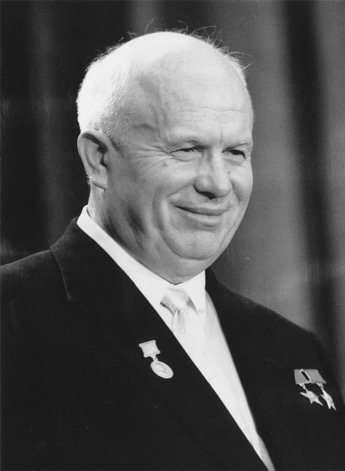
When Uncle Joe Stalin died in 1953, Khrushchev eventually emerged at the top of the Soviet food chain. A few years later (1956), he gave a famous speech to the Communist Party faithful where he denounced Stalin. The speech was called “On the Cult of Personality and Its Consequences”, but it’s known as the Secret Speech, because the session wasn’t open to journalists and the speech wasn’t supposed to be published. It came as a great surprise to the Communist Party rank and file, and there are stories of people in the audience having heart attacks and being driven to suicide.
Of course, news of the speech spread around the world within weeks. In the Soviet bloc it resulted in the “Khrushchev Thaw”, a period of relative intellectual, cultural, and political relaxation in the Soviet Union, and the process of de-Stalinization. It’s also generally seen by historians as pretty self-serving, a cunning tool the wily old Russian used for political purposes.
Stalin’s quarter-century at the top of the Soviet power pyramid had seen an increasing level of paranoia and repression as he was constantly trying to fight off enemies (real or imagined) from without and within. It was a period of great turbulence. The USSR was constantly under threat of attack from the Germans, the Americans, the British, the Japanese, the Polish, and their allies. He was in charge of running a country of roughly 150 million people who had been still largely illiterate and fervently religious at the time of the revolution, and who had barely made it into the industrial revolution. They were facing genuine existential threats, including recurrent crop failures and famines in a country vulnerable to drought and devastated by years of war, from diseases (the Spanish Flu had hit in 1918–19), from wars (they were barely out of WWI and the Russian civil war), and from far more powerful nations using their wealth and influence to bribe people inside the country to slow down or otherwise destroy the revolution (or, at least, so Stalin and other Marxists believed) and who could attack and invade at any time. Many people in the West don’t know that the UK and the U.S.A. did, in fact, invade Russia during their civil war that followed the revolution, fighting on the side of the anti-Bolshevik White Army. But Stalin knew. He fought in that war. And, of course, when the Germans did finally invade in 1941, the results were catastrophic. Twenty-six million Soviet people dead. The Siege of Leningrad. Stalin defeated Hitler, with the support of FDR and, to a lesser extent, Churchill, but it took everything he had to prevent being totally crushed. Meanwhile, his allies tried to hide from him the secret that they were developing a new kind of weapon. He knew more than they realised, thanks to Soviet intelligence sources inside the British and American programmes. But the fact they were hiding it from him caused a new level of distrust. When Truman finally let him know, in the vaguest of terms, just weeks before the Americans dropped the bomb on Hiroshima, Stalin pretended ignorance and showed little interest. He just said “oh that’s nice, good luck with that”, or something close. And accelerated his own bomb programme.
I think the twentieth century experiments in socialism have a lot in common with France getting rid of their monarchy in the late 18th century. After the French Revolution, there was no way the surviving European monarchs would let the new republic survive. They spent decades forming coalitions to fight a series of wars against France to restore the Bourbon monarchy. Their reasoning was that if the people of France were able to get away with getting rid of their nobility, it could set a very bad precedent back home in their own monarchies. The Americans had just kicked out the English king, but that was merely a colony. Doing it on home ground was another issue entirely. It could not be allowed to succeed. Despite all of that, most monarchies fell anyway, in due course. History has a trajectory.
The Bolshevik Revolution of 1917 posed a similar threat to capitalists around the world. It could not be allowed to succeed. A successful socialist experiment in one country would provide a bad example for people back home, aka the domino theory (but not how it’s usually portrayed in the West). The capitalists and the religious leaders in the West were fully aware that socialism in their own country would mean an end of their power and influence. It could not be allowed to get a foothold. They had to throw everything and the kitchen sink at making sure socialist experiments in other countries not only failed, but were demonised. The Communists in China turned it into the largest economy in the world anyway (or the second largest, depending on how you measure it). History has a trajectory.
Which brings me, finally (thank god, I hear you say), to Tony and some lines on a stock chart. As Tony said on the show this week, our trend line system started with a fairly simple premise: pick the two highest peaks or the two lowest troughs, draw a line through them, and that creates the buy or sell line. If the price line crosses one of them, it becomes a buy or a sell.
Over time, especially during periods of great turbulence like COVID, we started to introduce new rules that modified the original idea, to handle edge cases. It might be that we’ve been inadvertently sending stocks to the gulag because they have run foul of our trend line cult. This started because we noticed anomalies in how the Brettalator is drawing some lines and it prompted Tony to start to channel his inner Nikita Khrushchev. Maybe we went too far? Maybe we got too paranoid?
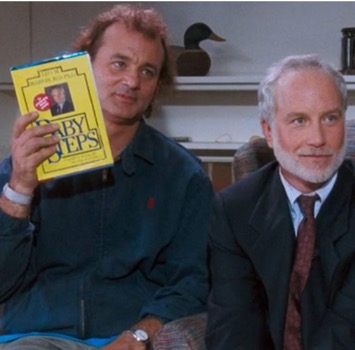
We haven’t finished backtesting the trend line logic yet. It’s going to take a while. But I encourage you all to channel your own Khrushchev. Draw the lines as you see fit. Apply the logic as it makes sense to you, and tell us what you think. Share your insights. As I said on the show this week, my personal interpretation of why we use trend lines is that I don’t want to be the rightest person in the graveyard. A stock might look great on paper, but if the market is dumping it, it’s possible we might be wrong. Somebody out there might know something we don’t. So we tread with caution. The trend lines are our way of taking the market’s temperature on a stock. While a stock’s daily price will always fluctuate, it tends to trade within bands. If it goes outside of those bands, it could be an indication that it’s a good time to buy or sell. But don’t let the cult of personality get in the way. The QAV rules are just things Tony has used as guidelines over the decades. Nobody is going to send you to the gulag if you break them. Do what makes sense for you, using your own interpretation of the reasons behind the rules. Feel free to go full Khrushchev on the rules, if you must. Just do it with caution. Don’t go causing heart attacks. Do some backtesting. Try it in small doses first. Experiment on paper first, if you can. Baby steps.
“Comrades! We must abolish the cult of the individual decisively, once and for all.”
Nikita Khrushchev
QAV Myth Killers is a weekly column in the QAV newsletter, taking apart a piece of
investing conventional wisdom. Read the series, or
get it by email every Friday.
General advice only. Spacecraft Publishing Pty Ltd
trading as QAV is a Corporate Authorised Representative (CAR 001292718) of MF & Co.
Asset Management Pty Ltd (AFSL 520442). This is general information and does not take your
personal circumstances into account. See our
disclosure.