
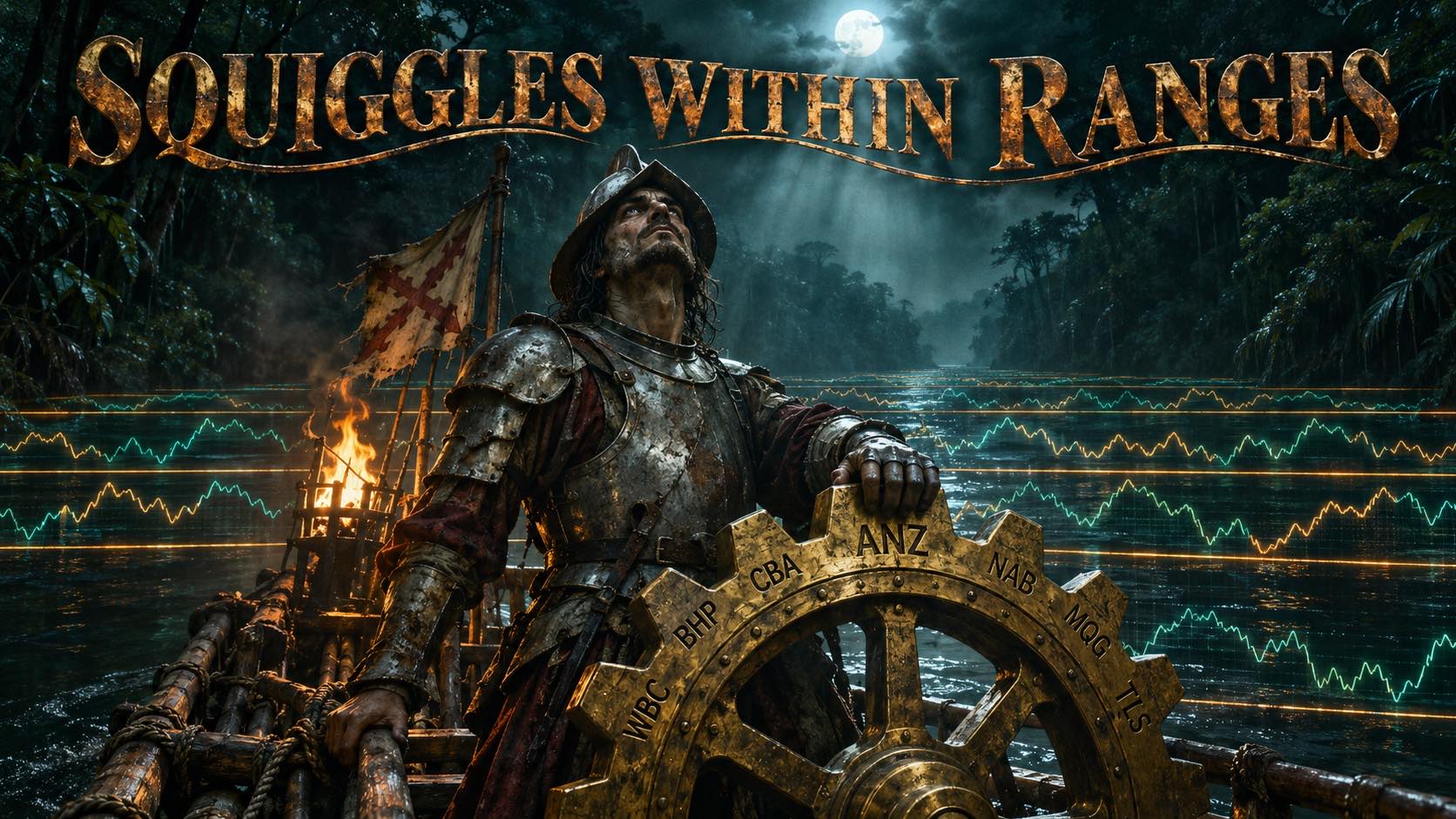
This week we catch up after a couple of hectic weeks away from the mic, with the Melbourne Cup, a US election Blue Nami, the biggest crypto heist in history, and a rattled oil price all demanding attention. Tony does a deep dive Pulled Pork on COG Financial Services, the broker aggregator riding the EV novated leasing wave, and we chew over results from ANZ, SXE, SSM, and a few other portfolio names. After Hours gets properly weird, with Werner Herzog, Klaus Kinski, the Marquis de Sade, Diwali, and a Shostakovich symphony about antisemitism all somehow fitting into the same fortnight.
This week’s full episode is for QAV Club members only. The free episode is available below. Also check out our podcast archives link and our pages on Apple Podcasts or Spotify or watch clips on TikTok. Or visit our homepage to learn more about QAV and how it works as a value investing system that you can learn and apply to beat the market.
Transcription
QAV AU 955
Cameron: [00:00:00] Welcome back to QAV Australia. This is, um. God, I don’t even know. Hold on. I don’t even have my notes in front of
Tony Kynaston: It’s the 10th of November.
Cameron: that’s not
Tony Kynaston: 10th of November 2026. That’s all you need to know
Cameron: Yeah. Uh, uh, no, it’s not QAV America
Tony Kynaston: 1:04,
Cameron: Australia nine-
Tony Kynaston: PM
Cameron: five How did the cup go, Tony, for
Tony Kynaston: Good. Yeah, good day. Um, well, my, one of my tips got up at $7, so that was fine. Points of– point of order. That pays for the last six years of bad tips.
Cameron: Didn’t you say in your, uh, uh, convers- in your email or whatever, your post about it, that it was the sort of everyone’s tip?
Tony Kynaston: That was the market favorite. It, it– I think it may have started second or third favorite. Um, but yeah, it was one of the favorites. Yeah
Cameron: And you had a good
Tony Kynaston: I did. Yeah, we’ve had a busy week. We’ve had, um, [00:01:00] guests staying with us. Um, back, back and forward to Melbourne a few times. Went out to the track on Saturday to the members’ dining room, which was lovely.
Um, yeah, had various other things happening.
Cameron: in
Tony Kynaston: I was, yeah, I drive. Yeah.
Cameron: The only sober,
Tony Kynaston: Well, the interesting thing was, so the last Saturday is, is getting to be a better race day, probably the best race day of the week and if you, if you wanna see good horses run. Like Cup Day, the Melbourne Cup itself is good, but the undercards, like a midweek meeting, it’s not that great.
Um, Derby Day used to be the premier racing day, and it possibly still is, but, um, the Saturday now has a few better races in it, so it’s really good. But, um, traditionally it’s, it’s probably been the lowest attendance at the track. It’s used to be called Family Day, so people would sort of unwind and bring their kids along and picnic rug and stuff like that, and they’d get about 30,000 people.
But now the racing’s improving. They had a bigger crowd, and they [00:02:00] had someone I’d never heard of before called Fisher, who’s a DJ. And after the races, we were sort of standing around talking, and we looked out the window. There must have been tens of thousands of young people walking to the end of the track to see Fisher play.
So the crowd was big, bigger, much bigger than usual, and then all these young people stayed on to party on afterwards. It was really good to see, actually.
Cameron: Yeah, it’s
Tony Kynaston: Hmm
Cameron: DJs
Tony Kynaston: Yeah. I was gonna say it was live music, and I guess it was played live, but I, I was joking I’ll go and plug my iPhone in and they, they can. It’s the same thing
Cameron: so a, a, a primary school friend of Hunter and Taylor’s came over for dinner here a week or two ago with Hunter. Um, and I’ve caught up with him a couple of times recently. Uh, Hunter’s invited me out for drinks with this guy. Cool guy. But, um, he’s, he’s a p- DJ, part-time DJ. Um, I, I, [00:03:00] I said, “I’ve always wanted to ask this question, like, how much of what DJs do.”
‘Cause, like, we watch YouTubes of DJs
Tony Kynaston: Mm-hmm.
Cameron: They, they, they seem to do very
Tony Kynaston: Mm-hmm.
Cameron: much of y- what you’re doing is just for show,
Tony Kynaston: It’s a, it’s a bit of this and a bit of this, and
Cameron: yeah.
Tony Kynaston: it. Arms in the air, that’s about it. Yeah
Cameron: said, “No, the cutting, the transitions between tracks is real because you wanna the vibe of the audience and see what they’re liking and not liking, and you wanna adjust it accordingly.” I was like, “Yeah, but do you, though? Couldn’t you just, like, say to AI, just trans, you know,
Tony Kynaston: Yeah
Cameron: play?” He goes, “Yeah, but it’s.” He said, “People wanna look at something.” So I think a large part of it is the guy or the girl up the
Tony Kynaston: Hmm
Cameron: and a weird haircut
Tony Kynaston: And tats.
Cameron: on.
Yeah, that’s what for, is to look at
Tony Kynaston: a bucket hat.
Cameron: A bucket
Tony Kynaston: Yeah, you gotta have a bucket hat if you’re a DJ.
Cameron: Re-
Tony Kynaston: Yeah. It used to be that way, Cam. I mean, like, you go back to the early days of rap and they had the two different [00:04:00] turntables going, and they had to match the speeds on the vinyl and
Cameron: Have
Tony Kynaston: right track. Mm, nah
Cameron: The Get Down? Highly recommend it. I’m sure we’ve talked about it before. Baz Luhrmann put it
Tony Kynaston: All right
Cameron: ago. It’s based on. It’s, it’s a fictional hip hop boys band in the Bronx or something like that. But it’s also got Grandmaster Flash and people like that in, or characters
Tony Kynaston: yeah
Cameron: But it’s set in New York in the late ’70s. It’s the rise of DJing, and he explains, “Well, we put the chalk on the thing so I know
Tony Kynaston: Yeah
Cameron: and he’s explaining the whole thing to him. So it’s kind of like a documentary on scratching and hip hop and DJing with a dramatic storyline that goes along with it.
It’s really, really fun, really good.
Tony Kynaston: Nika
Cameron: We really enjoyed it. It was only, like, one, one, maybe two seasons he did. I don’t know. One or two. So my other question for you, Tony, is, um, have you, uh, slept with any Chinese spies lately? Because I [00:05:00] just wa- Like, it seems like a pretty obvious thing not to do. But apparently rich guys, uh, can’t say no to attractive Chinese spies.
So
Tony Kynaston: I wonder if he double-dated with Trump and Putin.
Cameron: Or Rupert Murdoch and Wendi
Tony Kynaston: Oh, did you see him.
Cameron: of marriages
Tony Kynaston: Did you see, uh, Rupert Murdoch? He was taken to some, I think it was the American Australian Association dinner or something. Um, they just. Look it up, Google it. There’s, um, he’s, he’s helped out of the car by someone. He’s got his wife, holding him up on one side and a, like a bouncer holding him up on the other side.
He can barely move his feet,
Cameron: Hmm
Tony Kynaston: the, um, into the auditorium.
Cameron: Hmm.
Tony Kynaston: fine. He’s like, he’s getting very old.
Cameron: prophets.
Tony Kynaston: Mm.
Cameron: Yeah. Well, well, well, well, well. So no to, no to the affairs with Russian– with Chinese
Tony Kynaston: Hmm. No, I haven’t had any affairs [00:06:00] with with Chinese or otherwise.
Cameron: What a, what a rookie, what a rookie mistake
Tony Kynaston: it? Yeah.
Cameron: pay for. Hmm. I’m sure. Well, anyway, uh, I’ve got lots of market news. You haven’t been around for a couple of weeks.
Uh, there’s been a lot happen. Um, before I get into company news, though, I wanted to talk to you about the biggest bank heist in history.
Tony Kynaston: Mm-hmm
Cameron: Um, I wanted to talk about that last week, but you weren’t here. North Kor- this is a couple of weeks old now. Uh, The Guardian, Saturday, 31st of October. North Korea is likely culprit behind $6.3 billion crypto hack, the largest heist in history. Exchange says it will cover customer losses as it scrambles to freeze affected assets with about $3 billion located so far. Uh, crypto, it’s the future, Tony. It’s the future [00:07:00] of something. Um, I don’t know. The biggest, the biggest heist in history. Um, I like how they just go, “Oh, it’s probably North Korea.” Like, I saw the, the, all the fridges in France and other parts of Europe that got hacked last week. Now they’re say- Paris are saying, “Oh, it’s, it was Iran. They think it was Iran.” Got any evidence? Ah, no, but, you know, uh, one story’s as good as another. Um, what do you think about crypto hacks? Did you get some amusement out of that?
Tony Kynaston: I did, yeah. Um, from what I read, like I think they’ve– Yeah, it’s the future of money, yeah.
Cameron: Yeah
Tony Kynaston: what I read, they, they stopped half of it before it left the wallets or something, or left the exchange, but there’s still half out there. So yeah. You think it’s safe, it’s not
Cameron: And this– And the, the, the guy who ran Binance was in jail in the US. I think Trump gave him a pardon, uh, at some point. I can’t remember if it was the first term or the second term, but, uh, [00:08:00] he got out to be the victim of the largest heist in history
Tony Kynaston: Well, yeah. A‑and, uh, you know, Bitcoin is down since the Blue Nami last week in the US.
Cameron: The Blue Nami.
Tony Kynaston: Haven’t heard that one, the Blue Nami? Okay. And, um, you know, uh, it’ll be interesting to see what the tech bros do to get in good with the Republican Congress– uh, sorry, a Democrat Congress after they cozied up to Trump and, and, uh,
Cameron: Well, they’re going back to calling it AI instead
Tony Kynaston: SOI.
Cameron: now. They, uh, changing their names back again
Tony Kynaston: Yeah, right. Uh
Cameron: I don’t know that they’re gonna have to worry about it. I think now that Stephen Miller’s, uh, Trump’s chief of staff, we, we may see the games afoot in the next couple of months before they actually take, take office.
We’ll see what
Tony Kynaston: Mm-hmm
Cameron: But yes, that was, uh, that was something that we didn’t get to talk about last week. So we had to deal with the Brazilian election fallout portfolio. Now we’re [00:09:00] dealing with the Blue Nami election result in the US portfolio. There’s been a lot of retreats. Plus, you know, uh, Jensen Huang’s, uh, dalliance and the impacts of that.
Uh, chip stocks are down. They’ve rebounded a little bit, but they’re still mostly down. So it’s pretty turbulent times
Tony Kynaston: is
Cameron: nothing going on in the Strait of Hormuz worth talking about or
Tony Kynaston: Oil price is down
Cameron: It is, but why? There’s like, nothing’s happening. There’s no, no deals, there’s no, you know, re- resumption of hostilities really to speak of.
A couple of minor attacks
Tony Kynaston: well s-
Cameron: Island
Tony Kynaston: something is happening because I read today in, I think it was in The Wall Street Journal, that, um, the supply shortfalls that were caused by the closure of the Straits have all been plugged and, uh, they’re starting to be a build-up of reserves again, which is one of the [00:10:00] reasons why the oil price is down.
‘Cause don’t forget the oil price is a futures price. It’s not the last traded price for a barrel of oil. It’s a futures price. Um, so it’s, it’s getting ahead of the curve. Uh, and part of that was the Blue Nami that, um. I, I don’t know if that’s, if this is an accurate forecast, but I don’t know if Congress will be able to rein Trump in when he’s on foreign policy.
But, um, markets seem to think that a Democratic Congress would try and resolve the Iran war faster than. I know. That’s what I’m thinking too.
Cameron: How?
Tony Kynaston: I, I,
Cameron: be
Tony Kynaston: I, I. You’re asking the wrong person, but the. Go and talk to the futures traders in the oil market, ’cause I think it’s gonna happen. I, I had a good laugh when,
Cameron: yeah
Tony Kynaston: 3% up when the election results came out, and the next day it went down 3% when people realized the Democrats had won.
Cameron: Oh, well. Funny times. Funny times. [00:11:00] Um, all right, so I’ve got a whole bunch of news stories that I’ll run through pretty quickly. Um, so our market has actually been doing relatively okay, uh, in the last few days. Um, if I look over the course of the last week, we’re up. Uh, a week ago, 4th of November, we were, like, just below 9,000.
Today, at the time of recording, we’re at 9,270, the All Ords. So it’s, uh, sort of shrugged off the, uh, US election. Didn’t seem to worry about it too much at all. The S&P 500, on the other hand, uh, uh, well, a week ago it was, um, th- which was the day before the election, it was around about 7,567. Um, jumped up, then again crashed back down.
Now it’s back up to around 7,555 so it’s about where it was a week ago. It’s sort of recovered, uh, from its p- [00:12:00] and crash
Tony Kynaston: It’s like nothing happened.
Cameron: Yeah. not, not too, uh, different actually. Gold is up in the last week. Um, the Bitcoin is down
Tony Kynaston: And missing.
Cameron: the
Tony Kynaston: And missing.
Cameron: Yeah.
Tony Kynaston: Down and out.
Cameron: Yeah, yeah, yeah. Um, ANZ reported, uh, $7.6 billion in cash profit and subsequently fell 3.2%. said the profit was up 31%. Also took a $582 million charge for loans it expects to lose money on, which is up 141 million.
Final dividend was 83%. We hold ANZ as a disclosure in a number of our portfolios. Uh, at least I do. I’m not sure if you
Tony Kynaston: I do. I own ANZ. I’ll declare that too. Yeah
Cameron: What do you think about their [00:13:00] result and the share price, uh, subsequently?
Tony Kynaston: Yeah, so the, I think the main thing. Well, there’s a couple of minor issues. The, I think they missed guidance on a couple of, of the numbers, but not by much. Uh, but the main thing I think, which has driven the sell-off, uh, of 3%, um, is, uh, the increase in credit provisions. So these are. This is money held for bad and doubtful debts on mortgages, uh, predominantly.
Uh, and it’s traditionally a good time to buy banks when they’re reducing those provisions and, and a bad time to buy banks when they’re increasing them. So they’ve just started increasing them. Um, and so that’s, that’s why I think the market has, has sold off a little bit. It, um, I, I’m not selling. I’m gonna use my normal sell signals for this stock.
On the flip side, um, I looked at the result a little bit today, and they’ve, uh, Mr. Matos, Nuno Matos, the [00:14:00] CEO, has now com- pretty much complete his cost-cutting exercise. Something like three and a half thousand people were cut from the staff at ANZ, and he’s now gonna focus on going for growth. And he is hinting, and he.
In fact, I think he said that he’s looking at a re-entry back into the wealth business, the wealth management business, which the banks all got o‑out of after the Hayne Royal Commission. Um, he was reasonably coy about saying what that would look like, and they’re still investigating it and researching it, um, I guess to see what they can do to, um, get back into the market without, um, causing any of the infractions that the Hayne Royal Commission uncovered.
And the, the biggest one was vertical selling. So, um, the, the bank would generate a product and then give it to a sales force to go and sell, and when customers thought they were getting independent advice or ad- uh, uh, general advice, they were getting, uh, sold an ANZ product. It. And I shouldn’t, I shouldn’t say an ANZ product, a product of the manufacturer.
[00:15:00] So it wasn’t just ANZ that was, um, falling foul of those rules, it was all of the large institutions. And I, I can’t even recall with- whether ANZ was called out in the Hayne Royal Commission. But as a general rule, the banks were making their own products and then selling them to customers. Um, and that may not have been in the best interest of customers because that product may not have been the best product for them.
That’s kind of my summary of, of why banks got out of wealth management. Uh, so he’s trying to find a way back into it, and that may be a growth engine for them. So I, I think the sell-off was in relation to the credit provisioning, but it hasn’t, it hasn’t gone much further than that, uh, than the initial response, um, as people wait to see what he does to, uh, to grow the business
Cameron: ANZ faced strong criticism during the hearings for failing to hand over critical internal emails to the Royal Commission in a timely manner. Commissioner Hayne raised serious concerns regarding ANZ’s co- ANZ’s conduct and potential breaches of the law relating to consumer credit and funeral insurance products marketed to [00:16:00] indigenous communities. The inquiry highlighted systemic issues around organizational complexity, product intricacy, and poor financial advice through subsidiaries such as RI Advice Group, which later faced enforcement action and penalties. So yeah, they, uh, were named and shamed
Tony Kynaston: Okay.
Cameron: whole
Tony Kynaston: As they, as all the big banks were pretty much. Yeah
Cameron: Well, um, yeah, I was just looking at their portfolios.
I hold them in a bunch of live in the model portfolio. In some cases, I’ve held them since October twenty twenty-three. They’re up about fifty-three, fifty-four percent since then. Um, sort of surprises me a little bit to have held, you know, one of those blue-chip stocks that long.
Tony Kynaston: Mm-hmm. And plus they’ve been paying a decent dividend as well
Cameron: yeah, so there you go.
I mean, even those can perform very well. I mean, you would think ANZ, it’s not gonna go up by fifty percent [00:17:00] uh, a few years, but there you go. Sometimes we get it. Well, what was going on in October twenty twenty-three when they were– made them so cheap?
Tony Kynaston: Uh, from memory, there was a couple of things. So it was getting towards the end of the last CEO’s, uh, tenure, and they were. Yep, and they were buying, uh, Suncorp Bank, and so some people didn’t like that and were selling the stock off and thought it was too high a price. And then there was all the, um, issues around, uh, what was it called?
ANZ1, I think it was called, the IT, um, project that was going to put banking on your phone and just kept pushing out deliverables. So, uh, eventually, uh, you know, not just for those reasons, but he’d been there for four or five years. The CEO was replaced, um, and the shares have been going up since then pretty much.
Cameron: We bought it cheap.
Tony Kynaston: Hmm. Which, which we like to do.
Cameron: ANZ,
Tony Kynaston: of the game
Cameron: RBA raised rates by a quarter of a [00:18:00] percentage point
Tony Kynaston: Hmm.
Cameron: Annual inflation hit 4.3% in September. RBA says it expects inflation to get back to the middle of its target range around mid-2028. Uh, good luck with that.
Tony Kynaston: Well, a lo- a lot’s kinda, a lot’s driven by oil, so if your price is off something like 16%, it’d be interesting to see what that means for inflation in the next quarter, if it stays down low or goes lower. You know
Cameron: Well, I wouldn’t say it’s low right now, but it’s lower.
Tony Kynaston: correct
Cameron: Yeah, it seems like a lot of stuff is out of their hands, as we’ve talked about before, right?
Tony Kynaston: Yeah. And I guess the other, the other point about inflation is it’s a comparison of cost this year to last year. So even when inflation comes back to their range of s- like around 2.5%, it’s costs may still have gone up 50% over the last three or four years.
Cameron: Yeah.
Tony Kynaston: Yeah. So it,
Cameron: Mm.
Tony Kynaston: mm, it doesn’t necessarily re- im-improve cost of living, it [00:19:00] just stops it from getting worse, if that makes sense.
Yeah.
Cameron: So some news from some of the stocks that, uh, we tend to follow. Service Stream, SSM, says they’re gonna buy a company called Programmed $975 million. Programmed maintains buildings and industrial sites and supplies staff across Australia and New Zealand. Stream says they’re gonna borrow, uh, and raise, uh, 475 million at $2.03 a share.
They closed at $2.20 last Friday. about 38% more shares on issue. Uh, what do you think about that, Tony? Uh, SSM, we don’t hold SSM f- uh, at the moment, apparently
Tony Kynaston: Well, that’s good because it just became a sell.
Cameron: Oh, good
Tony Kynaston: Yeah, so it’s, it. I don’t think the market’s liking the, the deal. It’s, so it’s been sold off.
Cameron: Right
Tony Kynaston: And Programmed’s, um, an interesting company. [00:20:00] It, it was listed many years ago. Um, I don’t know if the business model has changed, but it was an interesting business model which I had used in past corporate life, where you pay, like, an annual fee to Programmed, and then they, um, do whatever maintenance is in the plan.
You, like, you agree at, like, a five-year plan that includes we’re gonna paint the building in year four, or we’re gonna recarpet in year two, or we’re going to, you know, blah, blah, blah. Um, so it allows you to, uh, keep your costs constant whilst getting all the CapEx work done. So I thought that was always an interesting, uh, product that they sold and was kind of unique.
Um, but they’ve, they’ve had a bit of a rocky time over the years. They were listed, they were delisted. Um, I don’t know if the business has changed since it’s been delisted, um, but looks like Service Stream’s picking it up
Cameron: I just looked at our history with SSM. I actually sold it in March of this year when it breached a three-point sell line for us. E- But it was up 108%, uh, when we [00:21:00] sold it, since we’d bought it in late 2023. It subsequently went up to $2.68. We sold it at, um, Went up to $2.68, but has then come back and is now trading about $2.09. So yeah, we left money on the table with that one, but, uh, that’s how, that’s how it works sometimes
Tony Kynaston: We would have bought something else and hopefully it’s gone up the same or more. Yep
Cameron: Another good old QAV stock is SXE, Southern Cross Electrical Engineering. They’ve bought a business called Entire. Entire installs and services fire protection, heating, and air conditioning systems. They paid $70 million in cash up front. Um, apparently it could go up to 112 million if Entire hits its profit targets. SXE, I think we still hold [00:22:00] those. Let me see
Tony Kynaston: So that’s– So the share price has come off a little bit, but I’m, I’m wondering whether that’s not just because of this acquisition, but, um, SXE has done really, really well in the last few years because it’s been providing services to data center constructions. And of course, that’s one of the issues that, um, one of the things which Americans are saying or the Democrats in America are saying they want to curtail is, is data centers.
So, um, there’s been a couple of issues in Australia mirroring that, that people don’t want data centers nearby. So, um, I think that’s one of the reasons why the SXE share price has, has come off a little bit recently.
Cameron: Well, it’s actually up 7% today. We’ve got it in two live portfolios, have held it since October 23 and November 23. Uh, the October 23 one is up 396%, and the November 23 one is up 372%. Current share price is $3.87. Our [00:23:00] three-point sell price on it is 88 cents.
Tony Kynaston: That one’s gonna ride for a while.
Cameron: back.
Yeah.
Tony Kynaston: Hmm
Cameron: it doesn’t go all the way back down to that. Uh, so good job, SXE. I mean, uh, that’s. I, I know whenever they come up, it’s just an example to me of one of these businesses that just seems to continue to do well. they, they know their business, they do a good job, and we just keep, riding it up,
Tony Kynaston: Yeah. Cheering them on
Cameron: Yeah, that’s one of those examples that, um, you know, we talk about from time to time where, um, we don’t sell our winners. We don’t rebalance, you know, because a well-run business could keep being well-run and keep performing well.
Tony Kynaston: Correct.
Cameron: Karoon Energy is also in the news. Looks like I don’t own any Karoon Energy at the moment, but they’ve put their Brazilian oil project into a design. The first stage of Neon is now estimated at [00:24:00] 800 to 950 million US dollars, down from 900 million to 1.2 billion. for the first stage. They’re looking for a partner to take 30 to 50% before they commit to building. Uh, and Brazil has apparently extended its temporary 12% tax on crude oil exports through December. you know, we all own a number of Brazilian businesses in our US portfolio, and some of them are doing okay after the election, some not so much. Uh, so it’s interesting to see anyone that’s persisting with, uh,
Tony Kynaston: Mm-hmm.
Cameron: right now
Tony Kynaston: Um, they’re also a sell too if, uh, you have a look, so that’s probably why we don’t own them. Um, and sp- and they’re spending money on this project, uh, to get it to at least the next stage. It’ll be interesting to see if they can find a partner going forward to actually build it
Cameron: Looking at some of the, uh, stocks that we’ve talked about in [00:25:00] Brazil, not that we necess- own necessarily, but, uh, PagSeguro Digital down twenty-six percent since we talked about them in April, and Banco Bradesco, BBDO, is down twenty-nine percent since we talked about them in August. They’ve been hit really badly after the election.
They were both doing okay before the election. Petrobras is still up, though, two percent, the oil company. Uh, Regis Resources, a contractor died on Friday at the Duketon South gold operation in WA. That’s, uh, unfortunate. They’ve had to shut the processing plant during the investigation. Um, I don’t think, uh, it’s impacted the share price a great deal.
We do own a couple. We own RRL in a number of portfolios. One we’ve owned since March twenty twenty-five. It’s up a hundred and [00:26:00] fifteen percent, one of the live portfolios. But, uh, I did look to see if that was gonna have a big impact on the share price. I don’t think it has so, but that’s, uh, still very unfortunate when those sorts of things
Tony Kynaston: It is
Cameron: business
Tony Kynaston: It is unfortunate, I agree
Cameron: Uh, what else we got? Qantas put its first half fuel bill at 3.75 billion, which is up from 3.6 billion. It still expects to earn 8 to 10% more per seat kilometer across its domestic and international businesses. Uh, Taylor back from LA, uh, in December for a week, and he told me about what the airfares are like.
Uh, flying from LA to Brisbane is relatively inexpensive. Getting back
Tony Kynaston: Oh, really? Wow
Cameron: Flights out of Australia to the US are insanely expensive, so
Tony Kynaston: I wonder why that is
Cameron: Oh, I imagine it’s a [00:27:00] combination of petrol and, uh, whatever. Yeah. I think, I think it’s also a bad time, people flying back, flying to the US for, you know, Christmas, those sorts of
Tony Kynaston: Right. Okay
Cameron: Sort of peak travel. I thought that most, a lot of Australians weren’t going to the
Tony Kynaston: Yeah, that’s what I was, that’s what I was thinking too. I wonder why it was dearer. That would normally mean that lots of people are going to the US.
Cameron: Hmm. Yeah, well, the prices are hellishly expensive, he said
Tony Kynaston: Wow. Does that mean you’ll stay over here? Stay in Brisbane? No, he’s going back
Cameron: no. He’s bringing his American girlfriend
Tony Kynaston: Yeah.
Cameron: for the week.
Tony Kynaston: Nice
Cameron: Yeah. Uh, McMahon, MAH, closed its purchase of WA engineering and maintenance contractor Aspect. The price was 75 million, which was about five times Aspect’s unaudited annual profit before interest and tax. 30 million due up front with the rest tied to retaining staff and meeting profit targets. MAH is [00:28:00] a company that’s on and off our buy list a lot. We do hold them in a portfolio. Uh, have held them since Dec- uh, November 25. About a year, and it’s up roughly 100% since then. So good job, McMahon
Tony Kynaston: Yeah.
Cameron: That’s it?
Tony Kynaston: That’s it? Got nothing, no?
Cameron: it?
Tony Kynaston: No. Good on them. That’s pretty good.
Cameron: that I
Tony Kynaston: Yeah
Cameron: Yeah. KMD, you talked about KMD not that long ago. Did a bit of a Pulled Pork on them,
Tony Kynaston: Hmm. I did
Cameron: They, they got some news. They gave the US group BlueStar Alliance an exclusive look at the books for a potential purchase of the whole Kathmandu and Rip Curl business. Preliminary talks. BlueStar Alliance sounds like, uh, an airline
Tony Kynaston: Sounds like at the Wall Street, Anna Cott Steel.
Cameron: yeah. Uh, they’re a global brand management [00:29:00] firm that builds and grows iconic consumer brands across fashion, lifestyle, and entertainment according to Google. Um, you did talk about some of the problems
Tony Kynaston: Yeah.
Cameron: having. Is this surprising?
Tony Kynaston: Not at all. No, I, I think it was, um– I think they were even earlier on in the process, they tried to sell their Rip Curl brand and it had fallen through. So it’s not surprising they’ve– they’re trying to sell the whole business, I guess, or some of the brands still.
Cameron: Hmm. Hmm. So I guess we hold them, as I said, and we’ll just wait to see how that, uh, plays
Tony Kynaston: Yeah, it seems like early days at the moment
Cameron: Mm. Share price is up 3% today, so something’s still happening there. They’re up about 18% since I bought them just a couple of months ago in September, so they’ve done okay for
Tony Kynaston: Hmm
Cameron: another one of your favorites, Auto Sports Group, ASG, has agreed to buy three new New South Wales dealerships.
They’re waiting on approval from the ACCC. [00:30:00] Do you hold ASG? Are they
Tony Kynaston: I don’t. No. No, no, not at all. Um, and they’re. Well, they’ve, they’re a Schrödinger, one of the rare ones which is both a buy and a sell.
Cameron: Oh,
Tony Kynaston: On the three-point trend lines, yeah.
Cameron: Hmm.
Tony Kynaston: below its sell price.
Cameron: either.
Tony Kynaston: it’s below its sell price. There was an article, interesting article in the paper last week about how car dealerships were doing it tough because of all the Chinese cheap, uh, car, car types.
Cameron: Yeah
Tony Kynaston: makers coming into Australia. I don’t know how it works in China, whether they’re all sub-brands of the one big one or what, but there’s lots of different brands coming into Australia
Cameron: Well, I don’t, I don’t pay a lot of attention to these things, but I did, um, Chrissy and I went out for a date on Sunday lunchtime, and our car, overheated. Like, I got the little light flashing on and I was like, “Uh-oh.” Pulled it over, and the hose that goes to the radiator had popped off and coolant [00:31:00] had sprayed everywhere.
Tony Kynaston: Hmm.
Cameron: I called, uh, roadside assist and
Tony Kynaston: didn’t, didn’t call Nat Rad?
Cameron: Nat Rad. No, I didn’t call Nat Rad. I called Youi
Tony Kynaston: Mm-hmm.
Cameron: uh, you
Tony Kynaston: Mm-hmm.
Cameron: a car insurance company on our American show today. uh, uh, shout out to Youi. Um, I haven’t had good experience with them in the past, but this time they did a good job, and a tow truck came out.
And so anyway, bottom line is the, uh, tow truck taking me to a mechanic’s, uh, workshop to drop it off, and I was driving through Gympie Road where there are tons of
Tony Kynaston: Mm-hmm
Cameron: Um, and I don’t go down there very often, I was just shocked at all of these, uh, car brands that I’ve never heard of before.
There, there just seemed to be tons of them. All of these, I assume, Chinese EVs that, uh,
Tony Kynaston: Yeah.
Cameron: new to me
Tony Kynaston: And very cheap too. That’s– I think that’s the problem the dealers are facing is that, [00:32:00] you know, you sell a, a, a ch- a cheap Chinese car and you, you still make whatever their margin is 10%, but it’s on a smaller sales, uh, docket. So you’re making less money doing the same work. Yeah.
Cameron: Well, you know, that’s all I’ve got in my list of news things. Tony, what have you got?
Tony Kynaston: I had a couple of things. We’ve, we’ve certainly covered a couple of them. Um, the oil price, uh, ANZ. One thing I did wanna just spend a minute on was, uh, it’s interesting that a lot of retailers are back on our buy list, so it’s no, probably no news to any listener that retail companies are doing it tough at the moment.
Um, there’s been a lot of headlines about stocks like, uh, Nick Scali, um, experiencing downturns in their businesses, but, um, might be a good time to have a look at some of these. But, uh, this week I noticed that SUL, which is Super Retail Group, Dusk, DSK, Kathmandu, [00:33:00] which you spoke about before, and Myer are all back on our, on our buy list, although I think Myer might be still in a sell situation in terms of its sentiment.
But the oth- but Super Retail, for example, is, is, um, a buy from a sentiment point of view and a QAV score point of view. So not re- recommending anything, but we’ve often seen this before, that industries, um, or sectors have their time on our buy list, and it looks like retail might be in that s- uh, time now
Cameron: Of course, something that should have been on my list of things to talk about but isn’t for some reason is David Jones gone into, I don’t know, receivership or liquidation
Tony Kynaston: yeah.
Cameron: Administration?
Tony Kynaston: Hmm
Cameron: obviously those sorts of retailers are doing it tough. I haven’t really drilled into that to find out what happened
Tony Kynaston: Uh, so it’s. From what I can tell, and I’m, I’m, maybe I’m wrong here, but it’s almost like a bit of a Chapter 11 in the, in America. So they’re trying to, uh, get out of some of their store leases, um, and renegotiate [00:34:00] terms. So that’s always been the problems with both Myer and David Jones, is they’ve had too many stores on, um.
Back in the heyday of department stores, and even then sometimes they couldn’t afford to expand the way they did. Um, they took on too many leases. Too, the leases were too big and too expensive and, um, and they’re locked in for 15 years. So, uh, that’s one way to, to solve that problem, is to go into administration and then, you know, play hardball with the landlords and either renegotiate or hand back the keys.
Um, so that’s probably the biggest problem. Uh, but, you know, it’s. If David Jones is in that situation, then it’s, it’s, you know, they’re gonna shrink their way to greatness. You know, how do you, how do you grow the business if you’ve got less stores and, um, you’re handing back keys to landlords? It’s, it’s, it’s gonna be a.
If it does survive administration, it’ll be a much smaller business than it was going in.
Cameron: Right. if there’s a chance they might just come out of it
Tony Kynaston: [00:35:00] Possibly. Um, it also often, um, results in a sales situation that people who are interested in buying something of David Jones, whatever it is, um, will start to make offers and engage with the administrators as well.
Cameron: Yeah, right What else you got?
Tony Kynaston: I think that’s it. Just the pulled pork, which was a request, uh, on COG, COG Financial
Cameron: Excellent.
Tony Kynaston: Yes. So interesting, uh, interesting request. Thanks. Uh, so, uh, that was from Peter, I think Have I got that right? Philip. Philip, sorry. Thank you, Philip. So he’s requested I do Wagners as well, both of which I’ve done in the last couple of years, but, uh, happy to go back and have a look at this one.
So COG, strange name, COG Financial Services, but COG is an acronym for Consolidated Operations Group. Um, and that’s because they basically operate as a consolidator or an aggregator of commercial finance brokers around Australia. [00:36:00] And, um, so they do all these deals, uh, create like a portal for, uh, commercial finance, uh, brokers to.
These are people who basically go out and arrange leasing for small businesses. You know, you wanna buy a tractor if you’re a farmer, you wanna buy a fleet of cars if you’re a cleaning business or whatever. You can go and do a deal with a, a broker who’ll, um, who sh- who’ll shop around and get you the best deal with, uh, the provider of that, uh, of that lease or, or, um, what- whatever, you know, sort of structure you take in terms of financing your equipment.
Uh, and COG is the kind of engine behind all that. It, it aggregates all of the demand from all the brokers that are part of the service and then goes and negotiates with the financial companies who provide the, uh, the, um, leases or, uh, loans or whatever it is, um, and gets the best deal, uh, as a group buyer of those things.
Um, so that’s what COG is. Don’t confuse them with another company called Cogstate, which is, like, the code is CGS. Cogstate [00:37:00] conducts clinical trials for new, for new drugs, uh, when pharmacy companies need, um, to, uh, to test, uh, um, new drugs as part of, uh, going to, uh, get approvals and then going to market.
Um, that’s a separate company. So COG, C‑O-G, is the code that we’re talking about. I’ve actually, I looked back to, uh, in my notes, and I’ve actually analyzed COG Financial Services twice before, uh, the last time being seventeenth of June, twenty twenty-five. And back then, the stock price was a dollar fifty-three.
Today, it’s a dollar sixty. So, uh, it’s kind of about where it was two and a bit. Well, one and a bit years ago, 18 months ago or so. Uh, it did go all the way up to two dollars thirty-two in October 2025 and then down to a dollar thirty-one in July of this year. Uh, and it looks like it did cross, uh, the three-point trendline sell line then, so it was a s- a sell from a sentiment point of view.
Uh, today it’s a hold, um, and it is trending down a little bit, so it’s a [00:38:00] Josephine. It’s below its buy price and, um, uh, the sell price is a dollar forty-four. Uh, so it’s a little bit further to go for if it’s gonna be a sell, but it’s, um, it’s currently trending down. Uh, in twenty twenty-five when I did the analysis, the COG business was described as Australia’s leading finance broker aggregator and equipment leasing business for small to medium sized enterprises.
That came off the COG website. Uh, they describe what they do as being the roll up, a roll up partner with asset finance brokers by offering the following benefits. They put together a large lender panel of over fifty asset lenders, which saves brokers needing accreditation with each individual lender and provides bulk negotiated rates.
They provide commercial loans for equipment purchases, everything from coffee machines to dump trucks. They also, uh, provide personal loans for cars, renovations, travel, et cetera. [00:39:00] Uh, they, uh, offer a car buying service, which, um, offers fleet prices for, for bulk purchases. Uh, they’re in the business of, uh, financing SMEs, th- for example, overdrafts or working capital loans, et cetera.
Um, they, et cetera, et cetera. They do training, they do cross-business, uh, access for the, for the brokers. Um, but one area which was, uh, s- a part of all that, but a small part of all that, um, in twenty twenty-five is novated leasing. And since the last analysis of the company, the business has invested very heavily into this section, novated leasing, and in particular into the novated leasing and salary sac- salary sacrifice packaging of electric vehicles.
It’s so funny, we just talked about EVs and car yards, but it’s been a bit of a boom in Australia and, uh, people w‑will, [00:40:00] will probably have experienced it themselves, but if you haven’t, um, in the past, if a, or and currently, if a business grants an employee a perk in lieu of a salary, the government levies a fringe benefits tax on the perk, and a car, of course, is, is a traditional management perk and attracts fringe benefits tax.
However, in twenty twenty-two, the federal government removed the FBT on EVs, and that allowed an employee to lease and operate an EV with pre-tax income via their, a salary, uh, s- package, uh, which was a clear benefit to employees and a strong incentive to use EVs, so it was kind of a win-win, uh, for both sides of that transaction.
What it meant was that novated leasing exploded and, uh, eighty percent of new leased vehicles are now EVs. So, uh, the, the policy worked and a lot of people are using salary sacrifice and salary packaging, uh, to, uh, to lease an EV and take advantage of the fact that they can pay for it with pre, uh, tax dollars.
[00:41:00] Um, COG saw that that was happening and they, uh, acquired a company called EasyFleet, and they also took a ninety-two percent stake in, in another one called Fleet Network and, uh, captured a lot of market share in the small end of the, of the market, in the SME market. And that allowed this year the, uh, company to post an eighty-eight percent surge in, um, uh, EBIT to thirty-one million dollars and the customer base doubled to twenty-two thousand.
So it’s really been a big driver of their, um, of their business. However, all good things come to an end and the policy was too successful and strained the federal budget, so the government announced a phased reduction to the exemption to make the tax treatment fiscally sustainable, in the words of Treasury.
God knows why they’ve launched a, launched a policy that wasn’t fiscally sustainable, but now it’s gonna be fiscally sustainable. So there’s a ph- there’s a [00:42:00] phased rollout, um, and there’s a couple of different levels to this. So in, until the thirty-first of March twenty twenty-seven, the exemption continues for all eligible EVs which are less than the luxury car tax threshold, which kicks in at about seventy-five thousand dollars.
Uh, so take out a lease, salary sacrifice. If the car’s less than the luxury car tax threshold, you still receive 100% FBT exemption. Uh, from the 1st of April 2027 for two years, the exemption only remains for EVs valued at $75,000 or less. Cars over $75,000 lose the exemption, and they drop to a, a s, they don’t pay the full FBT, but they still get a discount of 25%.
And then from, from 2029 onwards, um, the 100% exemption ends entirely for new leases, and [00:43:00] all EVs revert to a permanent flat 25% FBT discount. So it’s a phase-out of the current, um, free-for-all, and it, it, it will get phased out based on whether the car’s worth more or less than $75,000. But then in two years’ time, it, uh, it drops back to a 25% FBT discount.
That’s for new leases. Anyone that signed up on a lease before, uh, these cutoff dates are still fully grandfathered, and they can keep the 100% exemption. So that’s one of the reasons why the business is experiencing an immediate rush of demand right now. Um, and consumers are scrambling to lock in the 100% tax-free EV lease before the rules tighten, uh, which is good, but it’ll have the kind of reverse effect going forward so that we won’t get the growth in COG because of these, uh, the phasing out of the FBT exemption for new leases.
The other thing I, I looked into when I was doing this analysis is that we have had, um, [00:44:00] these novated lease companies on the buy list before, and there’s three big ones that we’ve talked about over the last five to six years. Fleet Partners is one, Smart Group is one, and McMillan Shakespeare is the third.
They’re kind of the big three in novated leasing and salary packaging. Um, and I wondered whether the fact that, uh, COG was a late entrant into this market, whether that would, um, they, they would face competitive pressures. But my analysis sort of thinks that no, because they’re operating in the SME market, um, and they’ve been underserviced all the way along by the big three.
So the big three are, are much larger than COG is in this market. Um, even though COG is, is a reasonably sized business with 22,000 active customers, Smart Group, for example, has 600,000. Um, MMS has 400,000 salary packaging customers. So they are orders of magnitude bigger, and therefore they tend to focus on state governments, large corporations, Woolworths, [00:45:00] Coles, people like that, uh, will use the big three and, but it’s left a, a vacuum in the market where they’ve expanded into.
Um, they were, were also finding that, um, they had a, a, a bit of an edge on the big three as well because every time a business broker wrote a commercial equipment loan for a small business owner, they would just ask, simply ask the question, you know, “Do you need novated leasing solutions?” And, uh, that could often lead to, um, a package being sold by Paywise or EasyFleet under the COG, uh, brand.
So the big three, um, the Smart Groups of the world did not, uh, have that ability of cross-selling into the SME market. So that got me thinking, does this mean that COG might be a takeover target for one of the big three? Like a s- like, uh, I, I know currently that, uh, private equity are buying into Smart Group, so that will exit the ASX boards at some stage.
So I did [00:46:00] wonder whether one of the big three might decide that, um, that, uh, COG was now on their radar given that they were soaking up the SME market. Uh, it’s. I don’t think I’m alone in that analysis because the AGM for COG was held last week, 5th of November, where shareholders approved a couple of takeover protection provisions, um, protecting the company from a potential raider.
So, uh, the two provisions that were approved was one which is called the proportional takeover provision, and that requires that any partial takeover bid, so for example, if a raider buys a controlling stake at twenty percent and then tries to creep up the register, um, that, that bid must be voted on and approved by a majority of independent, unaffected shareholders before it can proceed.
So that’s a fairly unusual part of the constitution now for this, for this company. Um, and the same, uh, with, uh, creeping up the register as well. It, it has to be approved by, uh, shareholders, uh, before that can happen too. [00:47:00] And, um, they’ve also, uh, allowed the company to increase the, uh, share issuance cap. So most companies will go to their AGMs and put the, ask for a cap to be able to issue new shares without having to come back to shareholders, uh, and that cap is usually around ten percent.
Uh, but, um, the, the shareholders in this case have given a temporary increase, um, cap to the board so that if someone does launch a takeover, uh, bid, they can start to, um, issue shares, particularly if they can find someone who’ll take a cornerstone interest in the company to defend them against the takeover.
So a couple of interesting developments on the, um, takeover protection front from this business as well. Uh, but I also kind of thought if McMillan Shakespeare or, uh, Fleet Partners or Smart Group were interested in the SME market, then they could [00:48:00] easily have picked up Paywise or EasyFleet, uh, before COG did.
So I, I think it’s, um, I, if there’s a takeover coming for this company, it’s probably not coming from one of the novated lease companies. Um, they would have expanded into that lower end of the market beforehand if they’d wanted to. And I think also, too, COG, because it’s, um, only partly a novated lease company, it’s also still the traditional, uh, broker finance business, um, then that’s, that’s kind of a side of the business that if, uh, Smart Group or someone who doesn’t operate in, in that area would probably have to divest, um, or it, it’d be too much headache to worry about if they acquired it.
So, uh, I don’t think if an acquisition is coming, it’s coming from the other novated lease companies. Uh, I did outline the history of the company in the past analysis, I’m not gonna do it now because it’s been done before, but, um, suffice to say that it’s been around for, uh, twenty, twenty-one years, and it’s been operating in the equipment [00:49:00] leasing and broker aggregating model all through that period.
And now it’s big time into the, uh, salary sacrificing, uh, SME business as well. Latest results, as I said, um, had boomed because of the salary packaging part of the business. Um, however, the traditional side of the business, the broking and aggregation arm, was flat, and the lending division of the business actually dropped thirty-seven percent due to a margin squeeze.
So it’s probably a good thing they got into salary packaging when they did because the traditional part of the business, um, has, uh, not been performing as well. Uh, their overall results were good. Revenue was up nine percent, net profit was up twenty-nine percent, earnings per share was up twenty-seven percent, and their net, uh, assets finance was up to eight percent to a record nine billion dollars.
Um, their dividend was also increased by seventeen percent. So, uh, that was largely driven by the [00:50:00] novated leasing side of things, which was up eighty-eight percent. Broking, um, aggregation was, uh, the same as it was last year, flat, and the lending and asset management business was down quite substantially.
But, but the driver of the business, um, is salary, uh, and novated lease packaging that made some, um, thirty-one million dollars. I’ve only got EBITDA number here, so I apologize for that, but thirty-one million dollars was EBITDA and, uh, the broking aggregation business is twenty-four million dollars. So not quite fifty-fifty, but they’re the two big drivers, and the lending part of the business was only one point two million, so it wasn’t a big part of the business anyway, uh, but it did drop.
Uh, the CEO said that, that given that EV leasing was changing and the FBT deadlines were imminent, um, the business wouldn’t grow as strongly, but he still called out that he thought it would grow by ten percent in FY twenty-seven. Uh, so [00:51:00] that’s, um, that’s a summary of the results. Analysts are questioning what happens when the EV FBT relief fully phases out.
Um, so that will mute the growth engine, but it has. You know, whether that means people will stop leasing EVs, I’m not so sure. I think it just means that the business won’t grow as fast, uh, in the future. Uh, from the QAV point of view, stock price I used for the analysis was a dollar sixty, which is greater than IV1 of sixty-two cents, but less than IV2 of a dollar sixty-five, and it’s about thirty percent less than the consensus forecast.
ADT is two hundred and sixty-six thousand dollars, so, uh, it’s not gonna suit big portfolios, but will suit portfolios up to around sort of a million dollar mark. Yield is four point three eight percent. Stock Doctor financial health and trend is strong and steady. Last time it was recovering, so, uh, it’s, it’s improved its financial position according to Stock Doctor.
All these individual scores have gone up, um, and I’ll get, when I get to the summary at the end, I’ll, I’ll give an overall [00:52:00] comparison, but, um, a lot of these are better than they were in twenty twenty-five. Stockopedia certainly is. The quality rank is eighty-four. F score is seven out of nine. I think last time it was about five, so that’s improved.
Overall stock rank is ninety-four, which is about where it was last time. PE ratio is thirteen times, which is neither highest nor lowest, so we can’t score it for that. PROPCAF is four point one four times. Uh, net equity per share is ninety-seven cents. Book plus thirty is therefore a dollar twenty-six, so we can’t buy it for book or book plus thirty.
I, I do call out that, uh, net tangible assets is actually negative four cents, so it has acquired a couple of businesses recently, and that’s weighing down on the NTA. Forecast earnings per share growth, um. Now, this is interesting because Stock Doctor’s calling it out at forty-five percent, so growth over PE is three point three times, and we score it a two for that.
Um, but the CEO called out, uh, guidance, uh, of ten percent growth, so I’m not sure what’s going on there. But, [00:53:00] um, it’s not gonna make a material difference to the score, uh, whether we give it a two or not for that. Uh, there was an owner founder, and last time I spoke about him in twenty twenty-five, Cameron McCulloch.
He’d been around for a long time in the business and had a decent stake of the shares. However, he resigned. Actually, it took effect yesterday, um, and has left the board. Uh, he did sell some shares, but he still retains three percent of the company. Uh, when I looked into it, that was part of an orderly handover, so it didn’t really raise any red flags for me that he was leaving.
Um, and it was also called out in twenty twenty-five that a, a new chair, Tony Robinson, was, uh, was taking over, um, chairmanship and I guess running of the, the company, and he thanked McCulloch for his service and, and they both highlighted the fact that was. this, this was all planned, that McCulloch would leave.
So that was, um, uh, uh, we couldn’t score it for owner, uh, founder, but it wasn’t really a red flag either. It’s not a recent three-point trendline buy, can’t score it for [00:54:00] that. Doesn’t have consistently increasing equity, can’t score it for that. So overall, scores seven out of fifteen or forty-seven percent for quality and just sneaks in with a QAV score of point one one.
Uh, so interestingly, last time it scored better on quality, uh, and, uh, its, its PROPCAF was just below seven times, I think it was about six point nine times. It’s now down to four point one four times. So we can buy this company cheaper, uh, but there is, has been a little bit of a deterioration in the quality score as well, at least from our score point, point of view.
Um, Stockopedia thinks it’s gone up and Stock Doctor thinks it’s gone up, so, um, it’s probably a wash. Uh, risks and positives. Well, clearly the risks are that the asset-backed finance business was flat, so the traditional part of this business was flat. And we, we, you know, even the RBA said we’re, we’re going into recession-like [00:55:00] times in the economy, even though it’s not a traditional, um, definition of a recession.
So I can see why the asset-backed finance business and the broking business were flat. Uh, it’s also gonna face headwinds in the EV leasing side of the business when the FBT breaks trail off. Um, however, I, I think, um, it’s a, it’s a positive that Tony Robinson is now chairing the company, and that’s been proven by the fact that they, they got into, they pivoted into EV leasing at the right time and made a lot of money out of that.
Um, and he, he comes out of, uh, kind of an adjacent industry or a similar industry. So, uh, this company uses, um, or aggregates finance brokers. Uh, he came out of a company called PSSC Insurance, which in, which, uh, aggregated, um, insurance brokers. So a similar sort of model, but different, different industries I guess, or different, uh, businesses, but similar sort of structure.
And he took PSSC, um, and ran it well and eventually sold it off for two point two billion dollars. So, uh, if he can repeat that again with COG, [00:56:00] it’ll be, um, a nice neat end to his career. So that’s, uh, that’s the Pulled Pork request, COG Financial Services.
Cameron: Thank you, Tony. I do note that we hold them in. Well, we don’t actually hold them in a portfolio, but I did have them as a possible buy for QAV Light back in September. They’re currently down 13%, and they’re, uh, yeah, the three-point sell line, as you said, is like, uh, well, I don’t know if you said this, but they’re 138.
They’re a Josephine at the moment. But
Tony Kynaston: Yeah. Yep
Cameron: then. I did want to, uh, also flag, uh, which we did talk about a couple of weeks ago, and I’ve had a couple of emails about the bread later. There are some issues with the bread later. I’ve flagged it with Brett. He’s had a look at it. He’s not sure what’s going on either.
There’s something missing, um, some problems. we will address those with Brett, um, some point soon and get those [00:57:00] fixed. But it’s also raised some that we’ve had about how we calculate three-point lines and we should calculate them, and we’re gonna have to do. I’m gonna do some, um, back testing on that.
So if you are confused about some of the lines that you see in the bread later, um, you’re not the only ones. But as I keep telling people who send me emails, “Look, draw your own damn three-point trend lines.” I mean, we we’ve, we’ve taught you the theory, um, and, and some of it’s up to interpretation, like how, how you wanna pick your troughs and how you wanna pick your peaks, whether or not you want to use shoulders, whether or not you want to, you know, use flat lines, all of that kind of stuff.
We have. Tony has his interpretation. Come up with your own interpretation. Whatever makes sense to you, draw your line. I mean, the lines are. Tell me if you disagree, but when I think about the lines, it’s our attempt to gauge the overall sentiment of the market with regards to [00:58:00] the stock. we’re not
Because there are times when things look great on paper to us, but the market’s dumping it for some reason, and we don’t wanna fight the herd
Tony Kynaston: Mm-hmm.
Cameron: or the horde of herds or whatever you wanna call it. We don’t, don’t, we don’t wanna be the right per- the, the right person in the cemetery
Tony Kynaston: Well, that’s a good, that’s a good saying. Yeah, that’s exactly right. So I, I think one of the pitfalls of traditional value investing is you find something which you think is, is real- is a screaming buy, so you buy it and you wait for it to re-rate. And it’s that waiting period which I think kills results.
So I would rather, you know, wait f- Say it’s on my watchlist or my buy list, and then when it starts to go up again because people are also seeing value, then I’d buy it. So I’m, I’m eliminating the holding period while it goes through the trough, is what I’m trying to do. Um, so as you say, I mean, the theory is that stocks, um, well, they’re lines on the graph and they squiggle up and down, but they tend to stay within ranges.
[00:59:00] So, um, if, if a stock is going up, it won’t go up in a straight line. It’ll zigzag, but it won’t zigzag, you know, orders of magnitudes different away from what its trend line is. So, um, generally that sort of, that sort of, um, order of magnitude change or a big magnitude change or a swing indicates, um, an opportunity to buy or sell that, that sentiment’s changing.
So we’re just trying to put some math around it, I guess, or some guidelines around that. I think, I think over the last five or six years, we’ve tried to code a lot of edge cases into the, into the bread later and into the, uh, our three-point trend lines, and that’s probably confusing things. So, um, you know, I, I’m wondering whether we just go back to very simply taking the, the highest peak and the second highest peak and drawing a, a, a buy breakout and the lowest peak and the bottom.
and the second lowest peak and drawing a line and calling it a sell breakthrough. Um, and then we just deal with the edge cases, as you say, as look at [01:00:00] them and, and make our own assessment really.
Cameron: Mm-hmm. Mm-hmm. Fudge where we believe a fudge is required.
Tony Kynaston: Yeah
Cameron: All right. Well, thank you, TK. Thank you for whoever requested COG, Phil, Peter, whatever you wanna be known as this week. Phil.
Tony Kynaston: Yeah
Cameron: Um, that’s that. Now we’re into After
Tony Kynaston: Hmm.
Cameron: I’ve got some corker things to
Tony Kynaston: Hmm. Please do.
Cameron: don’t take up all the time
Tony Kynaston: Well, I’ve just been busy, you know, with Cup Week and guests and golf and back and forwards to lunches and things, so it’s been fun. While trying to move house at the same time, so it’s been busy. Um, and other.
Cameron: going?
Tony Kynaston: Yeah, Jenny’s up there today. She’s taking up the reins today while I’m recording this, and then tomorrow I go up early and have, hopefully our furniture’s ar- well, it should arrive tomorrow from Sydney.
It’s been in storage for a while. So, um, yeah, we’re just slowly getting established. Um, it’s been, but it’s taken a while. And I’ve been doing trips back and forwards, taking stuff up from Cape Schanck as well. It is exciting. [01:01:00] Yeah, it’s good. Great.
Cameron: How well do you know the area? Like, uh, have you s- lived in or around there before? Do you know cafes, restaurants, uh, that sort of stuff?
Tony Kynaston: yes and no. We’ve, we lived in, on the edge of Toorak before we went overseas, but that’s, you know, going back 15 years I guess, I go, suppose so.
Cameron: it’s probably all
Tony Kynaston: Some, some of the names are still the same, but it’s changed a little bit. Yeah. Yeah. But no, it’s all good. Looking, looking forward to it, and it’s great to be able to.
Like, Cape Schanck’s been great, but you can’t just sort of walk out and go to a coffee shop very easily. But,
Cameron: Yeah
Tony Kynaston: know, Woolworths is sort of five minutes walk up the street from where we are now, and so is the tram, and the train’s about 10 minutes walk. So it’s, uh, it’s gonna be good. Hmm.
Cameron: Yeah, it’s
Tony Kynaston: Yeah. I’ve started watching, in terms of what I’ve watched, only got to it last night and then didn’t finish it, was, um, 70 Up.
You know the Seven Up series?
Cameron: I’ve
Tony Kynaston: Mm-mm.
Cameron: Is it on SBS
Tony Kynaston: is on SBS, [01:02:00] yeah. Started watching it last night. It’s great. Oh, really?
Cameron: I haven’t watched one since the, maybe the ’80s. But, uh, yeah.
Tony Kynaston: No, great series. And, and it’s, um, it’s because it’s the whole life now, at least the s- the first bit I watched last night’s really good. And just the master of editing too, to, you know, put all these lives together and groups and different s- life stages and pull out the interesting bits. Really good
Cameron: So for people that haven’t heard of it, um, so I think they did the first one when the kids were seven
Tony Kynaston: Correct. Yes.
Cameron: seven
Tony Kynaston: Yeah. So there’s been, you know-
Cameron: uh, uh, se- I
Tony Kynaston: Yeah, covering the whole lifespan now of those people. Yeah. In fact,
Cameron: documentary
Tony Kynaston: it is. Yeah, Michael Apted, Apted did it. Um, and, uh, I think a lot, probably the majority of the people have stayed with it. Some people dropped out, didn’t wanna do it anymore, um, didn’t want their invasion of their privacy and that kind of thing, so that makes sense.
[01:03:00] But a great cross-section. I mean, you had, um, upper-class kids from private schools, you had working-class kids from public schools, you had northerners, people from London. It was a great mix of society and, and their views and how things have turned out. Very interesting.
Cameron: huh?
Tony Kynaston: Mm.
Cameron: now
Tony Kynaston: Oh, well, maybe the last one’s been put together by someone else, but he did the earlier ones for sure
Cameron: Hmm. Yeah. It says his, uh, health started to decline shortly after the completion of “63 Up”, he died at his home in Los Angeles, 7th of January 2021 at the age of 79. In “70 Up”, series producer Clea Lewis revealed that Apted had been suffering from early onset dementia at the time of making “63 Up”, which was aggravated by a subsequent fall. But, uh, you know, what a great career he had outside of that, like Coal Miner’s Daughter, Gorky Park, Gorillas in the Mist, uh, Thunderheart, Nell, The World is Not [01:04:00] Enough, Chronicles of Narnia. Not to mention in TV. Made a lot of good stuff in TV too. So Yeah, what a great, um,
Tony Kynaston: Hmm
Cameron: I would sit down and watch those, I think, one day. Well, I’ve, I’ve had a lot of watching since I got over, finished Game of Thrones.
Tony Kynaston: Mhm.
Cameron: I to you since
Tony Kynaston: Nein
Cameron: I finished Game of Thrones again, my rewatch, after absolutely being furious at the producers of that for the last 10 years.
Tony Kynaston: You have been
Cameron: and I went, “It’s actually pretty good.
Tony Kynaston: Yeah.
Cameron: angry about
Tony Kynaston: Yeah.
Oh, I’m gonna play this back next time you get furious at something. Yeah.
Cameron: white hot anger
Tony Kynaston: Mm.
Cameron: and I, I fi- I finished it and I went, “Actually, I gotta hand it to you. That’s.” Like it’s not a happy ending, [01:05:00] uh, probably pretty realistic. She goes batshit crazy like her bloodline made her, and Jon has to kill her. He doesn’t have a happy ending.
Tony Kynaston: Mm-hmm.
Cameron: Wall and then marches north with the wildlings. And Tyrion’s left behind to pick up the pieces of h- the mistakes that he made. And Bran, you know. And, and I remember go- being angry that Bran was making. Like, Bran’s had nothing to do.
Tony Kynaston: Yeah
Cameron: says, Tyrion goes, “If we, if we offer it to you, will you accept it?”
He goes, “Why do you think I came all the way
Tony Kynaston: Yeah.
Cameron: Like, he knew
Tony Kynaston: Mm-hmm.
Cameron: basic job, is just to survive and be
Tony Kynaston: Mm-hmm.
Cameron: sensible king, you know?
Tony Kynaston: Yeah
Cameron: the point of his whole story, was that he did nothing. He just survived and became the Three-Eyed Raven
Tony Kynaston: yeah. Well, there were, and there were, you know, two characters around Bran which had that kind of foreshadowing. There was the Hodor who, uh,
Cameron: yeah.
Tony Kynaston: know, could say one thing and that’s, he had [01:06:00] one job. A bit like Bran, yeah.
Cameron: Yeah. Yeah, so I have to, uh, apologize for the rest of my life to the guys behind that series for them for the last 10 years. there you go. Uh, so anyway, then I got over that. Um, I’ve been just spiraling out of control on SBS. Um, so it kind of started with, uh, Halloween.
We were looking for something to watch, and I watched Nosferatu, the original F.W. Murnau 1922 black and white silent movie version. loved it. it was an absolute banger masterpiece. have you ever seen
Tony Kynaston: I haven’t, no. That was remade, was remade recently, wasn’t it?
Cameron: Yeah, and I haven’t seen that
Tony Kynaston: Okay
Cameron: then I next watched Werner Herzog’s 1979
Tony Kynaston: Oh
Cameron: which is almost shot for shot. bit different, but it’s, um, [01:07:00] yeah, it’s, it’s sort of a fairly faithful remake. But his remake stars Klaus Kinski
Tony Kynaston: Natasha’s father.
Cameron: character.
Tony Kynaston: Hmm
Cameron: I just watched Paris, Texas again a
Tony Kynaston: Hmm
Cameron: I’m going through this German movie bent, thanks largely to SBS putting them in front of me. Um, it also stars Isabelle Adjani as the femme fatale in and Bruno Ganz
Tony Kynaston: Frontline. The Frontline producer
Cameron: N- no.
Tony Kynaston: Yes
Cameron: His name was Bruno something. It wasn’t Bruno Ganz. This is a German
Tony Kynaston: it? Okay.
Cameron: Yeah,
Tony Kynaston: it up while you’re talking
Cameron: yeah. what was his name? Bruno something, yeah. This is a German film from the ’70s, man. Why would an Australian actor be
Tony Kynaston: Well, he was a Kiwi, I think.
Cameron: know.
Tony Kynaston: Yeah. Yeah
Cameron: He was great. I know who you’re talking
Tony Kynaston: Yeah
Cameron: Anyway, no, Bruno Ganz, the internet knows as Hitler in the bunker
Tony Kynaston: [01:08:00] Right
Cameron: Downfall that gets pulled out as GIFs every time, where he’s kicking all of his generals out of the bunker and then starts screaming at them while his hand is going
Tony Kynaston: Mm-hmm.
Cameron: Parkinson’s‑y. Bruno Ganz was a great, beloved, uh, German actor who looked a lot like George Clooney. And, um, the, the Hitler film was one of his later things, but he’d been around for decades. So he was in the remake as, as in, uh. Sorry, the remake of Nosferatu, and he was great. Um, then I watched the next Werner Herzog film with Klaus Kinski. No, the first one he made in m- ’75, Aguirre. the
Tony Kynaston: Wrath of God. Mm-hmm.
Cameron: You ever seen
Tony Kynaston: I have.
Cameron: Oh, my God,
Tony Kynaston: out, yeah.
Cameron: when it came
Tony Kynaston: Mm. Well, the, well, maybe it was a re-showing, but it used to be at the Chauvel Theater. Must’ve been a re-showing in the ’80s, [01:09:00] yeah
Cameron: Absolute. I mean, I’ve wanted to see it for decades. It’s always one of those, “Oh yeah, I’m gonna sit down and watch that one day.” I finally did. Absolute banger
Tony Kynaston: Oh, I mean, those, those German movies from the ’70s, they are just the best
Cameron: So for people who don’t know it, um, it’s, it’s basically loosely based on a true story. Spanish conquistadors in Peru, you know, they’re, they’re looking for El S- El Dorado, which the
Tony Kynaston: Mm-hmm
Cameron: we get rid of these guys? I know, we’ll tell them there’s a city made of gold. Just go that way. Yeah, it’ll be great.
You can’t, you can’t
Tony Kynaston: Just up the Amazon River a bit, over the mountains.
Cameron: So Werner Herzog, uh, low, no budget, um, he just decides he’s gonna take his entire cast and
Tony Kynaston: Hmm.
Cameron: through the bloody mountains and building rafts, uh, uh, and sailing down the Amazon River. And you feel
Tony Kynaston: guerrilla style, isn’t it?
Cameron: It is, and apparently was a big inspiration to Coppola when he [01:10:00] made
Tony Kynaston: Ah.
Cameron: three, four years later.
This was one of his in- Yeah, oh, yeah, it looks like a fun way to make a movie. Let’s go out into the middle of a jungle and just with, you know, mosquitoes and tribes and, and, you know. Anyway.
Tony Kynaston: And did it again. And, uh, Kinski and Herzog did it again 10 years later, roughly.
Cameron: What did they do
Tony Kynaston: Fitzcarraldo took a.
Cameron: I haven’t seen that yet.
Tony Kynaston: Ah,
Cameron: watch. But apparently, about this, they, um, had this very turbulent relationship. And apparently, during the making of Aguirre, Kinski, um, was so batshit crazy, he actually — there was a bunch of extras making too much noise in a tent one night.
He fired a gun into the tent, blew the fingers off one of the
Tony Kynaston: Oh
Cameron: It got to a point where Herzog point, put two bullets in a gun and said he was gonna kill Kinski with one of them and then shoot himself with the other. [01:11:00] mean, it was. And Kinski apparently in real life was a complete madman. think a couple of his daughters accused him of sexually abusing them throughout their lives and all this kind of stuff. Anyway, but I love the film. Like, his presence in the film, like, he just looks like absolute the devil through the
Tony Kynaston: Oh, yeah
Cameron: conquistadors who decides to overthrow the entire
Tony Kynaston: Yeah.
Cameron: and
Tony Kynaston: And,
Cameron: and
Tony Kynaston: and has that real, it’s almost a Nazi sort of German, you know, “I am the Superman,” who’s like the, the Nietzsche sort of, “I am the Superman, and the birds won’t sing in the trees ’cause I command it,” and all that kind of stuff. Yeah.
Cameron: Oh,
Tony Kynaston: Mm-hmm
Cameron: he’s good in Nosferatu as well, but it’s more of a sympathetic, uh, depiction of Nosferatu. Um, b‑by the way, the story of Nosferatu, the, the 1922 version is great. You’ll love this. So again, it was a low-budget film, a new production company that decided to make [01:12:00] horror films. They invented the horror film.
Nosferatu is as the first horror film. they c- didn’t bother to get the rights to Bram Stoker’s book. They just– But they– So they changed all the
Tony Kynaston: Right.
Cameron: just change the names and no one will know.” Even though they said Nosferatu loosely based on the book Dracula by Bram Stoker. Bram Stoker’s widow sued them. They lost in a German court, and the judge said they had to destroy all copies
Tony Kynaston: Oh, wow
Cameron: which they did, and the production company went out of business. But there were some copies that had already been sent out into the wild, and they survived. Now it’s considered one of the great masterpieces of early 20th century cinema, German cinema, et cetera.
And the, the very first horror movie, and the– Michael Jackson ripped
Tony Kynaston: Mm-hmm
Cameron: for the Thriller film clip and the whole thing. Anyway, so then we watched Wings of Desire.
Tony Kynaston: Ah, one of my [01:13:00] favorites.
Cameron: Yeah.
Tony Kynaston: Peter,
Cameron: Texas
Tony Kynaston: is brilliant in that
Cameron: Oh my God, so great.
Tony Kynaston: I, I know you’re there. I, I can’t really see you.
Cameron: I t- I, I, I said to Hunter, “You gotta watch Wings of Desire,” but I hadn’t seen it for 20 I did watch it a- I’d seen it before, but I– she and I watched it again sort of 20 years ago. couldn’t really remember it, so we watched it again. Again, Bruno Ganz is the– he’s the lead
Tony Kynaston: Hmm.
Cameron: and then Peter Falk’s in it
Tony Kynaston: I was thinking of Bruno Lawrence, by the way. Sorry.
Cameron: Bruno
Tony Kynaston: Yeah
Cameron: right. So Bruno Ganz is in this one as well, and fan- just great, beautiful, original film. Now, I know there was. And I remember I watched the sequel years ago, Far Away So Close, which I wanna watch. And
Tony Kynaston: Mm-hmm
Cameron: then there was a Hollywood remake of it with Nicolas
Tony Kynaston: Mm-hmm.
Cameron: which I
Tony Kynaston: Terrible.
Cameron: saw. Yeah,
Tony Kynaston: I tried to show that to Alex and it was, it was bad. We stopped watching it.
Cameron: Right. but [01:14:00] the original,
Tony Kynaston: great, yeah
Cameron: And Peter Falk apparently ad-libbed most of his stuff, and, uh, they, you know, brought him in at the
Tony Kynaston: Ooh.
Cameron: And, uh, he wasn’t in the original script. They’d already started shooting,
Tony Kynaston: right.
Cameron: Wim Wenders had this idea that he wanted a famous politician or somebody to play an angel who’d already made the transition, and then his producer said, “What about Columbo?”
And they called him up, and he was like, “Ah, get on the plane.” He got on the plane, he went to Berlin. Apparently, he disappeared one day, and they had to send the cops out looking for him. They thought he’d been kidnapped. He was just walking around West Berlin for five hours, got lost. He
Tony Kynaston: Mm-hmm.
Cameron: tremendous. They’re a great film. So yeah, now Fitzcarraldo I gotta watch.
Tony Kynaston: I, actually, I think it, I think it was when Fitzcarraldo was released. That must’ve been a double feature at the Chauvel.
Cameron: Ah,
Tony Kynaston: and Aguirre. Yeah
Cameron: Ne- never seen that, so I’m really, really digging. Now, I kinda know Werner Herzog more from documentaries like Grizzly Man [01:15:00] and, and his acting performances, but I ha- haven’t seen his early catalog, so I’m loving
Tony Kynaston: Well, I haven’t been able to track down. He did make a documentary about his relationship with Klaus Kinski.
Cameron: I, I’ve heard about
Tony Kynaston: Hmm.
Cameron: wanna
Tony Kynaston: Yeah. Came out about 10 years ago, but I haven’t seen it.
Cameron: Yeah. me
Tony Kynaston: I think it’s just called My Friend or something like that, or Close Friend or something. Yeah.
Cameron: Yeah,
Tony Kynaston: Hmm
Cameron: That I threatened to
Tony Kynaston: Yeah. But
Cameron: 120 Days of Sodom by the
Tony Kynaston: Okay. Mm-hmm
Cameron: Wow. Are you, do you know, have you ever read it?
Tony Kynaston: No.
Cameron: know much about the story of
Tony Kynaston: No
Cameron: So I didn’t either. Um Basically, he was imprisoned the 1780s for uh, you know, sex crimes basically. Um, and he was in the Bastille, and he started writing, and he wrote [01:16:00] “120 Days of Sodom” and his notes for it anyway, and he was scrolling it up on little pieces of paper and hiding it in a hollow brick. then the revolution happened, and he got moved out of the Bastille, didn’t have a chance to take it, um, and thought it was lost forever. And then it– But it had been found by another prisoner, and then was passed down from family to family to family for generations until it finally got published, um, uh, after the Marquis de Sade died, by one of his, um, you know, one of the ancestors of the people that owned it. But he hadn’t, hadn’t finished it. He’d, he’d. It, it was just notes, and so somebody tried to finish it and that kind of stuff. he ended up going to prison again in Napoleon’s consulate and, uh, ended up dying. But this book, it like shush. It’s basically about four rich guys who are basically all [01:17:00] sexual deviants, and they, they plan this whole, you know, festival of, of r‑raping young children and themselves being sodomized by well-hung guys.
And they go on this whole– It’s, it’s basically Epstein’s Island, but completely mapped out and figured out, and it is absolutely shocking to read today, like abhorrently shocking. Imagine, you know, reading it in– when it was written in like 1789 or something like that. But, um, fascinating, like really, really fascinating, uh, depiction.
And he was this guy, like it’s largely believed by scholars that he is one of the characters that he’s writing about, but he’s not sympathetic to the characters either. He’s kind of talking about them as being, um, brutal and venal and horrible and, uh, abusive. So it’s fascinating to try and figure out what’s going on in his head as
Tony Kynaston: Right[01:18:00]
Cameron: but yeah, an amazing piece of historical literature that’s not for the faint of heart, but, um, know, from a literary perspective and an historical perspective, absolutely fascinating. then Friday night we went to the Diwali festival with some Indian friends. So I’ve been German, German film, sodomy, Indian, uh, festival of light, um, celebrating the victory of light over darkness.
Lots of Bollywood dancing. One of our friends was on stage doing some
Tony Kynaston: All right. Nice
Cameron: it’s been a, it’s been a very, uh, multicultural. And I’m listening to Shostakovich’s, uh, Thirteenth Symphony this week, so Russian Russian symphony about, uh, antisemitism by, and Nazis killing Jews is what that one’s about. Anyway, yeah, that’s me. It’s been a very, very artistic, uh, couple of weeks since you’ve been gone
Tony Kynaston: Very good. Uh, I, hard- I’ve hardly [01:19:00] touched a book in the last couple of weeks.
Cameron: Now read The Marquis de Sade. That’ll put some hairs on your chest. Um, let’s go talk about America.
Tony Kynaston: All right. Yeah. Thanks.
Cameron: Welcome back
Tony Kynaston: Thanks
QAV LIGHT
Someone already cleared the way.
Click the picture to learn more!